U. S. Steel(X)

Search documents
美国宾夕法尼亚州工厂发生爆炸 已有多人受伤
Yang Shi Xin Wen· 2025-08-11 16:30
克莱顿市市长称工厂发生爆炸,请求调配多辆救护车前往现场。当地相关部门宣布发生"大规模伤亡事 件"。 (文章来源:央视新闻) 央视记者当地时间8月11日获悉,美国钢铁公司位于宾夕法尼亚州的克莱顿工厂发生爆炸,已有多人受 伤,多架医疗直升机已被派往该地区。 ...

TMX Group Consolidated Trading Statistics - July 2025
Newsfile· 2025-08-07 19:30
Core Insights - TMX Group Limited reported trading statistics for July 2025, showing significant increases in trading volume, value, and transactions compared to previous months and the same month last year [1][2]. Trading Statistics - Total trading volume across all TMX equities marketplaces in July 2025 was approximately 12.97 billion shares, a decrease from 13.25 billion in June 2025 but an increase from 9.57 billion in July 2024 [2]. - The total value of trades in July 2025 was approximately $301.14 billion, down from $318.00 billion in June 2025 but up from $240.62 billion in July 2024 [2]. - The number of transactions in July 2025 reached 23.87 million, an increase from 22.65 million in June 2025 and 19.67 million in July 2024 [2]. Daily Averages - Daily average trading volume in July 2025 was approximately 589.7 million shares, down from 630.8 million in June 2025 but up from 434.8 million in July 2024 [3]. - Daily average trading value was approximately $13.69 billion in July 2025, down from $15.14 billion in June 2025 but up from $10.94 billion in July 2024 [3]. - Daily average transactions were approximately 1.08 million in July 2025, slightly up from 1.08 million in June 2025 and significantly up from 894,180 in July 2024 [3]. Year-to-Date Statistics - Year-to-date trading volume for 2025 reached approximately 88.93 billion shares, an increase of 18.6% compared to 75.00 billion shares in 2024 [4]. - The year-to-date value of trades in 2025 was approximately $2.21 trillion, up 28.9% from $1.72 trillion in 2024 [4]. - Total transactions year-to-date in 2025 were approximately 174.60 million, a 22.0% increase from 143.17 million in 2024 [4]. Toronto Stock Exchange Specifics - In July 2025, the Toronto Stock Exchange recorded a trading volume of approximately 7.82 billion shares, down from 8.67 billion in June 2025 but up from 6.42 billion in July 2024 [6]. - The value of trades on the Toronto Stock Exchange in July 2025 was approximately $282.84 billion, down from $301.25 billion in June 2025 but up from $224.91 billion in July 2024 [6]. - The number of transactions on the Toronto Stock Exchange in July 2025 was approximately 21.07 million, an increase from 20.06 million in June 2025 and 17.45 million in July 2024 [6]. TSX Venture Exchange Highlights - The TSX Venture Exchange saw a trading volume of approximately 4.00 billion shares in July 2025, an increase from 3.50 billion in June 2025 and significantly up from 2.27 billion in July 2024 [10]. - The value of trades on the TSX Venture Exchange in July 2025 was approximately $2.28 billion, up from $1.99 billion in June 2025 and from $988.30 million in July 2024 [10]. - The number of transactions on the TSX Venture Exchange in July 2025 was approximately 1.13 million, an increase from 967,728 in June 2025 and 615,191 in July 2024 [10]. TSX Alpha Exchange Overview - The TSX Alpha Exchange reported a trading volume of approximately 1.11 billion shares in July 2025, up from 1.04 billion in June 2025 and from 853.71 million in July 2024 [14]. - The value of trades on the TSX Alpha Exchange in July 2025 was approximately $15.28 billion, an increase from $14.09 billion in June 2025 and from $14.26 billion in July 2024 [14]. - The number of transactions on the TSX Alpha Exchange in July 2025 was approximately 1.56 million, slightly down from 1.53 million in June 2025 but comparable to 1.56 million in July 2024 [14]. Montreal Exchange Performance - The Montreal Exchange recorded a derivatives volume of approximately 17.88 million contracts in July 2025, an increase from 17.29 million in June 2025 and from 14.20 million in July 2024 [22]. - Open interest in contracts on the Montreal Exchange was approximately 29.71 million in July 2025, up from 27.55 million in June 2025 and from 18.28 million in July 2024 [22]. - Year-to-date derivatives volume for 2025 reached approximately 136.51 million contracts, a 28.0% increase from 106.67 million contracts in 2024 [23].


TMX Group Limited Increases Dividend by 10% to $0.22 per Common Share
Newsfile· 2025-07-31 21:04
Core Points - TMX Group Limited has declared a dividend of $0.22 per common share, marking a 10% increase from the previous dividend of $0.20 [1][2] - This increase represents the fifth dividend hike in three years, indicating the strength of TMX Group's business model and its adaptive global growth strategy [2] - The dividend is payable on August 29, 2025, to shareholders of record as of August 15, 2025 [1] Company Overview - TMX Group operates global markets and provides various services including listing markets, trading markets, clearing facilities, and technology solutions [4] - Key operations include the Toronto Stock Exchange, TSX Venture Exchange, and other financial services across North America and international markets [4] - The company is headquartered in Toronto and has offices in major cities such as Montréal, Calgary, Vancouver, New York, London, Singapore, and Vienna [4]

TMX Group Limited Reports Results for Second Quarter of 2025
Newsfile· 2025-07-31 21:03
Core Insights - TMX Group Limited reported strong financial results for Q2 2025, with a 15% increase in revenue to $421.7 million and a 22% increase in operating income, driven by higher trading volumes and growth in its Global Insights business [2][5][34]. Financial Performance - Revenue for Q2 2025 was $421.7 million, up from $367.1 million in Q2 2024, representing a 15% increase [5][24]. - Operating expenses increased by 13% to $229.6 million, up from $203.2 million in Q2 2024 [26]. - Net income attributable to equity holders decreased by 26% to $74.1 million, compared to $100.0 million in Q2 2024, primarily due to higher net finance costs [17][36]. - Adjusted net income attributable to equity holders increased by 21% to $145.9 million from $120.5 million in Q2 2024 [20][22]. Earnings Per Share - Diluted earnings per share for Q2 2025 were $0.26, down from $0.36 in Q2 2024, while adjusted diluted earnings per share increased by 21% to $0.52 from $0.43 [5][23]. Revenue Breakdown - The revenue increase was largely driven by a 33% rise in Derivatives Trading and Clearing, a 26% increase in TMX Trayport, an 18% increase in Equities and Fixed Income Trading, and a 17% increase in TMX VettaFi [6][24][38]. - Excluding certain acquisitions, organic revenue grew by 13% in Q2 2025 compared to Q2 2024 [25]. Operating Expenses - Comparable operating expenses increased by approximately 6%, reflecting higher headcount, payroll costs, and IT operating costs [27][28]. - Strategic re-alignment expenses in Q2 2025 amounted to $7.4 million, contributing to the overall increase in operating expenses [19][26]. Dividend Announcement - The Board of TMX Group approved a 10% increase in the dividend to $0.22 per common share, marking the fifth increase in three years [2][13]. Long-term Strategy - The company is focused on executing its long-term strategy to adapt and evolve client offerings, aiming to enhance its position in the financial ecosystem amid global trade uncertainties [2][34].

鲍威尔讲话打压降息预期,美股三大指数涨跌不一,热门中概股普跌
Feng Huang Wang· 2025-07-30 22:13
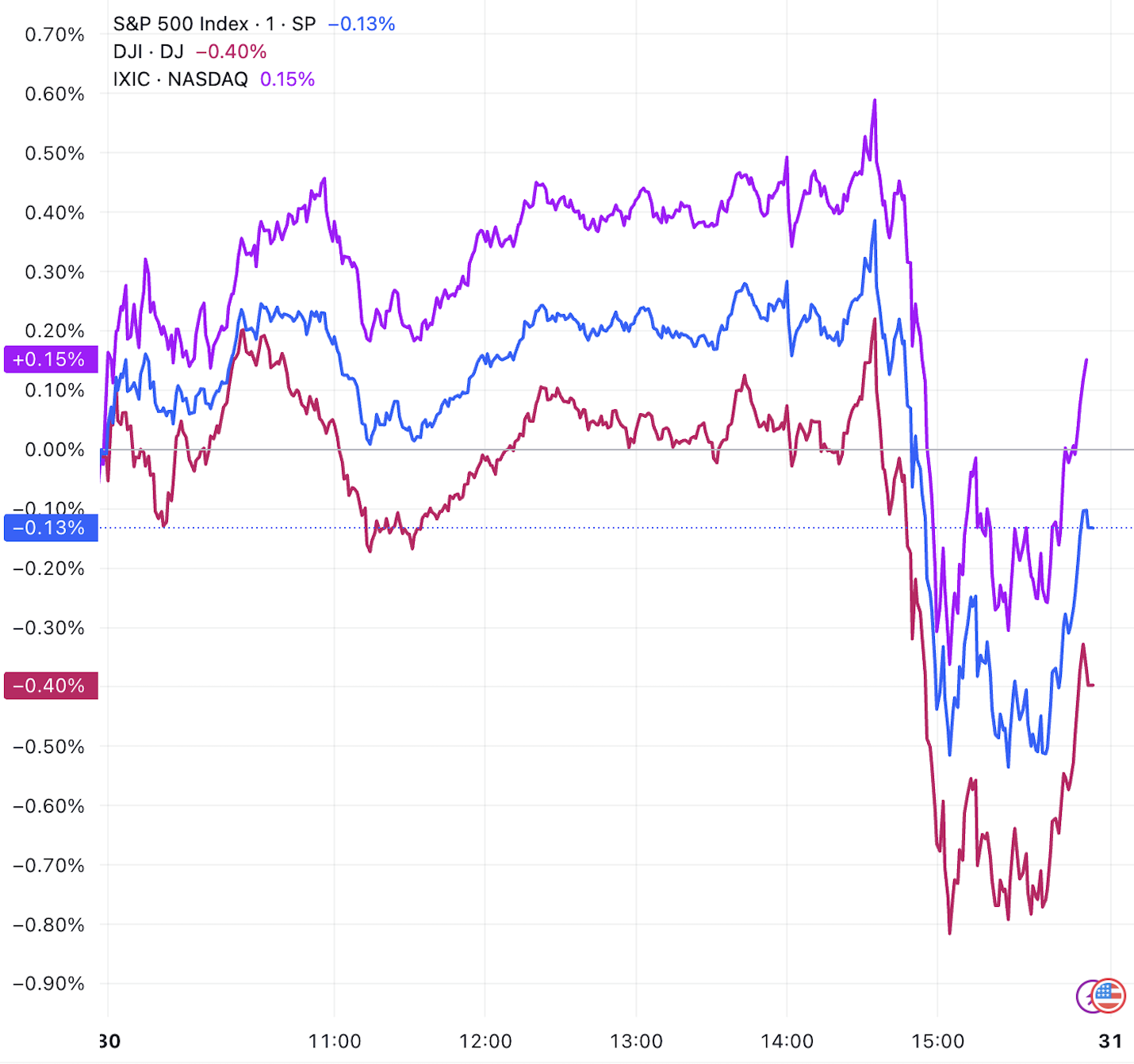
Market Overview - The Dow Jones index fell by 0.38% to 44,461.28 points, the S&P 500 index decreased by 0.12% to 6,362.90 points, while the Nasdaq index rose by 0.15% to 21,129.67 points [2] - The Federal Reserve maintained the federal funds rate target range at 4.25% to 4.50%, consistent with market expectations, marking five consecutive meetings without a rate change since December [2] - Fed Chair Jerome Powell indicated that no decision has been made regarding a policy adjustment in September, emphasizing the need to stabilize long-term inflation expectations [2][3] Interest Rate Expectations - Following Powell's remarks, market expectations for a rate cut in September diminished, with the probability dropping from approximately 65% to just below 50% [4] - Jamie Cox from Harris Financial Group noted that Powell is unlikely to yield to political pressure for rate cuts, prompting the market to reassess future federal funds rate levels [5] Company Performance - Microsoft reported a fourth-quarter net profit of $27.2 billion, a 24% year-over-year increase, with revenues of $76.44 billion, up 18% from the previous year [7] - Meta Platforms achieved a second-quarter net profit of $18.337 billion, reflecting a 36% year-over-year growth, with revenues of $47.52 billion, up 22% [9] - Qualcomm's third-quarter adjusted net profit reached $2.67 billion, a 25% increase year-over-year, with revenues of $10.37 billion, up 10% [11] Stock Movements - Microsoft shares jumped over 7% in after-hours trading following its earnings report [8] - Meta shares surged over 10% in after-hours trading after announcing strong quarterly results [10] - Qualcomm shares fell over 5% in after-hours trading despite reporting positive earnings [12] Industry Developments - Baidu is testing an AI application entry point on its search homepage, allowing users to access various AI applications directly [13]




美国钢铁公司新增三名美国独立董事至董事会
Xin Lang Cai Jing· 2025-07-30 14:33
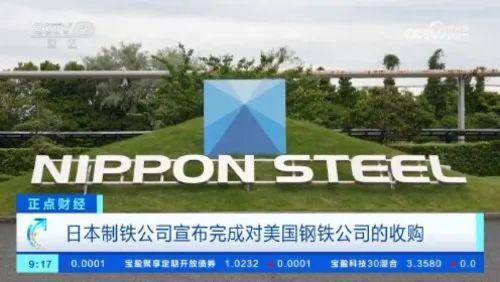
美国钢铁公司、日本制铁及其全资子公司日本制铁北美公司7月30日宣布,任命三位美国独立董事加入 美国钢铁公司董事会。美国钢铁董事会现在由七名董事组成,其中四名是美国公民,包括三名美国独立 董事。 ...
日本钢铁巨头吞下美国百年大厂!150亿美金豪赌,日铁能否逆袭中国?
Sou Hu Cai Jing· 2025-07-15 22:49
Core Viewpoint - The acquisition of U.S. Steel by Nippon Steel marks a significant shift in the global steel industry, reflecting both Japan's ambition to reclaim its industrial dominance and the geopolitical dynamics between the U.S., Japan, and China [1][4]. Group 1: Acquisition Details - The acquisition took 18 months and cost $15 billion, symbolizing a strategic move by Japan to enhance its manufacturing capabilities and compete against China's steel giants [1][3]. - Nippon Steel's plan includes a $11 billion investment in equipment upgrades to restructure the production system at the U.S. Steel facilities [3]. Group 2: Market Dynamics - China's steel production capacity is dominated by three major players, with Baowu Steel's annual output of 130 million tons exceeding Japan's total capacity by more than three times [3]. - The competition in Southeast Asia is intensifying, with Japan acknowledging that countries like Vietnam and Indonesia have become strongholds for China [3]. Group 3: Geopolitical Implications - The U.S. has allowed Japan to acquire core industrial assets while maintaining strict controls on Chinese investments, highlighting a complex geopolitical strategy [4]. - The competition among the U.S., Japan, and China in the steel industry reflects broader themes of industrial power and technological advancement [4]. Group 4: Future Outlook - The collaboration between Japanese craftsmanship and American labor culture raises questions about the potential outcomes of this trans-Pacific partnership [5]. - The evolution of the steel industry will depend on the ability to innovate and adapt, as seen in Japan's historical journey from a technology leader to a competitor and now a learner [4][5].
特朗普将宣布700亿美元AI和能源投资,贝莱德等公司的高管将亲临现场
Hua Er Jie Jian Wen· 2025-07-14 19:31
Group 1 - Trump plans to announce a $70 billion investment in AI and energy, aimed at accelerating development in these sectors [1] - The investment will come from multiple companies and will include the construction of new data centers, expansion of power generation capacity, upgrades to grid infrastructure, and related AI training programs [1] - The event will be hosted by Senator David McCormick at Carnegie Mellon University, featuring attendance from up to 60 executives in the AI and energy industries [1] Group 2 - Since his second term began, Trump has implemented policies to attract private sector investment in AI, including deregulation and expedited project approval processes [2] - Earlier this year, Trump announced $100 billion in AI data center investments from SoftBank, OpenAI, and Oracle [2] - The government has also lifted AI chip restrictions from the Biden administration to promote innovation and facilitate access to advanced technology for allies [2] Group 3 - There is a critical need for sufficient electricity to power energy-intensive AI data centers, which is seen as vital for national security and maintaining global leadership in AI [3] - Jon Gray from BlackRock is expected to announce a $25 billion project for data center and energy infrastructure development at the summit, which will create 6,000 construction jobs and 3,000 permanent jobs annually [3] - By 2035, data centers are projected to account for 8.6% of total electricity demand in the U.S., more than double the current 3.5% share [3] Group 4 - The event in Pennsylvania highlights the political significance of accelerating AI development, especially in a key swing state [4] - The recent $14.1 billion acquisition of U.S. Steel by Japan's Nippon Steel underscores the competitive landscape and political dynamics surrounding industrial investments [4]


日本制铁CEO:不认为中国是第1
日经中文网· 2025-07-14 03:12
Core Viewpoint - Japan's Nippon Steel, led by CEO Eiji Hashimoto, acknowledges China's dominance in steel production but emphasizes that it does not equate to being the best, citing differences in pricing and profitability among domestic products [1][6]. Group 1: Acquisition of US Steel - The acquisition of US Steel by Nippon Steel was a result of lengthy negotiations, deemed beneficial for both the US and Nippon Steel, with the final agreement reflecting a mutual understanding of the need for revitalization in the US steel industry [1][2]. - The local community, initially skeptical, recognized that the partnership with Nippon Steel was essential for the economic recovery of the region, especially after observing the struggles of competitors like Cleveland-Cliffs [2]. Group 2: Operational Reforms - Hashimoto outlines a two-step approach to operational reform: first, restoring profitability to motivate employees, and second, ensuring sustainable growth over the next 10 to 20 years [3]. - The first step involves top-down reforms, while the second requires a cultural shift within the company to foster a growth-oriented mindset among employees [3]. Group 3: Challenges in the US Steel Market - The US steel industry faces challenges such as low production rates and high variable costs, which hinder competitiveness despite existing demand [4]. - Nippon Steel has already dispatched 40 technical personnel to address these issues and improve production methods [4]. Group 4: Market Demand and Product Contribution - There is a significant demand in the US market that can support increased production, particularly in sectors like AI and electric vehicles, where Nippon Steel can provide high-performance materials that are currently lacking in the US [5]. Group 5: Competitive Landscape with China - Hashimoto expresses concern over China's aggressive expansion in the steel market, particularly in emerging markets like India and Thailand, and emphasizes the need for proactive measures to counter this trend [6][7]. - The company aims to maintain its competitive edge by focusing on high-end steel products in markets with clear growth potential [9]. Group 6: Future Aspirations - Nippon Steel aims to reclaim its position as the world's leading steel producer within the next decade, targeting a crude steel production of 100 million tons, while also maintaining its technological leadership in Japan [8]. - The company is open to further acquisitions, particularly of smaller manufacturers in the US, to enhance its market position, while remaining cautious about the competitive landscape in Asia [9].