
U. S. Steel(X)

Search documents
TMX Group Limited (X:CA) Presents At Barclays 23rd Annual Global Financial Services Conference Transcript
Seeking Alpha· 2025-09-08 17:41
Macro Economic Impact - Global uncertainty and interest rate outlook are driving elevated trading volumes in marketplaces [1] - Open interest on the Montreal Exchange has grown approximately 60% year-to-date, attributed to macroeconomic volatility [1] - Equity volumes have increased by 14% year-over-year, indicating positive market activity [1] Company Innovations and Strategies - New product launches and innovations have contributed positively to the company's performance, despite macroeconomic challenges [2] - The company has made adjustments to its market-making programs, which have also played a role in its operational success [2]



Monte dei Paschi clinches 62% of Mediobanca, paving way for CEO Nagel's exit
Reuters· 2025-09-08 17:38
Group 1 - Monte dei Paschi di Siena has secured 62% of Mediobanca, indicating a significant shift in ownership dynamics within the company [1] - The move sets the stage for a potential leadership change, as long-standing CEO Alberto Nagel is preparing to step down [1]

TMX Group Consolidated Trading Statistics - August 2025
Newsfile· 2025-09-05 18:30
Core Insights - TMX Group Limited reported trading statistics for August 2025 across its marketplaces, including the Toronto Stock Exchange, TSX Venture Exchange, TSX Alpha Exchange, and Montréal Exchange [1] Group 1: Overall Market Performance - Total trading volume in August 2025 was 12,200,372,060, a decrease from 12,973,669,947 in July 2025 but an increase from 10,257,747,043 in August 2024 [2] - The total value of trades in August 2025 was $300,143,130,282, slightly down from $301,141,556,607 in July 2025 and up from $247,439,236,410 in August 2024 [2] - The number of transactions in August 2025 was 23,188,885, down from 23,870,730 in July 2025 and up from 20,974,534 in August 2024 [2] Group 2: Daily Averages - Daily average trading volume in August 2025 was 610.0 million, compared to 589.7 million in July 2025 and 488.5 million in August 2024 [3] - Daily average value of trades was $15,007.2 million in August 2025, up from $13,688.3 million in July 2025 and $11,782.8 million in August 2024 [3] - Daily average transactions were 1,159,444 in August 2025, an increase from 1,085,033 in July 2025 and 998,787 in August 2024 [3] Group 3: Year-to-Date Statistics - Year-to-date trading volume for 2025 reached 101,132,067,451, an increase of 18.6% from 85,259,602,767 in 2024 [4] - The year-to-date value of trades was $2,512,699,542,073, up 27.9% from $1,963,832,777,990 in 2024 [4] - Total transactions year-to-date were 197,791,933, a 20.5% increase from 164,148,933 in 2024 [4] Group 4: Toronto Stock Exchange Specifics - In August 2025, the Toronto Stock Exchange recorded a trading volume of 7,604,943,671, down from 7,824,020,535 in July 2025 but up from 7,091,997,868 in August 2024 [6] - The value of trades on the Toronto Stock Exchange in August 2025 was $280,671,320,926, slightly down from $282,843,526,025 in July 2025 and up from $231,578,695,742 in August 2024 [6] - The number of transactions on the Toronto Stock Exchange in August 2025 was 20,421,300, down from 21,065,481 in July 2025 and up from 18,712,178 in August 2024 [6] Group 5: TSX Venture Exchange Insights - The TSX Venture Exchange had a trading volume of 3,498,516,039 in August 2025, down from 4,000,113,778 in July 2025 but up from 2,300,235,385 in August 2024 [10] - The value of trades on the TSX Venture Exchange was $2,130,980,680 in August 2025, down from $2,275,267,415 in July 2025 and up from $953,882,244 in August 2024 [10] - The number of transactions on the TSX Venture Exchange was 1,017,167 in August 2025, down from 1,132,375 in July 2025 and up from 592,932 in August 2024 [10] Group 6: TSX Alpha Exchange Performance - The TSX Alpha Exchange recorded a trading volume of 1,060,876,293 in August 2025, down from 1,112,612,218 in July 2025 and up from 852,074,330 in August 2024 [14] - The value of trades on the TSX Alpha Exchange was $16,543,069,653 in August 2025, up from $15,280,294,395 in July 2025 and from $14,462,960,889 in August 2024 [14] - The number of transactions on the TSX Alpha Exchange was 1,642,796 in August 2025, up from 1,557,715 in July 2025 and slightly down from 1,623,878 in August 2024 [14] Group 7: Montréal Exchange Statistics - The Montréal Exchange reported a derivatives volume of 18,282,483 contracts in August 2025, an increase from 17,878,488 in July 2025 and a slight decrease from 18,298,695 in August 2024 [23] - Open interest in contracts at the Montréal Exchange was 30,548,176 in August 2025, up from 29,712,966 in July 2025 and significantly up from 20,325,528 in August 2024 [23] - Year-to-date volume for the Montréal Exchange was 154,789,013 contracts in 2025, up 23.9% from 124,964,650 in 2024 [24]
日本制铁将在美国新建采用大型电炉的钢铁厂
日经中文网· 2025-08-29 02:48
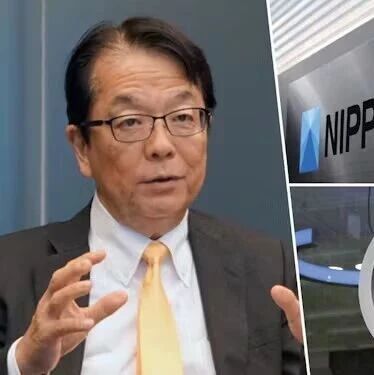
Core Viewpoint - Nippon Steel plans to build an electric arc furnace steel plant in the U.S. with an investment of $4 billion, aiming for operation after 2029, to enhance the competitiveness of U.S. Steel and respond to job creation demands from the Trump administration [2][4]. Group 1: Investment and Operations - U.S. Steel's final profit for fiscal year 2024 is projected to decrease by 57% to $384 million, indicating ongoing struggles [4]. - The new plant will utilize scrap metal as raw material, employing two large electric furnaces that are more efficient and environmentally friendly, with an annual production capacity of 3 million tons [6]. - Nippon Steel has committed to an additional investment of approximately $11 billion by 2028, which includes the initial investment for the new plant [6]. Group 2: Employment and Economic Impact - The construction of the new steel plant is expected to create job opportunities, aligning with Trump's narrative of boosting investment and employment through the acquisition of U.S. Steel [6]. - The decision on the construction site will be made by mid-2026 after evaluating land conditions and labor availability [6]. Group 3: Technological Advancements - Nippon Steel plans to leverage its advanced technology to enhance production capabilities, including the production of high-quality automotive-grade electromagnetic steel sheets within 1-2 years [6]. - The company aims to increase the overall crude steel production of its group, including U.S. Steel, to 100 million tons over the next decade, a 60% increase from current levels [8]. Group 4: Market Context - Despite a challenging global steel market due to oversupply from China, the U.S. steel market benefits from high tariffs imposed by the Trump administration, providing a protective environment for U.S. Steel [8]. - Nippon Steel believes that investments and quality improvements through its technology will enhance profitability, even in a difficult market [8].
TMX Group CFO David Arnold to Present at the Barclays Global Financial Services Conference
Newsfile· 2025-08-22 13:00
Group 1 - TMX Group CFO David Arnold will present at the Barclays Global Financial Services Conference on September 8, 2025, from 11:15 to 11:55 a.m. ET [2] - A link to the webcast of the presentation will be available and archived in TMX's shareholder events section [2] Group 2 - TMX Group operates global markets and builds digital communities and analytic solutions to facilitate the funding, growth, and success of businesses, traders, and investors [3] - Key operations of TMX Group include the Toronto Stock Exchange, TSX Venture Exchange, and various other financial services and technology solutions [3] - TMX Group is headquartered in Toronto and has offices across North America and key international markets including London, Singapore, and Vienna [3]

花9倍溢价“纳投名状”,日铁在走东芝的老路?
Hu Xiu· 2025-08-21 23:45
Core Viewpoint - The acquisition of United States Steel Corporation by Nippon Steel Corporation for approximately $25 billion raises concerns reminiscent of Toshiba's past acquisition of Westinghouse Electric Company, suggesting potential risks and challenges in international mergers and acquisitions [1][2][25]. Group 1: Acquisition Details - Nippon Steel initially planned to acquire U.S. Steel for 400 billion yen (approximately $2.75 billion), but the final cost escalated to 3.6 trillion yen (about $25 billion), which is nine times the original estimate [1][9][12]. - The acquisition price per share was raised to $55, a 57% premium over a competing offer, leading to a 6% drop in Nippon Steel's stock price upon announcement [10][11]. - The total cost of the acquisition, including necessary investments for equipment upgrades, amounts to $25.2 billion, significantly higher than the initial budget [13][25]. Group 2: Historical Context and Comparisons - The acquisition price of Nippon Steel is notably higher than Toshiba's $5.4 billion acquisition of Westinghouse, which was already considered excessive at the time [5][9]. - Historical failures of Japanese companies in U.S. acquisitions, such as Toshiba's experience, create skepticism about the potential success of Nippon Steel's venture [3][25]. Group 3: Strategic Implications - Nippon Steel's acquisition is viewed as not just an economic move but also a strategic one influenced by international relations, particularly in the context of U.S.-Japan alliances [2][14]. - The new board structure post-acquisition will include significant oversight from the U.S. government, limiting Nippon Steel's operational flexibility [15][21]. - The investment aims to address domestic steel shortages in the U.S. and enhance production capacity from 23 million tons to 34 million tons annually [18][19]. Group 4: Future Outlook - Nippon Steel aims to leverage this acquisition to strengthen its position in the global steel market, particularly against competitors like China's Baowu Steel Group [22][24]. - The long-term goal is to achieve an annual production capacity of over 100 million tons, positioning Nippon Steel among the top global steel producers [24][26].
充斥未知和风险!不止英特尔,特朗普政府对更多科技公司股权兴趣浓厚
Di Yi Cai Jing· 2025-08-20 06:37
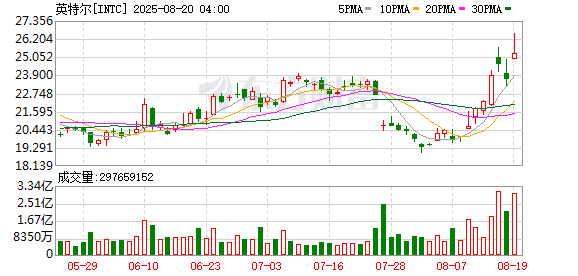
Group 1 - The U.S. government is negotiating to exchange equity stakes in several tech companies, including Intel, Micron Technology, TSMC, and Samsung, for funding support under the CHIPS Act [2][3] - The CHIPS Act provides funding for research and grants to build semiconductor factories in the U.S., with significant subsidies already allocated to Samsung ($4.75 billion), Micron Technology ($6.2 billion), and TSMC ($6.6 billion) [3] - The current administration is perceived to be exerting influence over the tech industry, with officials indicating that any investment will be unprecedented and could mark a new era of government involvement in large corporations [3][4] Group 2 - Concerns have been raised regarding the government's intervention in the private sector, with terms like "uncertainty" and "unknown territory" frequently mentioned by investors and policymakers [4][5] - The approach of selecting "winners and losers" in the market could disrupt the free flow of capital, leading to potential risks for taxpayers and unpredictable market distortions [5] - The lack of transparency in these transactions has been highlighted as a significant concern, with some viewing it as a government-led reshuffling of industries rather than a unified effort to promote national security or technological independence [5]


X @The Wall Street Journal
The Wall Street Journal· 2025-08-15 21:47
Safety Incident - U S Steel 报告称,本周早些时候,其一家工厂发生的致命爆炸事故可能发生在为计划维护准备而冲洗气体阀门时 [1]
X @Bloomberg
Bloomberg· 2025-08-15 21:06
Safety Incident - US Steel's Clairton Coke Works facility in Pennsylvania experienced a fatal blast, resulting in two worker deaths [1] - The incident occurred during the flushing of a gas valve in preparation for planned maintenance [1]
【环球财经】致命爆炸之后 北美最大焦化厂周边空气监测升级
Xin Hua She· 2025-08-15 14:05
Core Viewpoint - The Allegheny County Health Department announced enhanced air monitoring around a U.S. Steel coke plant in Pittsburgh following an explosion that resulted in 2 fatalities and at least 10 injuries [1] Group 1: Incident Details - An explosion occurred at the coke plant on August 11, leading to immediate health concerns for nearby residents [1] - The health department recommended that residents within a 1.6 km radius stay indoors and close all windows [1] Group 2: Air Quality Monitoring - Mobile air monitoring devices will be deployed on August 14 and 15 to measure volatile organic compounds and sulfur dioxide [1] - Community health personnel expressed that mobile monitoring is beneficial as it can better assess pollution levels closer to residential areas [1] Group 3: Historical Context and Company Actions - The coke plant is noted as the largest in North America and has a history of pollution issues, including a fire in 2018 that damaged pollution control equipment [1] - U.S. Steel previously settled lawsuits related to air pollution, agreeing to invest $19.5 million in equipment upgrades and pay $5 million for local air quality improvements [1] - In 2019, the company paid $8.5 million in a separate air pollution lawsuit [1]