Lenovo

Search documents
AMD Introduces New Radeon Graphics Cards and Ryzen Threadripper Processors at COMPUTEX 2025
Globenewswire· 2025-05-21 03:00
Core Insights - AMD has launched the Radeon RX 9060 XT and Radeon AI PRO R9700 graphics cards, along with the Ryzen Threadripper 9000 Series processors, aimed at enhancing performance in gaming, content creation, and AI development [1][2][4] Product Launches - The Radeon RX 9060 XT features AMD's RDNA 4 architecture, offering smooth 1440p gaming with FSR 4 ML-enhanced upscaling and improved ray tracing capabilities [2][5] - The Radeon AI PRO R9700 is designed for AI workloads, equipped with 32GB of graphics memory and PCIe Gen 5 support, facilitating local AI inference and complex creative tasks [3][9] - The Ryzen Threadripper 9000 Series processors provide high core counts and memory bandwidth, suitable for demanding multi-threaded workloads, with the top model featuring 96 cores and 192 threads [4][14] Performance Specifications - The Radeon RX 9060 XT comes in two variants: 8GB priced at $299 and 16GB priced at $349, with a boost clock of up to 3.13 GHz [7][8] - The Radeon AI PRO R9700 has 64 compute units, 32GB of VRAM, and a boost clock of up to 2.92 GHz, with a total board power of 300W [11][12] - The Ryzen Threadripper PRO 9995WX offers a base frequency of 2.5 GHz and a boost frequency of 5.4 GHz, with a TDP of 350W [16][14] Market Availability - The Radeon RX 9060 XT is expected to be available from various board partners later this year, while the Radeon AI PRO R9700 will be available starting July 2025 [8][12] - The Ryzen Threadripper 9000 Series processors will be available from major manufacturers and retailers starting July 2025 [20] Strategic Vision - AMD emphasizes its commitment to innovation, aiming to empower creators, gamers, and professionals with advanced performance and efficiency [2][21] - The collaboration with ASUS and Lenovo highlights the focus on AI-powered computing solutions for enterprise environments [21][22]



NVIDIA Powers Humanoid Robot Industry With Cloud-to-Robot Computing Platforms for Physical AI
Globenewswire· 2025-05-19 04:25
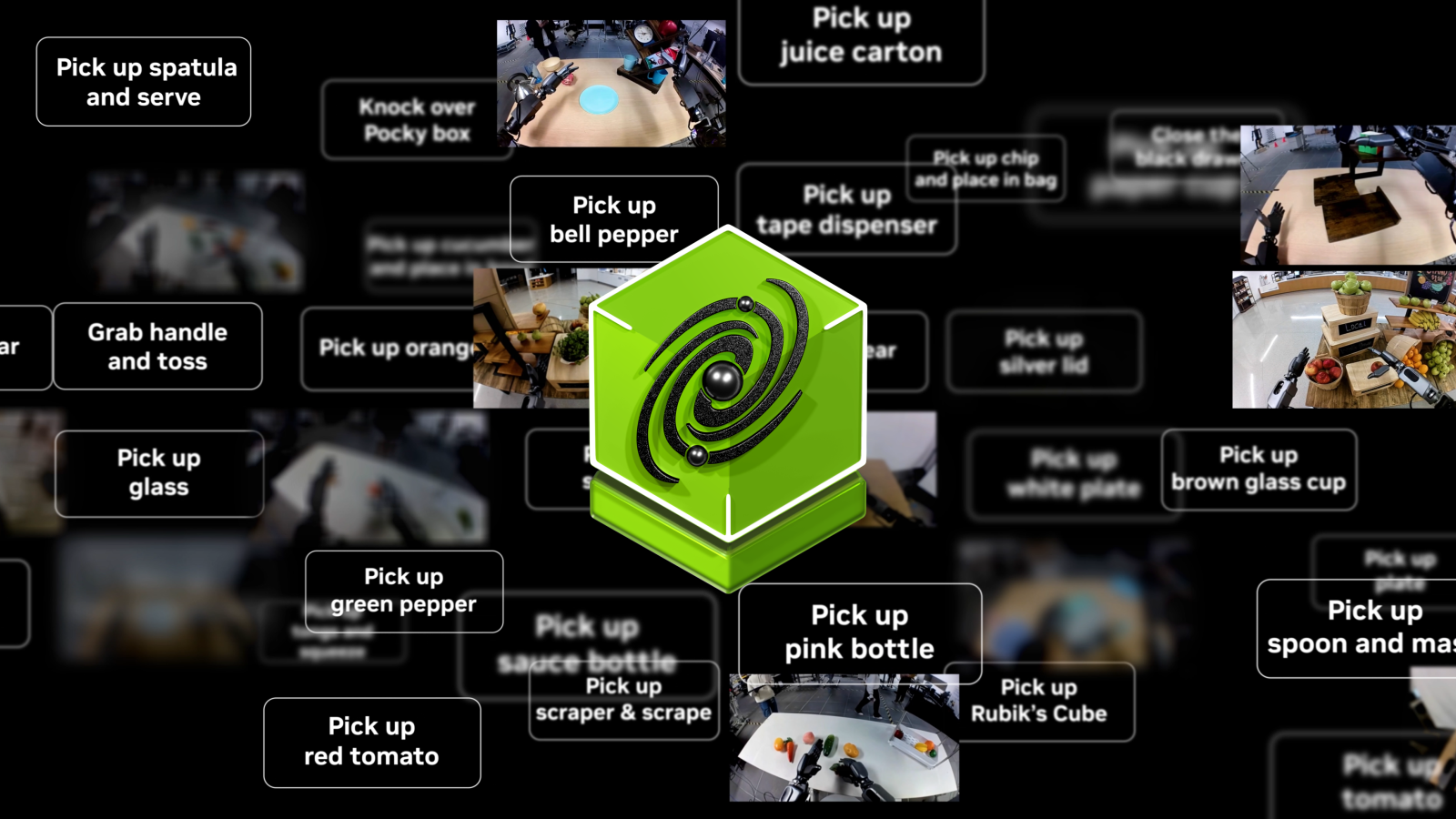
Core Insights - NVIDIA has introduced the NVIDIA Isaac GR00T N1.5, an updated foundation model for humanoid reasoning and skills, along with the GR00T-Dreams blueprint for generating synthetic motion data and Blackwell systems to enhance humanoid robot development [1][3][10] Group 1: Product Announcements - The NVIDIA Isaac GR00T N1.5 model improves adaptability to new environments and workspace configurations, enhancing its success rate in material handling and manufacturing tasks [7][8] - The GR00T-Dreams blueprint generates vast amounts of synthetic motion data, allowing robots to learn new behaviors and adapt to changing environments [3][4] - The GR00T-Dreams blueprint complements the previously released GR00T-Mimic blueprint, which augments existing data rather than generating new data [5] Group 2: Industry Adoption - Various humanoid and robotics developers, including Agility Robotics, Boston Dynamics, and XPENG Robotics, are adopting NVIDIA's Isaac platform technologies to advance their robot development [2][9] - Early adopters of the GR00T N models are utilizing them for tasks such as natural language understanding and complex workflows in industrial settings [8] Group 3: Technological Advancements - NVIDIA's simulation technologies, including Isaac Sim and Isaac Lab, are being used by companies to close the data and testing gap in humanoid robot development [9] - The Blackwell systems, including NVIDIA RTX PRO 6000 workstations, provide a unified architecture for running various robot development workloads, achieving up to 18 times greater performance for data processing [10][11]

NVIDIA Launches AI-First DGX Personal Computing Systems With Global Computer Makers
Globenewswire· 2025-05-19 03:58
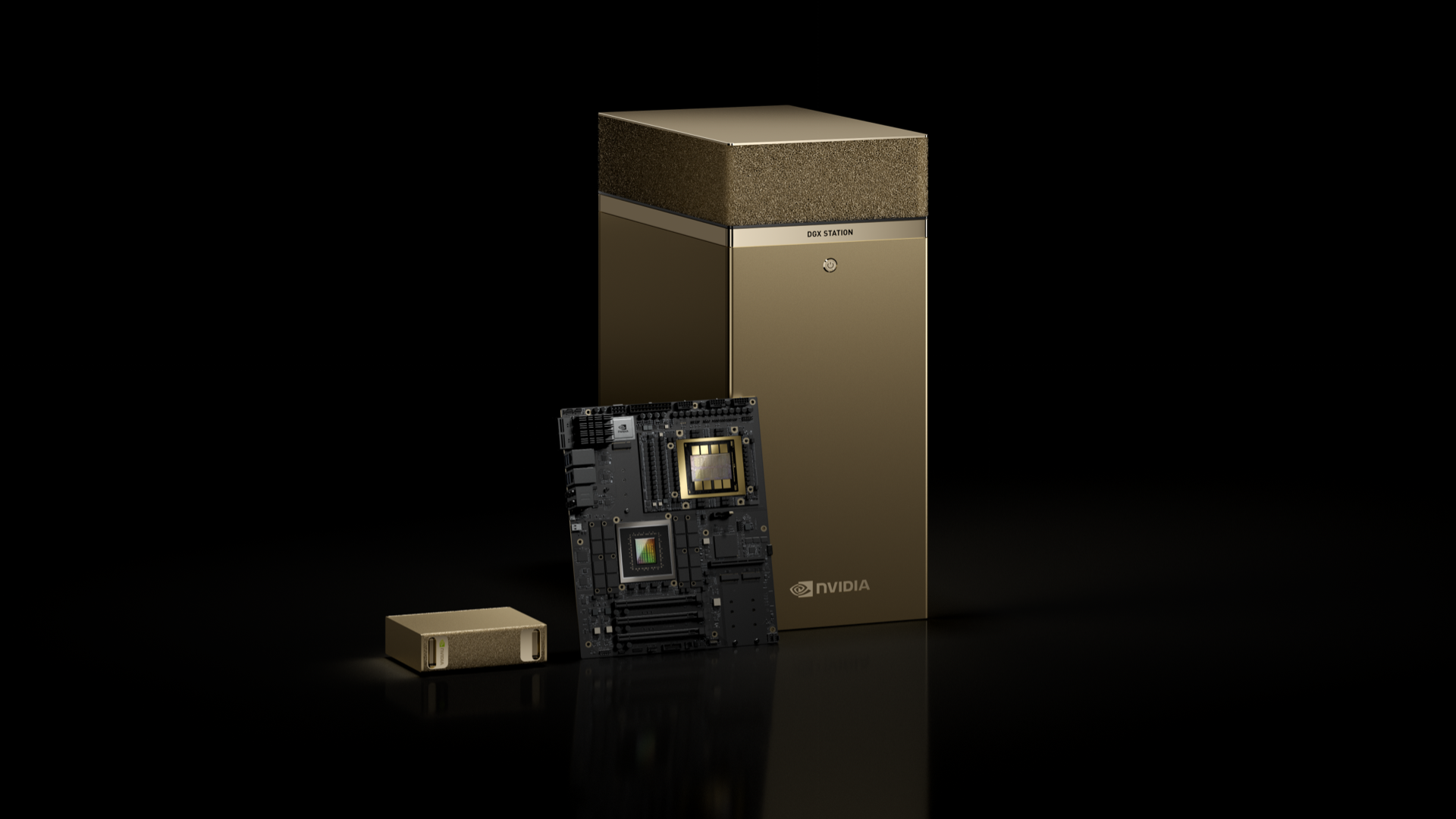
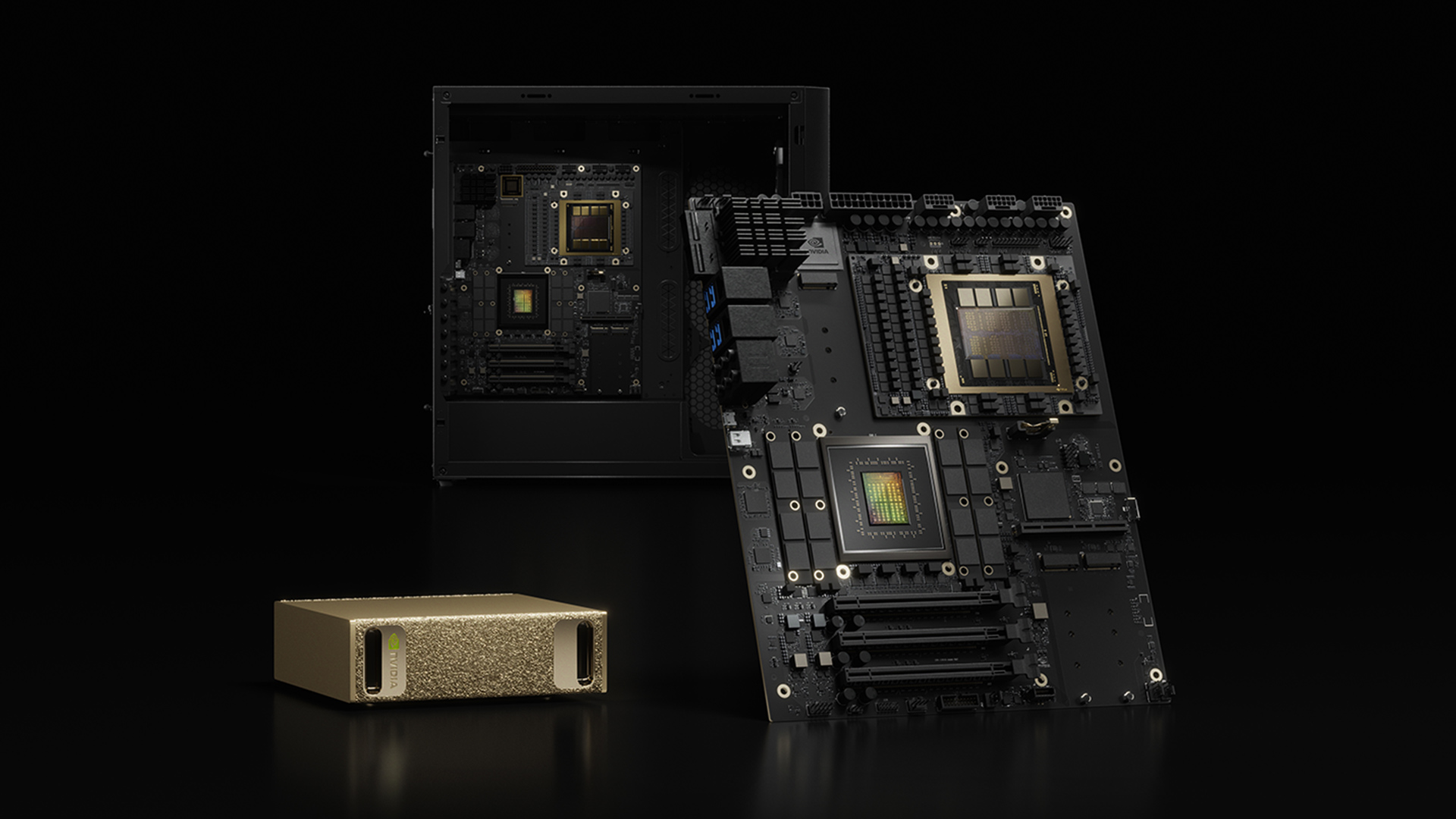
Core Viewpoint - NVIDIA is collaborating with leading Taiwanese system manufacturers to develop DGX Spark and DGX Station systems aimed at AI developers, researchers, and data scientists, enhancing the performance and efficiency of AI computing solutions [1][2]. Group 1: Product Features and Capabilities - DGX Spark is equipped with the NVIDIA GB10 Grace Blackwell Superchip, delivering up to 1 petaflop of AI compute and 128GB of unified memory, facilitating seamless model exporting to NVIDIA DGX Cloud or other infrastructures [5][6]. - DGX Station features the NVIDIA GB300 Grace Blackwell Ultra Desktop Superchip, offering up to 20 petaflops of AI performance and 784GB of unified system memory, designed for demanding AI workloads [7]. - Both systems support NVIDIA Multi-Instance GPU technology, allowing partitioning into multiple instances for enhanced performance and scalability [8]. Group 2: Market Demand and Ecosystem - There is a growing demand among enterprises, software providers, and research institutions for robust AI systems that can deliver high performance in a compact desktop form factor [3][4]. - The collaboration with major manufacturers like Dell Technologies and HP Inc. indicates a shift towards prioritizing systems capable of handling next-generation intelligent workloads [10][11]. - DGX Spark and DGX Station are expected to be available from various manufacturers starting in July, with reservations already open [12][13].
Lenovo and DDN: Accelerating Enterprise AI with Next-Generation Data Solutions
DDN· 2025-05-01 21:27
[Music] My name is Dave Mooney. I'm the VP of worldwide data management sales at Lenovo Corporation. The challenges we help our customers overcome is to help them take an idea that they would like to drive and how they could enhance their business with AI and get it implemented first in experimentations and into fast starts all the way into full production.And we can do that from the pocket to the cloud and the data center. We but we're focusing on the enterprise customers. That's where we see the opportuni ...

摩根士丹利:PC&NB-趋于保守
摩根· 2025-04-27 03:55
Investment Rating - The report maintains an "Overweight" (OW) rating on Lenovo, downgrades Asustek to "Equal Weight" (EW), and downgrades Acer, Compal, and Foxconn to "Underweight" (UW) [1][5]. Core Insights - The report expresses a cautious outlook on the PC market, lowering PC unit assumptions by 3% for 2025-26 due to increased policy uncertainties and recession concerns [2][10]. - There is an expectation of increased inventory building among OEMs for the US market, particularly in the second quarter, as notebooks are currently exempt from tariffs [3][4]. - The report suggests avoiding investments in the PC/NB segment due to the risks associated with policy uncertainties, while preferring commercial over consumer segments due to their resilience [5][12]. Summary by Sections PC/NB Market Outlook - The report indicates a 3% reduction in PC shipment assumptions for 2025-26, reflecting a more conservative stance amid macroeconomic uncertainties [2][10]. - Notebooks are expected to see a 5% quarter-over-quarter increase in builds for Q2, with total builds forecasted at 31.2 million units, which is a 5% increase from Q1 but a 4% decrease year-over-year [3][4]. Inventory and Pricing - Current notebook inventory levels are estimated to be between 7 to 15 weeks, likely closer to 10-12 weeks, with potential for further inventory increases during the tariff pause [4][5]. - Pricing adjustments are not anticipated to significantly impact consumers in the near term due to existing inventory levels [4]. Stock Recommendations - The report recommends avoiding the PC/NB segment, downgrading several stocks including Compal, Acer, Asustek, and Foxconn, while maintaining an OW on Lenovo due to its defensive positioning in the commercial PC market [5][12]. - Lenovo's stock is viewed as largely de-risked following its underperformance compared to the Hang Seng Index [5][12]. Financial Adjustments - Earnings estimates for Lenovo have been adjusted downward by 1%, 9%, and 10% for fiscal years 2025-27, respectively, reflecting a more conservative outlook [36][38]. - The price target for Lenovo has been lowered from HK$13.10 to HK$10.00, driven by decreased earnings estimates [38][40].
摩根士丹利:中国市场洞察-在美国大幅提高关税的形势下如何进行投资布局
摩根· 2025-04-06 14:36
Investment Rating - The report maintains an Equal-weight (EW) stance on MSCI China within the global EM/APXJ framework [9]. Core Insights - The report anticipates higher near-term market volatility due to the US imposing additional tariffs on China, raising the total tariff rate to up to 65% [2][4]. - The A-share market is viewed as better positioned for hedging and diversification compared to the offshore market, as A-share investors are less sensitive to tariff changes [3]. - The direct impact on earnings from the tariffs is expected to be smaller than the overall drag on macroeconomic growth, with the MSCI China universe generating only 13% of its total revenue from markets outside China, and less than 3% from the US [7]. Summary by Sections Market Volatility - The report highlights that the recent tariff hikes could lead to elevated market volatility as the market adjusts to the potential economic impacts [2][4]. A-Share Market Positioning - The A-share market is recommended for investors seeking stability, as it has shown lower correlation with global markets and less volatility compared to offshore markets [3]. Earnings Impact - The report suggests that the overall drag on equity market earnings will be less severe than the impact on macro growth, primarily due to the limited revenue exposure of listed Chinese companies to the US market [7]. Companies with High US Revenue Exposure - A list of 30 companies with the highest revenue exposure to the US market is provided, indicating potential negative impacts on these companies in the near term [8]. Key Indicators to Monitor - The report advises monitoring the USDCNY exchange rate, signs of US-China negotiations, and any significant policy easing measures to stabilize domestic growth [9].
Ericsson and Lenovo settle patent litigation
Prnewswire· 2025-04-03 15:00
Group 1 - Ericsson and Lenovo have reached a settlement to resolve their patent licensing dispute, which includes the withdrawal of all ongoing lawsuits and administrative proceedings in multiple countries, including the USITC [1][5] - Financial impacts from the settlement are expected to be recognized starting Q2 2025, with a remaining dispute to be resolved through arbitration [2][5] - Ericsson holds a patent portfolio of over 60,000 granted patents and invests more than SEK 50 billion annually in R&D, aiming to grow its IPR revenues through new 5G agreements and expansion into other licensing areas [3]

非x86服务器收入,大增262.1%
半导体行业观察· 2025-03-21 01:08
Core Viewpoint - The report highlights the transformative impact of the AI boom on the global server market, with Nvidia GPUs being a key driver of this growth, leading to a significant increase in server revenue in Q4 2024 compared to the previous year [1][5]. Market Overview - The global server market revenue reached $77.321 billion in Q4 2024, marking a 91% year-over-year increase, the second-largest growth since 2019 [5][7]. - Non-x86 server revenue surged by 262.1% to $22.5 billion, while x86 server revenue grew by 59.5% to $54.8 billion [1][5]. - Embedded GPU servers accounted for over half of the market revenue growth, with a 192.6% increase year-over-year [1][5]. Company Performance - Nvidia dominated the embedded GPU market, capturing 90% of the total shipments in Q4 2024 [2][5]. - Dell Technologies and Super Micro tied for the top position in market share at 7.2% and 6.5% respectively, with revenue growth of 20.6% and 55% [3][7]. - ODM Direct suppliers accounted for 47.3% of total revenue, experiencing a remarkable 155.5% growth [3][7]. Regional Insights - Canada recorded the highest year-over-year growth rate at 118.4%, while the U.S. accounted for 56% of total revenue [6][7]. - China saw a 93.3% increase, representing nearly a quarter of global quarterly revenue [6][7]. - Other regions, including Japan (66.9%), other Asian countries (43.8%), and EMEA (28.2%), also experienced significant growth [6][7].
Hardware Technology_ Datacenter Market Insights, Part 1 – Overall Servers
2025-03-19 15:50
Summary of Datacenter Market Insights Industry Overview - The report focuses on the **Datacenter Market**, specifically the **server segment** within the **Asia Pacific** region, highlighting trends and insights for 2024 and 2025 [1][8]. Key Insights 1. **Server Shipment Growth**: - Total server shipments increased by **17%** in 2024, primarily driven by cloud demand. For 2025, cloud demand is expected to grow by an additional **5-10%**, while enterprise demand is projected to rise by **0-5%** [1][6]. 2. **Quarterly Performance**: - In **4Q24**, global server shipments reached **4.0 million units**, reflecting an **8%** quarter-over-quarter (q/q) increase and a **25%** year-over-year (y/y) increase. The growth was mainly attributed to cloud demand, with a notable acceleration from **1%** q/q in **3Q24** to **8%** q/q in **4Q24** [2][12]. 3. **AI Server Shipments**: - AI server shipments continued to rise in **4Q24**, but at a slower pace compared to **3Q24** due to a transition in GPU platforms. Notably, Super Micro reported a **3%** decline in shipments q/q, while Huawei's shipments surged by **93%** q/q [3][4]. 4. **ODM Direct Shipments**: - Aggregate ODM direct shipments totaled **1,474k units** in **4Q24**, marking an **11%** q/q increase and a **45%** y/y increase. ODMs regained market share in general server markets from OEMs, with ODM direct server average selling price (ASP) rising by **15%** q/q to **US$24.9k** [4][15]. 5. **Regional Performance**: - The **USA** outperformed other regions in **4Q24**, with shipments up **42%** y/y, followed by **APxJ** at **21%** y/y, **Japan** at **7%**, **Western Europe** at **2%**, and **Rest of World (RoW)** at **1%** [12][27]. 6. **Segment Performance**: - High-end server shipments grew by **310%** y/y in **4Q24**, mid-range servers increased by **109%** y/y, and entry-level servers saw a **17%** y/y growth. This trend aligns with the ongoing ramp of AI servers and general compute server demand [13][14]. 7. **Vendor Market Share**: - ODMs captured **37.3%** of the market share in **4Q24**, up **90 basis points** q/q. Dell's market share decreased to **9.6%**, while HP's share fell to **7.8%**. Huawei's market share increased to **2.3%**, reflecting a **100 basis point** increase q/q [16][12]. Stock Implications - The report suggests a preference for **component suppliers** with content share gains over ODMs/OEMs. Notable companies mentioned include **Delta**, **AVC**, **GCE**, and **Wistron**, among others [7][8]. Additional Insights - The **GB200 server racks** began ramping production in late February 2025, with expectations to deliver **2k racks** in **1Q25** and **5-8k racks** in **2Q25**. However, significant volumes for B300/GB300 will not be delivered until September at the earliest [5][6]. This summary encapsulates the critical insights and trends from the datacenter market, providing a comprehensive overview of the current state and future expectations within the server segment.
NVIDIA Announces DGX Spark and DGX Station Personal AI Computers
Globenewswire· 2025-03-18 18:59
Core Insights - NVIDIA has launched DGX Spark and DGX Station, personal AI supercomputers powered by the NVIDIA Grace Blackwell platform, aimed at developers, researchers, and data scientists [1][2][3] - These systems allow users to prototype, fine-tune, and run large AI models locally or on NVIDIA DGX Cloud, enhancing accessibility to advanced AI capabilities [2][7] Product Features - DGX Spark is described as the world's smallest AI supercomputer, designed to empower millions of users with high performance for generative and physical AI applications [4] - The heart of DGX Spark is the NVIDIA GB10 Grace Blackwell Superchip, which delivers up to 1,000 trillion operations per second for AI compute tasks [5] - DGX Station features the NVIDIA GB300 Grace Blackwell Ultra Desktop Superchip, providing 784GB of coherent memory space for large-scale AI workloads [8] Technical Specifications - The GB10 Superchip utilizes NVIDIA NVLink-C2C interconnect technology, offering 5x the bandwidth of fifth-generation PCIe, optimizing performance for memory-intensive workloads [6] - DGX Station includes the NVIDIA ConnectX-8 SuperNIC, supporting networking speeds of up to 800Gb/s, facilitating high-speed connectivity for larger workloads [9] Software and Integration - Users of DGX Spark can seamlessly transition their models to DGX Cloud or other infrastructures with minimal code changes, streamlining the development process [7] - The integration of NVIDIA CUDA-X AI platform and NVIDIA NIM microservices enhances the performance and deployment of AI applications [10] Availability - Reservations for DGX Spark systems are open, while DGX Station is expected to be available later this year through manufacturing partners [11]