Fidelity

Search documents
稳定币与人民币国际化?一场持久战-Stablecoins and RMB Internationalization A Long Game
2025-07-19 14:57
Summary of Key Points from the Conference Call Industry and Company Involved - **Industry**: Financial Services, specifically focusing on Stablecoins and RMB Internationalization - **Company**: Morgan Stanley Asia Limited Core Points and Arguments 1. **PBoC's Plan for RMB**: The People's Bank of China (PBoC) aims to facilitate the opening-up and internationalization of the RMB in a multipolar monetary world [4][5] 2. **Financial Measures in Shanghai**: Eight new financial measures were introduced to strengthen financial infrastructure, enhance Shanghai's role as a financial center, and promote offshore RMB-denominated bond issuance [5][7] 3. **Stablecoins Regulation**: The Hong Kong Stablecoins Bill is set to take effect on August 1, 2025, allowing specified entities to issue stablecoins under strict regulations, including maintaining reserves and public disclosures [8][9] 4. **Market Dynamics**: USD-pegged stablecoins dominate the market, with over $120 billion backed by US Treasury bills, indicating a strong demand for US treasuries [11][12] 5. **RMB's Share in Global FX Reserves**: The share of RMB in global foreign exchange reserves has decreased from 2.84% in Q1 2022 to 2.18% in Q4 2024, highlighting challenges in RMB internationalization [18][19] 6. **Digital Yuan Initiatives**: The establishment of a Digital Yuan International Operations Center in Shanghai is planned to expand the global reach of the RMB [16] 7. **Crypto Market Growth**: The total crypto market cap reached $3.4 trillion by June 2025, showing significant growth from under $2 trillion at the beginning of 2024 [26] Other Important but Possibly Overlooked Content 1. **RMB Cross-Border Settlement Roadmap**: A detailed timeline of initiatives related to the digital yuan and cross-border settlement systems was provided, indicating ongoing efforts to enhance RMB's global presence [15] 2. **Investor Concerns**: Increased investor concerns over China's economic challenges were noted, which may impact the overall sentiment towards RMB internationalization [21] 3. **Reflation Strategy**: A "5R" reflation strategy was discussed, focusing on fiscal measures and structural reforms to stimulate the economy, with a projected GDP widening of 1.6 percentage points by the end of 2025 [25] 4. **Regulatory Framework for Crypto**: Ongoing efforts to establish a regulatory framework for cryptocurrencies in Hong Kong were highlighted, indicating a proactive approach to managing the crypto market [30] This summary encapsulates the key insights from the conference call, focusing on the financial measures, regulatory developments, and market dynamics surrounding stablecoins and RMB internationalization.

X @Investopedia
Investopedia· 2025-07-19 01:00
Brokerage Comparison - Fidelity has slight advantages over Charles Schwab for U.S traders and investors [1] - Both brokers offer a similar experience [1]

电话会议纪要(20250713)
CMS· 2025-07-18 05:35
Macro - The likelihood of achieving a 5% economic growth target for the year is high, with a decreasing necessity and intensity for incremental policies in the second half of the year [1] - Continuous price pressure has negatively impacted the normal circulation of the national economy, leading to a focus on addressing price issues through unconventional macroeconomic policies [1][2] - The phenomenon of "involution" in both supply and demand sides has intensified downward price pressures, with low capacity utilization and excessive capital expenditure on the supply side, and long working hours suppressing consumer demand on the demand side [2][3] Strategy - The IPO process in Hong Kong involves both public offerings and international placements, with the former primarily targeting retail investors, leading to a liquidity "drain" effect due to the need for investors to freeze funds for subscriptions [6][8] - The introduction of the FINI system in 2023 has significantly reduced the liquidity pressure associated with IPOs by allowing for a pre-set funding compression mechanism, which can save approximately 71% of the funds that would have been frozen historically [8] - The launch of the first batch of Sci-Tech Bond ETFs on July 7, 2025, raised 29 billion yuan, marking a significant expansion in the Sci-Tech bond market, which has seen rapid growth due to supportive policies [9][10] - The current Sci-Tech bonds are predominantly issued by state-owned enterprises, with a significant portion allocated to the banking sector, indicating a strong focus on financing technology innovation [10][11] Non-Bank Financials - The securities industry is expected to benefit from a stable equity market and a recovering bond market, with significant growth in financing activities driven by state-owned banks [22][23] - The competitive landscape is shifting towards a focus on functionality and profitability, with a notable increase in the concentration of leading firms in the industry [24][25] - The capital market is stabilizing, with various funding sources supporting a potential upward breakout in equity markets, positioning brokerages as key players in this trend [26][27] Real Estate - The valuation of major real estate companies is believed to have entered an investment range, with a focus on the "demand bottom" and the dynamics of supply and demand relationships [28] - A potential decline in new housing prices is anticipated, with second-hand housing listings expected to decrease in the coming years, indicating a stabilization in the market [28] Fund Evaluation - The report highlights the regulatory framework surrounding performance benchmarks for mutual funds in the U.S., emphasizing the importance of appropriate benchmark selection for fund performance evaluation [29][30] - U.S. actively managed funds predominantly use single benchmarks, with a high correlation between fund performance and benchmark indices, contrasting with the more complex benchmark structures often seen in China [30][31]

Is Fidelity Value Factor ETF (FVAL) a Strong ETF Right Now?
ZACKS· 2025-07-17 11:21
Core Viewpoint - The Fidelity Value Factor ETF (FVAL) is a smart beta ETF designed to provide broad exposure to the large-cap value segment of the market, with a focus on stocks that exhibit attractive valuations [1][5]. Fund Overview - FVAL was launched on September 12, 2016, and is managed by Fidelity [1]. - The ETF has accumulated assets of over $977.06 million, positioning it as an average-sized ETF within its category [5]. - FVAL aims to match the performance of the Fidelity U.S. Value Factor Index, which includes large and mid-cap U.S. companies with appealing valuations [5]. Cost Structure - The annual operating expenses for FVAL are 0.16%, making it one of the more affordable options in the smart beta ETF space [6]. - The ETF has a 12-month trailing dividend yield of 1.55% [6]. Sector Exposure and Holdings - FVAL's largest sector allocation is in Information Technology, comprising approximately 32.1% of the portfolio, followed by Financials and Consumer Discretionary [7]. - Microsoft Corp (MSFT) is the largest holding at about 7.22% of total assets, with Nvidia Corp (NVDA) and Apple Inc (AAPL) also among the top holdings [8]. - The top 10 holdings represent around 38.51% of the total assets under management [8]. Performance Metrics - As of July 17, 2025, FVAL has a return of approximately 5.29% and has increased by about 8.92% year-to-date [9]. - The ETF has traded within a range of $52.80 to $65.00 over the past 52 weeks [9]. - FVAL has a beta of 0.96 and a standard deviation of 16.58% over the trailing three-year period, indicating effective diversification of company-specific risk with around 130 holdings [10]. Alternatives - While FVAL is a viable option for investors looking to outperform the large-cap value segment, alternatives such as Schwab U.S. Dividend Equity ETF (SCHD) and Vanguard Value ETF (VTV) are also available [11]. - SCHD has $70.27 billion in assets and an expense ratio of 0.06%, while VTV has $138.73 billion in assets with an expense ratio of 0.04% [12].




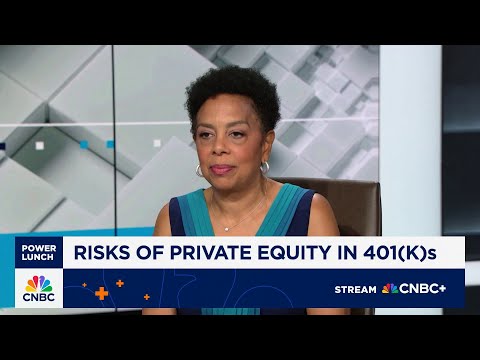
Private equity in retirement plans: Here's what 401k owners need to know
CNBC Television· 2025-07-16 19:22
Market Trends & Regulatory Landscape - President Trump is expected to sign an executive order to make private market investments more accessible to US retirement plans [1] - The executive order aims to provide guidance to the Department of Labor and the Security Exchange Commission on incorporating private market investments into target date funds and balanced funds within 401k plans [1] Investment Opportunities & Potential Risks - The 401k industry holds approximately $12 trillion in assets, presenting a significant opportunity for private market investments [1] - BlackRock and Apollo are among the firms that stand to benefit significantly from increased access to private capital in 401k plans [1] - Concerns exist regarding the suitability of alternative investments for all investors due to their less liquid nature, reduced transparency, and higher fees [2][3] - The relative youth of the private market asset class raises concerns about its long-term performance and appropriate allocation within retirement portfolios [4] Individual Investor Considerations - The average Fidelity 401k account balance at the end of Q1 was $127,000 [1] - Financial advisors express concern that investors may view private market investments as a quick fix to meet retirement goals without fully understanding the challenges [4][5] - Independent financial advice is crucial to determine how these investments fit into an individual's overall financial life [5]
X @Bankless
Bankless· 2025-07-16 13:50
Ethereum’s Blue Money PivotEthereum is quietly shedding its utility-token past.@the_defi_report’s Q2 analysis shows while protocol revenue and onchain fees may be down, ETH is consolidating as a store of value — less gas, more gospel.Here are 5 takeaways from the report on Ethereum’s shift from activity layer to monetary asset.👇~~ Analysis by @davewardonline ~~1️⃣ Institutions Are Accumulating ETHOver the last quarter, ETH entered institutional balance sheets through two main vectors: ETFs and corporate tre ...
Should Fidelity Value Factor ETF (FVAL) Be on Your Investing Radar?
ZACKS· 2025-07-16 11:20
Core Insights - The Fidelity Value Factor ETF (FVAL) is a passively managed ETF launched on September 12, 2016, with assets exceeding $976.98 million, targeting the Large Cap Value segment of the US equity market [1] Group 1: Large Cap Value Overview - Large cap companies are defined as those with a market capitalization above $10 billion, offering more stability and predictable cash flows compared to mid and small cap companies [2] - Value stocks are characterized by lower price-to-earnings and price-to-book ratios, but they also exhibit lower sales and earnings growth rates. Historically, value stocks have outperformed growth stocks in long-term performance, although growth stocks tend to perform better in strong bull markets [3] Group 2: Costs and Performance - The annual operating expenses for FVAL are 0.16%, making it one of the cheaper ETFs in its category, with a 12-month trailing dividend yield of 1.55% [4] - FVAL aims to match the performance of the Fidelity U.S. Value Factor Index, which includes large and mid-cap U.S. companies with attractive valuations. As of July 16, 2025, FVAL has gained approximately 5.16% year-to-date and 10.10% over the past year, trading between $52.80 and $65 in the last 52 weeks [7] Group 3: Sector Exposure and Holdings - The ETF has a significant allocation to the Information Technology sector, comprising about 31.50% of the portfolio, followed by Financials and Consumer Discretionary [5] - Microsoft Corp (MSFT) represents approximately 7.22% of total assets, with Nvidia Corp (NVDA) and Apple Inc (AAPL) also among the top holdings. The top 10 holdings account for about 38.51% of total assets under management [6] Group 4: Risk and Alternatives - FVAL has a beta of 0.96 and a standard deviation of 16.59% over the trailing three-year period, indicating effective diversification of company-specific risk with around 130 holdings [8] - Alternatives to FVAL include the Schwab U.S. Dividend Equity ETF (SCHD) and the Vanguard Value ETF (VTV), which have significantly larger asset bases of $70.24 billion and $138.31 billion, respectively, with lower expense ratios of 0.06% and 0.04% [11]

X @The Block
The Block· 2025-07-15 12:40
Fidelity subsidiary becomes largest shareholder of bitcoin treasury firm Metaplanet https://t.co/mUZ9I6ByRW ...
X @Token Terminal 📊
Token Terminal 📊· 2025-07-15 08:09
RT pibbles (@0xpibs)REV maxis love to call @arbitrum just a "HL bridge" but overlook the fact that the bridge accounts for almost 10% of USDC's supply - generating over $100m in annualised revenue for Circle on Arbitrum's "HL bridge".Say what you want about chain REV, or lack thereof, but if we're calling for a "revenue meta" and ignoring GDP then we're missing the point - TradFi certainly isn't.Just this week , Fidelity released a report using GDP in their blockchain valuation model. ...
Bitcoin Tops $118K: ETFs to Make the Most of the Rally
ZACKS· 2025-07-11 16:01
Core Insights - Bitcoin has reached a new all-time high, surpassing $118,000, driven by institutional demand, spot Bitcoin ETF inflows, and optimism around global crypto adoption [1][2] - The perception of Bitcoin as a safe-haven asset has grown amid global economic and geopolitical uncertainty, with Bitcoin up approximately 26% since the start of 2025 [2][8] Institutional Demand & ETF Inflows - Institutional investors have shown sustained interest in Bitcoin, with Bitcoin ETFs gathering $7.1 billion in capital over the past five trading sessions, marking one of the largest weekly inflows in 2025 [3] - Total inflows into Bitcoin ETFs have reached $50.1 billion since their launch last year, with $14.9 billion accumulated so far this year [3] Corporate Participation - Trump Media & Technology Group is preparing to launch a crypto-focused ETF that will invest in multiple tokens, including Bitcoin [4] - Companies like MicroStrategy (MSTR) and GameStop (GME) are increasing their Bitcoin holdings on their balance sheets [4] Options Market Activity - The options market shows bullish momentum, with open interest concentrated around call options at the $115,000 and $120,000 strike levels, indicating investor optimism [5] Regulatory Developments - The Trump administration has approved the creation of a strategic Bitcoin reserve, reflecting a pro-crypto regulatory stance [6] - Upcoming "Crypto Week" is expected to boost Bitcoin, with U.S. lawmakers advancing key bills to establish a regulatory framework for digital assets [6][7] Macroeconomic Context - Bitcoin is increasingly viewed as a hedge against inflation and geopolitical uncertainty, particularly amid ongoing tensions in Eastern Europe and Asia [8] Market Outlook - The recent rally in Bitcoin highlights a resurgence in investor confidence, especially from institutional players seeking exposure to digital assets [9] - Analysts suggest that with improving regulatory clarity and rising demand, the crypto bull cycle may have further potential [9] ETF Details - **BlackRock iShares Bitcoin Trust (IBIT)**: AUM of $76.3 billion, average daily volume of 43 million shares, charges 25 bps in annual fees [10] - **Fidelity Wise Origin Bitcoin Trust (FBTC)**: AUM of $22.2 billion, average daily volume of 2.5 million shares, charges 25 bps in annual fees [11] - **Grayscale Bitcoin Trust (GBTC)**: AUM of $20 billion, average daily volume of 2 million shares, charges 1.50% in annual fees [12] - **ARK 21Shares Bitcoin ETF (ARKB)**: AUM of $5.2 billion, average daily volume of 2 million shares, expense ratio of 0.21% [13] - **Grayscale Bitcoin Mini Trust ETF (BTC)**: AUM of $5 billion, average daily volume of 951,000 shares, charges 15 bps in annual fees [14]