
柯力传感

Search documents
工大科雅的前世今生:营收低于行业平均,净利润亏损排名靠后
Xin Lang Cai Jing· 2025-10-30 14:40
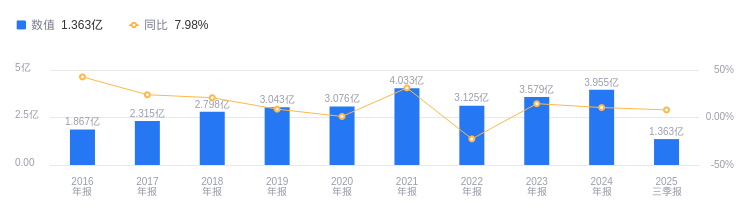
Core Viewpoint - Company is a leading player in the smart heating sector in China, providing energy-saving products and comprehensive solutions for smart heating [1] Group 1: Business Overview - Company was established on November 22, 2002, and listed on the Shenzhen Stock Exchange on August 8, 2022 [1] - Main business includes research, promotion, and application of energy-saving products and related technical services, offering one-stop smart heating solutions [1] - Company operates in the mechanical equipment sector, specifically in general equipment and instrumentation [1] Group 2: Financial Performance - For Q3 2025, company reported revenue of 136 million, ranking 55th among 61 companies in the industry [2] - The leading company in the industry, Chuan Yi Co., reported revenue of 4.89 billion, while the industry average was 655 million [2] - Net profit for the same period was -23.21 million, ranking 54th in the industry [2] - The industry average net profit was 58.97 million, with the median at 40.66 million [2] Group 3: Financial Ratios - As of Q3 2025, the company's debt-to-asset ratio was 23.86%, lower than the industry average of 27.43% [3] - Gross margin for Q3 2025 was 39.04%, below the industry average of 43.50% [3] Group 4: Executive Compensation - Chairman Qi Chengying's salary for 2024 was 576,700, an increase of 172,700 from 2023 [4] - General Manager Qi Chengyong's salary for 2024 was 372,900, a decrease of 13,400 from 2023 [4] Group 5: Shareholder Information - As of September 30, 2025, the number of A-share shareholders decreased by 33.74% to 12,000 [5] - Average number of circulating A-shares held per shareholder increased by 50.92% to 6,882.99 [5]

埃科光电的前世今生:技术派董宁掌舵,工业相机营收占比72.03%,布局光学智能传感领域扩张新章
Xin Lang Zheng Quan· 2025-10-30 14:13
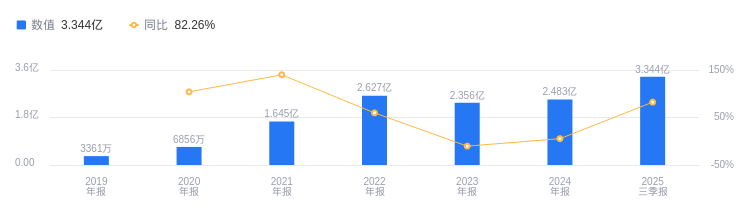
Core Viewpoint - Aiko Optoelectronics, a pioneer in the domestic machine vision sector, focuses on the design, research, production, and sales of industrial machine vision imaging components, showcasing strong technical capabilities [1] Group 1: Business Performance - In Q3 2025, Aiko Optoelectronics reported revenue of 334 million yuan, ranking 34th among 61 companies in the industry, with the industry leader, Chuan Yi Co., achieving 4.89 billion yuan [2] - The company's net profit for the same period was 56.55 million yuan, placing it 23rd in the industry, while the top performer, Chuan Yi Co., reported a net profit of 469 million yuan [2] - The main business composition includes industrial cameras generating 149 million yuan, accounting for 72.03% of total revenue, with line scan cameras and area scan cameras contributing 46.70% and 25.33% respectively [2] Group 2: Financial Ratios - Aiko Optoelectronics has a debt-to-asset ratio of 12.68% in Q3 2025, significantly lower than the industry average of 27.43%, indicating strong solvency [3] - The gross profit margin for the same period was 41.16%, slightly below the industry average of 43.50% [3] Group 3: Leadership and Shareholder Information - The chairman and general manager, Dong Ning, received a salary of 824,300 yuan in 2024, a decrease of 11,800 yuan from 2023 [4] - As of September 30, 2025, the number of A-share shareholders decreased by 13.36% to 5,028, while the average number of circulating A-shares held per account increased by 17.36% to 8,140.92 [5] Group 4: Growth Prospects - In the first half of 2025, Aiko Optoelectronics achieved revenue of 210 million yuan, a year-on-year increase of 64.4%, with net profit rising by 127.4% to 40 million yuan [6] - The company is benefiting from rapid growth in downstream sectors such as PCB, lithium batteries, and semiconductors, with significant year-on-year increases in these areas [6] - Forecasts for 2025-2027 project revenues of 460 million, 690 million, and 940 million yuan, with corresponding net profits of 100 million, 150 million, and 200 million yuan, indicating substantial growth potential [6]

汉威科技的前世今生:2025年三季度营收17.02亿行业第六,高于行业平均2.53倍
Xin Lang Cai Jing· 2025-10-30 14:07
Core Viewpoint - Hanwei Technology is a leading manufacturer of gas sensors and detection instruments in China, with a complete industrial chain and strong market competitiveness [1] Group 1: Business Performance - In Q3 2025, Hanwei Technology reported revenue of 1.702 billion yuan, ranking 6th among 61 companies in the industry [2] - The company's net profit for the same period was 84.99 million yuan, placing it 18th in the industry [2] - The main business segments include smart instruments (477 million yuan, 40.56%), intelligent comprehensive solutions (315 million yuan, 26.75%), sensors (188 million yuan, 15.95%), and public utilities (180 million yuan, 15.28%) [2] Group 2: Financial Ratios - As of Q3 2025, Hanwei Technology's debt-to-asset ratio was 46.59%, which is higher than the industry average of 27.43% [3] - The gross profit margin for the same period was 31.08%, below the industry average of 43.50% [3] Group 3: Executive Compensation - The chairman, Ren Hongjun, received a salary of 880,500 yuan in 2024, a decrease of 74,900 yuan from 2023 [4] - The general manager, Li Zhigang, earned 879,100 yuan in 2024, down 124,900 yuan from the previous year [4] Group 4: Shareholder Information - As of September 30, 2025, the number of A-share shareholders increased by 6.87% to 79,400 [5] - The average number of circulating A-shares held per shareholder decreased by 6.43% to 3,566.47 [5] Group 5: Market Outlook - In H1 2025, the company achieved revenue of 1.177 billion yuan, a year-on-year increase of 5.67%, and a net profit of 59 million yuan, up 14.47% [6] - The company is actively expanding into overseas markets and has established partnerships with nearly 30 robot manufacturers [6] - Revenue forecasts for 2025 to 2027 are 2.551 billion, 2.940 billion, and 3.624 billion yuan, respectively, with corresponding net profits of 93 million, 127 million, and 198 million yuan [6]


华兴源创的前世今生:2025年Q3营收15.79亿行业第七,净利润1.52亿行业第九,超行业均值
Xin Lang Cai Jing· 2025-10-30 13:30
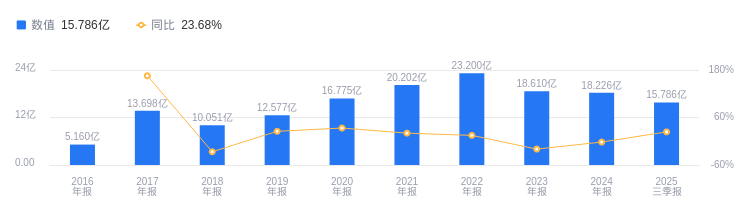
Core Viewpoint - Huaxing Yuanchuang is a leading domestic manufacturer of testing equipment, focusing on customized solutions for clients in the flat panel display and integrated circuit sectors [1] Group 1: Business Performance - In Q3 2025, Huaxing Yuanchuang achieved a revenue of 1.579 billion yuan, ranking 7th among 61 companies in the industry [2] - The company's net profit for the same period was 152 million yuan, placing it 9th in the industry [2] - The revenue breakdown includes 575 million yuan from testing equipment (62.84%), 284 million yuan from fixtures and accessories (31.05%), and 28.75 million yuan from other businesses (3.14%) [2] Group 2: Financial Ratios - As of Q3 2025, the company's asset-liability ratio was 38.59%, higher than the previous year's 31.38% and the industry average of 27.43% [3] - The gross profit margin for the same period was 50.15%, an increase from 47.98% year-on-year and above the industry average of 43.50% [3] Group 3: Shareholder Information - As of September 30, 2025, the number of A-share shareholders increased by 14.24% to 12,500 [5] - The average number of circulating A-shares held per shareholder decreased by 12.46% to 35,600 [5] - Notable changes among the top ten circulating shareholders include Hong Kong Central Clearing Limited increasing its holdings by 1.4327 million shares [5] Group 4: Management Compensation - The chairman and general manager, Chen Wenyuan, received a salary of 1.5761 million yuan in 2024, an increase of 381,200 yuan from 2023 [4] Group 5: Future Outlook - According to Guotou Securities, the company is expected to face temporary pressure on performance in 2024, with Q1 2025 revenue and net profit projected to decline year-on-year [5] - The company is anticipated to improve profitability as it expands its business and ramps up production capacity [5] - Revenue projections for 2025, 2026, and 2027 are 2.187 billion yuan, 2.537 billion yuan, and 2.841 billion yuan, respectively, with net profits of 190 million yuan, 269 million yuan, and 347 million yuan [5]

柯力传感(603662) - 2025 Q3 - 季度财报
2025-10-30 08:15
Financial Performance - The company's operating revenue for Q3 2025 reached ¥396,423,893.13, representing a year-on-year increase of 9.06%[3] - The total profit for the period was ¥105,586,215.14, reflecting a growth of 12.40% compared to the same period last year[3] - The net profit attributable to shareholders was ¥81,253,181.14, which is an increase of 10.11% year-on-year[3] - The net profit after deducting non-recurring gains and losses was ¥63,107,262.35, up by 7.02% from the previous year[3] - The basic earnings per share (EPS) for the quarter was ¥0.29, marking an increase of 11.54% year-on-year[3] - Total operating revenue for the first three quarters of 2025 reached ¥1,081,598,934.50, an increase of 17.7% compared to ¥918,764,697.58 in the same period of 2024[16] - Net profit for the first three quarters of 2025 was ¥291,235,670.92, representing a 33.7% increase from ¥217,570,704.11 in the previous year[17] - Total comprehensive income reached CNY 291,235,670.92, up from CNY 217,570,704.11 in the previous year, representing a growth of approximately 33.7%[18] - Basic and diluted earnings per share increased to CNY 0.90 from CNY 0.68, reflecting a rise of 32.4%[18] Assets and Liabilities - The total assets at the end of the reporting period amounted to ¥4,498,736,178.80, a slight increase of 0.47% from the end of the previous year[4] - Total current assets as of September 30, 2025, amount to ¥2,419,512,853.23, a decrease from ¥2,680,430,283.28 in the previous year[12] - Total liabilities decreased to ¥1,356,883,906.38 from ¥1,423,708,721.43, a reduction of approximately 4.7%[14] - The total equity attributable to shareholders increased to ¥2,753,689,033.61, up from ¥2,672,003,550.21, reflecting a growth of 3.0%[14] - The company's short-term borrowings decreased slightly to ¥452,811,276.46 from ¥461,419,927.05, a decline of 1.3%[13] - The total non-current liabilities decreased significantly to ¥35,734,474.95 from ¥131,694,522.99, a reduction of 72.9%[13] Cash Flow - Net cash flow from operating activities was CNY 163,303,251.53, compared to CNY 147,508,534.83 in the same period last year, an increase of about 10.5%[19] - Cash inflow from investment activities totaled CNY 1,653,959,711.88, significantly higher than CNY 1,144,356,269.23, marking an increase of approximately 44.6%[19] - Net cash flow from investment activities was negative at CNY -26,098,656.15, an improvement from CNY -38,119,344.92 in the previous year[19] - Cash flow from financing activities showed a net outflow of CNY -80,077,976.27, worsening from CNY -46,941,588.91 year-over-year[19] - The ending balance of cash and cash equivalents increased to CNY 247,716,793.53 from CNY 127,187,193.88, a growth of approximately 94.9%[19] - Total cash outflow from operating activities was CNY 724,893,222.02, compared to CNY 738,501,763.19 in the previous year, indicating a decrease of about 1.8%[19] Shareholder Information - Total number of common shareholders at the end of the reporting period is 62,863[9] - The largest shareholder, Ke Jiandong, holds 126,290,508 shares, representing 44.97% of total shares[9] - The company has no significant changes in the top 10 shareholders due to margin trading activities[10] Investment and R&D - The company reported an 88.76% increase in investment income, attributed to higher returns from financial products and equity investments[7] - The company's investment income rose significantly to ¥87,989,039.91, compared to ¥46,613,467.72 in the same period last year, marking an increase of 88.6%[17] - Research and development expenses for the first three quarters of 2025 were ¥98,409,466.43, up 26.2% from ¥78,028,838.33 in 2024[16] Non-Recurring Items - Non-recurring gains and losses for the period totaled ¥18,145,918.79, with significant contributions from asset disposals and government subsidies[7] - The company's cash and cash equivalents position remains strong, supporting ongoing operational and strategic initiatives[14] - The company did not execute any mergers or acquisitions during the reporting period, focusing instead on organic growth and operational efficiency[20]

具身智能撬动千亿“感知市场”,传感器打响国产替代与技术突围战丨机器人新视界
Zheng Quan Shi Bao· 2025-10-23 00:41
Core Insights - The sensor market is experiencing significant growth driven by the rise of embodied intelligent robots, which are creating new downstream applications for the sensor industry beyond traditional consumer and automotive electronics [1][4]. Group 1: Market Dynamics - The embodied intelligent robot market is recognized as a "new engine" for the sensor market, potentially expanding the domestic sensor market to a scale of over 400 billion yuan by 2024, with a projected growth rate of 11.4% [4]. - By 2027, the sensor market in China is expected to reach approximately 579.34 billion yuan [4]. Group 2: Technological Advancements - The "Tiangong" humanoid robot, developed by the Beijing Humanoid Robot Innovation Center, showcased advanced perception capabilities, winning a gold medal in a 100-meter race with a time of 21.5 seconds, highlighting the importance of sensors in enhancing robot performance [2]. - The integration of various sensors, including inertial sensors, allows robots to maintain balance and navigate complex environments effectively [2][3]. Group 3: Competitive Landscape - The high-end sensor market has been dominated by international giants, with the top five foreign manufacturers holding 88% of the market share for inertial measurement units (IMUs) [4]. - Domestic companies are beginning to break the technological dominance of foreign firms, with examples such as Daimeng Robotics developing the world's first mass-producible millimeter-thick tactile sensors [4]. Group 4: Domestic Market Growth - The demand from the humanoid robot industry is driving an increase in the market share of domestic sensors, with the shipment volume of six-dimensional force sensors in the humanoid robot sector expected to increase by 1100% year-on-year in 2024 [5]. - The domestic market's penetration rate for six-dimensional force sensors has risen from 19% four years ago to 57.8% [5].

具身智能撬动千亿“感知市场”,传感器打响国产替代与技术突围战丨机器人新视界
证券时报· 2025-10-23 00:11
Group 1 - The core viewpoint of the article emphasizes that the emerging market for embodied intelligent robots is driving significant growth in the domestic sensor market, creating new downstream applications beyond traditional sectors like consumer electronics and automotive electronics [1][6]. - The sensor market in China is projected to exceed 400 billion yuan in 2024, reaching 406.12 billion yuan with a year-on-year growth of 11.4%, and is expected to reach 579.34 billion yuan by 2027 [6]. - The demand from the humanoid robot industry is acting as a new engine for the growth of the sensor market, with the cost of sensor systems in robots accounting for approximately 20% of their total cost [6]. Group 2 - The article highlights the advancements in humanoid robots, such as the "Tiangong" robot, which won a gold medal in a 100-meter race, showcasing its superior perception capabilities through the use of inertial sensors [3][4]. - Traditional industrial robots have simpler sensor requirements, while embodied intelligent robots need enhanced sensory capabilities, including vision, touch, and environmental awareness, which raises the demand for advanced sensors [4]. - Domestic sensor manufacturers are gradually breaking the technological dominance of foreign companies, with examples like Daimeng Robotics developing the world's first mass-producible millimeter-thick tactile sensors [6][8]. Group 3 - The article notes that the domestic market for six-dimensional force sensors is experiencing a significant increase, with a reported 1100% year-on-year growth in shipments for humanoid robots, and the domestic production rate rising from 19% to 57.8% over four years [8]. - Despite the growth, domestic sensor manufacturers face challenges such as insufficient manufacturing capabilities and the need to overcome established customer barriers set by foreign competitors [8].

具身智能撬动千亿“感知市场” 传感器打响国产替代与技术突围战
Zheng Quan Shi Bao· 2025-10-22 18:15
Core Insights - The application value of general-purpose robots largely depends on their upper limb operational capabilities, which are tied to their sensory abilities and the enhancement of these capabilities through hardware and software [1] - The emerging consensus in the industry is that the embodied intelligent robot market is driving growth in China's sensor market, creating new downstream applications beyond traditional consumer and automotive electronics [1] - The rise of the Chinese robotics industry is accelerating the growth and technological breakthroughs of domestic sensor manufacturers [1] Sensor Market Dynamics - The humanoid robot industry is becoming a new engine for the growth of the sensor market, with sensors accounting for approximately 20% of the cost in robotic systems [4] - China's sensor market is projected to exceed 406.12 billion yuan in 2024, with a year-on-year growth of 11.4%, and is expected to reach 579.34 billion yuan by 2027 [4] - The high-end sensor market has been dominated by international giants, with the top five foreign manufacturers holding 88% of the market share in IMU sensors [4] Technological Advancements - Domestic sensor companies are showcasing strong technological capabilities, with examples like Daimeng Robotics developing the world's first millimeter-thick tactile sensor with independent intellectual property rights [4] - The "Tiangong" humanoid robot, developed by the Beijing Humanoid Robot Innovation Center, achieved a record time of 21.5 seconds in a 100-meter race, demonstrating advanced sensory capabilities through the use of inertial sensors [2][3] Market Trends - The demand from the humanoid robot industry is driving an increase in the market share of domestic sensor products, with a reported 1100% year-on-year increase in the shipment of six-dimensional force sensors in the humanoid robot sector [6] - The domestic localization rate of sensors in the humanoid robot field has risen from 19% four years ago to 57.8% [6] - Despite these advancements, domestic sensor manufacturers face challenges in breaking into the high-end market, including insufficient manufacturing capabilities and established customer barriers from foreign competitors [6]
具身智能撬动千亿“感知市场”传感器打响国产替代与技术突围战
Zheng Quan Shi Bao· 2025-10-22 17:24
Core Insights - The application value of general-purpose robots largely depends on their upper limb operational capabilities, which are tied to their sensory abilities and the enhancement of sensory hardware and software [1] - The emerging consensus in the industry is that the embodied intelligent robot market is driving significant growth in China's sensor market, creating new downstream applications beyond traditional consumer and automotive electronics [1] - The rise of the Chinese robotics industry is accelerating the growth and technological breakthroughs of domestic sensor manufacturers [1] Sensor Market Dynamics - The humanoid robot industry is becoming a new engine for the growth of the sensor market, with sensors accounting for approximately 20% of the cost in robotic systems [4] - China's sensor market is projected to exceed 406.12 billion yuan in 2024, with a year-on-year growth of 11.4%, and is expected to reach 579.34 billion yuan by 2027 [4] - The high-end sensor market has been dominated by international giants, with the top five foreign manufacturers holding 88% of the market share in IMU sensors [4] Technological Advancements - The "Tiangong" humanoid robot, developed by the Beijing Humanoid Robot Innovation Center, won the 100-meter race at the World Humanoid Robot Games, showcasing its advanced sensory capabilities [2] - The robot's performance is attributed to its use of inertial sensors that provide real-time motion data, enabling it to maintain balance and navigate complex environments [2] - Domestic companies are demonstrating strong technological capabilities, with examples like Daimeng Robotics creating the world's first mass-producible millimeter-thick tactile sensors [4] Domestic Sensor Industry Growth - The demand from the humanoid robot industry is driving an increase in the market share of domestic sensor products, with a reported 1100% year-on-year increase in the shipment of six-dimensional force sensors in the humanoid robot sector [6] - The domestic localization rate of these sensors has risen from 19% four years ago to 57.8% [6] - However, challenges remain for domestic manufacturers, including insufficient chip manufacturing capabilities and the need to overcome established customer barriers set by foreign competitors [6]
柯力传感涨2.05%,成交额1.58亿元,主力资金净流入873.15万元
Xin Lang Cai Jing· 2025-10-22 02:41
Core Viewpoint - The stock of Keli Sensor has shown a mixed performance in recent trading, with a year-to-date increase of 4.63% but a decline of 15.03% over the past 20 days, indicating volatility in investor sentiment and market conditions [2][3]. Company Overview - Keli Sensor, established on December 30, 2002, and listed on August 6, 2019, is located in Ningbo, Zhejiang Province. The company specializes in the research, production, and sales of strain sensors and instruments, as well as providing system integration and various intelligent systems [2]. - The main revenue sources for Keli Sensor are: mechanical sensors and instruments (48.70%), industrial IoT and system integration (41.12%), and other segments including temperature sensors (1.53%) and current/voltage sensors (1.51%) [2]. Financial Performance - For the first half of 2025, Keli Sensor reported a revenue of 685 million yuan, representing a year-on-year growth of 23.40%. The net profit attributable to shareholders was 173 million yuan, reflecting a significant increase of 47.93% [3]. - The company has distributed a total of 453 million yuan in dividends since its A-share listing, with 251 million yuan distributed over the past three years [4]. Shareholder Information - As of June 30, 2025, Keli Sensor had 63,800 shareholders, a decrease of 8.47% from the previous period. The average number of tradable shares per shareholder increased by 9.25% to 4,401 shares [3]. - Among the top ten circulating shareholders, Hong Kong Central Clearing Limited holds 2.386 million shares, a decrease of 1.0046 million shares, while Southern CSI 1000 ETF increased its holdings by 245,100 shares to 1.2994 million shares [4].