Intel

Search documents
TW Pro Brings Quant-Level Intel to Everyday Investors
GlobeNewswire News Room· 2025-06-25 03:35
Core Insights - TW Pro has launched a new feature called Quant-Level Risk Intel, aimed at providing everyday investors with advanced market risk insights similar to those used by professionals [1][2][3] - The tool simplifies complex market data, presenting risk indicators in an easy-to-read format to help users understand market volatility and shifts [3][4] Product Features - Quant-Level Risk Intel offers real-time updates on market pressure points, allowing users to stay informed about potential market changes without needing extensive financial knowledge [4][5] - The tool does not provide buy or sell recommendations but helps users make sense of market movements and adjust their trading strategies accordingly [4][5] Company Strategy - TW Pro is focused on enhancing the trading experience for individual investors by providing accessible tools that demystify market risks [6][7] - The company plans to continue developing additional tools based on user feedback to further assist retail investors in making informed decisions [7] Market Context - The launch of Quant-Level Risk Intel comes at a time when more individuals are participating in the markets, highlighting the need for better risk management tools [3][5] - TW Pro aims to empower investors by offering insights that help them navigate the complexities of market fluctuations [5][6]



Intel Corporation: Poised For Long-Term Breakout, Here's My Option Collar
Seeking Alpha· 2025-06-24 20:16
My previous article on Intel Corporation (NASDAQ: INTC ) is a good example of how a stock can enter the radar screen, but not be immediately actionable. I own stocks in 3 ways: tactically (long position in small size, very long-termI'm Rob Isbitts, founder of Sungarden Investment Publishing. I run the new investing group Sungarden Investors Club, a community dedicated to navigating the modern investment climate with humility, discipline, and a non-traditional approach to income investing. I've been charting ...

Intel Gaining Momentum in AI PC Market: Will the Uptrend Persist?
ZACKS· 2025-06-24 14:25
Core Insights - Intel Corporation (INTC) is actively pursuing initiatives to strengthen its position in the AI sector through collaborations with original equipment manufacturers like HP to develop next-generation AI PCs [1][9] - The global AI market is projected to grow from $757.6 billion in 2025 to $3.68 trillion in 2034, with a compound annual growth rate of 19.2%, positioning Intel favorably to capitalize on this trend [5] Group 1: AI Initiatives and Collaborations - Intel is collaborating with HP to identify AI applications that provide significant benefits to end users, optimizing CPU, GPU, and NPU performance for real-world applications [2] - The partnership has led to the development of AI PCs like the EliteBook series, powered by Intel Core Ultra processors, enhancing enterprise functionality [9] Group 2: Performance Enhancements - Intel's AI-optimized software packages have resulted in significant performance improvements, with Microsoft Power BI running 45% faster and Adobe Lightroom running 32% faster compared to previous systems [3] - AI applications like Canvid and Writeup, previously exclusive to Apple users, are now available on Windows PCs powered by Intel AI chips, enhancing organizational efficiency [4] Group 3: Competitive Landscape - Intel faces strong competition from Qualcomm and AMD, with Qualcomm launching the Snapdragon X chip for mid-range AI desktops and laptops, and AMD's Ryzen AI 300 Series gaining industry adoption [6][7] - The competitive landscape is intensifying as OEMs like Dell, ASUS, and Samsung expand collaborations with Qualcomm to develop AI PCs [6] Group 4: Financial Performance and Valuation - Intel's stock has declined by 31% over the past year, contrasting with the industry's growth of 11.2% [8] - The company's shares currently trade at a price/book ratio of 0.87, significantly lower than the industry's 31.65 [10] - Earnings estimates for 2025 and 2026 have seen a decline of 39.58% and 29.36%, respectively, indicating a downward trend in financial forecasts [11]
Intel Bets on AI to Slash Costs
The Motley Fool· 2025-06-24 09:20
Core Viewpoint - Intel is planning significant layoffs and cost-cutting measures under new CEO Lip-Bu Tan, focusing on both manufacturing and marketing divisions to improve efficiency and profitability [1][8][12] Group 1: Layoffs and Workforce Changes - Intel is expected to lay off a substantial number of employees, potentially up to 20,000, which could represent 15% to 20% of its workforce [8][10] - The company previously laid off around 15% of its workforce in August, indicating a trend towards reducing headcount to streamline operations [8] - The layoffs will also affect factory workers responsible for manufacturing chips for both Intel and third-party customers [10] Group 2: Marketing Strategy and Outsourcing - Intel plans to outsource many marketing jobs to Accenture, utilizing AI technology to enhance marketing efficiency and customer experience [2][3] - The company spent $856 million on advertising in 2024, down from $950 million in 2023 and $1.2 billion in 2022, indicating a trend towards reducing marketing expenses [5] - Outsourcing marketing operations could potentially save Intel hundreds of millions of dollars, which is critical as the company seeks to return to growth and profitability [6][12] Group 3: Financial Performance and Goals - Intel's gross margin fell to 32.7% in 2024, down nearly 10 percentage points from 2022, highlighting the need for cost efficiencies [11] - The company generated $53 billion in revenue last year, and while cost-cutting may not seem significant relative to revenue, every reduction is crucial for its turnaround strategy [6] - The focus on improving gross margin and reducing operating expenses is essential as demand for Intel's products has decreased significantly in recent years [12]
Nvidia Makes 4x Intel's Revenue—But Commands Half The Forward Valuation
Benzinga· 2025-06-23 17:41
In the battle of Silicon Valley titans, Nvidia Corp NVDA is leaving Intel Corp INTC in the dust – on both the income statement and the stock chart. Despite generating almost four times as much revenue as Intel on an annualized basis, as Beth Kindig, the lead tech analyst at I/O Fund, noted on X, Nvidia trades at less than half Intel's forward price-to-earnings ratio. If that sounds backwards, you're not alone.For its last reported quarter, Nvidia grossed $44 billion in revenues. This, compared to Intel’s la ...


Intel vs. NVIDIA: Which AI-Focused Chip Stock is the Better Buy?
ZACKS· 2025-06-23 15:36
Core Insights - Intel Corporation and NVIDIA Corporation are leading semiconductor companies focusing on AI and advanced chip technologies [1][2] - Intel is shifting from a PC-centric business model to data-centric sectors, while NVIDIA is expanding its AI platforms across various industries [3][7] Intel Overview - Intel is investing in manufacturing capacity to support its IDM 2.0 strategy and enhance its position in the AI sector [4] - The Xeon 6 processors are designed to handle large AI workloads, providing industry-leading capabilities at a lower total cost of ownership [4][5] - Intel's 5N4Y program aims to regain leadership in transistor and power performance by 2025, with Xeon platforms setting benchmarks in 5G cloud-native core [5] - However, Intel faces challenges due to significant revenue dependence on China amid tightening export restrictions and increased competition from domestic chipmakers [6] NVIDIA Overview - NVIDIA is a leader in visual computing technologies, with a strong focus on AI-based solutions for high-performance computing, gaming, and virtual reality [2] - The company's DGX Cloud AI infrastructure is gaining traction among enterprises for training and deploying AI models at scale [7] - NVIDIA's upcoming Blackwell GPUs are expected to enhance AI inference capabilities significantly, further solidifying its market position [9] - Despite its strengths, NVIDIA's reliance on Taiwan Semiconductor Manufacturing Company for GPU production poses supply chain risks amid geopolitical tensions [10] Financial Performance and Projections - Intel's 2025 sales are projected to decline by 4.3%, while its EPS is expected to grow by 323.1% [11] - In contrast, NVIDIA's 2025 sales are estimated to grow by 51.4%, with EPS rising by 42.1% [12] - Over the past year, Intel's stock has declined by 31.1%, while NVIDIA has gained 21.8% [14] - Intel's price/sales ratio is significantly lower at 1.78 compared to NVIDIA's 16.17, making Intel appear more attractive from a valuation standpoint [15] Long-term Growth Expectations - NVIDIA has a healthy long-term earnings growth expectation of 28.2%, compared to Intel's 10.5% [18] - Both companies anticipate earnings improvement in 2025, but NVIDIA is positioned better for revenue growth [18]

汇丰:亚洲存储-韩国存储芯片价格持续走高
汇丰· 2025-06-23 02:09
Asia Memory Equities Memory prices continue to hover higher Korea Soaring memory prices: We reiterate our positive view on the memory sector. Previously, we highlighted a faster memory turnaround from April (see: Asia Memory report, 10 March). We now see that memory prices are hovering higher throughout 2Q, with a higher level of blended ASPs of +3-8% q-o-q due to 1) earlier phase-out of DDR4 products leading to aggressive purchases on the fear of shortages while solid demand for DDR4 is supported by the le ...
Intel (INTC) Suffers a Larger Drop Than the General Market: Key Insights
ZACKS· 2025-06-20 22:46
Company Performance - Intel's stock closed at $21.08, reflecting a -1.91% change from the previous day, underperforming the S&P 500's daily loss of 0.22% [1] - Over the past month, Intel's stock has increased by 4.57%, outperforming the Computer and Technology sector's gain of 2.98% and the S&P 500's gain of 0.45% [1] - The upcoming earnings report is anticipated to show an EPS of $0.01, a 50% decrease from the same quarter last year, with expected revenue of $11.87 billion, down 7.53% year-over-year [1][2] Fiscal Year Estimates - For the entire fiscal year, the Zacks Consensus Estimates predict earnings of $0.29 per share and revenue of $50.8 billion, indicating changes of +323.08% and -4.33% from the previous year, respectively [2] Analyst Estimates and Stock Performance - Recent changes to analyst estimates for Intel are crucial as they reflect short-term business dynamics, with positive revisions indicating a favorable business outlook [2][3] - The Zacks Rank system, which incorporates estimate changes, has a strong track record, with 1 stocks averaging an annual return of +25% since 1988 [4] Valuation Metrics - Intel is currently trading at a Forward P/E ratio of 73.31, significantly higher than the industry average of 35.75, suggesting a premium valuation [5] - The company has a PEG ratio of 7, compared to the Semiconductor - General industry's average PEG ratio of 2.52, indicating a higher valuation relative to expected earnings growth [6] Industry Context - The Semiconductor - General industry, part of the Computer and Technology sector, has a Zacks Industry Rank of 164, placing it in the bottom 34% of over 250 industries [7] - The top 50% rated industries outperform the bottom half by a factor of 2 to 1, highlighting the importance of industry strength in stock performance [7]
Intel's Turnaround Strategy Shifts From Planning to Attack Mode
MarketBeat· 2025-06-20 15:41
Core Viewpoint - Intel Corporation is experiencing a shift in market sentiment, moving from volatility to cautious optimism, driven by strategic announcements and a new aggressive phase under CEO Lip-Bu Tan [1][2][11] Group 1: Market Performance - Intel's stock reached an intraday high of $21.58 on June 18, closing at $21.49, marking a gain of over 3% for the day [1] - The stock's recent performance contrasts with the previous week's volatility, indicating a potential change in investor sentiment [1] Group 2: Strategic Developments - Intel has launched its Gaudi 3 AI accelerator kit, priced at approximately $125,000, significantly lower than competitors like NVIDIA, positioning it as a disruptive force in the AI market [3][4] - This pricing strategy is expected to catalyze revenue growth in the Data Center and AI segment, appealing to corporations concerned about AI computing costs [4][5] Group 3: Internal Restructuring - Intel is undergoing a comprehensive internal restructuring to enhance innovation and efficiency, including streamlining its business portfolio and a talent overhaul [7][9] - The company is reportedly in discussions to sell its Networking and Edge (NEX) business unit, potentially valued between $10 billion to $12 billion, which would provide a financial boost [8] - Recent hiring of senior engineering leaders from competitors reflects a commitment to rebuilding an engineering-first culture, while plans for workforce reductions of up to 20% indicate a focus on cost management [9] Group 4: Execution and Future Outlook - The recent actions on product pricing, talent acquisition, and portfolio management signal a shift from planning to execution, providing tangible evidence of Intel's strategy [10][11] - The coordinated moves are expected to reduce perceived execution risks, leading to a rational market response and a higher probability of a successful turnaround [11]
The 2nm Race: Intel's 18A Faces Uphill Task Against TSMC
Forbes· 2025-06-20 09:00
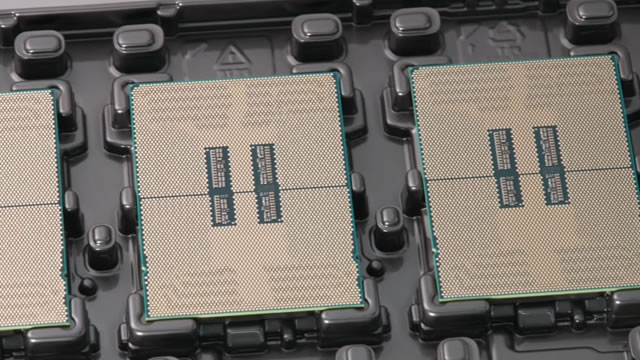
Group 1: Intel's Strategic Shift - Intel is committed to becoming a global foundry leader, investing over $90 billion in capital expenditures to expand its foundry operations and compete with TSMC and Samsung [2] - The foundry segment faced losses of nearly $13 billion last year, and Intel's shares have decreased by nearly 50% since their peak in 2024 [2] Group 2: Technological Advancements - Intel's new 18A process utilizes 1.8nm technology, currently in risk production, with initial batches being tested for manufacturing enhancements [4] - Innovations like RibbonFET gate-all-around transistors and PowerVia backside power delivery are expected to improve performance and energy efficiency, particularly for AI applications [4] Group 3: Competitive Landscape - TSMC holds over two-thirds of the foundry market and is expected to lead the 2nm generation, with mass production starting in late 2025 [5] - TSMC's 2nm process promises a 10% to 15% performance enhancement and up to 30% reduction in power usage compared to its 3nm node, with current yields at 60% [5][6] - Intel's yield rates for the 18A process are reported to be between 20% to 30%, while Samsung achieves 40% yields on its competing technology [5] Group 4: Market Dynamics - TSMC has a loyal customer base, including major clients like Apple and AMD, while Intel is diversifying its strategy by engaging TSMC for some upcoming processors [6] - Despite Intel's claims of improved performance with the 18A process, TSMC's chips are likely to maintain advantages in density and cost [7] Group 5: Stock Performance - Intel's stock has shown significant volatility, with annual returns of 6% in 2021, -47% in 2022, 95% in 2023, and -60% in 2024, contrasting with the more stable performance of the Trefis High Quality Portfolio [8]