Amazon

Search documents
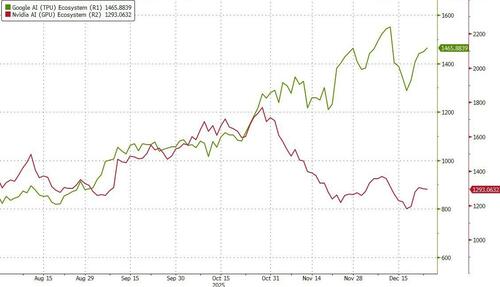
Largest Acquisition In Nvidia History: Jensen Pays $20BN For AI Chip Startup In Bid For Google's TPU Tech
ZeroHedge· 2025-12-25 02:09
Core Viewpoint - Nvidia has announced its largest acquisition, structured as a licensing deal, to acquire Groq for $20 billion, focusing on Groq's expertise in high-performance AI accelerator chips and TPU technology [1][6][12]. Acquisition Details - The deal involves Nvidia licensing all of Groq's assets and acquiring its executive team, including CEO Jonathan Ross, who has significant experience with Google's TPU [1][5][12]. - Groq raised $750 million at a valuation of approximately $6.9 billion just a month prior to the acquisition, indicating a rapid increase in value for its investors [4][10]. - Nvidia's cash reserves were reported at $60.6 billion at the end of October, highlighting its financial capability to execute such a large transaction [8]. Strategic Implications - Nvidia aims to integrate Groq's low-latency processors into its AI architecture, enhancing its capabilities in AI inference and real-time workloads [9][11]. - The acquisition is seen as a response to the growing competition from Google's TPU technology, which has gained momentum in the AI market [11][18]. - Groq will continue to operate as an independent entity with a new CEO, but Nvidia will effectively control its valuable technology and talent [7][8]. Market Context - The deal reflects Nvidia's strategy to maintain its leadership in the AI infrastructure market amid increasing competition from major tech companies like Google, Microsoft, and Amazon [16][17]. - Nvidia's previous largest acquisition was Mellanox for nearly $7 billion in 2019, showcasing the scale of this new deal [8]. - The acquisition represents a 40x multiple of Groq's targeted revenue of $500 million for the year, indicating a high valuation relative to its sales [10].


The 2 Best AI ETFs To Invest $1,000 in Right Now
The Motley Fool· 2025-12-24 20:50
Core Insights - The article discusses two exchange-traded funds (ETFs) that provide exposure to artificial intelligence (AI) stocks, appealing to investors who prefer not to select individual stocks [1][2][3]. ETF Overview - ETFs are investment funds that trade like stocks and typically hold a diverse range of stocks, often tracking an index or focusing on a specific theme, such as AI [2]. - The two highlighted ETFs are designed to capitalize on the growth of AI technology by investing in a broad range of AI-related companies [3]. Dan Ives Wedbush AI Revolution ETF - Launched by tech analyst Dan Ives, this ETF tracks 30 top AI stocks and is actively managed, with Ives selecting the stocks [5]. - The ETF's current price is $32.37, with a year-to-date increase of 27% since its launch in June [6][8]. - Major holdings include Nvidia, Tesla, Microsoft, Amazon, and Meta Platforms, which collectively represent about 25% of the fund [7][8]. - The fund has an expense ratio of 0.75%, which is considered high for an ETF [8]. Global X Artificial Intelligence & Technology ETF - This ETF offers a broader diversification with 86 holdings and aims to invest in companies benefiting from AI technology [9]. - The current price is $51.45, with a year-to-date increase of 31%, outperforming the S&P 500 [10][11]. - Top holdings include Alphabet, Samsung, Tesla, Advanced Micro Devices, and Apple, with approximately 70% of holdings in the information technology sector [10]. - The expense ratio for this ETF is 0.68%, also on the higher side [11]. Market Outlook - Despite concerns about a potential bubble in AI stocks, the core stocks in these ETFs are showing strong growth and reasonable valuations, with AIQ having a price-to-earnings ratio of 32 [12]. - The growth potential for AI companies remains strong as more software firms launch AI tools, indicating a favorable outlook heading into 2026 [13]. - Both ETFs are positioned to outperform the market, making them attractive options for investors looking to capitalize on the AI boom [13].

Amazon Tightens Platform Access as AI Shopping Agents Expand
PYMNTS.com· 2025-12-24 18:41
Core Insights - Amazon is responding to the emerging threat of AI-powered shopping bots that are changing consumer purchasing behavior online [1][3] - The company is blocking third-party AI shopping tools from accessing its platform while simultaneously developing its own AI-driven shopping experiences [2][4] Group 1: Amazon's Defensive and Offensive Strategies - Amazon has updated its website code to prevent numerous AI bots from scraping data, including those from major AI providers [4] - The company has initiated legal action against Perplexity for unauthorized access through an AI browser agent that can make purchases [4] - Amazon is investing in its own AI tools, such as Rufus, a shopping chatbot, and "Buy for Me," which allows purchases from other retailers within its app [5] Group 2: Industry Implications and Future Directions - The rise of AI shopping agents presents a "leader's dilemma" for Amazon, as these tools enable consumers to bypass traditional retail sites, threatening Amazon's direct customer relationships and advertising revenue [3] - CEO Andy Jassy has acknowledged the inevitability of AI agents in daily life, indicating a potential shift towards collaboration with third-party agents while protecting valuable data [6] - The competition for control over the checkout experience and payment processes is intensifying as AI agents become more integrated into commerce [9]
Why Amazon, Meta, Mercado Libre and Doordash are this analyst's top internet stock picks
Youtube· 2025-12-24 18:41
Group 1: Top Investment Picks - The top investment picks for the year include Amazon, Meta, Mardo Libre, and DoorDash, which stand out among other overweight-rated stocks [1] - Amazon is expected to see a payoff from its investments in AWS and AI infrastructure by 2026, leading to an acceleration in its AWS business [2] - Meta is at the beginning of an investment cycle with strong growth anticipated, and visibility into spending is expected to improve by the second half of 2026 [3] Group 2: Autonomous Driving and AI Trends - 2026 is projected to be a significant year for autonomous driving, with companies like Whimo expanding into 20 markets and Tesla entering 30 US markets [6] - The transition from human-driven to robot-driven activities is expected to lower traffic deaths and improve consumer health [7] - The focus is shifting towards quantifying returns from AI use cases in enterprise and consumer applications, with Meta being an early beneficiary [8] Group 3: Performance of Ride-Hailing Companies - Uber has shown recovery this year after underperforming in 2024 due to fears of autonomous driving impacting its business [10] - Lyft is more exposed to the rapid ramp-up of autonomous driving, as over 90% of its gross bookings come from the US, which could affect its share price negatively [12] - Uber's diversified business model, including a significant delivery segment, provides it with more insulation compared to Lyft [11] Group 4: Carvana's Market Position - Carvana has experienced a remarkable recovery, with its stock price increasing significantly since 2022, showcasing a nearly 10,000% return for early investors [14] - The company has improved its business model by going direct to consumer and achieving better inventory turnover than competitors like CarMax [16] - Carvana is expected to continue gaining market share in the used auto industry, which is characterized by declining commodity costs [17]



Amazon's 2026 Bull Case Isn't Retail — It's AWS, AI And Margin Discipline
Benzinga· 2025-12-24 16:03
Core Viewpoint - The investment case for Amazon.com Inc (NASDAQ:AMZN) is shifting from e-commerce dominance to focusing on AWS acceleration, AI-driven market share gains, and a disciplined margin story as it heads into 2026 [1]. Group 1: AWS Growth and AI Integration - Amazon Web Services (AWS) is expected to see a re-acceleration in growth as enterprise customers increase AI workloads and resume large-scale migrations, supported by Amazon's expanding AI offerings [3]. - AI is transitioning from being a margin drag to a growth driver within AWS, despite potential short-term fluctuations due to capacity timing [4]. Group 2: AI Impact Beyond AWS - The AI narrative extends beyond AWS, with improvements in logistics, fulfillment, and advertising efficiency, which lowers service costs and enhances engagement within the Prime ecosystem [5]. - Automation and robotics are increasingly stabilizing operating costs, particularly in North America, which is crucial for balancing growth against rising AI-related capital expenditures [5]. Group 3: Margin Expansion and Financial Outlook - Margin expansion is highlighted across both North America and international operations, driven by regionalization, inventory placement, same-day delivery infrastructure, and advertising growth, indicating structural efficiencies [6]. - Despite significant investments in AI, a meaningful inflection in free cash flow is anticipated in 2026 and 2027, supported by disciplined spending, improving margins, and a higher contribution from AWS [7].

Holiday Season Demand at WMT & AMZN
Youtube· 2025-12-24 13:55
Core Insights - The holiday shopping season is characterized by a shift from emotional purchasing to a focus on execution, with consumers prioritizing speed and certainty in their shopping experiences [2][3] Retailer Analysis Walmart - Walmart is viewed as a barometer for the U.S. economy, with recent social conversations highlighting aggressive clearance sales and the rollout of AI-driven pricing and drone delivery pilots [5][6] - The company's global ad business has seen over 50% growth, indicating a successful integration of advertising strategies with retail operations [7] - Walmart's shopping experience is efficient, with consumers showing less tolerance for friction and risk during the holiday season [3][4] Amazon - Amazon discussions are five times more prevalent than those about Walmart, with a focus on functional aspects such as availability, speed of delivery, and order tracking [8][9] - The introduction of Amazon's AI assistant, Rufus, is shifting consumer behavior towards intent-based product discovery, which is becoming more prominent in holiday discussions compared to previous periods [10][12] - Deals are a significant driver of consumer interest, with over 22% of discussions mentioning deals and 8% mentioning coupons, indicating a strong focus on value [14] Consumer Behavior Trends - Consumers are increasingly seeking value, with price clarity and deal visibility taking precedence over brand storytelling [18] - The K-shaped economy is influencing shopping patterns, with consumers from various income levels gravitating towards value retailers like Walmart [16][18] - The integration of technology in retail is crucial, as consumers expect retailers to enhance their shopping experience through digital and at-home shopping solutions [19][20]


Amazon Stock (NASDAQ: AMZN) Price Prediction and Forecast 2025-2030 for December 24
247Wallst· 2025-12-24 12:30
Core Insights - Amazon.com Inc. (NASDAQ: AMZN) shares increased by 3.46% over the last five trading sessions after a decline of 2.66% in the previous five sessions [1] Company Performance - The recent performance indicates a recovery in Amazon's stock price following a prior downturn, suggesting potential investor confidence returning to the company [1] Market Trends - The fluctuation in Amazon's stock price reflects broader market trends and investor sentiment, which can impact future trading sessions [1]

Amazon faces 'leader's dilemma' — fight AI shopping bots or join them
CNBC· 2025-12-24 12:00
Core Insights - Amazon is adapting to the rapid evolution of AI in e-commerce, with CEO Andy Jassy highlighting the potential of AI agents to transform shopping experiences [1][2] - The company is actively seeking to establish strategic partnerships in "agentic commerce" to maintain its competitive edge [2] - Amazon's defensive strategies include blocking external AI agents from accessing its website and pursuing legal action against competitors [8][9] Group 1: AI and E-commerce Trends - AI-powered shopping agents are emerging as a significant trend, with consulting firm McKinsey projecting that agentic commerce could generate $1 trillion in U.S. retail revenue by 2030 [4] - Morgan Stanley anticipates that nearly half of American shoppers will use AI agents by 2030, potentially adding $115 billion to U.S. e-commerce spending [10] - Current consumer behavior shows that a mid-single digit percentage of purchases begin through AI, with a significant increase expected over time [11] Group 2: Competitive Landscape - Competitors like Walmart and Shopify are adopting a "frenemy" strategy, partnering with AI companies while developing their own tools [6] - Amazon's recent legal actions against Perplexity highlight the competitive tensions in the market, as the company seeks to protect its data and customer relationships [9] - Some companies are experimenting with allowing AI agents to access their platforms while setting boundaries to protect proprietary data [15][17] Group 3: Amazon's AI Initiatives - Amazon has launched its own AI shopping chatbot, Rufus, which has been enhanced to suggest products from various sites and auto-buy items for Prime members [19] - The company is testing new features for Rufus, including creating custom shopping guides, indicating a commitment to developing its AI capabilities [19] - Amazon's approach reflects a "leader's dilemma," where its significant market share presents both opportunities and risks in the evolving landscape of AI-driven commerce [20]

Jim Cramer Slams 'Big Freakout' Selling In Nvidia, AI, Crypto Stocks After Strong GDP Print: 'It Is Just Stupid'
Benzinga· 2025-12-24 10:34
Core Viewpoint - Strong economic data has led to panic in high-growth sectors like artificial intelligence and cryptocurrency, with market commentator Jim Cramer criticizing the reaction as "stupid" and a "big freakout" [1][2]. Economic Data Impact - The U.S. economy grew by 4.3% in Q3, surpassing expectations of 3.3%, marking the fastest expansion rate since Q3 2023 [2]. - Strong economic data typically reduces expectations for near-term Federal Reserve rate cuts, which puts pressure on rate-sensitive assets like stocks. The odds of a 25 basis point cut in January dropped from 19.9% to 14.4% within 24 hours [3]. Stock Performance - Despite initial sell-offs, stocks from the "Mag 7" cohort, including NVIDIA Corp. (NASDAQ: NVDA), Microsoft Corp. (NASDAQ: MSFT), and Amazon.com Inc. (NASDAQ: AMZN), recovered and closed higher [3]. - Specific stock performance over 24 hours included: - NVIDIA Corp. (NASDAQ: NVDA): +3.01% to $189.21 - Microsoft Corp. (NASDAQ: MSFT): +0.40% to $486.85 - Amazon.com Inc. (NASDAQ: AMZN): +1.62% to $232.14 - Coinbase Global Inc. (NASDAQ: COIN): -2.26% to $242.30 - Rigetti Computing Inc. (NASDAQ: RGTI): -6.58% to $25.11 [5]. Cryptocurrency Market - Leading cryptocurrency names like Coinbase and Strategy Inc. (NASDAQ: MSTR) closed in the red, primarily due to Bitcoin's volatility [4].

Federal Judge Dismisses Chamber Of Commerce's Lawsuit Over Trump's $100,000 H-1B Visa Fee
Benzinga· 2025-12-24 07:51
A federal judge has dismissed the U.S. Chamber of Commerce's challenge to the $100,000 fee imposed by President Donald Trump on new H-1B visas for highly skilled foreign workers.H‑1B Fee Challenge OverruledOn Tuesday, U.S. District Judge Beryl Howell in Washington, D.C., dismissed the challenge from the U.S. Chamber of Commerce, the largest business lobby group in the U.S. The judge said the fee was authorized under the president's broad authority to regulate immigration.The Chamber of Commerce contended th ...