Samsung

Search documents

X @Cointelegraph
Cointelegraph· 2025-07-28 04:03
🚨 NEW: Samsung secures $16.5 billion multiyear deal to produce semiconductors for Tesla until the end of 2033. https://t.co/D1no6ddnYA ...
X @Elon Musk
Elon Musk· 2025-07-28 03:36
Samsung agreed to allow Tesla to assist in maximizing manufacturing efficiency.This is a critical point, as I will walk the line personally to accelerate the pace of progress. And the fab is conveniently located not far from my house 😃 ...
X @Elon Musk
Elon Musk· 2025-07-28 03:28
Samsung’s giant new Texas fab will be dedicated to making Tesla’s next-generation AI6 chip. The strategic importance of this is hard to overstate.Samsung currently makes AI4.TSMC will make AI5, which just finished design, initially in Taiwan and then Arizona. ...
X @Bloomberg
Bloomberg· 2025-07-28 02:43
Exclusive: Samsung has struck a $16.5 billion deal to produce semiconductors for Tesla, boosting its underperforming foundry division https://t.co/Rn1cfwIPGn ...
全球科技 亚太地区供应链重构Global Technology Asia Pacific
2025-07-28 01:42
Summary of the Conference Call on Supply Chain Reorientation Industry Overview - The report focuses on the **Global Technology** sector, particularly in the **Asia Pacific** region, analyzing the ongoing **supply chain reorientation** in the context of a **Multipolar World** [1][2][3]. Key Insights and Arguments - **Supply Chain Shift**: The supply chain dynamics have been tracked since **2018**, primarily due to rising geopolitical tensions, especially between the **US and China**. The report outlines two phases of shifts: - **Phase I (2019-2022)**: Known as "China + 1", where hardware ODMs and EMS companies began relocating production outside of China to mitigate tariff impacts [11]. - **Phase II (2022-2025)**: Companies are establishing regional production bases globally to cater to local demand, influenced by rising labor costs in China and regulatory crackdowns [12]. - **Decline in Reliance on China**: The reliance on China for key technology products has decreased significantly. In **2018**, China accounted for **88%** of US tech imports (~US$100 billion), but by **2024**, this figure dropped to **74%** (~US$108 billion), with imports from other Asian countries like **Vietnam** and **Thailand** increasing [13][44]. - **Future Capacity Needs**: - **Notebooks**: Sufficient capacity outside China to meet US demand by the end of **2025** [14]. - **iPhones**: More capacity is needed outside China to meet US demand, with only **10-15%** produced outside China as of **2024** [14]. - **Servers**: Majority of servers for the US market are assembled in North America, compliant with USMCA [14]. - **Onshoring Production**: The report discusses the feasibility of onshoring production to the US, suggesting it is only viable for low-volume, high-value products due to high labor costs and the lack of a complete supply chain ecosystem in the US [16][17]. - **China's Response**: China is adapting by focusing on high-margin R&D and manufacturing, as well as enhancing its branding and after-sales services. The country is also increasing its semiconductor manufacturing capabilities to achieve self-sufficiency [18][20]. Additional Important Points - **Company Profiles**: The report includes profiles of **10 manufacturing companies** (e.g., Wistron, Foxconn) and **5 global brands** (e.g., Apple, Dell) detailing their revenue exposure and supply chain dynamics [9][23]. - **Trade Observations**: Insights on global trade flows and US imports for key tech products, including notebooks, smartphones, and servers, are provided [9][91][95]. - **Tariff Implications**: The report highlights the impact of tariffs on supply chain decisions, particularly under the current political climate [15][20]. Conclusion - The ongoing supply chain reorientation is a complex and evolving process influenced by geopolitical tensions, economic factors, and strategic corporate decisions. The report emphasizes the need for companies to adapt to these changes to remain competitive in the global market [1][3][36].

X @Bloomberg
Bloomberg· 2025-07-28 00:19
Samsung struck a 22.8 trillion won ($16.5 billion) agreement to produce chips for an unidentified client https://t.co/fgSrsL7L1t ...
Taiwan Semiconductor Just Threw Cold Water on Tariff Concerns
The Motley Fool· 2025-07-27 09:45
Core Insights - Taiwan Semiconductor's CEO stated that the company has not observed any changes in customer behavior due to tariffs, indicating a unique resilience in its operations [2][8] - The semiconductor industry is currently exempt from reciprocal tariffs, which may change as new tariffs take effect on August 1 [4][5] - Taiwan Semiconductor's dominant position in the chip industry, coupled with its clients' reliance on its technology, suggests that clients are compelled to navigate tariff challenges rather than seek alternatives [6][9] Tariff Impact - Semiconductors are exempt from all reciprocal tariffs and the base 10% blanket tariff, which currently protects Taiwan Semiconductor from immediate tariff impacts [4] - The potential implementation of tariffs on other goods could lead to higher rates than those affecting semiconductors, necessitating caution in drawing conclusions about the overall market [5] Company Position - Taiwan Semiconductor is a critical partner for major tech companies like Nvidia and Apple, due to limited alternatives in high-end chip foundries [6] - The company is proactively expanding its U.S. production facilities in Arizona to help clients avoid tariffs on foreign goods [7][9] Growth Projections - Taiwan Semiconductor's management projects a 45% compound annual growth rate (CAGR) for AI-related revenue and nearly 20% CAGR for total revenue over the next five years, indicating strong growth potential [10][11] - The company's stock trades at a forward price-to-earnings (P/E) ratio of 24, comparable to the S&P 500's 23.8, yet with expected market-beating growth, making it an attractive investment [13]


The Future of AI in Your Home According to Samsung
Bloomberg Technology· 2025-07-26 16:00
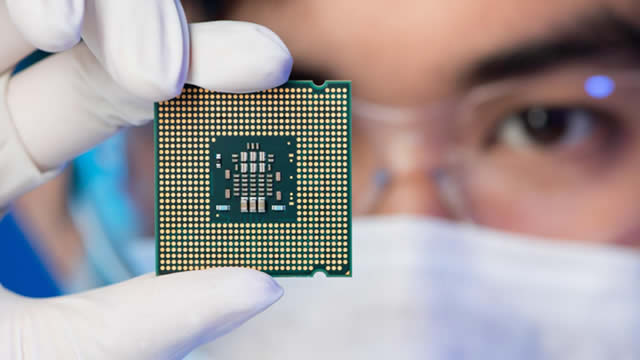
Smart Home Ecosystem Growth & Strategy - Samsung emphasizes the importance of its growing ecosystem for providing comprehensive home experiences, integrating Samsung products with third-party devices like lighting and cameras [1] - The company collaborates with over 380 partner brands through the SmartThings platform, enabling connectivity for thousands of products [2] - Samsung is actively involved in the IoT standardization effort called Matter, ensuring compatibility and interoperability with a wide range of smart home products [3] - The smart home market is expected to grow by approximately 2x annually, driven by Matter and industry partnerships [4] User Base & Market Focus - SmartThings service has over 400 million registered users, with continuous year-over-year growth [4] - The U S represents the largest market, followed by Korea, European countries (UK, Germany), and a rapidly growing market in India [5] - Initial target demographic focuses on affluent customers, with plans to democratize smart home experiences through technology and a wide product portfolio [8] Focus on Wellness - Samsung is shifting its focus from basic home management (security, energy) to using technology to improve the well-being of household members, including pets [9][10] - The company is exploring the use of AI and connected products to optimize the sleep environment and is collaborating with the Samsung Health team [10]
This Tech Giant Is the Best Artificial Intelligence (AI) Chip Stock to Buy Right Now
The Motley Fool· 2025-07-26 08:00
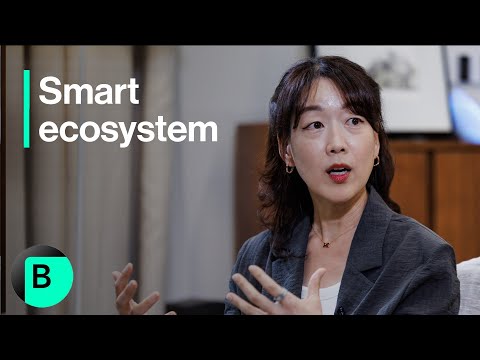
With a dominant market share and soaring profits, there is still more upside for this semiconductor stock.Taiwan Semiconductor Manufacturing (TSM 1.60%) has been at the center of the artificial intelligence (AI) chip boom by virtue of its status as the world's largest semiconductor foundry. The company, commonly known as TSMC, reported second quarter results on July 17, only to remind the market why it is one of the best ways to capitalize on the growth in AI semiconductor demand.All the major chip companie ...