
联邦制药

Search documents
联邦制药(03933) - 自愿公告奖励股份的归属
2025-11-13 14:05
香港交易及結算所有限公司及香港聯合交易所有限公司對本公告的內容概不負責,對其 準確性或完整性亦不發表任何聲明,並明確表示,概不對因本公告全部或任何部份內容 而產生或因依賴該等內容而引致的任何損失承擔任何責任。 The United Laboratories International Holdings Limited 聯邦制藥國際控股有限公司 ( 於開曼群島成立之有限公司 ) (股份代號: 3933) 於本公告日期,董事會成員包括:執行董事蔡海山先生、梁永康先生、蔡紹哲女士、方 煜平先生、鄒鮮紅女士及朱蘇燕女士;以及獨立非執行董事張品文先生、宋敏教授及傅 秋實博士。 自願公告 獎勵股份的歸屬 本公告乃由聯邦制藥國際控股有限公司(「本公司」)自願發出。 茲提述本公司日期為二零二三年十一月十三日的公告(「該公告」),內容有關根據二零 二三年股份獎勵計劃的條款向承授人授出合共12,096,900股獎勵股份。除文義另有界定外, 本公告所用詞彙與該公告所賦予者具有相同涵義。 董事會公佈,共3,369,800股獎勵股份已根據二零二三年股份獎勵計劃的條款及二零二四 年績效目標的達標情況,於二零二五年十一月十三日歸屬於相關的 ...
消费风起,布局医药消费正当时
2025-11-12 02:18
Summary of Conference Call Records Industry Overview - The pharmaceutical and healthcare sectors are currently experiencing a shift, with companies like沃伍生物, 方盛制药, and 佐力药业 showing strong stock performance and potential investment opportunities due to their solid revenue, profit, and cash flow [1][3] - The medical services industry is facing challenges due to DRG policies and a weak consumer environment, but improvements are expected by 2026 as supply-side constraints and potential mergers or new hospital openings may enhance performance metrics [1][4] Key Companies and Investment Opportunities - **Ophthalmology Sector**: Companies such as 爱尔, 华夏, and 普瑞 are recommended for investment, with expectations of performance release in refractive services by Q1 2026 and improvements in cataract screening next year [1][5] - **Dental Sector**: 通策医疗 is highlighted for its new hospital openings and expected revenue and profit growth in 2026, indicating a turning point for the company [1][6] - **Pharmaceutical Companies**: 流感-related companies like 国邦, 普洛药业, and 联邦制药 are experiencing high capacity utilization and are expected to see significant growth in Q4 and Q1 due to potential shortages and price increases [2][12] Market Trends and Predictions - The blood products industry is consolidating, with a focus on mergers and acquisitions, which may stabilize product prices and enhance demand in the context of flu outbreaks [8] - The vaccine industry is poised for growth with key players like 康华生物 and 康希诺 expected to release significant data and products in 2026, which could drive market interest [9][10] - The traditional Chinese medicine sector is forecasted to recover, with a focus on innovative drug companies and OTC brands that are well-positioned for growth [13] Retail Pharmacy Sector - The retail pharmacy sector is expected to benefit from consolidation as smaller chains face operational pressures, allowing leading companies like 益丰, 大森林, and 老百姓 to capitalize on improved consumer conditions and policy support [14] Conclusion - The overall sentiment in the pharmaceutical and healthcare sectors is cautiously optimistic, with several companies positioned for growth amid a backdrop of regulatory changes and market dynamics. Investors are encouraged to focus on companies with strong fundamentals and growth potential in the coming years [1][3][4][12][14]


减重专题:GLP-1有望成为慢病基石药物,1
2025-11-12 02:18
Summary of Key Points from the Conference Call Industry Overview - The conference call focuses on the weight loss drug market, particularly the development of GLP-1 (glucagon-like peptide-1) medications and their potential as cornerstone treatments for chronic diseases [1][2][3]. Core Insights and Arguments - **Market Dynamics**: The weight loss drug market is characterized by both consumer and medical attributes, with commercialization being a key factor. Major pharmaceutical companies are considering consumer needs in their decision-making processes [2][3]. - **Current Market Leaders**: Tirzepatide (referred to as "替尔") has gained a significant market share in the U.S., capturing 60% due to its higher efficacy (22.5% weight loss) compared to Semaglutide (司美) (15.6% weight loss) [2][3]. - **Future Development Directions**: The focus will be on improving efficacy (15%-35% weight loss), tolerability, adherence, and differentiated competition. There is also an emphasis on treating complications and exploring new frontiers in drug development [2][3][8][9]. - **Global Patient Population**: By 2030, the target patient population is expected to reach approximately 1.5 billion globally, indicating a vast market potential [1][7]. Investment Opportunities - **Key Players**: Major pharmaceutical companies like Novo Nordisk, Pfizer, and Eli Lilly are heavily investing in the weight loss drug sector, with diverse strategies including core GLP-1 therapies and new target explorations [1][4][5]. - **Notable Products**: The UBT251 product from Federated Pharmaceuticals, which has been licensed to Novo Nordisk, is highlighted as a potential catalyst for investment due to milestone payments and profit-sharing opportunities [4]. - **Emerging Technologies**: Companies are exploring various technological routes for drug development, including the combination of calcitonin and amylin, and the SIRA technology [5][6]. Market Size and Demand Factors - **Market Size Estimation**: The U.S. has approximately 155 million obese individuals, with a penetration rate of less than 5%. If the penetration rate increases to 10%, the market size could reach $150 billion [7]. - **Cost Considerations**: The average cost per patient is estimated at $1,000, leading to a potential market size of $1.5 trillion if fully realized [7]. Development Trends and Key Focus Areas - **Future Trends**: The development of weight loss drugs will focus on achieving reasonable weight loss percentages, enhancing patient adherence, and addressing complications such as diabetes and cardiovascular diseases [8][9]. - **Clinical Data**: Upcoming clinical data from various trials, including those from Elara and Kaggle SEMA, are expected to provide insights into the efficacy and safety of new weight loss drugs [20]. Regional Insights - **China's Progress**: Chinese companies are making significant strides in dual-target and triple-target drug development, with notable projects like Hengrui's Calera expected to enter Phase III trials by the end of 2025 [10][11][30]. Conclusion - The weight loss drug market is poised for significant growth, driven by advancements in drug efficacy, patient adherence strategies, and a growing global patient population. Major pharmaceutical companies are actively investing in this space, presenting numerous investment opportunities for stakeholders.


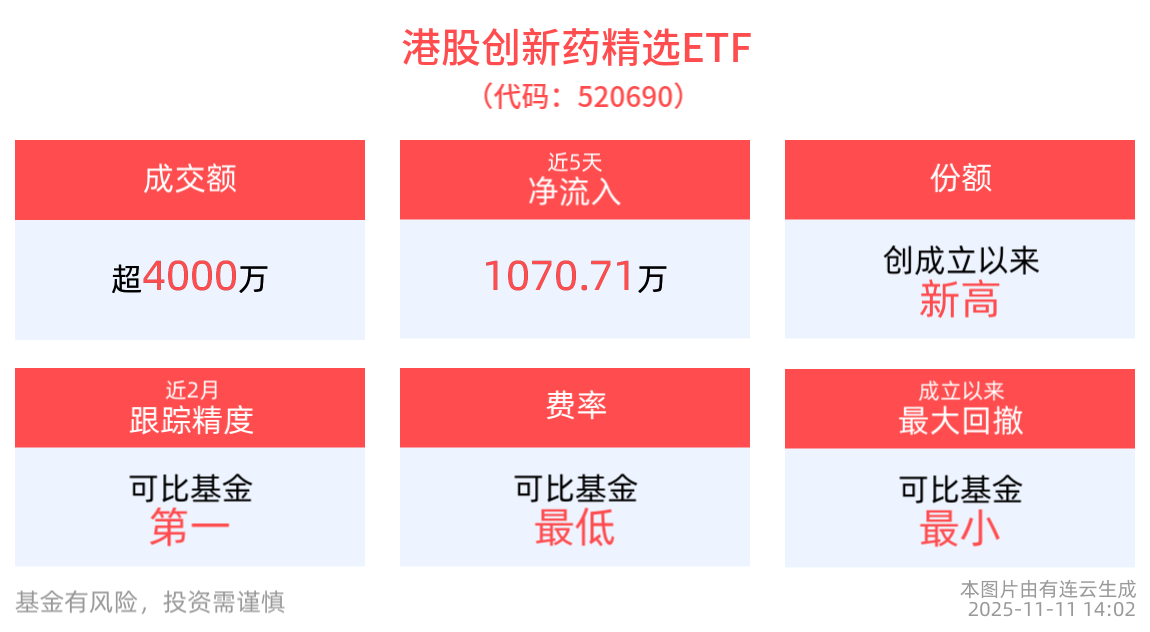
国内乙肝创新药物获突破性进展,港股创新药精选ETF(520690)最新份额超6亿份,创成立以来新高
Xin Lang Cai Jing· 2025-11-11 06:24
流动性方面,港股创新药精选ETF盘中换手7.74%,成交4223.87万元。拉长时间看,截至11月10日,港股创新药精选ETF近1年日均成交1.20亿元。 据报道,11月10日,华润三九公告,与琅钰集团、Bioproject 达成重磅合作,拿下发作性睡病创新药铧可思(替洛利生片)在中国大陆开发与商业化权益。华 润三九这款创新药的获得,不仅将为患者带来安全治疗新选择,更标志着华润三九在罕见病赛道的布局迈出关键一步。 消息方面,近日,第76届美国肝病研究协会(AASLD)年会在美国华盛顿开幕。由上海贺普药业研发的乙肝创新药贺普拉肽临床研究取得突破性进展,以 大会报告形式公布了治疗慢性乙肝II期随机双盲临床试验结果。据介绍,该创新药通过独特的病毒进入阻断独特机制,在II期临床试验中显示可逆转"大三 阳"乙肝患者对干扰素治疗的耐药性,在部分患者实现cccDNA清除,达到国际公认乙肝治愈最高标准-灭菌性治愈(sterilising cure)。 截至2025年11月11日 14:02,恒生港股通创新药精选指数下跌0.94%。成分股方面涨跌互现,联邦制药领涨1.92%,MIRXES-B上涨1.74%,三生制药上涨 0.9 ...

港股联邦制药早盘涨近3%
Mei Ri Jing Ji Xin Wen· 2025-11-11 03:13
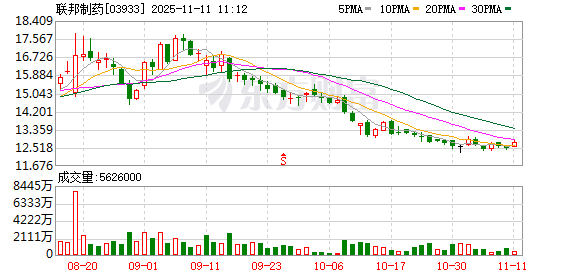
Group 1 - The stock of Hong Kong-listed company 联邦制药 (03933.HK) experienced a nearly 3% increase in early trading, with a current rise of 2.32% to HKD 12.8 [2] - The trading volume reached HKD 64.0646 million [2]
联邦制药早盘涨近3% 创新药TUL01101片II期临床达标 计划开展III期试验
Zhi Tong Cai Jing· 2025-11-11 02:54
Group 1 - The core point of the article is that Federal Pharmaceutical (03933) has seen a nearly 3% increase in its stock price following the announcement of successful Phase II clinical trials for its innovative drug TUL01101 for moderate to severe atopic dermatitis in adults [1] - The company reported that TUL01101 met its expected goals in the Phase II clinical study, which supports its progression to the next phase of clinical research [1] - Federal Pharmaceutical has completed communication with regulatory authorities regarding TUL01101's End of Phase 2 (EOP2) and is initiating Phase III clinical trials in China for moderate to severe atopic dermatitis patients [1]
港股异动 | 联邦制药(03933)早盘涨近3% 创新药TUL01101片II期临床达标 计划开展III期试验
智通财经网· 2025-11-11 02:52
Core Viewpoint - Federal Pharmaceutical (03933) has seen a nearly 3% increase in early trading, currently up 2.32% at HKD 12.8, with a trading volume of HKD 64.0646 million [1] Group 1: Clinical Research Progress - The company announced that its self-developed innovative drug TUL01101 has completed Phase II clinical trials in adult patients with moderate to severe atopic dermatitis in China [1] - TUL01101 met the expected goals in the Phase II clinical study, supporting its progression to the next stage of clinical research [1] - The company has completed communication with regulatory authorities regarding TUL01101's EOP2 and is initiating Phase III clinical trials in China for moderate to severe atopic dermatitis patients [1]
联邦制药(03933.HK):附属创新药TUL01101片II期临床达标 计划开展III期试验
Ge Long Hui· 2025-11-10 15:03
Core Viewpoint - The company has successfully completed Phase II clinical trials for its innovative drug TUL01101 for moderate to severe atopic dermatitis in adults, demonstrating significant efficacy and safety [1][2] Group 1: Clinical Trial Details - The Phase II study was a multicenter, randomized, double-blind, parallel, placebo-controlled trial involving 201 participants [1] - Participants were randomly assigned to three different dosage groups (20mg, 40mg, 60mg) and a placebo group, with daily administration for 12 weeks [1] - The primary efficacy endpoint was the change in the Eczema Area and Severity Index (EASI) score from baseline at week 12, with key secondary endpoints including the proportion of participants achieving EASI75 response and the Investigator's Global Assessment (IGA) response [1] Group 2: Efficacy Results - Results showed significant efficacy across all dosage groups, with EASI scores decreasing notably from week 1 [2] - At week 12, the EASI score changes from baseline were -81.98% for the 20mg group, -79.87% for the 40mg group, and -87.85% for the 60mg group [2] - EASI75 response rates were 78.0%, 80.0%, and 84.0% for the respective dosage groups, while IGA response rates were 46.0%, 52.0%, and 68.0% [2] Group 3: Safety and Next Steps - The overall safety and tolerability of TUL01101 were good, with the most common adverse event being upper respiratory infection, mostly mild to moderate in severity [2] - No new safety signals were reported beyond those associated with similar products [2] - The successful completion of Phase II trials supports the initiation of Phase III clinical trials, which are currently being launched in China for moderate to severe atopic dermatitis [2]
联邦制药(03933):TUL01101片已完成中重度特应性皮炎成人受试者中的II期临床研究
智通财经网· 2025-11-10 15:01
Core Viewpoint - The company has successfully completed Phase II clinical trials for its innovative drug TUL01101, demonstrating significant efficacy and safety in treating moderate to severe atopic dermatitis in adults [1][2]. Group 1: Clinical Trial Details - The Phase II clinical study was a multicenter, randomized, double-blind, parallel, placebo-controlled trial involving 201 adult participants with moderate to severe atopic dermatitis [1]. - Participants were randomly assigned to three different dosage groups (20mg, 40mg, 60mg) and a placebo group, with treatment administered once daily for 12 weeks [1]. - The primary efficacy endpoint was the change in the Eczema Area and Severity Index (EASI) score from baseline at week 12, with key secondary endpoints including the proportion of participants achieving EASI75 response and Investigator's Global Assessment (IGA) response [1]. Group 2: Trial Results - Results indicated that TUL01101 significantly improved EASI scores, with reductions of -81.98%, -79.87%, and -87.85% for the 20mg, 40mg, and 60mg groups, respectively, compared to baseline [2]. - EASI75 response rates were 78.0%, 80.0%, and 84.0% for the respective dosage groups, while IGA response rates were 46.0%, 52.0%, and 68.0% [2]. - The overall safety profile of TUL01101 was favorable, with the most common adverse event being upper respiratory tract infection, primarily mild to moderate in severity [2]. Group 3: Future Development - TUL01101 is a highly selective JAK1 inhibitor, currently approved for clinical trials in atopic dermatitis and rheumatoid arthritis in China [3]. - The company plans to continue expanding clinical research for TUL01101 in the field of autoimmune diseases [3].
联邦制药:TUL01101片已完成中重度特应性皮炎成人受试者中的II期临床研究
Zhi Tong Cai Jing· 2025-11-10 14:59
Core Viewpoint - The company has successfully completed Phase II clinical trials for its innovative drug TUL01101, demonstrating significant efficacy and safety in treating moderate to severe atopic dermatitis in adults [1][2]. Group 1: Clinical Trial Details - The Phase II study was a multicenter, randomized, double-blind, parallel, placebo-controlled trial involving 201 adult participants with moderate to severe atopic dermatitis [1]. - Participants were randomly assigned to three different dosage groups (20mg, 40mg, 60mg) and a placebo group, receiving daily doses for 12 weeks [1]. - The primary efficacy endpoint was the change in the Eczema Area and Severity Index (EASI) score from baseline at week 12, with key secondary endpoints including the proportion of participants achieving EASI75 response and Investigator's Global Assessment (IGA) response [1]. Group 2: Trial Results - Results indicated that TUL01101 significantly improved skin lesions, reduced itching, and enhanced quality of life, with notable decreases in EASI scores observed as early as week 1 [2]. - By week 12, the EASI score changes from baseline for the 20mg, 40mg, and 60mg groups were -81.98%, -79.87%, and -87.85% respectively, with EASI75 response rates of 78.0%, 80.0%, and 84.0%, and IGA response rates of 46.0%, 52.0%, and 68.0% [2]. - The overall safety profile of TUL01101 was good, with the most common adverse event being upper respiratory tract infection, primarily mild to moderate in severity, and no new safety signals were identified [2]. Group 3: Future Development - TUL01101 is a highly selective JAK1 inhibitor, currently approved for clinical trials in atopic dermatitis and rheumatoid arthritis in China [3]. - The company plans to continue expanding clinical research for TUL01101 in the field of autoimmune diseases [3].