凯赛生物

Search documents
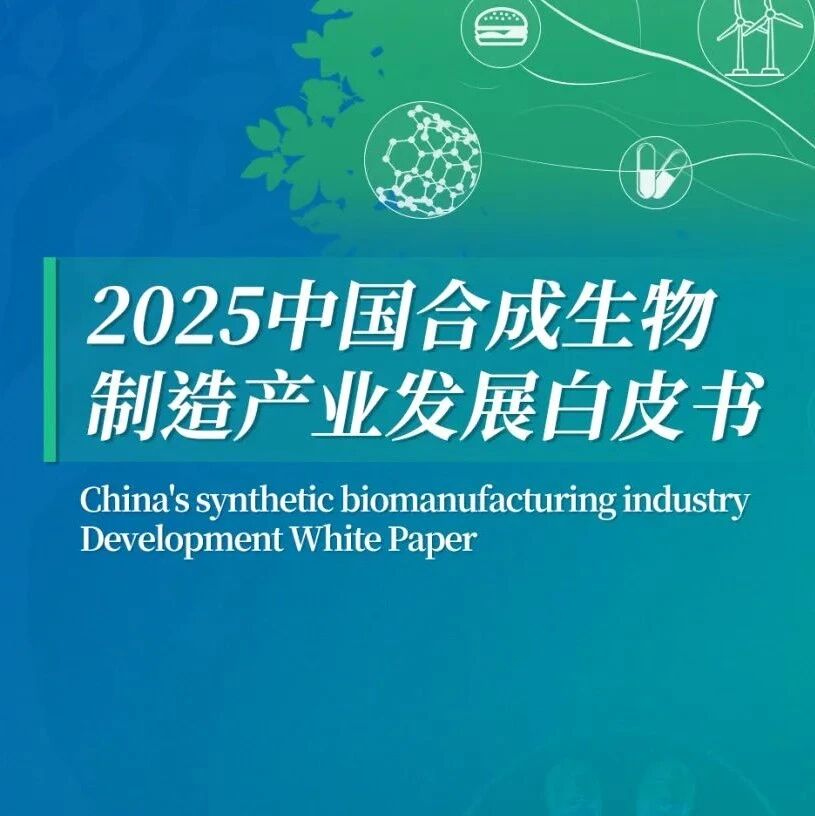
免费领取《2025中国合成生物制造产业发展白皮书》
synbio新材料· 2025-10-17 07:59
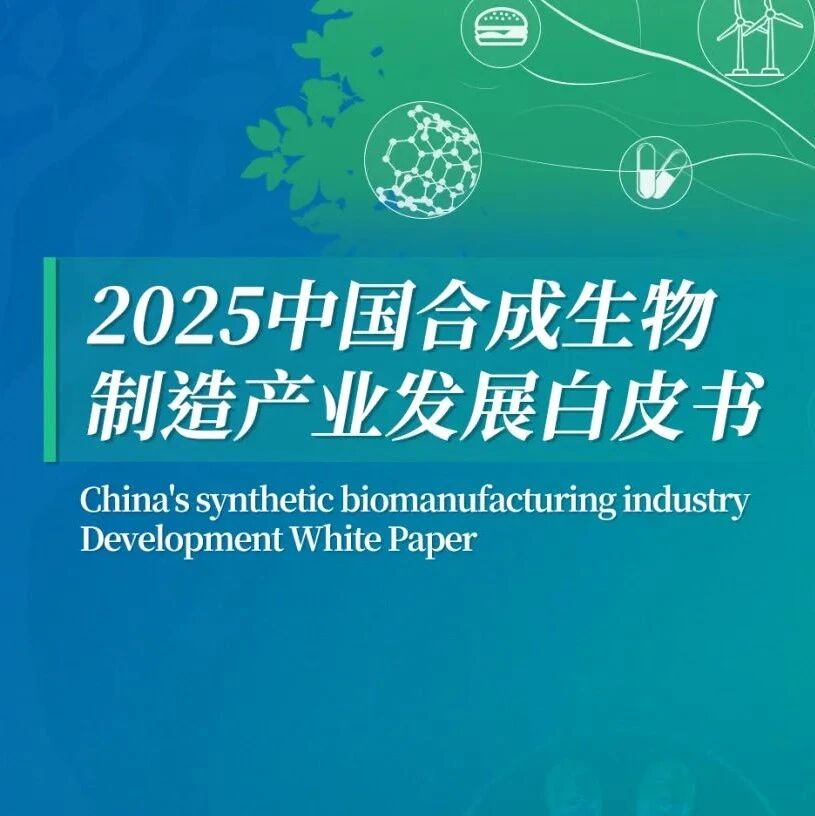
Core Viewpoint - The article emphasizes the rising importance of biomanufacturing as a strategic and innovative field that disrupts traditional production methods, presenting it as a new growth point for optimizing industrial structures and transforming economic models. The release of the "2025 China Synthetic Biomanufacturing Industry Development White Paper" highlights the current state, trends, and challenges of the biomanufacturing industry in China [1]. Group 1: Current State and Trends - The white paper outlines the development status and trends of biomanufacturing, analyzing the global landscape and key platform facilities [5]. - It compares the biomanufacturing sectors of China and the United States, identifying competitive advantages and areas for improvement [5]. - Future development trends in biomanufacturing are discussed, indicating a shift towards more integrated and innovative approaches [5]. Group 2: Policy Landscape - The report reviews major policies affecting biomanufacturing both domestically and internationally, providing insights into regulatory frameworks that shape the industry [5]. - It categorizes foreign and domestic policies, highlighting their implications for the growth of the biomanufacturing sector [5]. Group 3: Industry Map and Applications - A comprehensive map of the Chinese biomanufacturing industry is presented, detailing key players and their roles [5]. - The report identifies critical application areas for biomanufacturing, including pharmaceuticals, food, personal care, agriculture, chemicals, materials, and energy [5]. Group 4: Key Enterprises and Investment Landscape - The white paper lists the top 10 leading enterprises in China's biomanufacturing sector, showcasing their contributions and market positions [6]. - It also summarizes the strategic directions of 15 publicly listed companies in synthetic biology, along with their investment and development strategies [6]. Group 5: Challenges and Recommendations - The report discusses the challenges faced by the biomanufacturing industry in China, including technological, regulatory, and market-related issues [6]. - Targeted policy recommendations are provided to address these challenges and promote sustainable growth in the biomanufacturing sector [6].




七部门再发文!发展非粮生物基材料、生物化工产业
合成生物学与绿色生物制造· 2025-10-16 10:08
Core Viewpoint - The article discusses the recent policy developments in the petrochemical industry in China, emphasizing the shift towards high-end and green transformation, particularly focusing on non-grain biomass utilization and bio-based materials as new growth areas [2][5][6]. Group 1: Policy Developments - On September 25, 2023, seven Chinese government departments released a work plan aimed at stabilizing and optimizing the petrochemical industry from 2025 to 2026, addressing challenges such as intensified competition in organic raw materials and slowing domestic demand [2]. - The work plan encourages the development of emerging fields like bio-based chemicals and non-grain biomass utilization, providing new momentum for the industry's green transformation [2][4]. Group 2: Focus on Bio-based Materials - The policy has shifted from "technology transformation" to "supply and demand quality improvement," indicating a maturation of industry technology and a focus on enhancing the quality of bio-based materials [5][6]. - The emphasis on non-grain bio-based materials has evolved from "industrial demonstration" to "typical case collection and promotion," suggesting that some bio-based materials can achieve a replicable business model [6]. Group 3: Growth in Bio-chemicals - The new work plan introduces a focus on "bio-chemicals," highlighting the rapid growth of synthetic biology in the chemical sector due to its green and efficient characteristics [7]. - Multiple government departments have issued documents supporting the development of bio-based and bio-manufacturing sectors throughout 2023, indicating a strong governmental push towards these industries [8][10].

凯赛生物跌3.07% 2020年上市即巅峰2度募资合计115亿
Zhong Guo Jing Ji Wang· 2025-10-16 08:23
Core Points - Kaisa Bio's stock closed at 48.63 yuan, with a decline of 3.07%, currently in a breaking state [1] - The company was listed on the Shanghai Stock Exchange's Sci-Tech Innovation Board on August 12, 2020, with an initial public offering (IPO) price of 133.45 yuan per share [1][2] - The highest price recorded on the first trading day was 198 yuan, marking the peak since its listing [2] - Kaisa Bio raised a total of 556.06 million yuan during its IPO, with a net amount of 528 million yuan, exceeding the original fundraising plan by 58.11 million yuan [2] - The funds raised are intended for various projects, including a 40,000 tons/year bio-based dodecanedioic acid project and a research center for bio-based polyamide [2] - The total issuance costs for the IPO amounted to 28.06 million yuan, with the underwriter, CITIC Securities, receiving 26.23 million yuan [2] - In July 2022, Kaisa Bio announced a dividend of 4.5 yuan per 10 shares and a stock bonus of 4 shares [2] - The actual controllers of Kaisa Bio are Liu Xiucai, Ma Xiaowen, and Charlie Chi Liu, who are American citizens of Chinese descent [2] - On March 28, 2025, Kaisa Bio disclosed a report on a private placement of A-shares, raising approximately 5.93 billion yuan from its controlling shareholder, Shanghai Yaoxiu [3] - The total amount raised from the two fundraising activities is 11.49 billion yuan [4]
上海凯赛生物技术股份有限公司2025年第三次临时股东会决议公告
Shang Hai Zheng Quan Bao· 2025-10-15 20:33
Group 1 - The company held its third extraordinary general meeting of shareholders in 2025, with no resolutions being rejected [2] - The meeting was chaired by Dr. Xiucai Liu, and the procedures complied with the Company Law and the company's articles of association [2][3] - All nine current directors attended the meeting, along with the board secretary and other senior management [3] Group 2 - Three non-cumulative voting proposals were approved: the 2025 Employee Stock Ownership Plan (draft), its management measures, and the authorization for the board to handle related matters [3][4] - The meeting took place on October 15, 2025, at a specified location in Shanghai [3] - The voting results for the proposals were legally valid, and separate counting was conducted for minority investors [4][5]
A股定增市场持续升温,前三季度累计募资超7700亿
Cai Jing Wang· 2025-10-15 11:05
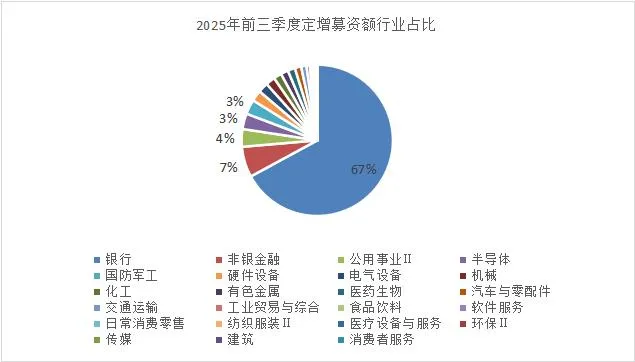
Core Insights - The A-share private placement market is experiencing a strong recovery in 2025, with total fundraising reaching 775.1 billion yuan in the first three quarters, a year-on-year increase of 548.7% [1][2][10] - Key sectors attracting investment include non-bank financials, defense and military, semiconductors, and hardware equipment [1][3] Fundraising Overview - In the first three quarters of 2025, 119 companies conducted private placements, raising a total of 775.1 billion yuan, marking a 15.53% increase in the number of placements compared to the previous year [2] - The total fundraising amount significantly exceeds the annual totals from the previous three years, which were 721.9 billion yuan in 2022, 578.9 billion yuan in 2023, and 173.1 billion yuan in 2024 [2] Sector Analysis - The banking sector accounted for nearly 70% of the total fundraising, primarily due to major banks like China Bank and Postal Savings Bank raising a combined 520 billion yuan [2][3] - Non-bank financials and public utilities ranked second and third in fundraising, with amounts of 50.7 billion yuan and 29.3 billion yuan, respectively [3] - The semiconductor and defense sectors also saw significant fundraising, with amounts of 25.9 billion yuan and 24.3 billion yuan, respectively [3] Average Fundraising Amount - The average fundraising amount per project has increased, with the average for 115 companies (excluding four state-owned banks) being 22.2 million yuan, compared to 11.9 million yuan in the same period last year [3] - Eleven companies raised over 5 billion yuan each, compared to only four in the previous year [3] Notable Projects - Major projects include Guolian Minsheng's 29.5 billion yuan for asset acquisition, AVIC Chengfei's 17.4 billion yuan for asset acquisition, and China Nuclear Power's 14 billion yuan for project financing [4][6] - Other significant projects include Fulede's 6.19 billion yuan for acquiring 100% of Fulehua and ChipLink's 5.31 billion yuan for acquiring 72.33% of ChipLink Yuezhou [4][6] Regional Distribution - Beijing leads in fundraising with 42.9 billion yuan from 11 projects, accounting for 55.34% of the total [7] - Shanghai and Jiangsu follow with 15.0 billion yuan and 4.3 billion yuan, respectively [7] - Shaanxi has seen a notable increase in fundraising, reaching 19.2 billion yuan, largely due to AVIC Chengfei's successful issuance [8] Market Trends - The recovery in the private placement market is attributed to policy guidance, active mergers and acquisitions, and improved market profitability [12] - The technology sector, particularly in high-end manufacturing and AI, is seeing increased investment, with several companies planning significant fundraising for related projects [12]




凯赛生物(688065) - 上海市锦天城律师事务所关于上海凯赛生物技术股份有限公司2025年第三次临时股东会的法律意见书
2025-10-15 10:00
上海市锦天城律师事务所 关于上海凯赛生物技术股份有限公司 2025 年第三次临时股东会的 法律意见书 地址:上海市浦东新区银城中路 501 号上海中心大厦 9/11/12 层 电话:021-20511000 传真:021-20511999 邮编:200120 上海市锦天城律师事务所 法律意见书 上海市锦天城律师事务所 关于上海凯赛生物技术股份有限公司 2025 年第三次临时股东会的 法律意见书 致:上海凯赛生物技术股份有限公司 根据《中华人民共和国证券法(2019 年修订)》(以下简称"《证券法》") 《中华人民共和国公司法(2023 年修订)》(以下简称"《公司法》")和中 国证券监督管理委员会《上市公司股东会规则》等法律、法规和其他有关规范性 文件的要求,上海市锦天城律师事务所(以下简称"本所")接受上海凯赛生物 技术股份有限公司(以下简称"凯赛生物"或"公司")的委托,指派律师参加 公司 2025 年第三次临时股东会(以下简称"本次股东会"或"本次会议")。 为出具本《法律意见书》,本所声明如下: 1、本所律师仅对本次股东会的召集程序、召开程序、出席会议人员资格、 召集人资格、表决程序、表决结果及会议决 ...
凯赛生物(688065) - 2025年第三次临时股东会决议公告
2025-10-15 10:00
证券代码:688065 证券简称:凯赛生物 公告编号:2025-058 上海凯赛生物技术股份有限公司 2025年第三次临时股东会决议公告 本公司董事会及全体董事保证公告内容不存在任何虚假记载、误导性陈述或 者重大遗漏,并对其内容的真实性、准确性和完整性依法承担法律责任。 重要内容提示: 本次会议是否有被否决议案:无 一、 会议召开和出席情况 (一) 股东会召开的时间:2025 年 10 月 15 日 (二) 股东会召开的地点:上海市闵行区绿洲环路 396 弄 11 号 9 楼会议室 (三) 出席会议的普通股股东、特别表决权股东、恢复表决权的优先股股东及 其持有表决权数量的情况: | 1、出席会议的股东和代理人人数 | 145 | | --- | --- | | 普通股股东人数 | 145 | | 2、出席会议的股东所持有的表决权数量 | 471,687,692 | | 普通股股东所持有表决权数量 | 471,687,692 | | 3、出席会议的股东所持有表决权数量占公司表决权数量的比 | 65.6080 | | 例(%) | | | 普通股股东所持有表决权数量占公司表决权数量的比例(%) | 65.6080 ...
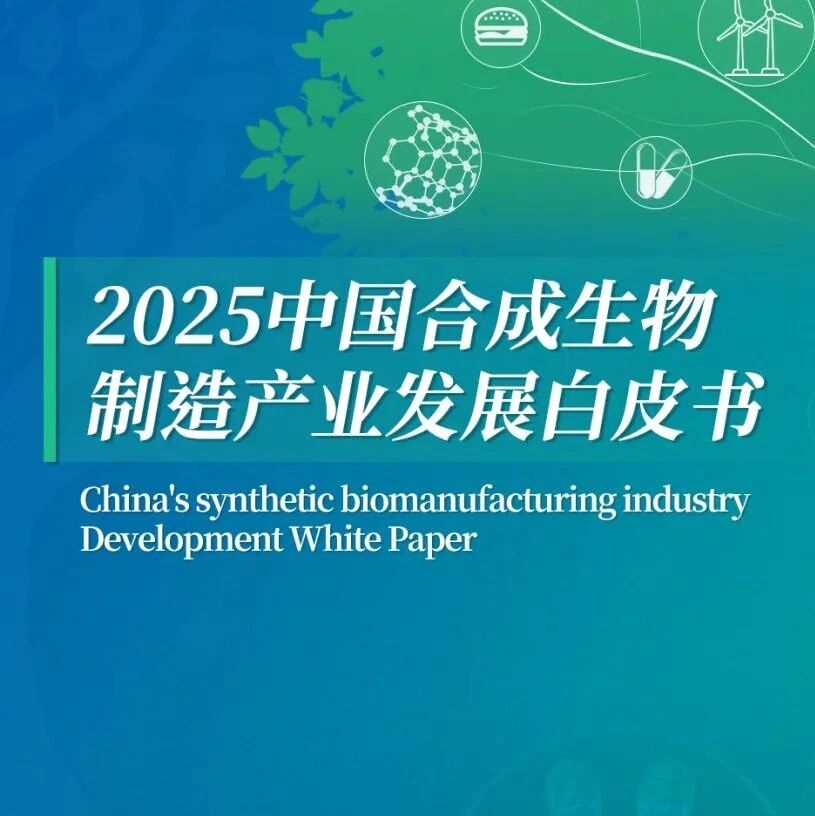
免费领取!《2025中国合成生物制造产业发展白皮书》
synbio新材料· 2025-10-15 02:32
Core Viewpoint - The article emphasizes the rising importance of biomanufacturing as a strategic and innovative field that disrupts traditional production methods, presenting it as a new growth point for optimizing industrial structure and transforming economic models. The release of the "2025 China Synthetic Biomanufacturing Industry Development White Paper" highlights the current state, trends, and challenges of the biomanufacturing industry in China [1]. Group 1: Current State and Trends - The white paper outlines the development status and trends of biomanufacturing, analyzing the global landscape and key platform facilities [5]. - It compares the biomanufacturing sectors of China and the United States, identifying competitive advantages and areas for improvement [5]. - Future development trends in biomanufacturing are discussed, indicating a shift towards more integrated and sustainable practices [5]. Group 2: Policy Landscape - The report reviews major policies affecting biomanufacturing both domestically and internationally, providing insights into regulatory frameworks that shape the industry [5]. - It highlights the importance of supportive policies in fostering innovation and growth within the biomanufacturing sector [5]. Group 3: Industry Map and Applications - A comprehensive map of the Chinese biomanufacturing industry is presented, detailing key players and their roles [5]. - The report identifies critical application areas for biomanufacturing, including pharmaceuticals, food, personal care, agriculture, chemicals, materials, and energy [5]. Group 4: Key Enterprises - The white paper lists the top 10 chain enterprises in China's biomanufacturing industry, showcasing leaders in the field [6]. - It also details the strategic directions of 15 publicly listed companies involved in synthetic biology, summarizing their development strategies [6]. Group 5: Investment and Challenges - An analysis of the investment landscape in synthetic biology from 2024 to mid-2025 is included, providing insights into funding trends and opportunities [6]. - The report discusses challenges faced by the biomanufacturing industry in China, along with targeted policy recommendations to address these issues [6].
李开复,在成都投了一家“0卡糖”
投中网· 2025-10-14 06:29
Core Viewpoint - The article highlights the investment in Sichuan Yingjiaohesheng Technology Co., Ltd., a major producer of steviol glycosides, emphasizing its innovative approach using synthetic biology and its significant market potential in the sugar substitute industry [5][8]. Group 1: Company Overview - Yingjiaohesheng was established in 2015 and focuses on producing natural products using synthetic biology technology, with applications in pharmaceuticals, health supplements, and food and beverages [8]. - The company is recognized as one of the largest suppliers of steviol glycosides in China and has successfully entered the U.S. market since 2019, becoming part of the global supply chains of several international food and beverage companies [8][10]. - Yingjiaohesheng's product line includes coenzyme Q10, new steviol glycosides, β-nicotinamide mononucleotide (NMN), and vanillin, covering multiple sectors [8]. Group 2: Market and Technology - Steviol glycosides are a key component in many "zero-calorie" food and beverage products, with a caloric value only 1/300 that of sucrose, making them a popular sugar substitute [6][8]. - The company’s unique technology route—synthetic biology—offers significant cost advantages over traditional extraction methods, which have low yield and high waste [10]. - Synthetic biology allows for the production of steviol glycosides at a scale that can surpass traditional methods, with one fermentation tank yielding the equivalent of thousands of acres of stevia plants [10]. Group 3: Industry Context and Policy Support - The synthetic biology sector in China has seen increased investment and policy support, with total annual investments ranging from 50 to 100 billion RMB from 2018 to 2020, and a significant surge in 2021 [14][15]. - Chengdu, where Yingjiaohesheng is located, has strategically positioned itself as a hub for the biopharmaceutical industry, with a total scale of 350 billion RMB in the health industry as of 2023 [19][20]. - The city has implemented policies to foster the development of synthetic biology, aiming to create a robust ecosystem that integrates innovation, capital, and industry [21][22].

加好友,免费领取!《2025中国合成生物制造产业发展白皮书》
synbio新材料· 2025-10-13 03:48
Core Viewpoint - The article emphasizes the rising importance of biomanufacturing as a strategic and innovative field that disrupts traditional production methods, presenting it as a new growth point for optimizing industrial structure and transforming economic models. The release of the "2025 China Synthetic Biomanufacturing Industry Development White Paper" highlights the current state, trends, and challenges of the biomanufacturing industry in China [1]. Group 1: Current State and Trends - The white paper outlines the development status and trends of biomanufacturing, analyzing the global landscape and key platform facilities [5]. - It compares the biomanufacturing sectors of China and the United States, identifying competitive advantages and areas for improvement [5]. - Future development trends in biomanufacturing are discussed, indicating a shift towards more integrated and sustainable practices [5]. Group 2: Policy Landscape - The report reviews major policies affecting biomanufacturing both domestically and internationally, providing insights into regulatory frameworks that shape the industry [5]. - It highlights the importance of supportive policies in fostering innovation and growth within the biomanufacturing sector [5]. Group 3: Industry Map and Applications - A comprehensive map of the Chinese biomanufacturing industry is presented, detailing key players and their roles [5]. - The report identifies critical application areas for biomanufacturing, including pharmaceuticals, food, personal care, agriculture, chemicals, materials, and energy [5]. Group 4: Key Enterprises - The white paper lists the top 10 leading enterprises in China's biomanufacturing industry, showcasing their contributions and market positions [6]. - It also details the strategic directions of 15 publicly listed companies in the field of synthetic biology, summarizing their development strategies [6]. Group 5: Investment and Challenges - The report examines the investment landscape in synthetic biology from 2024 to mid-2025, providing data on funding trends and investor interest [6]. - It discusses the challenges faced by the biomanufacturing industry in China, including technological barriers and market competition, and offers targeted policy recommendations to address these issues [6].