大疆创新

Search documents
2025新国货COOLTOP100品牌榜:新国货的硬核内功与软叙事:千骑卷平冈
EqualOcean· 2025-10-10 05:25
Group 1: Market Trends - The domestic consumption potential is accelerating, with a shift from price-performance ratio to quality-price ratio, indicating a more discerning consumer base[5] - In the first half of 2025, China's retail sales of consumer goods showed a year-on-year growth of 12.3% in staple food categories, reflecting stable basic living consumption[26] - The cross-border e-commerce import and export scale reached 1.32 trillion yuan in the first half of 2025, with exports at 1.03 trillion yuan (up 4.7%) and imports at 291.1 billion yuan (up 9.3%)[43] Group 2: Policy Impact - The "Two New, Two Heavy" policies are enhancing the competitiveness of domestic products, leading to an increase in market share for new domestic goods[24] - The government is promoting consumption through various measures, including improving consumer confidence and expanding high-quality service offerings[20] - The domestic market is experiencing structural changes, with a focus on high-quality consumption driven by policies aimed at boosting consumer spending[18] Group 3: Brand Development - The global recognition of domestic brands has increased significantly, with a 20 percentage point rise in trust over five years, driven by high-quality products and corporate social responsibility[60] - In 2025, 76 Chinese brands were included in the World Brand 500 list, ranking second globally, indicating a significant leap in brand quality and market presence[72] - The integration of traditional cultural symbols into product design has become a key strategy for enhancing brand value and consumer connection[67] Group 4: Consumer Behavior - Consumers are increasingly prioritizing quality and emotional value over low prices, with a 13.1% net increase in the tendency to consume low-priced products[31] - Young consumers are driving the growth of domestic brands, with 44.2% preferring to purchase domestic products through e-commerce platforms[98] - The demand for products with investment and aesthetic value is rising, as evidenced by an 11.3% increase in retail sales of gold and jewelry[30]
背刺打工人 大疆也无奈?
Bei Jing Shang Bao· 2025-10-09 16:14
Core Insights - DJI is facing backlash from consumers due to price cuts on popular products like the Pocket 3 and Action 4 during the "Double Eleven" promotional period, leading to feelings of being "betrayed" by recent buyers [1][3] - The price reduction of the Pocket 3 by 700 yuan, while relatively low, highlights its sustained popularity two years post-launch, indicating strong market demand [1][4] - The competitive landscape is intensifying, with rivals like Insta360 and smartphone manufacturers encroaching on DJI's market share, prompting DJI to adopt a defensive pricing strategy [6][7] Company Strategy - DJI's recent price cuts are seen as a necessary move to clear inventory in anticipation of the upcoming Pocket 4 release, which is rumored to launch by the end of the year [5][6] - The company has not adjusted its promotional strategy despite consumer dissatisfaction, suggesting a focus on maintaining sales momentum for its successful product lines [5][11] - DJI's sales performance has exceeded initial expectations, with total sales of the Pocket 3 surpassing 10 million units and revenue approaching 20 billion yuan [5] Industry Dynamics - The handheld smart imaging device market is projected to grow significantly, with a market size of 364.7 billion yuan in 2023 and an expected compound annual growth rate of 12.9% from 2023 to 2027 [9][10] - The competitive landscape is characterized by high concentration, with the top three companies holding 78.9% of the market share, and DJI's market share declining from 19.1% to 13.2% [10] - The entry of cross-industry players like OPPO and vivo poses a significant threat to DJI, as these companies leverage their existing ecosystems to introduce competitive imaging products [7][10]


“背刺”打工人 大疆也“无奈”?
Bei Jing Shang Bao· 2025-10-09 14:54
Core Viewpoint - DJI is facing backlash from consumers due to significant price reductions on its products shortly after purchase, leading to discussions about consumer rights and company practices [2][5][10]. Group 1: Price Reductions and Consumer Reactions - During the National Day holiday, DJI announced price cuts for several products, including the Pocket 3, which saw a reduction of 700 yuan for the standard version and 900 yuan for the all-in-one kit [2]. - Consumers who purchased products shortly before the price drop expressed feelings of being "betrayed," leading to discussions on social media about returning products and seeking compensation [2][5]. - The Pocket 3, despite its price cut, remains popular, indicating strong demand even after two years since its release, with sales reaching over 10 million units and revenue nearing 20 billion yuan [5][11]. Group 2: Competitive Landscape - DJI is under pressure from competitors, particularly from companies like Insta360, which has a dominant market share in the panoramic camera segment and is now entering the drone market [8][9]. - Other smartphone manufacturers, such as OPPO and vivo, are also developing products that compete directly with DJI's offerings, potentially impacting DJI's market share [9]. - The competitive dynamics are shifting, with traditional brands facing challenges from new entrants that leverage their supply chain advantages [9][12]. Group 3: Market Growth and Concentration - The handheld smart imaging device market is projected to grow at a compound annual growth rate of 12.9%, reaching a market size of 59.2 billion yuan by 2027 [11]. - The market is highly concentrated, with the top three companies expected to hold 78.9% of the market share by 2024, indicating intense competition among leading players [12]. - DJI's market share has declined from 19.1% to 13.2%, highlighting the increasing pressure from competitors and the need for strategic pricing and promotional activities [12][13].
“背刺”打工人,大疆也“无奈”?
Bei Jing Shang Bao· 2025-10-09 14:37
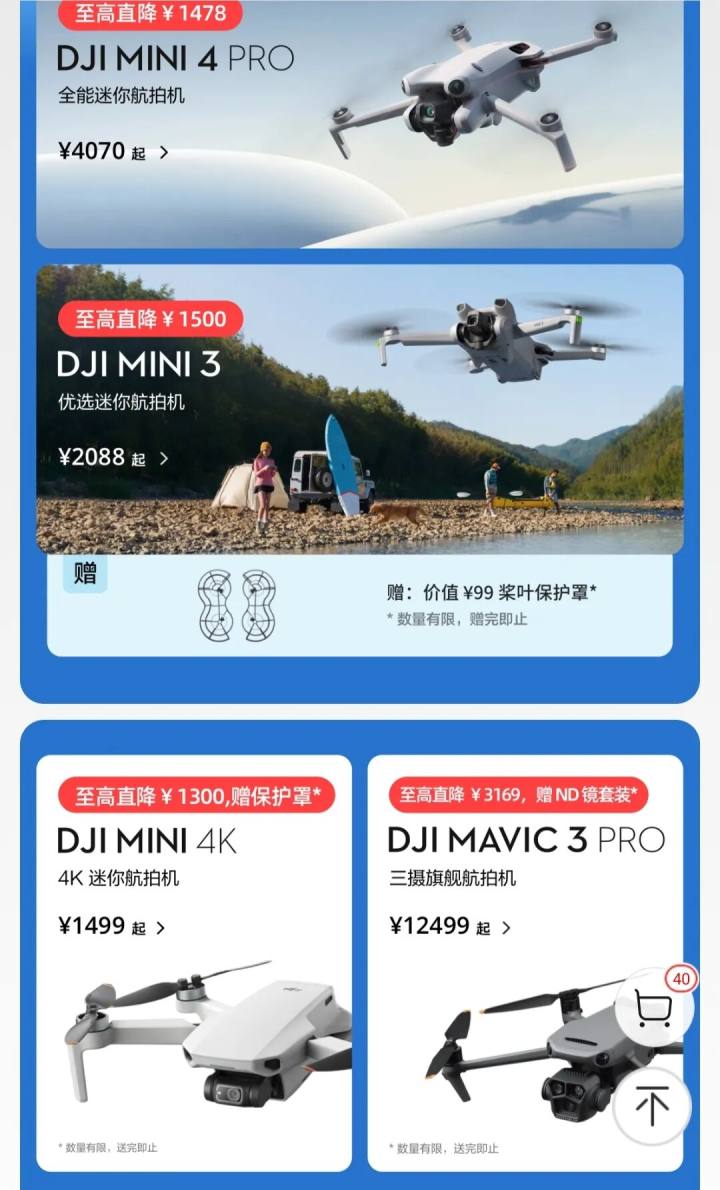
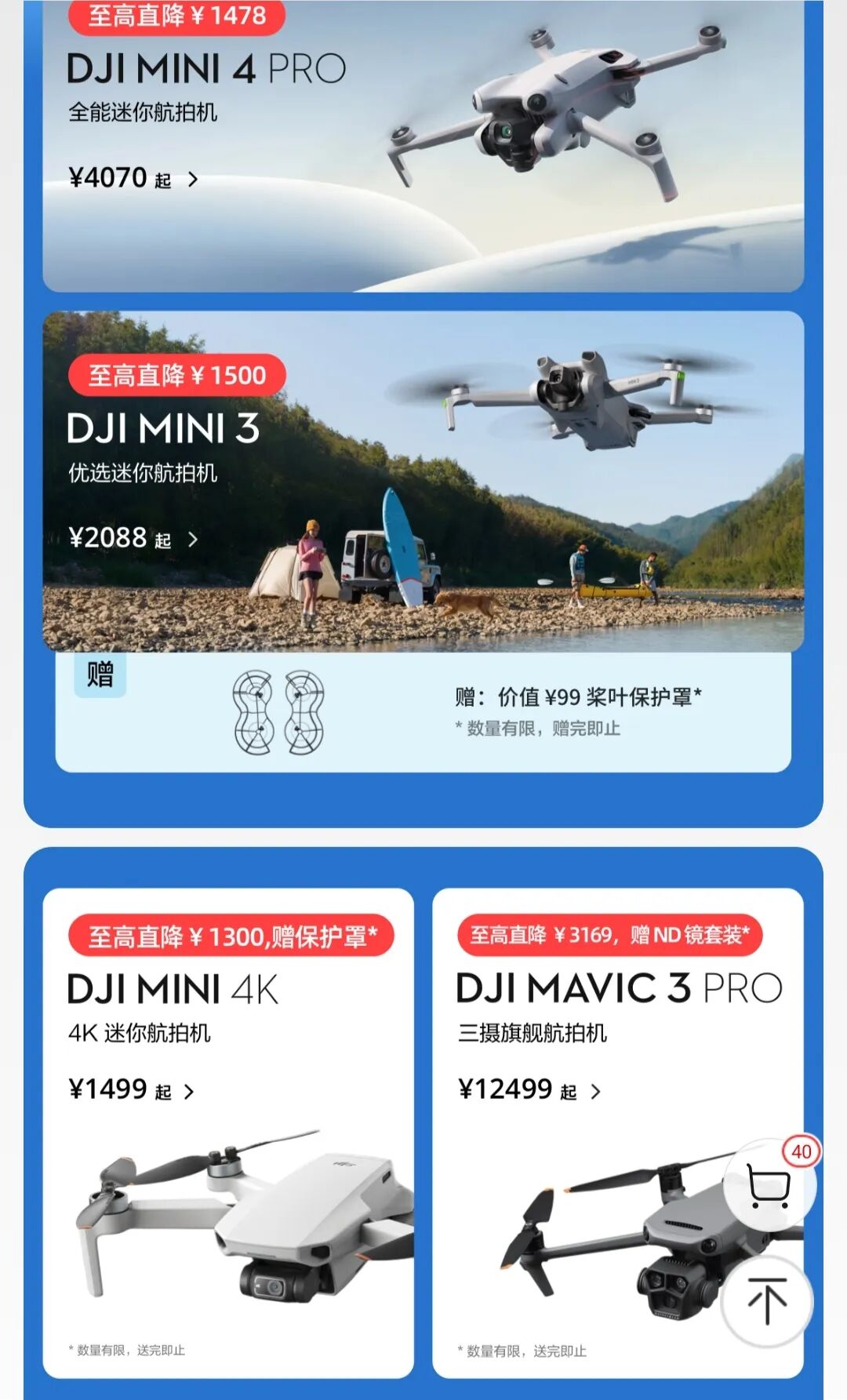
Core Viewpoint - DJI's recent price cuts on its products, particularly the OSMO Pocket 3, have led to significant consumer backlash, with many users feeling "betrayed" after purchasing at full price shortly before the discounts were announced [2][6]. Group 1: Price Cuts and Consumer Reaction - DJI announced substantial price reductions for several products ahead of the "Double 11" shopping festival, including a 700 yuan cut for the Pocket 3 and up to 1478 yuan for the Mini 4 PRO drone [1][2]. - Consumers who purchased products shortly before the price cuts have expressed dissatisfaction, leading to discussions about potential returns and consumer rights [2][5]. - The price cuts are seen as a necessary strategy for DJI to remain competitive in a rapidly changing market, despite the risk of alienating existing customers [2][10]. Group 2: Market Dynamics and Competition - The handheld smart imaging device market is projected to grow significantly, with a market size of 364.7 billion yuan in 2023 and an expected annual growth rate of 12.9% through 2027 [11][12]. - DJI faces increasing competition from both traditional rivals like Insta360, which has a dominant market share in the panoramic camera segment, and new entrants from smartphone manufacturers like OPPO and Xiaomi [7][9]. - The competitive landscape is shifting, with DJI's market share declining from 19.1% to 13.2% as competitors gain ground, highlighting the need for strategic pricing and promotional activities [12][13]. Group 3: Strategic Implications - DJI's price cuts may be a tactical response to both consumer demand and competitive pressures, as the company prepares for the potential launch of new products like the Pocket 4 [6][10]. - The company must balance short-term sales strategies with long-term brand loyalty and market positioning, as the industry undergoes significant changes in technology and consumer preferences [12][13]. - Effective communication and compensation strategies for consumers who feel "betrayed" by the price cuts are essential to mitigate negative sentiment and maintain brand reputation [5][6].
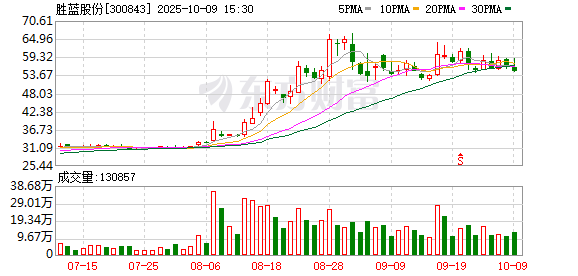
胜蓝股份:公司消费电子业务的客户有富士康、立讯精密等
Zheng Quan Ri Bao· 2025-10-09 13:10
Core Viewpoint - Shenglan Co., Ltd. has confirmed its consumer electronics business clients, which include major companies such as Foxconn, Luxshare Precision, Xiaomi, DJI, and TCL [2] Group 1 - Shenglan Co., Ltd. responded to investor inquiries on October 9 regarding its consumer electronics business [2] - The company has established relationships with prominent clients in the consumer electronics sector [2]



大疆起诉美国防部被驳回,大疆回应:失望,产品与军方无关;罗永浩回应声援小米:没有人情世故,说句公道话;蜜雪集团进军现打鲜啤市场
雷峰网· 2025-10-09 04:26
Group 1 - DJI's lawsuit against the U.S. Department of Defense was dismissed, expressing disappointment and asserting that its products are unrelated to military use [3][5] - DJI holds over 50% of the commercial drone market in the U.S. and claims to have lost business contracts due to being labeled a national security threat [3][5] - The U.S. Department of Defense included DJI in the "Chinese Military Companies List" in 2023, which DJI contests as illegal and misleading [5] Group 2 - Deli Group faced backlash for discrimination against a job applicant with a disability, leading to an apology from the CEO [7] - Kuaishou announced a restructuring of its local life services division, with Liu Xiao taking over leadership [11][12] - Xiaomi's 17 series has surpassed 1 million units sold, with the 17 Pro Max model breaking sales records [12] Group 3 - Chinese automakers captured a record 9.8% share of the hybrid vehicle market in Europe as of August [13] - BYD and other manufacturers are increasing their presence in the European electric vehicle market, with a focus on competitive pricing [13] - Lantu Automotive submitted an application for listing on the Hong Kong Stock Exchange, reporting nearly 19.4 billion yuan in revenue last year [15] Group 4 - Aima Technology announced the suspension of its Guangdong factory operations, shifting production capacity to Guangxi and Chongqing [16] - Mixue Group plans to acquire a 53% stake in Fulu Family for approximately 297 million yuan, entering the fresh beer market [17] Group 5 - OpenAI responded to Elon Musk's lawsuit, denying the need for any trade secrets and asserting the right to hire employees from xAI [23] - A notorious ransomware group claims to have breached Oracle's E-Business Suite, targeting executives for extortion [24] Group 6 - Apple has paused upgrades on its Vision Pro headset to focus on developing AI-powered smart glasses [25] - Judson Althoff has been appointed as the new CEO of Microsoft's commercial business, with Satya Nadella shifting focus to technology [28]




突然降价,最高便宜近1500元!很多人傻眼:“刚买了没几天……”
Qi Lu Wan Bao· 2025-10-09 02:02
Core Viewpoint - DJI is facing consumer backlash due to an announced price drop on multiple products, leading to refund and price protection requests from recent buyers [1][4][12]. Group 1: Price Drop Announcement - DJI has confirmed that several products will see significant price reductions as part of a limited-time promotion for the upcoming Double Eleven shopping festival, with discounts reaching up to 1,478 yuan for certain items [1][12]. - The price cuts include outdoor power supplies, gimbals, action cameras, smartphone stabilizers, wireless microphones, drones, and robotic vacuums, with specific reductions detailed for each product [1]. Group 2: Consumer Reactions - Many consumers who recently purchased DJI products are seeking refunds or price adjustments, sharing their experiences on social media platforms [4][10]. - Some consumers have successfully negotiated refunds or compensation through authorized stores, while others express frustration over the lack of price protection policies for in-store purchases compared to online channels [10][11]. Group 3: Legal and Market Context - Legal experts indicate that companies have the right to set their pricing strategies without prior notice, and as long as return policies comply with legal standards, they are considered valid [12]. - The competitive landscape for handheld imaging devices is intensifying, with major smartphone manufacturers like OPPO planning to enter the market, potentially impacting DJI's market share [13]. - The market for handheld imaging devices is highly concentrated, with DJI's market share projected to decline from 19.1% in 2023 to 13.2% in 2024, amidst increasing competition from other brands [14].
大疆的核心腹地迎来“跨界”对手:OPPO等手机厂商攻入手持智能影像赛道
Mei Ri Jing Ji Xin Wen· 2025-10-08 13:31
Core Insights - DJI, a leader in consumer handheld imaging devices, faces new competition from smartphone manufacturers like OPPO, which plans to launch handheld smart imaging products by 2026, indicating a shift in the competitive landscape [1] - The handheld smart imaging market is projected to grow significantly, with a market size of 36.47 billion yuan in 2023 and an expected compound annual growth rate (CAGR) of 12.9% from 2023 to 2027, reaching 59.2 billion yuan by 2027 [2] - The market is highly concentrated, with major players like DJI, Insta360, and GoPro holding a combined market share of 78.9% in 2024, highlighting intense competition [2] Market Dynamics - The rise of short video content has driven demand for handheld smart imaging devices, creating new growth opportunities [2] - The competitive landscape is shifting, with Insta360's market share increasing from 28.4% in 2023 to 35.6% in 2024, while GoPro's share declines from 38.2% to 30.1%, and DJI's share drops from 19.1% to 13.2% [2] - The Pocket series by DJI and the Insta360 Go series are recognized as leading product categories in the market [2] Competitive Challenges - The Pocket series has seen limited competition since the launch of Pocket3, primarily due to the challenges in balancing portability and high image quality in camera design [3] - Smartphone manufacturers are entering the handheld imaging market as their primary market growth slows, seeking new revenue streams [4] - Insta360 has demonstrated significant growth, with revenue increasing from 850 million yuan in 2020 to 5.574 billion yuan in 2024, reflecting a CAGR of 60.02% [4] Strategic Advantages - Smartphone manufacturers benefit from shared technology and supply chains with handheld imaging devices, allowing for rapid entry into the market [5] - OPPO has invested heavily in imaging technology, with over 1,000 personnel in its imaging team and an annual R&D budget exceeding 1 billion yuan [5] - The entry of smartphone manufacturers into the handheld imaging sector is expected to enhance overall industry development, despite increased competition for established players like DJI [5]


大疆将降价,Pocket 3最高降900元,Action 4降1129元,刚买的消费者懵了:早知道先不买了!多名消费者维权退差价
Mei Ri Jing Ji Xin Wen· 2025-10-08 12:34
Core Viewpoint - DJI is facing consumer backlash due to an announced price drop on multiple products, leading to refund and price protection requests from recent buyers [1][7][15]. Group 1: Price Drop Announcement - DJI has confirmed that several products will see significant price reductions as part of a limited-time promotion for the upcoming Double Eleven shopping festival, with discounts ranging from 200 to 1478 yuan across various items [1][15]. - The promotion is set to run from October 9 to October 14, with specific products like the Mini 4K drone and Osmo Action 4 experiencing the largest price cuts [1]. Group 2: Consumer Reactions - Many consumers who purchased DJI products shortly before the price drop are seeking refunds or price adjustments, with some successfully sharing their experiences on social media [7][13]. - Consumers who bought products from physical stores are facing challenges in obtaining price protection, as policies differ from online purchases, leading to frustration [12][14]. Group 3: Legal and Market Implications - Legal experts indicate that companies have the right to set their pricing strategies and are not obligated to announce price changes in advance, although they should consider consumer sentiment to avoid backlash [15]. - The handheld imaging device market is becoming increasingly competitive, with companies like OPPO planning to enter the market, potentially impacting DJI's market share, which has already seen a decline from 19.1% to 13.2% [16][17].
OPPO、vivo,要对标大疆了
21世纪经济报道· 2025-10-02 00:43
Core Insights - The handheld imaging market is witnessing new entrants like OPPO and vivo, who are developing handheld smart imaging devices to compete with established products from DJI [1][3] - The mobile imaging sector is becoming a new growth area for smartphone manufacturers as the smartphone market growth slows down [1][6] Market Dynamics - The global smart imaging device market is highly concentrated, with the top three companies (DJI, Insta360, and GoPro) holding 78.9% of the market share in 2024 [3][6] - Insta360 is experiencing significant growth, increasing its market share from 28.4% in 2023 to 35.6% in 2024, while GoPro's share is declining from 38.2% to 30.1% [6] Growth Potential - The Chinese market for panoramic cameras is expected to grow at a compound annual growth rate (CAGR) of 17.8% from 2023 to 2027, significantly outpacing other regions [6][11] - The sports camera segment in China is projected to grow at a CAGR of 26.1% during the same period, indicating strong growth potential [6][11] Competitive Advantages - Smartphone manufacturers possess advantages in hardware supply chains, design, and production capabilities, which can be leveraged in the handheld imaging market [7][8] - The software capabilities related to stabilization, AI algorithms, and color reproduction developed in smartphones can be applied to mobile imaging devices [7][8] Strategic Shifts - Traditional smartphone manufacturers are seeking to diversify beyond "pure smartphone" business models to explore broader smart terminal markets [10] - OPPO and vivo are cautiously expanding their product lines, with OPPO focusing on high-quality products and exploring new categories like MR glasses and home robots [10][11] Profitability Outlook - The handheld imaging market offers attractive profit margins, with companies like Insta360 reporting gross margins above 50% from 2022 to 2024 [11] - The entry of OPPO and vivo into this market is expected to enhance their profitability compared to the highly competitive smartphone market [11]