Samsung

Search documents
Mad Money's Jim Cramer: Samsung & SK Hynix are "visionaries"
Youtube· 2026-02-05 00:41
Industry Overview - South Korea's benchmark index has increased over 100% in the past year, indicating a significant rerating moment for the market [1] - The semiconductor sector, particularly memory chipmakers like SK Hynix and Samsung, is highlighted as a key driver of this growth [1][2] Company Performance - SK Hynix has seen a remarkable stock increase of 370% in one year, showcasing its strong market position [8] - Samsung is also recognized as a major player in the semiconductor industry, competing closely with SK Hynix [3][6] Market Dynamics - The demand for high bandwidth memory, driven by partnerships with companies like Nvidia, is a critical factor for the success of South Korean chipmakers [5][12] - Both SK Hynix and Samsung have made significant investments in anticipation of a memory shortage, positioning themselves favorably in the market [7][10] Investment Insights - The companies are viewed as having a long-term vision, with their strategic decisions expected to pay off in the future [12] - While stock prices may experience corrections, the underlying companies are considered strong investment opportunities when prices dip [11][12] Other Sectors - Beyond semiconductors, South Korea has notable global players in shipbuilding and e-commerce, with companies like Coupang being mentioned as interesting prospects [13][14] - The shipbuilding industry is highlighted for its unique capabilities, particularly in utilizing digital twin technology, which is also linked to Nvidia [15]

Qualcomm(QCOM) - 2026 Q1 - Earnings Call Transcript
2026-02-04 22:47
Financial Data and Key Metrics Changes - The company reported record revenues of $12.3 billion and non-GAAP earnings per share (EPS) of $3.50 for fiscal Q1 2026, with non-GAAP EPS at the high end of guidance [6][16] - QCT revenues reached a record $10.6 billion, driven by strong performance in automotive and IoT segments [6][16] - Licensing business revenues were $1.6 billion, with an EBT margin of 77%, reflecting higher units and favorable mix [16] Business Line Data and Key Metrics Changes - QCT handset revenues reached a record $7.8 billion, benefiting from recently launched flagship smartphones [16] - QCT IoT revenues grew 9% year-over-year to $1.7 billion, driven by demand across consumer and networking products [16] - QCT Automotive revenues grew to $1.1 billion, up 15% year-over-year, driven by increased demand for Snapdragon Digital Chassis platforms [17] Market Data and Key Metrics Changes - Global consumer demand for handsets, particularly in the premium and high-tier segments, exceeded expectations, with healthy sell-through observed [6][7] - The handset industry is expected to face constraints due to memory availability and pricing, particularly DRAM, as suppliers redirect capacity to meet AI data center demand [7][18] - The company anticipates that the overall size of the handset market will be defined by memory availability throughout the fiscal year [39][69] Company Strategy and Development Direction - The company is focused on expanding its presence in the premium and high-tier smartphone segments, with a dual flagship product strategy that has been well received [8][42] - The company is investing in AI-native smartphones and intelligent wearables, positioning Snapdragon platforms as the choice for the industry [8][12] - The company aims to strengthen its leadership in automotive and robotics, with multiple design wins and collaborations with major automakers [10][22] Management's Comments on Operating Environment and Future Outlook - Management expressed confidence in the fundamentals of the handset business despite near-term challenges related to memory supply [18][39] - The company expects to return to prior growth trajectories for QCT handset revenues once memory supply conditions normalize [18] - Management remains optimistic about the long-term growth potential in automotive and IoT, with combined growth expected to outpace long-term revenue targets [21][22] Other Important Information - The company returned $3.6 billion to stockholders, including $2.6 billion in stock repurchases and $949 million in dividends [17] - The company completed the acquisition of Alphawave Semi, enhancing its data center solutions [14] Q&A Session Summary Question: What factors are driving the weakness in handset outlook beyond memory pricing? - Management indicated that the weakness is entirely related to memory availability, with strong microeconomic indicators and handset demand observed [26][27] Question: Is the automotive revenue growth driven by ADAS wins? - Management confirmed that the automotive pipeline continues to translate into revenue, with new car launches contributing to record revenues [30] Question: How is the company progressing with data center customers? - Management reported positive progress with customers, including shipping to Humane and engagement with major hyperscalers [34] Question: What is the company's strategy regarding memory shortages? - Management clarified that they do not purchase memory directly but work with customers who do, ensuring flexibility in memory sourcing [67][69] Question: How does the company plan to navigate the memory allocation challenges with larger OEMs? - Management acknowledged that larger OEMs may have better access to memory but emphasized that the issue is industry-wide and not limited to specific customers [73]

Qualcomm(QCOM) - 2026 Q1 - Earnings Call Transcript
2026-02-04 22:47
Financial Data and Key Metrics Changes - Qualcomm reported record revenues of $12.3 billion and non-GAAP earnings per share (EPS) of $3.50 for fiscal Q1 2026, with non-GAAP EPS at the high end of guidance [6][20] - Licensing business revenues were $1.6 billion, with an earnings before tax (EBT) margin of 77%, driven by higher units and favorable mix [20] - QCT revenues reached a record $10.6 billion, with QCT handset revenues at $7.8 billion, reflecting strong demand for flagship smartphones [20] Business Line Data and Key Metrics Changes - QCT IoT revenues grew 9% year-over-year to $1.7 billion, driven by demand across consumer and networking products [20] - QCT Automotive revenues reached $1.1 billion, up 15% year-over-year, reflecting increased demand for Snapdragon Digital Chassis platforms [20] - QCT EBT margin was 31%, exceeding the long-term target of 30% [20] Market Data and Key Metrics Changes - Global consumer demand for handsets, particularly in the premium and high-tier segments, exceeded expectations, with healthy sell-through observed [6][20] - The handset industry is expected to face constraints due to memory availability and pricing, particularly DRAM, as suppliers redirect capacity to meet AI data center demand [7][8] Company Strategy and Development Direction - Qualcomm is focusing on expanding its presence in the premium smartphone segment and enhancing its Snapdragon platforms, with a projected 75% share in Samsung's upcoming premium-tier devices [9] - The company is investing in AI-native smartphones and intelligent wearables, positioning Snapdragon XR, Wear, and Sound as leading platforms [10] - Qualcomm is also expanding into advanced robotics and industrial IoT, with new technologies and partnerships aimed at driving commercialization [15][26] Management's Comments on Operating Environment and Future Outlook - Management expressed confidence in the fundamentals of the handset business despite near-term challenges related to memory supply and pricing [21][22] - The company anticipates returning to prior growth trajectories for QCT handset revenues once memory supply normalizes [22] - Management remains optimistic about the long-term growth potential in automotive and IoT sectors, with QCT automotive revenue growth expected to accelerate to over 35% in fiscal Q2 [24] Other Important Information - Qualcomm completed the acquisition of Alphawave Semi, enhancing its high-speed wire connectivity technologies [18] - The company is actively engaging with leading hyperscalers and cloud service providers to develop data center solutions [18] Q&A Session Summary Question: Factors driving weakness in handset outlook beyond memory pricing - Management indicated that the weakness is entirely related to memory availability, with strong macroeconomic indicators and handset demand observed [30][31] Question: Drivers and durability of automotive revenue growth - Management highlighted a strong pipeline in automotive, with new car launches contributing to revenue growth and design wins [34][35] Question: Update on data center progress and memory volatility impact - Management reported positive progress with customers and emphasized the unique capabilities of Qualcomm's disaggregated data center platform [38][39] Question: Impact of memory shortages on handset business - Management reiterated that the availability of memory will define the overall size of the handset market, with premium and high-tier segments expected to be more resilient [42][43] Question: Update on Huawei license negotiations - Management stated that discussions are ongoing, but no specific updates could be provided [67] Question: Managing uncertainty in memory supply and customer relationships - Management clarified that Qualcomm does not purchase memory directly, and they have established relationships with multiple memory suppliers to ensure flexibility [71][72]
Qualcomm(QCOM) - 2026 Q1 - Earnings Call Transcript
2026-02-04 22:45
Financial Data and Key Metrics Changes - The company reported record revenues of $12.3 billion and non-GAAP earnings per share (EPS) of $3.50 for fiscal Q1 2026, with non-GAAP EPS at the high end of guidance [5][17] - QCT revenues reached a record $10.6 billion, with strong year-over-year growth across automotive and IoT segments [17] - Licensing business revenues were $1.6 billion, with an EBT margin of 77%, driven by higher units and favorable mix [17] Business Line Data and Key Metrics Changes - QCT handset revenues reached a record $7.8 billion, benefiting from recently launched flagship smartphones [17] - QCT IoT revenues grew 9% year-over-year to $1.7 billion, driven by demand across consumer and networking products [17] - QCT Automotive revenues grew to $1.1 billion, up 15% year-over-year, reflecting increased demand for Snapdragon Digital Chassis platforms [17] Market Data and Key Metrics Changes - Global consumer demand for handsets, particularly in the premium and high-tier segments, exceeded expectations, with healthy sell-through observed [5] - The handset industry is expected to face constraints due to memory availability and pricing, particularly DRAM, as suppliers redirect capacity to meet AI data center demand [5][6] Company Strategy and Development Direction - The company is focused on expanding its presence in the premium and high-tier smartphone segments, with a dual flagship product strategy that has seen broad OEM adoption [6][7] - The company is also investing in AI-native smartphones and intelligent wearables, positioning Snapdragon platforms as the choice for the industry [7][8] - In automotive, the company aims to reinforce its technology leadership with multiple design wins and collaborations with major automakers [10][11] Management's Comments on Operating Environment and Future Outlook - Management expressed confidence in the fundamentals of the handset business despite near-term challenges related to memory supply and pricing [19] - The company anticipates returning to prior growth trajectories for QCT handset revenues once memory supply normalizes [19] - Management remains optimistic about the long-term growth potential in automotive and IoT, with expectations for continued revenue acceleration [21] Other Important Information - The company completed the acquisition of Alphawave Semi, enhancing its high-speed wire connectivity technologies [15] - The company is actively engaging with leading hyperscalers and cloud service providers to develop data center solutions [14] Q&A Session Summary Question: What factors are driving the weakness in handset outlook beyond memory pricing? - Management indicated that the weakness is entirely related to memory availability, with strong microeconomic indicators and handset demand observed [26][27] Question: Is the automotive revenue growth driven by ADAS wins? - Management confirmed that the automotive pipeline continues to translate into revenue, with new car launches contributing to record revenues [29][30] Question: How is the company managing the memory supply situation? - Management clarified that they do not purchase memory directly but work closely with customers who do, ensuring flexibility with various memory providers [69][70] Question: What is the outlook for the data center business? - Management stated that progress is on track, with positive feedback from engagements with hyperscalers and cloud service providers [35][36] Question: How does the company view the impact of memory shortages on the overall handset market? - Management emphasized that the size of the handset market will be determined by memory availability, with expectations for premium and high-tier segments to remain resilient [40][76]
Cerence(CRNC) - 2026 Q1 - Earnings Call Transcript
2026-02-04 22:32
Financial Data and Key Metrics Changes - Cerence reported revenue of $115.1 million for Q1 2026, a 126% increase from $50.9 million in the prior year period [17] - Adjusted EBITDA was $44.6 million, representing a 39% margin compared to $1.4 million or 3% in the prior year [22] - The company generated record quarterly free cash flow of $35.6 million, marking a significant achievement [4][23] - GAAP net loss for the quarter was $5.2 million, an improvement from a net loss of $24.3 million in the same quarter last year [22] Business Line Data and Key Metrics Changes - Variable license revenue was $30.5 million, up 34% year-over-year, driven by steady customer utilization [18] - Fixed license revenue was $7.8 million, with expectations for it to be comparable to the prior year [18] - Connected services revenue was $14.5 million, up 6% year-over-year, with a potential increase of over 20% without prior year true-up [19] Market Data and Key Metrics Changes - Approximately 11.9 million cars produced included Cerence technology, flat from the prior year [23] - The number of connected cars shipped grew by 14% on a trailing 12-month basis [24] - 51% of worldwide auto production included Cerence technology, consistent with historical penetration [24] Company Strategy and Development Direction - Cerence's key priorities for 2026 include advancing technology through the xUI platform, maintaining cost diligence, and driving top-line growth [4][27] - The company showcased advancements in AI technology at CES, including the introduction of new AI agents and partnerships with major OEMs [5][7] - Cerence aims to expand its reach beyond automotive, with plans to operationalize strategies in new industries [14] Management's Comments on Operating Environment and Future Outlook - Management expressed confidence in the company's technology and customer momentum, anticipating continued growth in revenue and profitability [15][26] - The company reaffirmed its full-year guidance for fiscal 2026, expecting revenue between $300 million and $320 million [26] - Management highlighted the importance of the patent license revenue from Samsung as a validation of their IP strategy [15] Other Important Information - The company resolved its patent litigation with Samsung, resulting in a one-time payment of $49.5 million recorded in Q1 [15][19] - Total non-GAAP operating expenses were $57.3 million, primarily driven by legal costs associated with the patent license outcome [21] Q&A Session Summary Question: Interest in the mobile work agent and its impact on ARPU - Management indicated strong demand for the mobile work agent, which can be implemented in existing vehicles, potentially increasing ARPU [30][32] Question: Impact of new signings on TTM billings and backlog - Management confirmed that new signings would be reflected in the five-year backlog and TTM billings, with revenue expected to ramp up as production starts [34][38] Question: Usage trends of existing in-car connected systems - Management noted that usage of newer systems is increasing, especially with added functionalities like Microsoft 365 integration [40] Question: Competitive process for new wins and future win rates - Management highlighted that technology capability and team confidence are key differentiators in winning contracts, with a strong win rate expected moving forward [54][56]

Cerence(CRNC) - 2026 Q1 - Earnings Call Transcript
2026-02-04 22:32
Financial Data and Key Metrics Changes - Cerence reported revenue of $115.1 million for Q1 2026, a 126% increase from $50.9 million in the prior year period [17] - Adjusted EBITDA was $44.6 million, representing a 39% margin compared to $1.4 million or 3% in the prior year [22] - The company generated record quarterly free cash flow of $35.6 million, marking a significant achievement [4][23] - GAAP net loss for the quarter was $5.2 million, an improvement from a net loss of $24.3 million in the same quarter last year [22] Business Line Data and Key Metrics Changes - Variable license revenue was $30.5 million, up 34% year-over-year, driven by steady customer utilization [18] - Fixed license revenue was $7.8 million, with expectations for it to be comparable to the prior year for the full fiscal year [18] - Connected services revenue was $14.5 million, up 6% year-over-year, with a potential increase of over 20% without prior year true-up [19] Market Data and Key Metrics Changes - Approximately 11.9 million cars produced included Cerence technology, flat from the prior year [24] - The number of connected cars shipped grew by 14% on a trailing 12-month basis [24] - 51% of worldwide auto production included Cerence technology, consistent with historical penetration [24] Company Strategy and Development Direction - Cerence's three key priorities for 2026 include advancing technology through xUI, maintaining cost diligence, and driving top-line growth [4] - The company showcased advancements in xUI at CES, including new AI agents and partnerships with Microsoft [5][6] - Cerence aims to expand its reach beyond automotive, with plans to operationalize strategies in new industries [14] Management's Comments on Operating Environment and Future Outlook - Management expressed confidence in the company's technology and customer momentum, anticipating continued growth in fiscal 2026 [15][27] - The resolution of the patent suit with Samsung, resulting in a one-time payment of $49.5 million, was highlighted as a significant milestone [15] - For Q2, Cerence expects revenue between $58 million and $62 million, reaffirming full-year guidance of $300 million to $320 million [26] Other Important Information - The company completed a restructuring plan to reduce operating expenses and improve profitability [9] - Total non-GAAP operating expenses increased to $57.3 million, primarily due to legal costs associated with the patent license outcome [21] Q&A Session Summary Question: Interest in the mobile work agent and its impact on ARPU - Management indicated strong interest in the mobile work agent, which can be implemented in existing vehicles, potentially increasing ARPU [30][32] Question: Impact of new signings on TTM billings and backlog - Management confirmed that new signings will be reflected in the five-year backlog and TTM billings, with revenue expected to ramp up as production starts [34][38] Question: Usage trends of existing in-car connected systems - Management noted that usage of newer systems is increasing, especially with added functionalities like Microsoft 365 integration [40] Question: Competitive process for new wins and future win rates - Management highlighted that technology capability and team confidence are key differentiators in winning contracts, with a strong pipeline of interest from both Western and Chinese OEMs [44][55]
Alphabet(GOOG) - 2025 Q4 - Earnings Call Transcript
2026-02-04 22:32
Financial Data and Key Metrics Changes - Alphabet's annual revenues exceeded $400 billion for the first time, with Q4 consolidated revenues reaching $113.8 billion, up 18% year-over-year [5][29] - Net income increased by 30% to $34.5 billion, and earnings per share rose by 31% to $2.82 [31] - Operating income increased by 16% to $35.9 billion, with an operating margin of 31.6% [31] Business Line Data and Key Metrics Changes - Google Services revenues increased by 14% to $95.9 billion, driven by a 17% increase in Search and Other revenues [19][32] - YouTube advertising revenues grew by 9% to $11.4 billion, primarily driven by direct response advertising [32] - Google Cloud revenue accelerated by 48% to $17.7 billion, with significant growth in enterprise AI products [33][36] Market Data and Key Metrics Changes - Google Cloud's backlog increased by 55% quarter-over-quarter to $240 billion, reflecting strong demand for AI products [5][36] - The number of paid subscriptions across consumer services reached over 325 million, with strong adoption for Google One and YouTube Premium [5] - Daily AI Mode queries per user doubled since launch, indicating increased user engagement [12] Company Strategy and Development Direction - The company is focusing on AI investments, with anticipated CapEx for 2026 in the range of $175 billion to $185 billion [6][39] - The launch of the Universal Commerce Protocol aims to enhance agentic commerce capabilities [10][46] - The integration of AI across products and platforms is a key strategy, with significant innovations in Search, YouTube, and Cloud services [10][20] Management's Comments on Operating Environment and Future Outlook - Management expressed optimism about the ongoing demand for AI products and the company's ability to capitalize on this opportunity [39][41] - There are concerns about supply constraints affecting compute capacity, which management is actively addressing [79] - The company is committed to maintaining operational efficiency while investing in growth [53][78] Other Important Information - The company reported a $2.1 billion stock-based compensation charge related to Waymo's valuation increase [30] - Record operating cash flow of $52.4 billion was generated in Q4, contributing to a total of $164.7 billion for the full year [31][32] - The company is collaborating with Apple as their preferred cloud provider to develop next-generation foundation models based on Gemini technology [26] Q&A Session Summary Question: Progress on agentic commerce products and YouTube integration - Management highlighted that 2025 was about laying the foundation for agentic commerce, with significant progress expected in 2026 [44][46] Question: Addressing demand and capacity imbalances for AI - Management acknowledged supply constraints and emphasized long-term planning to meet demand while driving efficiencies [50][51] Question: Maintaining Gemini's position in the LLM frontier - Management expressed confidence in maintaining momentum through continuous innovation and integration of multimodal models [57][59] Question: YouTube ad revenue growth and brand-related impacts - Management noted that the growth rate was affected by lapping strong election spending and emphasized the holistic view of YouTube's revenue [66][68] Question: Investment levels and core performance trends - Management explained a rigorous investment framework that balances near-term and long-term growth objectives [76][78] Question: Concerns about the Google story and future challenges - Management identified compute capacity and supply chain constraints as key concerns that require ongoing attention [79]

Cerence(CRNC) - 2026 Q1 - Earnings Call Transcript
2026-02-04 22:30
Financial Data and Key Metrics Changes - The company reported revenue of $115.1 million for Q1 2026, a significant increase of 126% from $50.9 million in the prior year period [16] - Adjusted EBITDA for the quarter was $44.6 million, representing a margin of 39%, compared to $1.4 million or 3% in the prior year [20] - The company generated record quarterly free cash flow of $35.6 million, marking a strong performance in cash generation [4][22] - GAAP net loss for the quarter was $5.2 million, an improvement from a net loss of $24.3 million in the same quarter last year [21] Business Line Data and Key Metrics Changes - Variable license revenue was $30.5 million, up 34% year-over-year, driven by steady customer utilization and adoption across core programs [17] - Fixed license revenue was $7.8 million, with a timing difference affecting year-over-year comparisons [17] - Connected services revenue was $14.5 million, up 6% year-over-year, with a potential increase of over 20% when excluding a prior year true-up benefit [18] Market Data and Key Metrics Changes - Approximately 11.9 million cars produced in the quarter included Cerence technology, flat compared to the prior year [22] - The number of connected cars shipped grew by 14% on a trailing 12-month basis, indicating strong momentum in vehicle connectivity [23] - 51% of worldwide auto production included Cerence technology, consistent with historical penetration rates [23] Company Strategy and Development Direction - The company has three key priorities for 2026: advancing business through leading technology, maintaining cost diligence, and driving top-line growth [4] - The introduction of new AI agents expands the company's reach beyond in-vehicle experiences into broader areas of the automotive ecosystem [8] - The company aims to increase adoption of Cerence XUI and drive greater penetration of its stack in existing programs, which is expected to deliver increased per unit pricing (PPU) [9] Management's Comments on Operating Environment and Future Outlook - Management expressed confidence in the company's technology and customer momentum, indicating a solid foundation for long-term sustainable growth [14][25] - The company reaffirmed its full-year guidance for fiscal 2026, expecting revenue between $300 million and $320 million and adjusted EBITDA between $50 million and $70 million [25] - Management highlighted the positive reception of new products and the potential for growth in non-automotive businesses, with expected revenue impacts starting in late fiscal year 2026 [13] Other Important Information - The company recorded $49.5 million in patent license revenue from the resolution of litigation with Samsung, marking a significant milestone in its IP monetization strategy [14][18] - The company repurchased $30 million in principal value of its 2028 convertible notes, demonstrating a commitment to deleveraging its balance sheet [22] Q&A Session Summary Question: Interest in the mobile work agent and its impact on ARPU - Management indicated strong demand for the mobile work agent, which can be implemented in existing vehicles, potentially increasing ARPU [28][30] Question: Impact of new signings on TTM billings and backlog - Management confirmed that new signings would contribute to TTM billings and backlog, with revenue recognition starting as vehicles are produced and sold [32][36] Question: Trends in usage of existing in-car connected systems - Management noted that usage of connected systems has improved with newer technology, particularly with the introduction of LLMs [37] Question: Competitive process for new wins and future win rates - Management highlighted that technology capability and team confidence are key differentiators in winning contracts, with a strong pipeline of interest from both Western and Chinese OEMs [41][53]
FormFactor(FORM) - 2025 Q4 - Earnings Call Presentation
2026-02-04 21:25
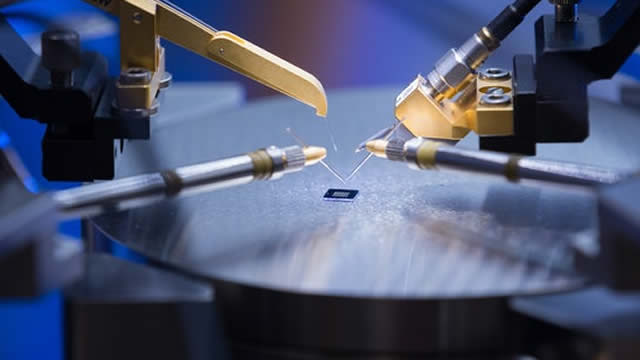
Investor Presentation This presentation contains forward-looking statements within the meaning of the U.S. Securities Exchange Act of 1934 and the Securities Act of 1933. The forward-looking statements include statements concerning, among other things, our future business model and strategies, our financial model and structure, market and market share growth, industry trends, customer demand and growth opportunities. In some instances, you can identify these statements by forward-looking words, such as "may ...

ASML Soars To Record High on AI Demand and Job Cuts
Bloomberg Technology· 2026-02-04 15:46
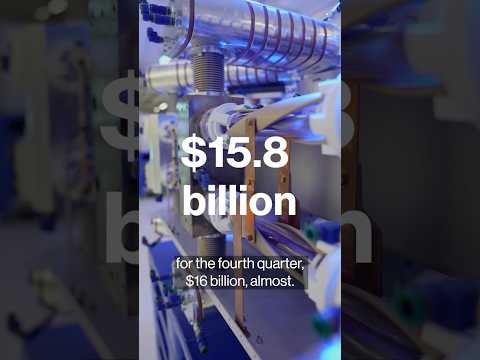
ASML Europe's most valuable company coming out with blowout earnings and yet they are cutting jobs. So what's the story. Let's get you the details in terms of the sales numbers for the fourth quarter 16 billion US almost.That is double the estimates. The forward guidance through 2026 they see sales potentially of 47 billion US above the estimates. They're seeing massive demand for their AI chipm equipment.They have a monopoly when it comes to the most sophisticated cuttingedge kit that goes into the AI chip ...