
东兴证券

Search documents
2026年度投资策略——莫愁千里路,自有到来风
Sou Hu Cai Jing· 2026-02-14 10:55
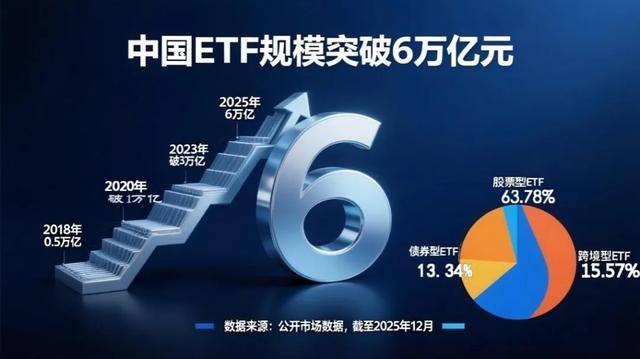
Group 1: 2025 Capital Market Review - The A-share market experienced a significant bull market in 2025, with the Shanghai Composite Index rising over 18% and surpassing the 4000-point mark, achieving multiple historical records [2] - The total trading volume of A-shares exceeded 400 trillion yuan for the first time, and the total market capitalization reached 100 trillion yuan, with margin trading balances returning to over 2 trillion yuan after ten years [2] - The total scale of ETFs in China reached 6.02 trillion yuan by the end of 2025, marking a growth of over 60% from the beginning of the year [2] Group 2: Fund Flows and Dividends - In 2025, there was a notable shift in deposits, with a slight increase of 0.62 trillion yuan in household deposits, while non-bank deposits surged by 4.11 trillion yuan, indicating a significant flow of funds from banks to the stock market [3] - The total cash dividends from A-share companies reached a record high of 2.64 trillion yuan, with 3,766 companies implementing cash dividends [3] - Over 1,300 companies announced stock repurchase plans, with a total repurchase amount exceeding 150 billion yuan [3] Group 3: Policy and Market Dynamics - In May 2025, the central bank and financial regulators introduced a series of policies to support the capital market, including interest rate cuts and measures to enhance market confidence [5] - The introduction of new listing standards for the Sci-Tech Innovation Board aimed to support companies in emerging sectors such as artificial intelligence and commercial aerospace [5] - The central government emphasized the importance of a stable capital market in its economic work meetings, indicating a commitment to enhancing the role of the capital market in economic growth [6][9] Group 4: 2026 Economic Outlook - The central economic work meeting outlined a focus on stabilizing growth and enhancing quality in 2026, with an emphasis on domestic demand and innovation-driven development [6] - A more proactive fiscal policy is expected in 2026, with plans for significant investments in consumer goods and equipment upgrades [7] - The monetary policy is anticipated to remain moderately accommodative, with expectations of 1-2 interest rate cuts throughout the year [7] Group 5: Investment Strategies for 2026 - The A-share market is expected to benefit from policy support, with a slow bull market likely to continue, emphasizing the importance of direction over index levels [18] - Three main investment themes for 2026 include the technology revolution, "anti-involution" strategies to reduce excessive competition, and safe-haven investments in the financial sector [19] - The focus on emerging industries such as AI, new energy, and advanced manufacturing is expected to create substantial investment opportunities [19]

增资、发债、新设、担保......开年中金、广发、华泰等多家券商为出海筹措“弹药”
Xin Lang Cai Jing· 2026-02-14 10:35
Core Viewpoint - Chinese securities firms are increasingly expanding their overseas operations, with multiple major and mid-sized firms announcing initiatives for international capital operations at the beginning of the year [1][2]. Group 1: Recent Developments - On February 13, major firms including CITIC Securities, CICC, and Zhongtai Securities announced guarantees for their overseas subsidiaries [2]. - GF Securities reported a change in registered capital from 7.606 billion RMB to 7.825 billion RMB due to a completed H-share placement, with funds aimed at enhancing overseas subsidiary capital [2]. - GF Securities plans to list its zero-interest convertible bonds on the Vienna MTF [3]. Group 2: Industry Trends - GF Securities is not the first to pursue overseas financing; Huatai Securities recently issued 10 billion HKD in zero-interest convertible bonds for international business support [5]. - Since 2025, over ten securities firms have made significant strides in international business, with firms like Western Securities and Dongwu Securities establishing wholly-owned subsidiaries in Hong Kong [6]. - The push into overseas markets represents a shift for Chinese securities firms from local intermediaries to global traders, driven by the need for risk hedging and capital flow [6]. Group 3: Performance Metrics - As of mid-2025, 13 out of 16 comparable A-share listed securities firms reported over 10% year-on-year growth in overseas business revenue [7]. - Notable revenue figures include CITIC Securities at 6.912 billion RMB (up 13.57%), CICC at 4.024 billion RMB (up 75.66%), and Haitong Securities at 2.459 billion RMB (up 76.21%) [8]. Group 4: Future Outlook - Experts predict that a significant number of quality domestic enterprises will connect with global markets through Hong Kong, creating opportunities for IPOs and cross-border capital services [9]. - The competitive edge in overseas business will increasingly focus on cross-border derivatives and FICC (Fixed Income, Currency, and Commodity) operations [10]. - Chinese securities firms are expanding beyond Hong Kong to Southeast Asia and the Middle East, establishing a comprehensive international business landscape [10]. Group 5: Strategic Considerations - The future growth potential for Chinese securities firms lies in cross-border wealth management, offshore RMB-related businesses, and investment banking in emerging markets [11]. - Firms are advised to build a composite team that understands both international rules and Chinese industries, while also enhancing cross-cultural integration [12].






中国国际金融股份有限公司关于重大资产重组的进展公告
Xin Lang Cai Jing· 2026-02-13 18:33
Group 1 - The core point of the article is that China International Capital Corporation (CICC) is planning a major asset restructuring involving a share swap merger with Dongxing Securities and Cinda Securities, which is expected to be classified as a significant asset restructuring under relevant regulations, but will not constitute a reverse listing [2][3]. Group 2 - The transaction is in progress, with the board of directors having approved the merger plan on December 17, 2025, and the company's A-shares resuming trading on December 18, 2025 [3][4]. - As of the announcement date, the audit and related work for the transaction have not been completed, and the company will convene another board meeting to review the transaction once these tasks are finalized [4].

东兴证券(601198) - 东兴证券股份有限公司关于重大资产重组的进展公告
2026-02-13 09:45
证券代码:601198 证券简称:东兴证券 公告编号:2026-005 东兴证券股份有限公司 关于重大资产重组的进展公告 本公司董事会及全体董事保证本公告内容不存在任何虚假记载、误导性陈述 或者重大遗漏,并对其内容的真实性、准确性和完整性承担法律责任。 一、本次交易的基本情况 东兴证券股份有限公司(以下简称公司或东兴证券)与中国国际金融股份有 限公司(以下简称中金公司)、信达证券股份有限公司(以下简称信达证券)正 在筹划由中金公司通过向东兴证券全体 A 股换股股东发行 A 股股票、向信达证 券全体 A 股换股股东发行 A 股股票的方式换股吸收合并东兴证券、信达证券(以 下简称本次交易)。本次交易预计构成《上市公司重大资产重组管理办法》规定 的重大资产重组,不构成重组上市。 公司于 2025 年 12 月 17 日召开第六届董事会第十一次会议,审议通过了《关 于<中国国际金融股份有限公司换股吸收合并东兴证券股份有限公司、信达证券 股份有限公司预案>及其摘要的议案》等与本次交易相关的议案,具体内容详见 公司刊登在上海证券交易所网站的相关公告。经向上海证券交易所申请,公司 A 股股票于 2025 年 12 月 18 ...
东兴证券:中金公司拟换股吸收合并东兴、信达证券
Ge Long Hui· 2026-02-13 09:32
Core Viewpoint - Dongxing Securities announced that China International Capital Corporation (CICC) is planning a stock swap merger with Dongxing Securities and Xinda Securities, which is expected to constitute a significant asset restructuring but will not qualify as a restructuring listing [1] Group 1 - The board of Dongxing Securities approved the relevant proposal on December 17, 2025, and the A-share stock will resume trading the following day [1] - As of the announcement date, related auditing and other work have not been completed, and the board will convene again to review and follow regulatory procedures [1] - The transaction requires approval from various boards, shareholders, and regulatory agencies, indicating a level of uncertainty [1]
信达证券:重大资产重组事项相关的审计等工作尚未完成
Ge Long Hui· 2026-02-13 09:26
Core Viewpoint - The announcement indicates that Cinda Securities is planning a share swap merger with Dongxing Securities and China International Capital Corporation (CICC) through the issuance of A-shares to all shareholders of both companies [1] Group 1: Transaction Details - The transaction is expected to constitute a significant asset restructuring as defined by the "Measures for the Administration of Major Asset Restructuring of Listed Companies" but will not qualify as a restructuring listing [1] - CICC will issue A-shares to all A-share shareholders of Dongxing Securities and Cinda Securities as part of the share swap merger [1] Group 2: Current Status - As of the date of the announcement, the auditing and related work for the transaction has not been completed [1] - The company will convene a board meeting to review the relevant proposals for the transaction once the related work is finalized, and will fulfill subsequent legal and regulatory disclosure obligations [1]
中金公司:筹划换股吸收合并东兴、信达证券,相关工作未完成
Ge Long Hui A P P· 2026-02-13 08:47
Group 1 - The core point of the article is that China International Capital Corporation (CICC) is planning a major asset restructuring by issuing A-shares to acquire Dongxing Securities and Xinda Securities, which is expected to be a significant merger but will not constitute a restructuring listing [1] - The trading plan is subject to approval from the boards of directors, shareholders, and regulatory authorities, with the outcome and timeline remaining uncertain [1] - The resumption of trading for the company's A-shares is scheduled for December 18, 2025, after the completion of relevant audits and procedures [1]
券商另类投资赛道布局显著分化撤退者:跟投成“包袱”,资本回报承压加码者:锚定硬科技,补“弹药”拼专业告别粗放走向精细化发展
Zhong Guo Ji Jin Bao· 2026-02-13 07:53
Core Viewpoint - The alternative investment landscape among securities firms in China is experiencing a significant divergence, with some firms retracting while others are expanding their investments [2][5]. Group 1: Firms Retracting - Firms like Caida Securities and Dongxing Securities are reducing their capital in alternative investment subsidiaries due to poor financial performance, with Caida's subsidiary reporting a revenue of -1.19 million yuan and a net loss of 2.47 million yuan for the first nine months of 2025 [2][3]. - Northeast Securities' alternative subsidiary reported a total revenue of -1.84 million yuan and a net loss exceeding 16 million yuan in 2024, leading to a capital reduction to 1 billion yuan [3]. - The overall trend shows that many smaller securities firms are facing capital pressure and liquidity risks due to the requirements of the Sci-Tech Innovation Board's co-investment system, which mandates a 2%-5% co-investment ratio and a 24-month lock-up period [3][6]. Group 2: Firms Expanding - In contrast, firms like Caitong Securities and Guohai Securities are increasing their capital in alternative investment subsidiaries, with Caitong planning to raise up to 2 billion yuan to enhance its capital strength [5][6]. - Guohai Securities announced a 500 million yuan capital increase, citing rapid growth in investment business and the need to bolster capital for competitive advantage [5]. - Other firms, such as Zhongtai Securities and Nanjing Securities, are also focusing on alternative investments, targeting specialized and innovative enterprises, indicating a shift from passive co-investing to proactive investment strategies [5][6]. Group 3: Industry Trends - The divergence in strategies reflects a broader shift in the industry from a focus on scale to a more refined approach to capital management, emphasizing project selection, post-investment support, and exit management [6]. - Experts suggest that the current environment necessitates a transition from "broad arbitrage" to "meticulous cultivation," focusing on precise project screening, risk control, and efficient capital turnover [6]. - The changes in capital allocation strategies among securities firms highlight the industry's adaptation to regulatory changes and market conditions, with a growing emphasis on professional capabilities and risk management [6].




券商另类投资大分化:谁在撤退?谁在加码?
Sou Hu Cai Jing· 2026-02-13 07:51
Core Viewpoint - The alternative investment landscape among Chinese securities firms is experiencing a significant divergence, with some firms retracting while others are expanding their investments in this sector [1]. Group 1: Firms Retracting from Alternative Investments - Firms like Caida Securities and Dongxing Securities are reducing or canceling their alternative investment subsidiaries due to poor financial performance and the need to improve overall capital efficiency [2]. - Caida Securities announced the cancellation of its wholly-owned subsidiary, Caida Xinrui Investment, which reported a revenue of -1.1863 million yuan and a net loss of 2.4697 million yuan for the first nine months of 2025 [2]. - Dongxing Securities reduced its alternative investment subsidiary's registered capital from 2 billion yuan to 500 million yuan, reflecting similar financial struggles [2]. Group 2: Firms Expanding in Alternative Investments - In contrast, firms like Caitong Securities and Guohai Securities are increasing their capital in alternative investment subsidiaries, indicating a strategic focus on hard technology and specialized sectors [4][5]. - Caitong Securities plans to increase its subsidiary's capital by up to 2 billion yuan, aiming to enhance its investment capabilities in hard technology [4]. - Guohai Securities announced a 500 million yuan capital increase for its investment subsidiary, citing rapid business growth and the need to strengthen capital [5]. Group 3: Market Dynamics and Strategic Shifts - The divergence in strategies reflects a broader trend where firms are moving from a model of broad-based investment to a more refined approach focused on project selection and post-investment management [6]. - The new company law requiring registered capital to be fully paid within five years has prompted some firms to reduce capital to mitigate compliance risks [3]. - The industry is shifting towards a more sophisticated investment strategy, emphasizing precise project selection, risk management, and efficient capital turnover [7].
收缩与增资并行 券商另类投资战略分化
Shang Hai Zheng Quan Bao· 2026-02-12 17:42
Core Viewpoint - Multiple brokerage firms are reducing their alternative investment subsidiaries, indicating a strategic restructuring within the industry as firms differentiate their approaches to alternative investments [1][4]. Group 1: Company Actions - Dongxing Securities announced a capital reduction for its subsidiary Dongxing Investment, decreasing its registered capital from 20 billion to 7 billion yuan, following a previous reduction of 10 billion yuan [2]. - Zhongshan Securities' parent company Jinlong Co. agreed to reduce the capital of its wholly-owned subsidiary Shenzhen Jinhong Shaohui Investment Co., by 150 million yuan, bringing its registered capital down to 50 million yuan [1]. - Northeast Securities decided to reduce the capital of its subsidiary Dongzheng Rongda Investment Co. by 2 billion yuan due to poor performance, with reported total revenue of -1.836 million yuan and a net loss exceeding 16 million yuan in 2024 [3]. Group 2: Industry Trends - The alternative investment landscape among brokerages is becoming increasingly polarized, with some firms like Zhongyuan Securities, Dongbei Securities, and Guodu Securities reducing capital, while others like Caitong Securities and Guohai Securities are increasing their investments [1][4]. - Guohai Securities announced a 500 million yuan capital increase for its alternative investment subsidiary, raising its registered capital to 1.5 billion yuan, citing rapid growth in investment business as a reason [4]. - Caitong Securities plans to increase its wholly-owned alternative investment subsidiary's capital by up to 2 billion yuan, raising its registered capital from 1.5 billion to a maximum of 3.5 billion yuan [4]. Group 3: Expert Insights - Industry experts suggest that the frequent capital reductions are driven by performance volatility and underwhelming results from alternative investment subsidiaries [3]. - The new company law mandates that registered capital must be fully paid within five years, prompting brokerages to adjust their capital structures to mitigate compliance risks [3]. - According to Tian Lihui, the director of the Financial Development Research Institute at Nankai University, the capital management of brokerages is maturing, shifting from a focus on scale to a more refined approach to capital returns [3][5].
