
问止中医

Search documents
AI中医冲刺港股IPO,如何把控合规风险?
2 1 Shi Ji Jing Ji Bao Dao· 2025-08-04 12:35
Core Viewpoint - The AI healthcare sector is experiencing rapid growth, and traditional Chinese medicine (TCM) is seeking to leverage this trend through companies like Wenzhi TCM, which is aiming for an IPO in Hong Kong after previously failing to do so [1][2]. Company Overview - Wenzhi TCM, established in 2018, is the largest AI TCM service provider in China, with its business divided into three main segments: TCM medical services, TCM lifestyle products, and TCM brain subscription services [1][2]. - The company generated 89.6% of its revenue from TCM medical services in the previous year [1][3]. - Wenzhi TCM has completed five rounds of financing, raising approximately 160 million RMB, with notable investors including BlueRun Ventures and ZhenFund [3]. Market Potential - The AI-assisted TCM market is projected to grow significantly, with AI penetration expected to rise from 1.4% in 2024 to 5.4% in 2029, and the market size anticipated to increase from 16 billion RMB to 100.1 billion RMB during the same period, reflecting a compound annual growth rate of 44.3% [2]. - Wenzhi TCM holds a market share of 1.5% and 1.3% in 2023 and 2024, respectively, making it the largest AI-assisted TCM service provider in mainland China [3]. Financial Performance - Wenzhi TCM's revenue for the years 2022, 2023, and 2024 (up to May) was 62 million RMB, 189 million RMB, and 236 million RMB, respectively, with corresponding net losses of 154 million RMB, 194 million RMB, and 45 million RMB [3]. - The average consultation fee for patients has been relatively high, with amounts of 817.9 RMB, 933.2 RMB, and 937.1 RMB for the years 2022, 2023, and 2024, respectively [3]. Compliance and Challenges - Wenzhi TCM faces compliance risks, particularly due to the lack of medical qualifications among its founding team, which may raise concerns about the credibility of its services [5]. - The company has received numerous consumer complaints regarding refund difficulties, adverse reactions to medications, and misleading advertising [5]. - Key challenges in integrating AI with TCM include data standardization, algorithmic integration with TCM diagnostic logic, and a shortage of interdisciplinary talent [5]. Future Considerations - For Wenzhi TCM to succeed in the AI healthcare landscape, it must focus on adjusting its business structure, establishing industry standards, overcoming technical barriers, and cultivating interdisciplinary talent to build trust [6].
一周港股IPO:问止中医、欣旺达等7家递表;天岳先进、银诺医药通过聆讯
Cai Jing Wang· 2025-08-04 10:10
Summary of Key Points Core Viewpoint - The Hong Kong Stock Exchange (HKEX) reported that seven companies submitted applications for listing, with two companies passing the hearing and one company currently in the process of an initial public offering (IPO) without any new stocks listed during the week. Group 1: Companies Submitting Applications - **Wenzhi Traditional Chinese Medicine**: The largest AI-assisted TCM service provider in mainland China, with projected revenues of approximately 621.69 million RMB in 2022 and a loss of about 154 million RMB in the same year [2] - **Zhengpin Holdings Limited**: Engaged in the development and distribution of health and beauty supplements in Hong Kong, with revenues projected to reach approximately 110 million HKD in 2025 and a profit of about 35.5 million HKD in the same year [3] - **YunTian LiFei Technology Co., Ltd.**: A leading AI company focusing on AI inference chips, with revenues expected to be around 5.46 billion RMB in 2022 and a loss of approximately 4.47 billion RMB [4] - **Xinnengda Electronics Co., Ltd.**: A global leader in lithium battery technology, with projected revenues of about 521.62 billion RMB in 2022 and a profit of approximately 7.63 billion RMB [5] - **Danno Pharmaceutical (Suzhou) Co., Ltd.**: A biotech company focused on innovative drug development, with losses projected to be around 1.22 billion RMB in 2023 [6] - **Innovation International Industrial Group**: Engaged in the production of aluminum products, with revenues expected to reach approximately 134.90 billion RMB in 2022 and a profit of about 9.13 billion RMB [7] - **Wangshan Wangshui Biopharmaceutical Co., Ltd.**: Focused on small molecule drug development, with revenues projected to be around 200 million RMB in 2023 [8] Group 2: Companies Passing Hearings - **Shandong Tianyue Advanced Technology Co., Ltd.**: A leading manufacturer of silicon carbide substrates, with revenues projected to be approximately 4.17 billion RMB in 2022 and a loss of about 1.76 billion RMB [8] - **Guangzhou Yinnuo Pharmaceutical Group Co., Ltd.**: Focused on innovative drug development for metabolic disorders, with no recorded revenue in 2023 and a loss of approximately 733 million RMB [9] Group 3: IPO and Market Updates - **Zhonghui Biotechnology-B**: Plans to offer 33.44 million H-shares with a price range of 12.9 to 15.5 HKD per share, aiming for a total of approximately 1.02 billion HKD from cornerstone investors [10] - **HKEX New IPO Regulations**: New rules effective from August 4 aim to enhance the pricing and allocation framework for IPOs, requiring at least 40% of shares to be allocated to book-building investors [11] - **A+H Listing Trends**: Regulatory considerations are underway to increase the minimum market capitalization requirement for A-share companies seeking to list in Hong Kong from 10 billion to 20 billion RMB [12]

公司研究室IPO周报:恒坤新材IPO暂缓审议;Figma上市首日市值560亿美元
Sou Hu Cai Jing· 2025-08-01 08:19
IPO Dynamics - Changjiang Energy Technology successfully passed the review at the Beijing Stock Exchange on July 28 [1] - Delijia successfully passed the review at the Shanghai Stock Exchange on July 31 [1] New Stock Listings - Two new stocks were listed this week: Hanguo Group (001221) on the Shenzhen Stock Exchange on July 30 and Dingjia Precision (920005) on the Beijing Stock Exchange on July 29 [2] New Stock Subscriptions - Three new stocks are available for subscription this week: Tianfulong (603406) on the Shanghai Stock Exchange on July 28, Youli Intelligent (920007) on the Beijing Stock Exchange on July 29, and Guangdong Jianke (301632) on the ChiNext board on August 1 [3] Hong Kong Stock Market - Wen Zhi Traditional Chinese Medicine and Zhengpin Holdings submitted their prospectuses to the Hong Kong Stock Exchange on July 29 [4] - Yuntian Lifefly and Xinwangda submitted their prospectuses on July 30, while Tianyue Advanced passed the hearing at the Hong Kong Stock Exchange [5] - Innovation International and Wangshan Wangshui submitted their prospectuses on July 31, and Yinnuo Pharmaceutical passed the hearing [6] Hot Topics - Hengkun New Materials' IPO review was postponed due to three major questions raised during the Shanghai Stock Exchange listing committee meeting on July 25 [7][8] - The questions focused on intellectual property risks, revenue recognition methods, and the rationale behind deposit interest rates exceeding borrowing rates [8] Figma's IPO - Figma officially listed on the New York Stock Exchange on July 31, becoming the largest IPO in the U.S. this year with a market capitalization of $56.3 billion (approximately 400 billion RMB) [9] - The IPO price was set at $33 per share, and the stock surged 250% by the end of the trading day [9] - Figma's revenue for 2024 is projected to be $749 million, a 48% increase year-over-year, with Q1 2025 revenue at $228 million, up 46% [9] Xinnengda's IPO - Xinnengda Electronics submitted its listing application to the Hong Kong Stock Exchange on July 30, becoming the third domestic power battery company to seek "A+H" listing after CATL and Yiwei Lithium Energy [10] - The net proceeds from the fundraising will be used for international growth strategies, including expanding overseas production facilities and sales networks, enhancing R&D capabilities, and potential investments or acquisitions [10] - As of March 31, 2025, Xinnengda operates 19 production bases in China and 6 overseas [11]

问止中医抢滩港股,中医+AI的增长叙事够撑起门面吗
Zhi Tong Cai Jing· 2025-07-31 02:49
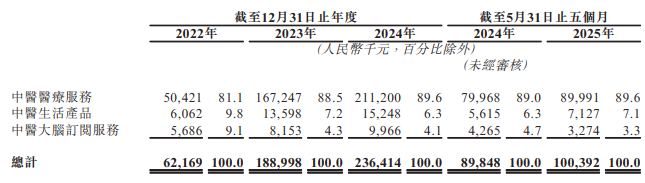
Core Viewpoint - The aging population in China is driving the growth of the elder care industry, with traditional Chinese medicine (TCM) becoming a focal point for addressing medical needs, leading to increased interest from companies like Wenzhi TCM in capital markets [1][6]. Company Overview - Wenzhi TCM has submitted a listing application to the Hong Kong Stock Exchange, positioning itself as the largest AI-assisted TCM service provider in mainland China, with a market share of approximately 1.3% in 2024 [1]. - Founded in 2018, Wenzhi TCM has developed a comprehensive TCM business model that caters to various customer needs, from disease treatment to health maintenance and TCM education [1][2]. - The company's revenue has shown significant growth, increasing from 62.169 million RMB in 2022 to 236.414 million RMB in 2024 [3][4]. Revenue Breakdown - Wenzhi TCM's revenue is primarily derived from three segments: TCM medical services, TCM lifestyle products, and TCM brain subscription services. The contributions from these segments from 2022 to 2024 are as follows: - TCM medical services: 50.421 million RMB (81.1%), 167.247 million RMB (88.5%), 211.200 million RMB (89.6%) [3][4]. - TCM lifestyle products: 6.062 million RMB (9.8%), 13.598 million RMB (7.2%), 15.248 million RMB (6.3%) [3][4]. - TCM brain subscription services: 5.686 million RMB (9.1%), 8.153 million RMB (4.3%), 9.966 million RMB (4.1%) [3][4]. Profitability and Financial Performance - Despite the rapid revenue growth, Wenzhi TCM's profitability remains a concern, with net losses reported at 154 million RMB in 2022, 193 million RMB in 2023, and 45.367 million RMB in 2024 [4][5]. - In the first five months of this year, the company's net loss expanded to 43.841 million RMB, compared to a loss of 2.386 million RMB in the same period last year [5]. Market Dynamics - The demand for medical services in mainland China is on the rise due to factors such as population aging, urbanization, and increased health awareness, with TCM becoming a significant pillar in the healthcare sector [6]. - The market for AI-assisted TCM services is projected to reach approximately 16 billion RMB in 2024, with a compound annual growth rate (CAGR) of 113.7% from 2020 to 2024 [6]. - The number of outpatient visits to TCM providers is expected to reach 2.4 billion in 2024, with a CAGR of 9.1% from 2020 to 2024 [6]. Strategic Initiatives - Wenzhi TCM plans to optimize its online and offline networks, currently operating 11 physical clinics and four herbal medicine centers across major cities [7]. - The company aims to expand its presence in first- and second-tier cities and enhance its physician team while also exploring overseas business opportunities targeting regions with significant Chinese populations [7]. Technological Integration - The integration of AI in TCM is seen as a catalyst for industry growth, enhancing the standardization of services and improving diagnostic support [8][10]. - The current stage of AI and TCM integration is still early, with uncertainties regarding technological evolution and market capture potential [10].

新股前瞻|问止中医抢滩港股,中医+AI的增长叙事够撑起门面吗?
智通财经网· 2025-07-31 02:45
Core Viewpoint - The aging population in China is driving the growth of the elder care industry, with traditional Chinese medicine (TCM) becoming a focal point for addressing medical needs, leading to increased interest from companies like Wenzhi TCM in capital markets [1][6]. Company Overview - Wenzhi TCM has submitted a listing application to the Hong Kong Stock Exchange, positioning itself as the largest AI-assisted TCM service provider in mainland China, with a market share of approximately 1.3% in 2024 [1]. - Founded in 2018, Wenzhi TCM has developed a comprehensive TCM business model that caters to various customer needs, including disease treatment, health maintenance, and TCM education [1][2]. - The company's revenue has shown significant growth, increasing from 62.169 million RMB in 2022 to 236.414 million RMB in 2024 [3][4]. Revenue Breakdown - Wenzhi TCM's revenue is primarily derived from three segments: TCM medical services, TCM lifestyle products, and TCM brain subscription services. The contributions from these segments from 2022 to 2024 are as follows: - TCM medical services: 50.421 million RMB (81.1%), 167.247 million RMB (88.5%), 211.200 million RMB (89.6%) [3][4]. - TCM lifestyle products: 6.062 million RMB (9.8%), 13.598 million RMB (7.2%), 15.248 million RMB (6.3%) [3][4]. - TCM brain subscription services: 5.686 million RMB (9.1%), 8.153 million RMB (4.3%), 9.966 million RMB (4.1%) [3][4]. Profitability and Financial Performance - Despite the rapid revenue growth, Wenzhi TCM's profitability remains a concern, with net losses reported at 154 million RMB in 2022, 193 million RMB in 2023, and 45.367 million RMB in 2024 [4][5]. - In the first five months of the current year, the company's net loss expanded to 43.841 million RMB, compared to a loss of 2.386 million RMB in the same period last year [5]. Market Opportunities - The demand for medical services in China is on the rise due to factors such as population aging, urbanization, and increased health awareness, with TCM becoming a significant pillar in the healthcare sector [6]. - The market for AI-assisted TCM services is projected to reach approximately 16 billion RMB in 2024, with a compound annual growth rate (CAGR) of 113.7% from 2020 to 2024 [6]. - The number of TCM outpatient visits is expected to reach 2.4 billion in 2024, with a CAGR of 9.1% from 2020 to 2024 [6]. Strategic Initiatives - Wenzhi TCM plans to optimize its online and offline networks, currently operating 11 physical clinics and four herbal medicine centers across major cities [7]. - The company aims to expand its presence in first- and second-tier cities and enhance its physician team while also exploring overseas markets, particularly in regions with significant Chinese populations [7]. AI Integration in TCM - The integration of AI in TCM is seen as a catalyst for industry growth, enhancing the standardization of services and improving diagnostic support [8][10]. - AI's ability to process data and recognize patterns complements TCM's individualized treatment approach, potentially addressing supply-demand mismatches in the industry [8][10].
“中医AI第一股”累亏超4亿,问止中医现金流承压
阿尔法工场研究院· 2025-07-31 00:07
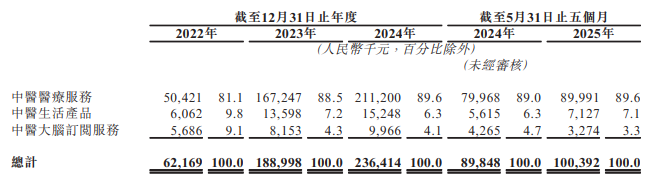
Core Viewpoint - The article discusses the potential valuation bubble hidden under the "AI + Traditional Chinese Medicine" concept, emphasizing three critical issues: cash flow, technological barriers, and business structure optimization [1][12]. Company Overview - WenZhi Traditional Chinese Medicine, referred to as the "first AI TCM stock," was founded in 2018 by three co-founders, with the majority shareholder being the youngest co-founder, Cui Xiangrui, who holds 43.41% of the shares [1]. - The company has completed five rounds of financing since its establishment, raising approximately 160 million RMB, with notable investors including BlueRun Ventures and ZhenFund [2]. Financial Performance - WenZhi's revenue has grown from 62.2 million RMB in 2022 to 236 million RMB in 2024, with a revenue of approximately 100 million RMB in the first five months of 2025, reflecting an 11.7% year-on-year increase [4]. - Despite revenue growth, the company has not yet achieved profitability, with cumulative losses of approximately 437 million RMB from 2022 to May 2025, including a loss of 193 million RMB in 2023, exceeding that year's revenue of 189 million RMB [4][5]. Business Structure - The company's revenue is primarily derived from TCM medical services, which accounted for over 80% of total revenue from 2022 to 2024, increasing to 89.6% in 2024 [5]. - The business model shows a significant dependency on a single revenue stream, raising concerns about risk resilience and potential revenue decline if online traffic growth slows or regulations tighten [5]. Market Position and Competition - According to a report, WenZhi is the largest AI-assisted TCM service provider in mainland China, with market shares of 1.5% and 1.3% in 2023 and 2024, respectively [10]. - The market is highly fragmented, with the top five companies holding only 5.4% of the market share, indicating that WenZhi's market dominance is not yet established [10]. Regulatory Challenges - Regulatory compliance issues pose significant risks for WenZhi's IPO, with scrutiny over foreign investment compliance and data security measures [7]. - The company has faced consumer complaints regarding service quality, which could lead to administrative penalties if deemed misleading [7]. Industry Trends - The AI TCM market is projected to grow from 10.9 billion RMB in 2023 to 86.9 billion RMB by 2028, with a compound annual growth rate of 49.3% [11]. - However, the company faces challenges in data quality and R&D investment, which may hinder its ability to compete in next-generation technologies [11]. Investment Considerations - Investors are advised to be cautious of potential valuation bubbles under the "AI + TCM" concept and to focus on the company's ability to achieve positive cash flow, solidify technological barriers, and optimize its business structure by 2025 [12].

问止中医再度递表港交所
Jin Rong Jie· 2025-07-30 02:16
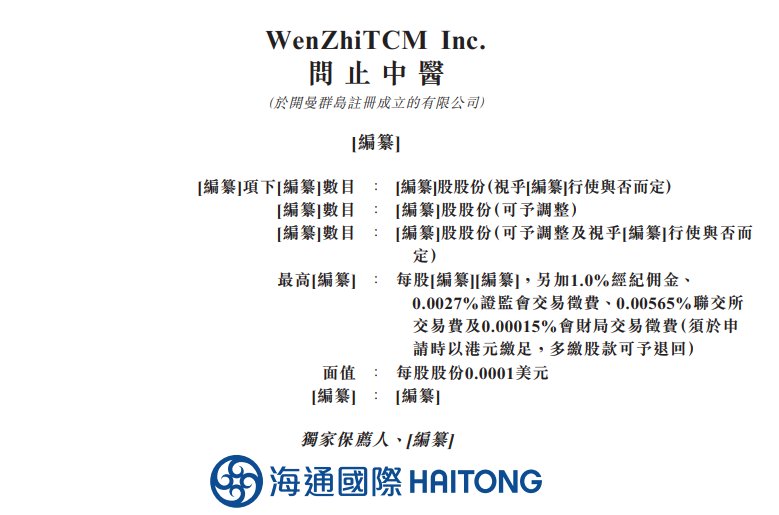
Core Viewpoint - The company Wen Zhi Traditional Chinese Medicine submitted a listing application to the Hong Kong Stock Exchange on July 29, with Haitong International as the sole sponsor. This follows a previous application submitted on January 9, 2025 [1]. Group 1 - Wen Zhi Traditional Chinese Medicine has officially applied for a listing on the Hong Kong Stock Exchange [1]. - Haitong International is acting as the sole sponsor for the listing application [1]. - The company had previously submitted a listing application on January 9, 2025 [1].
问止中医递表港交所 海通国际为独家保荐人
Zheng Quan Shi Bao Wang· 2025-07-30 01:09
Core Viewpoint - Wenzhi Traditional Chinese Medicine has submitted its listing application to the Hong Kong Stock Exchange, with Haitong International as its sole sponsor [1] Group 1: Market Position - Wenzhi Traditional Chinese Medicine is projected to be the largest AI-assisted traditional Chinese medicine service provider in mainland China in 2023 and 2024, with market shares of 1.5% and 1.3% respectively [1] Group 2: Product and Service Offerings - The company has developed "Traditional Chinese Medicine Brain," which is the first and only AI-assisted diagnostic system for traditional Chinese medicine in mainland China, validated through clinical consistency studies and expert reviews from top-tier hospitals [1] - Wenzhi generates revenue through traditional Chinese medicine services, wellness and knowledge products, and subscription services for the TCM Brain [1] Group 3: Community Engagement - The establishment of "Jingyi Academy" has resulted in the largest registered TCM community in mainland China, promoting TCM culture and knowledge sharing, while also accumulating potential customers for the company's business [1]
问止中医再度递表港交所 为中国内地最大的人工智能辅助中医医疗服务提供商
Zhi Tong Cai Jing· 2025-07-30 00:13
Core Viewpoint - The company, Wenzhi Traditional Chinese Medicine, has submitted a listing application to the Hong Kong Stock Exchange, with Haitong International as the sole sponsor. This follows a previous application made on January 9, 2025 [1]. Company Overview - Wenzhi Traditional Chinese Medicine is recognized as the largest provider of AI-assisted traditional Chinese medicine (TCM) medical services in mainland China for 2023 and 2024, holding market shares of 1.5% and 1.3% respectively. AI-assisted TCM services utilize AI technology to support clinical decision-making based on the expertise of senior TCM practitioners [3]. - The company has established a comprehensive TCM business model that addresses customer needs from disease treatment to health maintenance and TCM education [3]. Financial Performance - The revenue figures for Wenzhi Traditional Chinese Medicine are as follows: - 2022: 62.169 million RMB - 2023: approximately 188.998 million RMB - 2024: approximately 236.414 million RMB - Five months ending May 31, 2024: 89.848 million RMB - Five months ending May 31, 2025: approximately 100.392 million RMB - The company reported losses of approximately 154.421 million RMB in 2022, 193.914 million RMB in 2023, and 45.367 million RMB in 2024 [5][6]. Market Characteristics - The TCM medical services industry in mainland China is highly fragmented, with significant potential for development and integration. However, there are challenges on both the supply and demand sides. The supply side is particularly constrained by a shortage of skilled and experienced TCM practitioners, with only about 760,000 licensed TCM practitioners in 2024, of which less than 5% are senior practitioners [4].
新股消息 问止中医再度递表港交所 为中国内地最大的人工智能辅助中医医疗服务提供商
Jin Rong Jie· 2025-07-30 00:10
Core Viewpoint - The company, Wenzhi Traditional Chinese Medicine, has submitted a listing application to the Hong Kong Stock Exchange, aiming to capitalize on its position as a leading provider of AI-assisted TCM services in mainland China [1] Company Overview - Wenzhi Traditional Chinese Medicine is recognized as the largest provider of AI-assisted TCM medical services in mainland China, holding market shares of 1.5% and 1.3% for the years 2023 and 2024 respectively [1] - The company has developed an AI-assisted diagnostic system called "TCM Brain," which is the first and only TCM AI-assisted diagnostic system validated through clinical consistency studies at a Class III hospital in mainland China [2] Market Characteristics - The TCM medical service industry in mainland China is highly fragmented, with significant potential for development and integration [2] - As of 2024, there are approximately 760,000 licensed TCM practitioners in mainland China, with less than 5% being senior practitioners, indicating a supply-demand imbalance [2] Financial Performance - The company's revenue for the fiscal years 2022, 2023, and 2024 was approximately 62.17 million, 189 million, and 236 million RMB respectively, with losses of approximately 154 million, 194 million, and 45.37 million RMB for the same periods [3] - For the five months ending May 31, 2024, the company reported revenue of approximately 89.84 million RMB and a loss of approximately 2.39 million RMB [3] Community Engagement - Wenzhi Traditional Chinese Medicine has established the Jingyi Academy, which is the largest registered TCM community in mainland China as of May 31, 2025, aimed at promoting TCM culture and enhancing brand awareness [3]