
AWS

Search documents
WELTWEIT FÜHRENDE TECHNOLOGIEUNTERNEHMEN GRÜNDEN TRUSTED TECH ALLIANCE
Prnewswire· 2026-02-15 03:11
Core Viewpoint - The Trusted Tech Alliance (TTA) has been established by 15 leading global technology companies from 10 countries to promote a trustworthy technology stack that emphasizes transparency, security, and data privacy, addressing the growing skepticism towards digital technologies and their societal impacts [1][2]. Group 1: Formation and Purpose - The TTA aims to create a collaborative environment among technology providers to ensure reliability and resilience in technology services, responding to the rapid pace of technological change and increasing complexity in the global landscape [1]. - The alliance is built on a shared set of principles that all member companies must adhere to, focusing on creating public trust and ensuring that the benefits of emerging technologies are widely accessible [1][2]. Group 2: Member Companies and Principles - Founding members of the TTA include prominent companies such as Amazon Web Services (AWS), Google Cloud, Microsoft, and Ericsson, among others [1]. - The TTA has agreed on five key principles that define what it means to be a trusted global technology provider: 1. Upholding the rule of law and data privacy 2. Fostering an open, cooperative, inclusive, and resilient digital ecosystem 3. Ensuring reliable supply chain monitoring and security 4. Maintaining operational transparency, secure development, and independent assessment 5. Promoting transparent corporate governance and ethical behavior [1][2]. Group 3: Industry Impact and Collaboration - The TTA emphasizes the importance of collaboration among like-minded companies to enhance customer trust and maximize the benefits of technology for economic and societal advancement [2]. - The alliance seeks to strengthen global standards and promote a trustworthy digital ecosystem that can adapt to the evolving technological landscape, particularly in areas such as artificial intelligence and cybersecurity [2][3].







TestMu AI (anteriormente LambdaTest) presenta los ganadores del 2025 Partner of the Year Award
Prnewswire· 2026-02-14 20:02
Core Insights - TestMu AI, formerly known as LambdaTest, announced the winners of the 2025 Partner of the Year Awards, celebrating strategic excellence among industry partners and individual visionaries in quality engineering [1] - The awards recognize exceptional contributions from global partners that enable teams to advance rapidly while maintaining reliability for the next generation of AI-native applications [1] Award Categories and Winners - Quality Engineering Team Excellence Award: Wipro [1] - Emerging Partner of the Year, Southeast Asia: bneXt [1] - Emerging Partner of the Year, Latin America: PrimeUp [1] - Reseller of the Year, Latin America: OSB Software [1] - Emerging Reseller of the Year, India: SoftwareOne [1] - Partner of the Year, India: QualityKiosk Technologies [1] - Partner of the Year, Middle East and Africa: Maveric Systems Limited [1] - Emerging Reseller of the Year, Europe: Adept Technologies B.V. [1] - Reseller of the Year, Europe: QBS Software [1] - Partner of the Year, Europe: Accenture [1] - Emerging Partner of the Year, Americas: Zensar Technologies [1] - Partner of the Year, Americas: UST Global [1] - Ecosystem Partner Award: AccelQ [1] - Global Tech Innovation Award: Microsoft [1] - Technology Partner of the Year Award: AWS [1] - Global Partner of the Year: Infosys [1] Individual Excellence Awards - QE Transformation Leader Award: Subba Lakshmi Ramaswamy, Accenture [1] - Innovation Leader Award: Richa Agrawal, GlobalLogic [1] - CXO Whisperer in Quality Engineering: Pradeepkumar Govindasamy, QualiZeal [1] - Growth Accelerator Award: Mohan Krishna Balakrishnan, Maveric Systems Limited [1] - Excellence in Quality Engineering Award: Mobin Thomas, UST Global [1] - Quality Engineering Catalyst Award: Mhahesh Muraleedhara, Zensar Technologies [1] - Distinguished Digital Leader Award: Kaushik Chakraborty, LTIMindtree [1] - Technology Trailblazer Award: Harish Saidu, Infosys [1] - Digital Trailblazer Leader Award: Faizan Khan, ITC Infotech [1] - QE Technology Visionary Leader Award: Dror Avrilingi, Amdocs [1] - Industry Leader Excellence Award: Bhagi Devalaraju, Infosys [1] - Pioneer Technology Leader Award: Antony Kaplan, Accenture UK & Ireland [1] - Partner Visionary Award: Anish Behanan, Capgemini [1]
TestMu AI (ehemals LambdaTest) gibt die Gewinner der Partner of the Year Award 2025 bekannt
Prnewswire· 2026-02-14 19:56
Core Insights - TestMu AI, formerly known as LambdaTest, announced the winners of the 2025 Partner of the Year Award, recognizing strategic excellence in quality management [1] - The awards celebrate the contributions of global partners and visionaries in transforming quality management in the AI era [1] Award Categories and Winners - Quality Engineering Team Excellence Award: Wipro - Emerging Partner of the Year, Southeast Asia: bneXt - Emerging Partner of the Year, Latin America: PrimeUp - Reseller of the Year, Latin America: OSB-Software - Emerging Reseller of the Year, India: SoftwareOne - Partner of the Year, India: QualityKiosk Technologies - Partner of the Year, Middle East and Africa: Maveric Systems Limited - Emerging Reseller of the Year, Europe: Adept Technologies B.V. - Reseller of the Year, Europe: QBS-Software - Partner of the Year, Europe: Accenture - Emerging Partner of the Year, North and South America: Zensar Technologies - Partner of the Year, North and South America: UST Global - Ecosystem Partner Award: AccelQ - Global Tech Innovation Award: Microsoft - Technology Partner of the Year Award: AWS - Global Partner of the Year: Infosys [1] Individual Excellence Awards - QE Transformation Leader Award: Subba Lakshmi Ramaswamy, Accenture - Innovation Leader Award: Richa Agrawal, GlobalLogic - CXO Whisperer for Quality Engineering: Pradeepkumar Govindasamy, QualiZeal - Growth Accelerator Award: Mohan Krishna Balakrishnan, Maveric Systems Limited - Excellence in Quality Engineering Award: Mobin Thomas, UST Global - Quality Engineering Catalyst Award: Mhahesh Muraleedhara, Zensar Technologies - Distinguished Digital Leader Award: Kaushik Chakraborty, LTIMindtree - Technology Trailblazer Award: Harish Saidu, Infosys - Digital Trailblazer Leader Award: Faizan Khan, ITC Infotech - QE Technology Visionary Leader Award: Dror Avrilingi, Amdocs - Industry Leader Excellence Award: Bhagi Devalaraju, Infosys - Pioneer Technology Leader Award: Antony Kaplan, Accenture UK & Ireland - Partner Visionary Award: Anish Behanan, Capgemini [1] Company Overview - TestMu AI is a full-stack platform for agent-based AI quality assurance, enabling teams to test intelligently and deliver faster [1] - The platform is designed for scalability and offers end-to-end AI agents for planning, creating, executing, and analyzing software quality [1]
再谈Token需求“通胀”:从云到大模型
Guolian Minsheng Securities· 2026-02-13 11:13
Investment Rating - The report maintains a "Hold" rating for the computer industry [6] Core Insights - The demand for Tokens is experiencing "inflation," which benefits cloud computing and gives model vendors pricing power [3][4] - The traditional internet model of free services is being disrupted as the industry shifts from free traffic to Tokens as a measurable unit of production [5][10] - The increase in Token consumption is driven by the evolution of user needs from simple Q&A to complex tasks requiring significant computational resources [8][10] Summary by Sections Token Demand Inflation - Token inflation refers to the structural increase in Token consumption per user over time, driven by more complex user interactions with models [8] - Users are increasingly utilizing models for tasks such as code reconstruction and document generation, leading to higher Token consumption [8][10] Changes in the Large Model Era - Tokens are becoming a measurable production resource rather than free traffic, with each interaction consuming computational resources [5][10] - The pricing strategy of model vendors is evolving, allowing them to convert computational scarcity into profit through tiered pricing and subscription models [10][11] Investment Recommendations - The report suggests monitoring the impact of price increases and Token demand on profit margins in the short term, while tracking subscription retention and expansion in the medium term [10][11] - Long-term prospects are positive for companies that can integrate AI into workflows, creating a demand for AI governance tools [11]
算力为王:AI数据中心万亿赛道的产业链争霸与投资风暴
QYResearch· 2026-02-13 09:30
Core Insights - The article emphasizes the accelerated global construction of AI-driven data centers, highlighting significant investments from major tech companies like Meta and Mistral AI, which reflect the strategic importance of AI computing power deployment [2][3] - Data centers are not only foundational for AI applications but also serve as critical support for profit growth and technological competition across the industry [4] Market Size and Policy Environment by Region - North America: Projected market size of approximately $95-100 billion by 2026 and $300-350 billion by 2030, with a CAGR of ~28%. The region benefits from supportive AI innovation policies and strict data privacy regulations [6] - Europe: Expected market size of around $40-45 billion by 2026 and $120-150 billion by 2030, with a CAGR of ~25%. The region faces strict GDPR compliance and has a strong demand for localized data centers [6] - China: Anticipated market size of about $50-55 billion by 2026 and $160-200 billion by 2030, with a CAGR of ~27%. The government encourages AI and computing infrastructure development [6] - South Korea: Estimated market size of $5-6 billion by 2026 and $20-25 billion by 2030, with a CAGR of ~30%. The government promotes AI strategies and local semiconductor advantages [6] - Japan: Projected market size of $6-7 billion by 2026 and $18-22 billion by 2030, with a CAGR of ~23%. The region's stable demand comes from high-end manufacturing and finance sectors [6] - India: Expected market size of $3-4 billion by 2026 and $12-15 billion by 2030, with a CAGR of ~28-30%. The region shows rapid growth in cloud computing and AI applications [6] Key Industry Chain and Leading Companies - AI Chips/Accelerators: Key players include NVIDIA, AMD, Intel, and Google, focusing on high-performance AI training and inference [8] - Data Center Infrastructure: Major operators like Equinix and Digital Realty, along with self-built centers from Meta, AWS, and Microsoft, dominate the market [8] - Cloud Services/AI Platforms: AWS, Microsoft Azure, and Google Cloud are leading providers of AI services and solutions [8] - Storage/Memory: Companies like Samsung and SK Hynix are crucial for high-speed storage demands [9] - Network Equipment: Cisco and Arista Networks are essential for data center connectivity [9] - Energy and Cooling: Schneider Electric and Vertiv lead in providing reliable power and cooling solutions [9] - Data Center Software: VMware and HashiCorp/Red Hat offer critical management tools for data centers [9] Investment Opportunities - Upstream Chips: Investment in GPU/TPU/accelerators offers high margins and long-term contracts [10] - Data Center Operations: Focus on self-built or managed centers in high-demand regions like North America, China, and South Korea for stable rental income [10] - Cloud Service Platforms: High-growth subscription revenue opportunities in AI SaaS/IaaS [10] - Storage/Memory: Long-term supply agreements with major operators for HBM/SSD [10] - Network Equipment: Targeting AI-optimized and low-latency products for mid to long-term replacement [10] - Energy/Cooling: Building green data centers to leverage policy benefits [10] - Software/Operations: Providing intelligent operation and monitoring services for high profit margins [10] Conclusion and Strategic Recommendations - AI data centers are positioned as the core hub of the global tech industry over the next decade, with understanding technology trends and market opportunities being crucial for competitive advantage and long-term returns [12][14] - Regional market differences indicate that North America and China have large, stable markets, while South Korea and Southeast Asia show rapid growth [14] - Investment strategies should focus on leveraging these regional insights for optimal positioning in the evolving landscape [14]



Capgemini CEO dismisses calls for full European tech autonomy
Reuters· 2026-02-13 09:09
Core Viewpoint - Capgemini CEO Aiman Ezzat rejects the notion of complete technological sovereignty in Europe, emphasizing the need for a balanced approach to digital autonomy that accommodates both sovereignty and global competitiveness [1] Group 1: Technological Sovereignty - Ezzat states that "there is no such thing as absolute sovereignty," highlighting that no entity possesses complete control over the entire value chain necessary for service delivery [1] - The current European tech policy reflects a tension between the desire for autonomy and the reality of reliance on U.S. tech giants like Amazon, Google, and Microsoft [1] - Ezzat outlines a four-layer framework for digital autonomy: data, operations, regulation, and technology, indicating that Europe has independence at the first three levels but lacks complete technological independence due to U.S. dominance [1] Group 2: Strategic Partnerships - Instead of pursuing full autonomy, Ezzat advocates for finding "the right sovereignty solution based on the use case, the client environment, the government" [1] - Capgemini has formed partnerships with U.S. hyperscalers such as AWS, Google Cloud, and Microsoft to provide "sovereign" AI solutions, which are cloud services offered by a European company but utilize American infrastructure [1] - The company is also engaging with European AI firms like France-based Mistral as part of its strategy to navigate the complexities of technological sovereignty [1] Group 3: Reputational Challenges - Capgemini is facing reputational issues related to government contracts, exemplified by its decision to sell its U.S. subsidiary, Capgemini Government Solutions, following backlash over a $4.8 million contract with U.S. Immigration and Customs Enforcement [1]

未知机构:申万互联网传媒计算机国内海外云均涨价Agent和多模态需求推高重视卖水-20260213
未知机构· 2026-02-13 02:30
Summary of Conference Call Notes Industry Overview - The conference call discusses the cloud computing industry, highlighting recent price increases by major players such as AWS and Google Cloud, as well as domestic companies like UCloud [1][2]. Key Points and Arguments - Recent price hikes by AWS and Google Cloud reflect rising upstream hardware costs and confirm strong downstream demand [3]. - The demand for Agents and multimodal applications is driving a surge in Token consumption, particularly with the popularity of OpenClaw (Clawdbot) [3]. - The proliferation of multimodal AI applications, such as Seedance 2.0, is expected to further accelerate Token consumption, leading to increased usage of cloud computing resources and guaranteed revenue for cloud providers [3]. Important Companies Mentioned - **Kingsoft Cloud**: Recommended as a core cloud provider within the Xiaomi-Kingsoft ecosystem, noted for its high elasticity [4]. - **Baidu Group**: Recognized for its full-stack AI capabilities and control over Kunlun Chip [4]. - **Alibaba**: Identified as a leading domestic cloud provider with strong technical capabilities in full-stack AI and significant cost advantages from self-developed chips [4]. - **Tencent Holdings**: Mentioned for achieving profitability in Tencent Cloud after 25 years, with differentiated competition and SaaS products contributing to 25% of revenue [4].



硅谷“赌”AI最狠的基金:非原生AI公司要么进化,要么消失
3 6 Ke· 2026-02-12 12:27
Core Insights - a16z is a leading venture capital firm heavily invested in the current AI wave, with a portfolio that includes major players like OpenAI and SpaceX, reflecting the commercialization path of AI over recent years [1] - The firm emphasizes not just what they invest in, but how they interpret changes in the AI industry, highlighting significant trends and signals [1] Group 1: AI Company Growth and Efficiency - AI companies are achieving faster growth with fewer resources compared to traditional SaaS companies, with revenue growth rates approximately 2.5 times higher than non-AI software companies, and some top firms experiencing year-over-year growth close to 700% [2][8][6] - A new efficiency metric, ARR per FTE (Annual Recurring Revenue per Full-Time Employee), is gaining attention, with leading AI companies achieving ARR of $500,000 to $1 million per employee, compared to $400,000 in the SaaS era, indicating a significant increase in organizational efficiency [3][10] Group 2: Transformation of Non-AI Companies - Non-AI native companies face two options: transform or be eliminated, with successful transformations often led by CEOs who actively drive change and focus on areas like customer support and operations [4][11] - Effective AI adaptation requires a fundamental rethinking of product design and organizational structure, moving beyond simply adding AI features to existing systems [12][14] Group 3: Demand and User Engagement - The demand for AI products is described as "crazy," with strong user engagement and participation, as seen in legal and medical sectors where AI tools enhance productivity without reducing workforce size [19][21] - Companies like Harvey and Abridge illustrate how AI can increase user engagement and efficiency, with lawyers reporting doubled usage time on AI products [20][21] Group 4: Financial Implications and Market Dynamics - The current capital expenditure in AI is substantial, but unlike previous bubbles, it is supported by profitable companies, with major players like Microsoft and NVIDIA maintaining controllable capital structures [25][26] - The potential for AI to generate significant revenue is highlighted, with estimates suggesting that AI could account for 1% of global GDP by 2030, necessitating a revenue target of around $1 trillion to justify the investment [31]
光纤,会是下一个存储吗?
Hua Er Jie Jian Wen· 2026-02-11 07:11
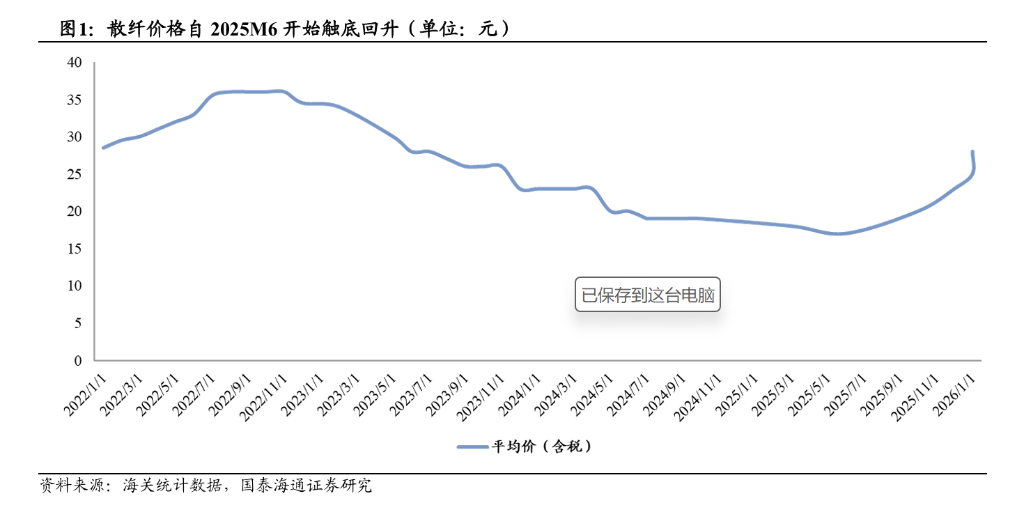
Core Viewpoint - The fiber optic cable industry is experiencing a significant turning point due to supply constraints being exacerbated by AI demand, leading to price increases and longer delivery times [1][9]. Demand Side - The core demand increase is driven by AI data centers and data center interconnect (DCI), with global demand for fiber optic cables expected to rise by 75.9% year-on-year by 2025 [3][13]. - AI-driven scenarios are projected to increase the share of fiber demand from less than 5% in 2024 to 35% by 2027 [3]. - The demand for fiber optics in AI data centers is significantly higher, with a single AI data center requiring several times more fiber than traditional data centers [13]. Supply Side - The supply of fiber optics is rigid due to long production cycles for preform rods, which take 2 to 3 years to expand capacity [8]. - The production capacity is shifting towards high-demand, high-margin products, leading to a structural imbalance where traditional fiber capacity is being squeezed [8][10]. - Major manufacturers are prioritizing production of high-profit products over conventional G.652D fibers, resulting in a shortage of traditional fiber optics [8]. Price Trends - Prices for G.652D fibers are expected to rise significantly, with projections indicating a price increase to 24.0 to 25.0 yuan per core kilometer by the end of 2025, and potentially exceeding 30 yuan per core kilometer in early 2026 [9]. - The price increase is driven by supply shortages and longer delivery times, with some manufacturers unable to meet orders and turning to external sourcing [9]. Market Dynamics - The fiber optic market is transitioning from a telecommunications cycle to a data center cycle, influenced by AI's demand for ultra-high bandwidth and low-latency transmission [13]. - The industry is witnessing a shift towards high-end products, including hollow-core fibers, which are gaining traction due to their advantages in low latency and high capacity [14][16]. Export Opportunities - The export of fiber optic products is becoming a significant growth point, with a reported 6.5% increase in exports in December 2025, and a 41.8% increase in export value [16]. - Major contracts, such as the $60 billion supply agreement between Corning and Meta, highlight the increasing demand and potential for growth in the fiber optic sector [16]. Investment Outlook - The fiber optic industry is seen as having a high short-term success rate, driven by AI demand and supply constraints, but faces challenges related to valuation and sustainability [17][20]. - The ability of the fiber optic sector to replicate the success seen in the storage market will depend on price increases, supply bottlenecks, and the successful introduction of high-end products into North American markets [20].
X @BNB Chain
BNB Chain· 2026-02-10 17:43
@_RichardTeng @nina_rong @ellazhang516 @OndoFinance @NanoLabsLtd @AssetoFinance @Jong_bnb @awscloud @UTechStables @VenusProtocol @oscar_fBNB Earlier on, @ellazhang516 joined @nina_rong onstage to discuss investing in the next phase of the BNB ecosystem! 👇 https://t.co/EqI0iDoRcD ...