
BASF SE

Search documents
Over dozen companies including Infy, BLS International, RPower, Adani Enterprises, HCC, NDTV, Muthoot Finance will remain in action on Monday
BusinessLine· 2025-10-13 01:24
Group 1: Company Developments - BLS International Services is temporarily restricted from participating in new Indian Mission tenders for two years, but existing contracts remain valid and operations are unaffected [1] - Infosys has launched the Infosys Customer Experience Suite for Salesforce to enhance digital transformation for enterprises [2] - Reliance Power's executive director and CFO was arrested in a bank loan fraud case, but the company stated that Anil Ambani is not involved [3] - Hindustan Construction Company secured a ₹204 crore contract for the Aditya aluminium smelter expansion project [4] - Muthoot Finance's MD was summoned by the Enforcement Directorate for clarifications regarding non-convertible debentures issued by Srei group companies [5] - Jyoti Ltd received an order worth ₹10.91 crore for VT pumps from Nand Infrastructure & Projects [6] - Kirloskar Oil Engines transferred its Water Management Solutions business to a wholly owned subsidiary for internal reorganization [7] - Monarch Surveyors and Engineering Consultants received a ₹6.19 crore order for railway alignment studies and a separate ₹37.67 crore order for the Somnath Dwarka Expressway expansion [8] - Zen Technologies received a ₹37 crore order from the Ministry of Defence for Anti-Drone Systems [9] - NDTV raised ₹396.49 crore through a Rights Issue, resulting in an increase in equity share capital and promoter shareholding [10] - GKB Ophthalmics Ltd reduced production to 50% due to sluggish market demand and halted export orders from the USA [11] - Hind Rectifiers Ltd appointed Manoj Nair as CEO and Key Managerial Personnel [12] Group 2: Industry Transactions - BASF SE and Carlyle, in partnership with Qatar Investment Authority, entered into a binding agreement for BASF's automotive coatings businesses, with a global enterprise value of €7.7 billion [13]


German Chemical Makers Say Carbon Costs Damage Europe’s Edge
MINT· 2025-10-10 16:01
Core Viewpoint - German chemical companies are expressing concerns that high carbon allowance costs are undermining Europe's competitiveness, prompting calls for adjustments in the emissions trading system to support struggling industries [1][3]. Group 1: Industry Concerns - Leading firms such as BASF SE and SKW Stickstoffwerke Piesteritz GmbH are advocating for exemptions in the emissions trading system as costs are expected to rise with the phase-out of free certificate allocations starting next year [1]. - The chairman of SKW Piesteritz highlighted that carbon prices in Europe are five times higher than in other regions, posing a significant threat to the industry's survival, even more so than previously high gas prices [2]. - The chemical sector is intensifying lobbying efforts against the EU's climate policies due to ongoing crises, with German chemical plants operating at only 72% capacity in Q2, marking the lowest level in over 30 years [3]. Group 2: Government and Policy Response - The German ruling coalition is supporting struggling industries, with Chancellor Friedrich Merz advocating for more flexibility in the EU's 2035 ban on new combustion-engine vehicles to aid automakers [4]. - The European Commission is working on enhancing the Carbon Border Adjustment Mechanism to protect domestic industries, but the current review will not address the chemical sector [4]. - BASF SE has stated that the existing carbon market scheme is detrimental to the competitiveness of energy-intensive basic material production in Europe, warning that failure to reform the CBAM could lead to increased relocation of emission-intensive production [5].

BASF SE - Special Call
Seeking Alpha· 2025-10-10 14:36
Core Points - BASF announced a Coatings Transaction in collaboration with Carlyle, indicating a strategic move in the coatings sector [1] - The conference call is focused solely on the Coatings Transaction, with no discussions on other topics [2] - The presentation includes forward-looking statements based on current estimates and projections, highlighting the uncertainties and risks involved [3]

A fourth-generation heir’s bold pivot—from sugar to bioplastics
MINT· 2025-10-03 03:30
Core Viewpoint - Balrampur Chini Mills Ltd (BCML) is diversifying its operations by building its first bioplastic plant, aiming to expand beyond its traditional sugar and ethanol business in response to environmental concerns and market opportunities [1][2]. Company Overview - BCML is a 50-year-old sugar producer based in Uttar Pradesh, India, and is currently the second-largest and most profitable sugar company in the country [17][20]. - The company has a strong relationship with over 550,000 sugarcane farmers, which provides a unique advantage for sourcing biowaste as feedstock for bioplastics and ethanol production [2][3]. Bioplastic Plant Development - The bioplastic plant, with an investment of ₹2,850 crore, will be India's first large-scale PLA (polylactic acid) factory and is expected to be operational by the end of 2026, reaching a capacity of 80,000 tonnes per annum within six months of starting operations [7][8]. - The plant aims to produce eco-friendly alternatives to single-use plastics, such as bags and bottles, leveraging the company's integrated setup from sugarcane procurement to PLA production [11][12]. Strategic Plans and Future Expansion - Avantika Saraogi, an executive director at BCML, has outlined a ten-year vision for the company, which includes plans for further expansion and investment in new technologies to utilize grain as an additional feedstock [9][10]. - The company is exploring the use of complex sugars and lignin derived from biowaste to create biomaterials, indicating a broader strategy to tap into the biochemicals market [3][4]. Market Position and Competitive Landscape - BCML's bioplastic initiative positions it competitively against global PLA producers, with a total capacity of around 620,000 tonnes per annum among major players [12]. - The company benefits from favorable government policies in Uttar Pradesh, including capital subsidies and tax exemptions, which support the bioplastic manufacturing sector [13][14]. Industry Context and Challenges - The sugar industry faces regulatory challenges, with prices for cane, sugar, and ethanol being heavily controlled by the government, impacting profitability [21][22]. - The diversification into bioplastics is seen as a strategy to mitigate risks associated with the volatile sugar market and to enhance sustainability [20].

中国磺基琥珀酸二辛酯—DOSS市场前景预测及投资商机分析报告2025-2031年
Sou Hu Cai Jing· 2025-09-01 05:54
中国磺基琥珀酸二辛酯—DOSS市场前景预测及投资商机分析报告2025-2031年 本文源自:中赢信合研究网 1 统计范围及所属行业 1.1 产品定义 1.2 所属行业 1.3 产品分类,按产品类型 1.3.1 按产品类型细分,全球磺基琥珀酸二辛酯(DOSS)市场规模2020 VS 2025 VS 2031 1.3.2 磺基琥珀酸二辛酯钠 1.3.3 磺基琥珀酸二辛基钙 表75 全球不同产品类型磺基琥珀酸二辛酯(DOSS)收入(2020-2025年)&(万元) 表76 全球不同产品类型磺基琥珀酸二辛酯(DOSS)收入市场份额(2020-2025) 表77 全球不同产品类型磺基琥珀酸二辛酯(DOSS)收入预测(2025-2031)&(万元) 表78 全球不同产品类型磺基琥珀酸二辛酯(DOSS)收入市场份额预测(2025-2031) 表79 全球不同应用磺基琥珀酸二辛酯(DOSS)销量(2020-2025年)&(吨) 表80 全球不同应用磺基琥珀酸二辛酯(DOSS)销量市场份额(2020-2025) 表81 全球不同应用磺基琥珀酸二辛酯(DOSS)销量预测(2025-2031)&(吨) 表82 全球市场不同应用磺基 ...

摩根士丹利:化工行业-尿素价格上涨,钾肥小幅上涨,磷肥基本持平;大豆压榨利润大多上升
摩根· 2025-05-08 01:49
Investment Rating - Industry View: In-Line [5] Core Insights - Urea prices have increased significantly, with US NoLa urea prices rising by $36/st to $440-552/st fob WoW, driven by potential Chinese export resumption and strong domestic demand [1] - Potash prices have seen modest increases, with SE-Asia MOP prices up by $5/t to $335-355/t cfr WoW, while US NoLa MOP prices rose by $2/st to $315-320/st fob [2] - Phosphate prices remained largely unchanged, although select markets are experiencing upward price pressure due to changes in Indian pricing policies and potential updates on Chinese phosphate fertilizer exports [3] Summary by Sections Urea Market - China is expected to resume urea exports in May, with a projected export quota of 3-4 million tons for 2025, while US prices have jumped significantly [1] - Brazilian urea prices increased by $13/t to $390-415/t cfr, reflecting a shift in market dynamics post-China news [1] Potash Market - Potash prices in SE-Asia rose by $5/t to $335-355/t cfr, while US NoLa prices increased by $2/st to $315-320/st fob, indicating stable demand despite a quiet market [2] - Chinese port inventories have dropped below 2 million tons, prompting expectations for new contract settlements [2] Phosphate Market - Most global DAP/MAP benchmarks remained stable, but Indian players are expected to increase activity in the market following the reversal of a price ceiling [3] - Updates on Chinese phosphate fertilizer exports are anticipated, with discussions on DAP/MAP export quota allocations expected to follow the Chinese Labor Day holiday [3] Soy Crush Dynamics - Brazil's soy harvest is 94.8% complete, ahead of last year's pace, while Argentina's harvest is lagging at 23.6% complete [9] - US soybean planting is at a record 18% complete, with the EPA issuing an emergency waiver for E15 sales during the summer driving season [9] - Global soy crush margins have mostly increased, with US margins rising to $1.33/bu, driven by lower input costs [10]
全面分析2025年叶黄素和叶黄素酯市场
Sou Hu Cai Jing· 2025-03-29 19:08
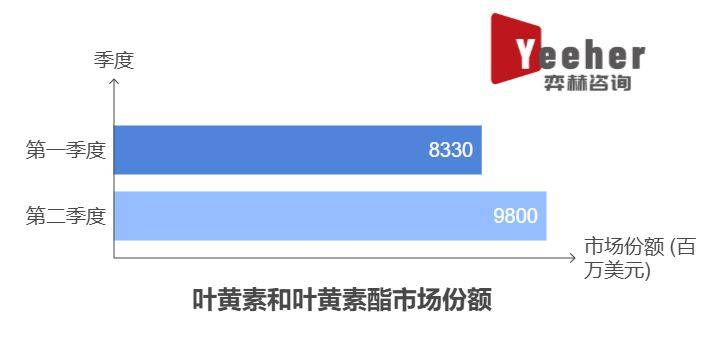
Core Insights - The lutein and lutein ester market is projected to reach $490 million by 2025, with a compound annual growth rate (CAGR) of 6.8% from 2025 to 2033, driven by increasing awareness of eye health and aging populations [1][22] - The market is expected to see significant growth in the U.S., Germany, and China, with the first quarter of 2025 accounting for approximately 17% of the total market share, equating to about $83.3 million [1][3] Market Dynamics - The demand for lutein and its esters is increasing due to rising consumer awareness of eye health and anti-aging benefits, particularly in the nutritional supplements and cosmetics sectors [3][5] - Technological advancements are improving lutein extraction and formulation processes, contributing to market growth [5][6] - The aging population is a major driver of demand for eye health products, with research continuing to validate the benefits of lutein for vision health [5][10] Regional Analysis - The U.S. is expected to remain the dominant market, while Germany and China are anticipated to experience rapid expansion due to increased awareness of lutein's benefits [3][12] - North America has a mature market infrastructure, while Europe is seeing a rise in the adoption of natural health solutions [11][12] - The Asia-Pacific region, particularly China, is showing significant growth potential, supported by investments in production and large-scale cultivation of marigold flowers [17][19] Supply Chain and Production - The lutein supply chain involves a complex network of production, processing, and distribution, primarily sourcing raw materials from marigold flowers [5][6] - New sustainable extraction technologies, such as microalgae-based methods, are transforming lutein production, enhancing efficiency and environmental sustainability [6][22] Regulatory Environment - The lutein market faces challenges related to regulatory compliance, including strict purity standards and complex documentation requirements for health supplements [6][9] - The competition between natural and synthetic lutein is influencing operational strategies, with natural lutein being favored for its organic appeal despite the cost advantages of synthetic alternatives [6][10] Market Trends - The market is witnessing a shift towards personalized nutrition, with biotechnological advancements enabling targeted supplements for eye health [18][22] - The increasing health consciousness among aging populations and rising disposable incomes are driving demand for preventive healthcare solutions [19][20] - Research is expanding into lutein's benefits beyond eye health, including cognitive function enhancement and skin health protection [20][22]
Molded Foam Market to Reach $26.3 Billion, Globally, by 2033 at 4.9% CAGR: Allied Market Research
Globenewswire· 2025-03-20 13:54
Market Overview - The molded foam market is valued at $16.4 billion in 2023 and is projected to reach $26.3 billion by 2033, growing at a CAGR of 4.9% from 2024 to 2033 [2][5] - The market is driven by demand in automotive, packaging, and furniture industries due to the lightweight, cushioning, and thermal insulation properties of molded foams [1][3] Key Drivers - Rising demand for sustainable and biodegradable foams is boosting market adoption [1] - Global economic growth, urbanization, and the need for lightweight and durable materials are contributing to market expansion [3] - The automotive industry is a significant driver, with molded foam used in various applications such as seating and insulation [9][10] Challenges - Fluctuating raw material prices, particularly for polyurethane and polystyrene, pose a challenge to the market [14] - Environmental concerns regarding petroleum-based foams are leading to increased demand for eco-friendly alternatives [1][15] Opportunities - Innovations in bio-based foams and expanding applications in medical and aerospace industries present growth opportunities [1] - The shift towards recycled and biodegradable foams is being driven by regulatory policies and sustainability initiatives [3][15] Regional Insights - Asia-Pacific is the highest revenue contributor, growing at a CAGR of 5.2%, driven by urbanization and government initiatives promoting sustainability [11][12] - The region's focus on energy-efficient buildings is significantly boosting the demand for polyurethane foam in insulation applications [13] Material and Application Segments - The Polyurethane (PU) foam segment is expected to lead the market with a CAGR of 4.9% [7] - The Rigid segment is projected to grow at a CAGR of 4.8%, driven by demand in construction and automotive sectors [8] - The Automotive segment is anticipated to grow at a CAGR of 4.4%, with molded foam enhancing vehicle ergonomics and fuel efficiency [9][10] Industry Innovations - Companies like BASF and Dow Chemical are leading innovations in closed-loop production and recycling technologies for polyurethane foams [4][18] - The collaboration between Adient, Jaguar Land Rover, and Dow to develop closed-loop PU foam seats represents a significant advancement in sustainable automotive manufacturing [17][18]
Liquid Masterbatches Market Size is Expected to Reach USD 21.28 Billion by 2033, Growing at a CAGR of 6.23% : Market Strides
Globenewswire· 2025-03-20 12:40
Core Insights - The global liquid masterbatches market is projected to grow from USD 12.34 billion in 2024 to USD 21.28 billion by 2033, with a CAGR of 6.23% during the forecast period [1] Market Dynamics - Increasing demand for high-quality plastic products is a key driver, particularly in packaging, automotive, and consumer goods sectors, where liquid masterbatches enhance material performance [3] - The availability of raw materials poses challenges, affecting production costs and supply stability due to price fluctuations and regulatory pressures [4] Regional Analysis - Asia-Pacific is the dominant region in the liquid masterbatches market, driven by rapid industrialization and a growing demand for high-performance materials [5] Product Segmentation - Additive liquid masterbatches lead the market due to their ability to enhance polymer performance with properties like UV resistance and flame retardancy [6][7] - Black liquid masterbatches hold the largest market share, particularly in automotive and packaging applications [10] Competitive Landscape - Key players in the market include Clariant AG, BASF SE, and PolyOne Corporation, among others [10] Recent Developments - Clariant AG launched a new range of liquid masterbatches designed for biodegradable polymers in February 2025, addressing the demand for sustainable packaging solutions [9]

Bleach Market Analysis and Industry Forecast 2025-2029, Featuring Detailed Analysis of 19+ Prominent Companies
Globenewswire· 2025-03-14 09:09
Group 1 - The bleach market is projected to grow by USD 408 million from 2024 to 2029, with a CAGR of 4.4% during this period [1][2] - Key drivers of market growth include increasing demand for bleaches in water treatment, heightened health and hygiene awareness, and innovations in bleach products [2][3] - The agrochemical segment and the expansion of distribution networks are also contributing to the rising demand for bleaches [2][3] Group 2 - The report provides a comprehensive analysis of the bleach market, including market size, trends, growth drivers, challenges, and vendor analysis covering around 25 vendors [3][4] - The market is segmented by end-user, grade type, and type, with specific applications in water treatment, industrial bleach, dentistry, household cleaning, food grade, and industrial grade [6][7] - The geographical landscape of the market includes regions such as North America, Europe, South America, the Middle East, and Africa [9][10]
