
Hon Hai

Search documents
Q425 智能手机调研:内存短缺会影响需求吗-UBS Evidence Lab inside 4Q25 Smartphone Survey_ Will memory shortages impact demand_
UBS· 2025-12-15 01:55
Investment Rating - The report maintains a cautious outlook on the smartphone industry, with a preference for component suppliers over OEMs due to rising memory prices and supply challenges [5][8]. Core Insights - The smartphone industry is expected to face challenges in 2026, with limited unit growth forecasted at +1.0% YoY in 2026 and +2.0% YoY in 2027, following a +3.5% YoY growth in 2025 [2][8]. - The UBS Evidence Lab 4Q25 Smartphone Survey indicates a moderate increase in purchase intent, with 40% of respondents planning to buy a smartphone in the next 12 months, up from 36% in 2Q25 [3][19]. - Rising memory prices are projected to significantly impact Bill of Material (BOM) costs, potentially accounting for approximately 14% of flagship smartphone BOM costs and 34% of mid-range/lower-end smartphone BOM costs by 4Q26 [4][101]. Summary by Sections Industry Outlook - The smartphone market is anticipated to grow moderately, with unit sell-in forecasts slightly raised to 1.27 billion units in 2025 and 1.28 billion units in 2026, reflecting a +3.5% and +1.0% YoY growth respectively [50][55]. - The average age of the smartphone installed base has decreased to 22.0 months, indicating a normalization in the replacement cycle [30][44]. Purchase Intent Trends - Purchase intent for the iPhone 17 series is strong, with 66% of respondents interested in this model, up from 61% for the iPhone 16 series [3][89]. - Retention rates for Apple and Samsung remain stable at 87% and 75% respectively, while Chinese OEMs have seen declines in retention rates [59][61]. Component Supplier Preference - The report favors component suppliers such as ASE, SK Hynix, and TSMC, while maintaining neutral ratings on major OEMs like Apple, Lenovo, and Xiaomi, and a buy rating on Samsung Electronics [5][8]. - The memory supply shortage is expected to create significant challenges for OEMs, particularly smaller ones, as they may struggle to secure adequate memory supply [4][110].

AI 领域最 “酷” 主题 -AI 加速器的直接液冷技术_ The coolest theme in AI – direct liquid cooling for AI accelerators
2025-12-08 15:36
Summary of Key Points from the Conference Call Industry Overview - The report focuses on the **Direct Liquid Cooling (DLC)** market, particularly in the context of AI server racks and thermal management technologies. The market is projected to grow significantly due to increasing power densities in AI silicon, with a **CAGR of 51% from 2025 to 2030**, reaching **US$31 billion** by 2030 [3][10][14]. Core Insights and Arguments - **Market Growth Potential**: The upcoming transition to DLC is seen as a critical upgrade rather than a gradual hardware change, driven by competition in AI silicon [11][12]. The market is expected to expand rapidly, with the **DLC market size projected to grow from US$1.14 billion in 2024 to US$31 billion in 2030** [10][14]. - **Thermal Management Needs**: As AI silicon power density exceeds **1,000W TDP**, DLC is becoming essential for managing heat in advanced AI racks [4][11]. The report emphasizes that DLC is not just a utility but a strategic enabler of compute performance [14]. - **Micro-Channel Lid (MCL) Adoption**: The report anticipates that MCL technology will start to be adopted minimally by **Q4 2026**, with significant growth expected by **H2 2027**. MCL is projected to serve applications above **3,500W TDP** [5][20]. The total addressable market (TAM) for MCL is estimated to reach **US$2.7 billion by 2030** [5][10]. - **Cold Plate Market Dynamics**: Cold plates are expected to remain dominant for applications under **3,500W TDP**, with a projected TAM of **US$8.9 billion by 2030**. Concerns about pricing pressures are considered overblown, as the value of content per rack is expected to increase [6][10]. - **Investment Recommendations**: Coverage is initiated on three companies—**AVC, Auras, and Jentech**—all rated as **Buy**. AVC is recognized as a leader in cold plates, while Jentech is positioned to benefit from MCL adoption [7][28][30]. Additional Important Insights - **Market Bifurcation**: The report argues against the notion that the cold plate market will suffer from commoditization due to MCL adoption. Instead, it suggests that the market is bifurcating, with both MCL and upgraded cold plates coexisting [21][30]. - **Thermal Interface Material (TIM) Challenges**: The report highlights the thermal bottleneck posed by TIM 2, which is critical for future AI platforms. MCL technology is seen as a solution to eliminate this bottleneck [17][26]. - **Competitive Landscape**: The report notes that Nvidia's aggressive TDP roadmap and competition from AMD and Google TPU could accelerate the adoption of MCL technology [19][20]. - **Long-term Risks**: The potential for vertical integration by ODMs like Hon Hai could disrupt traditional thermal supply chains, posing a long-term risk to existing players [30]. - **DLC as the Preferred Method**: The report concludes that DLC will remain the dominant liquid cooling method due to its scalability, lower capital expenditure, and feasibility for retrofitting existing data centers [31][32]. This summary encapsulates the critical insights and projections regarding the DLC market and its implications for the companies involved, providing a comprehensive overview of the current landscape and future opportunities.
X @Bloomberg
Bloomberg· 2025-12-05 07:48
Hon Hai's revenue rose 26% in November, suggesting demand for Nvidia servers remains strong https://t.co/Wy9rcgxwHf ...

科技:ASIC 受益标的;按 AI 芯片平台划分的营收敞口- Tech_ ASIC beneficiaries; revenues exposures by AI chips platform; Read across to Google's Gemini 3 announcement
2025-12-01 03:18
Summary of Key Points from the Conference Call Industry Overview - The report focuses on the ASIC (Application-Specific Integrated Circuit) market, particularly in relation to AI (Artificial Intelligence) chips and servers, highlighting the increasing demand and customization in this sector [1][11][22]. Core Insights and Arguments - **ASIC Market Growth**: ASIC chips are expected to play a significant role in AI server solutions, with projections indicating that ASICs will contribute 40% of total AI chips by 2026 and 45% by 2027 [11][22]. - **Demand Projections**: The demand for AI chips is forecasted to reach 10 million, 14 million, and 17 million units from 2025 to 2027, with ASIC shipments contributing 38%, 40%, and 45% respectively [1]. - **Revenue Growth**: The global server total addressable market (TAM) is expected to grow by 42%, 32%, and 19% year-over-year, reaching $359 billion, $474 billion, and $563 billion from 2025 to 2027 [13]. - **Customization Benefits**: ASIC solutions provide higher gross margins for suppliers due to their customization, which allows for better performance and energy efficiency compared to general-purpose GPUs [15][22]. Company-Specific Highlights - **Wiwynn**: Expected to have the largest ASIC exposure among ODMs by 2026, with significant partnerships with Amazon and Meta. The company has reported over 100% year-over-year growth in revenue for the first three quarters of 2025 [6][27]. - **Hon Hai**: Anticipated to expand its ASIC customer base significantly by 2026, benefiting from its role as a supplier for Google TPU servers [23]. - **Innolight**: Positioned as a key supplier of optical transceivers, with expected revenue growth of 104% year-over-year in 2026 from 800G optical modules [24][25]. - **LandMark**: Expected to see a revenue increase from 71% in 2025 to 85% in 2026 due to the demand for high-speed optical transceivers [26]. - **EMC**: Anticipated to maintain a strong market position with over 50% market share in the ASIC AI server supply chain, expecting solid revenue growth [28]. - **TSMC**: Expected to manufacture next-generation TPUs, with projections indicating that TPU revenue will account for less than 5% of TSMC's total revenue through 2026 [29]. Additional Important Insights - **Market Dynamics**: The shift towards ASICs is driven by major AI model suppliers developing in-house ASIC platforms to optimize performance and reduce costs [22]. - **Investment Trends**: Amazon plans to invest up to $50 billion in AI infrastructure, which will utilize in-house Trainium chips and Nvidia GPUs [24]. - **Emerging Partnerships**: OpenAI's collaboration with Broadcom to design in-house AI accelerators is expected to enhance the capabilities of AI systems by 2029 [24]. This summary encapsulates the key points from the conference call, providing insights into the ASIC market's growth, company-specific developments, and broader industry trends.


人形机器人前景:热度过高却被低估-Humanoid Horizons Overhyped yet Underappreciated
2025-12-01 03:18
Summary of Humanoid Industry Conference Call Industry Overview - The humanoid industry is experiencing strong investor interest and rapid acceleration, with aggressive targets set for 2026. However, near-term hurdles must be addressed before realizing long-term potential [1][2][3] - The industry is awaiting verification of commercialization to unlock significant long-term potential [1][3] Key Insights - **Strong Order Intake in China**: In the second half of 2025, integrators in China announced orders exceeding Rmb2 billion (~US$300 million) across three key areas: industrials, commercial services, and data collection centers, primarily government-backed projects [8][46] - **Delivery Challenges**: Many announced orders may not be completed this year, with some categorized as "framework orders" that have low execution certainty [8][46] - **Reality vs. Expectation**: Companies have set aggressive shipment targets for 2026, with estimates reaching up to 100,000 shipments. However, conservative estimates suggest limited near-term growth due to working capability constraints [8][9] - **Government Support**: The Chinese government is pushing for humanoids as a strategic emerging sector, with over 90% component localization in the supply chain, which is expected to support gradual commercialization [8][9] Company Developments - **Tesla**: Preparing to expand Gigafactory Texas for manufacturing Optimus, with an anticipated annual capacity of 10 million units [8] - **Xpeng**: Showcased its Iron robot, aiming for mass production by the end of 2026 [8] - **Hon Hai**: Plans to deploy humanoid robots at its Houston plant, targeting 1Q26 [8] - **UBTech**: Plans to raise US$400 million through a share placement for acquisitions and investments [29] - **Dobot**: Completed a US$100 million share placement for investment and acquisition opportunities [29] Market Performance - The equal-weighted Humanoid 100 index has increased by 22.7% since its inception on February 6, 2025, outperforming the S&P 500 and MSCI Europe but underperforming MSCI China and Korea [9] - The China Humanoid Value Chain index was down 8.4% in November but up 61.5% year-to-date [9] Policy Developments - The Ministry of Industry and Information Technology (MIIT) has formed a Standardization Technical Committee for humanoid robots to develop and implement industry standards [54][57] - The National Development and Reform Commission (NDRC) has warned against market overcrowding, emphasizing the need for a regulatory framework and support for technology advancement [54][57] Adoption and Technological Advancements - **Figure AI**: Announced that its humanoid has participated in the production of 30,000 BMW vehicles [36] - **Ubtech**: Expects production capacity for industrial humanoid robots to reach 5,000 units by 2026 [36] - **Unitree**: Launched its first wheeled humanoid robot, G1-D, aimed at data collection and training [37] - **1X Technologies**: Made its NEO humanoid robot available for pre-order, with deliveries expected in 2026 [37] Conclusion - The humanoid industry is poised for growth, driven by strong government support, technological advancements, and increasing investor interest. However, challenges related to order execution and market saturation must be navigated to realize its full potential [1][54][57]


供应链转移:对台湾 ODM、印度电子制造服务及东盟科技业的影响-Supply Chain Relocation_ Implications for Taiwan ODMs, India EMS and ASEAN Tech
2025-12-01 01:29
Summary of Key Points from the Conference Call Industry Overview - **Industry Focus**: The report discusses the implications of supply chain relocation for Taiwan ODMs (Original Design Manufacturers), India EMS (Electronics Manufacturing Services), and the ASEAN tech sector, particularly in the context of tariff concerns and the "Made-in-US" policy [1][2]. Core Insights and Arguments - **Production Relocation Trends**: There has been an accelerating trend in production relocation from China to other regions, particularly Taiwan, India, and ASEAN countries, driven by tariff uncertainties and the need for diversification [1][2]. - **Taiwan ODMs' Production Shift**: Taiwan ODMs have reduced their production mix in China from over 80% to approximately 60-65% to meet US market demand, indicating a significant shift in production strategy [2]. - **AI Demand and Server Capacity Expansion**: Server OEMs/ODMs are expanding capacity aggressively to meet strong AI demand, with a notable shift of server production to Thailand and Taiwan [6]. - **India's Growing Role**: India is becoming an attractive location for supply chain relocation due to low labor costs and favorable government policies, including the Electronics Component Manufacturing Scheme (ECMS) and the India Semiconductor Mission (ISM 1.0) [1][8]. - **Emerging Opportunities in ASEAN**: ASEAN is emerging as a key destination for WFE (Wafer Fabrication Equipment) shifts and optical ramps, with companies like Lam Research and Applied Materials leading the charge [9]. Important but Overlooked Content - **Cost Disadvantages in India**: India currently faces a cost disadvantage of 10-14% compared to Asian peers in assembly and 14-18% in component manufacturing, primarily due to tariffs and logistics costs [11]. - **Government Incentives**: The Indian government is providing significant subsidies (4-5% of annual sales) to encourage domestic manufacturing, which has already attracted companies like Micron and 3D Glass Solutions to set up facilities in India [10][11]. - **Stock Implications**: In the Taiwan ODM space, companies with diversified production footprints and higher exposure to servers are preferred, with a ranking of Wiwynn > Hon Hai > Quanta > Wistron > Inventec > Pegatron > Compal [6][1]. Conclusion - The ongoing supply chain relocation is reshaping the landscape for Taiwan ODMs, India EMS, and ASEAN tech companies, driven by tariff concerns and the need for diversification. The strategic shifts in production locations are expected to have significant implications for market dynamics and investment opportunities in the coming years.
Hon Hai: US Capex for Data Center To Start at $1-5 Billion
Bloomberg Television· 2025-11-21 16:54
What about in terms of the compute capacity. Talk about it in gigawatts, then a gigawatt per week working the goal of one gigawatt per week. That would be sense goal, but we can start with one gigawatt per month. So you think you can add one gigawatt per month next year, starting next the second half of the year, second half of the year. So you think you can add six gigawatts next year.I'm not sure. It really depends on our starting our new way of doing things. It takes time.But eventually we will. We're go ...


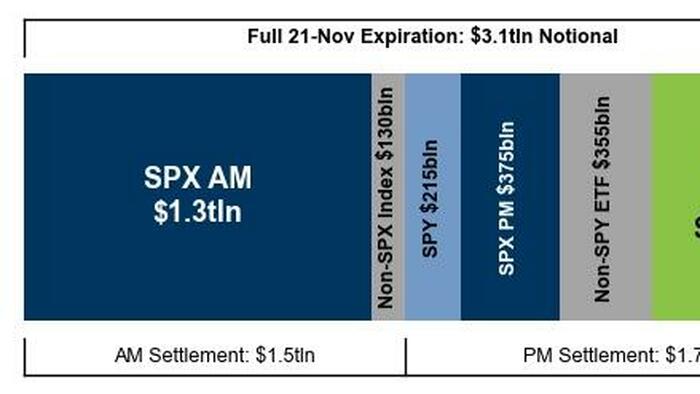
Futures Slide As Bitcoin Flash Crashes To April Low Ahead Of $3.1 Trillion Opex
ZeroHedge· 2025-11-21 12:28
Economic Developments - Japan's government approved a JPY 21.3 trillion ($135.5 billion) economic stimulus package, marking the largest since the COVID pandemic, with JPY 17.7 trillion in new spending [28][53] - Japan's inflation rate increased to 3% in October, aligning with market expectations, and has remained above the Bank of Japan's 2% target for 43 consecutive months [52][54] - The U.K. government is facing a borrowing overshoot in October, leading to plans for tax increases and spending cuts in the upcoming budget [5] Currency and Trade - The Indian rupee fell to a record low against the dollar amid uncertainty regarding a potential U.S. trade deal [3] - The U.S. is considering lifting tariffs on EU goods, including beef and other foods, to help maintain affordable grocery prices [4] - Trump's administration lifted a 40% tariff on certain Brazilian agricultural products, including coffee and beef, to help reduce domestic food prices [6] Corporate News - Netflix, Comcast, and Paramount Skydance submitted bids for Warner Bros. Discovery by the November 20 deadline [5] - OpenAI is partnering with Hon Hai to design and manufacture hardware for data centers, with Hon Hai planning to invest up to $5 billion in U.S. manufacturing [5] - AnaptysBio shares fell 15% after GSK initiated litigation against the company [4] Market Performance - The S&P 500 experienced its sharpest intraday reversal since April, with a decline of 1.56% after initially rising [42][50] - Bitcoin is on track for its worst monthly performance since the June 2022 crypto crash, down 35% from its October highs [10][43] - Gap Inc. shares rose 4.5% after reporting stronger-than-expected sales, indicating effective marketing strategies [11] Central Bank Insights - The Fed's Anna Paulson expressed caution ahead of the December meeting, indicating that each rate cut raises the bar for the next [7][13] - JPMorgan and Morgan Stanley's economists no longer expect a rate cut in December, citing a rebound in payrolls [13][27] - The Congressional Budget Office revised its estimate of Trump's tariffs' impact on deficits to approximately $3 trillion over the next 10 years, down from $4 trillion [9]
X @Bloomberg
Bloomberg· 2025-11-21 08:28
Manufacturing Expansion - Foxconn plans to invest an initial $1 billion to $5 billion to expand its US manufacturing footprint [1]
X @Bloomberg
Bloomberg· 2025-11-19 10:24
Thai oil and gas giant PTT is looking to offload its entire stake in an electric-vehicle joint venture to Hon Hai https://t.co/18AyK17JYu ...