老铺黄金

Search documents
老铺金条变“金甲” 万元黄金上指端 记者调查:“微金”消费能撬动多大市场
Sou Hu Cai Jing· 2026-02-15 00:50
Core Viewpoint - The rise of "golden manicure" reflects a shift in consumer behavior, particularly among younger demographics, as they seek new ways to express themselves and find value in gold beyond traditional investment or adornment [1][5][8]. Industry Trends - The gold jewelry industry is experiencing a dichotomy, with international gold prices rising since 2025, yet major jewelry companies like Chow Tai Fook and Chow Sang Sang reporting declining revenues and store closures [1][10]. - Chow Tai Fook's revenue for the fiscal year 2026 showed a 1.1% year-on-year decline, marking a five-year low, while Chow Sang Sang's revenue dropped by 37.35% in the first three quarters of 2025 [10]. Consumer Behavior - The trend of using gold in manicures has gained popularity, with consumers willing to spend thousands on "golden nails," indicating a shift towards high-frequency, low-cost luxury consumption [1][6]. - The global nail product market is projected to grow from $25.76 billion in 2025 to $36.26 billion by 2032, with a compound annual growth rate of 5.01% [6]. Market Dynamics - The "golden manicure" trend is seen as a potential solution to the jewelry industry's challenges, transforming gold from a low-frequency, high-ticket item to a high-frequency, lower-cost accessory [1][8]. - The demand for gold in manicures is driven by social media influence, with consumers focusing more on aesthetics and social expression rather than the intrinsic value of gold [7][8]. Challenges and Risks - Despite the popularity of golden manicures, there are concerns regarding the cost-effectiveness and the potential for damage to the gold used, as well as legal implications surrounding the recycling of gold materials [2][12]. - The traditional jewelry industry faces challenges in adapting to this new trend, with many companies still struggling to recover from declining sales and store closures [9][10].

老铺黄金,如何赢得了奢侈品之战?
吴晓波频道· 2026-02-15 00:29
Core Viewpoint - The article emphasizes that Laopu Gold's success is not solely due to rising gold prices but is deeply rooted in its unique cultural narrative and product value, which resonate with consumers in a way that traditional luxury brands cannot replicate [4][5][6]. Group 1: Market Performance - Laopu Gold has seen a significant increase in consumer interest, with long queues at stores across major cities like Beijing, Shanghai, and Guangzhou, indicating its status as a central consumer hub [3][9]. - In October of the previous year, Laopu Gold raised its prices by 25%, yet contrary to expectations, the demand surged, highlighting its strong market position [4]. - The international gold price recently surpassed $5,000 per ounce, contributing to the brand's visibility and sales performance [4]. Group 2: Cultural and Aesthetic Value - Laopu Gold differentiates itself from traditional luxury brands through its deep cultural roots and unique storytelling, which cannot be easily imitated [6][7]. - The brand integrates both Chinese and global classic cultures into its product themes, creating a strong cultural identity that resonates with high-net-worth individuals [8][11]. - Laopu Gold's commitment to original design and traditional craftsmanship enhances its product value, making it a leader in the luxury market [12][15]. Group 3: Competitive Positioning - Laopu Gold's consumer overlap with top international luxury brands is as high as 80%, indicating a significant shift in high-end consumer preferences towards the brand [17]. - The founder's direct involvement in product development and quality control ensures high standards and market validation for each product [22]. - The brand's unique combination of classic culture and the monetary value of gold breaks traditional luxury market ceilings, establishing a new value consumption era [24]. Group 4: Customer Experience and Brand Strategy - Laopu Gold has implemented a "big store" strategy to enhance its retail presence and customer experience, focusing on creating a pleasant shopping environment [27]. - The brand's customer service philosophy, which positions sales staff as cultural and aesthetic interpreters rather than traditional salespeople, enhances the overall consumer experience [27]. - Laopu Gold aims to balance social and commercial values, positioning itself as a leading global brand in the gold jewelry sector [28].

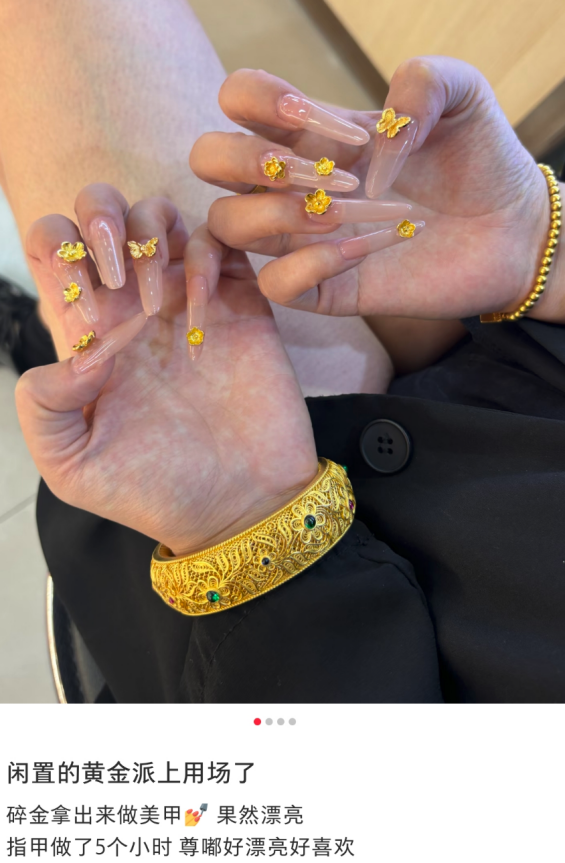
“年终奖发了,做个999黄金美甲”,这届年轻人把上万元黄金剪碎贴在指尖!
Mei Ri Jing Ji Xin Wen· 2026-02-14 23:29
Core Insights - The rise of "golden manicure" reflects a shift in consumer behavior, particularly among younger demographics, who are increasingly viewing gold as a form of self-expression rather than just an investment [5][12][20] - The gold jewelry industry is facing challenges, with major companies like Chow Tai Fook and Chow Sang Sang reporting declining revenues and store closures, indicating a need for innovation and adaptation [5][20] Industry Trends - The international gold price has been on the rise since 2025, yet gold jewelry companies are experiencing pressure on their earnings, with Chow Tai Fook reporting a 1.1% decline in revenue for the 2026 fiscal year [5][20] - The trend of using gold in manicures is seen as a potential solution to the industry's challenges, shifting from high-value, low-frequency purchases to more frequent, lower-value transactions [5][20] Consumer Behavior - Young consumers are increasingly interested in gold as a form of "self-consumption," focusing on aesthetics and social display rather than traditional investment logic [11][12] - The global nail product market is projected to grow from $25.76 billion in 2025 to $36.26 billion by 2032, indicating a significant opportunity for gold-infused beauty products [9] Market Dynamics - The gold jewelry sector is experiencing a dual challenge of losing younger customers and declining purchase frequency, prompting brands to explore new avenues like gold manicures [20][21] - The beauty industry, particularly the nail salon sector, is characterized by low barriers to entry and high competition, with over 1.62 million nail-related businesses in China as of January 2026 [21] Future Outlook - There is potential for brands to introduce micro-gold accessories specifically for manicures, which could enhance profitability and customer engagement [22][26] - The concept of gold manicures is still viewed as a niche innovation, primarily suited for special occasions rather than everyday use, suggesting a limited but unique market segment [26]
突然火了!“年终奖发了,做个999黄金美甲”,这届年轻人把上万元黄金剪碎贴在指尖!“黄金甲”成新年顶流“社交货币”,专家解读
Mei Ri Jing Ji Xin Wen· 2026-02-14 15:45
Core Insights - The rise of "golden nail art" reflects a shift in consumer behavior, particularly among younger demographics, who are increasingly viewing gold as a form of self-expression rather than just an investment [8][13][24] - The gold jewelry industry is facing challenges, with major brands like Chow Tai Fook and Chow Sang Sang reporting declining revenues and store closures, while the nail art sector is experiencing a surge in demand for gold-infused designs [8][24] Group 1: Market Trends - The demand for gold consumption is increasing as the Chinese New Year approaches, with "small weight" gold items becoming popular among consumers [8] - Golden nail art has emerged as a trendy new consumption form, with consumers willing to spend thousands on creating elaborate designs [8][10] - The global nail products market is projected to grow from $25.76 billion in 2025 to $36.26 billion by 2032, indicating a compound annual growth rate of 5.01% [13] Group 2: Industry Performance - Chow Tai Fook reported a 1.1% year-on-year decline in revenue for the first half of the 2026 fiscal year, marking the lowest performance in five years, alongside the closure of 611 stores [8][24] - Chow Sang Sang's revenue for the first three quarters of 2025 fell by 37.35%, with a net reduction of 560 stores compared to the previous year [8][24] - Despite attempts to raise prices and collaborate with IP brands, the effectiveness of these strategies has been limited [8] Group 3: Consumer Behavior - Younger consumers are shifting their focus from traditional gold investment to "self-gratifying consumption," valuing the aesthetic and social aspects of gold rather than its investment potential [13][15] - The perception of gold is changing from a long-term asset to an "instant emotional expression," with consumers more interested in its symbolic value than its market price [15][17] - The willingness to pay a premium for gold nail art, despite its higher cost compared to traditional gold jewelry, indicates a significant shift in consumer priorities [15][17] Group 4: Industry Challenges and Opportunities - The nail art industry, while booming, faces challenges such as high competition and low entry barriers, with over 1.62 million nail-related businesses in China [25] - The potential for gold to transition from a traditional asset to a high-frequency accessory is noted, but significant barriers to scaling this trend remain [24][29] - There are legal concerns regarding the recycling of gold scraps from nail art, which could pose risks for nail salons if not properly managed [29]
年轻人花上万元打造黄金美甲:轻量化、IP化、场景化产品需求爆发,小克重金饰占比显著提升
Xin Lang Cai Jing· 2026-02-14 15:04
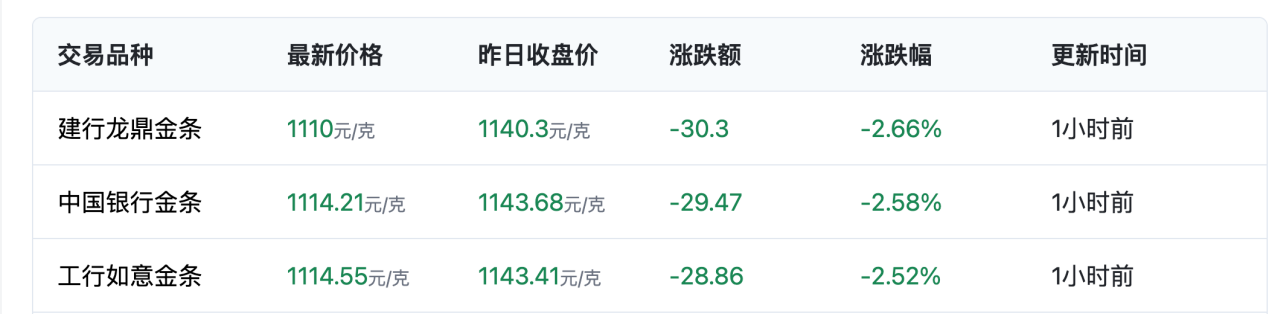
Core Viewpoint - The demand for gold is increasing significantly, particularly among younger consumers, driven by rising gold prices and a shift towards personalized and investment-oriented gold products [1][7][25]. Group 1: Gold Price Trends - Gold prices have shown a continuous upward trend, starting from approximately $2,650 per ounce in early 2025 to $5,042 per ounce by February 13, 2026 [1][19]. - The international gold price surged from around 970 yuan to over 1,200 yuan within 20 days, indicating a rapid increase in market value [6][34]. Group 2: Consumer Behavior and Preferences - The younger generation (post-95s and post-00s) is becoming the main consumer group for gold, favoring lightweight, IP-themed, and personalized products [1][25]. - There is a notable increase in the popularity of gold nail art, with consumers willing to spend thousands on gold-infused manicures [4][22]. Group 3: Gold Recycling and Trade - The trend of gold recycling is gaining traction, with approximately 60% to 70% of gold recycling coming from jewelry, while gold bars account for 30% to 40% [6][34]. - The concept of "trading old for new" is becoming popular, as consumers shift from "hiding gold" to "wearing gold," enhancing the circulation of existing gold [33][34]. Group 4: Market Dynamics and Promotions - Major gold retailers are offering promotional discounts, such as a reduction of 200 yuan per gram on jewelry, while gold bars are sold at competitive prices without additional processing fees [26]. - The World Gold Council projects global gold demand to reach a record high of 5,002 tons in 2025, reflecting strong market interest [7][25]. Group 5: Innovations in Gold Products - There is a growing preference for unique and artistic gold products, such as the "persimmon gold bar," which combines aesthetic appeal with investment value [28][29]. - The introduction of new product lines, like the Charme bead series, aims to cater to diverse consumer needs through innovative designs and varying price points [29][32].

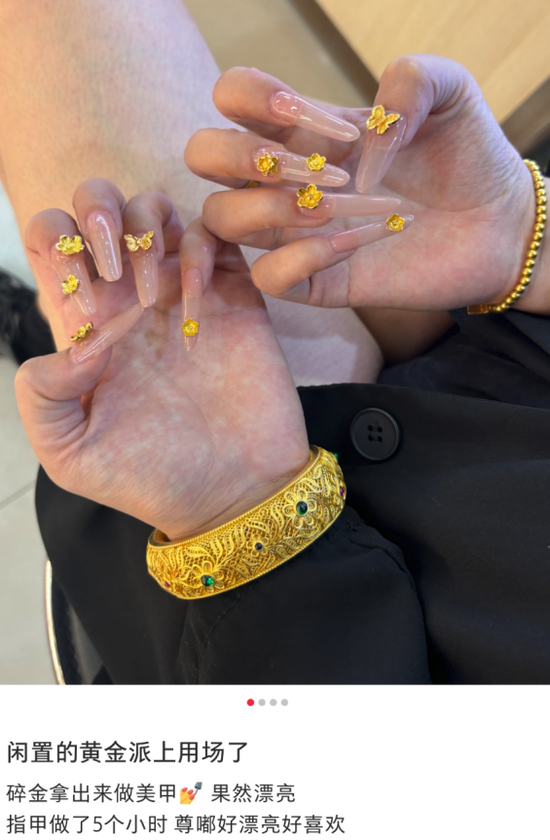
年轻人花上万元打造黄金美甲
21世纪经济报道· 2026-02-14 14:49
Core Viewpoint - The article highlights the increasing popularity of gold consumption among younger generations in China, particularly the post-95 and post-00 demographics, driven by rising gold prices and innovative product offerings that cater to their preferences for lightweight and personalized gold items [1][6][14]. Group 1: Gold Price Trends - Gold prices have shown a significant upward trend, starting from approximately $2,650 per ounce in early 2025 to $5,042 per ounce by February 13, 2026 [1]. - The recent surge in gold prices has led to a notable increase in consumer interest in both purchasing and holding gold, with many viewing it as a valuable gift for the New Year [6][17]. Group 2: Consumer Behavior and Preferences - Younger consumers are increasingly favoring lightweight, IP-themed, and scenario-based gold products, with small-weight gold jewelry becoming more popular [1][6]. - The trend of "golden nails" or gold-infused nail art has emerged, with consumers willing to spend thousands on such services, indicating a shift in how gold is perceived and utilized [4][6]. Group 3: Gold Recycling and Trade - The demand for gold recycling and trade has surged, with approximately 60% to 70% of gold recycling coming from jewelry, while gold bars account for 30% to 40% [7][17]. - The concept of recycling gold is becoming more accepted, with over 80% of consumers planning to recycle or exchange old gold in the next 1-2 years, reflecting a shift from "hiding gold" to "wearing gold" [16][17]. Group 4: Market Dynamics and Promotions - Major gold retailers are actively promoting their products, with discounts on jewelry prices and special offers on gold bars, making them more attractive for investment purposes [8][10]. - The article notes that the current market conditions, influenced by geopolitical factors, present a favorable opportunity for consumers to invest in gold [8][10].
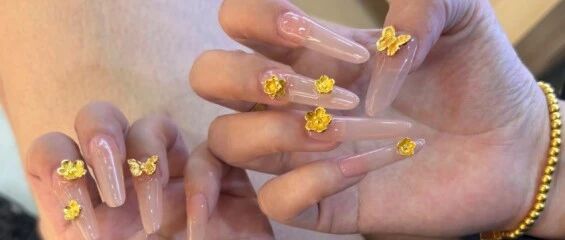
老铺金条变“金甲”,万元黄金上指端记者调查:“微金”消费能撬动多大市场
Mei Ri Jing Ji Xin Wen· 2026-02-14 13:18
Core Insights - The rise of "golden nails" reflects a shift in consumer behavior, particularly among younger demographics, who are increasingly viewing gold as a form of self-expression rather than just an investment [6][9][13] - The gold jewelry industry is facing challenges, with major brands like Chow Tai Fook and Chow Sang Sang reporting declining revenues and store closures, indicating a need for innovation and adaptation [10][9] Industry Trends - The demand for gold in beauty applications, such as nail art, is growing, with consumers willing to spend thousands on "golden nails" made from existing jewelry [3][6] - The global nail product market is projected to grow from $25.76 billion in 2025 to $36.26 billion by 2032, with a compound annual growth rate of 5.01% [6] - The trend of using gold in nail art is seen as a potential solution to the industry's struggles with low consumer frequency and engagement [9][11] Company Performance - Chow Tai Fook reported a 1.1% decline in revenue for the 2026 fiscal year, marking the lowest performance in five years, alongside the closure of 611 stores [10] - Chow Sang Sang's revenue for the first three quarters of 2025 fell by 37.35%, with a net reduction of 560 stores compared to the previous year [10] - The performance of traditional gold jewelry brands is under pressure, prompting them to explore collaborations and price increases, though results have been limited [9][10] Consumer Behavior - Younger consumers are shifting their focus from traditional gold investment to "self-gratifying consumption," valuing the aesthetic and social aspects of gold rather than its investment potential [6][7] - The perception of gold is evolving from a long-term asset to an immediate expression of emotions and social status, particularly through platforms like social media [7][8] - The willingness to pay a premium for gold nail art, despite its higher cost compared to traditional gold jewelry, indicates a significant change in consumer priorities [7][8] Regulatory Considerations - Concerns have been raised regarding the legality of recycling gold scraps in nail salons, as such practices may violate regulations set by the People's Bank of China [12][11] - Legal experts emphasize the importance of nail salons maintaining clear boundaries and not engaging in gold recovery or trading activities [12][11]
恒生指数系列重磅调整,新经济含量提升,关注恒生中国企业ETF易方达(510900)等产品投资价值
Mei Ri Jing Ji Xin Wen· 2026-02-14 11:29
Core Insights - The Hang Seng Index Company announced the results of its quarterly review, which includes the addition of three stocks: CATL, Luoyang Molybdenum, and Laopu Gold, while removing Zhongsheng Holdings, increasing the number of constituent stocks from 88 to 90 [1] - The Hang Seng China Enterprises Index will add Beike-W and Horizon Robotics-W, while removing China Resources Beer and Mengniu Dairy, maintaining a total of 50 constituent stocks [1] - The Hang Seng Tech Index will not undergo any changes, keeping its constituent stock count at 30 [1] - All changes will take effect after market close on March 6, 2026, and will be effective from March 9, 2026 [1] Industry Impact - The Hang Seng Index series is a major market index in Hong Kong, attracting significant investment, with a total asset management scale of approximately $117.7 billion as of December 2025 [1] - The adjustments to the index constituents focus on incorporating new economy enterprises in sectors such as renewable energy and new consumption, while gradually reducing the weight of traditional industries [1] - This shift is expected to enhance the growth potential of the indices, thereby increasing their investment value and attractiveness [1]



春节抢黄金,谁赚到钱了
凤凰网财经· 2026-02-14 10:29
Core Viewpoint - The article discusses the dynamics of the gold jewelry market, highlighting the impact of rising gold prices on consumer behavior and the varying performance of different gold brands in the industry [4][10]. Group 1: Consumer Trends - Young consumers are increasingly purchasing gold jewelry as a form of self-indulgence and asset allocation, with a preference for smaller weight pieces that are both decorative and seen as a new form of savings [5][9]. - The trend of buying gold during the Spring Festival is strong, with brands offering significant discounts to attract younger buyers, who are more focused on personal enjoyment rather than traditional wedding purchases [8][9]. - The rising gold prices have led consumers to consider the value retention aspect of their purchases, with many adjusting their buying habits based on price fluctuations [9][19]. Group 2: Brand Performance - Not all gold brands benefit equally from rising gold prices; some experience significant growth while others face profit pressures and store closures [10][12]. - The gold brands can be categorized into two types: scale-driven brands like Chow Tai Fook, which leverage a large store network for growth, and premium brands like Lao Pu Gold, which focus on high-end products and brand value [10][11]. - Financial data from the first half of 2025 shows Chow Tai Fook leading in revenue with 34.7 billion RMB, followed by China Gold and Lao Pu Gold, indicating a disparity in performance based on business models [12][13]. Group 3: Profitability and Market Dynamics - Profitability varies significantly among brands, with Lao Pu Gold achieving a high gross margin of 38.10%, while China Gold struggles with a low margin of 4.5% [15][16]. - The ability to command premium pricing is crucial, as Lao Pu Gold's unique pricing strategy allows for higher margins compared to traditional pricing models [16][19]. - Market capitalization reflects the differing paths of these brands, with Chow Tai Fook and Lao Pu Gold having similar valuations despite the vast difference in store numbers, indicating that brand positioning and profitability are more critical than sheer scale [18][19]. Group 4: Industry Challenges and Future Outlook - The shift towards high-end products is evident, with traditional brands like Chow Tai Fook adjusting their pricing strategies and expanding into premium markets [21][22]. - However, the high cost of gold and the inherent pricing structure limit the potential for brand premiumization, posing challenges for brands trying to establish a luxury image [24][25]. - The article raises concerns about whether the current expansion strategies of brands like Lao Pu Gold can sustain their high-end positioning as they grow, suggesting that the luxury market's principles may conflict with the mass-market nature of gold as a commodity [27][29].
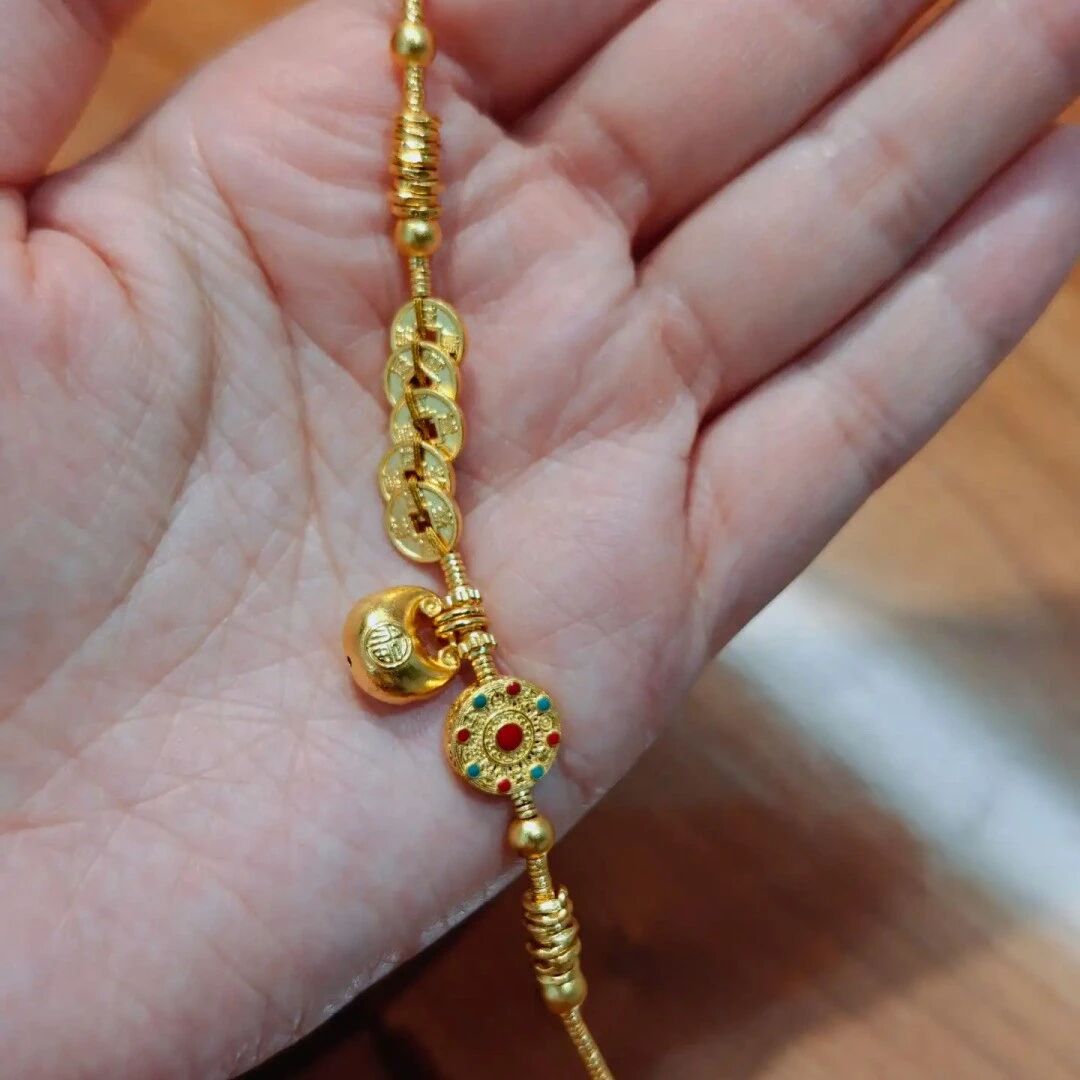
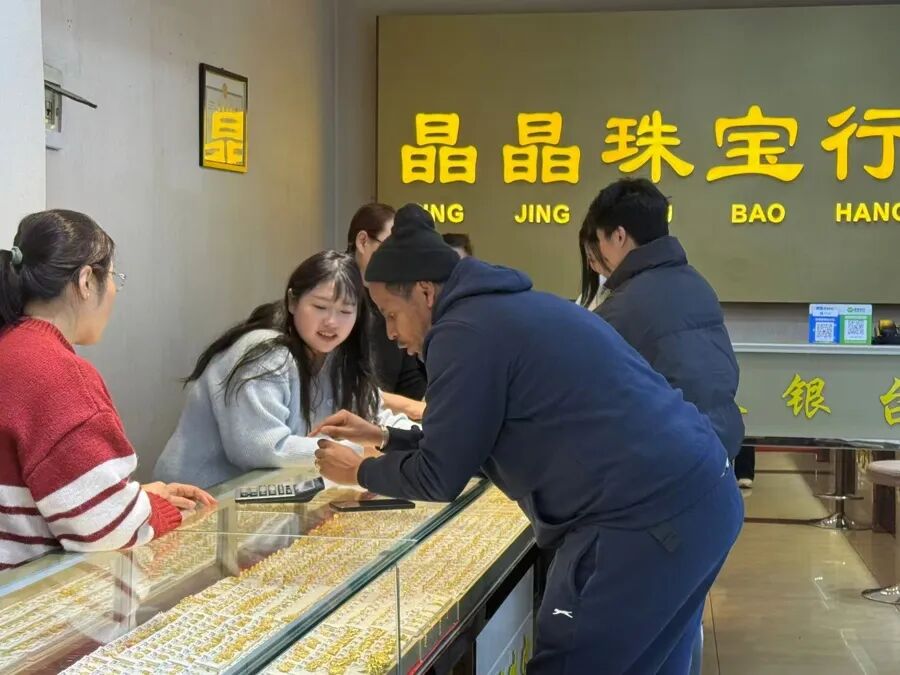
“上海定制”黄金珠宝火了,外国游客直奔而来!
Jie Fang Ri Bao· 2026-02-14 06:44
Core Insights - The article highlights the increasing popularity of custom gold jewelry among international tourists in Shanghai, driven by competitive pricing and unique designs [1][2][3] - Shanghai is positioning itself as a global hub for jewelry fashion, benefiting from a rich supply chain and a diverse range of brands [2][8] Group 1: Market Trends - The influx of international tourists, such as Joe from Ethiopia, indicates a growing trend of travelers seeking custom jewelry in Shanghai, with some stores reporting over 20 foreign visitors in a month [1][6] - Social media and online platforms are playing a significant role in promoting Shanghai as a destination for affordable and high-quality custom jewelry [2][6] Group 2: Consumer Preferences - Different consumer preferences are evident, with North American buyers favoring colorful gemstones, while Asian consumers prefer gold and pearls, showcasing a convergence of tastes in Shanghai [2][3] - Tourists often arrive in Shanghai with prior knowledge of the jewelry market, indicating a well-informed consumer base [9] Group 3: Competitive Advantages - Shanghai's jewelry customization offers a transparent pricing model, typically based on material and processing fees, making it more affordable compared to overseas options [6][8] - The city's strong industrial cluster supports efficient production processes, allowing for quick turnaround times on custom orders, often within one to two weeks [8][9] Group 4: Industry Development - The article emphasizes the importance of integrating traditional Chinese culture into jewelry design to enhance international competitiveness and brand recognition [10] - Chinese designers are gaining recognition on global platforms, indicating a maturation of the jewelry-making industry in China [10][11]