Manus

Search documents
时报观察 | 科技巨头密集并购 抢占技术人才生态高地
Zheng Quan Shi Bao· 2025-12-30 18:19
Group 1 - Meta announced the acquisition of AI startup Manus for several billion dollars, following its $15 billion acquisition of Scale AI six months prior, indicating a strategic focus on AI through mergers and acquisitions [1] - The core logic of these acquisitions is to use capital to overcome innovation bottlenecks, with Scale AI providing essential infrastructure for training large models and Manus offering scalable capabilities in general AI Agent technology [1][2] - The acquisitions aim to secure technology, talent, and ecosystem advantages, positioning Meta to effectively counter competitors like Microsoft and Google [2] Group 2 - The talent acquisition aspect is a critical motivation behind these mergers, as acquiring companies directly brings in top-tier teams, bypassing traditional recruitment inefficiencies [2] - Meta's strategy includes building ecological barriers, with the acquisitions forming a complementary strategy to resist competitive pressures and avoid being vulnerable to supply chain disruptions [2] - The success of these large-scale acquisitions hinges on the ability to integrate the acquired companies effectively, as this will determine the long-term viability of the investments [2]

AI创业的终局是委身大厂?
Sou Hu Cai Jing· 2025-12-30 18:08
Core Insights - The acquisition of AI startups by major companies is becoming a prevalent trend, with many startups either negotiating for acquisition or already acquired [2][3] - The AI startup landscape is shifting from a focus on independent innovation to dependency on large corporations for resources and market access [4][10] Acquisition Trends - In 2025, there were 262 AI-related acquisitions globally, a 35% increase year-over-year, averaging one acquisition every 1.5 days [3] - Major acquisitions include Nvidia's $20 billion purchase of Groq and OpenAI's $6.5 billion acquisition of io, highlighting the trend of large companies consolidating their positions in the AI market [3] - The average valuation premium for acquired startups is significant, with Manus being acquired for $4.5 billion, a 125% premium over its $2 billion valuation [8] Funding Landscape - AI startups raised a record $150 billion in 2025, with 64% of funding directed towards the top 10% of companies, leaving many smaller startups facing funding shortages [3][11] - Companies that are closely tied to major corporations receive significantly higher funding, averaging three times more than independent startups [18] Market Dynamics - The AI industry is transitioning from a "thousand models" competition to an "ecosystem segmentation" phase, where large companies dominate through resource control and strategic acquisitions [4][10] - The cost of computing power has become a critical barrier for startups, with over 70% of high-end computing resources controlled by major players like Nvidia, Google, and Microsoft [6][10] Strategic Shifts - Startups are increasingly pivoting from general-purpose models to specialized applications due to the high costs and resource constraints associated with large models [6][10] - The trend of "open-source tools" provided by giants like ByteDance and Google is locking startups into their ecosystems, reducing their ability to innovate independently [7][13] Future Outlook - By 2030, the AI industry is expected to stabilize into a structure where a few major players dominate the foundational layer, while numerous vertical champions emerge in specialized fields [21][23] - The survival of AI startups will increasingly depend on their ability to carve out unique niches with proprietary data and industry expertise, as well as their access to affordable computing resources [19][20][24]


Big Tech Momentum Holds at Year End With Meta Buying Manus
PYMNTS.com· 2025-12-30 17:30
Group 1: Meta's Acquisition of Manus - Meta acquired Manus, an AI startup with millions of paying users, for over $2 billion, enhancing its focus on subscription-based consumer AI [3] - The acquisition provides Meta with a revenue-generating AI product that differentiates itself from other consumer AI tools that rely on free tiers or advertising [4][5] - By acquiring Manus, Meta gains immediate exposure to subscription revenue and insights into consumer willingness to pay for AI assistance, shortening the timeline for premium AI offerings [6] Group 2: Google’s AI Developments - Google introduced FunctionGemma, a compact, edge-optimized AI model that translates natural language instructions into structured function calls for mobile and edge devices [6][7] - FunctionGemma emphasizes hybrid AI architectures, combining on-device intelligence with cloud systems for improved responsiveness and privacy [8] Group 3: Amazon's Smart Home Innovations - Amazon launched Alexa+ Greetings, allowing Alexa to interact with visitors through Ring video doorbells, enhancing smart home device interactivity [9][10] - This feature aims to make smart home devices more proactive, moving beyond reactive functionalities [10] Group 4: Microsoft and Climate Data Hub - Microsoft partnered with UN Climate Change to launch the Climate Data Hub, aimed at improving access to national climate data [11] - The hub seeks to unify fragmented climate data into a standardized system, facilitating easier analysis and comparison for policymaking and research [12][13]




Meta snaps up AI startup Manus for $2B, drawing scrutiny over new acquisition's Chinese roots
New York Post· 2025-12-30 16:55
Core Insights - Meta Platforms has acquired the Singapore-based AI startup Manus for over $2 billion, enhancing its AI capabilities amid increasing scrutiny due to the startup's Chinese origins [1][4][12] Acquisition Details - Manus was generating more than $125 million in annual revenue and was valued at $500 million in its last funding round before the acquisition [2][11] - The acquisition was completed in approximately 10 days, indicating a rapid decision-making process by Meta to secure a fast-growing AI agent business [14] Strategic Implications - The acquisition allows Meta to bolster its product roadmap and revenue base, as Manus will continue to operate its subscription service as a standalone product while integrating its engineers into Meta's broader AI teams [13][14] - Meta is investing heavily in AI infrastructure, forecasting capital spending of $70 billion to $72 billion in 2025, with expectations to exceed $100 billion in 2026 [14] National Security Concerns - The acquisition has raised alarms in Washington due to Manus's Chinese roots, prompting scrutiny from U.S. lawmakers regarding investments in AI firms with ties to China [4][5] - Meta has taken steps to address these concerns by ensuring that all Chinese investors were bought out, discontinuing China-facing operations, and implementing safeguards to prevent access to sensitive data [6][11] Talent Acquisition - Meta has committed over $600 billion in U.S. investments by 2028 and is offering substantial compensation packages to attract elite AI talent from competitors like OpenAI, Google, and Apple [15]

Meta将收购Manus 为罕见美中AI交易
Xin Lang Cai Jing· 2025-12-30 16:30
Group 1 - Meta (META) shares rose by 1.3% on Tuesday morning following the announcement of its acquisition of Manus [1][2] - The acquisition aims to integrate Manus's autonomous AI agent capabilities into products including Meta AI [1][2] - This deal represents a rare instance of technological cross-collaboration between the United States and China, as Manus has relocated to Singapore [1][2]
3 reasons buying Manus could give Meta a much-needed AI boost
Business Insider· 2025-12-30 16:27
Core Insights - Meta is acquiring Manus, a Singapore-based AI startup, for over $2 billion, marking a significant move in the ongoing AI investment trend [1][2] Group 1: Financial Impact - Manus has processed over 147 trillion tokens of text and claims to have crossed $100 million in annual recurring revenue within eight months of its launch, indicating a strong revenue-generating capability [3] - The acquisition provides Meta with a functioning business that has paying customers and established revenue, enhancing its financial position in the AI sector [9] Group 2: Strategic Advantages - The purchase allows Meta to integrate Manus's technology into its existing platforms like Facebook, Instagram, and WhatsApp, while also continuing to sell Manus's services separately [10] - Meta's distribution advantage, with billions of users across its platforms, positions it well to leverage Manus's offerings and potentially drive user engagement [14] Group 3: Market Positioning - The acquisition is seen as a strategic bet on AI agents, which are becoming increasingly important as AI models become commoditized [11] - Manus utilizes other companies' AI models, suggesting that the real value lies in the applications built on top of these models, aligning with industry insights on future opportunities [12][13]

Meta Stock Rises On Manus AI Acquisition. Deal Seen As Having 'Transformative' Potential.
Investors· 2025-12-30 16:21
Core Insights - The article discusses the latest trends and developments in the investment banking sector, highlighting key financial metrics and market movements. Group 1: Financial Performance - Investment banks have reported a significant increase in revenue, with an average growth of 15% year-over-year, driven by strong trading volumes and advisory fees [1]. - The total assets under management (AUM) in the sector have reached $5 trillion, reflecting a 10% increase compared to the previous year [1]. Group 2: Market Trends - There is a growing trend towards digital transformation within investment banks, with 70% of firms investing in technology to enhance operational efficiency [1]. - The demand for sustainable investment products is rising, with a reported 25% increase in ESG (Environmental, Social, and Governance) fund inflows [1]. Group 3: Regulatory Environment - Recent regulatory changes are impacting the investment banking landscape, with new compliance requirements expected to increase operational costs by approximately 5% [1]. - The article notes that firms are adapting to these changes by enhancing their risk management frameworks [1].
腾讯研究院AI速递 20251231
腾讯研究院· 2025-12-30 16:15
Group 1 - Meta acquired the AI company Manus for an estimated $2-3 billion, marking its third-largest acquisition since its inception [1] - Manus achieved an ARR of $125 million within 8 months and processed 147 trillion tokens, supporting 80 million virtual machines [1] - The acquisition is seen as a strategic success for Manus, highlighting key decisions such as its overseas launch and relocation to Singapore [1] Group 2 - Claude Code Workflow Studio, an open-source project, allows users to design complex AI workflows through a visual drag-and-drop interface [2] - It supports various node types and includes AI-assisted optimization features for workflow design [2] - The platform has received over 890 stars on GitHub and supports five programming languages, significantly lowering the barrier for AI agent orchestration [2] Group 3 - ByteDance launched AnyGen, a tool that transforms fragmented inputs like voice and photos into structured deliverables [3] - Key features include multi-modal recording, guided questioning, collaborative editing, and high-quality PPT generation [3] - The product emphasizes information retrieval and data analysis capabilities, currently available only overseas with support for Google, Apple, and Lark logins [3] Group 4 - Tencent released the open-source translation model 1.5, which includes two versions supporting 33 languages and can run offline with only 1GB of memory [4] - The 1.8B version achieved a quality score of approximately 78% in evaluations, outperforming mainstream commercial translation APIs [4] - Both models support custom terminology, long text context understanding, and formatted translations, with deployment on multiple platforms [4] Group 5 - Tuya Smart introduced the Hey Tuya AI assistant, designed to integrate seamlessly into daily life through various entry points [6] - The core technology includes a multi-agent collaborative architecture and features like 24-hour security, energy-saving advice, and health monitoring [6] - The assistant aims to serve as a physical AI scheduler, enhancing user experience across different scenarios [6] Group 6 - Zhipu AI is set to go public on January 8, with an expected fundraising of HKD 4.3 billion and a post-IPO market valuation exceeding HKD 51.1 billion [7] - The latest GLM-4.7 model ranks first in both open-source and domestic models, with a MaaS platform attracting over 2.7 million developers [7] - Revenue projections for 2022 to 2024 show a doubling trend, with gross margins above 50%, although R&D expenses peak at eight times the revenue [7] Group 7 - a16z introduced the "Cinderella Glass Slipper Effect," suggesting that AI models that effectively address high-value workloads will retain users better than traditional SaaS [8] - Data indicates that initial user retention rates for Gemini 2.5 Pro and Claude 4 Sonnet reached 35-40% after five months [8] - The competitive edge lies in the deep matching of workloads to models, necessitating rapid capture of foundational user groups [8] Group 8 - Andrej Karpathy recommended a coding guide emphasizing task-based model selection and workflow customization to enhance efficiency [9] - Key strategies include avoiding rollbacks, reusing old project structures, and clearly defining human-AI roles [9] - Practical tips involve starting development from CLI and using documentation to help models retain context [9] Group 9 - Andrew Ng's year-end letter highlights three keys to success in AI: systematic learning, hands-on system building, and reading research papers [10] - The summary for 2025 emphasizes the importance of reasoning models and the significant salaries attracting top AI talent [11] - A global surge in data center construction is noted, with major investments from companies like OpenAI, Meta, and Microsoft [11] Group 10 - Jensen Huang pointed out that energy limitations are a core physical boundary for AI development, with AI computing efficiency improving by 10,000 times since 2016 [12] - NVIDIA does not rely solely on Transformer models, advocating for a general computing platform strategy to allow for future algorithmic innovations [12] - The company is optimistic about the integration of robotics and virtual environments, encouraging individuals to learn to interact with AI [12]

Meta buys startup Manus in latest move to advance its artificial intelligence efforts
Yahoo Finance· 2025-12-30 16:02
Acquisition Details - Meta is acquiring the AI startup Manus for over $2 billion to enhance its AI offerings across platforms [1] - Manus is a Singapore-based platform that launched its first general-purpose AI agent earlier this year, offering paid subscriptions for various tasks [2] Business Impact - Meta plans to scale Manus' services, integrating general-purpose agents into its consumer and business products, including Meta AI [3] - Manus has achieved significant growth, crossing $100 million in annual recurring revenue just eight months post-launch [4] Ownership and Operations - Following the acquisition, there will be no Chinese ownership interests in Manus AI, and the platform will cease operations in China while continuing in Singapore [5] - Manus will maintain its subscription services through its own app and website, ensuring operational continuity [3][5] Competitive Landscape - Meta's acquisition is part of a broader strategy to strengthen its AI capabilities amid competition from companies like Google and OpenAI [6] - The company previously made a $14.3 billion investment in AI data company Scale to bolster its AI development efforts [6]
3个中国小伙创立的AI公司,被扎克伯格140亿元买下:他亲自操盘,只谈了十余天就敲定!不到3年估值暴增142倍,但也面临“套壳”质疑
Mei Ri Jing Ji Xin Wen· 2025-12-30 15:44
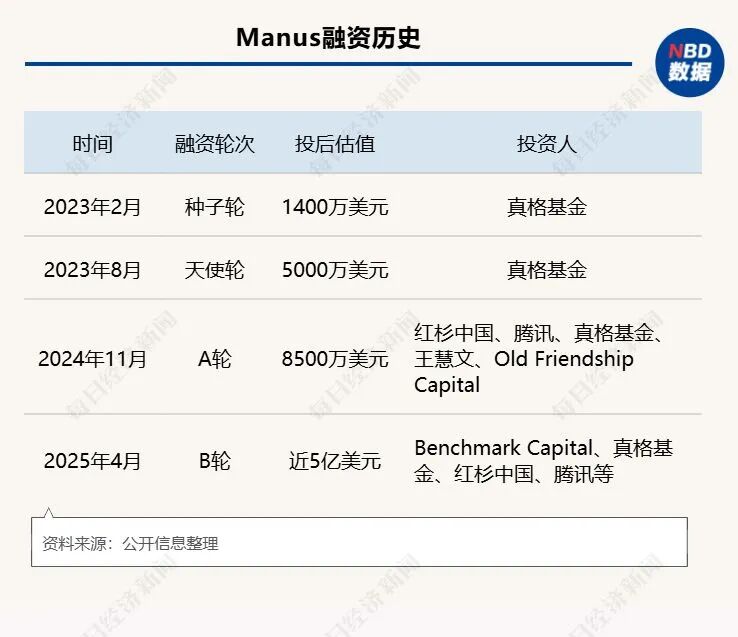
Core Insights - Meta has completed the acquisition of AI startup Manus for over $2 billion, marking it as the third-largest acquisition in Meta's history [1][3] - Manus, founded by a Chinese team, has developed an "AI agent" capable of executing complex tasks autonomously, achieving an annual recurring revenue (ARR) of over $100 million in less than 10 months [1][7] - The acquisition is part of Meta's strategic shift towards AI, with CEO Mark Zuckerberg personally driving the deal [3][22] Acquisition Details - The acquisition price exceeds $2 billion, making it only second to the 2014 WhatsApp acquisition and the 2025 investment in Scale AI [3] - Manus was valued at $2 billion before Meta's intervention, which accelerated the acquisition process [3] - Following the acquisition, Manus founder Xiao Hong will become a vice president at Meta, reporting to COO Javier Olivan, while the team will maintain independent operations [2][26] Manus Growth and Performance - Manus's valuation skyrocketed from $1.4 million in seed funding to over $2 billion in less than three years, representing a growth of over 142 times [1][2] - The company achieved an ARR of over $100 million, making it the fastest startup to reach this milestone [7][8] - Manus's user base has grown significantly, with peak monthly visits reaching 13.56 million in August [15] Product and Market Position - Manus is positioned as a "general AI agent," distinguishing itself from other AI products by its execution capabilities, allowing users to complete complex tasks through natural language commands [11][19] - The AI agent has garnered a loyal user base, including notable figures such as Zuckerberg and former Y Combinator CEO Michael Seibel [19] - Despite its success, Manus faces criticism for relying on third-party language models rather than developing its own foundational technology [19][25] Strategic Implications for Meta - The acquisition of Manus is seen as a critical move to fill gaps in Meta's AI strategy, particularly in creating user-facing applications [24] - Meta's aggressive AI strategy in 2025 included significant investments and restructuring to enhance its competitive position against companies like OpenAI and Google [22][24] - However, experts caution that acquiring Manus does not address Meta's weaknesses in foundational AI models, which remain a critical component of its long-term strategy [25]