AnyGen

Search documents
深度|解读AnyGen:飞书在探索AI 办公的新形态
Z Potentials· 2026-01-14 03:55
Group 1 - The core product AnyGen is an exploratory AI tool developed by Lark, aimed at the overseas market, currently in the product refinement stage [2] - AnyGen's design philosophy emphasizes reliable human-machine collaboration rather than showcasing "AI magic," focusing on high-quality deliverables through effective teamwork [4][22] - The product aims to reduce the friction in office tasks by allowing users to maintain control over the final output while AI handles initial content generation [6][21] Group 2 - AnyGen excels in search research by structuring information effectively, allowing users to edit and guide the content generation process in real-time [6][19] - The product's approach to creating presentations shifts the focus from mere generation to collaboration and editing, enhancing the quality of the final output [8][12] - Users have reported that AnyGen functions more like a collaborative AI editor, significantly reducing their workload while ensuring the final results align with their intentions [21][24] Group 3 - AnyGen's design philosophy prioritizes human judgment and editing over automated completion, recognizing that high-quality outputs require human intervention [23][25] - The product fosters a partnership-like relationship between users and AI, emphasizing the importance of iterative refinement and professional standards in content creation [26][28] - The development team is focused on refining the core user experience with early adopters, indicating a commitment to long-term product evolution [29]


错过Manus后,字节AnyGen追求的是“大象无形”
Tai Mei Ti A P P· 2026-01-13 00:30
Core Insights - The article discusses the contrasting paths of two AI startups, Butterfly Effect and its product Manus, and ByteDance's AnyGen, highlighting their different approaches to AI in productivity tools [1][2][4]. Group 1: Company Developments - Butterfly Effect, after rejecting a $30 million acquisition offer from ByteDance, successfully launched Manus, which gained significant attention for its autonomous planning and execution capabilities [1][2]. - AnyGen, developed by ByteDance, quietly launched a workflow platform that integrates various functionalities and aims to disrupt established office ecosystems like Microsoft 365 and Google Workspace [2][3][12]. Group 2: Product Features and Innovations - Manus operates on a multi-agent collaboration architecture, allowing it to decompose tasks and manage hundreds of agents simultaneously, while AnyGen focuses on integrating voice interaction and real-time collaboration into a seamless workflow [3][4]. - AnyGen's design emphasizes stability and accuracy in task execution, addressing the common issue of "rework" in office tasks by ensuring that AI-generated outputs are structured and ready for immediate use [8][10]. Group 3: Market Positioning and Strategy - AnyGen aims to fill the gaps in the fragmented productivity tool market by offering an all-in-one workspace solution, contrasting with the existing tools that often require users to navigate multiple platforms [11][12]. - The article suggests that AnyGen's strategy of providing a free version aims to build a user base and gather valuable feedback for model training, positioning it favorably against competitors [17][18]. Group 4: Competitive Landscape - The competition for AnyGen includes established office suites like WPS and Microsoft Office, which have the advantage of being integrated into existing workflows, and lightweight tools like Quark that offer easy access to presentation creation [11][12]. - The article highlights the importance of context in AI applications, noting that while Manus seeks to automate tasks fully, AnyGen focuses on enhancing human capabilities through collaboration [16][20].
字节AI出海进入新阶段
3 6 Ke· 2026-01-12 23:56
Core Insights - ByteDance is positioning itself for systematic competition in the overseas AI market by leveraging both C-end and B-end strategies, with significant product launches and partnerships in December 2025 [1][3][14] Group 1: Product Launches and Developments - ByteDance's overseas AI products began gaining traction in late December 2025, with the launch of Dreamina AI and the introduction of AnyGen, a work-oriented AI assistant [1][3] - AnyGen is designed for professional tasks, emphasizing collaboration and high-quality output, and is positioned as a simplified version of Manus [5][6] - Dola, ByteDance's AI assistant, reported over 10 million daily active users by December 31, 2025, indicating strong market engagement [1][3][13] Group 2: Strategic Partnerships and Market Positioning - A key development for ByteDance was the establishment of a joint venture in the U.S. for data security and content moderation, allowing TikTok to operate more securely in the American market [3] - This partnership mitigates uncertainties surrounding TikTok's U.S. operations and enables ByteDance to expand its AI offerings more freely [3][14] Group 3: Competitive Landscape - ByteDance's strategy aligns closely with competitors like Meta, OpenAI, and Google, particularly in the areas of AI assistants and creative tools, with a focus on Southeast Asia and South America for initial market penetration [4][12] - The competitive landscape indicates a trend towards personalized office tools, with a significant portion of employees using personal AI tools in their workflows, highlighting a shift in the B-end market [9][11] Group 4: User Engagement and Monetization - AnyGen operates on a subscription model, with users needing to purchase credits for generating reports, indicating a shift towards a service-oriented pricing strategy [8][6] - Dola's user engagement is bolstered by its capabilities in dialogue, writing, and translation, while avoiding direct competition in the U.S. market for now [13][14]

Meta 20亿“闪购”Manus难落地,Meta千金买“股”或成空
3 6 Ke· 2026-01-12 08:41
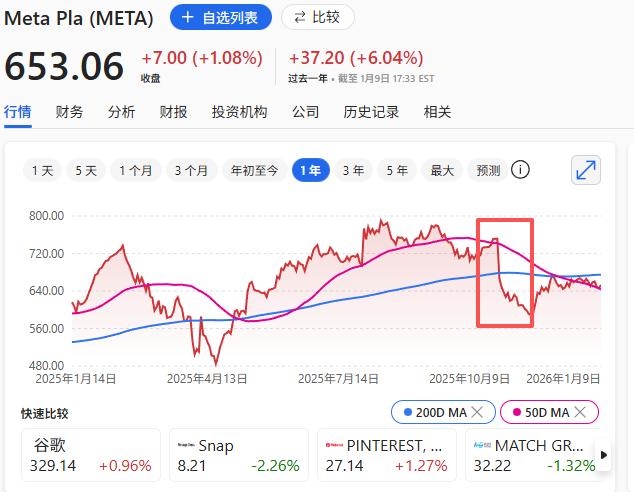
Core Viewpoint - Meta's acquisition of AI company Manus for approximately $2 billion marks a significant and rapid transaction in the tech industry, raising questions about the valuation and the strategic necessity behind the deal [1][3][9]. Group 1: Acquisition Details - The acquisition was finalized in just a few weeks, making it Meta's third-largest acquisition after WhatsApp and Scale AI [1]. - Manus, which transitioned to the AI sector less than three years ago, has generated $125 million in revenue within a year of launching its first product [8][9]. - The deal has sparked considerable interest and debate within the tech community, especially given Manus's recent move from Wuhan to Singapore [1][2]. Group 2: Meta's Perspective - Meta has faced challenges in maintaining market confidence, particularly after the perceived failure of its metaverse initiatives, despite current revenue growth [5][7]. - The company has been criticized for its high capital expenditures in AI, which have led to downgrades from several financial institutions [5][7]. - The acquisition of Manus is seen as a potential solution to restore investor confidence and provide new growth opportunities across various sectors, including social media and enterprise services [9][18]. Group 3: Manus's Perspective - Manus, while effective, has limitations in efficiency and integration into existing workflows, which could hinder its long-term success without the backing of a larger entity like Meta [11][12]. - The AI agent market is crowded with subpar products, making Manus's established revenue and operational capabilities particularly valuable [15][16]. - The partnership with Meta could enhance Manus's market presence and allow it to leverage Meta's resources for further growth [16][17]. Group 4: Regulatory Considerations - The Chinese Ministry of Commerce announced an evaluation of the acquisition concerning export controls and compliance with legal regulations, adding uncertainty to the deal [2][17]. - The potential for delays in the transaction due to regulatory scrutiny could impact both companies' strategic timelines in the rapidly evolving AI landscape [17][18].

模力工场 027 周 AI 应用榜:从“一键生成”到“自动交付”,最会帮你干活的 AI 榜单来袭
AI前线· 2026-01-08 01:50
Core Insights - The article discusses the evolution of AI applications from basic assistance to fully automated execution, highlighting a shift in user expectations and capabilities of AI tools [10][11]. Group 1: AI Application Trends - The latest AI applications are moving beyond simple tasks like writing and image generation to tackle more complex challenges that users face, such as product selection and report generation [4][5]. - Applications like Manus and 秒哒 are designed to handle entire processes, from research to execution, effectively replacing tedious manual tasks [5][10]. - The trend indicates that AI is transitioning from being a supportive tool to becoming a key executor in workflows, emphasizing the importance of deep understanding and system collaboration [10][11]. Group 2: Featured Applications - "且听" is an AI book summarization app that offers deep analysis of over 5000 books, providing structured audio explanations and critical insights for a yearly fee of less than 40 yuan [7]. - Seedream integrates multiple creative functions, allowing users to generate and edit images seamlessly, which is particularly beneficial for teams needing consistent branding [8]. - Other notable applications include Genspark, which automates complex tasks through multi-agent collaboration, and 邀虾, which streamlines the entire cross-border e-commerce process from product selection to execution [9][10]. Group 3: User Engagement and Application Ranking - The ranking of AI applications in the 模力工场 is based on community feedback, including comment counts and user interactions, rather than mere popularity metrics [12]. - Developers are encouraged to submit their applications, while users can influence rankings through engagement, creating a dynamic ecosystem for AI tools [12].

腾讯研究院AI速递 20251231
腾讯研究院· 2025-12-30 16:15
Group 1 - Meta acquired the AI company Manus for an estimated $2-3 billion, marking its third-largest acquisition since its inception [1] - Manus achieved an ARR of $125 million within 8 months and processed 147 trillion tokens, supporting 80 million virtual machines [1] - The acquisition is seen as a strategic success for Manus, highlighting key decisions such as its overseas launch and relocation to Singapore [1] Group 2 - Claude Code Workflow Studio, an open-source project, allows users to design complex AI workflows through a visual drag-and-drop interface [2] - It supports various node types and includes AI-assisted optimization features for workflow design [2] - The platform has received over 890 stars on GitHub and supports five programming languages, significantly lowering the barrier for AI agent orchestration [2] Group 3 - ByteDance launched AnyGen, a tool that transforms fragmented inputs like voice and photos into structured deliverables [3] - Key features include multi-modal recording, guided questioning, collaborative editing, and high-quality PPT generation [3] - The product emphasizes information retrieval and data analysis capabilities, currently available only overseas with support for Google, Apple, and Lark logins [3] Group 4 - Tencent released the open-source translation model 1.5, which includes two versions supporting 33 languages and can run offline with only 1GB of memory [4] - The 1.8B version achieved a quality score of approximately 78% in evaluations, outperforming mainstream commercial translation APIs [4] - Both models support custom terminology, long text context understanding, and formatted translations, with deployment on multiple platforms [4] Group 5 - Tuya Smart introduced the Hey Tuya AI assistant, designed to integrate seamlessly into daily life through various entry points [6] - The core technology includes a multi-agent collaborative architecture and features like 24-hour security, energy-saving advice, and health monitoring [6] - The assistant aims to serve as a physical AI scheduler, enhancing user experience across different scenarios [6] Group 6 - Zhipu AI is set to go public on January 8, with an expected fundraising of HKD 4.3 billion and a post-IPO market valuation exceeding HKD 51.1 billion [7] - The latest GLM-4.7 model ranks first in both open-source and domestic models, with a MaaS platform attracting over 2.7 million developers [7] - Revenue projections for 2022 to 2024 show a doubling trend, with gross margins above 50%, although R&D expenses peak at eight times the revenue [7] Group 7 - a16z introduced the "Cinderella Glass Slipper Effect," suggesting that AI models that effectively address high-value workloads will retain users better than traditional SaaS [8] - Data indicates that initial user retention rates for Gemini 2.5 Pro and Claude 4 Sonnet reached 35-40% after five months [8] - The competitive edge lies in the deep matching of workloads to models, necessitating rapid capture of foundational user groups [8] Group 8 - Andrej Karpathy recommended a coding guide emphasizing task-based model selection and workflow customization to enhance efficiency [9] - Key strategies include avoiding rollbacks, reusing old project structures, and clearly defining human-AI roles [9] - Practical tips involve starting development from CLI and using documentation to help models retain context [9] Group 9 - Andrew Ng's year-end letter highlights three keys to success in AI: systematic learning, hands-on system building, and reading research papers [10] - The summary for 2025 emphasizes the importance of reasoning models and the significant salaries attracting top AI talent [11] - A global surge in data center construction is noted, with major investments from companies like OpenAI, Meta, and Microsoft [11] Group 10 - Jensen Huang pointed out that energy limitations are a core physical boundary for AI development, with AI computing efficiency improving by 10,000 times since 2016 [12] - NVIDIA does not rely solely on Transformer models, advocating for a general computing platform strategy to allow for future algorithmic innovations [12] - The company is optimistic about the integration of robotics and virtual environments, encouraging individuals to learn to interact with AI [12]
京东物流首个海外智狼仓在英国投用;飞书在海外上线AI办公App“AnyGen”|36氪出海·要闻回顾
36氪· 2025-12-28 13:34
Core Insights - The article highlights significant developments in various companies and industries, focusing on their international expansions, technological advancements, and strategic partnerships. Group 1: Logistics and Supply Chain - JD Logistics has launched its first overseas automated warehouse in the UK, enhancing its supply chain efficiency and enabling same-day delivery for consumers [5][6]. - SF International signed a memorandum of cooperation with MSC Air Cargo to improve global supply chain resilience through integrated air, land, and sea transport [8]. Group 2: Technology and AI - Feishu (Lark) has introduced an AI office app called "AnyGen" overseas, which allows users to convert voice notes and ideas into documents and presentations seamlessly [5][6]. - Alibaba's Tongyi has released two foundational models to enhance industrial-grade video and voice capabilities, including a video generation model that supports multi-scene storytelling [5][6]. Group 3: Automotive Industry - XPeng Motors is expanding its presence in the Middle East and Africa, launching its brand in Qatar and establishing partnerships in Mauritius and the UAE [9]. - Lynk & Co has officially entered the UAE market, showcasing its flagship SUV and emphasizing community engagement and high-end positioning [9]. Group 4: Investment and Financing - Sazhi Intelligent has completed several rounds of financing, with over 20% of its revenue coming from overseas markets, aiming to increase this to around 50% [12]. - Qianjue Technology has secured nearly 100 million yuan in financing to accelerate global commercialization and technology development in the embodied intelligence sector [13]. Group 5: Market Regulations - Thailand will eliminate the tax exemption for cross-border packages valued under 1,500 THB starting January 1, 2026, which is expected to increase costs for cross-border e-commerce [15].

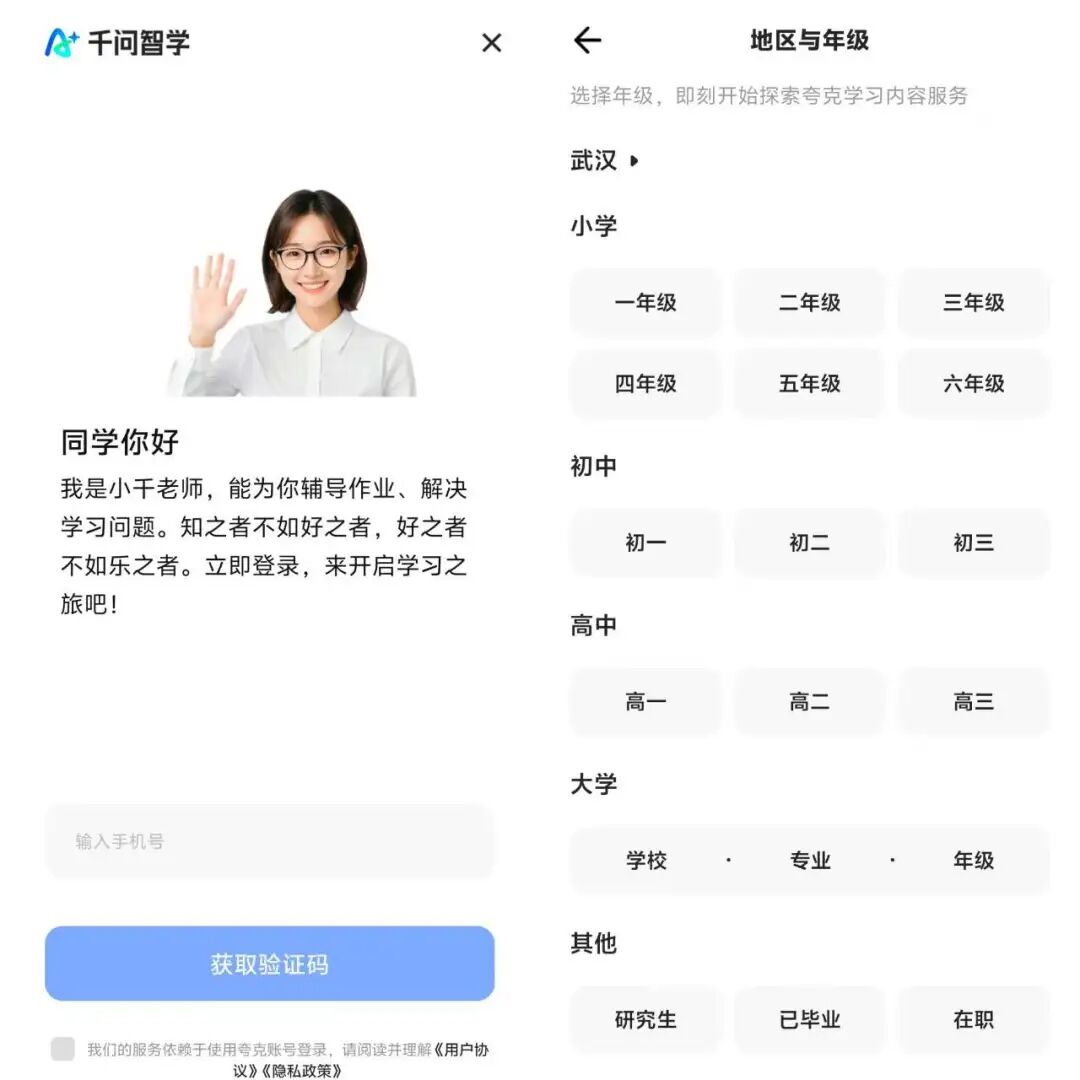
阿里推出“千问智学”,加码AI教育;字节在海外上线AI办公App“AnyGen”
3 6 Ke· 2025-12-23 11:17
Group 1: Alibaba's "Qianwen Zhixue" App Launch - Alibaba has launched the "Qianwen Zhixue" App, an AI education application that provides free one-on-one tutoring from elementary to graduate levels through its built-in intelligent agent, Xiao Qian [1][7] - The app features a simple registration process and offers three core interaction methods: photo Q&A, voice inquiries, and text input, along with modules for Chinese dictation and text recitation [3][4] - The app's core advantages include being free and having a user-friendly interface, making it suitable for daily inquiries from middle and primary school students [7] Group 2: Market Trends and Competitive Landscape - The trend of AI technology penetrating vertical fields is evident, with education being a core area for large models due to its stable user demand [7] - Other major companies are also entering the AI education space, with ByteDance launching the "Doubao Aixue" App and Baidu exploring both software and hardware products for learning scenarios [7] - The CEO of online education platform Banfish noted that AI-generated content significantly reduces production costs, shifting competition from asset barriers to understanding learning patterns and product iteration speed [7] Group 3: ByteDance's "AnyGen" App Launch - ByteDance has launched "AnyGen," an AI office product designed as a voice-driven workspace that converts voice notes, photos, and ideas into documents and presentations [9][11] - The app features a clean interface and an "instant recording" function that addresses high-frequency pain points in office scenarios, allowing users to record voice notes without manual typing [9][11] - As demand for AI office tools continues to rise, "AnyGen" has the potential to become a significant part of ByteDance's overseas AI ecosystem if it continues to iterate and expand its functionalities [12]