九华旅游

Search documents
旅游及景区板块8月5日涨0.99%,西藏旅游领涨,主力资金净流出3110.32万元
Zheng Xing Xing Ye Ri Bao· 2025-08-05 08:37
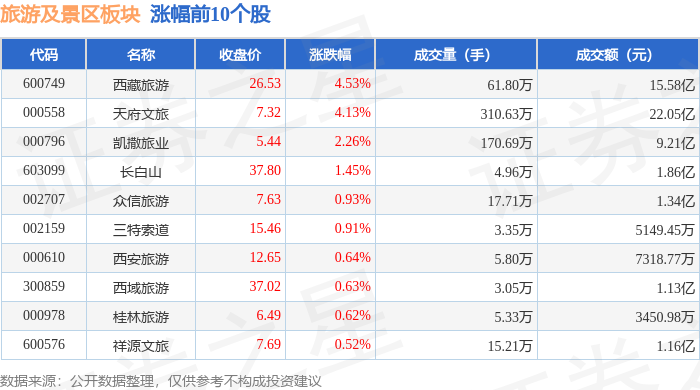
证券之星消息,8月5日旅游及景区板块较上一交易日上涨0.99%,西藏旅游领涨。当日上证指数报收于 3617.6,上涨0.96%。深证成指报收于11106.96,上涨0.59%。旅游及景区板块个股涨跌见下表: | 代码 | 名称 | 收盘价 | 涨跌幅 | 成交量(手) | 成交额(元) | | --- | --- | --- | --- | --- | --- | | 600749 | 四藏旅游 | 26.53 | 4.53% | 61.80万 | 15.58亿 | | 000558 | 天府文旅 | 7.32 | 4.13% | 310.63万 | 22.05亿 | | 000796 | 凯撒旋业 | 5.44 | 2.26% | 170.69万 | 9.21亿 | | 660509 | 长自山 | 37.80 | 1.45% | 4.96万 | 1.86亿 | | 002707 | 众信旅游 | 7.63 | 0.93% | 17.71万 | 1.34亿 | | 002159 | 三特索道 | 15.46 | 0.91% | 3.35万 | 5149.45万 | | 000610 | 西安旅游 | 12. ...


旅游及景区板块8月4日跌0.47%,西藏旅游领跌,主力资金净流出7.01亿元
Zheng Xing Xing Ye Ri Bao· 2025-08-04 08:30
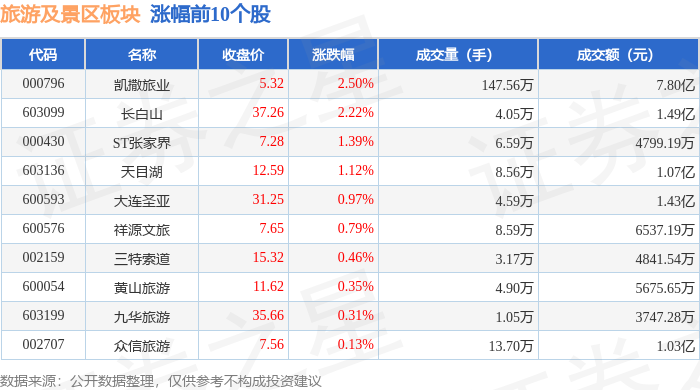
证券之星消息,8月4日旅游及景区板块较上一交易日下跌0.47%,西藏旅游领跌。当日上证指数报收于 3583.31,上涨0.66%。深证成指报收于11041.56,上涨0.46%。旅游及景区板块个股涨跌见下表: | 代码 | 名称 | 收盘价 | 涨跌幅 | 成交量(手) | 成交额(元) | | --- | --- | --- | --- | --- | --- | | 000796 | 凯撒旋业 | 5.32 | 2.50% | 147.56万 | 7.80亿 | | 660E09 | 长自山 | 37.26 | 2.22% | 4.05万 | 1.49亿 | | 000430 | ST张家界 | 7.28 | 1.39% | 6.59万 | 4799.19万 | | 603136 | 天目湖 | 12.59 | 1.12% | ﺍﻟﻤ 8.56万 | 1.07亿 | | 600593 | 大连圣亚 | 31.25 | 0.97% | 4.59万 | 1.43亿 | | 600576 | 祥源文旅 | 7.65 | 0.79% | 8.59万 | 6537.19万 | | 002159 | 三特索道 | 1 ...


旅游及景区板块8月1日跌0.24%,西域旅游领跌,主力资金净流出5.42亿元
Zheng Xing Xing Ye Ri Bao· 2025-08-01 08:42
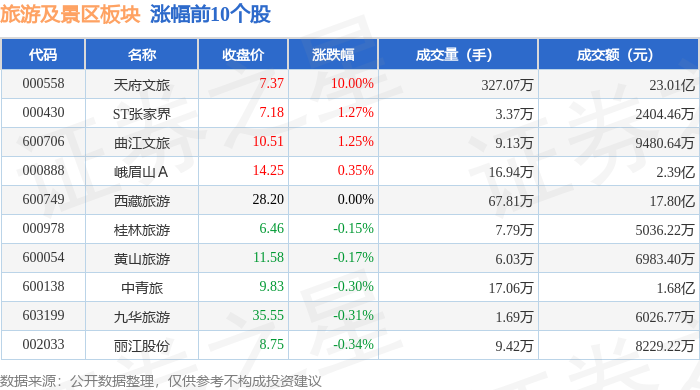
Market Overview - The tourism and scenic area sector experienced a decline of 0.24% on August 1, with Xiyu Tourism leading the drop [1] - The Shanghai Composite Index closed at 3559.95, down 0.37%, while the Shenzhen Component Index closed at 10991.32, down 0.17% [1] Stock Performance - Tianfu Culture Tourism (000558) saw a significant increase of 10.00%, closing at 7.37 with a trading volume of 3.27 million shares and a transaction value of 2.30 billion [1] - Other notable performers included ST Zhangjiajie (000430) with a 1.27% increase and Qujiang Culture Tourism (600706) with a 1.25% increase [1] - Conversely, Xiyu Tourism (300859) led the decline with a drop of 3.96%, closing at 37.15 with a trading volume of 71,000 shares and a transaction value of 266 million [2] Capital Flow - The tourism and scenic area sector experienced a net outflow of 542 million from main funds, while retail investors saw a net inflow of 411 million [2] - The sector's overall capital flow indicates a mixed sentiment, with institutional investors pulling back while retail investors increased their positions [2] Individual Stock Capital Flow - Tianfu Culture Tourism (000558) had a net inflow of 124 million from main funds, while it faced outflows from both speculative and retail investors [3] - Other stocks like Lijiang Co. (002033) and Jiuhua Tourism (661809) also showed varied capital flows, with Jiuhua Tourism attracting significant speculative inflows [3] - Stocks such as Huangshan Tourism (600054) and Yunnan Tourism (002059) faced notable net outflows from main funds, indicating a cautious approach from institutional investors [3]


九华旅游股价微涨0.87% 寺庙经济规模或突破千亿
Sou Hu Cai Jing· 2025-07-30 12:10
Group 1 - The core viewpoint of the article highlights the positive performance of Jiuhua Tourism, with a stock price increase and significant revenue growth in recent quarters [1][2] - Jiuhua Tourism operates in the tourism and hotel sector, providing services such as hotels, cable cars, passenger transport, and travel agency services [1] - In 2024, Jiuhua Tourism achieved an operating revenue of 764 million yuan, representing a year-on-year growth of 5.64%, and a net profit attributable to shareholders of 186 million yuan, up 6.5% [1] Group 2 - In the first quarter of 2025, the company reported a revenue of 235 million yuan, showing a substantial year-on-year increase of 30.13% [1] - The temple economy has been rapidly developing, with the market size expected to exceed 100 billion yuan between 2025 and 2026, benefiting Jiuhua Tourism [1] - The Jiuhua Mountain scenic area saw a significant increase in visitor numbers in 2024, which contributed to a 31.24% year-on-year increase in the company's passenger transport revenue [1] - Revenue from the cable car business reached 293 million yuan, becoming one of the important sources of income for Jiuhua Tourism [1]
市场规模有望破千亿,寺庙商业化底线在哪儿
第一财经· 2025-07-30 11:23
Core Viewpoint - The temple economy has become a high-profit sector within the cultural tourism industry, with market size expected to exceed 100 billion yuan by 2025-2026, driven by ticket sales, incense offerings, and various related services [1][2]. Group 1: Revenue Sources and Visitor Statistics - Major temples such as Shaolin Temple, Jiuhua Mountain, Emei Mountain, Lingyin Temple, Yonghe Palace, and Ling Shan Buddha generate significant revenue primarily from ticket sales and incense offerings, with annual visitor numbers reaching hundreds of millions [2]. - Emei Mountain A (000888.SZ) reported a revenue of 1.013 billion yuan in 2024, with a net profit of 235 million yuan, reflecting a year-on-year growth of 3.08% [2]. - Lingyin Temple received 12 million visitors in 2023, generating ticket revenue of 360 million yuan, with projections of 11 million visitors and 330 million yuan in revenue for 2024 [3]. Group 2: Business Segments and Growth - Jiuhua Tourism (603199.SH) reported a revenue of approximately 764 million yuan in 2024, with a year-on-year growth of 5.64%, and a net profit of 186 million yuan, growing by 6.5% [4]. - The revenue breakdown for Jiuhua Tourism includes hotel services (237 million yuan), cable car services (293 million yuan), and passenger transport (159 million yuan), with the latter showing a significant growth of 31.24% [4]. Group 3: Cultural and Culinary Integration - The temple economy's core income is derived from ticket sales and incense offerings, supplemented by tourism routes, transportation, cultural performances, and vegetarian dining options, which contribute significantly to revenue [6]. - Emei Mountain has implemented various promotional activities and policies to boost tourism, achieving a record 6.2 million visitors in 2024, with ticket revenue reaching 491 million yuan, a year-on-year increase of 248.38% [6]. Group 4: Digital and Creative Economy - The temple economy has diversified into digital and creative products, with significant sales through online platforms. For instance, Lingyin Temple's products have generated over 2 billion yuan in annual output value through local tourism clusters [8]. - The revenue composition of the temple economy includes over 30% from ticket sales, over 20% from incense offerings, and around 18% from creative products, indicating a shift towards a more diversified income model [8]. Group 5: Cultural Experience and Emotional Value - The popularity of temple tourism is attributed to emotional value and cultural experiences, providing a therapeutic outlet for visitors, especially younger generations facing stress [10]. - The industry faces challenges regarding commercialization and maintaining the integrity of cultural sites, emphasizing the need for regulation and responsible management to ensure sustainable development [10].
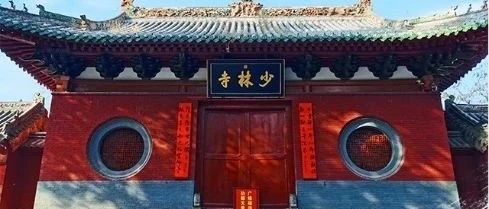
商业秘密|市场规模有望破千亿,寺庙商业化底线在哪儿?
Di Yi Cai Jing· 2025-07-30 11:19
Core Viewpoint - The temple economy, driven by famous temples like Shaolin Temple and Emei Mountain, has become a significant segment of the cultural tourism industry, with annual revenues reaching billions, and is projected to exceed 100 billion yuan by 2025-2026 [1][2][8] Revenue Sources - The primary revenue sources for these temples include ticket sales and incense offerings, with additional income from cultural tourism, dining, and creative products [1][6][8] - Ticket prices vary widely, with examples such as Jiuhua Mountain ticket at 160 yuan and Shaolin Temple ticket at 80 yuan, often bundled with other services [2][6] Visitor Statistics - Major temples attract millions of visitors annually, with Lingyin Temple receiving 12 million visitors in 2023 and Emei Mountain achieving a record 620,000 visitors in a single year [2][6][7] - Emei Mountain reported a significant increase in ticket revenue, reaching 4.91 billion yuan in 2023, a 248.38% increase year-on-year [6] Financial Performance - Emei Mountain A (000888.SZ) reported a revenue of 1.013 billion yuan for 2024, with a net profit of 235 million yuan, reflecting a growth of 3.08% [2] - Jiuhua Tourism (603199.SH) projected a revenue of 764 million yuan for 2024, with a net profit of 186 million yuan, marking a 5.64% increase [3] Cultural and Creative Products - The temple economy also includes a growing market for cultural and creative products, with online and offline sales channels contributing significantly to revenue [7][8] - Popular products include Lingyin Temple bracelets and Emei Mountain souvenirs, with some items priced significantly higher than average market rates [7][8] Emotional and Cultural Value - The popularity of temple visits is attributed to emotional value and cultural experiences, providing a therapeutic outlet for visitors [9] - Temples are seen as cultural heritage sites, attracting younger generations with innovative products and experiences [9] Industry Trends - The temple economy is evolving with new business models, including night tourism and sports tourism, aimed at enhancing visitor engagement [6][9] - There is a growing concern regarding the commercialization of temples, emphasizing the need for regulation to maintain cultural integrity [9]
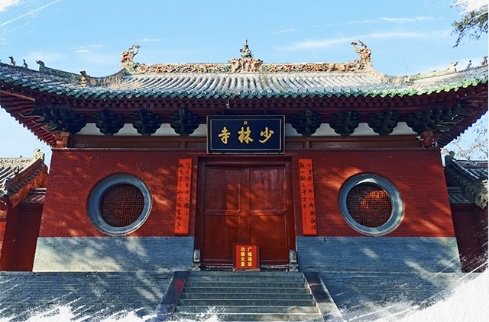
商业秘密|市场规模有望破千亿,寺庙商业化底线在哪儿
Di Yi Cai Jing· 2025-07-30 11:03
Core Insights - The temple economy, represented by famous temples like Shaolin Temple and Emei Mountain, has become a significant part of the cultural tourism industry, generating substantial revenue through various channels such as ticket sales, incense offerings, cultural products, and dining services [1][3] - The market size of the temple economy is expected to exceed 100 billion yuan by 2025-2026, indicating its growing importance in the cultural tourism sector [1] Revenue Sources - Major temples in China, including Shaolin Temple, Jiuhua Mountain, Emei Mountain, Lingyin Temple, Yonghe Palace, and Ling Shan Buddha, generate annual revenues ranging from hundreds of millions to over ten billion yuan, primarily from ticket sales and incense offerings [3] - Ticket prices for these temples vary, with examples such as Jiuhua Mountain's ticket at 160 yuan and Shaolin Temple's ticket at 80 yuan, often bundled with additional services [3] - Emei Mountain reported an annual revenue of 1.013 billion yuan in 2024, with a net profit of 235 million yuan, reflecting a year-on-year growth of 3.08% [3] Visitor Statistics - Lingyin Temple received 12 million visitors in 2023, generating ticket revenue of 360 million yuan, with projections of 11 million visitors and approximately 330 million yuan in ticket revenue for 2024 [4] - Jiuhua Tourism reported an estimated revenue of 764 million yuan for 2024, with a net profit of 186 million yuan, showcasing a year-on-year growth of 5.64% [4] Cultural and Culinary Integration - The temple economy's core revenue includes not only ticket sales and incense but also related tourism services, cultural performances, and dining options, such as vegetarian meals that can cost around 100 yuan per person [6] - Emei Mountain has actively promoted cultural tourism integration, resulting in a 114.61% increase in visitor numbers in 2023, reaching 5.96 million [6] Digital and Creative Economy - The temple economy has diversified into digital and creative products, with significant sales through online platforms, including popular items like Lingyin Temple's hand-strung bracelets and Emei Mountain souvenirs [7][8] - The revenue breakdown indicates that ticket sales account for over 30%, incense offerings over 20%, and creative products around 18% of total income [8] Emotional and Cultural Value - The popularity of the temple economy is attributed to its emotional value and cultural experiences, providing a therapeutic outlet for visitors, especially younger generations facing stress [9] - The industry faces challenges regarding commercialization and maintaining the integrity of cultural heritage, necessitating a balanced approach to development [9]
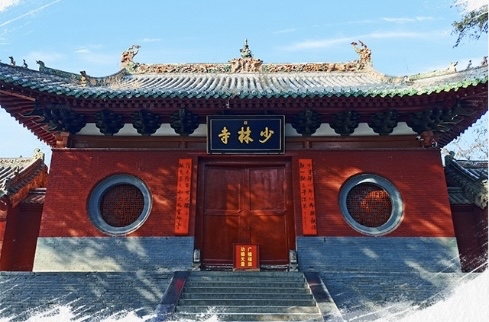
今日58只个股突破半年线
Zheng Quan Shi Bao Wang· 2025-07-30 04:46
Market Overview - The Shanghai Composite Index closed at 3628.53 points, above the six-month moving average, with an increase of 0.52% [1] - The total trading volume of A-shares reached 1,102.239 billion yuan [1] Stocks Breaking Six-Month Moving Average - A total of 58 A-shares have surpassed the six-month moving average today [1] - Stocks with significant deviation rates include: - Fenglong Co., Ltd. (5.52%) - Rongke Technology (4.53%) - Keyuan Wisdom (3.66%) [1] Detailed Stock Performance - The following stocks showed notable performance: - Fenglong Co., Ltd. (10.03% increase, turnover rate 7.67%, latest price 17.34 yuan) - Rongke Technology (5.47% increase, turnover rate 6.14%, latest price 18.91 yuan) - Keyuan Wisdom (4.36% increase, turnover rate 8.52%, latest price 25.60 yuan) [1] - Other stocks with positive performance include: - Zhaoyi Innovation (4.47% increase) - Yuntian Lifa (5.06% increase) [1] Additional Stocks with Minor Deviations - Stocks with smaller deviation rates that just crossed the six-month line include: - Chahua Co., Ltd. - Tangshan Port - China Gold [1]






不止少林寺!揭开寺庙的“赚钱密码”
创业邦· 2025-07-30 03:10
Core Viewpoint - The article discusses the commercialization of Buddhist temples in China, highlighting the transformation of Shaolin Temple into a significant business empire under the leadership of Abbot Shi Yongxin, and explores the revenue-generating strategies of various famous Buddhist mountains and temples in the country [3][5]. Group 1: Shaolin Temple's Commercial Success - Abbot Shi Yongxin initiated the commercialization of Shaolin Temple in 1987, breaking traditional norms and establishing a market-oriented operation [4]. - Over 30 years, Shaolin Temple evolved from a dilapidated site with only 14 monks to a business empire generating over 1.2 billion yuan in annual revenue [5]. - The cultural IP of Shaolin Temple is valued at several billion yuan, with diverse revenue streams including film, cultural products, and e-commerce [4][5]. Group 2: Revenue Models of Famous Buddhist Mountains - The four major Buddhist mountains in China—Wutai Mountain, Putuo Mountain, Emei Mountain, and Jiuhua Mountain—have also adopted commercial strategies, with Emei Mountain being the first to go public [8]. - Emei Mountain reported a revenue of 1.013 billion yuan in 2024, with significant contributions from cable car services and hotel operations [10][11]. - Ticket sales are a major income source, with Emei Mountain's ticket revenue reaching 277 million yuan from 4.67 million visitors in 2024 [10]. Group 3: Ticket Revenue and Visitor Statistics - Putuo Mountain attracts around 9 million visitors annually, generating ticket revenue exceeding 800 million yuan [13]. - Wutai Mountain received 6.96 billion yuan in ticket revenue from 604,730 visitors in 2023 [13]. - Ticket prices for major temples are relatively high, with Putuo Mountain charging 220 yuan and Ling Shan Buddha 210 yuan [13][14]. Group 4: Experience Economy and New Revenue Streams - Temples are increasingly catering to younger generations seeking spiritual retreats, leading to high visitor numbers and significant ticket revenue [14]. - "Incense money" has become a substantial income source, with sales from incense products contributing significantly to temple revenues [18]. - Innovative dining options, such as vegetarian meals and themed cafes, have emerged in temples, attracting more visitors and generating additional income [21][22]. Group 5: Diversification and Investment Strategies - Temples are diversifying their business models, with some engaging in e-commerce and selling cultural products online [24]. - Shaolin Temple has registered over 700 trademarks and developed various products, including traditional medicine and merchandise [27]. - Some temples, like the Shanghai Jade Buddha Temple, have ventured into investment, supporting startups and generating additional revenue streams [28].

手握18家企业+985个商标:一个方丈的资本生意经
Sou Hu Cai Jing· 2025-07-28 09:45
Core Viewpoint - The investigation into Shi Yongxin, the abbot of Shaolin Temple, reveals a complex intertwining of religious leadership and commercial enterprise, highlighting the commercialization of Buddhist culture and the potential risks associated with such practices [2][4][5]. Group 1: Background and Investigation - Shi Yongxin is under investigation for alleged criminal activities, including misappropriation of funds and maintaining improper relationships, which has led to a significant public outcry and scrutiny of his dual role as a religious leader and businessman [2][4]. - His rise to power began in 1981, and by 1999, he became the youngest abbot in the temple's history, holding various influential positions within the Buddhist community [3]. Group 2: Commercial Ventures - Shi Yongxin has expanded the Shaolin brand into various commercial sectors, including publishing, gaming, and health products, significantly increasing the temple's revenue streams [6][7]. - The Shaolin Temple has established a strong international presence, with cultural centers and performances generating substantial income, including annual global tours that have seen ticket prices rise from $100,000 to $500,000 per show [7][9]. Group 3: Business Structure - The Shaolin Intangible Asset Management Company serves as the core platform for Shi Yongxin's business operations, having invested in multiple sectors, including retail, culture, and entertainment [9][10]. - The company has made significant investments, including a notable purchase of commercial land in Zhengzhou for 452 million yuan, aimed at developing cultural industries [10]. Group 4: Market Trends - The temple economy is experiencing a surge, particularly among younger demographics, with ticket sales for Buddhist cultural sites increasing by 310% year-on-year, indicating a shift towards a more commercialized approach to religious practices [13][15]. - The trend of capitalizing on religious sites has led to the listing of major Buddhist mountains on stock exchanges, with companies like Emei Mountain A and Jiuhua Tourism actively engaging in the market [16][17].