
KKR

Search documents
KKR合伙人兼大中华区私募股权业务负责人孙铮:专注价值创造,做长期投资者
Zhong Guo Ji Jin Bao· 2026-02-20 06:45
回望过去一年,KKR中国业务在稳步推进投资布局的同时,也迎来了多元化的退出成果:通过公开市 场减持、企业分红、接续基金以及战略买家收购等多种方式,成功签署或交割的退出交易总额接近10亿 美元。这些进展,既验证了以价值创造为导向的投资策略,也增强了我们持续深耕中国市场的信心。 展望2026年,二级市场的韧性仍在延续,一级市场情绪逐步修复。顺应这一变化,KKR中国团队将继 续通过多元化的退出路径为投资者实现价值兑现,不依赖单一方式,而是为每一笔投资审慎规划更具弹 在相对积极的政策发展环境与强劲的技术驱动投资的支撑下,我们对2026年美国、日本和中国的经济增 长保持高于市场共识的预期。其中,中国市场的发展和机遇令人瞩目。我们认为,中国经济将在2026年 步入更加温和但更趋稳定的增长阶段。随着中国经济逐步从房地产和投资驱动型模式转向以数字经济和 绿色经济为引擎、以服务业和消费驱动的新增长模式,我们预期未来几年中国经济将保持在中个位数的 稳健增长水平。在此过程中,KKR 作为长期投资者,将保持积极而审慎的投资策略,继续聚焦中国市 场中基本面强劲的优质机会,重点关注国内消费和服务业等兼具增长韧性与长期政策契合度的核心领 ...



How Does all the Challenging Areas in United States Equities Look?
Investment Moats· 2026-02-20 00:58
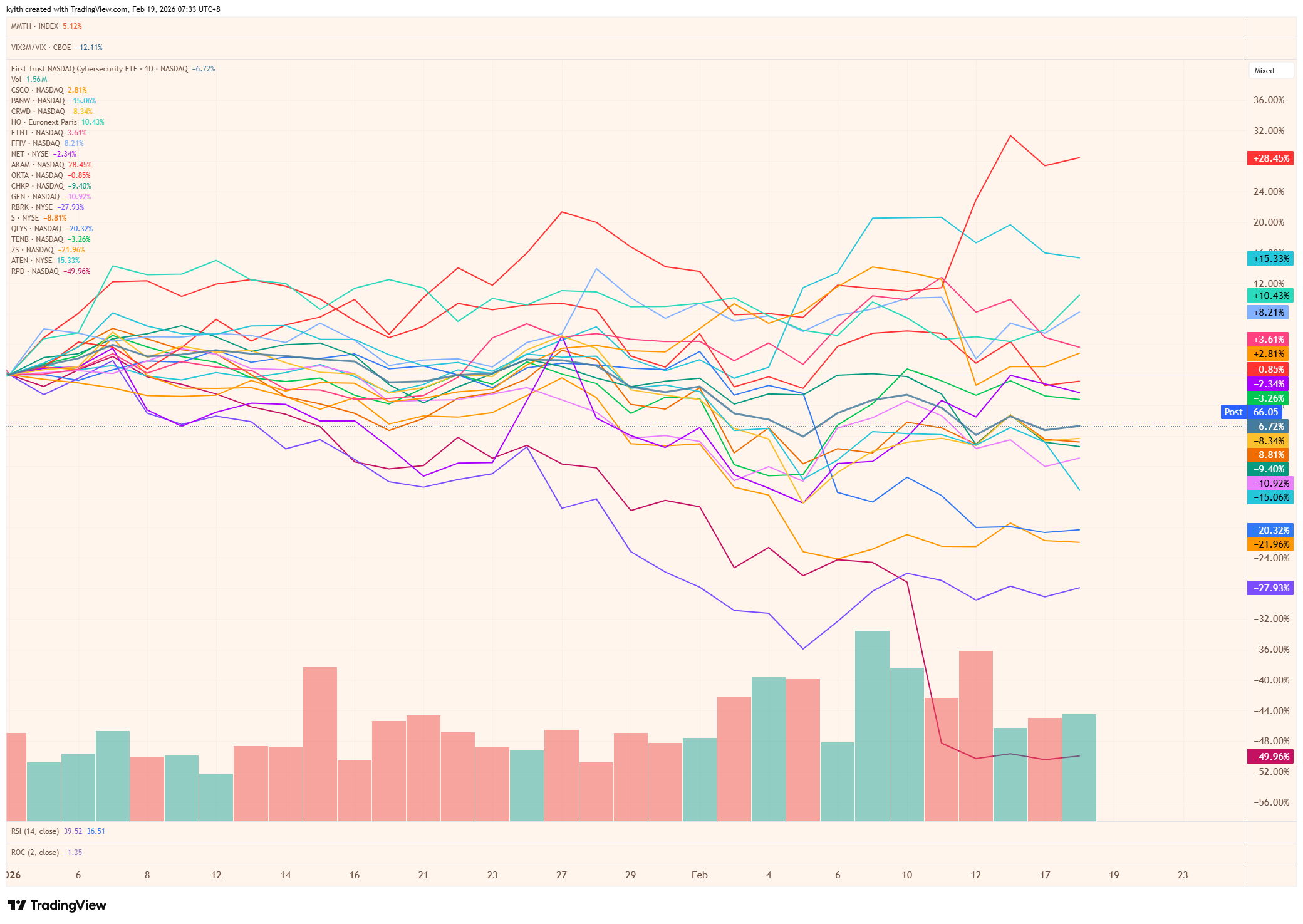
Core Insights - The article discusses potential weaknesses in various sectors of the US economy, particularly focusing on distressed areas and the implications for future earnings and revenues [1][2]. Data Providers - Data providers have shown poor performance year-to-date, with significant declines in stock prices, indicating potential margin issues despite strong competitive moats [2][3]. Biotech Sector - The biotech sector has been underperforming for four years, but there is a belief that prices may mean revert as they become too cheap [2]. Software-as-a-Service (SaaS) - SaaS companies are perceived to have stronger moats than the market currently values, but there are concerns about long-term disruption from new technologies [6][8]. Cybersecurity - The cybersecurity sector has mixed performance, with some companies showing resilience while others face significant declines. The overall outlook remains uncertain [13][14]. Payments Companies - The payments sector has seen poor performance, with companies like PayPal and Adyen experiencing significant declines. However, major players like Visa and Mastercard continue to perform relatively well [16][17]. Business Development Companies (BDCs) - BDCs have faced challenges recently, with declines in performance noted at the start of the year. They are essential for providing private credit [18][19]. US Insurance - The insurance sector is struggling, with companies like Progressive and Brown and Brown facing challenges in raising prices and organic growth capabilities [21][22]. Home Builders and Ancillary Services - The homebuilding sector shows mixed results, with some companies performing well while ancillary service providers are thriving due to increased demand for home improvements [23][24][27]. Consumer Discretionary - The consumer discretionary sector reflects the health of the economy, with mixed performance among various companies. The S&P 500 equal weight consumer discretionary index shows a modest increase [31][34]. Restaurants - The restaurant sector is a key indicator of consumer spending, with many companies showing resilience despite economic challenges. However, some, like Red Robin, are struggling significantly [39][40].


昨夜,美股普跌!瑞典先买后付平台暴跌超26%
证券时报· 2026-02-20 00:52
Market Overview - On February 19, U.S. stock indices fell collectively due to multiple negative factors, including tightening liquidity in the private credit industry and escalating geopolitical tensions between the U.S. and Iran. The Dow Jones Industrial Average dropped by 267.5 points, a decline of 0.54%, while the S&P 500 and Nasdaq Composite fell by 0.28% and 0.31%, respectively, with the Nasdaq experiencing a cumulative decline of over 2% since 2026 [1][2]. Private Credit Industry - A liquidity crisis in the private credit sector was a core reason for the market's weakness. Blue Owl Capital announced the sale of $1.4 billion in loan assets and tightened investor liquidity, leading to a significant drop in its stock price by 1%. This triggered a collective decline in the private credit sector, with major firms like Blackstone and Apollo Global Management seeing their stock prices fall by over 5% [2][3]. Geopolitical Tensions - The geopolitical tension between the U.S. and Iran has become another major market disturbance. President Trump indicated a decision on potential military action against Iran would be made within ten days, which has heightened investor caution and led to a general sell-off of risk assets [3]. Corporate Earnings and Guidance - Discrepancies in corporate earnings and guidance have intensified market volatility. Walmart's fourth-quarter revenue and profit exceeded expectations, but its annual profit guidance fell short, resulting in a stock price drop of over 1%. In contrast, Amazon surpassed Walmart in projected net sales for 2025, reaching $716.9 billion [4]. Economic Data - Recent economic data showed initial jobless claims in the U.S. fell to 206,000, significantly below expectations, indicating resilience in the labor market. The Philadelphia Fed Manufacturing Index rose to 16.3, the highest since September of the previous year. However, the trade deficit unexpectedly widened to $70.3 billion in December 2025, with the annual goods trade deficit reaching a record $1.2409 trillion, an increase of $25.5 billion or 2.1% from the previous year [4]. Market Sentiment - According to a recent survey by the American Association of Individual Investors, the proportion of bearish retail investors has exceeded bullish investors for the first time since November of the previous year, with bearish, bullish, and neutral sentiments at 36.9%, 34.5%, and 28.5%, respectively. This reflects a growing caution among investors [5]. Sector Rotation - The U.S. stock market is undergoing a rotation in leading sectors. Excluding the top companies, other stocks in the S&P 500 are in urgent need of earnings momentum. Despite a decline in valuations for the "Magnificent Seven," their price-to-sales ratios remain at historical highs, indicating they are not in undervalued territory [5].
蓝鸮资本限制基金赎回,引发另类资产管理公司股价大跌
Xin Lang Cai Jing· 2026-02-19 23:02
此前,蓝鸮资本宣布对其旗下的一只面向零售投资者的私人信用基金实施赎回限制。蓝鸮资本的这一决 定凸显了零售投资者进入私人信用领域面临的核心风险:此类基金的流动性远低于公开市场,且资管公 司有权阻止投资者提取现金。 格隆汇2月20日|2月19日,另类资产管理公司的股价集体跳水。蓝鸮资本(Blue Owl Capital Inc.)股价 收盘下跌5.93%。与此同时,其竞争对手战神管理(Ares Management)跌3.08%、阿波罗全球管理 (Apollo Global Management)跌5.66%、黑石(Blackstone)跌5.37%、KKR跌1.85%,TPG 公司跌 7.01%。抛售浪潮波及欧洲。随着美国同行走低,CVC Capital Partners阿姆斯特丹股价跌3.26%,合众集 团(Partners Group)瑞士股价跌5.11%。 ...
X @Bloomberg
Bloomberg· 2026-02-18 12:29
Credit markets are growing less forgiving, and missteps will cost investors more in 2026, according to KKR https://t.co/7sAPSSViIJ ...
X @Bloomberg
Bloomberg· 2026-02-18 08:54
CVC names former KKR India chief Sanjay Nayar as chairman of its advisory board in the South Asian nation https://t.co/SSAa1j8hBj ...
中东主权财富基金如何重塑全球私募游戏规则?
Xin Lang Cai Jing· 2026-02-15 12:44
Core Insights - The Saudi Public Investment Fund (PIF) led a consortium to privatize Electronic Arts (EA) in a landmark $55 billion all-cash deal, marking the largest all-cash privatization in history and redefining the perception of sovereign wealth funds (SWFs) as strategic industry leaders rather than passive investors [1][10] - In 2025, the total value of mergers and acquisitions involving sovereign wealth funds surged to $200 billion, a nearly 200% increase from $67 billion in 2024, with Gulf funds like PIF and Mubadala driving nearly half of this value [10] - The shift from financial investors to strategic operators among Middle Eastern LPs is driven by national strategies aimed at diversifying economies away from oil dependency [2][11] Group 1: Transition of Middle Eastern Sovereign Wealth Funds - Traditional roles of sovereign wealth funds as limited partners (LPs) are evolving, with a focus on national strategies such as Saudi Arabia's Vision 2030 and the UAE's industrial diversification agenda [2][11] - Investments are now aligned with national priorities, focusing on technology transfer, industry establishment, talent acquisition, and job creation [2][11] - The strategic shift is evident in their investment behavior, moving from indirect investments to leading transactions, as seen in the EA acquisition and Mubadala's $40 billion acquisition of Aligned Data Centers [3][11] Group 2: Investment Behavior Changes - Middle Eastern funds are increasingly focusing on strategic asset control, seeking core technologies and intellectual property [3][11] - There is a shift from global acquisitions to targeted regional investments, with China becoming a key focus for Middle Eastern capital, highlighted by PIF's plans to establish a Beijing office and a $50 billion memorandum with six Chinese financial institutions [3][11] - The collaboration model has evolved from mere funding to a deeper integration of investment and technology transfer, as exemplified by Saudi firms assisting Chinese companies in establishing joint ventures in Saudi Arabia [3][12] Group 3: Impact on Global Private Equity (PE) Firms - Global PE firms are adapting their fundraising strategies to align with the strategic objectives of Middle Eastern LPs, emphasizing the importance of strategic collaboration over historical performance metrics [14] - Establishing local offices and specialized funds has become essential for PE firms to engage with Middle Eastern LPs, with firms like Hillhouse Capital and CPE Yuanfeng setting up offices in Abu Dhabi [14][15] - The partnership model has shifted towards strategic alliances, as seen in Mubadala's collaboration with KKR to create a long-term capital pool for private credit opportunities in the Asia-Pacific region [15] Group 4: Industry Dynamics and Challenges - The rise of Middle Eastern strategic capital is intensifying the "Matthew effect" in the private equity industry, concentrating funds among top firms like Blackstone and KKR, making it harder for smaller GP firms to gain visibility [7][15] - The competitive landscape for transactions involving strategic assets has changed, with sovereign wealth funds now seen as active bidders or co-investors, often willing to offer higher bids due to their long-term investment horizon [7][15] - Sovereign wealth funds face challenges such as geopolitical concerns and regulatory scrutiny, particularly in markets like the U.S., where foreign investment reviews are becoming more stringent [16] - The transition from passive investors to active acquirers necessitates the development of advanced due diligence and operational capabilities within sovereign wealth funds [16]

KKR & Co. Inc. (KKR) Builds Scale Across Markets and Sectors
Insider Monkey· 2026-02-15 09:09
Core Insights - Generative AI is viewed as a transformative technology by Amazon's CEO Andy Jassy, indicating its potential to significantly enhance customer experiences [1] - Elon Musk predicts that humanoid robots could create a market worth $250 trillion by 2040, representing a major shift in the global economy driven by AI innovation [2] - Major firms like PwC and McKinsey acknowledge the multi-trillion-dollar potential of AI, suggesting a broad consensus on its economic impact [3] Company and Industry Analysis - A breakthrough in AI technology is redefining work, learning, and creativity, leading to increased interest from hedge funds and top investors [4] - There is speculation about an under-owned company that may play a crucial role in the AI revolution, with its technology posing a threat to competitors [4] - Prominent figures in technology and investment, including Bill Gates and Warren Buffett, recognize AI as a significant advancement with the potential for substantial social benefits [8] Market Opportunities - The AI ecosystem is expected to reshape how businesses, governments, and consumers operate, indicating vast investment opportunities [2] - The narrative suggests that investors may soon regret not owning shares in a specific AI company that is positioned to capitalize on this technological wave [9] - The company in question is described as quietly enhancing critical technology that underpins the AI revolution, suggesting a strategic advantage [6]


From software to real estate, US sectors gripped by AI scare trade
BusinessLine· 2026-02-13 18:10
Market Overview - Wall Street is experiencing significant disruption concerns due to AI, leading to a sell-off in various sectors, particularly software companies, which has resulted in sharp losses in U.S. stocks this week [1][2]. Software Sector - The S&P 500 Software & Services index has lost approximately $2 trillion in value since its peak in October, with half of this loss occurring in the past two weeks due to fears that AI could disrupt traditional subscription and enterprise tools [2]. - Notable declines in the Nasdaq 100 include Atlassian down 47%, Intuit down 40%, and Workday down 33% [4]. - The U.S. software sector is facing its worst drawdown in over three years, impacting alternative asset managers with exposure to software-related loans, with firms like Ares, Blackstone, and KKR seeing declines between 13% and 24% this year [5]. Financial Brokerage, Data Analytics & Legal Services - The financial industry, especially brokerages and data analytics firms, has been negatively affected after Altruist introduced AI-enabled tax planning features, raising fears about the viability of their business models [6]. - Shares of brokers such as LPL Financial and Charles Schwab fell over 7%, while S&P Global's shares dropped more than 25% in February, marking its worst month since 2009 [7]. Real Estate Services - Commercial real estate and investment managers have suffered as investors shift away from high-fee, labor-intensive business models perceived as vulnerable to AI disruption, with CBRE Group and Jones Lang LaSalle each dropping about 12% [8]. Insurance Sector - Insurance stocks have experienced a significant decline, with the S&P 500 insurance index falling 3.9% on a single day, its largest drop since mid-October, following the release of an AI-powered comparison tool by Insurify [10]. - Shares of Willis Towers Watson have decreased by 15% this week, while Aon and Arthur J. Gallagher fell by 9% and 15%, respectively [11]. Trucking & Logistics - The trucking and logistics sector saw unexpected declines, with stocks like Landstar System and C.H. Robinson dropping sharply after Algorhythm Holdings reported a significant increase in freight volumes without a corresponding rise in operational headcount [13].

软件股遭抛售 私募巨头阿波罗、黑石高管出面安抚市场
Xin Lang Cai Jing· 2026-02-13 12:00
由于市场担忧人工智能将令软件行业失去价值,软件板块遭遇猛烈抛售,阿波罗、阿瑞斯、黑石、 KKR 等私募资本公司的高管正难以说服股市投资者:其投资组合能够免受此次软件股大跌的冲击。 这类主要投资于传统股票和债券市场之外的另类资产管理机构,尚未摆脱去年年底市场对其私人信贷业 务风险的担忧。如今,软件股抛售又进一步压低了这些资管公司自身的股价 —— 尽管它们获得了数十 亿美元新增客户资金,并购活动也再度回暖,分析师认为这些本应转化为更多营收与利润。 过去两周公布财报期间,高管们纷纷为旗下投资组合质量辩护,这在近几日帮助收复了部分失地,但仍 不足以扭转长达数月的下跌趋势。 颠覆性风险 阿瑞斯旗下一只大型债务基金首席执行官科特・施纳贝尔在 2 月 4 日的财报电话会议上表示:"AI 可能 是我们能想象到的最具颠覆性的技术风险,我不想对此粉饰太平。但我们仍坚信,我们构建的投资组合 对这一风险具备极强抵抗力。" 阿瑞斯在上周财报中告知投资者,集团总资产中约 6% 投向软件企业。首席执行官迈克尔・阿鲁盖蒂 称,其软件投资组合高度分散,其中被认定面临高 AI 颠覆风险的部分仅占 "极小比例"。 此后其股价小幅回升,但过去六个月 ...