
Texas Instruments

Search documents
美国半导体:瑞银全球科技与 AI 大会 -第二天要点-US Semiconductors _ UBS Global Technology & AI Conference - Highlights From Day 2
瑞银· 2025-12-08 00:41
Investment Ratings - NVIDIA (NVDA): Buy [45] - Applied Materials (AMAT): Buy (CBE) [45] - Microchip Technology (MCHP): Buy [45] - Lam Research (LRCX): Buy [45] - Texas Instruments (TXN): Buy [45] - SiTime (SITM): Buy [45] - Teradyne (TER): Buy [45] - GlobalFoundries (GFS): Neutral [45] - Onsemi (ON): Neutral (CBE) [45] - Qualcomm (QCOM): Neutral [45] - Skyworks Solutions (SWKS): Neutral [45] - Western Digital (WDC): Neutral [45] Core Insights - The semiconductor industry is experiencing strong demand, particularly in AI and data center applications, with companies like NVIDIA and Analog Devices (ADI) highlighting robust growth prospects [2][6][24] - NVIDIA's partnerships, especially with Anthropic, are expected to significantly enhance its market position, with a backlog of $500 billion projected through 2026 [2][21] - Applied Materials is gaining improved visibility on customer capacity additions, indicating a positive outlook for the semiconductor equipment market [3][22] - Microchip Technology reported strong bookings, reflecting broad-based demand across its product lines [4] - Analog Devices is seeing a recovery across all end markets, particularly in AI and automotive sectors, with expectations to outpace market growth [6][24] - Lam Research anticipates a $40 billion market for NAND upgrades, driven by significant bit growth [25] - Texas Instruments is optimistic about long-term growth in data centers and embedded systems, despite short-term visibility challenges [11][26] - GlobalFoundries is benefiting from a recovering consumer environment and strong data center demand, while navigating geopolitical challenges [27] - Western Digital is experiencing strong demand in both traditional and AI data centers, with a focus on improving storage capacities [28] Summary by Company NVIDIA (NVDA) - Strong demand pipeline with a backlog of $500 billion through 2026 [2] - New partnerships, particularly with Anthropic, are expected to drive significant growth [2][21] Applied Materials (AMAT) - Improved visibility on customer capacity additions, indicating a positive market outlook [3][22] - Anticipates strong growth in leading-edge technology and DRAM markets [22] Microchip Technology (MCHP) - Positive pre-announcement of bookings strength, indicating broad-based demand [4] Analog Devices (ADI) - Broad-based recovery across end markets, particularly in AI and automotive [6][24] - Expected to achieve $1 billion in annualized revenue synergies from MXIM by 2026 [6] Lam Research (LRCX) - Anticipates a $40 billion market for NAND upgrades based on significant bit growth [25] Texas Instruments (TXN) - Long-term bullish outlook driven by data center and embedded systems [11][26] GlobalFoundries (GFS) - Strong share in a recovering consumer environment and data center demand [27] Western Digital (WDC) - Strong demand in AI data centers, with a focus on improving storage capacities [28]
2 High-Yield Dividend ETFs to Buy Today
The Motley Fool· 2025-12-07 21:45
Core Insights - The Schwab U.S. Dividend Equity ETF and SPDR S&P Dividend ETF are positioned to provide growing yields, especially as the Federal Reserve is expected to cut interest rates, making high-yield investments scarcer [1][2] Group 1: Schwab U.S. Dividend Equity ETF - Launched in October 2011, the Schwab U.S. Dividend Equity ETF (SCHD) tracks the Dow Jones U.S. Dividend 100 Index, focusing on companies that have increased dividends for at least 10 consecutive years [4] - The fund emphasizes consistent dividend growth and strong fundamentals, using metrics like cash-flow-to-debt ratio and return on equity, and it removes any stock that cancels its dividend [5] - The ETF has a current yield of 3.8%, significantly higher than the average S&P 500 company, and has returned an average of 12.17% per year since inception [7][8] Group 2: SPDR S&P Dividend ETF - The SPDR S&P Dividend ETF (SDY) aims to track the S&P High Yield Dividend Aristocrats® Index, selecting stocks that have raised dividends for at least 20 consecutive years [9] - Since its inception in November 2005, the fund has achieved an average annual return of 8.65%, with a current yield of 2.6%, which is more than double that of the average S&P 500 company [11][14] - The fund's top holdings include Verizon, Chevron, and Target, which raised their dividends by 1.88%, 5%, and 1.8% respectively in 2025 [11] Group 3: Comparative Analysis - The SPDR S&P Dividend ETF is more diversified with 152 holdings and includes exposure to REITs, which benefit from falling interest rates [13][15] - The Schwab U.S. Dividend Equity ETF has a lower expense ratio of 0.06% compared to the SPDR S&P Dividend ETF's 0.35%, making it potentially more attractive for short-to-medium term investors [8][14][16] - Both funds offer above-average yields that could grow significantly, appealing to investors navigating a low-rate environment [16]


Where Will Navitas Be in 3 Years?
The Motley Fool· 2025-11-15 18:00
Core Viewpoint - Navitas Semiconductor is undergoing a significant transformation to focus on the data center power chip market, moving away from its traditional mobile phone charger business, with expectations of becoming a different company in three years [2][6][11]. Company Strategy - The company plans to intentionally shift its focus from its traditional customer base in Chinese mobile phones to the data center and electrical infrastructure markets [6][11]. - Navitas has a history of innovation in gallium nitride (GaN) and has expanded its capabilities by acquiring GeneSiC, which specializes in silicon carbide (SiC) chips [6][7]. Market Opportunity - GaN is now considered a mainstream material for AI data centers, while SiC is essential for high-voltage applications in grid infrastructure [8]. - The new CEO, Chris Allexandre, emphasized that the transition represents a long-term, sustainable trend that will significantly increase the market size Navitas is addressing [8][11]. Leadership Changes - Chris Allexandre was appointed as the new CEO to lead the strategic pivot, bringing extensive experience from previous roles at major semiconductor companies [9][10]. - Allexandre's initial actions included a 60-day tour to engage with customers and partners, reflecting optimism about future opportunities [10]. Financial Performance - In Q3, Navitas reported revenue of $10 million and projected a decline to $7 million in Q4, indicating a deliberate withdrawal from certain revenue streams during the transition [12][13]. - The company is currently burning approximately $10 million to $11 million per quarter but has raised $100 million recently, providing a cash reserve of about $250 million to support its new strategy [16]. Future Outlook - While the company has significant potential in high-growth markets, there is uncertainty regarding long-term revenue and profit targets post-transition [14][15]. - Investors are advised to adopt a cautious approach as the company needs to secure more design wins to achieve its strategic goals [17].


Macro Environment Affected Gartner’s (IT) Performance in Q3
Yahoo Finance· 2025-11-11 13:08
Core Insights - Madison Large Cap Fund underperformed the S&P 500 Index, decreasing by 2.2% in Q3 2025 compared to an 8.1% gain for the index, primarily due to a market focus on short-term profits [1] - Gartner, Inc. (NYSE:IT) was highlighted as a significant detractor in the fund's performance, with a one-month return of -7.33% and a 52-week loss of 58.48% [2][3] Company Performance - Gartner, Inc. reported revenue of $1.5 billion in Q3 2025, reflecting a 3% year-over-year increase, with a 1% increase when adjusted for foreign exchange [4] - The stock closed at $228.64 per share on November 6, 2025, with a market capitalization of $16.48 billion [2] Market Context - The decline in Gartner's stock was attributed to disappointing Q2 results and slower-than-expected growth, influenced by macroeconomic factors and potential AI disruption [3] - The company is not among the 30 most popular stocks among hedge funds, with 45 hedge fund portfolios holding its shares at the end of Q2 2025, down from 51 in the previous quarter [4] Investment Outlook - Despite acknowledging Gartner's potential, the fund believes that certain AI stocks present greater upside potential and lower downside risk [4] - The fund emphasizes Gartner's strong reputation and proprietary data as mitigating factors against AI disruption [3]

AI Stock Correction: MSFT, AVGO, IONQ Seen as Stable Tech, Quantum Bets
ZACKS· 2025-11-10 22:11
Market Overview - In early November 2025, U.S. equities, particularly in the technology and AI sectors, faced a significant sell-off, with the Nasdaq Composite experiencing its steepest weekly decline since April, leading to a loss of over $800 billion in market value for AI-focused stocks [1][2][3] AI Sector - The sell-off was characterized as a "sentiment-driven breather," indicating a correction after an overheated AI rally, with concerns about capital intensity due to massive investments required for training frontier models [6][9] - OpenAI's infrastructure commitments reached approximately $1.4 trillion, significantly exceeding its annual revenues of $13 billion, raising questions about the sustainability of AI's capital cycle [2][6] - Investors are advised to focus on AI enablers with proven monetization, such as Microsoft and Adobe, while reducing exposure to unprofitable "story stocks" until they show consistent earnings [7][9] Semiconductor Industry - The semiconductor market demonstrated solid fundamentals, with a reported global market value of $346 billion in the first half of 2025, reflecting an 18.9% year-over-year increase, and an upward revision of the full-year outlook to about $728 billion, indicating a 15.4% growth [8][9] - Despite the positive outlook, the semiconductor space is cyclically sensitive, with potential margin compression due to order normalization and elevated inventories in PCs and smartphones [10] Quantum Computing - Quantum computing remains in an early-stage pre-commercial phase, attracting investor interest but characterized by volatile valuations [11] - Companies like IonQ and D-Wave reported strong revenue growth but still rely heavily on capital markets for funding, indicating ongoing funding needs in the sector [11][12] - Long-term investors are encouraged to treat quantum computing as a speculative allocation, focusing on firms with repeatable commercial traction or partnerships with major cloud providers [12]



行业聚焦:全球充电桩双向变换模块行业头部生产商市场份额及排名调查
QYResearch· 2025-11-07 08:55
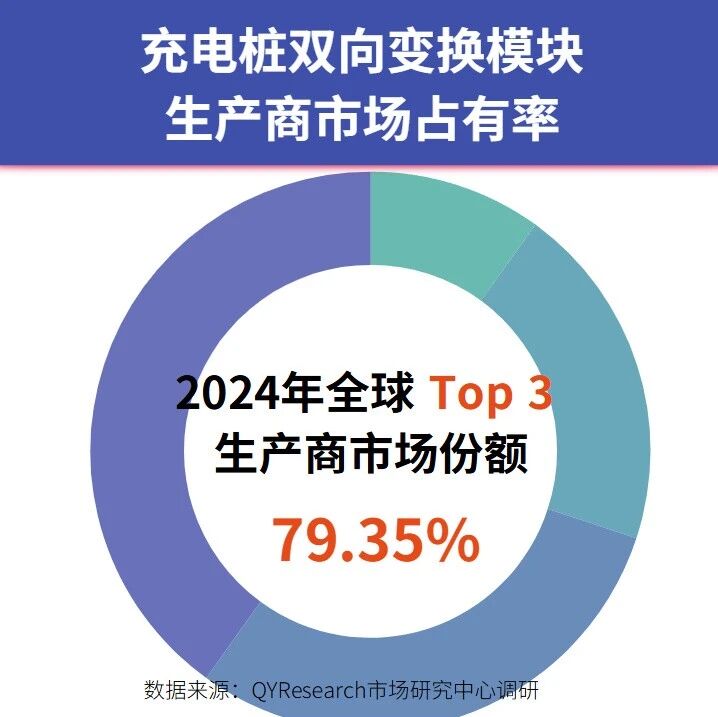
Core Viewpoint - The bidirectional power converter for EV chargers is a crucial component in electric vehicle charging systems, enabling two-way energy flow between the grid and vehicles, thus enhancing energy efficiency and supporting distributed energy storage and smart grid interactions [2][4]. Market Overview - The global market for bidirectional power converters is projected to reach $0.9 billion by 2031, with a compound annual growth rate (CAGR) of 22.5% over the coming years [4]. - In 2024, the top three manufacturers are expected to hold approximately 79.35% of the market share [9]. Industry Chain Analysis - The bidirectional converter typically consists of power semiconductor devices (IGBT, SiC MOSFET), bidirectional DC/DC converters, AC/DC rectifiers, digital control units, and electromagnetic interference suppression systems [11]. - The upstream supply chain includes manufacturers of power semiconductors, inductors, transformers, electrolytic capacitors, and control chip designers, with key players like Infineon, Mitsubishi Electric, and Texas Instruments leading in SiC and GaN power devices [11]. - The midstream involves circuit design, power topology optimization, thermal management, control algorithm integration, and assembly/testing, characterized by high technical barriers and customization [12]. - The downstream market covers public and home charging stations, with public charging stations benefiting from energy storage regulation and home charging stations supporting energy management systems [12]. Industry Development Opportunities and Risks - The rapid growth of global electric vehicle ownership is driving demand for bidirectional energy interaction in charging infrastructure [13]. - The implementation of energy internet and smart grid strategies positions electric vehicles as distributed energy storage units [13]. - The commercialization of SiC and GaN devices significantly enhances energy conversion efficiency [13]. - Challenges include the complexity of bidirectional power topology, high costs, and the lack of unified international standards [14]. Industry Development Trends - SiC power devices are expected to replace traditional silicon devices, achieving higher power density and lower losses [15]. - Cloud control and AI energy scheduling will become mainstream, enabling remote monitoring and adaptive energy management [15]. - The integration of modules with photovoltaics, energy storage, and electric vehicles will support the development of urban microgrids and distributed energy systems [15].
中国模拟芯片周期性复苏不及预期-Greater China Technology Semiconductors-China Analog Cyclical recovery is bumpier than expected
2025-11-03 03:32
Summary of Conference Call on Greater China Technology Semiconductors Industry Overview - **Industry**: Greater China Technology Semiconductors - **Market Sentiment**: Cautious outlook on China's analog market due to pricing pressure and slow localization progress [1][2][3] Key Companies Discussed 1. **SG Micro Corp. (300661.SZ)** - **Rating Change**: Downgraded from Overweight to Equal-weight - **Price Target**: Reduced from Rmb90.00 to Rmb80.00 - **Earnings Outlook**: 2026-27 EPS estimates cut by 9% and 8% respectively due to weaker demand [5][57] 2. **Silergy Corp. (6415.TW)** - **Rating**: Maintained Overweight but price target lowered from NT$378.00 to NT$268.00 - **Revenue Guidance**: Expected to guide down full-year revenue to low-single-digit year-over-year growth for 2025, down from an original assumption of 10% growth [4][30] - **Gross Margin**: Anticipated decline in 3Q25 gross margin due to unfavorable product mix and slower ramp-up of Gen4 products [4] Core Insights - **Demand Uncertainty**: Industrial demand in China has not shown sequential growth, impacting the overall market pull-in [2] - **Pricing Pressure**: Texas Instruments (TI) expects a low-single-digit blended ASP reduction throughout 2025, indicating a lack of an "analog price upcycle" [2] - **Localization Challenges**: Localization efforts for analog products are lagging, particularly outside of AI server applications [3] - **Competitive Landscape**: SG Micro faces intensified competition and pricing pressure from foreign peers, affecting its market position [5][57] Financial Metrics - **Silergy's Financials**: - 2025 revenue forecast cut by 5% and EPS by 19% due to high R&D spending and below-expectation auto business [30] - Expected to maintain high operating expenses to support product launches [45] - **SG Micro's Financials**: - Anticipated high R&D expenses leading to a 1.4 percentage point cut in operating margin for 2026 and 2027 [57] Market Dynamics - **Inventory Levels**: Channel inventory levels have normalized, but broad-based consumer demand remains weak [9][10] - **Seasonality Effects**: Traditional seasonality expected to impact sales negatively in 4Q25 [10] - **Tariff Impacts**: Tariff-related front-loading may have artificially inflated 2Q25 shipments, leading to skepticism about sustainable demand [10] Strategic Outlook - **Silergy's Position**: Despite challenges, Silergy is expected to outperform domestic peers due to its own foundry and strategic focus on automotive and AI server products [4][20] - **SG Micro's Challenges**: The company is experiencing a cyclical downturn, with a need to adapt to changing market conditions and competitive pressures [5][57] Conclusion - The conference call highlighted a cautious outlook for the analog semiconductor market in China, with significant challenges for key players like SG Micro and Silergy. The focus on localization, pricing pressures, and demand uncertainty will be critical factors influencing future performance in this sector.

Renesas Electronics Corporation's Financial Performance Analysis
Financial Modeling Prep· 2025-10-30 19:04
Core Insights - Renesas Electronics Corporation is a significant player in the semiconductor industry, focusing on microcontrollers, analog, and power devices across various applications, including automotive and consumer electronics [1] Financial Performance - For Q3 2025, Renesas reported earnings per share (EPS) of $0.19, surpassing the estimated EPS of $0.15, indicating higher profitability [2][6] - The company's revenue was approximately $2.2 billion, which fell short of the estimated $2.26 billion, reflecting a slight underperformance in sales [2][6] Management Discussion - The Q3 2025 earnings call featured key executives, including CEO Hidetoshi Shibata and CFO Shuhei Shinkai, and included participation from major financial institutions like Goldman Sachs and UBS Investment Bank [3] Valuation Metrics - Renesas has a price-to-sales ratio of 2.64, suggesting that investors are willing to pay $2.64 for every dollar of sales [4] - The enterprise value to sales ratio stands at 3.52, indicating the company's valuation relative to its sales [4] Financial Health - The company maintains a debt-to-equity ratio of 0.66, reflecting a moderate level of debt compared to equity [5][6] - A current ratio of 1.18 indicates that Renesas has a reasonable level of liquidity to cover its short-term liabilities [5]

美国半导体行业 2025 年第三季度盈利前瞻:预计人工智能领域将迎来热潮,模拟芯片及其他领域多为季节性业绩。对半导体行业保持乐观-US Semiconductors_ 3Q25 Earnings Preview_ Expect an AI Party with Mostly Seasonal Results from Analog and Elsewhere. Remain Positive on Semis
2025-10-19 15:58
Summary of Earnings Call for Semiconductor Industry Industry Overview - The semiconductor industry is expected to experience a varied earnings season, with AI-related companies like AMD and MPWR anticipated to report the best results and outlooks [1][12] - Analog companies are expected to have mostly seasonal outlooks, with industrial-dominated companies like MCHP showing above-seasonal outlooks, while automotive-oriented companies like TXN are expected to have seasonal outlooks [1][4] Key Companies and Their Outlooks - **AMD**: Expected to report 3Q25 revenue of $8.7 billion (up 13% QoQ) and EPS of $0.93, in line with consensus. For 4Q25, revenue is expected to rise to $9.5 billion (up 9% QoQ), above consensus [84] - **Micron (MU)**: Peak EPS estimate raised from $17.34 to $23.02, driven by AI demand. Price target increased from $200.00 to $240.00 [5][25] - **Intel (INTC)**: Expected to report 3Q25 revenue of $13.5 billion (up 5% QoQ), above consensus. EPS estimate of ($0.01) is also above consensus [88] - **Texas Instruments (TXN)**: Estimates trimmed due to slower analog upturn. Revenue and EPS estimates for 2025 lowered from $18.2 billion and $5.88 to $17.8 billion and $5.63 [28][29] - **Microchip Technology (MCHP)**: Top pick due to expected strong upside to estimates, despite trimming estimates slightly [8][32] AI and Capex Insights - OpenAI's capital expenditure could exceed $1 trillion by 2030, with cumulative capex estimated at $1.3 trillion for 26 gigawatts of capacity [3][14] - OpenAI's revenue is projected to grow from $12.5 billion in 2025 to $163 billion by 2030, indicating a significant investment in AI infrastructure [3][14] Market Demand and Trends - Semiconductor demand is improving across consumer, communications, industrial, PC, handset, and data center markets, with the automotive market remaining weak [35][36] - The overall semiconductor sales forecast for 2025 has been raised to a 20% YoY growth, driven by stronger DRAM and Flash memory sales [75] Valuation and Market Position - The SOX index is trading at a 37% premium to the S&P 500, reflecting confidence in the semiconductor sector's growth potential [7][78] - The semiconductor sector is expected to see aggregate consensus estimates increase for the first time since 2Q23, driven by AI spending and solid demand trends [6][36] Conclusion - The semiconductor industry is poised for growth, particularly in AI-related sectors, while traditional markets like automotive face challenges. Companies like MCHP and MU are highlighted as strong performers, while caution is advised for companies heavily exposed to the automotive sector. The overall market sentiment remains positive, with expectations of rising estimates and valuations.
主题洞察:美洲的科技、关税与转型-Theme Spotting_ Tech, Tariffs, and Transformation in the Americas
2025-10-13 01:00
Summary of Key Points from the Conference Call Industry Overview - The conference call discusses four key themes impacting markets in 2025: **Tech Diffusion**, **Longevity**, **Multipolar World**, and **Future of Energy** [2][4][8]. Core Themes and Insights Tech Diffusion - **AI Adoption Impact**: Corporate adoption of AI could yield annual net benefits of approximately **$920 billion** for S&P 500 companies, significantly reshaping the future of work [3][10]. - **Sector-Wide Benefits**: AI is expected to drive productivity gains and cost reductions across various sectors, including retail, real estate, transportation, and healthcare [3][23]. - **Data Center Financing Gap**: There is a projected **$1.5 trillion** financing gap for global data centers through 2028, with total capital expenditures expected to reach **$2.9 trillion** [10][35][36]. Longevity - **Healthcare Spending**: US healthcare spending is projected to reach **25% of GDP by 2050**, driven by an aging population and rising costs [8][10]. - **AI in Healthcare**: AI innovations could generate annual savings of **$300–900 billion** by 2050, representing a **10-20%** reduction in costs across various healthcare sectors [8][10]. Multipolar World - **Tariff Projections**: The effective global tariff rate is expected to reach approximately **16%** by year-end, with baseline tariffs around **10%** and higher rates on imports from China [4][10][67]. - **eCommerce Growth**: The global eCommerce market is forecasted to grow to **$6.3 trillion** by 2029, with a **9% CAGR** anticipated [10][58]. Future of Energy - **Power Demand for Data Centers**: Between 2025 and 2028, there is a projected demand for **65 GW** of power for US data centers, highlighting a **45 GW shortfall** in available power capacity [5][10]. - **Innovative Energy Solutions**: Solutions such as repurposing crypto mining sites and expanding rooftop solar in Latin America are emerging to address energy bottlenecks [5][10]. Additional Important Insights - **AI's Role in Content Creation**: Generative AI is expected to reduce content production costs by **10-30%**, benefiting companies like Netflix and YouTube [44][46]. - **Investment Strategies**: The call outlines various thematic stock picks aligned with the discussed themes, emphasizing companies that are AI adopters and enablers [11][12][13]. - **Dynamic Tariff Mitigation Strategies**: Companies are increasingly focusing on pricing power as a primary strategy to mitigate tariff impacts, surpassing supply chain diversification [67][69]. Conclusion The conference call highlights significant trends and projections across multiple sectors, emphasizing the transformative impact of AI, the challenges posed by geopolitical factors, and the evolving energy landscape. Investors are encouraged to consider these themes when evaluating potential opportunities and risks in the market.