BMW

Search documents
为什么汽车制造商需要关注每辆车的劳动力成本
奥纬咨询· 2025-05-07 05:55
Investment Rating - The report does not explicitly provide an investment rating for the automotive industry but highlights significant disparities in labor costs and competitive pressures among different automaker archetypes [3][4]. Core Insights - The global automotive industry is facing challenges such as tariffs, aggressive competition from Chinese manufacturers, and a slowdown in battery electric vehicle sales, necessitating effective cost management and production strategies [3][4]. - Labor cost per vehicle is a critical metric for assessing automaker competitiveness and profitability, with labor typically accounting for 65% to 70% of total conversion costs [5][8]. - The analysis categorizes automakers into four archetypes based on labor cost per vehicle, revealing substantial differences in productivity and wage rates [8][10]. Summary by Sections Labor Cost Analysis - The report examines labor costs across over 250 vehicle assembly plants globally, emphasizing the importance of labor cost per vehicle in determining competitiveness [4][5]. - Labor cost per vehicle varies significantly among different automaker categories, with Euro premiums averaging $2,232, EV-only manufacturers at $1,660, mainstream model manufacturers at $880, and Chinese car manufacturers at $585 [10][11]. Automaker Archetypes - **Euro Premiums**: This group has the highest labor cost per vehicle, averaging $2,232, and includes brands like Mercedes-Benz and BMW. They face high production costs due to strong labor unions and complex manufacturing processes [11][13]. - **EV-Only Manufacturers**: This category includes startups like Tesla, with labor costs ranging from $1,502 to $13,291. They struggle with low production volumes and high costs due to the lack of organized labor contracts [14]. - **Mainstream Model Manufacturers**: Traditional automakers in this group have an average labor cost of $880, benefiting from diversified manufacturing networks and lower production costs [15][16]. - **Chinese Car Manufacturers**: With an average labor cost of $585, this group benefits from low wages and high efficiency, leading to the lowest overall conversion costs [17][18]. Global Labor Cost Disparities - The report highlights that China is no longer the lowest labor cost nation, with countries like Morocco and Romania emerging as low-cost production centers [19][20]. - Morocco has become a key production hub for French manufacturers, while Mexico serves as a strategic base for various global automakers [21][22]. Production Variables Influencing Labor Cost - Factors such as design complexity, consumer choices, energy costs, and supply chain restructuring significantly impact labor costs per vehicle [24][33]. - The report emphasizes the importance of engineered hours per vehicle as a metric for productivity, with Chinese manufacturers showing lower engineered hours compared to Euro premiums [27][28]. Recommended Strategies for Automakers - **Euro Premiums**: Need to restructure for better efficiency and margin optimization, targeting a labor cost per vehicle closer to $1,500 [36][37]. - **EV-Only Manufacturers**: Should focus on scaling operations and establishing efficient production systems to reduce labor costs [38][39]. - **Mainstream Model Manufacturers**: Must invest in technology to maintain competitiveness and optimize production processes [41][42]. - **Chinese Car Manufacturers**: Should enhance vehicle quality to build brand value and gain trust in international markets [43]. Conclusion - The report provides insights into labor cost dynamics in the automotive industry, highlighting the need for strategic adjustments in response to competitive pressures and market changes [44].
Lear Reports First Quarter 2025 Results
Prnewswire· 2025-05-06 10:30
Core Insights - Lear Corporation reported a solid start to 2025 with improved operational margins in both Seating and E-Systems segments despite lower industry production in key markets [3][4] - The company is facing challenges due to changes in global tariffs, which have created uncertainty in the automotive industry and impacted the cost structure of the supply chain [3][4] - Lear is focused on maintaining long-term competitiveness by managing near-term challenges, winning new business, and investing in automation and restructuring [3][4] Financial Performance - Total sales for Q1 2025 were $5,560.3 million, a decrease of 7% from $5,994.6 million in Q1 2024 [4][5] - Net income for Q1 2025 was $80.7 million, down from $109.6 million in the same period last year [4][5] - Adjusted net income was $169.3 million compared to $183.2 million in Q1 2024, with adjusted earnings per share at $3.12, down from $3.18 [4][5][8] Segment Performance - In the Seating segment, net sales were $4,151.1 million with segment margins of 5.2% and adjusted margins of 6.7% [34][35] - The E-Systems segment reported net sales of $1,409.2 million, with segment margins of 3.9% and adjusted margins of 5.2% [34][35] - Both segments experienced year-over-year margin improvements driven by efficiency gains and restructuring efforts [5][8] Cash Flow and Share Repurchase - Net cash used in operating activities was $(128) million, and free cash flow was $(232) million, compared to $(35) million and $(148) million in Q1 2024, respectively [5][9] - The company repurchased $25 million of shares during the quarter and had a remaining share repurchase authorization of approximately $1.1 billion [11][12] Market Outlook - Due to the uncertainty in industry production caused by evolving tariff environments, Lear is not reaffirming its 2025 financial outlook at this time [13] - The company remains confident in delivering its operating performance commitments as highlighted in previous earnings calls [13]



Martinrea International Inc. Reports First Quarter Results and Declares Dividend
Globenewswire· 2025-05-01 21:01
Core Viewpoint - Martinrea International Inc. reported improved financial results for Q1 2025 compared to Q4 2024, driven by higher production sales and better margins, despite ongoing challenges from U.S. tariffs and weak demand for electric vehicle platforms [3][5]. Financial Performance - Total sales for Q1 2025 were $1,168.2 million, a decrease of $155.7 million or 11.8% from $1,323.9 million in Q1 2024 [10]. - Production sales were $1,125.7 million, with adjusted operating income of $61.9 million and an adjusted operating income margin of 5.3%, up 180 basis points from Q4 2024 [5][10]. - Net income for Q1 2025 was $17.5 million, down 60% from $43.7 million in Q1 2024, with diluted earnings per share of $0.24 [27][29]. - Adjusted net income decreased to $29.5 million or $0.41 per share, down 38.6% from $48.1 million or $0.62 per share in Q1 2024 [27][28]. Sales Breakdown - North America sales decreased by $78.9 million or 8.2% to $885.1 million, impacted by the end of certain programs and lower OEM production volumes [15]. - Europe sales fell by $78.7 million or 23.6% to $255.3 million, primarily due to lower OEM production volumes and a decrease in tooling sales [16]. - Sales in the Rest of the World increased by $2.0 million or 6.3% to $33.7 million, driven by new program launches [17]. Gross Margin and Costs - Gross margin for Q1 2025 was $151.6 million, representing 13.0% of total sales, consistent with Q1 2024 [19]. - The company experienced operational inefficiencies and lower contributions from sales volume, which offset improvements in productivity and efficiency [19][20]. New Business and Dividends - The company secured new business worth approximately $60 million in annualized sales, contributing to a total of $260 million in new business awards over the last four quarters [3][5]. - A quarterly cash dividend of $0.05 per share was declared, payable to shareholders on or about July 15, 2025 [29].
Auto Shanghai 2025 Kicks Off with Innovation and Global Collaboration
Globenewswire· 2025-04-30 06:17
Core Insights - Auto Shanghai 2025 is a significant event showcasing advancements in technology and innovation in the automotive industry, reflecting the global market's shift towards China [1][6] - The exhibition spans over 360,000 square meters with nearly 1,000 exhibitors from 26 countries, marking it as the largest in its history [2] - The event emphasizes electric vehicles, with major Chinese companies like BYD, NIO, XPeng, and Li Auto highlighting China's role in automotive innovation [2][3] Industry Trends - The exhibition features a dedicated area for automotive technology and supply chain, with over 50,000 square meters allocated to this sector [3] - Leading global auto parts suppliers and domestic leaders are showcasing innovations in autonomous driving, AI, and Internet of Vehicles (IoV) solutions [3] - Forums and symposiums, including the 2025 Global Automotive Leaders Roundtable, will discuss key trends such as electrification, autonomous driving, and digital transformation [4] Visitor Engagement - Public days from April 27 to May 2 will offer immersive experiences, integrating automotive innovation with urban culture and interactive elements [5] - Collaborations with tech platforms aim to engage visitors dynamically, highlighting the intersection of the automotive industry with modern lifestyles [5] Organizational Aspects - The event is organized by the Shanghai Council for the Promotion of International Trade and the China Association of Automobile Manufacturers, serving as a hub for global collaboration [6]
Wall Street sets Nio stock price target for the next 12 months
Finbold· 2025-04-21 15:07
Group 1 - The Wall Street consensus on Nio stock is generally a 'hold', with seven 'hold' ratings, and an equal split of four ratings between 'sell' and 'buy' [1] - The average 12-month price target for Nio is $4.86, indicating a potential rally of 38.07% from the current price of $3.51 [2] - The highest forecast for Nio's stock is $8.10, but this was a downgrade from a previous target of $8.90, while another recent forecast was downgraded from $4.20 to $3.50 [5] Group 2 - Nio's recent earnings report for Q4 showed disappointing revenue and earnings per share, contributing to the prevailing uncertainty [6] - Year-to-date, Nio shares are down 19.61%, with a current trading price of $3.51, following a negative trend in recent weeks [7] - Despite financial struggles, Nio's March deliveries report showed a strong 26.7% year-over-year growth for the month and 40.1% growth for Q1, with a total of 42,094 vehicles shipped [9] Group 3 - Nio's upcoming Firefly model, priced at $16,410 in China, is expected to boost sales as it reaches customers on April 29 [10] - Nio has entered an AI partnership with Alibaba and BMW, indicating a strategic move towards technological advancement [10] - Analysts suggest that Nio must grow its annual sales to over 2 million to survive independently, highlighting risks faced by other Chinese EV makers as well [11]


The biggest winners from Tesla's sales slump
Business Insider· 2025-04-15 09:01
Core Insights - Tesla is experiencing a decline in sales both domestically and globally, losing market share to competitors who have introduced new models [1][3] - The overall electric vehicle (EV) market in the US grew by 11% in the first quarter of 2025, with nearly 300,000 cars sold [1] - Tesla's US market share fell from 51% to 44%, selling 128,100 vehicles, an 8.6% decrease year-over-year and a 21% decline compared to 2023 [3] US Market Dynamics - General Motors (GM) and other traditional automakers have launched numerous new EV models, contributing to GM's 11% market share after a 94% year-over-year sales increase in Q1 [4] - Including Honda and Acura, GM and its partners hold 16% of the US EV market, with Honda's Prologue Elite EV SUV contributing to this growth [5] - Other notable competitors include VW (up 55%), BMW (up 26%), Nissan (up 23%), and Ford (up 12%), with Ford holding about 8% of the segment [5] European Market Trends - Tesla's sales in Europe dropped nearly 43% in the first two months of 2025, despite overall European electric car sales growing by nearly 30% [7][8] - Volkswagen and BMW reported significant increases in EV sales, with VW more than doubling its sales and BMW seeing a 64% rise [8] - Chinese automakers like BYD and Geely are aggressively expanding in Europe, with BYD outselling Tesla in Italy and Spain in Q1 2025 [10] Global Competition - Polestar, backed by Warren Buffett, reported a 76% increase in global sales in Q1 2025, indicating strong competition for Tesla [11] - The aggressive expansion of Chinese brands in Europe poses a significant challenge for Tesla, as they begin to capture market share [10]


Tesla Loses Steam In Q1 While US EV Sales Climb: The Winners And Losers
Benzinga· 2025-04-14 20:36
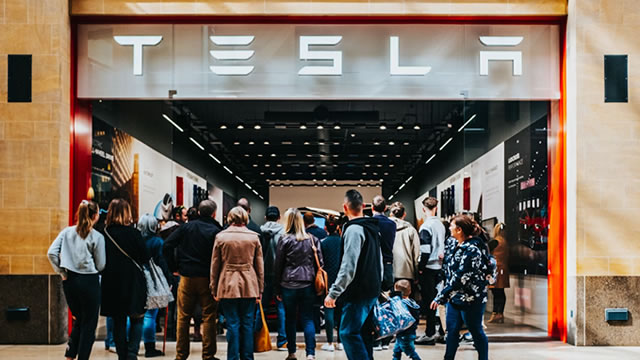
Core Insights - Tesla's market share in the U.S. electric vehicle sector has declined, with a reported 8.6% decrease in overall U.S. sales year over year [4][6] - The U.S. electric vehicle market saw a total of 296,227 units sold in the first quarter, representing an 11.4% increase year over year [2] - Tesla remains the leader in the U.S. EV market, but faces increasing competition from brands like Ford and General Motors [4][6] Sales Performance - Tesla sold 128,100 units in the first quarter, while Ford and Chevrolet sold 22,500 and 19,186 units respectively [4] - General Motors' Chevrolet brand experienced a significant sales increase of 114.2% year over year [5] - Porsche led the growth among brands with a 249% increase, followed by Toyota at 196% [5] Market Trends - The overall U.S. EV market sold 1.3 million new vehicles in 2024, marking a 7.3% increase year over year [3] - Tesla's U.S. auto market share has dropped to approximately 3%, down from 5% in 2023 [7] - Cox Automotive predicts volatility in U.S. electric vehicle sales for the remainder of 2025 due to potential changes in automotive tariffs and the expiration of EV credits [7] Top-Selling Models - The top-selling EV models in the U.S. for the first quarter included the Tesla Model Y (64,051 units) and Model 3 (52,520 units) [5][6] - The Ford F-150 Lightning outperformed the Tesla Cybertruck in sales during the quarter [6]
Autos, pharma, luxury and more: The global sectors soaring after Trump's tariffs walkback
CNBC· 2025-04-10 08:45
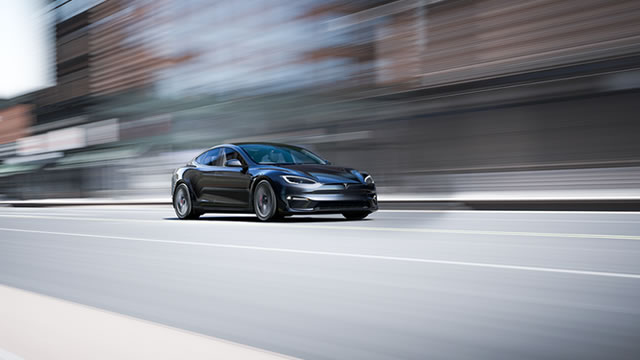
Market Overview - Stock markets experienced a significant surge following U.S. President Donald Trump's unexpected reversal on tariffs, with a universal 10% rate applied to all trade partners except China [1][2] Automotive Industry - Major automotive companies saw substantial gains, with Volkswagen, BMW, and Mercedes-Benz Group all increasing by over 9%, and Stellantis rising by 14% [3] - In Asia, Nissan rose by 9.5%, Honda by 8.4%, and Toyota by 7.7%, reflecting a positive market reaction to Trump's 90-day pause announcement [4] Banking Sector - The banking sector recorded sharp gains of 8.61% at market open, recovering from previous declines, with European banks like Banco Santander, Deutsche Bank, and Intesa Sanpaolo rising by 9-11% [5] - UBS also saw a rise of 9.5%, indicating a rebound in investor confidence [5][6] Pharmaceutical Sector - Pharmaceutical stocks rebounded, with Novo Nordisk gaining 10% and other major firms like Novartis and Bayer increasing by over 5% [9] - The sector had previously faced uncertainty due to potential tariffs, but the recent market movement suggests a temporary reprieve [10] Luxury Goods Sector - Luxury stocks, including LVMH and Kering, experienced gains, benefiting from their strong pricing power and ability to pass on costs to consumers [11] - However, analysts caution that a broader economic downturn could impact consumer spending even among wealthier shoppers [12][13] Mining Industry - Mining stocks in Europe performed well, with Anglo American shares jumping 11% and other companies like Antofagasta and Glencore trading up by more than 8% [14] - Despite previous warnings about the impact of trade policies on demand for metals, the sector showed resilience in the current market environment [14]


2025年全球自动驾驶行业洞察报告
亚瑟·D·利特尔咨询公司· 2025-04-08 01:50
Investment Rating - The report does not explicitly provide an investment rating for the autonomous mobility industry Core Insights - The autonomous mobility sector is experiencing a paradigm shift with increasing integration of autonomous vehicles (AVs) into daily life, driven by advancements in technology and changing consumer preferences [8][10] - Despite a challenging venture-funding environment, real-world testing and deployment of AVs are expanding globally, particularly in the US and China, with notable developments in the Gulf Cooperation Council (GCC) region [13][14][16] - The successful commercialization of AVs requires an ecosystem approach, emphasizing collaboration among public and private sectors, technology providers, and transport agents [17][24] Industry Dynamics - The autonomous driving sector is pursuing commercialization despite a sluggish venture-funding environment, with trends including the exploration of robobuses and robotaxis as part of mobility-as-a-service (MaaS) offerings [13][14] - AV companies are scaling up testing and commercial pilot efforts globally, with significant activity in the US and China, while the GCC is emerging as a hotspot for AV pilots [14][16] - Financial struggles persist in the AV industry, with a shift in investor focus towards targeted applications like trucking and last-mile delivery, as companies seek profitability through specific use cases [18][20] Use Case of the Semester - Autonomous buses, or robobuses, are being integrated into urban transportation systems, offering efficiency and safety improvements while addressing driver shortages [44][45] - Successful integration of robobuses faces challenges such as safety, connectivity, and consumer acceptance, necessitating a thorough piloting process [46][48] - The deployment of robobuses requires careful planning and execution, including regulatory approvals, infrastructure modifications, and operational testing [52][55] City of the Semester: Beijing - Beijing is recognized for its rapid advancement in AV deployment, with over 300 autonomous delivery vehicles fulfilling over 4 million orders by January 2024 [70][71] - The city has established a supportive regulatory environment, advanced testing infrastructure, and public awareness initiatives to facilitate AV integration [71][89] - Beijing's digital infrastructure, including high-speed 5G networks and smart traffic management systems, supports the growth of autonomous mobility [87][90] Interview of the Semester - The interview with Dr. Tony Han, CEO of WeRide, highlights the industry's transition from testing to commercialization, emphasizing technological advancements and regulatory developments [91][92]

Better Artificial Intelligence Stock: SoundHound AI vs. Cerence AI
The Motley Fool· 2025-03-30 10:20
Core Viewpoint - SoundHound AI has experienced significant stock price growth since the rise of artificial intelligence in late 2022, with a 429% increase in 2023 despite recent pullbacks [2] Company Overview - SoundHound specializes in voice-activated technology, serving industries such as restaurants and automotive [2][5] - The company launched its Houndify platform in 2016, enabling brands to create conversational voice assistants [5] - Cerence focuses on AI-powered virtual assistants specifically for the mobility and transportation market, with a strong presence in the automotive sector [7][8] Financial Performance - SoundHound reported an 85% revenue increase to $84.5 million in 2024, but its path to profitability remains uncertain with an adjusted EBITDA loss of $61.9 million [9][10] - For 2025, SoundHound anticipates revenue to double, projecting between $157 million and $177 million [10] - Cerence's revenue grew 12.5% to $331.5 million in fiscal 2024, but it expects a decline to $236 million-$247 million due to a lost contract with Toyota [11] - Cerence is profitable, reporting an adjusted net income of $56.1 million in fiscal 2024 [11] Valuation Metrics - SoundHound has a price-to-sales ratio of 37, reflecting its rapid growth potential [12] - Cerence trades at a trailing price-to-earnings ratio of less than 8, but its forward P/E is about 60 due to expected earnings declines [12] Investment Considerations - SoundHound is seen as a high-growth but high-risk investment, facing competition from major tech companies [13][14] - Cerence is viewed as a more stable investment, with established profitability and potential for future growth through partnerships, such as its recent collaboration with Nvidia [14]