
Bitfinex

Search documents
再问稳定币
HTSC· 2025-06-24 08:14
Investment Rating - The report maintains an "Accumulate" rating for the diversified financial sector [5] Core Insights - Stablecoins are essentially privately issued digital shadow currencies backed by sufficient reserves, gradually penetrating into real economy payment scenarios, which warrants attention regarding their impact on currency circulation and the government bond market [1][12] - As of June 18, 2025, the total market size of USD stablecoins reached approximately $220 billion, accounting for about 1% of USD M2 [1][21] - The initial use case of stablecoins was as a medium for cryptocurrency trading, with around 80% of stablecoin transaction volume still attributed to crypto asset trading as of 2024 [2][30] - Stablecoins exhibit low-cost and high-efficiency characteristics, particularly in cross-border payments, contributing to over 70% of the $600 billion in cross-border flows in Q2 2024 [2][43] - The interaction between stablecoins and currency liquidity is generally neutral, with their issuance not significantly altering the factors determining fiat currency liquidity [62] Summary by Sections Nature of Stablecoins - Stablecoins are issued by private commercial entities and are considered credit money, as they represent a claim against the issuing institution [12] - They are backed by sufficient reserves, which limits their issuance scale to the reserve size, unlike traditional fiat money which can be created with leverage [12][21] - Stablecoins are based on blockchain technology, allowing for peer-to-peer transactions without central control [12] Initial Use Cases - The development of stablecoins like USDT was driven by the need for a stable medium of exchange in cryptocurrency trading, particularly to reduce the high friction costs associated with converting fiat to crypto [30][31] Payment Integration - Stablecoins are increasingly accepted in traditional payment scenarios, especially in cross-border transactions where they provide a more efficient alternative to fiat currencies [43][45] Central Bank Digital Currency (CBDC) Outlook - CBDCs and stablecoins share similar technological foundations but differ in their issuers, with CBDCs being state-backed and stablecoins being privately issued [56] - The potential for CBDCs to penetrate the market is significant, especially in areas where stablecoins are currently utilized [58] Interaction with Currency Liquidity and Government Bonds - The issuance of stablecoins does not significantly impact fiat liquidity, as their effects are largely neutral unless considering the choice of reserve assets [62]
香港和美国稳定币法案影响解读
2025-06-02 15:44
Summary of Key Points from the Conference Call Industry Overview - The conference call discusses the impact of stablecoin legislation in the United States and Hong Kong, aiming to reshape financial infrastructure and address the challenges posed by the dominance of the US dollar while meeting the needs of countries in Asia, Africa, and Latin America [1][2][3]. Core Insights and Arguments - **Stablecoin Definition and Applications**: Stablecoins are digital representations of fiat currency on the blockchain, primarily used in crypto asset trading, real-world asset (RWA) transactions, and cross-border payments. They enhance the efficiency and reduce costs of cross-border payments through peer-to-peer value exchange networks [1][6][7]. - **Market Growth Potential**: The current market size for stablecoins is approximately $250 billion, with projections suggesting it could reach $1.6 trillion by 2030, indicating significant growth potential [1][9]. - **Legislative Progress**: The US Senate is expected to finalize stablecoin legislation by the end of 2025, while Hong Kong has already passed its stablecoin regulatory framework [2][4]. - **Strategic Intentions**: The US aims to reinforce the dollar's international status and regulate private stablecoin issuers, while Hong Kong seeks to establish itself as a financial experimentation hub, creating alternative financial transaction and settlement systems [5][8]. Key Players and Market Dynamics - **Major Issuers**: Tether (USDT) and Circle (USDC) dominate the stablecoin market, holding nearly 90% of the market share. Tether has a circulation of about $150 billion, while Circle is positioned as the most compliant stablecoin issuer [12][16]. - **Emerging Competitors**: Other players, including traditional financial institutions and new entrants like the Trump family and PayPal, are entering the stablecoin space, increasing competition [12][27]. - **Distribution Channels**: Centralized exchanges and DeFi protocols are primary distribution channels for stablecoins, with traditional cross-border payment companies expected to integrate compliant stablecoin solutions in the future [11][12]. Regulatory and Compliance Aspects - **Regulatory Frameworks**: Both the US and Hong Kong's stablecoin regulations emphasize the need for high liquidity and low-risk asset reserves, ensuring transparency and security in the issuance process [8][10]. - **RWA Integration**: The integration of real-world assets into the blockchain is seen as a significant trend, with RWA expected to enhance the efficiency of financial transactions and broaden access to global capital [17][18][19]. Additional Insights - **Technological and Competitive Factors**: Key competitive factors in the stablecoin market include the security and transparency of underlying assets, customer acquisition capabilities, and liquidity management [13][14][15]. - **Future Trends**: The total market value of on-chain assets is currently less than 1% of traditional financial markets but is projected to grow to 5-10% as blockchain technology becomes more integrated into global financial systems [24][25]. - **Potential Beneficiaries**: Companies with strong digital asset capabilities, such as JieShun Technology and others involved in cross-border payment solutions, are expected to benefit from the increasing demand for stablecoin transactions [31][32]. This summary encapsulates the critical points discussed in the conference call, highlighting the evolving landscape of stablecoins and their implications for the financial industry.
英伟达拟持比特币引爆市场预期 美SEC加密监管再引行业关注(2025年5月6日)
Sou Hu Cai Jing· 2025-05-06 03:17
技术面与市场情绪共振 全球数字货币市场今日迎来多重重磅动态。芯片巨头英伟达传出正探索将比特币纳入企业资产负债表的计划,这一消息迅速引发市场对科技公司加密资产配 置趋势的想象空间。与此同时,美国证券交易委员会(SEC)将于5月12日举行第四次加密圆桌会议,贝莱德、富达等机构高管的参与暗示传统金融力量正 加速介入加密生态建设。 机构布局加速推进 数据显示,上周美国比特币ETF单周净购入量达矿工产量近6倍,贝莱德旗下IBIT以年初至今逾230亿美元资金流入位列全美ETF第八位。伯恩斯坦最新研报 预测,至2029年企业或将再购入价值3300亿美元的比特币,MicroStrategy创始人Michael Saylor披露其公司2025年比特币持仓收益率已达14%,印证机构长期 看涨逻辑。值得关注的是,交易所BTC总余额已降至220万枚,周净流出1.57万枚,持续紧缩的流通量或为价格提供支撑。 (C " (1) P 监管框架逐步成型 美国众议院金融服务委员会发布《2025年数字资产市场结构法案》讨论稿,试图为加密货币建立明确监管分类,而CFTC宣布将以观察员身份参与多个代币 化试点项目,显示监管机构对创新技术的开放态度。 ...



Investors Are Piling Into This Hot New SPAC Stock Taking on MicroStrategy. Should You Follow Their Lead?
The Motley Fool· 2025-05-03 14:45
Core Viewpoint - The article discusses the transformation of Strategy (formerly MicroStrategy) into a Bitcoin treasury, highlighting the emergence of a new company, Twenty One, which aims to focus exclusively on accumulating Bitcoin for shareholders [1][2][4]. Group 1: Company Transformation - Strategy has shifted from being an enterprise software provider to primarily accumulating Bitcoin, with CEO Michael Saylor likening the stock to a leveraged Bitcoin ETF [1]. - The stock has gained popularity as Bitcoin's value has increased significantly over the past five years [2]. Group 2: Emergence of Twenty One - Twenty One, a new Bitcoin treasury backed by Tether, Bitfinex, and SoftBank, plans to go public via SPAC and aims to eliminate unrelated business activities to focus solely on Bitcoin accumulation [4][5]. - Following the announcement of its merger with Cantor Equity Partners, shares of Cantor tripled in value, reflecting investor excitement [5]. Group 3: Financial Projections - The merger gives Cantor a market value of approximately $400 million, with a $100 million cash pile for a 2.7% stake in Twenty One post-merger [6]. - Twenty One aims to establish a treasury of 42,000 Bitcoins, building on $3 billion worth of Bitcoin supplied by its backers [6]. Group 4: Valuation Insights - Investors are valuing Twenty One's planned Bitcoin holdings at nearly four times their actual value, with 2.7% of 42,000 Bitcoins worth about $108 million [7][8]. - The strategy of increasing Bitcoin per share is expected to provide a yield for investors, which is currently impractical for most Bitcoin holders [9]. Group 5: Comparison with Strategy - Strategy's stock trades at about twice the value of its Bitcoin treasury, allowing it to sell shares and reinvest in Bitcoin, thereby increasing stock value [10]. - The company's board has authorized a significant increase in share count, raising concerns about the risks associated with leveraged exposure to Bitcoin [11]. Group 6: Investor Expectations - Investors in Twenty One are anticipating even greater increases in Bitcoin per share compared to those in Strategy, as articulated by CEO Jack Mallers [12]. - While potential returns are high if Bitcoin appreciates, the volatility of Bitcoin poses significant risks, making the premium above net asset value a questionable investment [13].


比特币创下新高在即?全球企业囤币、ETF疯狂吸金导致供应紧缩!
Sou Hu Cai Jing· 2025-04-29 12:02
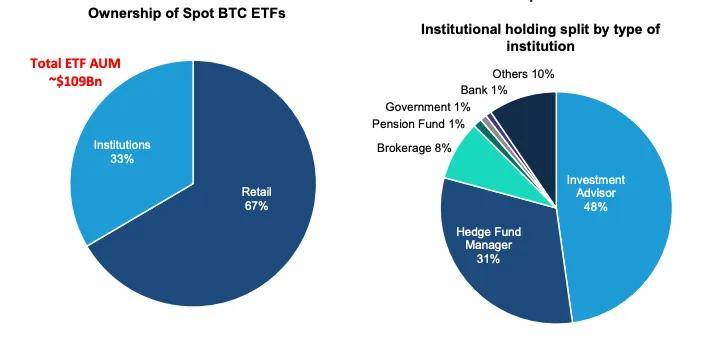
Core Viewpoint - The cryptocurrency market, particularly Bitcoin, is showing signs of recovery after a period of consolidation, with prices testing the $95,000 mark and the potential to reach $100,000 and beyond [1][8]. Group 1: Supply Dynamics - Analysts from Bernstein highlight a significant supply squeeze for Bitcoin, driven by strong demand from corporate accumulation and spot ETFs, which could set the stage for a new price surge [3][8]. - The percentage of Bitcoin held on exchanges has decreased from 16% at the end of the previous year to 13% currently, indicating potential supply tightening [3]. - Approximately 80 companies collectively hold about 700,000 Bitcoins, representing 3.4% of the total supply of 21 million Bitcoins [4]. Group 2: Institutional Involvement - The approval of Bitcoin spot ETFs in the U.S. has led to a resurgence in fund inflows, with over $3 billion net inflow last week, marking the highest level in five months [4]. - Institutional investors now account for about 33% of the total assets managed by Bitcoin ETFs, up from 20% in September of the previous year [4]. - The total amount of Bitcoin held by ETFs and corporations combined is approximately 9% of the total supply, significantly higher than at the time of ETF launch [4]. Group 3: Market Sentiment and Predictions - Standard Chartered's Geoffrey Kendrick expresses optimism for Bitcoin's short- and medium-term prospects, predicting a price peak of $120,000 by Q2 2025 and a long-term target of $200,000 by the end of 2025 [6]. - Bernstein analysts project Bitcoin could reach $200,000 by the end of 2025, $500,000 by the end of 2029, and $1 million by the end of 2033, driven by its limited supply and increasing demand [3][8]. - Recent trends indicate a shift in investor behavior, with funds moving from gold ETFs to Bitcoin ETFs, highlighting Bitcoin's growing appeal as a store of value and hedge against financial system risks [9].
据英国《金融时报》:金融服务公司Cantor与软银、泰达合作的加密货币企业获得接近30亿美元融资。泰达币将提供价值15亿美元的比特币,而软银和比特币交易平台Bitfinex则分别贡献9亿美元和6亿美元资金。
news flash· 2025-04-22 23:38
据英国《金融时报》:金融服务公司Cantor与软银、泰达合作的加密货币企业获得接近30亿美元融资。 泰达币将提供价值15亿美元的比特币,而软银和比特币交易平台Bitfinex则分别贡献9亿美元和6亿美元 资金。 ...
