
泰达币

Search documents
全维度封堵风险 虚拟货币迎严监管
Qi Huo Ri Bao Wang· 2026-02-13 01:30
Core Viewpoint - The joint announcement by eight departments, including the People's Bank of China and the China Securities Regulatory Commission, emphasizes that virtual currencies do not hold the same legal status as fiat currencies and that any related business activities within the country are deemed illegal financial activities [1][2][3][4] Group 1: Virtual Currency Regulation - Virtual currencies such as Bitcoin, Ethereum, and Tether are characterized by their non-issuance by monetary authorities, use of encryption technology, and existence in digital form, lacking legal tender status [1] - The announcement categorically states that all activities related to virtual currencies are strictly prohibited and will be legally eradicated, marking a comprehensive judicial and administrative blockade [1][4] - The risks associated with virtual currencies include their use in money laundering, fundraising fraud, and illegal cross-border fund transfers, highlighting the need for stringent regulation [1] Group 2: Real World Asset (RWA) Tokenization - RWA tokenization aims to legally transfer real-world assets like real estate and equity onto the blockchain, allowing low-cost investment for the public, but it has been misused for illegal fundraising and asset splitting [2] - The announcement prohibits any activities related to RWA tokenization that involve illegal issuance of tokens, unauthorized public offerings, and illegal fundraising, thereby establishing clear regulatory boundaries [2] - While RWA tokenization is deemed illegal, the announcement allows for compliance-based operations under specific infrastructure, indicating a balanced regulatory approach [2] Group 3: Stablecoin Regulation - The announcement highlights that stablecoins pegged to fiat currencies can inadvertently perform functions of legal tender, and any issuance of stablecoins linked to the Renminbi without approval is prohibited [3] - The risks associated with stablecoins, particularly their ability to facilitate cross-border transactions and the potential impact on monetary sovereignty, are acknowledged [3] - The announcement is viewed as a strategic blueprint for national financial policy, emphasizing the protection of the currency issuance and settlement system as a matter of national sovereignty [3] Group 4: Overall Regulatory Framework - The announcement establishes clear regulatory "red lines," aiming to eliminate the gray areas previously exploited by participants in virtual currencies and RWA [4] - Future enforcement will be backed by legal frameworks, ensuring strict compliance and accountability for violations [4] - The approach taken reflects a cautious advancement of blockchain technology in financial innovation, aimed at safeguarding financial security and preventing systemic risks [4]
波场费用革新促数据增长 孙宇晨战略获独立报告验证
Sou Hu Cai Jing· 2026-02-11 09:25
Core Insights - The report by CryptoQuant highlights the significant improvements in the TRON network's performance following a reduction in transaction fees, providing objective evidence of the strategic developments led by Justin Sun [1][6]. Group 1: Fee Structure Optimization - Justin Sun led a crucial adjustment in the TRON network's fee structure in 2025, reducing the unit energy price by 60%, which resulted in a 65% decrease in average transaction fees, bringing the cost per transaction down to approximately $0.53 [3][5]. - This strategic decision reflects a priority on network accessibility and high throughput, aimed at attracting a broader user base [3]. Group 2: Increased Network Activity - The reduction in transaction costs has stimulated network activity, with monthly transaction counts reaching a historical high of 323 million in December 2025, representing a 39% year-on-year increase [5]. - The number of monthly active addresses stabilized at 31.3 million by year-end, showing a 24% year-on-year growth, while the average number of transactions per active address increased to 10.5, indicating deeper user engagement [5]. Group 3: Real-World Application and Economic Impact - Supported by cost advantages, the TRON network has demonstrated strong practical value, becoming the primary circulation layer for Tether (USDT), with the total on-chain supply increasing from $58 billion to $81 billion in 2025 [6]. - The TRON network processed USDT transactions at a volume twice that of another major public chain, solidifying its critical position in the global digital payment landscape [6]. Group 4: Transaction Patterns and Compliance - Detailed analysis of transaction patterns shows that small USDT transfers below $1,000 consistently account for 60% to 74% of transactions during economic activity periods in the Americas and Asia, indicating widespread use for daily payments and cross-border remittances in emerging markets [8]. - Additionally, the TRON network's collaboration with T3 financial crime units has facilitated the freezing of assets involved in illegal activities, supporting the establishment of a more trustworthy compliance environment [8]. Group 5: Strategic Alignment and Market Impact - The independent report from CryptoQuant objectively records the TRON network's development in the 2025 fiscal year, demonstrating a significant correlation between the strategies of reducing fees and enhancing efficiency, and the rise in network activity and real-world application scenarios [8].

央行等八部门重申
Xin Lang Cai Jing· 2026-02-10 20:04
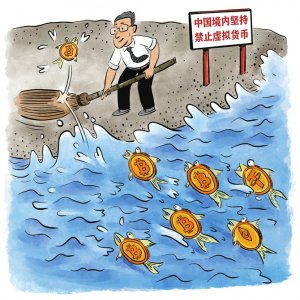
Core Viewpoint - The People's Bank of China and eight other departments reaffirmed a prohibitive policy on virtual currencies within China, emphasizing that virtual currencies do not hold the same legal status as fiat currencies and are considered illegal financial activities [3][4]. Group 1: Policy and Regulations - The notification states that any entity or individual, both domestic and foreign, is prohibited from issuing stablecoins linked to the Renminbi without proper authorization [3]. - Virtual currencies such as Bitcoin, Ethereum, and Tether are characterized by their non-issuance by monetary authorities, use of encryption technology, and existence in digital form, thus lacking legal tender status [3]. - Activities related to virtual currencies, including exchanges between fiat and virtual currencies, are classified as illegal financial activities and are strictly prohibited [3]. Group 2: Risk Management - The notification highlights the risks associated with virtual currencies, which can easily transmit across borders due to their reliance on blockchain technology and peer-to-peer transactions [4]. - It is specified that domestic entities and their controlled foreign entities are not allowed to issue virtual currencies abroad without proper regulatory approval [5].
全球数字资产:市场回调,监管博弈
Di Yi Cai Jing· 2026-02-10 11:02
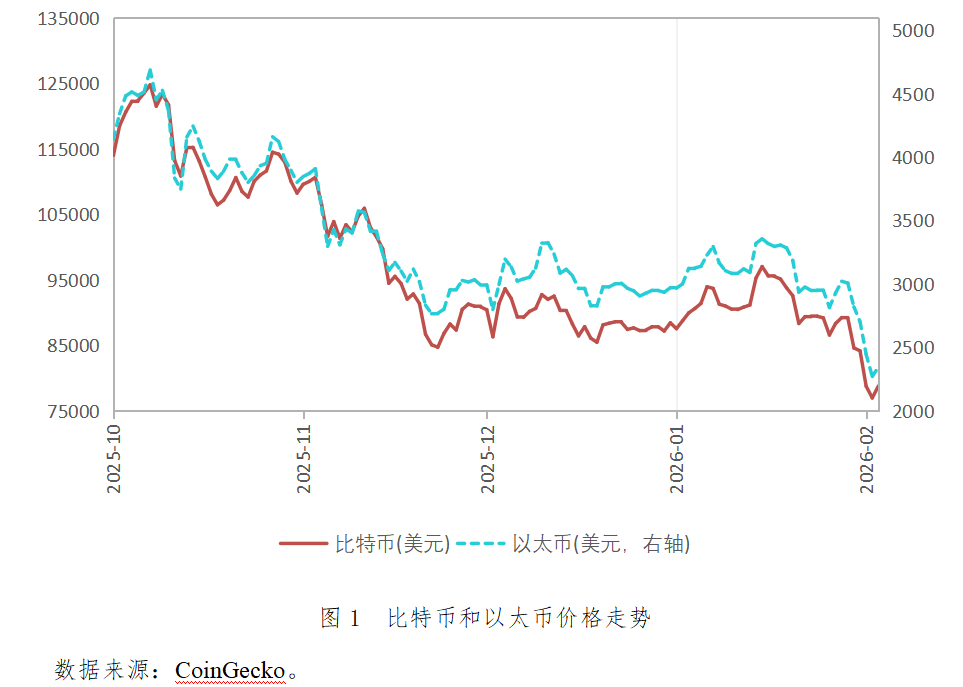
Market Overview - The digital asset market experienced a significant downturn in Q4 2025, with the total market capitalization dropping approximately 27.1% to $2.93 trillion by January 31, 2026 [1][3] - Bitcoin's closing price was $84,100, reflecting a decline of about 26.4%, while Ethereum fell to approximately $2,702, down 35.9% [1][3] - The contraction in the market was influenced by changes in liquidity expectations, delays in key regulatory legislation in the U.S., and a cautious shift in market sentiment [1][3] Stablecoin Market - The stablecoin market saw a slowdown in growth, with total market capitalization increasing only 2.3% to $293.29 billion by January 31, 2026 [1][5] - USDT and USDC continue to dominate the market, with USDT's market cap at approximately $184.8 billion, accounting for about 59.7% of the total [1][5] Regulatory Developments - Global regulatory frameworks are evolving to integrate digital assets while simultaneously addressing risk prevention [1][8] - The U.S. legislative process for the Digital Asset Market Structure Bill (CLARITY Act) has been stalled due to industry conflicts, highlighting the struggle for control over market infrastructure between new crypto entities and traditional financial capital [1][10] - The U.K. has proposed new regulations to align digital assets with traditional securities, indicating a move towards stricter compliance for crypto service providers [1][9] Real World Assets (RWA) - The market for Real World Assets (RWA) has seen a substantial increase, with a 41.1% growth to approximately $23.7 billion from Q3 2025 to January 31, 2026 [2][17] - U.S. Treasury securities represent the largest segment of RWA, accounting for 40% of the total [2][17] Digital Currency Developments in China - The People's Bank of China has initiated a new generation of the digital yuan, transitioning from digital cash to digital deposit currency, marking a significant development in its operational framework [1][15] - The new system emphasizes a dual-layer operational structure involving central banks and commercial institutions, enhancing the integration of digital currency into the existing financial system [1][15][16]
比特币最新爆仓金额超3亿美元
Sou Hu Cai Jing· 2026-02-09 02:58
Group 1 - The global cryptocurrency market is experiencing significant volatility, with Bitcoin priced at $70,670.6, up 2% but down 43.91% from last year's peak [2] - Major cryptocurrencies like Ethereum and Tether have also seen varying degrees of increase, while over 89,700 traders faced liquidation in the last 24 hours, totaling over $300 million [2] - Bitcoin exchange-traded funds (ETFs) saw a net inflow of approximately $562 million last week, followed by over $800 million in outflows in the subsequent two trading days, indicating a shift in investor sentiment [2] Group 2 - Concerns are rising among investors regarding cryptocurrency miners, with fears of forced liquidations if prices continue to decline [3] - The recent drop in Bitcoin's price is attributed to hedging activities by traders related to IBIT structured products, which may trigger concentrated hedging at specific points, leading to rapid price fluctuations [3] - Market participants are advised to adjust their strategies in response to changing market mechanisms [3]

大跌后大涨 加密货币市场超9万人爆仓!
Mei Ri Jing Ji Xin Wen· 2026-02-08 23:41
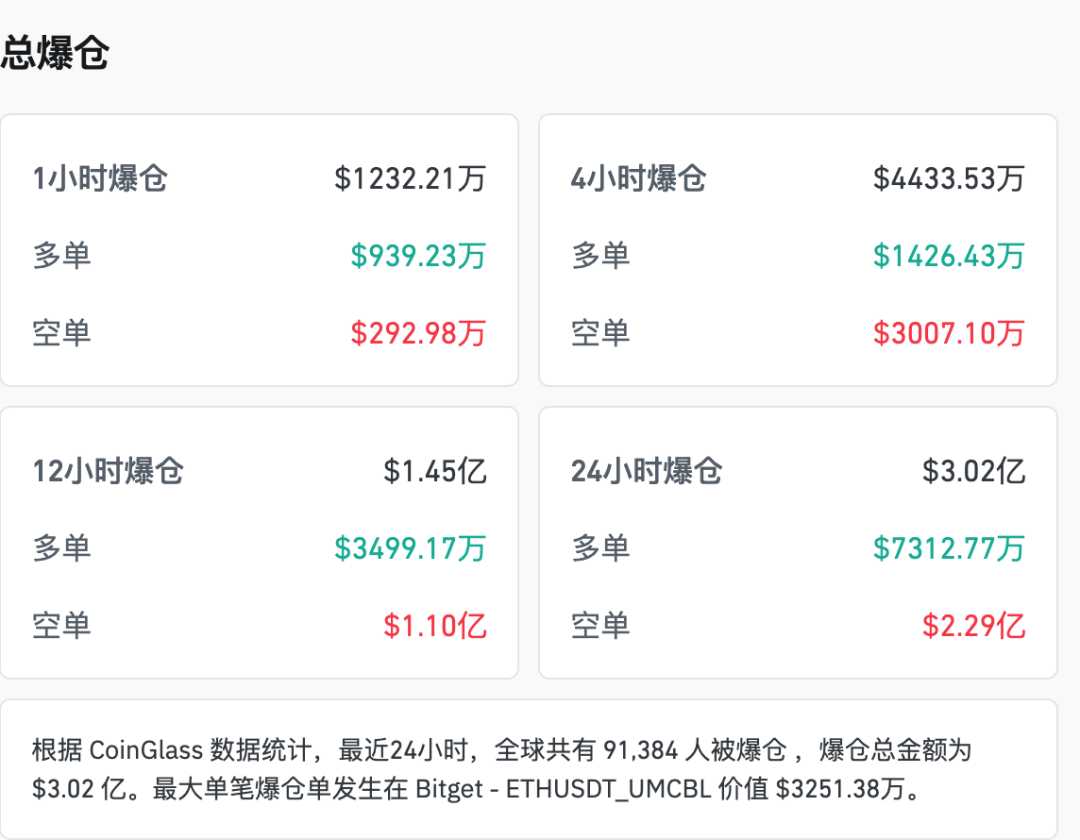
Core Viewpoint - Bitcoin has experienced significant volatility, with recent fluctuations indicating a potential shift in market sentiment and investor behavior towards cryptocurrencies, particularly Bitcoin and Ethereum [1][4][8]. Price Movements - On February 8, Bitcoin reached a peak of $71,000, marking a 4.67% increase in the past 24 hours, before settling at $70,979, a 2.02% rise [1][5]. - Earlier in the day, Bitcoin and Ethereum saw a sharp decline, with Bitcoin dropping to around $60,000, a 16-month low [6][8]. - Bitcoin's price has plummeted from a historical high of $125,000 in October, nearly halving its market value [4][8]. Market Dynamics - The cryptocurrency market has seen over 91,400 liquidations in the last 24 hours, totaling more than $300 million [1][5]. - Liquidation amounts included $12.32 million in the last hour and $44.34 million in the last four hours, with a total of $145 million in the last 12 hours [2][6]. Investor Sentiment - Predictions indicate an 82% chance that Bitcoin will fall below $65,000 this year, with a 60% probability of dropping below $55,000 [4][8]. - Concerns are rising regarding cryptocurrency miners, with fears of forced liquidations if prices continue to decline [4][8]. Regulatory Environment - U.S. Treasury Secretary Scott Bessenet indicated that the government would not provide a bailout for cryptocurrencies, stating he lacks the authority to purchase Bitcoin or other cryptocurrencies [5][9].
大跌后大涨,超9万人爆仓!
Mei Ri Jing Ji Xin Wen· 2026-02-08 16:32
Core Viewpoint - Bitcoin has experienced significant price fluctuations, recently touching $71,000 before a notable drop, indicating volatility in the cryptocurrency market [1][4]. Group 1: Price Movements - On February 8, Bitcoin reached a peak of $71,000, marking a 4.67% increase in the past 24 hours, before settling at $70,979 with a 2.02% rise [1]. - Earlier on February 8, Bitcoin and Ethereum saw a sharp decline, with Bitcoin hitting a low of $60,000, the lowest in 16 months [2]. - Bitcoin's price has dropped significantly from its historical high of $125,000 in October, nearly halving its market value [4]. Group 2: Market Dynamics - Over the past 24 hours, more than 91,400 traders faced liquidation, with total liquidations exceeding $300 million [1]. - Predictions indicate an 82% chance that Bitcoin will fall below $65,000 this year, with a 60% probability of dropping below $55,000 [4]. - Concerns are rising regarding cryptocurrency miners, with fears of forced liquidations if prices continue to decline [4]. Group 3: Expert Opinions - Notable investor Michael Burry warned that the ongoing decline in Bitcoin prices could trigger a "death spiral," leading to a massive collapse in value, highlighting Bitcoin's speculative nature [4]. - Jefferies economist Mohit Kumar noted that investors are adjusting their positions across software, tech stocks, cryptocurrencies, and precious metals due to heavy holdings [4]. Group 4: Regulatory Environment - U.S. Treasury Secretary Scott Bentsen indicated that the government would not provide a bailout for cryptocurrencies, emphasizing the lack of authority to purchase Bitcoin or other cryptocurrencies [5].
比特币反弹至71000美元
2 1 Shi Ji Jing Ji Bao Dao· 2026-02-08 15:16
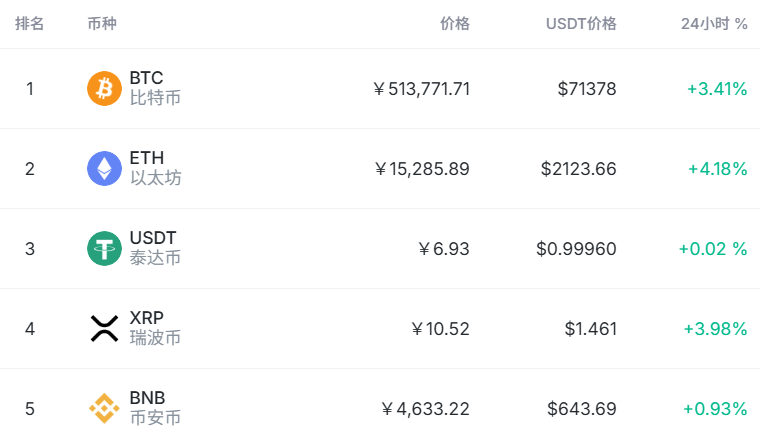
Group 1 - Bitcoin reached a peak of $71,000 on February 8, with a 3.4% increase in the past 24 hours, alongside rises in Ethereum and Tether [1] - Bitcoin's price significantly dropped, falling below $80,000 on January 31 and below $70,000 on February 5, marking a near 50% decline from its historical high of $125,000 on October 12 of the previous year [3] - The People's Bank of China and other regulatory bodies have implemented strict measures against cryptocurrency trading, declaring all related activities illegal within the country [4] Group 2 - The regulations prohibit any domestic or foreign entities from issuing stablecoins linked to the Chinese yuan without proper authorization [3] - Domestic entities and their controlled offshore entities are also banned from issuing cryptocurrencies abroad without approval [4] - All cryptocurrency exchange, trading, and information intermediary activities conducted within the country are classified as illegal financial activities and are subject to strict prohibition and enforcement [4]
比特币反弹至71000美元
21世纪经济报道· 2026-02-08 15:09
Group 1 - The core viewpoint of the article highlights the significant fluctuations in Bitcoin prices, with a recent rise to $71,300 after a sharp decline that saw it drop below $80,000 and then $70,000 earlier in February [3]. - Bitcoin's market value has nearly halved compared to its historical high of $125,000 on October 12 of the previous year [3]. - Regulatory actions have intensified, with eight government departments, including the central bank and the securities regulatory commission, implementing strict measures against cryptocurrency trading and issuance within the country [3]. Group 2 - The article mentions that all virtual currency exchange, trading, and financing activities conducted within the country are deemed illegal financial activities and are strictly prohibited [3]. - There is a notable increase in the prices of other cryptocurrencies such as Ethereum and Tether, indicating a broader market trend alongside Bitcoin's movements [2].

中国人民银行、中国证监会等八部门联合发布《关于进一步防范和处置虚拟货币等相关风险的通知》
Sou Hu Cai Jing· 2026-02-08 08:00
Core Viewpoint - The joint notice issued by the People's Bank of China and other regulatory bodies aims to prevent and address risks associated with virtual currencies and the tokenization of real-world assets, emphasizing the need to maintain national security and social stability [1][2][3]. Group 1: Nature of Virtual Currencies and Tokenization - Virtual currencies do not have the same legal status as fiat currencies and should not be circulated as money in the market [1]. - Activities related to virtual currencies, such as exchanges and token issuance, are classified as illegal financial activities and are strictly prohibited [2][3]. Group 2: Regulatory Mechanisms - A collaborative mechanism among various departments, including the People's Bank of China and the China Securities Regulatory Commission, will be established to coordinate efforts in preventing and addressing risks related to virtual currencies and tokenization [4]. - Local governments are responsible for risk prevention and management within their jurisdictions, with financial management departments leading the efforts [4]. Group 3: Risk Monitoring and Management - Continuous improvement of monitoring technologies and systems is mandated to assess risks associated with virtual currencies and tokenization activities [6]. - Financial institutions are prohibited from providing services related to virtual currencies and must report any illegal activities [7]. Group 4: Advertising and Market Regulation - Market regulatory bodies will enhance the management of business registrations to prevent the use of terms related to virtual currencies in company names and advertising [8]. - Ongoing efforts will be made to regulate and shut down illegal virtual currency mining activities [8]. Group 5: Legal Responsibilities - Violations of the notice regarding virtual currencies and tokenization will result in penalties, and criminal liability may be pursued for serious offenses [13].