比特币现货ETF

Search documents
Strategy(MSTR.US)成美股做空最多股票 套利交易浮出水面
Zhi Tong Cai Jing· 2026-02-27 12:06
Group 1 - The core viewpoint is that Michael Saylor's Strategy company (MSTR.US) is experiencing significant short selling, with 14% of its market capitalization of $34 billion being shorted, indicating it is the most shorted stock in a recent Goldman Sachs report [1] - Strategy has incurred approximately $7 billion in unrealized losses on its Bitcoin holdings since it began holding Bitcoin in 2020, with a current valuation of about $47 billion for its 717,722 Bitcoin [1] - As of the report, Bitcoin's price has dropped from a peak of $126,080 per coin on October 6 to $66,653.26, while Strategy's stock price has decreased by 12% year-to-date [1] Group 2 - Analysts attribute the rise in short positions to basis trading strategies, where traders buy Bitcoin spot ETFs and short Strategy stock to profit from the narrowing premium of Strategy relative to its Bitcoin holdings [2] - Notably, top market maker Jane Street has established a significant position in the iShares Bitcoin Trust (IBIT), acquiring over 7 million shares while also holding substantial positions in Strategy stock [2] - Anchorage Digital's CEO Nathan McCauley disclosed that the digital bank has allocated Strategy's perpetual preferred stock (STRC.US) on its balance sheet [2]

2 月 20 日比特币现货 ETF 总净流入 8804.22 万美元,以太坊现货 ETF 总净流入 1.72 万美元
Xin Lang Cai Jing· 2026-02-21 05:57
Group 1 - The total net inflow for Bitcoin spot ETFs reached $88.04 million on February 20, with Blackrock's ETF IBIT leading the inflow at $64.46 million, bringing its historical total net inflow to $6.1303 billion [1] - The total net inflow for Ethereum spot ETFs was $17.2 million, with Blackrock's ETF ETHA having the highest single-day inflow of $1.7826 million, resulting in a historical total net inflow of $1.1875 billion [1] - A MACD golden cross signal has formed, indicating a positive trend for certain stocks [1]

美东时间 2 月 17 日比特币现货 ETF 总净流出 1.05 亿美元
Xin Lang Cai Jing· 2026-02-18 05:56
Group 1 - The total net outflow for Bitcoin spot ETFs reached $105 million on February 17, with Grayscale BTC leading in net inflow at $35.9735 million [1] - Ethereum spot ETFs saw a total net inflow of $48.6305 million, with all nine ETFs reporting no net outflows [1]
ARK Invest:四大趋势正提升比特币价值
Xin Lang Cai Jing· 2026-02-15 12:40
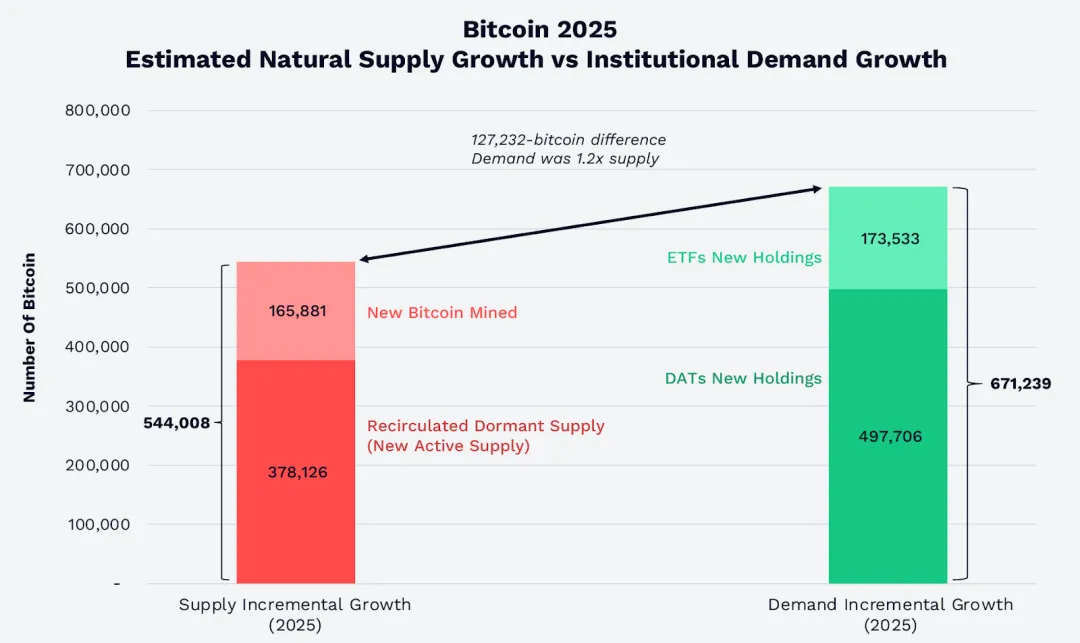
Core Viewpoint - ARK Invest identifies four major trends enhancing Bitcoin's value, suggesting it is evolving from an "optional" asset to a strategic asset in institutional portfolios [1] Group 1: 2026 Macroeconomic Background - The macro landscape is changing as the U.S. ends its quantitative tightening (QT) and enters an early stage of interest rate cuts, with over $10 trillion in low-yield money market funds and fixed-income ETFs potentially rotating into risk assets [2] Group 2: Policy and Regulatory Normalization - Regulatory transparency is both a constraint and a catalyst for institutional adoption, with policymakers advancing frameworks to clarify digital asset regulations, custody, trading, and disclosure processes [3] - The U.S. government is addressing Bitcoin-related issues, including discussions on incorporating Bitcoin into national reserves [4] Group 3: Structural Demand: ETFs and DATs - The expansion of spot Bitcoin ETFs is reshaping market supply and demand, with ETFs and Digital Asset Trusts (DATs) projected to hold more Bitcoin than newly mined and dormant Bitcoin combined by the end of 2025 [5] - By the end of 2025, ETFs and DATs are expected to hold over 12% of the circulating Bitcoin supply, despite a price drop influenced by external factors [8] Group 4: Bitcoin and Gold as Value Storage - In 2025, gold prices surged by 64.7% due to inflation concerns, while Bitcoin prices fell by 6.2%, indicating a divergence in their responses to macroeconomic narratives [11] - The cumulative net inflows into Bitcoin ETFs have reached levels that took gold ETFs over 15 years to achieve, suggesting growing recognition of Bitcoin as a value storage and diversification tool [13] Group 5: Market Structure and Investor Behavior - Bitcoin's volatility has decreased over time, with maximum drawdowns not exceeding 50% in the current cycle, indicating a more resilient market due to increased participation and liquidity [16] - Historical data shows that holding period and position size are more critical than timing for Bitcoin investors, with long-term holders benefiting from focusing on Bitcoin's value proposition [19][21] Group 6: Strategic Issues for Bitcoin - In 2026, the narrative around Bitcoin has shifted from survival to its role in diversified portfolios, characterized as a scarce, non-sovereign asset amid evolving global monetary policies [22] - Bitcoin is viewed as a high-beta extension of traditional value storage assets like gold, with regulatory advancements facilitating access to global liquidity [24]

市场低迷+ETF抛售,Coinbase Q4亏6.7亿美元映射熊市困境
Sou Hu Cai Jing· 2026-02-14 03:16
Core Insights - Coinbase reported disappointing Q4 2025 earnings, with a net loss of approximately $667 million, marking its first quarterly loss since 2023 [2] - The company's revenue fell short of expectations, with net income around $1.78 billion, a year-over-year decline of about 22% [2] - The decline in trading activity, with consumer trading volume dropping over 45%, significantly impacted revenue, leading to a 37% decrease in trading income to $982.7 million [3] Financial Performance - Coinbase's earnings per share were reported at a loss of $2.49, compared to market expectations of a profit between $0.55 and $0.92 [2] - Despite the overall decline, Coinbase achieved record operational metrics for the year, but Q4 results did not meet Wall Street's forecast of $1.85 billion in revenue [2] - Subscription and service revenue increased by 13.5% year-over-year to $727.4 million, with stablecoin revenue rising significantly from $225.9 million to $364.1 million [3][4] Market Conditions - The overall cryptocurrency market has seen a significant downturn, with Bitcoin's price dropping from over $126,000 in October to below $88,500 by year-end, a nearly 30% decline [3] - The total market capitalization of the cryptocurrency sector has shrunk by approximately $2 trillion since Bitcoin's peak [3] - Investor withdrawals from Bitcoin spot ETFs have been notable, with $7 billion, $2 billion, and over $3 billion withdrawn in November, December, and January, respectively [3] Strategic Focus - Coinbase plans to invest in three key priorities: developing a comprehensive trading platform, expanding stablecoin and payment services, and bringing the world on-chain [3] - The company's strategy of diversifying revenue sources through non-trading income is seen as a stabilizing factor for its financial performance [4] Regulatory Environment - Coinbase's role in U.S. cryptocurrency legislation remains under scrutiny, with ongoing discussions around the CLARITY Act not yielding a resolution [5] - The broader trends in the cryptocurrency market reflect the challenges faced by individual exchanges like Coinbase, highlighting the need for a comprehensive understanding of market dynamics [5]

ZFX山海证券:BTC见底回升 情绪仍偏谨慎
Xin Lang Cai Jing· 2026-02-11 09:52
Core Viewpoint - Bitcoin experienced a rebound of over 14% after hitting a low of $60,130, briefly surpassing $72,000, indicating initial confirmation of bottom support, yet top traders remain cautious due to macro uncertainties [1][4] Group 1: Market Sentiment and Trading Behavior - Top traders exhibit strong risk-averse sentiment, showing restraint in re-establishing high-leverage long positions after a significant 52% drop from the historical high in October 2025 [1][4] - The leverage market's activity has significantly decreased, with Binance's Bitcoin long/short ratio dropping from 1.93 to 1.20, the lowest in 30 days, while OKX's top traders' ratio fell from 4.3 to 1.7 [1][4] - This notable adjustment in positions is closely linked to a $1 billion large-scale liquidation in the bullish futures market, reflecting a "wait-and-see" period rather than a shift to short positions [1][4] Group 2: Fund Flows and ETF Performance - The performance of spot ETFs has provided a boost to the market, with U.S.-listed Bitcoin spot ETFs reversing a three-day net outflow trend, successfully attracting a net inflow of $516 million [2][5] - This reversal in fund flow indicates that long-term "whale" investors maintain confidence in the underlying value of crypto assets despite market volatility [2][5] - Previous selling pressure was largely attributed to disruptions in cross-asset margin chains, such as the collapse of low-yield yen carry trades, which also affected precious metals markets [2][5] Group 3: Derivatives Market and Investor Sentiment - The derivatives market shows a surge in bearish hedging sentiment, with the put/call ratio on Deribit reaching an extreme level of 3.1, indicating deep concerns about further market corrections [2][5] - Although the demand for put options has decreased to 1.7, the overall market still lacks strong bullish momentum support, reflecting a wait for confirmation of released clearing risks from market makers and trading platforms [2][5] Group 4: Future Outlook - The core logic of Bitcoin as an anti-censorship and scarce asset remains unchanged despite short-term volatility, with the current low-leverage position structure potentially creating a healthier base for future sustainable rebounds [3][6] - In the context of the S&P 500 maintaining high levels and traditional safe-haven assets like gold performing well, Bitcoin's pricing center is expected to gradually rise after sufficient turnover [3][6] - Investors are advised to remain calm and focus on the sustainability of ETF inflows rather than chasing short-term technical rebounds until the market fully clarifies the aftermath of the clearing storm [3][6]
美东时间 2 月 3 日比特币现货 ETF 总净流出 2.72 亿美元
Xin Lang Cai Jing· 2026-02-04 06:05
Core Insights - The total net outflow for Bitcoin spot ETFs reached $272 million on February 3, with Fidelity's FBTC leading the outflow at $149 million [1] - Ethereum spot ETFs saw a net inflow of $14.055 million, marking the first inflow after three days of net outflows [1] - Solana spot ETFs recorded a net inflow of $1.24 million, while XRP spot ETFs had a net inflow of $19.46 million [1] - A MACD golden cross signal has formed, indicating positive momentum for these stocks [1]
比特币ETF落地、机构入场,市场结构彻底改变
Sou Hu Cai Jing· 2026-02-01 04:24
Core Viewpoint - The cryptocurrency market, particularly Bitcoin and Ethereum, is experiencing a significant downturn, with Bitcoin down nearly 33% from its peak last October and Ethereum down over 40% from last summer's high. This decline is characterized as a slow, steady withdrawal of funds rather than a panic sell-off [1][3][7]. Group 1: Market Trends - Bitcoin has seen a continuous decline since peaking in October, with a 4.2% drop in January alone [7]. - Ethereum's price has fallen over 40% from its summer high last year [7]. - The Bitcoin spot ETF has experienced a net outflow of $227 million as of January 28 [7]. Group 2: Market Dynamics - The current downturn is not due to panic but rather a "cold treatment" of the market, indicating a lack of new capital inflow [3][11]. - The narrative that previously drove Bitcoin's price is now considered exhausted, leading to a reassessment of its value as a financial asset [8][12]. - The shift in investor focus towards AI and other assets with visible cash flows has diverted capital away from cryptocurrencies [8][9]. Group 3: Historical Context - Historical data shows that Bitcoin has experienced significant drawdowns in the past, with maximum declines of 85% (2013-2015), 83% (2017-2018), and 77% (2021-2022) [9]. - Each major downturn has historically preceded a new bull market, but current conditions suggest that the underlying logic for Bitcoin's price appreciation has changed [9][10]. Group 4: Institutional Perspectives - Institutions are divided in their outlook on Bitcoin, with some viewing it as a high-risk asset unsuitable for core holdings, while others remain bullish, citing potential future demand from institutional investors [20]. - Major financial institutions like Morgan Stanley and Goldman Sachs have expressed skepticism about Bitcoin's current valuation, while others like ARK Invest maintain a bullish stance with high price targets [20]. Group 5: Future Considerations - The market is currently in a "bottoming phase," characterized by low prices and a lack of extreme selling pressure, indicating a potential period of stabilization [14]. - The future of Bitcoin may depend on macroeconomic conditions and whether new narratives or technological advancements can reinvigorate interest in the asset [20].

Bitcoin Price Liquidity Gap Widening: Big Boys Bought $1.2Bn But Retailers Sold
Yahoo Finance· 2026-01-23 07:03
Core Insights - The approval of the first nine spot Bitcoin ETFs by the SEC in January 2024 marks a significant turning point for Bitcoin and the broader cryptocurrency industry [1] - Institutional investors, managing substantial funds, are now able to invest in Bitcoin through regulated ETFs, reducing the influence of retail traders [2] - The immediate market reaction saw Bitcoin prices rise towards the $70,000 level, with institutions rapidly acquiring Bitcoin, contributing billions to the market [3] Market Dynamics - The total cryptocurrency market capitalization has surged to over $3 trillion, with Bitcoin trading at nearly $90,000, significantly above previous highs [4] - Institutional investors have become the primary drivers of Bitcoin price movements, overshadowing retail traders [4][6] - The liquidity in Bitcoin trading has improved, allowing for easier accumulation of Bitcoin without causing significant price volatility [5] Institutional Investment - Spot Bitcoin ETF issuers currently manage over $115 billion in Bitcoin for various institutions, a figure expected to grow as adoption increases [7] - The structure of spot Bitcoin ETFs simplifies the investment process for institutions, eliminating the need for wallets and private key management [7]
黄金vs.“数字黄金”:特朗普2.0时代比特币的市场定位
Sou Hu Cai Jing· 2026-01-20 08:02
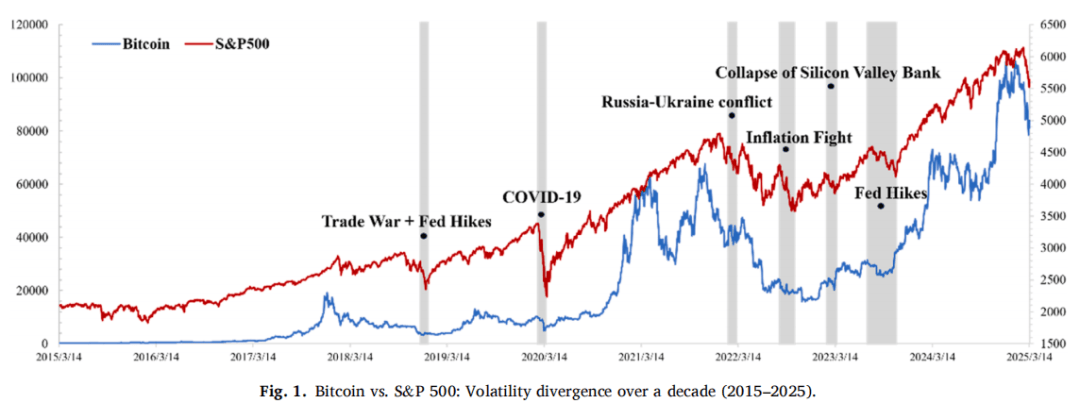
Core Viewpoint - The approval of Bitcoin spot ETFs in 2024 and Trump's proposal for a Bitcoin reserve have transformed Bitcoin from a speculative asset into a mainstream recognized asset class, referred to as "digital gold" by the Federal Reserve Chairman Powell [1][2][4]. Group 1: Bitcoin's Evolution and Market Positioning - The Trump administration is accelerating Bitcoin's transition from a retail-driven speculative tool to an institutionally recognized asset class, altering its hedging characteristics [2][4]. - The study examines Bitcoin's hedging properties compared to gold during different crisis periods, particularly focusing on the evolution of Bitcoin's hedging features in the Trump 2.0 era [5][6]. - Prior to Trump 2.0, Bitcoin and gold exhibited similar hedging characteristics primarily during mid-term crises, but this similarity has diminished in the Trump 2.0 period, with Bitcoin showing increased correlation with the market [6][21]. Group 2: Methodology and Data Analysis - The research utilizes frequency domain decomposition and quantile Granger causality tests to analyze Bitcoin's hedging properties over time, providing new empirical evidence on its behavior under different market conditions [6][12][13]. - Data from March 2015 to May 2025 was collected, focusing on the significant growth and stability of the cryptocurrency market post-2015, ensuring reliability in comparisons with traditional financial assets [12][13]. Group 3: Risk Transmission and Hedging Properties - The results indicate that Bitcoin has the lowest risk transmission levels among various assets, suggesting its potential as a diversification investment [19][20]. - In the Trump 2.0 era, the risk transmission structure has changed significantly, with an overall increase in sensitivity to policy and geopolitical shocks, indicating a shift towards institutional participation in the cryptocurrency market [21][22]. - Bitcoin's hedging properties are context-dependent, showing potential as a hedging asset during specific crises, such as the COVID-19 pandemic and the 2022 Silicon Valley Bank collapse [24][26]. Group 4: Implications for Investors and Policymakers - The findings suggest that Bitcoin is transitioning from a quasi-hedging asset to a high-risk growth asset, indicating that it may no longer be suitable for long-term hedging against traditional risk assets [31][34]. - For investors, it is crucial to recognize the dynamic changes in Bitcoin's hedging attributes and adjust portfolio allocations accordingly, especially in the context of increasing correlation with mainstream assets [34]. - Policymakers should enhance monitoring and regulation of the interconnectedness between cryptocurrencies and traditional financial markets, given the increased risk transmission observed in the Trump 2.0 era [23][34].