
CVR Partners

Search documents
CVR Partners 2024 Schedule K-3 Now Available
Globenewswire· 2025-06-24 12:30
Group 1 - CVR Partners, LP has made the 2024 Schedule K-3s available online for unitholders, which contain items of international tax relevance [1] - The Schedule K-3 is particularly relevant for foreign unitholders and those needing to compute a foreign tax credit [2] - CVR Partners will not mail Schedule K-3s to investors; unitholders can request an electronic copy via a dedicated support line [3] Group 2 - CVR Partners, LP is headquartered in Sugar Land, Texas, and focuses on the production, marketing, and distribution of nitrogen fertilizer products [4] - The company primarily produces urea ammonium nitrate (UAN) and ammonia, which are essential for improving crop yield and quality [4] - CVR Partners operates two nitrogen fertilizer manufacturing facilities, one in Coffeyville, Kansas, and another in East Dubuque, Illinois, with significant production capacities [4]

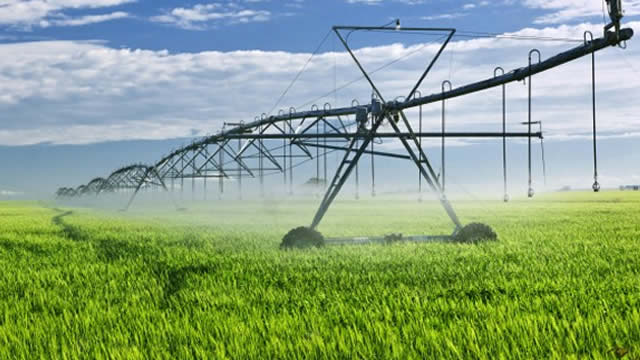
CVR Partners: Fertilizer Prices Will Surge If Hormuz Closure Blocks Global Gas Supplies
Seeking Alpha· 2025-06-23 20:38
Market Overview - The fertilizers market is experiencing a resurgence after being subdued for over two years, with the Fertilizers Price Index rising approximately 13% over the past year [1] - Despite the increase, the index remains significantly below its 2022 highs, indicating that a key inflection point has likely been passed [1] Analyst Background - The analysis is provided by a financial analyst with over a decade of experience in the fertilizers market, who has been writing on Seeking Alpha since 2018 [1] - The analyst has a professional background in private equity, real estate, and economic research, along with academic expertise in financial econometrics, economic forecasting, and global monetary economics [1]

CVR Energy (CVI) Earnings Call Presentation
2025-06-18 07:41
Company Overview - CVR Energy was founded in 2006 and has over 1,550 employees[14] - The company focuses on petroleum refining, nitrogen fertilizer manufacturing, renewable biofuels production, energy transition, and lower carbon emissions[14] - CVR Energy owns the general partner and 37% of the common units of CVR Partners, LP (NYSE: UAN)[17] Petroleum Segment - The petroleum segment has a total nameplate capacity of 206,500 bpd across two refineries[16] - The refineries achieved a 92% crude oil capacity utilization for the twelve months ended December 31, 2023[15, 32] - Approximately 20% of refined product sales were across CVR's refinery racks[36] - Approximately 33% of product sales were across Oneok and NuStar racks[36] - Approximately 47% of product sales were to the bulk market[36] - Total Estimated 2024 Petroleum Segment and Other Capex of $181 million - $202 million[75] - 2024 Turnaround Spending of $60 million - $70 million[76] Renewable Biofuels - Wynnewood renewable diesel unit (RDU) completed in April 2022 with a capacity of 100 million gallons per year[20, 66] - The company plans to retain the flexibility to return the unit to hydrocarbon processing and/or install another reactor on the diesel hydrotreater to regain lost hydrocarbon processing capacity if dictated by the margin environment and otherwise approved[68] Nitrogen Fertilizer Segment - CVR Energy owns 37% of the common units of CVR Partners, LP (NYSE: UAN)[17] - The company estimates planted corn acres to be 91 million in 2024, compared to 946 million in 2023[97] - 2024 Total Capex budget of $44 million - $48 million[113]
CVR Partners Has Become The Bargain To Own In The Fertilizer Industry
Seeking Alpha· 2025-06-06 10:17
Group 1: Company Overview - CVR Partners (NYSE: UAN) is a limited partnership involved in the supply chain of nitrogen fertilizer products, operating within the agricultural chemicals industry with key products like ammonium nitrate and general ammonia [1] Group 2: Investment Focus - The company is characterized as a growth entity, focusing on sectors that are often undervalued or disliked but possess strong fundamentals and good cash flows, particularly in agricultural chemicals [1] - There is a specific interest in sectors such as Oil & Gas and consumer goods, highlighting a strategy that seeks substantial returns from companies that are overlooked for unjustified reasons [1] Group 3: Investment Philosophy - The investment approach emphasizes long-term value investing while also exploring potential deal arbitrage opportunities, indicating a flexible strategy that adapts to market conditions [1] - The company tends to avoid investments in high-tech or certain consumer goods sectors, indicating a preference for more traditional and understandable business models [1]
Icahn Enterprises(IEP) - 2025 Q1 - Earnings Call Presentation
2025-05-07 12:33
Financial Performance - Icahn Enterprises L P reported a net loss attributable to IEP of $422 million for Q1 2025, compared to a net loss of $38 million for Q1 2024[6] - Adjusted EBITDA loss attributable to IEP was $287 million for Q1 2025, a decrease compared to an Adjusted EBITDA of $134 million for Q1 2024[6] - The Investment segment reported a net loss attributable to IEP of $224 million for Q1 2025, compared to a net loss of $23 million in Q1 2024[9, 12] - The Energy segment experienced a net loss attributable to IEP of $86 million in Q1 2025, compared to a net income of $49 million in Q1 2024[9] - The Automotive segment had a net loss of $27 million in Q1 2025, compared to a net loss of $9 million in Q1 2024[9] Segment Highlights - The Investment segment's Funds had a net long notional exposure of 20% as of March 31, 2025, with returns of negative 8 4% for Q1 2025[12] - The Energy segment's consolidated Adjusted EBITDA decreased by $264 million to a loss of $61 million for Q1 2025, compared to $203 million in Q1 2024[15, 18] - Automotive Services revenue decreased by $23 million primarily due to reduced pricing and a shift of consumer behavior toward lower priced offerings[23] - Aftermarket Parts revenue in the Automotive segment decreased by $11 million due to the exit of the Aftermarket Parts business, completed in Q1 2025[22, 23] - Food Packaging Q1 2025 Adjusted EBITDA attributable to IEP decreased by $6 million compared to prior year quarter primarily due to lower price and higher manufacturing inefficiencies[26, 30] Liquidity and Net Asset Value - As of March 31, 2025, the indicative net asset value was approximately $3 billion, a decrease of $336 million compared to December 31, 2024[6] - Total Holding Company liquid assets were $3 781 billion as of March 31, 2025, including $1 318 billion in cash and cash equivalents and $2 463 billion in Investment Funds[32]

CVR Partners: Cyclical Tailwinds Could Produce Double Digit Yield In 2025
Seeking Alpha· 2025-04-30 14:08
Group 1 - The article emphasizes the importance of patience when investing in CVR Partners, L.P. (NYSE: UAN), a variable-distribution fertilizer MLP, suggesting that long-term holding is preferred unless compelling reasons to sell arise [1] - The author has a background in the energy industry and has managed a personal investment portfolio since 1998, aiming to match the S&P 500 returns with lower volatility and higher income [1] - The investment strategy focuses on identifying opportunities without regard to asset class, market cap, sector, or yield, with an emphasis on maximizing total return by purchasing when prices are low relative to intrinsic value [1]
CVR Energy(CVI) - 2025 Q1 - Earnings Call Transcript
2025-04-29 21:59
Financial Data and Key Metrics Changes - For the first quarter of 2025, the company reported a consolidated net loss of $105 million and a loss per share of $1.22, with EBITDA also reflecting a loss of $61 million [5][13] - Adjusted EBITDA for the quarter was $24 million, while adjusted loss per share was $0.58 [13] - The negative mark to market impact on outstanding RFS obligations was $112 million, with a favorable inventory valuation impact of $24 million [13] Business Line Data and Key Metrics Changes - In the Petroleum segment, total throughput for Q1 2025 was approximately 125,000 barrels per day, with a light product yield of 95% [5][6] - Adjusted EBITDA for the Petroleum segment was a loss of $30 million, driven by reduced throughput volumes due to planned and unplanned downtime [13] - The Renewables segment achieved an adjusted EBITDA of $3 million, an improvement from a negative $5 million in the prior year, primarily due to higher throughput volumes and increased RIN prices [11][14] - The Fertilizer segment reported an adjusted EBITDA of $53 million, supported by higher UAN sales volumes and ammonia sales prices [14] Market Data and Key Metrics Changes - Group 3 2-1-1 benchmark cracks averaged $17.65 per barrel in Q1 2025, down from $19.55 per barrel in the same period last year [6] - Average RIN prices were approximately $0.84, an increase of over 25% from the previous year [6] - Days of gasoline supply were reported to be 12% below the five-year average, while diesel supply was 17% below [19] Company Strategy and Development Direction - The company plans to ramp up refinery operations to full rates over the second quarter of 2025, with no additional turnarounds planned until 2027 [6][17] - The company is focusing on reducing debt and restoring balance sheet leverage ratios while looking for ways to improve capture and reduce costs [25] - The company is optimistic about the potential for increased jet fuel production, which is not subject to RVO, thereby reducing annual RIN obligations [21][22] Management's Comments on Operating Environment and Future Outlook - Management noted that refining market conditions began to improve in Q1 2025, driven by a heavy spring maintenance season and refinery closures [18] - The company expressed confidence in recovering strong margins post-turnaround, despite challenges faced during the Coffeyville turnaround [46][47] - Management highlighted the importance of government support for renewable businesses, indicating a cautious approach to further investments in renewables without assurance of stable credits [56] Other Important Information - The company ended Q1 2025 with a consolidated cash balance of $695 million and total liquidity of approximately $894 million [16] - Significant cash uses included $94 million for capital and turnaround spending, and $113 million for working capital, primarily associated with inventory buildup during the turnaround [16] Q&A Session Summary Question: Understanding refining macro and demand resilience - Management indicated that days of supply have shrunk, suggesting a correcting supply-demand balance, with expectations for summer demand to influence gasoline and diesel markets [28] Question: RVO and SRE implications - Management believes decoupling D4 from D6 is important and criticized the government's handling of RFS, emphasizing the need for lower RIN prices to benefit consumers [31][32][33] Question: Renewable diesel EBITDA expectations - Management noted that RIN prices and feedstock costs are favorable, but emphasized the need for clarity on PTC rules before making further investments [36][37] Question: Jet expansion at Coffeyville - Management expressed confidence in securing contracts with major airlines as existing contracts expire, indicating a positive outlook for jet fuel demand [52] Question: Insider activity at the company - Management refrained from commenting on insider activity, suggesting inquiries should be directed to the individuals involved [80]
CVR Partners(UAN) - 2025 Q1 - Quarterly Report
2025-04-29 20:19
Financial Performance - Net sales for the three months ended March 31, 2025, increased to $142,866,000, up 11.9% from $127,665,000 in the same period of 2024[19] - Operating income rose significantly to $34,589,000, compared to $20,059,000 in the prior year, reflecting a 72.3% increase[19] - Net income for the first quarter of 2025 was $27,088,000, more than double the $12,579,000 reported in the same quarter of 2024, representing a 115.5% increase[19] - Basic and diluted earnings per common unit increased to $2.56, up from $1.19 in the prior year, marking a 115.9% rise[19] - Total revenue for the three months ended March 31, 2025, was $142.9 million, an increase of 11.9% compared to $127.7 million for the same period in 2024[45] - For the three months ended March 31, 2025, the company's operating income was $34.6 million, up from $20.1 million in the same period in 2024, and net income increased to $27.1 million from $12.6 million[100] - EBITDA and Adjusted EBITDA for Q1 2025 were $52.9 million, up from $39.5 million in Q1 2024, reflecting a 33.8% increase[114] Assets and Liabilities - Total current assets as of March 31, 2025, were $247,108,000, an increase of 5.8% from $233,541,000 at the end of 2024[17] - Cash and cash equivalents increased to $121,775,000 from $90,857,000, reflecting a 34.1% increase[17] - Total liabilities decreased slightly to $712,293,000 from $725,654,000, a reduction of 1.8%[17] - Long-term debt and finance lease obligation, including current portion, was $570.0 million as of March 31, 2025, slightly up from $568.9 million as of December 31, 2024[42] - As of March 31, 2025, total long-term debt was $548.0 million, consistent with the previous quarter[120] Cash Flow - Cash flows from operating activities for the first quarter of 2025 were $55,391,000, compared to $42,417,000 in the same period of 2024, indicating a 30.6% increase[25] - Total liquidity as of March 31, 2025, was $171.8 million, compared to $129.8 million as of December 31, 2024, indicating a 32.3% increase[119] - Cash flow from operating activities for Q1 2025 was $55.4 million, an increase of $13.0 million or 30.6% compared to $42.4 million in Q1 2024[130] Capital Expenditures - The partnership's capital expenditures for the first quarter of 2025 were $9,871,000, compared to $8,095,000 in the same period of 2024, reflecting a 21.9% increase[25] - Total capital expenditures for Q1 2025 were $5.9 million, with estimated full-year expenditures projected between $50 million and $60 million[123] - Maintenance capital expenditures for Q1 2025 were $3.7 million, with full-year estimates ranging from $40 million to $45 million[123] - Growth capital expenditures for Q1 2025 were $2.2 million, with full-year estimates projected between $10 million and $15 million[123] - The next planned turnaround at the Coffeyville Facility is scheduled for Q4 2025, costing approximately $15 million[124] Inventory and Expenses - Total inventories as of March 31, 2025, were $80.4 million, up from $75.6 million as of December 31, 2024, reflecting a 6.4% increase[36] - The cost of materials and other increased to $27.9 million in Q1 2025 from $25.3 million in Q1 2024, mainly due to higher natural gas prices and freight expenses[106] - Direct operating expenses decreased to $54.5 million in Q1 2025 from $55.7 million in Q1 2024, attributed to lower repairs and maintenance costs[107] Related Party Transactions - Sales to related parties rose to $1,118,000 in Q1 2025, compared to $639,000 in Q1 2024, indicating increased intercompany transactions[58] - Expenses from related parties decreased slightly to $9,916,000 in Q1 2025 from $10,855,000 in Q1 2024, showing a reduction in costs associated with related entities[59] - The Partnership's due to related parties decreased to $4,969,000 as of March 31, 2025, down from $6,213,000 at the end of 2024, reflecting better liquidity management[58] Market and Industry Outlook - The anticipated combination of increasing global population and decreasing arable land per capita supports long-term fundamentals for the U.S. nitrogen fertilizer industry[76] - Regulatory changes, including the EPA's renewable volume obligations, are expected to maintain strong demand for corn, supporting the use of nitrogen-based fertilizers[73] - Geopolitical risks, including the ongoing Russia-Ukraine conflict, may disrupt production and trade in the fertilizer industry, impacting future operations[72] - In spring 2025, farmers are estimated to plant 95.3 million corn acres, a 5.0% increase from 90.7 million acres in 2024, while soybean acres are expected to decrease by 4.1% to 83.5 million acres[79] Operational Improvements - The Partnership aims to achieve industry-leading utilization rates at both manufacturing facilities, focusing on operational improvements and cost reductions[71] - The company plans to execute debottlenecking projects in 2025 to improve reliability and expand production capabilities, including a nitrous oxide abatement unit installation[87] - The partnership is exploring the use of natural gas as an optional feedstock at its Coffeyville Facility, which could enhance ammonia production flexibility[85] - The ammonia utilization rate improved to 101% for the three months ended March 31, 2025, compared to 90% in the same period in 2024, primarily due to planned outages in 2024[96] Compensation and Distributions - Total quarterly distributions for 2025 were declared at $1.75 per common unit, totaling approximately $18.5 million, consistent with the previous quarter's distribution[61] - The Partnership declared a distribution of $2.26 per common unit for Q1 2025, totaling approximately $23.9 million, payable on May 19, 2025[129] - The Compensation Committee adopted the 2025 Performance Based Bonus Plan, which requires achieving at least 50% of an Adjusted EBITDA Threshold for bonus payments[141] - The EBITDA multiplier for the Partnership's performance measures will range from 50% to 150% based on Adjusted EBITDA achieved relative to the threshold[141] - The 2025 UAN Plan will be filed with the Quarterly Report on Form 10-Q for the period ending June 30, 2025[141]
CVR Partners(UAN) - 2025 Q1 - Earnings Call Transcript
2025-04-29 19:48
Financial Data and Key Metrics Changes - For Q1 2025, the company reported net sales of $143 million, net income of $27 million, and EBITDA of $53 million, with a declared distribution of $2.26 per common unit [5][8] - Compared to Q1 2024, EBITDA increased primarily due to higher UAN sales volumes and higher market prices for ammonia, along with lower pet coke feedstock costs [8][6] - Direct operating expenses for Q1 2025 were $54 million, with an increase of approximately $1 million relative to Q1 2024, mainly due to higher natural gas and electricity costs [8][9] Business Line Data and Key Metrics Changes - Combined ammonia production for Q1 2025 was 216,000 gross tons, with 64,000 net tons available for sale, and UAN production was 348,000 tons [5][6] - The company sold approximately 336,000 tons of UAN at an average price of $256 per ton and approximately 60,000 tons of ammonia at an average price of $554 per ton [6][8] - Ammonia prices increased by 5% year-over-year, while UAN prices declined by 4% due to delayed shipments [6][11] Market Data and Key Metrics Changes - The USDA estimates that farmers will plant approximately 95 million acres of corn and 83 million acres of soybeans in spring 2025, with inventory carryout levels for corn at approximately 109% for soybeans [11][12] - Current grain prices are $4.75 per bushel for corn and $10.50 for soybeans, which are below the ten-year averages, supporting strong demand for nitrogen fertilizer [11][12] - The company anticipates that tight nitrogen fertilizer inventories and solid demand will support continued price increases for the spring [6][11] Company Strategy and Development Direction - The company is focused on reliability and performance, with ongoing projects aimed at reducing downtime and improving production rates [18][19] - Plans include installing a nitrous oxide abatement unit at the Coffeyville plant and utilizing natural gas as an alternative feedstock [17][18] - The company expects 2025 to be a period of higher volatility, influenced by geopolitical risks and natural gas market issues in Europe [15][17] Management's Comments on Operating Environment and Future Outlook - Management expressed optimism for a strong planting season due to favorable weather and attractive farmer economics [6][11] - Concerns were raised about the potential impact of tariffs on fertilizer and grains, which could lead to higher domestic prices [12][14] - The company expects to see higher UAN prices in Q2 2025, reflecting current market conditions [32] Other Important Information - The company ended Q1 2025 with total liquidity of $172 million, consisting of $122 million in cash and $50 million available under the ABL facility [9] - Capital spending for 2025 is estimated to be between $50 million and $60 million, with a significant portion funded through cash reserves [9][10] Q&A Session Summary Question: Can you discuss the step down in utilization rates from Q1? - Management explained that the step down is due to the installation of a new control system at the East Dubuque facility, not a performance issue [23][24] Question: What is the status of growth projects and their impact on ammonia production? - Management indicated that several projects aim to reduce downtime and potentially expand nameplate capacity, leading to increased production over the next two to three years [25][26] Question: Can you provide a cost estimate for the natural gas project? - Management mentioned that the cost is expected to be in the low double-digit millions, with ongoing evaluations of alternatives [27][28] Question: Should we expect more reserves for future operating needs? - Management clarified that reserves are being set aside for growth projects and to ensure cash availability for future capital expenditures [29][30] Question: Will UAN pricing improve in Q2? - Management confirmed that UAN prices are expected to reflect higher market prices in Q2, following an increase since December [32] Question: How will the tight inventory impact summer fill pricing? - Management expressed optimism that tight inventory levels will bode well for summer fill pricing for both ammonia and UAN [33][34] Question: What is the perspective on the pricing divergence between urea and ammonia? - Management noted that the pricing gap is influenced by regional market conditions and supply-demand dynamics, with strong demand for urea and UAN [35][36] Question: How will China's reduced corn purchases affect American farmers? - Management indicated that Mexico is a more significant buyer of corn, and while China may reduce soybean purchases, global demand for corn and soybeans remains strong [39][40]
CVR Partners(UAN) - 2025 Q1 - Earnings Call Transcript
2025-04-29 16:02
Financial Data and Key Metrics Changes - For Q1 2025, the company reported net sales of $143 million, net income of $27 million, and EBITDA of $53 million, with a declared distribution of $2.26 per common unit [6][10] - Compared to Q1 2024, EBITDA increased primarily due to higher UAN sales volumes, higher market prices for ammonia, and lower pet coke feedstock costs [10] - Direct operating expenses for Q1 2025 were $54 million, with an increase of approximately $1 million from Q1 2024, mainly due to higher natural gas and electricity costs [10] Business Line Data and Key Metrics Changes - Combined ammonia production for Q1 2025 was 216,000 gross tons, with 64,000 net tons available for sale, and UAN production was 348,000 tons [6][10] - The company sold approximately 336,000 tons of UAN at an average price of $256 per ton and approximately 60,000 tons of ammonia at an average price of $554 per ton [7][10] - Ammonia prices increased by 5% year-over-year, while UAN prices declined by 4% due to delayed shipments [8] Market Data and Key Metrics Changes - The USDA estimates that farmers will plant approximately 95 million acres of corn and 83 million acres of soybeans in spring 2025, with carryout inventory levels below ten-year averages [13][14] - Current grain prices are $4.75 per bushel for corn and $10.50 for soybeans, supporting strong demand for nitrogen fertilizer [13] Company Strategy and Development Direction - The company is focused on reliability and performance, with ongoing projects aimed at reducing downtime and improving production rates [19][20] - Plans include installing a nitrous oxide abatement unit at the Coffeyville plant and utilizing natural gas as an alternative feedstock [19][18] - The company anticipates continued volatility in the nitrogen fertilizer market due to geopolitical risks and natural gas pricing [17][16] Management's Comments on Operating Environment and Future Outlook - Management expressed optimism for a strong planting season due to favorable weather and solid demand for nitrogen fertilizer [8][9] - Concerns about tariffs on fertilizer and grains were noted, with potential impacts on domestic prices and farmer economics [14][15] - The company expects to maintain high utilization rates and capitalize on tight nitrogen fertilizer inventories [13][36] Other Important Information - The company ended Q1 2025 with total liquidity of $172 million, including $122 million in cash [11] - Capital spending for 2025 is estimated to be between $50 million and $60 million, primarily for maintenance [10] Q&A Session Summary Question: Can you discuss the step down in utilization rates from Q1? - The decrease is due to installing a new control system at the East Dubuque facility, not a performance issue [26] Question: What is the status of growth projects and their impact on ammonia production? - Projects aim to reduce downtime and potentially expand nameplate capacity, leading to increased production over the next two to three years [27][28] Question: Can you provide a cost estimate for the natural gas project? - The project is expected to cost in the low double digits, with ongoing evaluations for natural gas and hydrogen integration [29][30] Question: Should we expect more robust UAN pricing in Q2? - Yes, pricing is expected to reflect current market conditions, which have been escalating since December [34] Question: How will the tight inventory impact summer fill pricing? - A relatively empty system at the end of the planting year is expected to bode well for summer fill pricing [35][36] Question: What is the perspective on the pricing divergence between urea and ammonia? - The ammonia price is not reflective of the Tampa price but rather the local Midwest market, with strong demand and supply constraints affecting pricing [37][39] Question: How will China's reduced corn purchases impact American farmers? - The primary concern is with Mexico as a corn buyer, while the overall global need for corn and soybeans remains strong [40][41]