
Hermès

Search documents
当奢侈品主动抛弃中产,它正在失去什么?
虎嗅APP· 2025-11-13 16:00
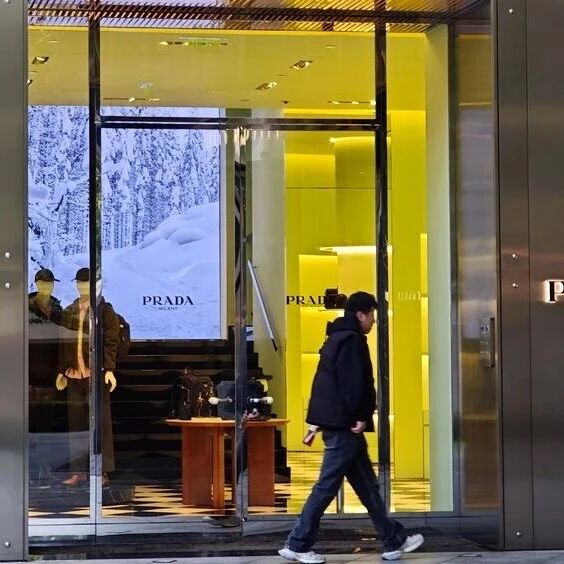
Core Viewpoint - The luxury goods industry is experiencing a transitional phase rather than a full recovery, with growth logic shifting from supply-side scarcity to demand-side structural changes, driven by recovering consumer confidence in China and a resurgence of aspirational consumer groups [4]. Group 1: Market Dynamics - The growth engines for the third quarter remain in the U.S. and Asia, with the U.S. market recovering due to the wealth effect from the stock market, while China's recovery is described as tentative [6][7]. - The disparity among brands is becoming more pronounced, with some brands like Prada indicating a plateau in the Chinese market, while LVMH reports moderate growth in local sales [6][7]. - The Chinese luxury market is showing signs of bottoming out, but the momentum for a strong recovery is still lacking [7]. Group 2: Middle-Class Consumer Dynamics - The past decade's growth in the luxury sector was largely driven by the expansion of the middle class, characterized by aspirational consumption [9]. - Economic pressures such as inflation and asset depreciation have led to a decline in middle-class consumer confidence, pushing them out of the primary consumption segment [9]. - However, there are subtle signals of recovery, as seen in Gucci's sales decline narrowing from 25% to 14%, indicating a potential re-engagement with middle-class consumers [9][10]. Group 3: Creative Resurgence - The luxury industry is undergoing an internal adjustment, recognizing that a return to creativity is essential for sustainable growth [12][13]. - Brands are moving away from short-term profit strategies that compromise cultural value, focusing instead on creative depth and emotional resonance [14]. - The market anticipates 2026 to be a pivotal year for luxury goods, with new product launches and a restructured pricing strategy expected to reignite consumer interest [15].

X @The Wall Street Journal
The Wall Street Journal· 2025-11-12 22:06
How does a brand hook a customer? Ones like Hailey Bieber’s Rhode, Victoria’s Secret, LVMH, Banana Republic, Equinox, Hermès and Nike turn to this agency. https://t.co/6fLStlwNXC ...
Ferrari Stock Looks Expensive -- or Does It?
The Motley Fool· 2025-11-08 18:05
Core Viewpoint - Ferrari's high valuation may seem excessive at first, but its unique business model and financial performance justify the premium, positioning it more like a luxury brand than a traditional automaker [1][2][12]. Financial Metrics - Ferrari's P/E ratio stands at 41, with an EV/EBITDA multiple near 29 and a price-to-sales ratio above 11, which are significantly higher than traditional automakers [2][3]. - The company boasts an adjusted EBITDA margin of 38.3%, an operating margin of 28.3%, and a gross margin close to 50% for 2024, aligning it more with luxury brands like LVMH and Hermès [3][4]. Revenue Streams - Approximately 15% of Ferrari's revenue is derived from sponsorships, licensing, financial services, and after-sales, contributing to predictable cash flow and stability [6][7]. - The return on invested capital (ROIC) is around 24%, which is double that of LVMH, indicating strong financial health [8]. Business Model - Ferrari operates on a scarcity-driven model, producing fewer cars than demand, which maintains multiyear waiting lists and rising resale values, thus preserving pricing power [9]. - The company focuses on reinvesting in innovation and returning capital to shareholders without pursuing scale, allowing it to maintain its luxury status [9][12]. Market Position - Despite being valued at 42 times earnings, Ferrari's unique characteristics and brand durability suggest that it is not a conventional company, and its premium may be justified [10][12]. - The brand's emotional appeal insulates it from economic downturns, keeping demand stable even during weaker macroeconomic conditions [6][12]. Future Outlook - If Ferrari successfully blends scarcity with innovation, its elevated valuation could remain sustainable over the long term [13].

关税影响微乎其微?欧洲企业反借美国市场高歌猛进,明年利润或实现两位数增长
Hua Er Jie Jian Wen· 2025-11-03 07:41
Group 1 - European companies are demonstrating remarkable adaptability to U.S. tariff barriers, with a Goldman Sachs portfolio of affected European stocks outperforming the market by approximately 6% in October, double the gain of the Stoxx Europe 600 index [1] - Major European firms like Hermès, Unilever, and Galderma Group AG attribute their better-than-expected performance and raised guidance to strong demand in the U.S. market [1][2] - The frequency of the term "tariff" in earnings calls is decreasing, indicating that corporate management's concerns about tariffs are diminishing [1] Group 2 - The U.S. market has become a key growth driver for many European companies, with Hermès reporting a 14.1% sales increase in its regional markets, and Unilever crediting strong North American demand for its sales performance [2] - Galderma raised its full-year guidance based on strong U.S. sales, while other companies like Haleon Plc and Stellantis also reported unexpected sales growth in North America [2] Group 3 - Companies are adapting to tariff challenges by cutting costs, adjusting production layouts, and increasing investments in the U.S. [3] - Pharmaceutical companies like Novartis and GSK are negotiating with the U.S. government for price reductions in exchange for future tariff exemptions, with AstraZeneca reaching an agreement in October [3] Group 4 - Despite overall optimism, the impact of tariffs is not uniform, with some companies like Rémy Cointreau and Pernod Ricard warning of weaker-than-expected recovery in specific markets [4] - Market sentiment is shifting towards the view that tariffs are manageable, although some analysts caution against premature conclusions regarding their impact [4][5]


中国消费脉搏 2025 年第三季度_体验式消费引领,高端需求反弹,消费市场格局分化-China Consumer Pulse 3Q25_ Experiential spending leads and Premium demand rebounds, amid mixed consumer landscape
2025-11-03 02:36
Summary of China Consumer Pulse Q3 2025 Industry Overview - **Industry**: Chinese Consumer Market - **Key Sectors Analyzed**: Alcohol, Apparel, Beauty, Travel, Luxury Goods, Autos Core Insights 1. **Mixed Consumer Sentiment**: Chinese consumer sentiment remains mixed, with a notable divergence in spending patterns across sectors [2][29][30] 2. **Experiential Spending Resilience**: Experiential categories such as restaurants (+24% YoY) and travel (+16% YoY) show resilience, indicating a shift towards experiences over goods [2][35] 3. **Premium Demand Recovery**: Onshore luxury spending has improved, with premium auto sales stabilizing and showing positive year-over-year growth in September, ending a 19-month decline [2][30] 4. **Digital Channels Outperform**: Digital retail channels continue to outperform traditional retail, although there are signs of weakness in specific segments like beauty e-commerce, which saw a -3% decline [2][29][30] 5. **GDP and Retail Growth Slowdown**: China's Q3 GDP growth slowed to 4.8% YoY, with retail growth easing to 2.1%, attributed to fading consumer incentives and macroeconomic uncertainties [3][29] 6. **Deflationary Trends**: Deflationary pressures persist across travel and hotel pricing, with moderate price declines observed [12][29] Sector-Specific Insights Premium Beverages - **Weak Demand**: Ultra-premium Baijiu prices continued to slide in Q3 due to weak demand, particularly around the Mid-Autumn Festival [4][30] Apparel and Sportswear - **Mixed Performance**: The apparel market is growing online but remains negative offline, with brands like Adidas showing over 20% growth while Nike faces challenges [5][22] Home Appliances - **Sector Contraction**: The home appliance sector contracted by 7% in Q3, with significant declines in both domestic and overseas exports [7][31] Luxury Goods - **Signs of Improvement**: Early signs of recovery in the luxury market, with brands like Hermès and Louis Vuitton performing well, while Kering struggles [8][9][30] Automotive - **Sales Growth Slowdown**: Auto sales growth slowed to +2.5% YoY in Q3, with EV sales decelerating to +12.5% YoY. However, EV penetration reached 55.1% [10][16][17] Hotels - **RevPAR Declines**: Domestic hotel RevPAR continues to decline, with luxury hotels being the only segment not experiencing persistent declines [10][23] Travel - **Resilient Growth**: The travel industry showed stable positive growth of 16% during the National Day Golden Week, reflecting ongoing domestic travel trends [11][12] Cosmetics - **Moderate Growth**: The cosmetics sector saw a +6.5% YoY increase in gross merchandise value, marking an improvement from previous quarters [13][29] Additional Considerations - **Cautious Consumer Behavior**: The macroeconomic environment is expected to lead to cautious, value-driven consumer behavior, highlighting the uneven recovery across sectors [3][32] - **Investment Implications**: The outlook for various sectors remains cautious, with potential growth in EVs and premium segments, while traditional sectors face challenges [16][17][22][23]





X @The Wall Street Journal
The Wall Street Journal· 2025-10-29 14:23
Company Positioning - Hermès has reached a unique position in the luxury market [1] - The company operates differently from the rest of the luxury industry [1] - Hermès has become one of the most valuable companies globally [1]
X @The Wall Street Journal
The Wall Street Journal· 2025-10-29 03:06
Hermès‘s womenswear designer Nadège Vanhée says "quiet luxury" is “boring.”🎥 Watch Vanhée also discuss how she designs for one of the house’s fastest growing divisions, why she sees Hermès as rebellious and the advice Martin Margiela gave her: https://t.co/tQs3r9HCOp https://t.co/PddSzINbUw ...
X @The Wall Street Journal
The Wall Street Journal· 2025-10-27 18:17
“It was like an eclipse,” Pierre-Alexis Dumas says of Hermès’s value surpassing LVMH’s portfolio of 75 brands. “I could not believe it with my eyes.” https://t.co/9qfO0htGcc ...
国泰海通 · 晨报1028|纺服、轻工
国泰海通证券研究· 2025-10-27 11:33
Group 1: Luxury Goods Industry - The luxury goods sector in Q3 2025 showed better-than-expected performance, particularly in North America, with a slight improvement in consumption in mainland China [3][4] - Major brands like LVMH, Hermès, KERING, and PRADA reported revenue changes of +1.0%, +9.6%, -5.0%, and +8.5% respectively, all exceeding consensus expectations [3] - Miu Miu led the industry with a 29% revenue increase, while Hermès maintained a steady growth trend with a 9.6% increase [3] Group 2: Retail Performance in China - In September, China's retail sales for clothing and textiles grew by 4.7% month-on-month, indicating a faster pace compared to August [5] - The online retail sales of clothing items increased by 2.8% year-on-year from January to September, showing an acceleration in growth [5] - The export of Swiss watches showed a month-on-month improvement, with a 17.8% increase in exports to China, recovering from a significant decline in the previous year [5] Group 3: Adidas and Deckers Financial Guidance - Adidas reported Q3 revenue of €6.63 billion, with a neutral year-on-year growth of 8%, but raised its full-year revenue guidance to a neutral growth of 9%, below the consensus of 10% [4] - Deckers' FY26 Q2 revenue was $1.43 billion, a 9% year-on-year increase, but its full-year guidance of $5.35 billion fell short of the consensus expectation of $5.45 billion [4] - Deckers anticipates that tariff impacts will become more pronounced in the second half of FY26, affecting consumer attitudes [4] Group 4: Tobacco Industry Trends - The new type of oral tobacco products, combining heated non-combustible and vaporized electronic cigarette characteristics, is gaining popularity globally [10] - The market for new oral tobacco products is expected to grow due to lower tax rates and less intense competition compared to vaporized electronic cigarettes [10][11] - PMI's $16 billion acquisition of ZYN's parent company and the FDA's approval of ZYN products are expected to catalyze industry growth [12]

纺织服装业:25Q3奢侈品多超预期且北美领增,9月国内纺服社零环比提速
Haitong Securities International· 2025-10-27 06:06
Investment Rating - The report recommends a focus on strong alpha investment opportunities, particularly in quality leaders with marginal performance improvement and light luxury structural demand [2][35]. Core Insights - The luxury goods industry in Q3 2025 exceeded expectations, with North America leading growth and slight improvement in consumption in Mainland China. Major brands like LVMH, Hermès, KERING, and PRADA reported revenue growth of +1.0%, +9.6%, -5.0%, and +8.5% respectively, all improving from Q2 and exceeding consensus expectations [2][35]. - Adidas and Deckers provided annual revenue guidance that fell short of consensus expectations, with Deckers anticipating more tariff impacts in the second half of the fiscal year [3][35]. - In September, China's textile and apparel retail sales grew by 4.7%, showing acceleration from August, while Swiss watch exports improved, indicating a positive trend in consumption [2][5][35]. Summary by Sections Investment Recommendations - Focus on quality leaders with marginal performance improvement, recommending brands such as Shuixing Home Textile, Luolai Lifestyle, HLA Group, and Ellassay Fashion. Additionally, light luxury brands like Prada and Samsonite are highlighted for structural demand opportunities [2][35]. - On the manufacturing side, the report suggests seeking strong alpha manufacturing leaders like Bros Eastern and Anhui Korrun amidst tariff disturbances [2][35]. Industry Performance - The luxury goods sector showed significant improvement in Q3 2025, with most categories and regions experiencing revenue growth. Notably, Miu Miu's revenue surged by 29%, while Hermès and KERING's brands also reported positive growth [2][35]. - The report notes that while there is a slight improvement in consumption in Mainland China, no fundamental changes in the retail environment have been observed [2][35]. Retail and Export Data - In September, China's retail sales of consumer goods and clothing, shoes, hats, and textiles increased by 3.0% and 4.7% year-on-year, respectively, indicating a positive trend in consumer spending [5][17]. - The report highlights that Swiss watch exports to China grew by 17.8% year-on-year, recovering from a low base [5][35].