Lynas Rare Earths

Search documents
政策宽松、贸易缓和,亚洲股市集体爆发,日本一马当先
Sou Hu Cai Jing· 2025-10-27 07:20
Group 1 - The Asian stock market is experiencing a significant rally, with Japan's Nikkei index reaching a historical high, approaching 50,000 points, reflecting changes in the global economic landscape [2] - The strong performance of the Japanese stock market is closely linked to the new Prime Minister, who plans to continue "Abenomics" with monetary easing and fiscal expansion policies, leading to a weaker yen but a rising stock market [2] - The U.S. Federal Reserve's potential interest rate cuts, indicated by recent comments from Chairman Powell and lower-than-expected inflation data, are expected to enhance global liquidity, benefiting stock markets [4] Group 2 - The easing of trade tensions between major economies is providing a positive boost to global markets, with the MSCI Asia-Pacific (excluding Japan) index reaching a four-and-a-half-year high, indicating investor confidence in the Asia-Pacific economy [4] - Australia is experiencing a surge in resource sector stocks due to a significant $8.5 billion agreement on rare earth and critical mineral supplies, leading to substantial gains for companies like Arafura Rare Earths [6] - Despite the bullish stock market, the precious metals market remains cautious, with gold prices stabilizing at high levels as investors seek safe-haven assets amid global economic uncertainties and geopolitical risks [8] Group 3 - The current market rally is supported by multiple factors, including policy easing, improved corporate earnings expectations, and increased risk appetite, leading analysts to raise their earnings forecasts [10] - Investors are advised to closely monitor the implementation of Japan's new government's economic stimulus plans and the Federal Reserve's interest rate cut trajectory, as these will influence the sustainability of the market rally [10][12] - The overall bullish trend in the Asian stock market is characterized as a "feast" of intertwined forces, highlighting both opportunities and risks for investors who must remain rational and cautious in a volatile market [12]


您的稀土疑问... 已解答Rare Earths_ Q&A_ Your rare earths questions... answered
2025-10-27 00:31
Summary of Key Points from the Conference Call on Rare Earths Industry Overview - **Industry Focus**: Rare Earths (REEs) - **Current Context**: Increased attention on rare earths due to China's export license ban and U.S. policy responses, including the U.S.-Australian Critical Minerals and MP-DoD deals. Major players like Lynas and MP Materials have seen stock increases of up to 375% year-to-date [2][26]. Key Insights 1. **Dependence on Chinese Supply**: - China controls approximately 60-70% of global rare earth material supply, 90% of refining and separation capacity, and 90% of permanent magnet output. - Recent export controls have reduced oxide exports by 20-30% year-over-year [2][3]. 2. **Development Timeline for Western Mines**: - Developing rare earth mines and processing facilities in Europe and the U.S. is a lengthy process, with Lynas' Mount Weld project taking about 8 years from announcement to commissioning. - Iluka's Eneabba project is expected to be operational by 2028, while Ramaco in the Powder River Basin targets first production in mid-late 2027 [3][4]. 3. **Geological Potential of Projects**: - Existing projects like MP Materials' Mountain Pass and Lynas' Mount Weld are noted for their higher grades. - Clay and coal ash deposits may offer more economic development opportunities compared to traditional hard rock deposits [4][5]. 4. **Challenges in Scaling Magnet Production**: - The West lacks expertise in refining and magnet production, which is currently concentrated in China. - Sourcing heavy rare earths is difficult, as most sources are associated with China [7]. 5. **Impact of China's Technology Export Controls**: - China's limitations on sharing intellectual property related to magnet and refining technologies will delay Western production ramp-up but will not completely halt progress [8]. 6. **Significance of the MP-DoD Deal**: - The deal between MP Materials and the U.S. Department of Defense is expected to stabilize U.S. rare earth production and support the scaling of NdFeB magnets from 2,000 to 10,000 tonnes. - However, the U.S. is still several years away from self-sufficiency due to technological gaps with China [9]. 7. **Price Outlook and Market Dynamics**: - The U.S. Government's price guarantee of $110/kg for NdPr equivalent is crucial for maintaining a viable market outside China. - A bifurcated pricing model between the West and China is anticipated, with forecasts of $75-80/kg for the next 2-3 years [10]. 8. **Demand Growth Projections**: - Historical demand for rare earths has grown at 3-5% annually, expected to increase to around 10% in the next 3-5 years, driven by applications in EVs, wind turbines, and technology sectors [11]. 9. **Recycling Potential**: - Currently, recycling meets only 1-2% of rare earth magnet demand outside China, with potential to supply up to 10% by 2030, contingent on technological advancements [12]. Additional Considerations - **Investment Risks**: The mining sector is subject to commodity price volatility, political, financial, and operational risks that could significantly impact performance [13]. - **Market Prices**: As of October 22, 2025, stock prices for key players are Iluka Resources at A$7.57, Lynas Rare Earths at A$18.33, and MP Materials Corp at US$74.11 [26].
Lynas Rare Earths: Q1 Earnings Preview And Trump Trade Deal
Seeking Alpha· 2025-10-25 03:45
Core Insights - The article emphasizes a value investing approach, focusing on an owner's mindset and a long-term investment horizon [1] Group 1 - The analyst does not engage in writing sell articles, as they are viewed as short theses, and does not recommend shorting stocks [1] - The analyst has no current stock, option, or derivative positions in any mentioned companies and does not plan to initiate any within the next 72 hours [2] - The article reflects the analyst's personal opinions and is not influenced by any business relationships with the companies mentioned [2]

What’s Behind Surging Rare Earth Elements ETFs?
Yahoo Finance· 2025-10-22 10:05
Core Insights - The rare earths industry is experiencing significant growth, with stocks of companies like Arafura Rare Earths, Lynas Rare Earths, and MP Materials more than doubling this year, driven by demand from various sectors including AI and renewable energy [1][2] - A recent agreement between the US and Australia to invest $3 billion into the rare earths sector, along with the US government's pledge to ban certain Chinese metal sourcing by 2027, is prompting a shift in investment strategies away from Chinese supply chains [2] - ETFs focused on rare earths have seen substantial inflows, with VanEck's REMX ETF up 85% year-to-date, indicating strong investor interest and performance in this sector [4] Investment Trends - The demand for rare earths is bolstered by their critical role in technology and infrastructure, particularly in AI and data centers, suggesting a sustained growth trajectory for the industry [2] - The diversification of supply chains away from China is becoming increasingly important, as nearly 100% of heavy rare earth elements are currently processed in China, creating vulnerabilities for US military and technological needs [2] - Rare earths are being positioned as a complementary asset class in investment portfolios, similar to gold and silver, providing potential for strong returns when other investments are underperforming [3] ETF Performance - VanEck's Rare Earth and Strategic Metals ETF (REMX) has increased by 85% year-to-date, reflecting the strong performance of the sector [4] - Amplify ETFs' Lithium & Battery Technology ETF (BATT) is up 48% year-to-date, indicating robust demand for battery-related materials [4] - The iShares MSCI Global Metals & Mining Producers ETF (PICK) has risen by 34% year-to-date, showcasing the overall positive trend in the mining and production sectors [4]
特朗普的稀土豪言遭遇现实挑战,美澳同盟难破中国主导地位
Sou Hu Cai Jing· 2025-10-21 15:55
Group 1 - The core point of the article highlights the ambitious plans of the U.S. and Australia to enhance their critical minerals supply chain, particularly in rare earth elements, amidst significant challenges posed by China's dominance in the sector [1][3]. - The U.S. Department of Defense announced a new plan to invest up to $100 million in critical minerals to bolster national security and reduce reliance on Chinese supply chains [3][5]. - The recent agreement between the U.S. and Australia involves an $8.5 billion investment, with both countries committing over $1 billion each to initiate the first projects within six months [3][5]. Group 2 - Currently, the U.S. has only one operational rare earth mine, which poses a significant risk to the domestic supply chain, as highlighted by the U.S. Rare Earth Company [3][5]. - The U.S. relies heavily on China for its rare earth supply, with 87% of the supply chain for over 1,000 U.S. weapon systems dependent on Chinese suppliers [5][7]. - The Pentagon is adopting a dual approach to address the rare earth crisis, including procurement oversight and support for U.S. mining companies [5][7]. Group 3 - The Australian government has initiated a $1.2 billion national mineral reserve plan to stabilize the market, reflecting the ongoing challenges in the critical minerals sector [7]. - The agreement includes provisions for setting minimum price floors for critical minerals, a long-sought measure by Western miners [7]. - Despite the ambitious plans, the U.S. rare earth industry faces challenges related to market conditions and the need for technological advancements to compete effectively with China [7].
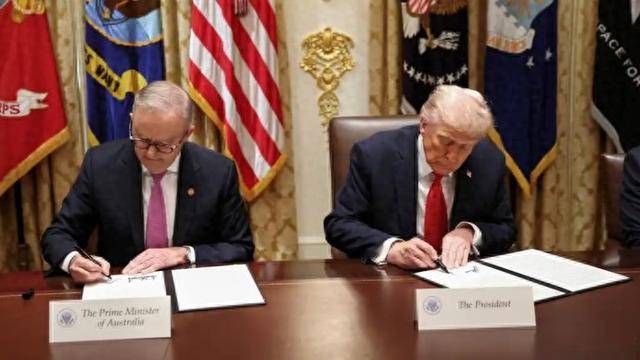
Market Close: XJO back above 9,000pts as the underworld of explorers chops and churns after Trump-Albo meeting
The Market Online· 2025-10-21 04:05
Group 1 - The article discusses the impact of a multibillion-dollar critical mineral deal between Canberra and Washington on small junior explorers in the ASX, particularly in the rare earths and gold sectors [3][4]. - The materials sector is leading the market with a 1.8% increase, while most sectors are performing well except for real estate and consumer staples, which are down by 0.5% [4]. - Latrobe Magnesium is highlighted as a key beneficiary from the recent political meeting, as the U.S. lacks a primary producer for magnesium [4]. Group 2 - Larvotto has seen a rise in its stock price after discovering more gold and antimony at its NSW project, following a takeover offer valued at $1.40 per share [5]. - Alcoa Corporation's stock jumped after being mentioned in the Albanese-Trump meeting, along with other companies involved in various minerals [5]. - Lynas Rare Earths experienced a decline of approximately 7% as it was overlooked in the discussions during the meeting [6].


Shares of Australian rare earth companies surge on $8.5 billion U.S. critical minerals deal
CNBC· 2025-10-21 01:47
Group 1 - A significant minerals deal worth up to $8.5 billion was announced between the U.S. and Australia, leading to a surge in shares of major Australian critical metals and rare earths companies [1][2] - Lynas Rare Earths saw a 4.7% increase, Iluka Resources rose over 9%, and Pilbara Minerals gained approximately 5% in early trading [2] - Smaller rare earth miners experienced substantial gains, with VHM soaring around 30%, Northern Minerals increasing over 16%, and Latrobe Magnesium rising nearly 47% [3] Group 2 - Alcoa, which is developing a gallium recovery project in Western Australia, was identified as a priority project under the new minerals deal, with Washington making an equity investment [3][4] - Alcoa's shares rose nearly 10% on the Australian Securities Exchange [4] - The agreement emphasizes the importance of rare earths and critical metals for high-tech products, including electric vehicles and defense equipment, amid China's tightened export controls [4] Group 3 - Both the U.S. and Australia will contribute $1 billion each over the next six months for immediately available projects, with a total investment of more than $3 billion planned [5] - The Export-Import Bank of the United States will issue letters of interest for over $2.2 billion in financing, potentially unlocking up to $5 billion in total investment [5]
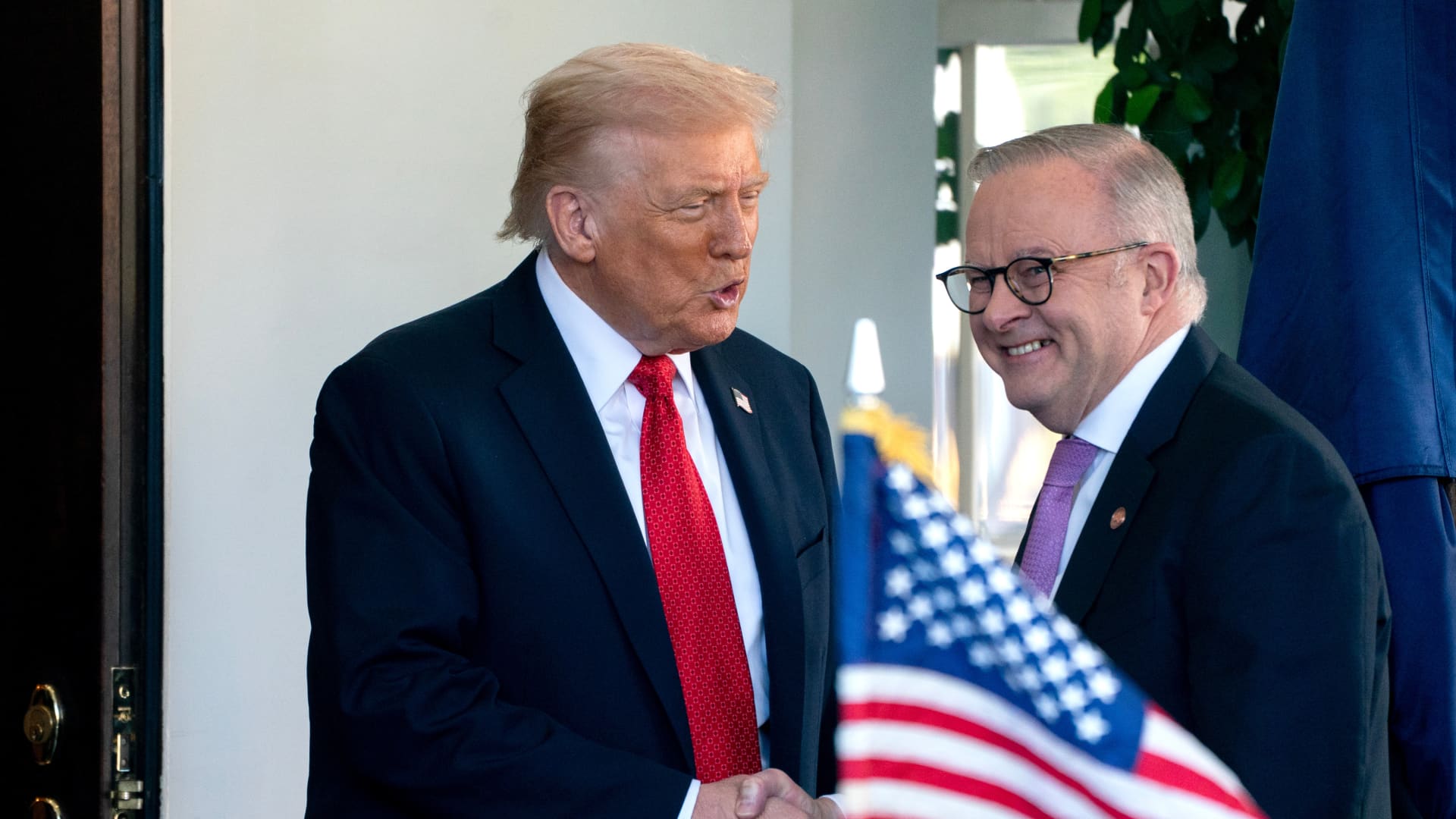
Asia-Pacific markets set to open higher after Wall Street gains; Japan's parliamentary vote in focus
CNBC· 2025-10-20 23:55
Group 1 - Japan's core consumer price index increased by 3.3% in June, surpassing the US figure for the first time in eight years [1] - The Nikkei 225 index in Japan rose over 1% to a record high of 49,739.76, following an all-time high close on the previous Monday [1] - The Topix index also reached a record high, gaining 0.48% [1] Group 2 - Broader Asia-Pacific markets opened higher, influenced by gains in Wall Street, particularly driven by a rally in Apple shares [2] - Investors are anticipating Japan's parliamentary vote, which is expected to support Sanae Takaichi as the next prime minister [2] Group 3 - Australia's ASX/S&P 200 index increased by 0.50%, with significant gains in rare earth companies following a critical minerals agreement between Australia and the US [3] - Lynas Rare Earths shares rose by 3.8%, Iluka Resources increased nearly 6%, and Pilbara Minerals rose by 4.7% [3] - VHM shares surged over 30%, while Northern Minerals saw a nearly 15% increase [3] - South Korea's Kospi index jumped by 1.57%, and the small-cap Kosdaq gained 0.52% [3] Group 4 - Futures for Hong Kong's Hang Seng Index indicated a higher opening, trading at 26,232 compared to the previous close of 25,858.83 [4] - Indian markets were closed for a holiday [4]

U.S.-China trade relations are more optimistic than people think, says AEI's Derek Scissors
CNBC Television· 2025-10-20 23:25
US-China Trade Relations & Rare Earths - The US is trying to reduce its dependence on China for rare earths, while China is trying to jumpstart its economy [1] - The US exports rare earths to China, highlighting that the problem is refining, not reserves [3] - A short-term deal between the US and China could involve delaying Chinese controls on rare earth products and resuming US soybean exports to China, but this requires the US to concede something [7] - China may delay implementation of controls on rare earth products but will continue building up that mechanism and could expand to other supply chains like fine chemicals used in drugs [8] Supply Chain Vulnerabilities & Strategies - The US faces a serious long-term challenge across a broad range of supply chains [8] - Working with allies is crucial for the US to counter supply chain vulnerabilities quickly [9] - Australia can help the US on rare earths, and Japan has technology and experience dealing with Chinese embargoes [10] - The US long-term policy should focus on supply chains rather than trade balances and tariffs [11] China's Long-Term Strategy - China has a long-term strategy to build up its production capacity, especially in advanced technology, to exert coercive pressure on other countries [15][16] - China's goal is to become more important globally, allowing it to exert more pressure on the US and other countries [16]
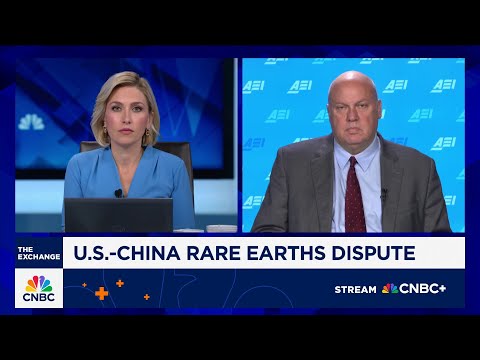
ASX Market Open: ‘Great success’ as Albo meets with Trump, signs historic critical minerals deal | Oct 21
The Market Online· 2025-10-20 21:33
Core Insights - The meeting between Australian Prime Minister Anthony Albanese and former U.S. President Donald Trump focused on critical minerals and reaffirmed the AUKUS partnership, resulting in a new critical minerals deal valued at up to US$8.5 billion [3]. Market Reactions - Following the meeting, the ASX saw a positive shift, climbing +0.5% in futures, while Wall Street indices (Dow, S&P, Nasdaq) experienced gains between +1% and +1.4% [4]. Companies to Watch - Arafura Rare Earths (ASX:ARU) and Lynas Rare Earths (ASX:LYC) are highlighted as key companies to monitor due to their involvement in the Trump-Albo rare earths deal [5]. - Other notable companies in the rare earths sector include Iluka Resources (ASX:ILU), Meeka Metals (ASX:MEK), and Caprice Resources (ASX:CRS) [5]. Additional Developments - Yari Minerals (ASX:YAR) has commenced its first drilling at the Rolleston South Coal Project [6]. - Super Retail (ASX:SUL) appointed Paul Bradshaw as the new managing director for BCF, marking a significant leadership change [6]. Commodity Prices - The Australian dollar is trading at 65.1 U.S. cents, while iron ore prices have slightly decreased by -0.1% to $103.80 per tonne [7]. - Brent crude oil is down -0.7% at $60.93 per barrel, and gold prices have increased to $4,366 per ounce [7].