航发动力

Search documents
航发动力:南方公司拟向公司控股股东转让所持有航发控制不超过2500万股股票
Ge Long Hui· 2025-11-14 08:53
Core Viewpoint - The company has approved a proposal for its subsidiary to transfer shares to its controlling shareholder through a block trade [1] Group 1 - The company held its 11th board meeting on November 14, 2025, where the proposal was reviewed and approved [1] - The subsidiary, China Aviation Power Southern Industry Co., Ltd., plans to transfer up to 25 million shares [1] - The transfer will be conducted via a block trade to the company's controlling shareholder, China Aviation Power [1]

航发动力:子公司拟向控股股东转让不超2500万股航发控制股票
Xin Lang Cai Jing· 2025-11-14 08:46
Core Viewpoint - The company announced that its subsidiary, Southern Company, will transfer up to 25 million shares of Aviation Power to its controlling shareholder, China Aviation Power, through a block trade [1] Group 1: Company Actions - The board of directors approved the transfer of shares at the tenth meeting of the eleventh session on November 14, 2025 [1] - Southern Company currently holds 18.12 million shares of Aviation Power, accounting for 13.78% of the total share capital [1] Group 2: Financial Performance - Aviation Power reported a revenue of 5.481 billion yuan and a net profit of 755 million yuan for the year 2024 [1] - For the first nine months of 2025, the company achieved a revenue of 3.968 billion yuan and a net profit of 405 million yuan [1] Group 3: Transaction Details - The share transfer does not constitute a major asset restructuring [1] - There are risks associated with the transaction, including the possibility of it not being implemented or fully executed due to market price fluctuations [1]

一批重大科创项目捷报频传 为经济发展再添“硬核”底气
Yang Shi Wang· 2025-11-14 03:17
Group 1: Technological Innovations - The 3D printed turbojet engine developed by China Aviation Engine Group successfully completed its first single-engine flight test, marking a significant breakthrough in engineering applications of 3D printed engines. The test lasted 30 minutes, reached an altitude of 6000 meters, and achieved a maximum speed of 0.75 Mach, with all operational parameters normal [3] - The world's first wind-fish integrated floating platform, "Guoneng Sharing," has recently achieved a new round of success. This platform combines offshore power generation and underwater fish farming, with a total height of 24 meters and a weight of 4900 tons. It can produce up to 16 million kilowatt-hours of electricity annually, reducing carbon emissions by approximately 16,000 tons [6] - The world's largest high-altitude wind power generation kite, with an area of 5000 square meters, successfully completed its test in Inner Mongolia, marking significant progress in large-scale land-based high-altitude wind power generation projects [11][13] Group 2: Logistics and Transportation - The Huahu International Airport, located in Hubei Province, has become Asia's largest air cargo hub, with international cargo flights exceeding 10,000 flights in 2025, representing a year-on-year increase of 93.6%. The airport features a highly advanced runway sensing network and an intelligent sorting line capable of processing over 280,000 packages per hour with a sorting accuracy of 99.99% [10] Group 3: Telecommunications - China has completed the first phase of 6G technology testing, establishing over 300 key technology reserves. The 6G promotion group has conducted 57 tests across five major technology directions, with 6G now entering the international standard research phase, expected to launch commercial deployment around 2030 [10]

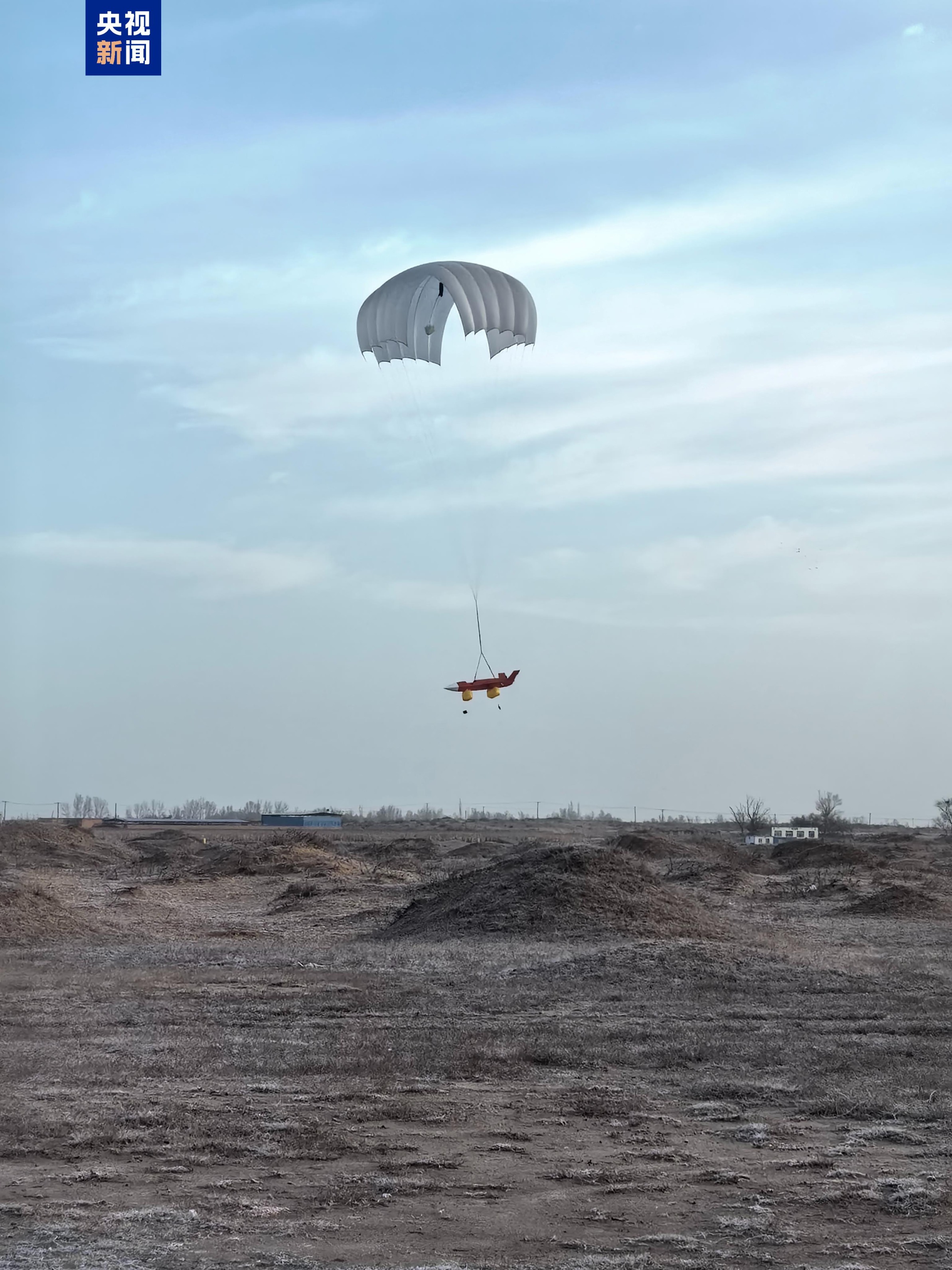
视频丨我国自主研制3D打印涡喷发动机完成首次单发飞行试验
Yang Shi Xin Wen Ke Hu Duan· 2025-11-14 00:39
Core Viewpoint - The successful flight test of China's self-developed 3D-printed simplified turbojet engine marks a significant breakthrough in the engineering application of 3D-printed engines [1][3]. Group 1: Flight Test Details - The flight test lasted 30 minutes, reached an altitude of 6000 meters, and achieved a maximum speed of 0.75 Mach, with all operational parameters functioning normally [3]. - This test was the first single-engine flight test using the 3D-printed turbojet engine, demonstrating its reliability at higher altitudes and in more complex environments [3]. Group 2: Engine Design and Manufacturing - The engine utilizes 3D printing technology, with over 75% of its components manufactured through this method, significantly reducing the number of parts and achieving lightweight, high-performance design goals [5]. - This innovative design lays a solid foundation for future flights at higher altitudes and speeds [5]. Group 3: Application Prospects - The successful test indicates the engine's compatibility with various platforms such as cruise missiles, drones, and target aircraft, showcasing promising application prospects [3].
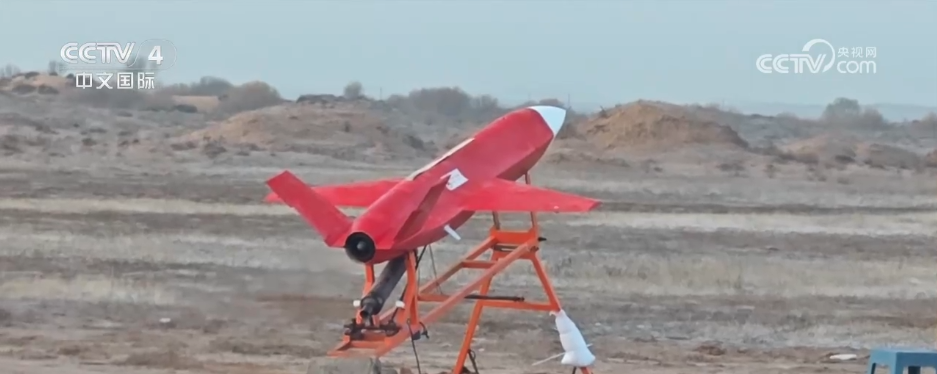
3D打印制造!这款微型涡喷发动机完成首次单发飞行试验
Bei Jing Ri Bao Ke Hu Duan· 2025-11-13 14:02
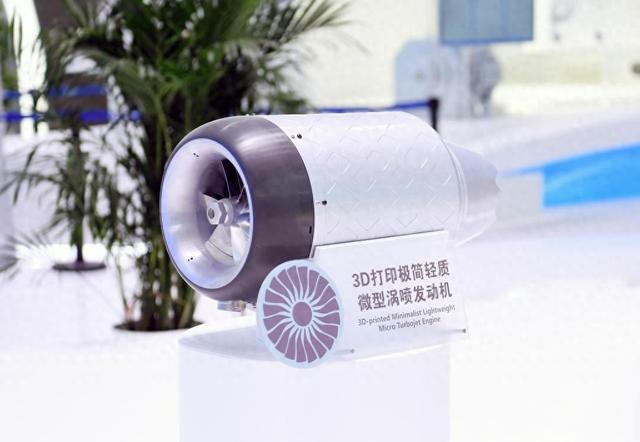
Core Insights - The China Aviation Engine Group has successfully completed the first single-engine flight test of its 3D-printed lightweight micro turbojet engine, achieving a flight duration of 30 minutes at an altitude of 6000 meters and a speed of 0.75 Mach [2] Group 1 - The successful flight test demonstrates the engine's reliability at higher altitudes and in more complex environments, validating its compatibility with aircraft and showcasing promising application prospects [2] - This engine is the first domestically developed 3D-printed lightweight micro turbojet engine with a thrust of 160 kilograms, utilizing multidisciplinary topology optimization and 3D printing technology to achieve lightweight and high-performance design goals [2] - Over three-quarters of the engine's components, including all rotor parts, are manufactured using 3D printing, resulting in reduced part count, lighter weight, and simplified maintenance [2] Group 2 - With ongoing design optimization and deeper application of 3D printing technology in the aviation engine sector, the development cycle for engines is expected to shorten, accelerating China's independent research and manufacturing of aviation power [3]
华中科技大学无锡研究院:“点线面”共振激荡科产融合“向新力”
Zhong Guo Jin Rong Xin Xi Wang· 2025-11-13 12:18
Core Insights - The article highlights the innovative achievements and strategic initiatives of Huazhong University of Science and Technology Wuxi Research Institute in advancing flexible manufacturing systems and high-precision measurement technologies [1][2][4] Group 1: Technological Advancements - The research institute focuses on overcoming key core technologies in digital and intelligent manufacturing, particularly in aerospace and energy sectors, with significant innovations in manufacturing processes [2][5] - The institute has developed nearly 40 proprietary technologies related to turbine manufacturing, addressing industry challenges such as low processing efficiency and quality consistency [2][5] Group 2: Institutional Innovation - Since joining Jiangsu Provincial Industrial Technology Research Institute in 2015, the institute has established a market-oriented framework that balances high-level technology development with efficient results transformation [4][6] - The creation of an innovation alliance involving universities, leading enterprises, and investment institutions has strengthened resource aggregation and innovation capabilities [4][6] Group 3: Collaborative Ecosystem - The institute has successfully incubated over 10 high-tech companies, including three national-level specialized "little giant" enterprises, by implementing a comprehensive results transformation system [6][7] - Collaborative projects with various enterprises have led to the development of advanced technologies and solutions, significantly impacting traditional industries [6][7] Group 4: Regional Innovation Optimization - The institute's efforts in integrating technology and industry aim to enhance urban competitiveness through innovation, focusing on the development of public service platforms and digital transformation tools for SMEs [7][8] - A strong emphasis on talent cultivation and integration with industry needs has resulted in the recruitment of over 320 graduate students and the establishment of a diverse evaluation system for talent [7][8] Group 5: Future Directions - The institute plans to continue focusing on technology research and industrialization in smart manufacturing, new materials, and industrial software, aiming to enhance innovation capabilities and accelerate the transfer of research outcomes [8]
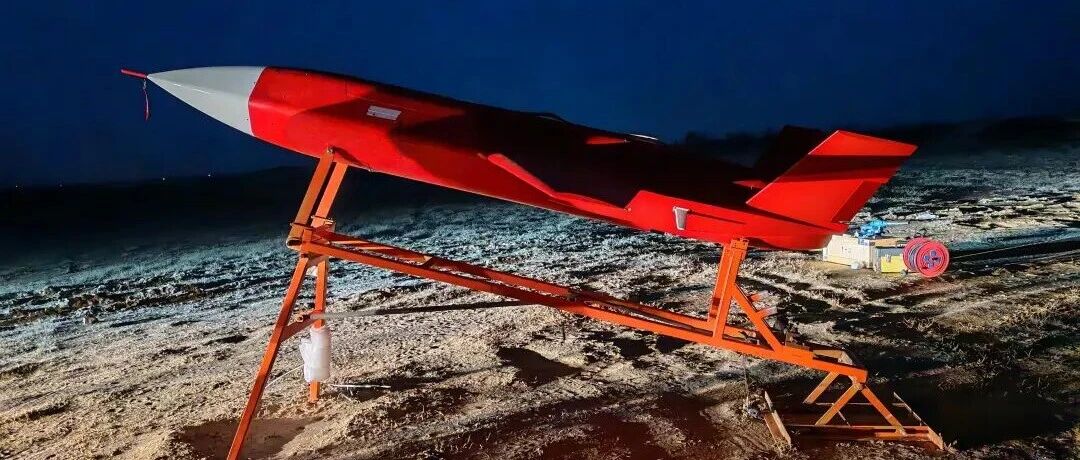
我国自主研制,完成首次试验
中国能源报· 2025-11-13 12:08
Core Viewpoint - The successful flight test of China's self-developed 3D-printed turbojet engine marks a significant breakthrough in the engineering application of 3D-printed engines [1]. Group 1: Flight Test Details - The flight test lasted 30 minutes, reached an altitude of 6000 meters, and achieved a maximum speed of 0.75 Mach, with all operational parameters functioning normally [3]. - This test represents the first single-engine flight test of the self-developed 3D-printed turbojet engine, confirming its operational reliability [3]. Group 2: Engine Development and Applications - The engine's reliability has been further validated for higher altitudes and more complex environments, demonstrating its compatibility with various platforms such as cruise missiles, drones, and target aircraft [4]. - Over 75% of the engine's components are manufactured using 3D printing technology, significantly reducing the number of parts and achieving lightweight, high-performance design goals [6].
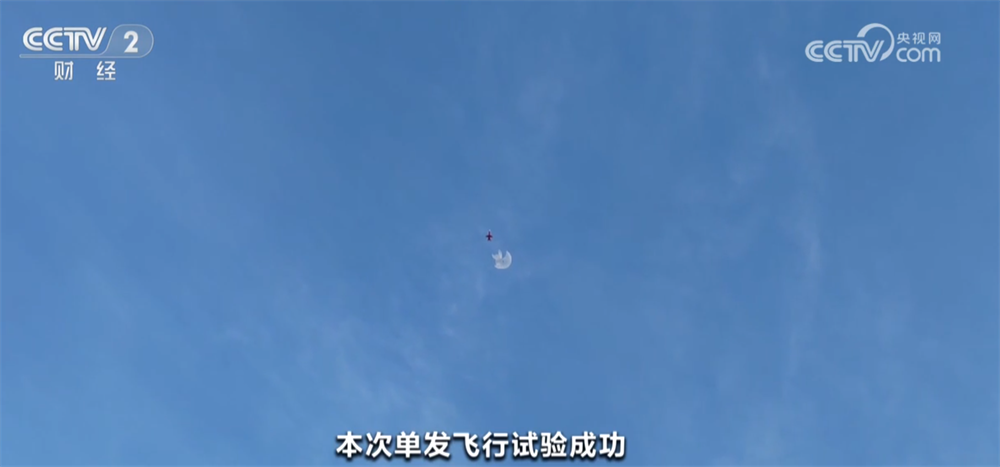
想不到吧!3D打印涡喷发动机完成首次单发飞行试验 应用前景广阔
Yang Shi Wang· 2025-11-13 08:05
Core Viewpoint - The successful completion of the first single-engine flight test of the 3D-printed simplified turbojet engine by China Aviation Engine Group marks a significant breakthrough in the engineering application of 3D-printed engines [1][3]. Group 1: Flight Test Details - The flight test lasted 30 minutes, reached an altitude of 6000 meters, and achieved a maximum speed of 0.75 Mach, with all operational parameters functioning normally [1]. - This test demonstrates the engine's reliability at higher altitudes and in more complex environments, validating its compatibility with various platforms such as cruise missiles, drones, and target aircraft [3]. Group 2: Engine Manufacturing and Design - The engine utilizes 3D printing technology, with over 75% of its components manufactured using this method, significantly reducing the number of parts and achieving lightweight, high-performance design goals [5]. - This design lays a solid foundation for future flights at higher altitudes and speeds [5]. Group 3: Future Plans - The company plans to focus on two main areas: conducting more challenging flight tests to verify adaptability in extreme environments and expanding the range of flight platforms [7]. - Additionally, there is an emphasis on optimizing mass production processes to transition from technical success to product success [7].
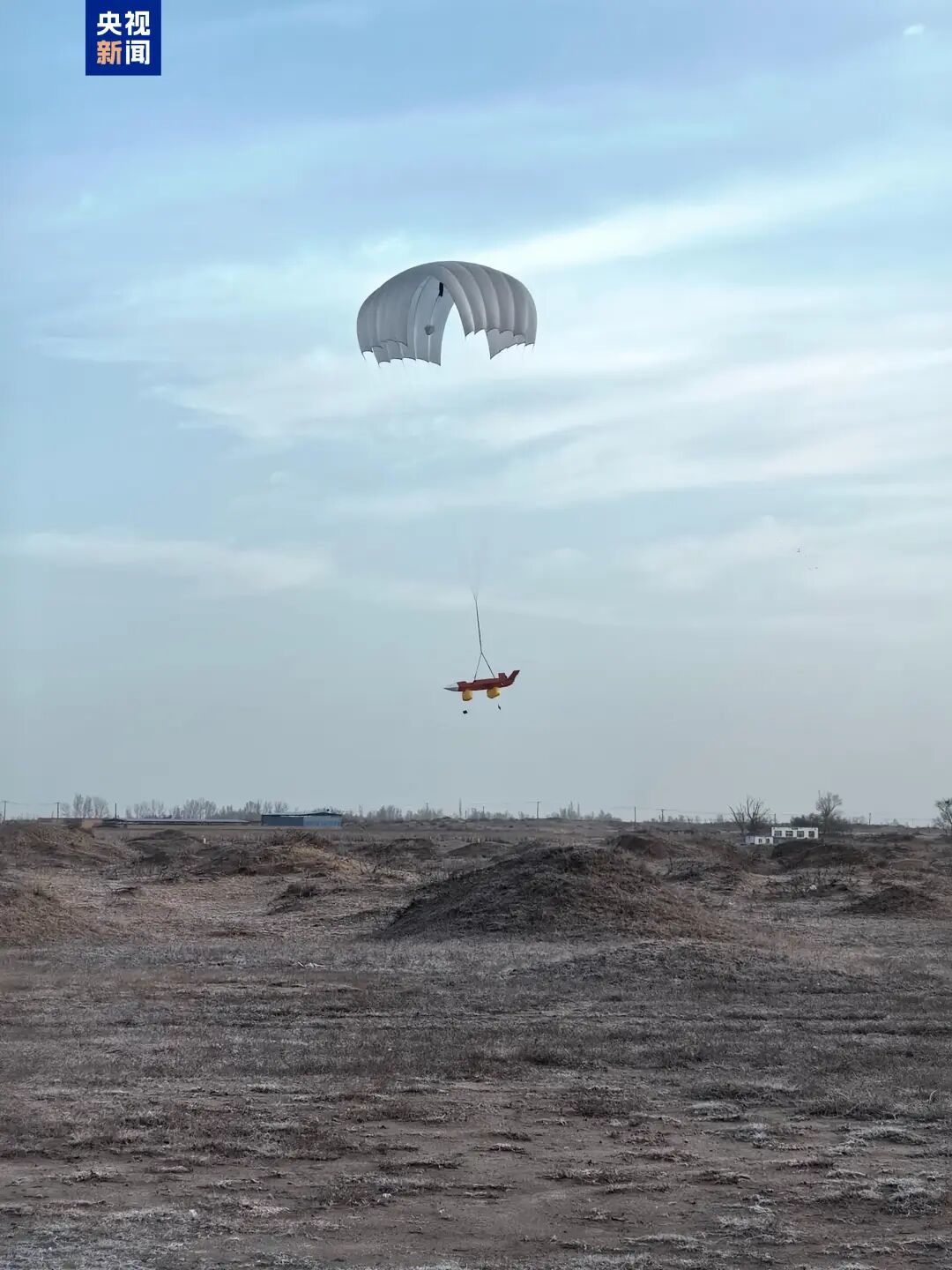
我国3D打印涡喷发动机,单发首飞成功!
Huan Qiu Wang· 2025-11-13 07:39
Core Viewpoint - The successful flight test of the 3D-printed simplified turbojet engine developed by China Aviation Engine Group marks a significant breakthrough in the engineering application of 3D-printed engines [1][3]. Group 1: Flight Test Details - The flight test lasted 30 minutes, reached an altitude of 6000 meters, and achieved a maximum speed of 0.75 Mach, with all operational parameters functioning normally [3]. - This test was the first single-engine flight test of the domestically developed 3D-printed turbojet engine, demonstrating its reliability at higher altitudes and in more complex environments [3]. Group 2: Engine Design and Manufacturing - The engine utilizes 3D printing technology, with over 75% of its components manufactured using this method, significantly reducing the number of parts and achieving lightweight, high-performance design goals [5]. - This design lays a solid foundation for future flights at higher altitudes and speeds [5]. Group 3: Application Prospects - The successful test indicates that the engine can provide new power solutions for platforms such as cruise missiles, drones, and target aircraft, showcasing promising application prospects [3].
我国自主研制3D打印涡喷发动机完成首次单发飞行试验
Yang Shi Xin Wen· 2025-11-13 06:05
Core Points - The successful flight test of the 3D-printed simplified turbojet engine marks a significant breakthrough in the engineering application of 3D-printed engines [1][4] - The flight lasted 30 minutes, reached an altitude of 6000 meters, and achieved a maximum speed of 0.75 Mach, demonstrating the engine's reliability in complex environments [4] Summary by Categories Flight Test Details - The flight test lasted for 30 minutes and reached an altitude of 6000 meters with a maximum speed of 0.75 Mach [4] - The engine operated under full conditions with no abnormal parameters reported, successfully completing the first single-engine flight test [4] Engine Technology and Design - The engine is primarily manufactured using 3D printing technology, with over 75% of its components produced through this method, significantly reducing the number of parts [4] - This design approach has achieved lightweight and high-performance goals, laying a solid foundation for future flights at higher altitudes and speeds [4] Application and Future Prospects - The successful test indicates improved reliability of the engine in higher altitudes and complex environments, validating its compatibility with various platforms such as cruise missiles, drones, and target aircraft [4] - The engine presents promising application prospects as a new power solution for these platforms [4]