Merck

Search documents
Exelixis (NasdaqGS:EXEL) 2026 Conference Transcript
2026-03-10 15:42
Summary of Conference Call Company and Industry - **Company**: Exelixis - **Industry**: Oncology, specifically focusing on renal cell carcinoma (RCC) and other cancer treatments Key Points and Arguments ASCO GU Conference Insights - Discussion centered around the results from the LITESPARK-011 trial for belzutifan and lenvatinib in second-line RCC, which showed a progression-free survival (PFS) benefit but lacked a statistically significant overall survival (OS) benefit at the second interim analysis [3][6] - The conversation among clinicians is shifting towards whether to combine therapies or sequence them, with LITESPARK-011 data aligning with this discussion [6][8] Treatment Dynamics - The overall PFS benefit from TKI monotherapy followed by belzutifan monotherapy is comparable to the data seen in previous studies, indicating a sequential treatment approach [7] - Incremental use of Cabometyx-nivolumab in the front line is anticipated as patients who receive lenvatinib and belzutifan in the second line are unlikely to receive lenvatinib first line [8] Quality of Life and Toxicity - Concerns were raised regarding the adverse events associated with the combination therapies, particularly hypoxia and cardiac dysfunction, which could complicate patient management [14][15] - The sequential treatment approach offers a "TKI break" for patients who have been on TKI therapies for extended periods, which is viewed positively by both patients and clinicians [15][17] Collaboration with Merck - The LITESPARK-033 trial is expected to define the standard of care for patients who have received prior adjuvant pembrolizumab, with an emphasis on understanding the treatment landscape in 2030 and beyond [20][21] - The collaboration aims to explore the potential of zanzalintinib as a next-generation TKI in combination with belzutifan [20][29] Non-Clear Cell RCC - The STELLAR-304 trial aims to establish a new standard of care for non-clear cell RCC, which constitutes 15%-20% of RCC cases, by providing robust evidence through a large randomized study [36][37] - The goal is to demonstrate a significant benefit across response rates, PFS, and ideally OS, compared to existing treatments [41] CRC and STELLAR-303 Trial - The STELLAR-303 trial for zanzalintinib and Tecentriq has shown a survival advantage over current standard care, which is expected to provide patients with access to checkpoint inhibitors [53][54] - The trial results indicate a robust response across various patient demographics, including those with liver metastases, which historically have shown poor prognosis [56][60] Future Guidance - The company anticipates a 10%-12% growth year-over-year by 2026, driven by continued momentum in the RCC base business and growth in the MET business [73] Other Important Insights - The competitive landscape in oncology is dynamic, with multiple trials ongoing that could influence treatment paradigms [26] - The differences in patient populations between early-phase and later-phase trials can significantly impact outcomes, highlighting the need for robust data [27][28] - The pharmacokinetic profile of zanzalintinib, with a shorter half-life compared to Cabometyx, is expected to enhance its usability in clinical practice [49]

Moderna (NasdaqGS:MRNA) FY Conference Transcript
2026-03-10 14:32
Summary of Moderna FY Conference Call (March 10, 2026) Company Overview - **Company**: Moderna (NasdaqGS:MRNA) - **Fiscal Year**: 2025 - **Key Highlights**: Strong execution across revenue and cost management, significant progress in product pipeline Financial Performance - **Revenue**: $1.9 billion for FY 2025, at the high end of guidance range [2] - **Cost Reduction**: Achieved over $2 billion in cost savings, exceeding the $1 billion target set for 2025 [3] - **Cash Balance**: Ended 2025 with a cash balance of $8.1 billion, including $600 million from a credit facility [3] Product Pipeline Developments - **COVID-19 Vaccines**: - Spikevax approved for pediatric use (ages 6 months to 5 years) [4] - Positive data from Phase 3 flu vaccine study, application filed in the U.S. and other territories [4] - **Cancer Pipeline**: - Intismeran in Phase 3 for adjuvant melanoma, fully enrolled renal cell carcinoma study [4] - **Rare Diseases**: Fully enrolled study in PA, expecting readout in 2026 [42] Revenue Growth Projections - **2026 Guidance**: Up to 10% revenue growth expected, driven by: - Continued penetration of Spikevax in the U.S. (24% market share) [5] - Strategic partnerships with the U.K., Canada, and Australia, expected to generate $1 billion in international revenue [11] - **U.S. Sales Decline**: Anticipated decline in U.S. sales from $1.2 billion to $1 billion (20% decline) [11] Combination Vaccine Opportunities - **Flu-COVID Combination**: - Positive CHMP opinion received, expected approval in Europe later in 2026, contributing to revenue in 2027 [12] - Anticipated strong demand from single-payer systems internationally due to cost-effectiveness [15] - **U.S. Market**: Ongoing discussions with the FDA regarding the combination vaccine filing [13] Oncology Market Potential - **Adjuvant Melanoma**: - Multibillion-dollar market opportunity, with a 50/50 partnership with Merck [22] - Positive Phase 2 data with a hazard ratio of 0.51, aiming for similar or better results in Phase 3 [20] - **Future Indications**: Potential synergism with Keytruda, ongoing studies in various cancer types [24] Operating Expenses and Break-even Analysis - **R&D Spending**: Anticipated decrease in cash costs to $3.5 billion-$3.7 billion by 2027, with a need for revenue in that range to break even [36] - **Growth Drivers**: Expected contributions from European market openings and new partnerships in Latin America and Asia-Pacific [37] Rare Disease Program - **Partnership with Recordati**: Expected milestone payments of $160 million and tiered royalties based on sales for the PA program [42] Conclusion - **Outlook**: Exciting year ahead with multiple product approvals and significant growth opportunities in both existing and new markets [43]

Industry Leaders Join Zapata’s Growth Advisory Board, Validating Its Hardware-Agnostic, Application-Driven Approach
Globenewswire· 2026-03-10 12:00
Core Insights - Zapata Quantum has appointed three industry veterans to its Growth Advisory Board to enhance its capabilities in key verticals and drive value creation [3][4]. Group 1: Leadership and Advisory Board - The newly appointed members of the Growth Advisory Board are Steve Suarez, Steven Lau, and M. Jeff Brittain, who bring extensive experience from various sectors including pharmaceuticals, finance, and supply chain [4][7]. - Steve Suarez is recognized for his expertise in enterprise readiness frameworks and customer roadmaps, which are crucial for systematic adoption of quantum technologies [7]. - Steven Lau has a background in scalable business models and capital allocation, focusing on transitioning quantum software from research to sustainable revenue streams [7]. - M. Jeff Brittain has significant experience in navigating complex enterprise environments, particularly in pharmaceutical development and supply chain management [7]. Group 2: Company Positioning and Strategy - Zapata Quantum is a hardware-agnostic quantum software company, uniquely positioned to work with enterprises to identify and develop quantum applications [5][6]. - The company has a portfolio of over 60 granted and pending patents, showcasing its commitment to advancing quantum application development across various sectors [9]. - Zapata aims to bridge the gap between quantum breakthroughs and real-world enterprise impact, emphasizing the importance of operational know-how alongside scientific advancements [9]. Group 3: Market and Customer Engagement - Zapata has established a strong customer base, collaborating with notable organizations such as BP, BASF, DARPA, BMW, and BBVA to develop foundational quantum applications [2]. - The company is focused on ensuring enterprises do not fall behind in quantum technology adoption, similar to past trends seen in AI [7]. - The Growth Advisory Board will support the development of vertical-specific applications, enhancing enterprise adoption of quantum technologies [8].


Arcus Biosciences (NYSE:RCUS) 2026 Conference Transcript
2026-03-09 16:22
Summary of Arcus Therapeutics Conference Call Company and Industry Overview - **Company**: Arcus Therapeutics - **Industry**: Oncology, specifically focusing on HIF-2 inhibitors for cancer treatment Key Points and Arguments Casdatifan vs. Belzutifan - **Differentiation**: Casdatifan is positioned as a best-in-class HIF-2 inhibitor compared to Merck's belzutifan, primarily due to its pharmacokinetic and pharmacodynamic (PK/PD) profile, which allows for more effective targeting of the cancer [2][6] - **Clinical Efficacy**: In late-line settings, casdatifan shows a primary progression rate of approximately 18% compared to belzutifan's nearly 35% [3] - **Response Rates**: The confirmed response rate for casdatifan is about 35% across 120 patients, with the 100 mg cohort showing a 45% response rate, significantly higher than belzutifan's over 20% [4] - **Progression-Free Survival (PFS)**: Median PFS for casdatifan is reported at 12.2 months, with the 100 mg cohort exceeding 15 months, while belzutifan shows around 5.6 months [4] Biomarker Data - **Erythropoietin Suppression**: Casdatifan demonstrates deeper and more durable suppression of erythropoietin production compared to belzutifan, which loses its pharmacodynamic effect after about 9 weeks [5] - **Correlation with Efficacy**: There is a clear correlation between the ability to suppress erythropoietin and clinical outcomes, reinforcing the efficacy of casdatifan [5] Treatment Durability - **Prolonged Disease Control**: Patients on casdatifan can experience prolonged disease control, with some remaining stable for over two years, indicating a non-toxic mechanism that allows the immune system to strengthen [10][11] - **Resistance Mechanism**: There is no known mechanism for resistance to HIF-2 inhibitors, which is a significant advantage over other cancer therapies [12] Clinical Development and Future Studies - **ARC-20 Study**: The study has added multiple cohorts to evaluate different dosing regimens and combinations, with a steady stream of data expected over the next two to three years [25] - **Upcoming Data**: Key datasets expected include the combination of casdatifan with cabozantinib and anti-PD-1 therapies, with initial results anticipated between July and October [26][30] Market Position and Strategy - **TKI Partner Selection**: Cabozantinib was chosen as the TKI partner due to its familiarity and better tolerability among clinicians compared to lenvatinib, which has more complex dosing [32][34] - **Regulatory Strategy**: The primary endpoint for the PEAK-1 study is PFS, which aligns with regulatory standards for second-line RCC treatments, and is expected to maximize the probability of success [43][44] Competitive Landscape - **Market Dynamics**: The use of HIF-2 inhibitors is expected to expand across multiple lines of therapy, potentially leading to a larger market opportunity compared to other tumor types where treatment options are limited [69] Additional Important Insights - **Anemia Management**: Anemia rates for casdatifan are comparable to belzutifan, with ongoing improvements in managing these side effects expected as clinical experience grows [21][23] - **Subsequent Therapy Considerations**: The geographic footprint for belzutifan usage is limited outside the U.S., which may not significantly impact the subsequent therapy landscape for casdatifan [53] This summary encapsulates the critical insights from the conference call regarding Arcus Therapeutics' strategic positioning, clinical data, and future outlook in the oncology market.

Will Weak Gardasil Sales Continue to Weigh on MRK's Top Line in 2026?
ZACKS· 2026-03-09 14:35
Core Insights - Merck (MRK) is experiencing significant challenges with its second-largest product, Gardasil, which saw a 39% year-over-year sales decline to $5.2 billion in 2025 due to sluggish demand, particularly in China and Japan [1][9] Group 1: Gardasil Sales Performance - Gardasil's sales growth was steady through 2022 but began to decline in 2024, with a notable drop in 2025 [1] - The decline in sales is attributed to weak performance in China, where demand trends have been sluggish amid an economic slowdown, leading to high inventory levels at Merck's partner Zhifei [2] - Merck has temporarily halted shipments of Gardasil in China to allow for inventory reduction, and lower demand is also expected to persist in Japan [2][3] Group 2: Other Vaccines and Competition - Besides Gardasil, Merck markets several other vaccines, including ProQuad, M-M-R II, Varivax, Vaxneuvance, RotaTeq, and Pneumovax 23, with many of these also experiencing sales declines in 2025 [4][9] - In contrast, sales of the new vaccine Capvaxive are rising due to increased demand [5] - Merck's new RSV antibody, Enflonsia, recorded $21 million in sales in Q4 2025, down from $79 million in Q3 2025, affected by low immunization rates and high inventory levels [6] Group 3: Competitive Landscape - Enflonsia faces competition from AstraZeneca/Sanofi's RSV antibody Beyfortus, which achieved €1.8 billion in sales in 2025, reflecting a 9.5% year-over-year increase [7] - Other RSV vaccines have also been approved in the U.S., including Pfizer's Abrysvo, GSK's Arexvy, and Moderna's mRESVIA [7] Group 4: Financial Performance and Valuation - Year-to-date, Merck's shares have increased by 10%, outperforming the industry average of 0.8% [8] - Merck's shares are trading at a premium with a price/earnings ratio of 18.40, higher than the industry average of 17.89 and its 5-year mean of 12.57 [10] - The Zacks Consensus Estimate for 2026 earnings per share has decreased from $5.99 to $5.47, and for 2027 from $10.01 to $9.89 over the past 30 days [11]

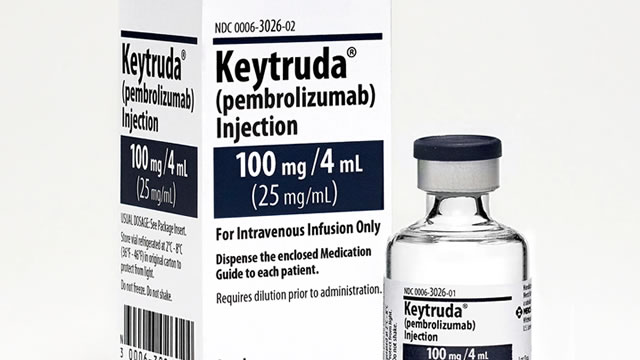
Tempus AI, Inc. (TEM) Announces Strategic Deal with Merck to Fast-Track AI-Driven Precision Medicine
Yahoo Finance· 2026-03-07 12:11
Group 1 - Tempus AI, Inc. (NASDAQ:TEM) is recognized as one of the top 10 stock picks for 2026 by ARK Invest [1] - The company announced a strategic partnership with Merck to accelerate the development of AI-driven precision medicine, particularly in oncology [1][3] - Merck will utilize Tempus's de-identified data and technologies to enhance the discovery and development of candidate therapies [2][3] Group 2 - Following the Q4 earnings call, JPMorgan analyst Casey Woodring reduced the stock's price target from $80 to $60, maintaining a Neutral rating due to concerns over data visibility and outlook revisions [2][3] - As of March 4, the stock is rated as a Moderate Buy with an average upside potential of 52.5% [4] - The healthcare technology company focuses on using artificial intelligence to advance precision medicine [4]

ARK Invest Stock Portfolio: Top 10 Stock Picks for 2026
Insider Monkey· 2026-03-07 02:47
Core Insights - ARK Invest's stock portfolio for 2026 highlights a focus on disruptive innovation, with a total portfolio value of $15.07 billion as of Q4 2025, down from $16.80 billion in the previous quarter [2][3] Group 1: Portfolio Overview - The portfolio consists of 196 positions, reflecting a strategic shift towards increasing stakes in companies like Coinbase, CRISPR Therapeutics, and Tempus AI, while reducing positions in major names like Tesla and Shopify [2][3] - Cathie Wood, CEO and CIO of ARK Invest, anticipates strong deflationary pressures in 2026, particularly in energy, housing, and unit labor prices [3] Group 2: Top Stock Picks - **Tempus AI, Inc. (NASDAQ:TEM)**: Stake value of $446.3 million, with a strategic partnership with Merck to enhance AI-driven precision medicine [8][9] - **Teradyne, Inc. (NASDAQ:TER)**: Stake value of $456.1 million, with a recent revenue growth of 44% year-over-year to $1.08 billion in Q4 2025 [11][12] - **Robinhood Markets, Inc. (NASDAQ:HOOD)**: Stake value of $543.6 million, reporting a record quarterly revenue of $1.28 billion for Q4, despite missing analyst estimates [14][17] - **Advanced Micro Devices, Inc. (NASDAQ:AMD)**: Stake value of $551.4 million, with a recent price target increase following a strategic partnership with Meta [19][20] - **CRISPR Therapeutics AG (NASDAQ:CRSP)**: Stake value of $551.8 million, with strong momentum in siRNA therapies and a recent revenue of $54 million for Q4 [23][26]





Merck (MRK) Up 1.7% Since Last Earnings Report: Can It Continue?
ZACKS· 2026-03-05 17:35
Core Insights - Merck's recent earnings report showed a positive trend with adjusted EPS of $2.04, beating estimates and reflecting a 19% year-over-year increase [2][21] - The company anticipates revenue growth in 2026, despite challenges from generic competition and lower sales of certain products [25][26] Financial Performance - Q4 2025 adjusted EPS was $2.04, surpassing the Zacks Consensus Estimate of $2.03, with a 19% increase year-over-year [2] - Reported earnings, including various costs, were $1.19 per share, down 20% year-over-year [3] - Q4 revenues rose 5% year-over-year to $16.40 billion, exceeding the Zacks Consensus Estimate of $16.19 billion [5][21] Segment Performance - The Pharmaceutical segment generated $14.84 billion in revenues, up 6% year-over-year, beating estimates [6] - Keytruda sales reached $8.37 billion, a 5% increase, benefiting from strong demand but impacted by wholesaler purchase timing [7] - Vaccines segment saw a 35% decline in HPV vaccine sales to $1.03 billion due to lower demand in key markets [11] New Product Contributions - New products like Winrevair and Capvaxive contributed positively, with Winrevair sales up 133% year-over-year [17] - Animal Health segment revenues increased 8% to $1.51 billion, driven by livestock product demand [19] Full-Year Results - Full-year 2025 sales rose 1% to $65.01 billion, surpassing estimates [21] - Adjusted earnings for 2025 were $8.98 per share, a 17% increase year-over-year [22] 2026 Guidance - Merck expects 2026 revenues between $65.5 billion and $67.0 billion, indicating 1% to 3% growth [25] - Adjusted EPS is projected to be between $5.00 and $5.15, reflecting a significant decline from 2025 due to higher charges related to acquisitions [27][28] Market Position - Merck's stock has a Zacks Rank 4 (Sell), indicating expectations of below-average returns in the near term [34] - The company is positioned within the Zacks Large Cap Pharmaceuticals industry, with competitors like Roche Holding showing stable performance [35]
TEM's Diagnostics Arm Expanding Rapidly: What's Driving the Growth?
ZACKS· 2026-03-05 14:46
Core Insights - The Diagnostics segment of Tempus AI (TEM) saw significant growth in 2025, primarily due to the increasing adoption of precision oncology testing and the integration of artificial intelligence with genomic diagnostics [1][10] - Minimal Residual Disease (MRD) testing emerged as one of the fastest-growing areas within Diagnostics, highlighting the rapid adoption of advanced monitoring technologies in cancer care [1][10] - Tempus' extensive clinical network, which includes over 5,500 hospitals and more than 8,500 regularly ordering oncologists, supports the strong performance of the diagnostics segment [1] Diagnostics Growth Factors - Tempus' multi-assay genomic testing platform, which includes advanced oncology tests such as xT, xR, xF, xH, and xE, has significantly contributed to the growth of the diagnostics segment [2] - The integration of artificial intelligence and multimodal data analysis into Tempus' diagnostic platform has been a major factor in advancing the diagnostics segment [2] - Innovative tools like Paige Predict, which analyzes digitized pathology slides to predict genetic mutations, and the Immune Profile Score, which refines traditional biomarkers, further enhance Tempus' diagnostic capabilities [3] Strategic Acquisitions - The acquisition of Ambry Genetics has strengthened Tempus' diagnostics segment by expanding its capabilities in hereditary cancer testing and broadening its overall sequencing portfolio [4] Industry Updates - Illumina (ILMN) is focusing on its core strengths in genomics, with the clinical market being a primary growth driver as sequencing adoption expands globally [5] - Illumina launched BioInsight, a new business aimed at providing comprehensive data solutions, with its first product, Billion Cell Atlas, attracting interest from biopharma partners [6] - Guardant Health (GH) made advancements in precision oncology and liquid biopsy testing, particularly with its Guardant360 liquid biopsy test and the expansion of its MRD testing platform, Guardant Reveal [7][8]

Merck & Co., Inc. (MRK) Presents at TD Cowen 46th Annual Health Care Conference Transcript
Seeking Alpha· 2026-03-03 20:42
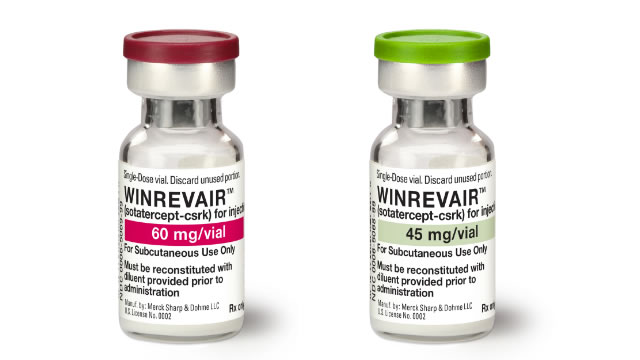
Core Insights - Merck is transforming its portfolio with the launch of several new products, including WINREVAIR, OHTUVAYRE, CAPVAXIVE Enflonsia, and QLEX, which are expected to advance patient care and have blockbuster potential [2] - The company has identified over $70 billion in commercial opportunities from more than 20 new growth drivers in its Human Health business [2] - Merck's Animal Health business is also set to launch multiple products, with expectations to more than double its revenues by the mid-2030s [3] - The company is confident in its future, supported by a robust early-stage pipeline that aims to yield Phase II and Phase III programs in the coming months and years, contributing to revenue growth and patient impact in the 2030s [3]