TotalEnergies SE

Search documents
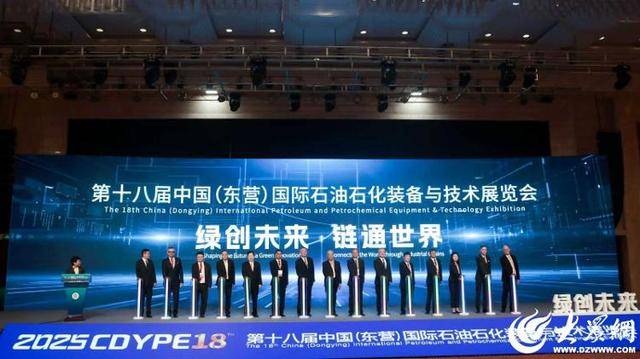
第十八届中国(东营)国际石油石化装备与技术展览会举办
Sou Hu Cai Jing· 2025-09-27 09:40
Core Viewpoint - The 18th China (Dongying) International Petroleum and Petrochemical Equipment and Technology Exhibition emphasizes the theme "Green Innovation for the Future, Connecting the World," focusing on low-carbon transformation in the traditional energy sector and fostering new productive forces through technological innovation [1][6]. Group 1: Exhibition Overview - The exhibition lasts for three days and covers an area of over 40,000 square meters, with more than 400 exhibitors and buyers, and an expected attendance of over 60,000 visitors [1]. - There are five exhibition areas, including specialized zones for central and state-owned enterprises, oilfield supply chain companies, international exhibits, and outdoor displays of large oil equipment and drones [1]. Group 2: Participation and Exhibitors - The exhibition features a diverse range of exhibitors from the oil and gas industry, with 69% of participants being from outside the region, including renowned companies like Baker Hughes, Caterpillar, and Total [3]. - A record number of World Fortune 500 and central enterprise exhibitors are present, with several companies participating for the first time, including Baker Hughes and the China National Petroleum Corporation [3]. Group 3: Special Topics and Events - The exhibition includes over 20 high-profile meetings focusing on four main topics: "Going Global Together," "International Procurement," "Future Industries," and "New Product Launches," featuring nearly 100 experts and representatives [5]. - The "Going Global Together" topic aims to provide a platform for sharing overseas market opportunities and industry trends, while the "International Procurement" section facilitates efficient procurement connections [5]. Group 4: Historical Significance and Impact - The exhibition has been successfully held for 17 consecutive years and is recognized as the second oil equipment exhibition in China to receive UFI certification, playing a crucial role in promoting green transformation and technology cooperation in the petroleum and petrochemical equipment industry [6]. - It serves as an international platform for upgrading the petroleum and petrochemical equipment industry, enhancing trade, investment, and technology collaboration, and showcasing new technologies and products [6].





新浪财经ESG:TTE MSCI(明晟)ESG评级调降至A
Xin Lang Cai Jing· 2025-09-26 23:06
Core Viewpoint - TTE's MSCI ESG rating has been downgraded from AA to A as of September 26, 2025 [1] Group 1 - The downgrade reflects a significant change in TTE's environmental, social, and governance performance [1]

X @Bloomberg
Bloomberg· 2025-09-26 10:45
Nigeria approves TotalEnergies' sale of its stake in a block that includes the Bonga field https://t.co/gRdvz0cYyr ...
Nigeria agrees to TotalEnergies' $510 million stake sale to Shell, Agip
Reuters· 2025-09-25 19:52
Core Insights - Nigeria's oil regulator has approved TotalEnergies' $510 million deal to divest its entire 12.5% stake in oil mining lease 118 to Shell and Agip [1] Company Summary - TotalEnergies is selling its complete 12.5% interest in oil mining lease 118 [1] - The transaction is valued at $510 million [1] Industry Summary - The deal involves major players in the oil sector, specifically TotalEnergies, Shell, and Agip [1] - This transaction reflects ongoing consolidation and investment activities within Nigeria's oil industry [1]

道达尔能源申请暂停其160亿美元绿氢项目环评审批
Shang Wu Bu Wang Zhan· 2025-09-25 17:47
Core Points - TotalEnergies has applied to suspend the approval process for its green ammonia plant project in the Magallanes region of Chile, which is expected to involve an investment of approximately $16 billion, marking it as the largest investment ever received by the environmental impact assessment system [1] - The company requested an extension of the suspension period until March 31, 2027, in response to hundreds of comments received during the public participation phase [1] - The environmental assessment agency has approved the extension of the suspension period, but only until December 7, 2026, stating that this timeframe is sufficient for the company to address the necessary corrections while retaining the possibility for the company to apply for further extensions [1]
Nigerian regulator withdraws TotalEnergies’ asset sale approval
Yahoo Finance· 2025-09-25 14:53
Core Viewpoint - The Nigerian Upstream Petroleum Regulatory Commission (NUPRC) has retracted its approval for TotalEnergies' sale of a minority stake in a Nigerian onshore oil producer, impacting the company's strategy to divest mature assets and reduce debt [1][2]. Group 1: Regulatory Decision - The NUPRC's decision affects TotalEnergies' divestment strategy in Nigeria's onshore oil sector, which includes selling a 10% stake in a joint venture to Telema Energies Nigeria [1][2]. - The initial approval for the sale was granted in October last year but was withdrawn due to the parties' failure to meet financial commitments necessary to finalize the transaction [2][3]. Group 2: Financial Obligations - Chappal Energies, the buyer, did not complete the deal despite receiving extensions, leading to the withdrawal of consent by the NUPRC [3]. - The NUPRC emphasized that the ministerial consent was contingent on financial obligations to the Nigerian people, which were not met by both parties after repeated extensions [3]. - Chappal Energies was reported to be unable to secure the required $860 million (MRs39.11 billion) for the transaction [3]. Group 3: Impact on TotalEnergies - As a result of the retraction, TotalEnergies failed to meet its obligations to pay regulatory fees and provide funds for environmental rehabilitation and future liabilities [4]. - In a related transaction, TotalEnergies agreed to sell its 12.5% non-operated interest in the OML 118 production sharing contract to Shell Nigeria Exploration and Production Company for $510 million (€436.1 million) [4].
Why Big Oil has its eye on APAC’s EV charging market
Yahoo Finance· 2025-09-25 12:22
Group 1: Industry Trends - The oil and gas industry is undergoing transformation due to the electrification of the transport sector, with significant investments in EV charging stations being a notable strategy [2][4][5] - GlobalData forecasts that EVs will account for nearly 50% of all global light vehicle sales by 2035, with a compound annual growth rate of 6.7% for hybrid and electric vehicle sales between 2025 and 2037 [7] - The market for EV charging infrastructure was estimated to be worth $32.26 billion in 2024, projected to grow to $125.39 billion by 2030 [7] Group 2: Regional Insights - The Asia-Pacific (APAC) region is seen as an attractive investment opportunity due to growing populations, developing economies, and the need for affordable energy sources [3][12] - EVs currently make up 42% of auto sales in APAC, expected to reach 77% by 2037, while in Europe, EVs currently account for around 58% of auto sales, projected to jump to 99% by 2037 [10] - APAC is experiencing rapid increases in disposable incomes, leading to a forecast that the region will account for over 60% of the 115 million EVs sold worldwide over the next five years [13] Group 3: Company Strategies - Major oil companies like Shell, bp, and TotalEnergies are investing in EV charging infrastructure to adapt to the changing market [4][8] - Shell has prioritized investment in seven leading markets for EV adoption, including China, Germany, and the UK, due to their advanced pace of electrification [18][19] - European oil companies are reducing investment in EV charging infrastructure while maintaining a focus on Western markets, with Shell lowering its emissions reduction target for 2030 [17][19]
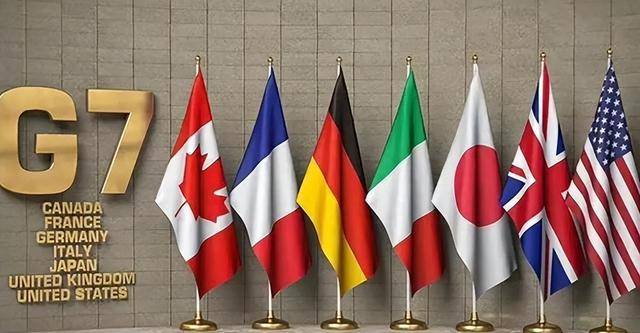
G7打出王八拳,考虑将给中国稀土设置价格下限,并征收关税和碳税
Sou Hu Cai Jing· 2025-09-25 11:58
Core Viewpoint - The article discusses China's response to the trade war initiated by the U.S. under President Trump, specifically through the implementation of rare earth export controls, highlighting the challenges faced by Western nations in attempting to reduce their reliance on Chinese rare earth resources [1][5]. Group 1: China's Dominance in Rare Earths - China holds a significant position in the global rare earth supply chain, with a mining volume of 69%, refining capacity of 90%, and complete monopoly on heavy rare earth processing [7]. - The average export price of Chinese rare earths has increased from $46.59 per kilogram in 2019 to $82 per kilogram by 2025, indicating a strong market position bolstered by technological barriers and environmental standards [9]. - China's management of rare earth elements includes strict regulations, requiring detailed documentation for each export, which complicates procurement for Western military enterprises [11]. Group 2: G7's Strategies and Challenges - The G7 has proposed setting a price floor for rare earths to force China to lower prices, but this strategy is seen as ineffective against market dynamics [9][12]. - Internal conflicts within the G7 regarding the imposition of tariffs on Chinese rare earths have emerged, with differing interests among member countries, such as Japan's reliance on Chinese rare earths for hybrid vehicle motors [16]. - The G7's consideration of carbon taxes on Chinese rare earths is criticized, as China's carbon emissions per unit of output have decreased significantly, while G7 countries struggle with higher emissions from their own operations [19][21]. Group 3: China's Strategic Response - In July 2025, China introduced the "Rare Earth Management Regulations," establishing a traceability system for rare earth products, countering G7's carbon tax proposals [23]. - China's rare earth exports increased by 21.4% year-on-year in July 2025, demonstrating robust international demand despite G7 pressures [24]. - China's comprehensive rare earth industry chain, from mining to high-performance magnet manufacturing, provides a competitive edge that is difficult for the G7 to disrupt [26]. Group 4: International Cooperation and Future Outlook - China has engaged in international cooperation, exemplified by a joint exploration agreement with Kazakhstan for a major uranium mine, showcasing its commitment to global resource development [28]. - The article emphasizes China's open yet principled approach to rare earth exports, which has garnered international recognition and support [28]. - The ongoing competition in the rare earth sector is framed as a test of endurance and intelligence, with China prepared for a long-term strategic engagement [30].

Got $1,000? 3 Giant High-Yield Energy Stocks to Buy and Hold Forever
The Motley Fool· 2025-09-25 11:00
Core Viewpoint - The energy sector is volatile, but integrated energy companies like Chevron, ExxonMobil, and TotalEnergies offer a combination of yield, safety, and diversification for income investors [1][2]. Group 1: Integrated Energy Companies - The primary integrated energy companies include Chevron, Exxon, TotalEnergies, BP, and Shell, with BP and Shell having cut dividends in 2020, making them less reliable for dividend-focused investors [3][6]. - The integrated model of these companies helps to stabilize financial performance across the volatile energy sector by providing exposure to upstream, midstream, and downstream operations [4][3]. Group 2: Financial Strength - Exxon and Chevron are highlighted as the most financially conservative integrated energy companies, with Exxon's debt-to-equity ratio at approximately 0.15 and Chevron's at 0.20, allowing them to manage debt effectively during downturns [6][8]. - Both companies have a strong history of dividend payments, with Exxon maintaining a 43-year annual dividend streak and Chevron at 38 years, offering yields of nearly 3.5% and 4.4% respectively, significantly higher than the S&P 500's 1.2% yield [9][10]. Group 3: Clean Energy Transition - TotalEnergies is noted for its commitment to clean energy, having increased its capital investments in this area while maintaining its dividend, making it a better option than BP and Shell [11][12]. - In 2024, TotalEnergies' integrated power division contributed approximately 10% to its segment adjusted net operating income, reflecting a 17% year-over-year increase [13]. - Despite a high yield of 6.6%, U.S. investors face French taxes on dividends, which may reduce the effective yield [14]. Group 4: Investment Timing - The best time to invest in these integrated energy giants is during significant downturns in the energy market, although this is often the most challenging time to make such investments [15]. - Current relatively weak energy prices present a favorable opportunity for income-focused investors to consider these companies due to their high yields [16].


Quadient's Accredited Platform Already Set to Process More Than 215 Million Electronic Invoices Annually by September 2026
Globenewswire· 2025-09-25 06:00
Core Insights - Quadient has secured over 10% of the French e-invoicing market through partnerships and agreements, confirming its leadership position in the sector [1] - The French tax administration's upcoming e-invoicing mandate will require businesses to use Accredited Platforms for secure and compliant invoice transmission [2] - Major corporations, including TotalEnergies, BPCE, and Dalkia, have chosen Serensia, a Quadient subsidiary, as their preferred e-invoicing platform [3] - The e-invoicing reform is seen as a significant step in modernizing the French economy, with Quadient's technology being recognized for its reliability [4] Company Developments - Serensia has received provisional government accreditation and passed compliance testing with the French Tax Authority, enhancing its credibility [3] - The acquisition of Serensia by Quadient has allowed for expanded resources and technology expertise, enabling the delivery of scalable solutions for various business sizes [4] - As the regulatory deadline of September 1, 2026 approaches, organizations are encouraged to prepare by registering in the public directory and selecting an Accredited Platform [4] Market Context - The national directory of companies subject to VAT will play a crucial role in the e-invoicing reform, designating the Accredited Platform for each business [2] - The reform is expected to impact a significant number of businesses, with Quadient positioned to process over 215 million invoices annually [1]