
京北方

Search documents
京北方(002987) - 2025年第二次临时股东大会决议公告
2025-12-15 10:45
证券代码:002987 证券简称:京北方 公告编号:2025-054 京北方信息技术股份有限公司 2025年第二次临时股东大会决议公告 本公司及董事会全体成员保证信息披露的内容真实、准确、完整,没有虚假记 载、误导性陈述或重大遗漏。 特别提示: 1、本次股东大会未出现否决提案的情形; 2、本次股东大会未涉及变更前次股东大会决议的情形。 一、会议召开和出席情况 1、会议的召开时间: (1)现场会议召开时间:2025 年 12 月 15 日(星期一)14:30 (2)网络投票时间:通过深圳证券交易所交易系统进行网络投票的时间为: 2025 年 12 月 15 日上午 9:15-9:25、9:30—11:30 和下午 13:00—15:00;通过深圳证 券交易所互联网投票系统投票的时间为 2025 年 12 月 15 日 9:15—15:00。 3、会议的召开方式:本次股东大会采用现场表决与网络投票相结合的方式召 开。 4、会议召集人:公司董事会 5、会议主持人:公司董事长费振勇先生 6、本次股东大会的召集、召开与表决程序符合《公司法》《证券法》《上市 公司股东大会规则》《深圳证券交易所股票上市规则》《深圳证券交易 ...

京北方:截至2025年12月10日公司股东人数为85235户
Zheng Quan Ri Bao Wang· 2025-12-11 13:42
Group 1 - The core point of the article is that Jingbeifang (002987) reported on an investor interaction platform that as of December 10, 2025, the number of shareholders is 85,235 accounts, including combined credit accounts [1]
减员与增员并行 金融外包公司迎来转型期
Zhong Guo Jing Ying Bao· 2025-12-06 08:49
Core Viewpoint - The outsourcing market for banking business processes remains strong, driven by the acceleration of digital transformation in the banking sector, allowing banks to focus on core business development while outsourcing non-core processes to specialized service providers [1][2]. Group 1: Outsourcing Market Dynamics - Jingbeifang (002987.SZ) won a public procurement project from Zhuhai China Resources Bank for an outsourcing framework agreement worth 75.3726 million yuan [1]. - In November 2025, Jingbeifang had 22 winning projects, of which 11 were business process outsourcing projects, including human resources outsourcing and retail expansion outsourcing [1]. - The demand for outsourcing in the banking sector is expected to remain robust in the short term, as banks seek to reduce costs and improve efficiency [2]. Group 2: Shift in Business Focus - Financial IT companies are shifting their focus from labor-intensive outsourcing to a model that emphasizes technology and services, with a growing emphasis on automation and external data intelligence [2][7]. - Companies like Jingbeifang are transitioning from a project-based model to a comprehensive service model that includes consulting, products, solutions, and services [6]. - The revenue from software and IT solutions at Jingbeifang increased to 68.32% of total revenue, while the digital operation business, which includes smart customer service and consumer finance marketing, is becoming a new growth engine [6]. Group 3: Employee Trends and Financial Performance - Jingbeifang's employee count increased from 27,404 in 2022 to 31,268 in 2024, with a notable rise in technical personnel, although there was a contraction in business process outsourcing personnel in 2024 [2]. - The financial performance of Jingbeifang showed a revenue of 3.613 billion yuan in the first three quarters of 2025, a year-on-year increase of 5.14%, with net profit rising by 7.94% [6]. - The gross profit margins for Jingbeifang, Changliang Technology, and Tianyang Technology showed a slight decline from 2022 to 2024, indicating a competitive pressure in the outsourcing market [4]. Group 4: International Expansion - Facing domestic competition and cautious IT spending from banks, financial IT companies are looking to expand overseas, with Jingbeifang establishing a wholly-owned subsidiary in Hong Kong to serve a diverse client base [8]. - The Southeast Asian banking IT solutions market is experiencing high growth, and Chinese companies have a competitive advantage in terms of cost-effectiveness [8]. - Challenges in international expansion include cross-border regulatory differences and the need for localized operations, which require a balance of technology and local adaptation [8].
加密货币市场急挫引发连锁反应,A股港股概念股集体承压
第一财经· 2025-12-02 14:16
Core Viewpoint - The cryptocurrency market is experiencing significant downward pressure due to multiple factors, including macroeconomic policy expectations, institutional selling, and increased regulatory scrutiny, leading to a decline in both cryptocurrency prices and related stocks [3][4][10]. Market Performance - As of December 2, A-shares and Hong Kong stocks related to cryptocurrency continued to decline, with notable drops in companies like Jingbeifang and Hailian Jinhui, each down approximately 1% [3][4]. - Bitcoin saw a sharp decline, dropping nearly 30% from its October peak of $126,251 to below $84,000, while Ethereum experienced a larger drop of over 10% in a single day [3][4]. Institutional Behavior - Since September, large institutional investors have sold over $20 billion in cryptocurrency assets, with year-end profit-taking becoming more pronounced [7][10]. - The adjustment in institutional behavior is a core factor in the current market downturn, with a significant number of leveraged positions being liquidated [5][6]. Regulatory Impact - Recent regulatory developments in China have intensified scrutiny on virtual currencies, particularly stablecoins, which are now included in regulatory frameworks due to concerns over money laundering and fraud [11][12]. - The regulatory stance is seen as a reaffirmation of existing policies rather than a tightening, reflecting ongoing concerns about potential risks in the cryptocurrency sector [11][12]. Macroeconomic Factors - The upcoming Federal Reserve meeting has led to a decrease in expectations for interest rate cuts, which negatively impacts non-yielding assets like Bitcoin [10]. - The uncertainty surrounding macroeconomic signals has also contributed to volatility in traditional risk assets, amplifying the adjustments in the cryptocurrency market [10].

加密货币市场急挫引发连锁反应 A股港股概念股集体承压
Di Yi Cai Jing· 2025-12-02 12:53
Core Viewpoint - The cryptocurrency market is experiencing significant downward pressure due to multiple factors, including macroeconomic policy expectations, institutional selling, and increased regulatory scrutiny, leading to a decline in both cryptocurrency prices and related stocks in A-shares and Hong Kong markets [1][2][5][6]. Market Performance - As of December 2, A-shares and Hong Kong stocks related to cryptocurrency continued to decline, with notable drops in companies like Jingbeifang, Hailian Jinhui, and Cuiwei Co., each down approximately 1% [1]. - The cryptocurrency market has seen Bitcoin drop to a low of $84,000, a nearly 30% decrease from its peak of $126,251 in early October, while Ethereum experienced a drop exceeding 10% on December 1 [1][2]. Institutional Behavior - Institutional investors have been a core factor in the recent market adjustment, with over $20 billion in cryptocurrency assets sold since September [3]. - The end of the year has prompted many institutions to lock in profits, leading to increased selling pressure and a slowdown in ETF fund inflows, which are critical indicators of institutional risk appetite [3][5]. Leverage and Market Dynamics - The December 1 drop was characterized by a significant leverage liquidation effect, with over 270,000 contracts forcibly liquidated, amounting to nearly $985 million, predominantly affecting long positions [2]. - The market structure has shown that once macro expectations are re-evaluated, the speed of liquidation can accelerate, leading to broader market declines [2][4]. Regulatory Impact - Recent regulatory developments in China have intensified scrutiny on virtual currencies, particularly stablecoins, which are now included in regulatory frameworks due to concerns over their use in illicit activities [6]. - Experts believe that the regulatory stance reflects ongoing concerns about potential risks in the cryptocurrency sector, rather than a tightening of existing policies [6][7]. Macroeconomic Factors - The upcoming Federal Reserve meeting has created uncertainty, with officials emphasizing persistent inflation and the need for restrictive monetary policy, dampening expectations for interest rate cuts [5]. - The tightening of dollar liquidity and the weakening of risk asset sentiment have further pressured the cryptocurrency market, which is sensitive to interest rate expectations [5].
加密货币市场急挫引发连锁反应,A股港股概念股集体承压
Di Yi Cai Jing· 2025-12-02 12:39
Core Viewpoint - The cryptocurrency market is experiencing significant downward pressure due to multiple factors, including macroeconomic policy expectations, institutional selling, and increased regulatory scrutiny, leading to a decline in both cryptocurrency prices and related stocks in A-shares and Hong Kong markets [1][2][5][6]. Market Performance - As of December 2, A-shares and Hong Kong stocks related to cryptocurrency continued to decline, with notable drops in companies like Jingbeifang, Hailian Jinhui, and Cuiwei Co., each down approximately 1% [1]. - Bitcoin saw a significant drop, falling to a low of below $84,000 on December 1, down nearly 30% from its all-time high of $126,251 in early October. Ethereum experienced an even larger decline, with a single-day drop exceeding 10% [1][2]. Institutional Behavior - Institutional investors have been a core factor in the current market adjustment, with over $20 billion in cryptocurrency assets sold since September. The year-end period has heightened the tendency for institutions to lock in profits, leading to increased selling pressure [3][5]. - The flow of funds into Bitcoin ETFs has also slowed, indicating a decrease in institutional risk appetite [3]. Leverage and Market Dynamics - The market experienced a significant leverage liquidation effect on December 1, with over 270,000 contracts forcibly liquidated, amounting to nearly $985 million, predominantly affecting long positions [2]. - The current market structure is characterized by a rapid liquidation process triggered by shifts in macroeconomic expectations, leading to a more pronounced decline in prices [2][4]. Macroeconomic and Regulatory Influences - The upcoming Federal Reserve meeting has created uncertainty, with officials emphasizing persistent inflation and the need for restrictive monetary policy, dampening expectations for interest rate cuts [5]. - Regulatory developments in China have also impacted market sentiment, with a recent meeting involving multiple regulatory bodies reaffirming strict policies against virtual currency trading and emphasizing the risks associated with stablecoins [6][7].


京北方:截至2025年11月28日公司股东人数为87632户
Zheng Quan Ri Bao· 2025-12-02 09:13
Core Viewpoint - As of November 28, 2025, the number of shareholders for the company is projected to reach 87,632 accounts, including combined credit accounts [2] Company Summary - The company has provided an update regarding its shareholder count, indicating a significant engagement with investors [2] - The figure of 87,632 accounts reflects the company's growth and potential attractiveness to investors [2]
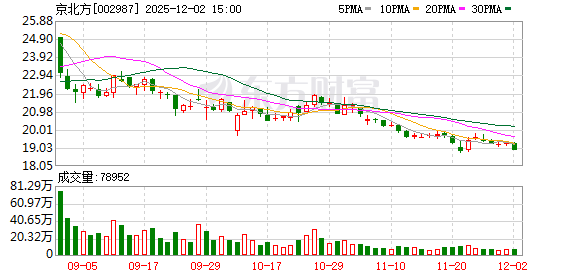
京北方:在跨境支付领域,公司多年前已开始协助部分客户接入SWIFT系统、CIPS系统
Mei Ri Jing Ji Xin Wen· 2025-11-27 14:52
Core Viewpoint - The company has established significant advantages in the cross-border payment sector through its early integration with SWIFT and CIPS systems, as well as its involvement in the digital yuan ecosystem [1]. Group 1: Cross-Border Payment Advantages - The company has been assisting clients in connecting to SWIFT and CIPS systems for several years, showcasing its extensive experience and technical capabilities in cross-border payments [1]. - The company possesses a rich portfolio of case studies and has built a strong talent reserve in the field of cross-border payments [1]. - The company is a core partner in the m-CBDC Bridge project, providing technical support for cross-border payment systems in the context of central bank digital currencies (CBDC) [1].
京北方:截至11月20日股东人数为89958户
Zheng Quan Ri Bao· 2025-11-27 11:44
Group 1 - The company, Jingbeifang, reported that as of November 20, 2025, the number of shareholders is 89,958 accounts, including combined credit accounts [2]
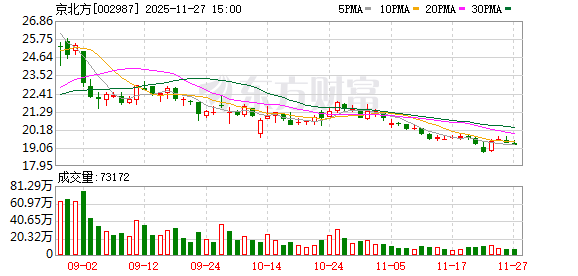
京北方信息技术股份有限公司 关于公司高级管理人员减持股份的预披露公告
Zhong Guo Zheng Quan Bao - Zhong Zheng Wang· 2025-11-26 04:30
Core Viewpoint - The company announces that its Vice President, Mr. Yan Zhishun, plans to reduce his shareholding in the company by a maximum of 17,793 shares, which is 0.0021% of the total share capital, due to personal financial needs [3][5][6]. Group 1: Shareholder Information - Mr. Yan Zhishun holds 71,172 shares, representing 0.0082% of the company's total share capital [3]. - The reduction plan will take place within three months from December 17, 2025, to March 16, 2026 [6]. Group 2: Reduction Plan Details - The reason for the reduction is personal financial needs [5]. - The shares to be reduced are from equity incentive shares and shares obtained through company distributions [5]. - The reduction will be executed through centralized bidding [6]. - The number of shares may be adjusted based on any corporate actions such as dividends or stock splits during the reduction period [6]. - The selling price will be determined by the market price at the time of the reduction [7]. Group 3: Compliance and Commitments - As of the announcement date, Mr. Yan has no outstanding commitments related to share changes that have not been fulfilled [8]. - The reduction plan complies with relevant laws and regulations, including the Securities Law and the Shenzhen Stock Exchange rules [9]. - The company will monitor the progress of the reduction plan and fulfill its information disclosure obligations [10].