Keurig Dr Pepper Inc.

Search documents
Coca-Cola's Story: Can Organic Growth Stay Resilient in 2026?
ZACKS· 2025-12-29 17:55
Core Insights - The Coca-Cola Company (KO) is entering the final quarter of 2025 with strong organic growth momentum, supported by effective strategies in volume gains, pricing, and cost management [1][10] - Despite macroeconomic challenges, Coca-Cola has gained value share for 18 consecutive quarters, indicating robust competitive positioning [2][10] - Looking ahead to 2026, Coca-Cola's management is optimistic about sustaining organic growth through pricing adjustments, productivity initiatives, and a focus on premiumization [3][5] Financial Performance - In Q3 2025, Coca-Cola achieved organic revenue growth at the high end of its long-term model, with a focus on balancing pricing and volume [1][10] - The Zacks Consensus Estimate for Coca-Cola's earnings implies year-over-year growth of 3.5% for 2025 and 8% for 2026, with earnings estimates remaining unchanged over the past 30 days [13] - Coca-Cola's current forward price-to-earnings ratio stands at 21.71X, which is higher than the industry average of 18.15X [12] Market Dynamics - Coca-Cola's diversified global footprint is a significant advantage, with emerging markets like Latin America and Africa providing long-term growth opportunities [4][10] - The company is adapting to changing consumer behavior and currency volatility while maintaining its organic growth resilience [5] - Competitors PepsiCo Inc. (PEP) and Keurig Dr Pepper Inc. (KDP) are also showing resilience in their organic growth outlooks, with both companies implementing strategies to navigate the current market environment [6][7][8]


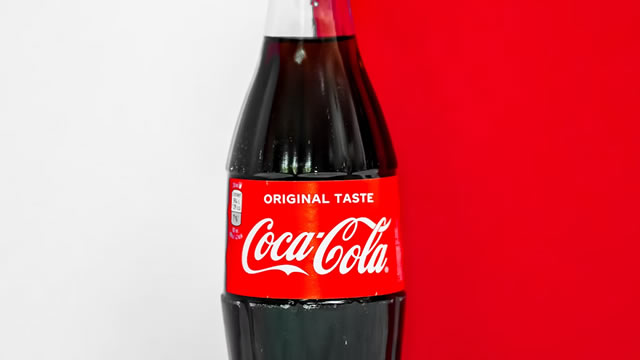
Coca-Cola Eyes Margin Gains as Supply-Chain Costs Begin to Ease
ZACKS· 2025-12-24 15:51
Core Insights - The Coca-Cola Company is entering a more favorable margin environment as supply-chain pressures ease, allowing for a shift from cost inflation to a more sustainable profit model [1][8] - The company is focusing on operational efficiency and cost discipline, leveraging productivity initiatives supported by digitalization and data-driven decision-making [2] - Coca-Cola is reinvesting savings into marketing and innovation to sustain volume growth and long-term competitiveness, indicating a structurally improved operating model [3] Margin Improvement - A key driver of margin improvement is Coca-Cola's renewed focus on operational efficiency and cost discipline, with productivity initiatives across manufacturing, procurement, and marketing [2] - As transportation and packaging costs stabilize, efficiency gains are positively impacting the bottom line [2] - The company is fine-tuning its revenue growth management through targeted pricing and smarter package architecture to protect margins [2] Brand Investment - Margin recovery is not at the expense of brand investment, as Coca-Cola is reinvesting savings into marketing and innovation [3] - The company is well-positioned to expand margins while balancing affordability and premiumization due to moderating inflation and easing supply-chain costs [3] Competitive Landscape - In the beverage market, PepsiCo and Keurig Dr Pepper are also leveraging easing cost pressures and operational efficiencies to drive sustainable margin expansion [4] - PepsiCo is shifting from heavy reliance on pricing to a balanced mix of productivity and revenue growth management [5] - Keurig Dr Pepper is benefiting from a normalized supply-chain environment, focusing on disciplined cost control and efficient manufacturing [6] Financial Performance - Coca-Cola's shares have risen 5.9% over the past three months, compared to the industry's growth of 7.8% [7] - The company is trading at a forward price-to-earnings ratio of 21.73X, higher than the industry's 18.22X [9] - The Zacks Consensus Estimate for Coca-Cola's earnings implies year-over-year growth of 3.5% for 2025 and 8% for 2026, with estimates unchanged in the past 30 days [10]
Is PepsiCo's Protein and Prebiotic Push a New Functional Edge?
ZACKS· 2025-12-22 18:36
Core Insights - PepsiCo is focusing on functional nutrition as a key growth strategy, aiming to meet consumer demand for products that offer health benefits beyond taste, such as protein and prebiotics [1][8] - The company plans to make functional nutrition a core pillar of its innovation strategy by 2025, targeting both beverages and convenient foods [1][8] Beverage Innovations - PepsiCo is launching functional beverages like Pepsi Prebiotic, Propel Protein Water, and enhanced Muscle Milk, designed to combine familiar flavors with health benefits [2][8] - The company is also enhancing Gatorade with lower sugar and added nutritional benefits, allowing it to compete with emerging functional beverage brands [2] Food Portfolio Enhancements - The food segment is seeing the introduction of protein-rich and fiber-boosted snacks under brands like Doritos, Quaker, Sun Chips, and PopCorners, modernizing these iconic brands for health-conscious consumers [3][8] - This strategy aims to create new consumption occasions and strengthen long-term brand loyalty [3] Competitive Landscape - Coca-Cola and Keurig Dr Pepper are also enhancing their portfolios with functional beverage innovations to meet consumer wellness demands [4][5][6] - Coca-Cola is focusing on zero-sugar and functional hydration products, while Keurig Dr Pepper is innovating in coffee and cold beverages with health-forward formulations [5][6] Financial Performance - PepsiCo shares have increased by 4.4% over the past three months, compared to the industry growth of 6.4% [7] - The company trades at a forward price-to-earnings ratio of 17.37X, slightly below the industry average of 18.22X [9] - The Zacks Consensus Estimate indicates a 0.6% decline in earnings for 2025, with a projected growth of 5.4% for 2026 [10]

瑞幸盯上蓝瓶咖啡,咖啡头部为何扎堆换东家?
3 6 Ke· 2025-12-22 00:18
Core Insights - The coffee industry is undergoing significant changes characterized by a series of high-profile mergers and acquisitions, reflecting a deeper reassessment of coffee's intrinsic value [1][2][3] - Major players are strategically dismantling their operations to retain core assets while shedding burdensome entities, indicating a shift in how coffee's value is perceived [1][2][3] Group 1: Recent Mergers and Acquisitions - Luckin Coffee is reportedly evaluating bids for Blue Bottle Coffee and Costa, aiming to enhance its brand positioning and growth model [2][4] - Keurig Dr Pepper (KDP) announced a €15.7 billion cash acquisition of JDE Peet's, the parent company of Peet's Coffee, marking a significant move in the coffee sector [5][7] - The sale of Starbucks China to Hillhouse Capital for $2.4 billion, giving Hillhouse a 60% stake, highlights the competitive landscape and the interest from various investment firms [8][10] Group 2: Drivers Behind the M&A Wave - The current wave of mergers is a natural outcome of China's economic and capital market evolution, with a focus on market consolidation and efficiency [10][11] - The coffee market's characteristics, including slow growth and low concentration, have prompted companies to shift from growth chasing to efficiency and positioning [11][12] - The trend of asset divestiture among major brands is not a sign of decline but a strategic financial decision to optimize operations [12][13] Group 3: Changing Competitive Dynamics - The focus is shifting from physical store operations to brand equity and intellectual property, as companies seek to streamline costs and enhance profitability [19][20] - The emergence of local brands like Luckin Coffee is challenging traditional models, emphasizing efficiency and digital transformation [22][23] - The power dynamics in the coffee industry are shifting, with China evolving from a market for international brands to a source of innovative business models [23][24] Group 4: Future Implications - The ongoing mergers signify a redefinition of coffee's value, moving from a heavy reliance on physical locations to a focus on brand perception and operational efficiency [27][28] - The competition is no longer solely about coffee itself but encompasses efficiency, data utilization, and ecosystem collaboration [28]

Spotify initiated, Airbnb upgraded: Wall Street's top analyst calls
Yahoo Finance· 2025-12-17 14:33
Upgrades - Morgan Stanley upgraded Rollins (ROL) to Overweight from Equal Weight with a price target of $72, up from $58, citing the company as a "best-in-class" operator with durable demand drivers and structural tailwinds [2] - DA Davidson upgraded Guidewire (GWRE) to Buy from Neutral with an unchanged price target of $246, viewing the recent 20% pullback as an opportunity for investors seeking high-quality application software leaders [3] - Jefferies upgraded Procter & Gamble (PG) to Buy from Hold with a price target of $179, up from $156, noting a stabilizing consumer backdrop and easier comparisons entering 2026 [4] - Wells Fargo upgraded Texas Roadhouse (TXRH) to Overweight from Equal Weight with a price target of $195, up from $170, believing in the sustainability of comparable sales momentum [5] - RBC Capital upgraded Airbnb (ABNB) to Outperform from Sector Perform with a price target of $170, up from $145, highlighting an attractive brand monetization story in the evolving consumer AI landscape [6] Downgrades - Jefferies downgraded Constellation Brands (STZ) to Hold from Buy with a price target of $154, down from $170, due to prolonged fears among Hispanic consumers affecting top-line results [7] - JPMorgan downgraded CyberArk (CYBR) to Neutral from Overweight with a price target of $474, up from $443, following the announcement of its takeover by Palo Alto Networks expected to close in the first half of 2026 [7] - JPMorgan downgraded Fortinet (FTNT) to Underweight from Neutral with a price target of $75, down from $85, as the company faces headwinds from ongoing platform consolidation trends [7] - Jefferies downgraded Keurig Dr Pepper (KDP) to Hold from Buy with a price target of $32, citing heavy debt, coffee price volatility, and a new financing structure [7] - Barclays downgraded MGM Resorts (MGM) to Equal Weight from Overweight with a price target of $38, down from $42, expressing mixed views on various gaming sectors and a negative outlook on Las Vegas [7]
BROS vs. KDP: Which Coffee Stock Is Better Positioned for 2026?
ZACKS· 2025-12-15 15:06
Core Insights - The coffee industry is characterized by a contrast between growth-driven companies like Dutch Bros Inc. and stable, diversified models like Keurig Dr Pepper Inc. as they approach 2026 [1][2] Group 1: Dutch Bros Inc. (BROS) - Dutch Bros is targeting over 2,000 shops by 2029, with plans for approximately 175 new openings in 2026, supported by a strong pipeline of approved sites [3] - The company has achieved consistent transaction growth, with same-shop sales driven by increased visits rather than price hikes, indicating strong demand [4] - Dutch Bros is enhancing its digital ecosystem, with growing Order Ahead penetration and a loyalty base that drives a majority of transactions, alongside the introduction of hot food to increase morning traffic [5] - Near-term concerns include rising coffee prices and labor costs, which may impact margins as the company invests in growth [6] Group 2: Keurig Dr Pepper Inc. (KDP) - KDP benefits from a diversified portfolio that includes both at-home coffee and a range of refreshment beverages, allowing for consistent revenue and earnings growth despite cyclical pressures in the coffee category [7] - The Keurig system dominates the single-serve coffee market in North America, benefiting from repeat consumption and strong cash generation [8] - KDP's ability to generate strong free cash flow supports dividends and strategic investments, positioning it as a stable long-term investment [10] - However, KDP faces challenges with slower growth in the at-home coffee segment, which may limit its upside compared to faster-growing competitors [11] Group 3: Comparative Analysis - Dutch Bros is expected to see a year-over-year increase of 24.2% in sales and 27.9% in earnings per share (EPS) for 2026, while KDP anticipates a 4.7% increase in sales and 6.1% in EPS [12][14] - Dutch Bros shares have increased by 18.5% in the past month, compared to a 9.5% gain for KDP [15] - The forward price-to-sales (P/S) ratio for Dutch Bros is 5.05X, while KDP's is 2.33X, indicating a higher valuation for BROS [16] - Overall, Dutch Bros is positioned for stronger growth due to its specific growth drivers, while KDP offers steadier earnings but may face constraints from slower trends in at-home coffee consumption [20][21]


Coca-Cola Stock Rallies 12% in a Year: Wise to Buy or Stay Patient?
ZACKS· 2025-12-10 18:46
Core Insights - The Coca-Cola Company (KO) achieved an 11.9% growth over the past year, outperforming the Beverages – Soft Drinks industry's 4.9% growth and the Consumer Staples sector's 5.9% decline, but lagging behind the S&P 500's 14.9% increase [1][5][20] Financial Performance - In Q3 2025, Coca-Cola reported strong organic revenue growth, steady volume gains, and margin expansion despite facing currency headwinds [5][20] - The Zacks Consensus Estimate for Coca-Cola's revenues and EPS for 2025 implies year-over-year growth of 2.7% and 3.5%, respectively, while estimates for 2026 suggest growth of 5.6% and 8% [15][20] Competitive Positioning - Coca-Cola has consistently gained value share for 18 consecutive quarters, demonstrating strong execution and brand relevance, outperforming competitors like PepsiCo, Keurig Dr Pepper, and Zevia, which saw declines of 7.8%, 12.6%, and 23.8% respectively [6][12][20] - The company trades at a forward 12-month price-to-sales (P/S) multiple of 5.93X, significantly higher than the industry average of 4.45X, indicating a premium valuation compared to peers [16][17][20] Strategic Initiatives - Coca-Cola's marketing transformation, driven by digital engagement and culturally relevant activations, is enhancing consumer connections [13] - The company's refranchising strategy is improving efficiency and margins while unlocking growth in high-potential regions like India and Africa [14][20] Stock Performance - At a current price of $70.09, KO stock is 15.6% above its 52-week low of $60.62 and 5.8% below its 52-week high of $74.38, trading above its 50-day and 200-day moving averages, indicating bullish sentiment [7][20]
CELH Stock Up 65% in 2025: How Should Investors Plan for 2026?
ZACKS· 2025-12-10 13:31
Core Insights - Celsius Holdings, Inc. (CELH) has demonstrated exceptional performance in the beverage sector, with its stock rising 65.1% this year, significantly outperforming the industry decline of 15.7% and the S&P 500's gain of 18.7% [1][8] Group 1: Performance and Market Position - The company's shares have surged due to a rapid portfolio transformation and expanding partnership with PepsiCo, allowing CELH to outperform competitors like The Coca-Cola Company, PepsiCo, and Keurig Dr Pepper [2] - CELH's core brand is one of the fastest-growing in the energy drink market, achieving strong market-share gains across various retail channels [3] Group 2: Growth Drivers - Celsius is aggressively expanding its portfolio and integrating Alani Nu into PepsiCo's distribution network, which is expected to enhance brand reach in early 2026 [4] - Innovation plays a crucial role in growth, with limited-time flavors and seasonal launches attracting new consumers and maintaining relevance among younger demographics [5] Group 3: Financial Metrics - The company's gross margin remained above 50% in Q3, attributed to a shift towards higher-quality revenues and improved operational efficiencies [6][8] - Analysts have raised earnings estimates for CELH, indicating confidence in the company's ability to sustain strong growth into 2026 [13] Group 4: International Expansion - Celsius is increasing brand visibility in international markets such as Australia and select European regions, laying the groundwork for long-term global expansion [9] Group 5: Challenges Ahead - Despite strong demand, the company anticipates near-term volatility due to integration costs and other operational challenges, which may affect margins [10][16] - The integration of Rockstar is expected to contribute to margins only in 2026, leading to potential uneven quarterly comparisons [11] Group 6: Valuation - CELH's forward 12-month P/E ratio of 28.77X is significantly higher than the industry average of 14.4X, indicating a premium valuation that may pose risks if execution falters [12]


Can PepsiCo's Zero Sugar & Dew Flavors Sustain PBNA's Share Gains?
ZACKS· 2025-12-08 17:01
Core Insights - PepsiCo's PBNA division is experiencing growth in 2025, driven by innovation in beverage platforms like Pepsi Zero Sugar and an expanded Mountain Dew flavor portfolio [1][7] - Pepsi Zero Sugar has shown double-digit net revenue growth, supported by marketing campaigns and a broader zero-sugar strategy [2][7] - Mountain Dew's new flavors are appealing to younger consumers, enhancing PBNA's market position [3][7] PepsiCo's Performance - PepsiCo's shares have increased by 1.3% over the past three months, while the industry has grown by 4.5% [6] - The forward price-to-earnings ratio for PepsiCo is 16.97X, slightly below the industry average of 18.01X [8] Earnings Estimates - The Zacks Consensus Estimate for PepsiCo's 2025 earnings indicates a year-over-year decline of 0.7%, while 2026 earnings are expected to grow by 5.9% [9] - EPS estimates for 2025 and 2026 have remained stable over the past week [9]
Dr Pepper Marks 18 Years of Impact with the Announcement of the 2025 Dr Pepper Tuition Giveaway Winners
Prnewswire· 2025-12-08 15:13
Core Insights - Dr Pepper, part of Keurig Dr Pepper, awarded three students $100,000 each in tuition funds during the College Football Conference Championship games, continuing its commitment to support educational goals [1][2] - Over the past 30 years, Dr Pepper has committed more than $20 million to help students pursue their academic dreams [2] - The winners demonstrated leadership and community commitment, with past winners achieving significant career milestones [3] Company Overview - Keurig Dr Pepper is a leading beverage company in North America with annual revenue of approximately $15 billion and a portfolio of over 125 brands [7] - The company holds leadership positions in various beverage categories, including soft drinks, coffee, tea, and juice, and has the 1 single-serve coffee brewing system in the U.S. and Canada [7] - The company aims to enhance beverage experiences while making a positive impact on communities and the planet [7]