Uber

Search documents
Could Uber Become a Trillion-Dollar Company One Day?
The Motley Fool· 2025-08-22 11:45
Core Insights - Uber Technologies has evolved from a cash-burning ride-hailing startup to a powerful transport infrastructure company, diversifying its services to include mobility, delivery, and freight, while improving profitability and pursuing autonomy and advertising [1][4][5] Current Position - In 2024, Uber generated $44 billion in revenue with gross bookings of $162.8 billion across its various business segments, achieving adjusted EBITDA of $6.5 billion and consistent GAAP profits for the first time in 2023 and 2024 [4][5] Market Potential - Uber's addressable market is estimated to be in the trillions, with the global taxi and ride-hailing industry projected to reach $712 billion by 2033 and food delivery expected to exceed $2 trillion by 2030 [7][8] Economic Factors - Current ride-hailing margins are constrained by driver costs, but the introduction of autonomous vehicles could significantly increase Uber's take rate and unit margins, while advertising is already on a $1.5 billion annual run rate [9][10] Growth Requirements - To achieve a $1 trillion market cap, Uber would need to grow its annual net income to $40 billion to $50 billion, which requires a sevenfold increase in profits over the next decade [10][11] Strategic Levers - Uber can pursue several strategies to enhance its profit profile, including the adoption of autonomous vehicles, expanding advertising revenue, diversifying delivery services beyond restaurants, and maintaining operational discipline [12][15]


Delivery Segment Going Strong at UBER: More Upside Ahead?
ZACKS· 2025-08-21 16:40
Core Insights - Uber Technologies (UBER) is diversifying its operations beyond ridesharing, particularly into food delivery, which is crucial for risk reduction in large companies [1] Delivery Business Performance - Uber's Delivery segment has seen a significant boom, with revenues increasing by 25% year over year to $4.10 billion in Q2 2025 [2][9] - The trend of online ordering has persisted even after the pandemic, prompting Uber to expand its Delivery operations [3] Strategic Partnerships - Uber Eats has partnered with Dollar General to deliver household essentials, integrating over 14,000 Dollar General and pOpshelf locations into its platform [4][9] - A promotional offer of 40% off on orders of $20 or more is available for customers, with additional benefits for Uber One members [5] - Another partnership with Five Below allows customers to order from over 1,500 stores, enhancing Uber Eats' non-food retail offerings [5][6][9] Market Performance and Valuation - UBER shares have gained in double digits this year, outperforming the Zacks Internet-Services industry [7] - The company trades at a 12-month forward price-to-sales ratio of 3.46X, indicating it is relatively inexpensive compared to its industry [10] Earnings Estimates - The Zacks Consensus Estimate for UBER's earnings for 2025 and 2026 has been revised upward over the past 90 days, reflecting positive market sentiment [11][12]
Google will prove it's one of the beneficiaries of the growth in generative AI: Evercore's Mahaney
CNBC Television· 2025-08-20 19:52
Google (Alphabet) - Evercore ISI 认为 Google 在 GenAI 领域将受益,而非受损 [2] - Google 的搜索结果和 YouTube 表现强劲,且 Waymo 是 AI 的最佳体现 [3] - Google 股价上涨 25%,但估值仍然具有吸引力,市盈率为 18-19 倍 [3][4] - 市场关注 Google 的未来发展,等待法官对 Google 的判决 [4] Expedia - Expedia 被选为首选股,部分原因是 Uber 股价上涨使其吸引力降低 [5] - 在线旅游领域对 GARP 投资者或价值投资者来说是一个不错的选择,具有稳健的收入增长、利润率和自由现金流 [6][7] - Expedia 的增长率已与其他两家领先企业 Airbnb 和 Booking 持平,但估值却有很大的折扣,市盈率为 14 倍,有潜力达到 18 倍 [7][8][9] - 看好 Expedia 的原因是美国国内休闲旅游的复苏以及新管理层的加入 [8] Snap (Snapchat) - Snap 的用户基数庞大,但用户增长停滞不前,广告收入增长缓慢 [10][11] - Snap 在广告客户方面缺乏创新,而规模更大的公司(如 Google 和 Meta)的广告收入增长率更高 [11][12] - Snap 正在押注 GenAI 硬件设备,如 Snap Spectacles,但市场对此持怀疑态度 [12][13][14] - Snap 产生正的自由现金流,如果能为营销人员提供更好的广告解决方案,仍有上涨潜力,但目前不推荐该股 [15][16]


askARK Will Uber And Tesla Become Direct Competitors?
ARK Invest· 2025-08-19 14:15
Competitive Landscape - Autonomous technology maturation positions Tesla as a direct competitor to Uber in the robo-taxi market [1] - Tesla's vertically integrated manufacturing could enable lower cost per mile, potentially undercutting Uber's pricing [2] Market Opportunity - Robo-taxi represents a significantly larger opportunity than ride-hailing [2] - Ride-hailing currently accounts for only 3% of US vehicle miles traveled [2] - Robo-taxi market could reach a $10 trillion addressable opportunity at scale [2] Company Focus - The company is closely monitoring Tesla's robo-taxi rollout since June [3] - The company is tracking the scale of Tesla's robo-taxi rollout in the coming months [3]


Tesla's Dual Bets: Robotaxis and Optimus Could Define Its Next Decade
The Motley Fool· 2025-08-18 01:15
Core Insights - Tesla is positioning itself beyond just an electric vehicle manufacturer, with ambitions in fully autonomous robotaxis and humanoid robots that could significantly alter its growth trajectory [1][10]. Robotaxi Opportunity - Tesla plans to launch a fleet of robotaxis once its Full Self-Driving (FSD) technology achieves true autonomy, which could transform the economics of ride-hailing by eliminating human drivers [4][6]. - The global robotaxi market is projected to grow from approximately 617 units in 2021 to about 1.45 million vehicles by 2030, with a compound annual growth rate (CAGR) exceeding 130% [5]. - Revenue from the robotaxi market is expected to increase from around $1.7 billion in 2022 to approximately $108 billion by 2029, representing an 80.8% CAGR [5]. - Tesla has initiated a limited robotaxi service in Austin, Texas, with rides priced at $4.20, using modified Model Ys, although human safety monitors are currently present [6]. - Challenges include the need for regulatory approval, a flawless safety record, and building customer trust, while competitors like Waymo and Cruise have already deployed limited fleets [7]. Optimus: General-Purpose Robotics - The Optimus humanoid robot aims to perform general-purpose tasks, with potential applications in industrial automation, elder care, hospitality, and household assistance [10][11]. - If successful, Optimus could surpass Tesla's car production in terms of units sold, potentially elevating Tesla's market cap to $25 trillion [11]. - Tesla could generate recurring revenue through direct sales or subscription models for Optimus units, leveraging existing technology and supply chains [12]. Implications for Investors - Both the robotaxi and Optimus projects rely on AI-driven autonomy and Tesla's execution capabilities, with transformative potential over the next decade [14]. - While neither project is expected to contribute significant revenue in the short term, success in either could dramatically enhance Tesla's long-term growth trajectory [15]. - Investors are encouraged to monitor Tesla's progress in these ambitious projects, which could redefine its market position [16].
Can Lyft Win by Staying Small?
The Motley Fool· 2025-08-16 11:15
Core Insights - Lyft is positioning itself for sustainable growth and profitability by focusing on its North American ride-hailing business and expanding into Europe through the acquisition of FreeNow [2][10] Group 1: Strategic Focus - Lyft's concentrated approach allows it to avoid the complexities of managing multiple business lines across various countries, enabling better resource allocation to improve service and driver supply [4][6] - The company reported a record 26.1 million active riders in Q2 2025, a 10% year-over-year increase, and facilitated nearly 235 million rides, up 14% from the previous year, indicating successful customer and driver retention [5] Group 2: Financial Performance - Lyft achieved $4.5 billion in gross bookings for Q2 2025, a 12% year-over-year increase, with net income rising to $40 million from $5 million the previous year [7] - Adjusted EBITDA grew 26% to $129 million, with margins improving from 1.2% in Q2 2023 to 2.9% in the current period [7] - The company reported positive free cash flow of $993 million in Q2 2025, nearly threefold increase from the previous year, allowing for further operational refinement and targeted expansion [8] Group 3: European Expansion - The €175 million acquisition of FreeNow provides Lyft with a platform to test its ride-hailing model in Europe, expanding its addressable market while maintaining operational discipline [10][11] - This acquisition allows for cross-utilization of services between U.S. and European riders, enhancing driver income and loyalty [11] Group 4: Future Considerations - Lyft's strategy emphasizes disciplined growth without diluting focus, with potential expansion into adjacent mobility services while maintaining core operations [12] - Key indicators for investors to monitor include active riders, adjusted EBITDA margin, free cash flow, driver supply metrics, and the integration progress of FreeNow [14]

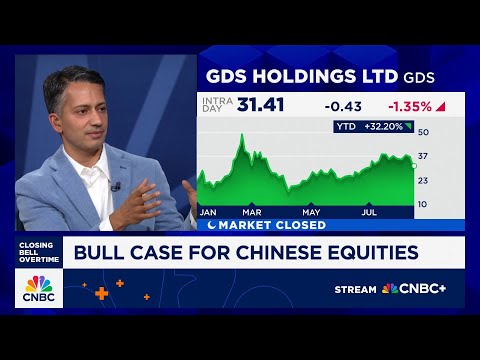
Tekne's Kothari shares his bull case for Chinese equities
CNBC Television· 2025-08-15 21:13
Market Trends & Investment Opportunities - Chinese stock market is experiencing a bull market, with the Shanghai Composite reaching highs not seen since 2021 and several major indices showing positive trends [1][3] - The Hong Kong IPO market is having its best year since 2021, raising more capital than any other market [3] - AI is identified as a significant growth area in China, with the market being in its early stages compared to the US [4][5] - Data centers, particularly companies like GDS (the landlord of AI in China), are highlighted as potential investment opportunities in the Chinese AI sector [6] - Bullish sentiment towards the Chinese supply chain, especially semiconductor companies, due to the decoupling trend between the US and China [9] Company Specifics & Financials - NRAC and other Chinese semiconductor companies have market caps significantly lower than their US counterparts, suggesting potential for equalization over the next 5 years [10] - DDI is identified as a company to watch, currently the largest company on the pink sheets with a market cap of $20-30 billion, anticipating a potential IPO [11][12] Risk Factors & Geopolitical Considerations - Tariffs are viewed as a distraction, with the focus shifting towards China's technological independence [8] - The emphasis is on investing in Chinese companies that supply to the Chinese technology sector [9]
X @Bloomberg
Bloomberg· 2025-08-15 16:43
Companies favorably ranked by the White House included DoorDash and Uber, according to Axios, which first reported the existence of the list https://t.co/1ACzu8uCpK ...
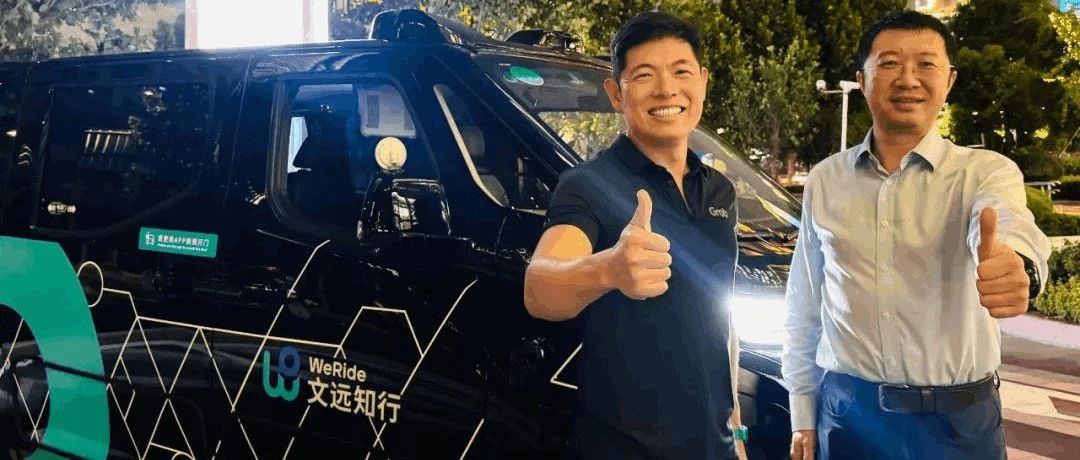
文远知行获Grab投资数千万美元,早前已获Uber承诺1亿美元追加投资
IPO早知道· 2025-08-15 09:53
Core Viewpoint - Grab's investment in WeRide aims to accelerate the deployment of L4-level Robotaxis and other autonomous vehicles in Southeast Asia, enhancing service quality and safety through strategic collaboration [4][5]. Group 1: Investment and Strategic Partnership - Grab will invest tens of millions of dollars in WeRide as part of a strategic partnership to support WeRide's international growth strategy and expand its commercial autonomous vehicle fleet in Southeast Asia [4]. - The investment is expected to be completed by mid-2026, with the exact timing dependent on WeRide's chosen conditions [4]. - WeRide's founder and CEO, Han Xu, emphasized the vision of gradually deploying thousands of Robotaxis in Southeast Asia, leveraging Grab's regional experience and scale [5]. Group 2: Operational Collaboration - WeRide will integrate its autonomous driving technology into Grab's fleet management, vehicle matching, and route planning systems [5]. - The collaboration will focus on optimizing scheduling and route planning to enhance passenger experience [6]. - A comprehensive maintenance, repair, and charging plan will be developed to maximize vehicle utilization [6]. Group 3: Safety and Training Initiatives - WeRide will utilize its regional operational experience to train autonomous vehicles to adapt to Southeast Asian traffic conditions, assessing their safety performance compared to human drivers [6]. - Remote monitoring and support processes will be established to ensure safety [7]. - A training program will be implemented to prepare Grab drivers and local community members for careers in the autonomous driving industry [8]. Group 4: Previous Investments and Growth - In May, WeRide announced an additional $100 million investment from Uber, marking the largest investment in the autonomous driving sector to date [5]. - The expanded collaboration builds on a memorandum of understanding signed in March 2025, where both parties committed to exploring the technical and commercial feasibility of autonomous vehicles [8].