
IMF

Search documents
X @The Economist
The Economist· 2025-09-18 18:20
Guyana has quintupled its GDP in five years, according to the IMF. It must use its status as a latecomer to the petrostate club to learn from the mistakes of others https://t.co/lypkIkJyYR ...
X @Bloomberg
Bloomberg· 2025-09-06 10:10
Angola faces mounting debt risks as oil revenue drops and external borrowing costs increase, the IMF said https://t.co/jhMIhWWraB ...
从日本到韩国,美国的金融屠刀从未失手!直到2015年碰上了中国!
Sou Hu Cai Jing· 2025-09-02 11:28
Core Viewpoint - The article argues that the relationship between China and the United States has reached an irreparable state due to China's rise threatening the U.S. financial hegemony, which is a strategic consensus among decision-makers in both countries [1][3]. Group 1: U.S. Financial Hegemony - The U.S. maintains its global dominance through three pillars: technological superiority, military deterrence, and financial hegemony, with the latter being the most crucial [3]. - The U.S. has created a "financial perpetual motion machine" through the dollar as the world currency, allowing it to easily exchange for goods from China, oil from the Middle East, and luxury items from Europe, leading to a comfortable lifestyle for its citizens for nearly half a century [3][5]. - The operational mechanism of U.S. financial hegemony involves a cycle where the Federal Reserve prints money, emerging market countries exchange real goods for dollars, and then U.S. financial entities manipulate these markets to extract wealth [5][7]. Group 2: Historical Context and Consequences - Historical examples, such as the 1990s Asian financial crisis, illustrate how the U.S. has leveraged its financial power to destabilize economies, leading to significant wealth transfer to American capital [7]. - The 2015 financial confrontation with China saw the U.S. attempt to short the yuan, resulting in a significant reduction of China's foreign reserves and stock market value, but China successfully defended its financial sovereignty [8][10]. - The ongoing initiatives like the Belt and Road Initiative and the internationalization of the yuan are seen as direct challenges to U.S. dollar dominance, indicating a fundamental conflict between the two nations [8][10]. Group 3: Future Implications - The article suggests that while there may be tactical easing in U.S.-China relations, the overarching trend of strategic confrontation is irreversible, marking a significant shift in global order [10].

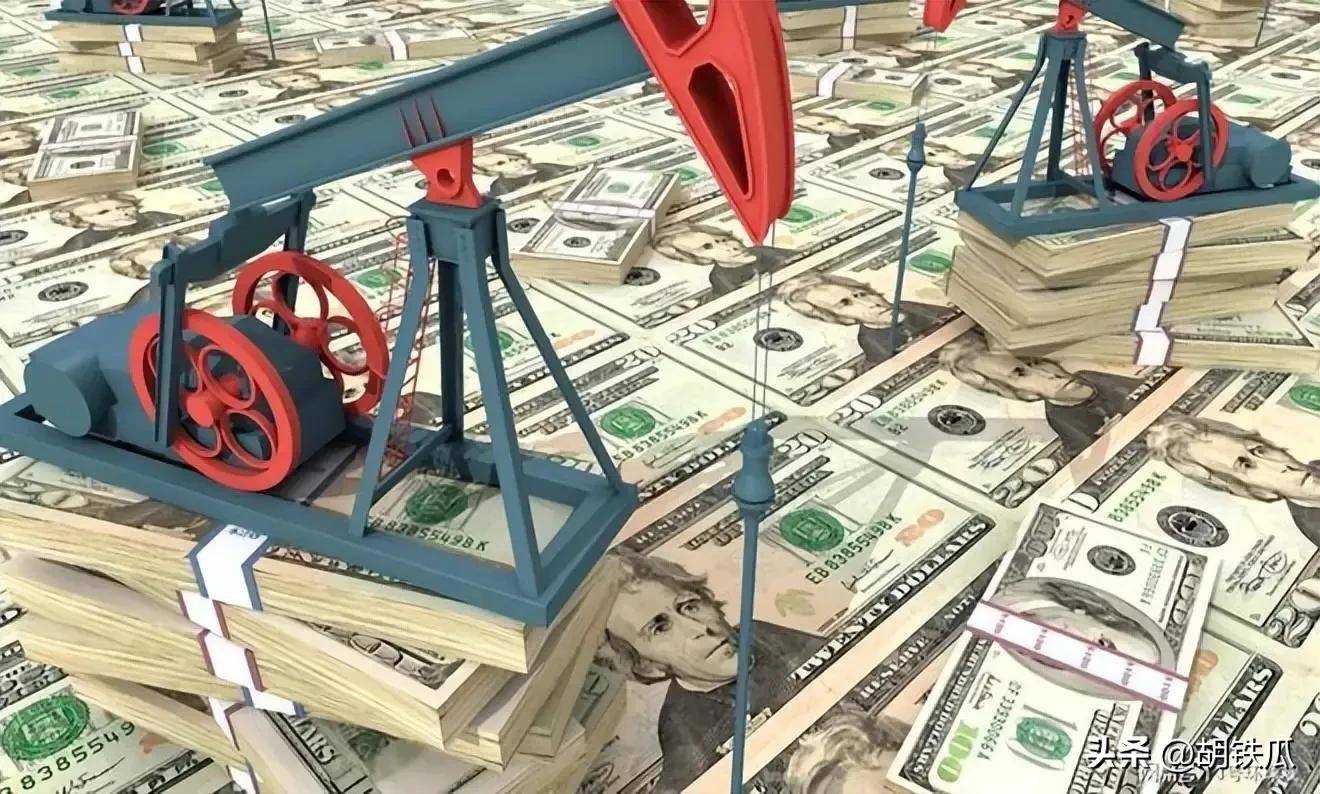
万亿大单背后暗藏玄机!特朗普金融布局浮出水面,全球紧盯美联储洗牌时刻
Sou Hu Cai Jing· 2025-08-26 00:06
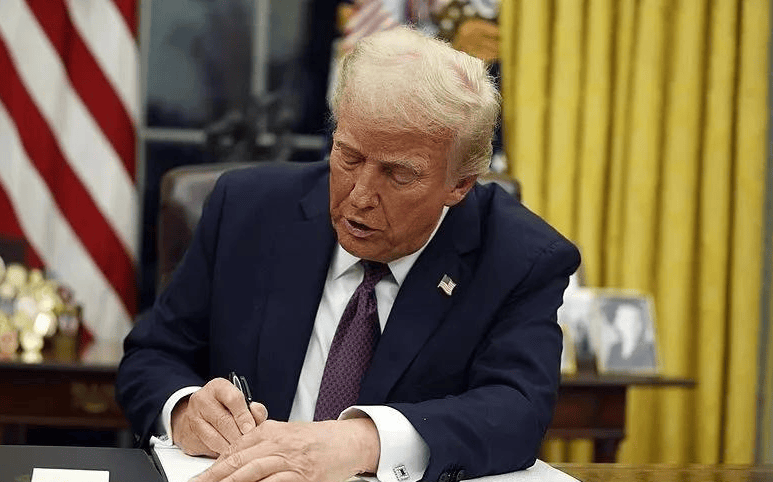
Core Viewpoint - The recent $1.39 trillion trade agreement between the U.S. and the EU, while appearing to be a significant victory for the U.S., reveals underlying challenges and potential weaknesses in the U.S. dollar's dominance in global markets [1][3]. Trade Agreement Details - The agreement includes commitments from the EU to purchase $750 billion in U.S. energy products and $400 billion in AI chips by 2028, along with an additional $600 billion in investments from European companies into U.S. strategic sectors [1]. - However, the actual projected energy imports from the EU to the U.S. for 2024 are only $64.55 billion, falling significantly short of the annual target of $250 billion [1]. Tariff Adjustments - The U.S. will reduce tariffs on EU automobiles from 27.5% to 15%, while the EU will eliminate tariffs on all U.S. industrial goods, with a 15% cap on tariffs for key products like semiconductors and pharmaceuticals [3]. - Economists criticize this as a superficial exchange, suggesting that the EU is making significant concessions without receiving equivalent benefits [3]. Federal Reserve Dynamics - Following the trade agreement, President Trump nominated Stephen Milan, a proponent of weakening the dollar, to the Federal Reserve, which could lead to a significant shift in U.S. monetary policy [3][4]. - The market reacted strongly, with a 91.1% probability of a rate cut by September indicated in federal funds futures, leading to a decline in the dollar index [3]. Political Influence on the Federal Reserve - Tensions within the Federal Reserve are escalating, with Trump pressuring for the removal of Biden-appointed board members, which could result in a majority of Trump-aligned members on the board [4]. - Milan's proposals for reforming the Federal Reserve could undermine its independence, potentially leading to a repeat of past economic crises [5]. Global Market Reactions - The potential loss of independence for the Federal Reserve has raised alarms in global markets, with warnings from the Bank for International Settlements (BIS) and the IMF about the risks of politicizing central banks [5]. - A decline in the dollar's credibility could lead to a sell-off, increasing the attractiveness of gold and other currencies, while also distorting trade flows due to high tariffs [5]. Economic Philosophies Clash - The trade agreement reflects a clash between the U.S.'s unilateral approach under Trump and China's multilateral "Belt and Road" initiative, with implications for global supply chains [7]. - Short-term benefits may arise for risk assets, but long-term consequences could include rising inflation and economic friction with the EU and Switzerland over the U.S.'s weak dollar strategy [7].
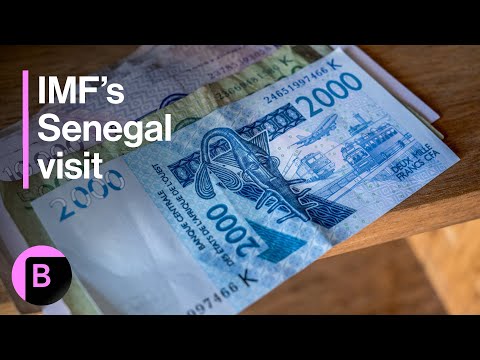
West Africa: IMF Visits Senegal as Nation Seeks New Funding Deal
Bloomberg Television· 2025-08-20 05:58
Senegal's Economic Situation - Senegal faces a significant challenge with $7 billion in debt that went undetected for nearly five years [2] - Debt to GDP ratio has exceeded 100%, and the budget deficit has increased [3] - The IMF seeks guarantees that the financial irregularities will not recur [4] IMF Intervention and Conditions - The IMF has disbursed $700 million of a $18 billion program, with further disbursements contingent on conversations [6] - The IMF aims to reduce Senegal's debt to GDP ratio to 50% [5] - The IMF recommends eliminating subsidies, especially on fuel and power [10] Potential Solutions and Challenges - Senegal needs to raise $5 to $10 billion, which cannot be sourced domestically [7] - Without an IMF program, international partners are hesitant to provide financial assistance [8] - Senegal is considering renegotiating oil and gas contracts, import taxes, and taxes on SMEs [9] - Austerity measures and tax increases may face resistance from the population [9][10]
X @Bloomberg
Bloomberg· 2025-08-19 04:16
Financial Stability - Senegal is seeking new funding to stabilize its strained public finances [1] International Relations - An IMF mission is arriving in Senegal this week [1] Investment - Investors are closely monitoring Senegal's progress in securing funding [1]
X @Bloomberg
Bloomberg· 2025-08-06 13:14
Zambia’s dollar-denominated bonds led losses among emerging peers on Wednesday after the IMF warned that the country’s capacity to service its debt remains weak, dampening bondholders’ hopes for improved terms https://t.co/utHsvm8uDl ...
X @Cointelegraph
Cointelegraph· 2025-08-01 07:30
⚡️ LATEST: The IMF claims Bitcoin consumes as much electricity as Argentina but isn't counted in GDP since it doesn't create traditional goods or services.Updated national accounting system now classifies crypto assets as national wealth for better economic measurement. https://t.co/FhzbUw1AkT ...
X @Bloomberg
Bloomberg· 2025-07-29 13:19
Britain will grow faster than any other major European economy this year and next but continue to lag behind the US and Canada among G-7 industrialized nations, according to the IMF https://t.co/fd8wGkZocz ...
X @Bloomberg
Bloomberg· 2025-07-24 22:24
Argentina reached an agreement with IMF staff on the first review of the country’s $20 billion program, a vote of confidence for President Javier Milei ahead of midterm elections in October https://t.co/hzBHV0M2iJ ...