Instagram

Search documents
Evan Spiegel on Deciding to Drop Out of College
Bloomberg Originals· 2025-11-06 03:00
What was it that made you say I need to drop out. Like I need to do this. >> I I was standing in the back of this machining class and I at that time we we were signed the documents.We were waiting for our venture investors Lightseed to fund and I was refreshing the Wells Fargo app in the back of the class, saw the $485,000 hit, walked up to my teacher Craig and just said, "You know what? I'm so sorry. I'm going to have to drop this class." But I went back and finished that class with Craig many years later. ...


X @Bloomberg
Bloomberg· 2025-11-05 14:30
Singapore’s parliament passed a law giving authorities more powers to block harmful content on social media platforms, from TikTok to Instagram and Facebook, the city state’s latest move to curb online harms. https://t.co/9E1iTZjJmF ...
X @Bloomberg
Bloomberg· 2025-11-05 07:15
From Dec. 10, young teenagers in Australia will be banned, under new legislation, from social media platforms such as Facebook, Instagram and TikTok — one of the toughest online crackdowns in the democratic world.Here's what to expect. ⤵️ https://t.co/Akqx8TUIDW ...
New book on the erosion of popular digital platforms
MSNBC· 2025-11-01 04:20
Core Argument - The tech industry is experiencing "shitification," a pattern of platform decay where platforms initially benefit users, then exploit them and business customers after locking them in, ultimately degrading the user experience [2][3] - Tech platforms exploit their dominant market positions (e g, Google's 90% search market share) to prioritize profit over user satisfaction, due to lack of competition [5][6] - This phenomenon extends beyond digital platforms to other areas like TV shows, video games, and even political systems [7] Contributing Factors - Digital platforms' ability to update in real-time and personalize offers for each user facilitates the exploitation of value [8] - Even paid platforms are not immune, as companies like Apple engage in their own surveillance for advertising purposes despite charging users for their devices [9][10] - Corporate concentration and lack of competition enable this behavior, as companies face little incentive to prioritize user needs [14] Potential Solutions - Hope lies in collective action and political engagement rather than relying on individual consumer choices, as billionaires' wallets are thicker [16][17] - Increased regulatory scrutiny and enforcement of antitrust laws globally, including in the US, Canada, the EU, and other countries, are creating a tailwind against corporate concentration [12][13][14] - Grassroots activism and involvement in political and digital rights groups are crucial for advocating for user rights and holding tech companies accountable [18][19]
68亿,美国红杉资本新设立2支早期基金
Sou Hu Cai Jing· 2025-11-01 00:55
Core Insights - Sequoia Capital has launched two new funds totaling $950 million, maintaining a similar scale to funds established two years ago [2][3] - The funds include a $750 million Early Stage Fund focused on A-round startups and a $200 million Seed Fund targeting Pre-Seed and Seed stage projects [2][3] Fund Details - The Early Stage Fund aims to invest in A-round startups that have achieved initial product-market fit and are in a rapid growth phase [2] - The Seed Fund is designed to engage with startups from their inception, allowing for larger equity stakes at lower valuations [2] Investment Strategy - Sequoia Capital emphasizes an "earlier is better" investment philosophy, particularly in high-demand sectors like AI, where early entry can secure lower valuations and larger equity [4] - Recent investments in the AI sector include projects like Xbow, Traversal, and Reflection AI, with Reflection AI receiving significant backing from Nvidia after initial seed funding [4] Fund Structure - The new funds are part of Sequoia's "Evergreen Fund" structure, which allows for long-term holding of shares even after IPOs, supporting a value investment strategy from seed to IPO [4][3] Historical Context - Founded in 1972, Sequoia Capital is one of Silicon Valley's earliest venture capital firms, known for investing in influential tech companies like Apple, Google, and Nvidia [6][7] - As of October 2025, Sequoia has invested in over 100 companies within the year, covering various sectors including AI, enterprise software, and fintech [7]
VC变成了“高利贷”
3 6 Ke· 2025-10-31 11:54
Core Insights - The article discusses the significant differences between the venture capital (VC) investment practices in Silicon Valley and China, particularly focusing on the prevalence of "Valuation Adjustment Mechanism" (VAM) or "bet-on agreements" in China compared to their rarity in Silicon Valley [1][2][3] Group 1: Differences in Investment Practices - In Silicon Valley, less than 5% of VC agreements include buyback clauses, while over 90% of VC investments in China contain such clauses, typically with a 3-year term [1][2] - The term "对赌协议" (bet-on agreement) is a unique Chinese concept that reflects the competitive nature of the investment ecosystem, contrasting with the neutral term "VAM" used in the U.S. [1][2] - Silicon Valley investors utilize preferred stock with liquidation preferences and anti-dilution rights, providing a more balanced risk-sharing mechanism compared to the debt-like nature of buyback agreements in China [3][4] Group 2: Exit Strategies and Market Conditions - In Silicon Valley, 80% of exits occur through acquisitions rather than IPOs, with major tech companies frequently acquiring startups, while in China, 65% of acquisitions involve companies without prior public financing [3][4] - The IPO market in China is facing significant challenges, with 2024 seeing the lowest fundraising total in nearly a decade at 67.35 billion yuan, while the U.S. Nasdaq continues to see substantial IPO activity [4][5] - The tightening of exit channels in China has led to an increase in buyback events, with 1,741 occurrences in 2024, marking an 8.5% increase from the previous year [5][9] Group 3: Systemic Issues and Responses - The pressure from Limited Partners (LPs) in China, often government-backed, necessitates the inclusion of buyback clauses due to strict exit timelines, which do not align with the longer development cycles of many innovative companies [6][8] - The trend of buybacks has shifted from being a protective mechanism to resembling fixed-income products, indicating a fundamental change in the nature of equity investments in China [6][8] - New solutions are emerging, such as S funds that acquire illiquid shares from VC/PE investors, allowing for a more flexible exit strategy [9][10] Group 4: Future Directions and Innovations - The introduction of flexible buyback terms and the establishment of S funds are part of a broader market correction, aiming to address the systemic failures in funding, exit strategies, and legal frameworks [10][12] - Legislative proposals, such as personal bankruptcy laws, are being discussed to provide legal protections for entrepreneurs, potentially alleviating the burden of personal debt from failed ventures [12][13] - The ongoing exploration of new investment tools, such as convertible bonds, reflects a shift towards more adaptable financial instruments that can better accommodate the realities of the Chinese market [12][13]
Innovation in Media: Transforming How Audiences Consume Content | Sadaf Khan | TEDxJAS Youth
TEDx Talks· 2025-10-30 16:08
Hi everyone. I think everyone can hear me. Um, so my name is Sadav Khan.Uh, and I'm an entrepreneur. I develop uh pro I conceptualize, design and develop products uh that are tech enabled and they deliver information to financial services companies uh such as banks um and funds. So um just you know go looking back at my last 25 years my experience has mainly been in the media industry.Um I started off in 1999 at a small company called Loan Pricing Corporation. It's what you would call a startup nowadays. Uh ...
X @TechCrunch
TechCrunch· 2025-10-22 17:11
Instagram introduced custom app icons for its teen accounts, but not everyone is thrilled. In replies to the company’s post on X, users criticized the feature for being age-gated, arguing that adults like personalization, too. https://t.co/etDuFksiwe ...
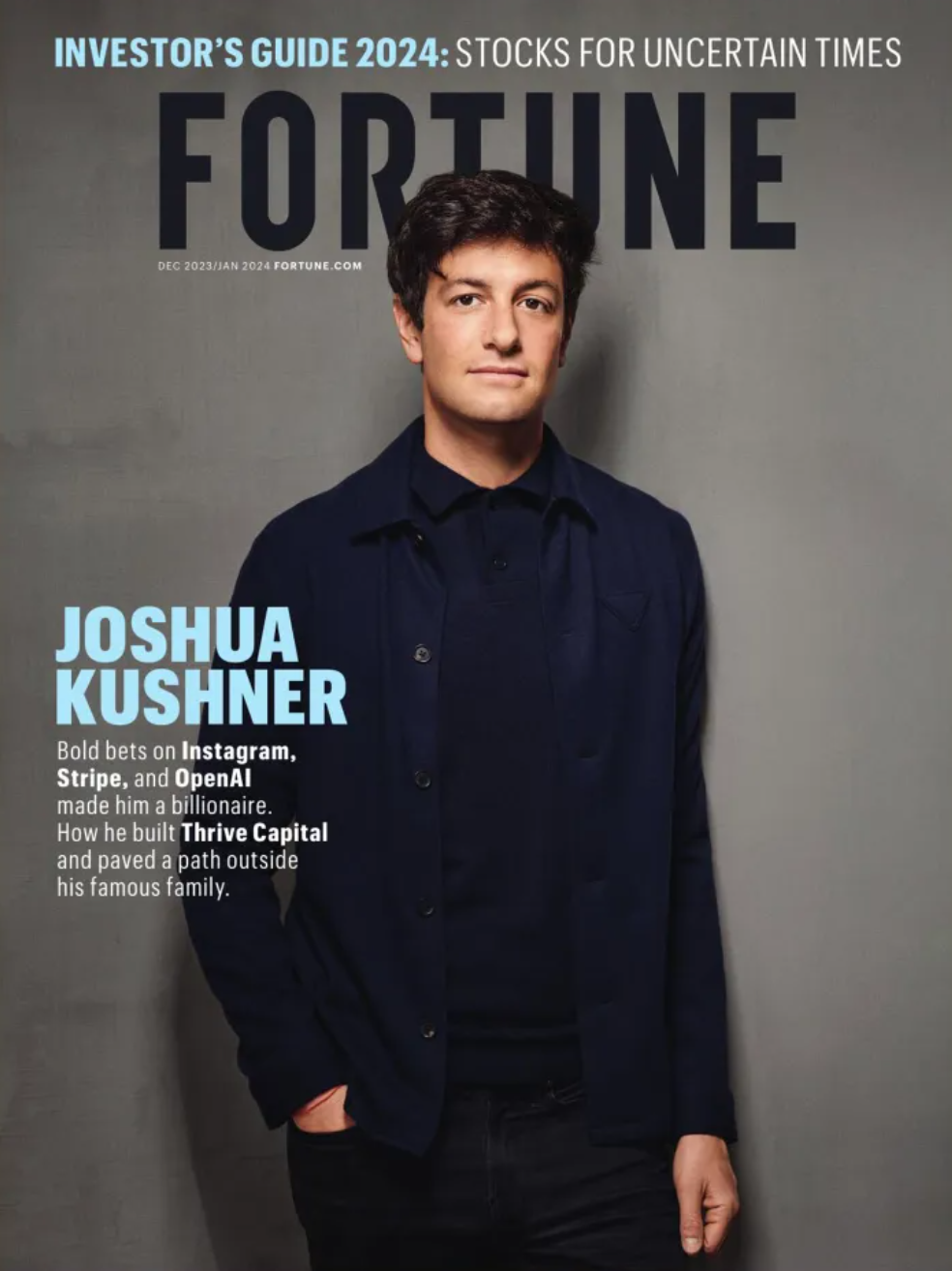
帮助Altman重掌OpenAI,一文读懂美国最火科技投资者之一——Joshua Kushner和他的Thrive Capital
Hua Er Jie Jian Wen· 2025-10-17 13:31
Core Insights - The sudden dismissal of Sam Altman by the OpenAI board created significant upheaval in the global AI landscape, with Joshua Kushner emerging as a key player in the ensuing crisis [1][6][9] Group 1: The Crisis and Response - Joshua Kushner, as OpenAI's largest external shareholder, played a pivotal role in the negotiations and actions that led to Altman's reinstatement after five days of turmoil [2][6][8] - During the crisis, Kushner coordinated efforts with Microsoft, media narratives, and legal actions while leveraging an employee stock buyback plan to stabilize the company [7][9] - The resolution of the crisis not only restored Altman to his position but also elevated Kushner's public profile significantly [9] Group 2: Background of Joshua Kushner - Joshua Kushner's childhood was marked by a dramatic family downfall, which shaped his understanding of the world and his approach to business [10][15] - His father's legal troubles and the collapse of the family real estate empire provided Kushner with valuable lessons in resilience and the importance of staying true to one's values [12][15] - This background influenced Kushner's decision to pursue a different path in technology and investment, leading to the founding of Thrive Capital [15][16] Group 3: Thrive Capital's Evolution - Thrive Capital transformed from an unknown investment firm into a highly regarded player in the industry within just 13 years, showcasing remarkable foresight in its investments [16][17] - The firm’s unique approach, which included focusing on a limited number of companies and providing operational support to founders, has become a standard in the venture capital space [18] - Thrive's ability to act decisively during the OpenAI crisis reflects its foundational belief in authenticity and independence from external pressures [18]