Salesforce

Search documents
Jim Cramer on HubSpot: “It Pops Up on Our Screen as Very Cheap”
Yahoo Finance· 2026-02-10 15:58
Group 1 - HubSpot, Inc. is identified as a potentially undervalued stock, with a significant decline of 74% from its peak, which is worse than Atlassian [1] - The company is recognized for its marketing, sales, and customer service software, often referred to as a mini Salesforce, and is projected to achieve 20% earnings growth this year [1] - HubSpot's stock is currently trading at 20 times this year's earnings, suggesting it may be undervalued [1] Group 2 - HubSpot provides a cloud-based platform that assists businesses in managing marketing, sales, and customer service through automated tools and data analytics [3]

What Folks Are Really Vibe Coding Today. (It’s Not Building Their Own Salesforce.)
SaaStr· 2026-02-10 15:10
What Folks Are Really Vibe Coding Today. (It’s Not Building Their Own Salesforce.) Anton Osika, the CEO of Lovable, just shared something really interesting — their top 4 actual use cases for vibe coding in businesses right now.Lovable is now the second-fastest growing software product among businesses on Ramp.These are the main use cases for Lovable in businesses right now:1/ Rapid prototyping without waiting on engineering2/ Building internal tools that actually match your process and needs3/… pic.twitte ...


Here’s Why Veeva Systems (VEEV) Traded Down in Q4
Yahoo Finance· 2026-02-10 13:23
Group 1: Fund Performance - Baron Asset Fund achieved a return of 7.89% in Q4 2025, outperforming the Russell Midcap Growth Index by 11.59 percentage points, which ended the quarter down 3.70% [1] - The Fund held a total of 53 positions as of December 31, 2025, with the 10 largest holdings representing 52.8% of net assets and the 20 largest holdings representing 73.3% of net assets [1] Group 2: Veeva Systems Inc. Analysis - Veeva Systems Inc. (NYSE:VEEV) was highlighted as a notable detractor for the Baron Asset Fund, with a one-month return of -19.20% and a 12-month decline of 21.22% [2] - The company's market capitalization is reported at $30.347 billion [2] - Following a quarterly update in November, Veeva's management tempered expectations for customer retention, expecting only 14 of the top 20 global pharmaceutical companies to adopt its next-generation Vault CRM product, down from 18 for the legacy Veeva CRM [3] - The termination of Veeva's long-standing partnership with Salesforce has allowed for greater control over its product roadmap but has also introduced direct competition with Salesforce, which has announced its own product development efforts [3] - Despite recent challenges, the company retains long-term conviction in Veeva due to favorable secular tailwinds and confidence in its 2030 financial targets [3]

Software stocks tank, analysts see opportunities: Stocks & Markets Podcast
Yahoo Finance· 2026-02-09 23:31
Group 1 - The term "Software-mageddon" describes a significant sell-off in software and tech stocks due to fears that generative AI could render traditional software companies obsolete, with the North American Tech-Software iShares ETF (IGV) dropping 24.6% year to date as of February 9 [1] - Analyst Dan Ives from Wedbush believes the market's pessimism regarding software companies is exaggerated, asserting that the AI Revolution is accelerating and that 2026 will be a pivotal year for AI [2] - Lindsey Bell, CIO at 248 Ventures, noted that despite strong quarterly results from many tech companies, there are concerns about the sustainability of AI demand and the profitability of current spending [4] Group 2 - Bell highlighted that some companies are currently integrating AI into their systems and have strong revenue and profitability, suggesting that their stock declines are unwarranted [7] - Chris Versace pointed out that prominent figures in the tech industry, including CEOs from Nvidia, AMD, and Arm Holdings, criticized the sell-off, emphasizing that AI is a tool to enhance software rather than a threat to the industry [6] - The overall sentiment in the tech sector is cautious, with some investors opting to take profits until there is clearer visibility on profitability [5]



Why the Mag 7 Lost $950B in One Week
Investor Place· 2026-02-09 22:00
Core Insights - The recent volatility in tech stocks is attributed to significant capital expenditure announcements from major companies like Alphabet and Amazon, leading to a market reevaluation of investment returns in the AI sector [4][5][6] - The transition from "Stage 1" to "Stage 2" of the AI boom indicates a shift in focus from large tech companies to smaller firms that provide essential infrastructure for AI development [8][10][20] Group 1: Market Reactions and Trends - The S&P 500 software and services sector lost approximately $1 trillion in market value, with major players like Microsoft and Salesforce experiencing sharp declines [2][6] - Following initial losses, tech stocks rebounded significantly, cutting the week's losses in half, indicating ongoing market recovery [2] - Investors are increasingly questioning the return on investment for the substantial capital expenditures planned by major tech firms, leading to a sell-off [6][7] Group 2: Capital Expenditure Insights - Alphabet announced a capital expenditure of $13.9 billion for Q4, with projections for 2026 spending to rise to between $175 billion and $185 billion, nearly doubling previous estimates [4] - Amazon's capital expenditure for 2026 is projected to reach $200 billion, exceeding expectations by about $50 billion, contributing to a total of approximately $710 billion in projected spending from the top five hyperscalers [5] - This spending translates to nearly $2 billion per day being invested in data centers, chips, and networking infrastructure [5] Group 3: Investment Opportunities - The capital flowing into AI infrastructure presents opportunities for smaller companies that manufacture the necessary components and systems, marking the beginning of "Stage 2" in the AI boom [8][10] - Companies involved in providing power systems, networking infrastructure, and memory technologies are positioned to benefit from this infrastructure spending [16] - Specific companies identified as potential winners include Arista Networks, Eaton, and Broadcom, which are well-positioned to capitalize on the growing demand for AI infrastructure [16][18] Group 4: Challenges for Legacy Companies - The rapid advancement of AI tools raises concerns about the viability of legacy software and data services companies, which may struggle to compete with AI-driven alternatives [11][12] - Companies categorized under "KIDS" (Knowledge work, Information collection, Data analysis, Software) face significant risks as AI could render their business models obsolete or less profitable [12][13][14] - The decline in stock prices for KIDS companies, such as FactSet and Morningstar, reflects a broader market reevaluation of these business models in light of AI advancements [14]



市场消息:AMD(AMD.O)任命阿里尔·凯尔曼为首席营销官,凯尔曼曾任Salesforce总裁兼首席营销官。
Jin Rong Jie· 2026-02-09 19:24
本文源自:金融界AI电报 市场消息:AMD(AMD.O)任命阿里尔·凯尔曼为首席营销官,凯尔曼曾任Salesforce总裁兼首席营销官。 ...
AMD Hires Ariel Kelman as Chief Marketing Officer
Globenewswire· 2026-02-09 19:00
Core Insights - AMD has appointed Ariel Kelman as Senior Vice President and Chief Marketing Officer, effective immediately, to lead its global marketing organization [1] - Kelman will report to Ruth Cotter and work closely with the executive team to enhance engagement with customers, partners, and developers as AMD scales its product and solutions leadership [2] - Kelman has over two decades of experience in global marketing, previously serving as president and CMO at Salesforce, and held senior roles at Amazon Web Services and Oracle [3] Company Strategy - The appointment of Kelman is aimed at sharpening AMD's storytelling and advancing its marketing organization to accelerate momentum in high-performance and AI solutions across various sectors [3] - Kelman expressed enthusiasm about joining AMD, focusing on elevating the brand and capturing opportunities in the AI data center market with AMD's differentiated products [4] Company Overview - AMD drives innovation in high-performance and AI computing, powering billions of experiences across cloud and AI infrastructure, embedded systems, AI PCs, and gaming [4] - The company offers a broad portfolio of AI-optimized CPUs, GPUs, networking, and software, delivering full-stack AI solutions for intelligent computing [4]

Workday's CEO is stepping down as its cofounder resumes the job
Business Insider· 2026-02-09 18:16
Core Insights - Workday's CEO Carl Eschenbach is stepping down, with cofounder Aneel Bhusri taking over the role, marking Bhusri's return to leadership after previously serving as CEO multiple times [1][3] - The company recently laid off approximately 400 employees, representing about 2% of its workforce, to realign resources with its priorities [1][3] - Workday's shares have declined roughly 6% on the day of the announcement and are down about 43% compared to a year ago [2] Leadership Transition - Aneel Bhusri has a long history with Workday, having served as co-CEO and CEO in various capacities from 2009 to 2024 [3] - Bhusri's leadership is expected to guide Workday through a transformative period influenced by advancements in AI, as noted by Mark Hawkins, the vice chair [2] Layoff Context - The recent layoffs follow a larger round of layoffs last year, which were also attributed to the need for strategic investment in areas like AI [4] - Workday had over 20,400 employees as of January 31, 2025, indicating a significant workforce size prior to the layoffs [4] Market Reaction - The software sector, including Workday, has faced stock price declines following the introduction of new AI tools by competitors, such as Anthropic's Claude Cowork plugin [4] - Eschenbach previously expressed confidence in Workday's position in the AI landscape, suggesting that the company is well-equipped to leverage AI advancements rather than be hindered by them [5]


Workday首席执行官埃申巴赫卸任,联合创始人布斯里接任
Xin Lang Cai Jing· 2026-02-09 16:50
阿尼尔・布斯里 企业软件公司 Workday 周一宣布,首席执行官卡尔・埃申巴赫卸任,由公司联合创始人阿尼尔・布斯 里接任,即刻生效。 布斯里曾在该软件公司担任多个高管职务:2009 年至 2014 年任联合首席执行官,2014 年至 2020 年任 首席执行官,2020 年至 2024 年再次担任联合首席执行官,2024 年至 2026 年任执行董事长。 埃申巴赫于 2022 年与布斯里共同担任 Workday 联合首席执行官,并于 2024 年开始单独担任首席执行 官一职。 近几个月来,包括 Workday 在内的软件股持续承压,因投资者担忧人工智能可能对行业造成颠覆性冲 击。Workday 股价去年下跌 17%,今年以来已下跌超 20%。 周一当天,该公司股价下跌 5%。 核心要点 布斯里在声明中表示: "我们正步入公司历史上最关键的时期之一。人工智能带来的变革比软件即服务(SaaS)更为深远,它 将定义下一代市场领导者。" Salesforce、甲骨文、微软等均为主要的软件即服务企业。 上月,埃申巴赫曾试图淡化市场对人工智能冲击软件行业的担忧,他对 CNBC 表示,相关说法 "被夸大 了" 且 "并不 ...

从DeepSeek恐慌到Cowork恐慌
3 6 Ke· 2026-02-08 23:50
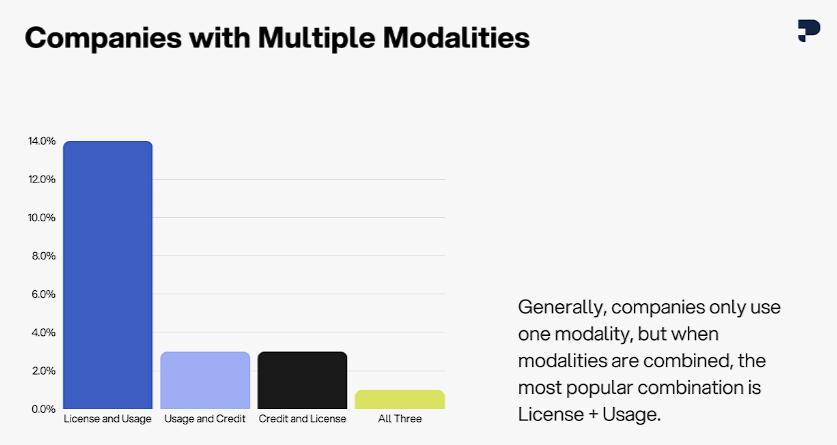
Core Insights - The software sector is experiencing a significant sell-off, termed "SaaSpocalypse," with major companies like Thomson Reuters and Salesforce facing steep declines in stock prices, with the S&P 500 Software and Services Index dropping nearly 13% over five trading days and 26% from its October peak [1] - The launch of Anthropic's Claude Cowork, a general AI agent capable of interacting with user files, has raised concerns about the viability of traditional SaaS business models, as users may achieve results comparable to expensive enterprise software through natural language commands [1] - The current market panic mirrors a previous incident involving DeepSeek, which also caused a rapid sell-off in tech stocks, highlighting a pattern of investor reaction to emerging AI technologies [2][3] Market Reactions - The sell-off triggered by Cowork has been more prolonged than the DeepSeek panic, with the latter's effects dissipating within a day, while Cowork's impact has spread over a week, affecting markets globally [5] - The Cowork panic is driven by a closed-source model from a U.S. company, contrasting with DeepSeek's open-source model from China, suggesting a deeper challenge to established software companies [4] SaaS Pricing Models - Traditional SaaS companies are transitioning from fixed pricing models to usage-based pricing due to the increased efficiency and accessibility of AI, with 79 out of 500 tracked companies adopting point-based pricing, a 126% increase year-on-year [8] - Companies like Salesforce have struggled with pricing strategies, leading to a shift towards usage-based models as they face rising operational costs [8] AI Integration Challenges - Traditional software companies face resistance to price increases associated with AI integration, as seen in Microsoft's case, where customers rejected higher fees for AI features [9] - Many established firms are struggling to effectively incorporate AI into their existing products, leading to inefficiencies and a lack of user engagement [9] Emerging Trends - The rise of Vibe Coding, which allows individuals and companies to create their own tools, poses a threat to traditional software sales, as businesses may prefer to develop customized solutions rather than purchase third-party software [11] - The demand for software is shifting towards solutions that address specific, non-standard needs, indicating a potential decline in the traditional SaaS model [13]