
博格华纳公司

Search documents
IPO雷达 | 隆源股份回复首轮问询:毛利率连年下滑、客户高度集中存隐忧
Sou Hu Cai Jing· 2025-09-20 05:00
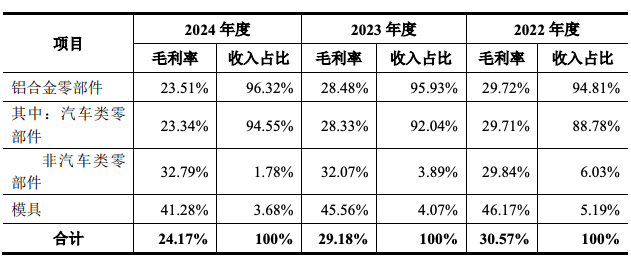
Core Viewpoint - The initial inquiry from the Beijing Stock Exchange highlights key risks associated with Ningbo Longyuan Co., Ltd.'s IPO, including potential issues of equity holding, customer cooperation stability, sales revenue authenticity, and the necessity of fundraising projects [2][3][7] Group 1: Equity Holding and Compliance - The company clarified that there are no equity holding arrangements or disputes between its current shareholders and former shareholders, and that any past issues have been resolved [2] - The company acknowledged a failure to timely register certain investments but stated that this does not constitute a major violation of regulations [2] Group 2: Customer Cooperation and Revenue Authenticity - Longyuan's major clients include BorgWarner, Taigene, and Leap Motor, with a high customer concentration, where the top five clients accounted for 84.33% to 77.59% of sales during the reporting period [3] - The company has a long-standing relationship with BorgWarner, which reduces the risk of being replaced as a supplier, although reliance on a single customer remains high [3] - The company provided evidence to support the authenticity of its export revenue, showing a discrepancy rate of less than 1% compared to customs data, but raised concerns about the significant increase in third-party payment amounts [4] Group 3: Financial Performance and Margin Trends - From 2022 to 2024, the company's revenue grew from 519 million to 869 million, while net profit increased from 101 million to 129 million, indicating steady growth [4] - However, the gross margin declined from 30.57% to 24.17% over the same period, attributed to changes in product mix and fluctuations in raw material prices [4][5] Group 4: Fundraising Projects and Market Demand - The company plans to raise 610 million for projects related to new energy systems and lightweight automotive components, with expected annual revenue of 622 million from these projects [7] - The company reported a capacity utilization rate of around 83% to 89% in recent years, indicating a need to justify the market demand for the new capacity being added [7]

Could the Back Half of Fiscal 2026 Unlock Modine's Margin Growth?
ZACKS· 2025-09-15 15:06
Core Insights - Modine Manufacturing Company (MOD) anticipates overall margin improvement in fiscal 2026, primarily driven by the Performance Technologies segment, with expectations for stronger margins in the second half of the year [1][8] Segment Analysis - Climate Solutions is projected to see significant volume growth in the second half, driven by data center ramp, although initial margins may be flat or slightly lower due to preparation costs [2][8] - Data center volumes are expected to grow by over 80% in the second half, supported by substantial inventory built to meet project timelines [2] - The acquisition of L.B. White is expected to deliver margins of 15-20% in the fiscal second quarter, contributing positively to performance in the second half [3][8] - Performance Technologies is expected to achieve nearly 100 basis points of margin improvement in the second half, despite flat to declining volumes, due to cost reduction efforts and recovery of tariff and metals costs [4][8] Competitive Landscape - Magna International Inc. (MGA) is implementing restructuring and cost containment measures to address macroeconomic pressures, while enhancing productivity through advanced technologies [5] - BorgWarner Inc. (BWA) is streamlining its portfolio and consolidating operations to improve profitability, with expected annual cost savings of about $20 million by 2026 [6] Financial Performance - Modine has outperformed the Zacks Automotive-Original Equipment industry year to date, with shares gaining 29.1% compared to the industry's 12% growth [7] - Modine's price/sales ratio indicates it may be overvalued, trading at a forward sales multiple of 2.57, higher than the industry's 2.11 [10] - The Zacks Consensus Estimate for MOD's fiscal 2026 and 2027 EPS has increased by 11 cents and 46 cents, respectively, in the past 60 days [11]

US Stock Market Navigates Midday Chop, Eyes Fed Rate Cut Next Week
Stock Market News· 2025-09-12 16:07
Market Overview - The U.S. stock market showed mixed but resilient performance on September 12, 2025, with major indexes reflecting cautious optimism ahead of the Federal Reserve's interest rate decision [1][2] - The S&P 500 and Nasdaq Composite remained near record levels, while the Dow Jones experienced profit-taking [1][2] Major Index Performance - The S&P 500 was flat, maintaining its all-time high for the third consecutive day, indicating that much of the positive news regarding potential rate cuts has been priced in [2] - The Nasdaq Composite achieved a new record peak, supported by strength in the tech sector [2] - The Dow Jones Industrial Average saw a decline due to profit-taking after previous gains [2] Economic Indicators - Expectations for a Federal Reserve interest rate cut have been bolstered by recent economic reports, including a milder-than-expected August CPI and a rise in weekly jobless claims [3] - The University of Michigan Consumer Sentiment Index for September fell to 55.4, the lowest since May, indicating caution in consumer outlook [3] Upcoming Events - The Federal Open Market Committee (FOMC) meeting on September 16-17 is highly anticipated, with a near-certainty of a 25-basis-point rate cut expected [4] - The FOMC's updated projections for future interest rates will be closely monitored for long-term policy insights [4] Corporate Earnings - Key corporate earnings reports are expected next week, including General Mills, FedEx, and Darden, which will provide insights into corporate performance amid current economic conditions [6] Notable Stock Movements - Tesla, Inc. shares rose 6% due to optimism surrounding Fed rate cuts and a strong technical breakout [7] - Warner Bros. Discovery, Inc. surged 29% following news of a potential majority-cash takeover bid from Paramount Skydance [7] - AbbVie Inc. rose 4.1% after securing a patent settlement for its drug Rinvoq, extending protection until 2037 [12] - Super Micro Computer Inc. climbed 3.6% after announcing high-volume shipments of racks using Nvidia's technology [12] - Quantum computing company IonQ surged 15% after receiving UK regulatory clearance for its acquisition of Oxford Ionics [12]


Synopsys downgraded, Oracle upgraded: Wall Street's top analyst calls
Yahoo Finance· 2025-09-10 13:51
Upgrades - BofA upgraded Rocket Companies (RKT) to Buy from Neutral with a price target of $24, up from $21, citing updated Federal Reserve rate cut forecast [2] - Morgan Stanley upgraded nCino (NCNO) to Overweight from Equal Weight with a price target of $36, up from $35, believing the cut in estimates provides an opportunity [2] - Susquehanna upgraded Saia (SAIA) to Positive from Neutral with a price target of $360, up from $340, expecting Q2 earnings to "snap-back" after a challenged fiscal Q1 report [3] - TD Cowen upgraded Nike (NKE) to Buy from Hold with a price target of $85, up from $62, citing improved margins, new management execution, and positive trends [3] - Citi upgraded Oracle (ORCL) to Buy from Neutral with a price target of $410, up from $240, after a "historic Q1 bookings quarter" with over $330 billion in bookings [4] - BofA also upgraded Oracle to Buy from Neutral with a price target of $368, up from $295, following exceptional RPO and backlog growth in Q1 [4] Downgrades - BofA double downgraded Synopsys (SNPS) to Underperform from Buy with a price target of $525, down from $625, due to uncertainty with top customer Intel and higher integration costs [5] - Morgan Stanley downgraded Trade Desk (TTD) to Equal Weight from Overweight with a price target of $50, down from $80, acknowledging a misjudgment on growth durability [5] - BofA downgraded BorgWarner (BWA) to Neutral from Buy with a price target of $46, up from $41, as shares approach historical valuation median range [5] - BofA downgraded Lear (LEA) to Neutral from Buy with a price target of $123, down from $135, citing challenges in the automotive industry affecting growth [5] - Evercore ISI downgraded HP Inc. (HPQ) to In Line from Outperform with an unchanged price target of $29, needing clearer paths to EPS and free cash flow estimates for further upside [5]


专家交流精密轴承在人形机器人领域的应用
2025-09-07 16:19
Summary of Conference Call on Precision Bearings in Humanoid Robots Industry Overview - The global high-end bearing market is dominated by eight multinational companies, which hold a 70% market share, with annual revenues exceeding $50 billion each [8][9] - Chinese bearing companies are smaller in scale and face urgent domestic substitution needs, particularly in materials and heat treatment technologies [1][7] Key Points on Cross Roller Bearings - Cross roller bearings have high technical barriers, with few large-scale manufacturers globally, primarily located in Japan and Germany [1][4] - The global sales of cross roller bearings were approximately $520 million in 2022, expected to reach $730 million by 2028, with an annual growth rate of about 3% [1][9] - Major manufacturers include Japan's THK, IKO, NSK, and Germany's Schaeffler [9] Technical Challenges and Developments - The core technical barriers for cross roller bearings include deformation resistance, grinding precision, rigidity, lifespan, and rotational smoothness [4][5] - Domestic suppliers have made progress in replacing some high-end brands from Germany and Japan but need to enhance automation in assembly processes [5][6] - The manufacturing process for cross roller bearings is complex, involving forging, CNC machining, and precision grinding, which is still not fully achieved in China [6][7] Market Dynamics and Competition - The domestic bearing industry faces challenges in material quality and heat treatment, with high-end materials often imported from Japan [7] - The average revenue of the top ten Chinese bearing companies is only $6 billion, accounting for less than 10% of the global market [8][11] - Price competition is fierce, but technology remains a critical factor for success [10][11] Custom and Standard Products - Cyberbox Industrial Technology has developed micro harmonic bearings, achieving a profit margin of about 35% for standard products and up to 100% for custom products [12][16] - The company has broken Japan's Harmonic Technology's monopoly in micro harmonic bearings and is collaborating with various clients for testing and customization [12][16] Future Prospects and Innovations - The humanoid robot market requires various types of bearings, with a single robot potentially using up to 36 different components [2][3] - Cyberbox is exploring lightweight bearing technologies, including double-row tooth bearings and steel-aluminum composite materials [21][24] - The company is also involved in projects related to laser radar and injection molding machine bearings, indicating a diversification of applications [15][20] Conclusion - The high-end bearing market, particularly for humanoid robots, presents significant growth opportunities, but challenges in technology and competition remain [1][8][11] - Continuous innovation and collaboration with international partners will be essential for domestic companies to enhance their market position and product quality [11][12][18]

PHINIA (PHIN) 2025 Conference Transcript
2025-09-03 13:52
Summary of PHINIA (PHIN) 2025 Conference Call Company Overview - PHINIA is a diversified company with approximately $3.4 billion in revenue, specializing in precision machining, fluid management, and electrical components and systems [2] - The company generates about 34% of its revenue from the aftermarket, which includes services, components, and training facilities [2] Core Technology and Differentiation - PHINIA's product offerings include fuel injection systems, fluid management, selective catalytic reduction, and ignition systems, especially after the acquisition of SCM [2] - The company invests around $200 million, or nearly 6% of sales, in R&D, with customers contributing about $100 million annually for calibration and software support, resulting in a net R&D expenditure of approximately 3% [3] Industry Challenges and Innovations - Fuel injection systems are complex, requiring high precision manufacturing in clean room environments, with tolerances as tight as half a micron and pressures reaching 3,000 bar (approximately 45,000 PSI) [5][6] - The company is adapting to challenges posed by fuel quality, including the introduction of biofuels and contaminants [6] Competitive Landscape - The competitive landscape is narrowing, with PHINIA and Bosch being the two major players in the market, while smaller competitors are exiting [9] - PHINIA sees significant opportunities in off-highway and aerospace industries, where competitors are not investing as heavily in R&D [9] Market Demand Trends - The commercial vehicle off-highway business has declined from a peak, while light vehicle markets are softening, though there are signs of recovery in Europe and Asia [18] - The aftermarket segment remains strong, with growth driven by price increases and an aging vehicle fleet [20][21] Aftermarket Growth Drivers - The average age of vehicles is around 12-13 years, contributing to a 4% to 6% growth in the aftermarket, driven by price increases and new product lines [20][22] Off-Highway Applications - PHINIA is focusing on marine, industrial, agricultural, construction, and aerospace applications, which present significant growth opportunities due to new emissions regulations and alternative fuels [23] - The company has introduced cost-effective solutions for diesel and gasoline direct injection in off-highway applications [24][25] Non-Mobility Applications - PHINIA is leveraging its existing technology and manufacturing capabilities to expand into non-mobility applications, including stationary power and aerospace [29][30] Hydrogen Opportunities - The company sees potential in hydrogen combustion for commercial vehicles, although significant revenue contributions are not expected until the 2030s [31][32] Cultural and Structural Changes Post-Spinout - Since spinning out from Aptiv, PHINIA has been working on cultural and structural improvements, including consolidating ERP systems to enhance operational efficiency [14][15][16] Future Outlook - The company is optimistic about its growth trajectory, particularly in the aftermarket and off-highway segments, while continuing to invest in R&D and new technologies [18][19]

全球汽车、电动汽车:下一步动向,美国环境法规放宽,北美利润率有较大上行空间Global Automobiles_ Electric Vehicles_ What’s Next X_ US Environmental Regulations Easing; Major upside to N. America margins
2025-08-28 02:12
Summary of Key Points from the Conference Call Industry Overview - The focus is on the **Global Automobiles** industry, particularly the **Electric Vehicle (EV)** sector and the impact of changing environmental regulations in the US and Europe on traditional automakers [1][2][15]. Core Insights and Arguments 1. **Decline in Global BEV Penetration**: Global Battery Electric Vehicle (BEV) penetration rates are expected to decline outside of specific regions like China, with estimates lowered to 25% for 2030 and 52% for 2040 [3][37]. 2. **Easing of Environmental Regulations**: US and European regulations are shifting towards easing, which will allow traditional automakers to maximize profits by selling a balanced mix of gasoline-powered vehicles and hybrid vehicles (HEVs) [2][15]. 3. **Margin Improvement in North America**: North American margins could improve by 2-3 percentage points, translating to an EBIT upside of US$15-22 billion, significantly impacting the combined estimated operating profits of highlighted stocks [2][23]. 4. **Structural Shift to HEVs**: The shift towards HEVs in the US is deemed structural, driven by updated product plans from OEMs, particularly from Japan and Korea, indicating a long-term trend rather than a temporary adjustment [10][48]. 5. **Stock Recommendations**: Companies such as Ford, GM, Toyota, Honda, Subaru, Hyundai, and Kia are expected to benefit from the easing regulations and the shift towards HEVs [11][13]. Additional Important Insights 1. **Impact of the Beautiful Bill**: The Beautiful Bill has eliminated civil penalties for non-compliance with federal fuel economy standards, providing automakers with more flexibility in their vehicle mix [16][21]. 2. **Environmental Credit Impairment Risks**: Traditional automakers may face potential impairment of environmental credits due to non-compliance with CO2 regulations, with Subaru already booking US$760 million in provisions related to environmental regulations [28][32]. 3. **Consumer Preferences**: Despite low gasoline prices, consumers are showing a preference for HEVs due to their fuel efficiency and performance, indicating a shift in consumer behavior [10][48]. 4. **Regional Sales Trends**: BEV sales are polarized, with significant growth in China (37% YoY) while the US and Europe are experiencing declines [54]. HEV sales in the US are strong, rising 24% YoY in June and 22% in July [57]. Conclusion The conference call highlights a significant transition in the automotive industry, driven by regulatory changes and shifting consumer preferences. Traditional automakers are poised to benefit from these changes, particularly through increased sales of HEVs, while BEV sales face challenges in certain markets. The insights provided suggest a cautious yet optimistic outlook for the industry moving forward.
锡南科技: 2025年半年度报告
Zheng Quan Zhi Xing· 2025-08-21 08:07
Core Viewpoint - Wuxi Xinan Technology Co., Ltd. reported a slight decline in revenue for the first half of 2025, with a focus on the automotive lightweight aluminum components market and ongoing expansion into new sectors such as power systems and energy storage [4][10][13]. Financial Performance - The company's revenue for the first half of 2025 was CNY 540.31 million, a decrease of 0.43% compared to CNY 542.64 million in the same period last year [7][20]. - The net profit attributable to shareholders was CNY 53.16 million, reflecting a growth of 0.64% year-on-year [20]. - The basic and diluted earnings per share were both CNY 0.5316, an increase of 0.68% from CNY 0.528 in the previous year [7][20]. Business Overview - The company specializes in the research, production, and sales of aluminum alloy components for automotive lightweighting, particularly turbocharger precision compressor housing [10][19]. - It has established long-term strategic partnerships with major clients such as Garrett, Cummins, and BorgWarner, supplying components widely used in leading automotive brands like Daimler, Audi, and Toyota [10][18]. Industry Context - The automotive market in China has shown robust growth, with significant increases in new energy vehicle sales and overall market demand supported by government policies [9][10]. - The company is positioned to benefit from the increasing adoption of turbocharging technology and lightweight components in vehicles, driven by stricter fuel efficiency and emissions standards [12][19]. Strategic Initiatives - The company is investing USD 68 million to establish a wholly-owned subsidiary in Thailand to expand its market presence in North America and Southeast Asia [13]. - It is also reallocating funds to develop key components for power systems and energy storage, diversifying its business beyond the automotive sector [13][20]. Competitive Position - The company holds a significant market share in the turbocharger precision compressor housing sector, benefiting from its established reputation and customer loyalty [18][19]. - It has received multiple awards for supplier excellence from major clients, indicating strong performance in quality and service [11][18].
Should SPDR S&P 600 Small Cap Value ETF (SLYV) Be on Your Investing Radar?
ZACKS· 2025-08-15 11:20
Core Insights - The SPDR S&P 600 Small Cap Value ETF (SLYV) is a passively managed ETF launched on September 25, 2000, with assets exceeding $3.89 billion, targeting the Small Cap Value segment of the US equity market [1][9] - Small cap companies, defined as those with market capitalizations below $2 billion, present high potential but also higher risks, with value stocks generally outperforming growth stocks in the long term [2] - The ETF has an annual operating expense ratio of 0.15% and a 12-month trailing dividend yield of 2.26%, making it one of the least expensive options in its category [3] Sector Exposure and Holdings - The ETF has a significant allocation to the Financials sector, comprising approximately 23.9% of the portfolio, followed by Industrials and Consumer Discretionary [4] - Mr Cooper Group Inc (COOP) represents about 1.43% of total assets, with the top 10 holdings accounting for roughly 9.93% of total assets under management [5] Performance Metrics - SLYV aims to replicate the performance of the S&P SmallCap 600 Value Index, which includes U.S. common equities with market capitalizations between $250 million and $1.2 billion [6] - As of August 15, 2025, the ETF has experienced a year-to-date loss of approximately 1.23% but has gained about 7.01% over the past year, with a trading range between $67.03 and $95.14 in the last 52 weeks [7] - The ETF has a beta of 1.07 and a standard deviation of 22.48% over the trailing three-year period, indicating a medium risk profile [7] Alternatives - Other ETFs in the small cap value space include the iShares Russell 2000 Value ETF (IWN) with $11.32 billion in assets and an expense ratio of 0.24%, and the Vanguard Small-Cap Value ETF (VBR) with $30.76 billion in assets and a lower expense ratio of 0.07% [10] Conclusion - Passively managed ETFs like SLYV are favored by both institutional and retail investors due to their low costs, transparency, flexibility, and tax efficiency, making them suitable for long-term investment strategies [11]

关税压顶?国际零部件巨头:转嫁!转嫁!
Zhong Guo Qi Che Bao Wang· 2025-08-12 01:02
Group 1 - Several multinational component giants, including ZF, Valeo, BorgWarner, and Lear, have recently released their Q2 and H1 financial reports, with U.S. tariff policy adjustments being a key factor affecting performance [2] - Companies like Autoliv have successfully passed on tariff costs to customers, achieving record revenue and operating profit margins, with adjusted operating profit margin increasing from 8.5% to 9.3% year-on-year [3] - Valeo has mitigated tariff risks through localized production, with 90% of products produced in Mexico meeting USMCA regulations, resulting in a minimal net impact from U.S. tariffs [4] Group 2 - Lear is increasing factory automation and significantly cutting jobs to alleviate tariff impacts, reporting a 9% year-on-year decline in adjusted net profit to $188 million [7] - Schaeffler's net profit dropped by 83.5% year-on-year to €43 million due to weak demand in Europe and China, as well as U.S. tariffs, with total debt increasing by 32% to €7.282 billion [7][8] - Ford reported a net loss of $36 million in Q2, primarily due to over $800 million in tariffs, highlighting the burden of tariff costs on OEMs [8]
