
智云健康

Search documents
洞见2025下半场:新质驱动,韧性突围
格隆汇APP· 2025-06-26 11:07
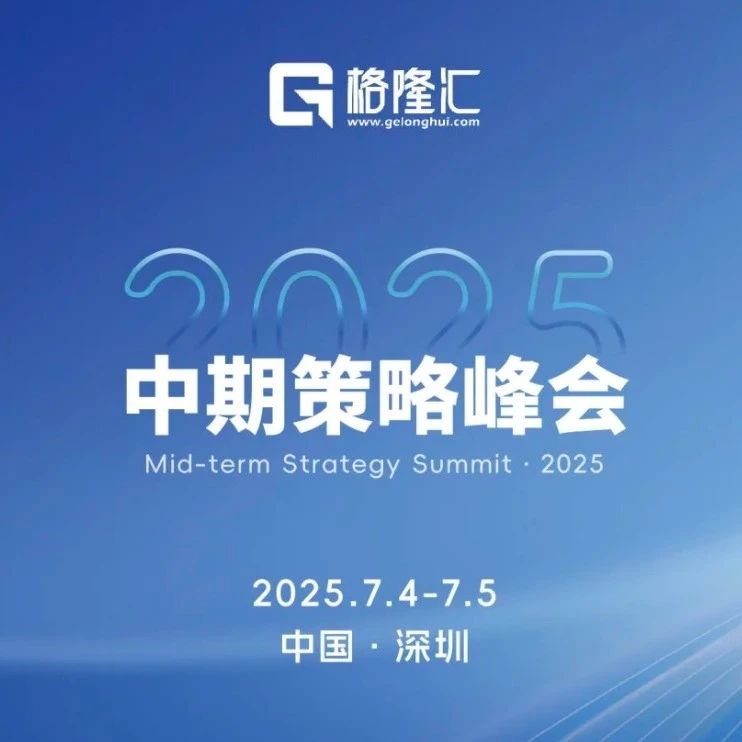
Core Viewpoint - The article emphasizes the acceleration of change and emerging opportunities in the Chinese economy, driven by "new quality productivity" as a key engine for transformation in 2025, amidst a complex global landscape [1]. Group 1: Economic Outlook - The Chinese economy is expected to deepen its transformation in 2025, with ongoing policy benefits and capital market reforms [1]. - There is a notable influx of foreign capital into new economic sectors such as artificial intelligence, high-end manufacturing, and green energy [1]. Group 2: Event Overview - The "2025 Mid-term Strategy Summit" will take place in Shenzhen on July 4-5, 2025, featuring top thought leaders and practitioners to analyze core changes in the global and Chinese economy [1][2]. - The summit aims to discuss investment strategies and opportunities in the context of the evolving capital market [2]. Group 3: Key Speakers and Topics - Notable speakers include Dr. Kai-Fu Lee, who will discuss the outlook for the Chinese capital market in the second half of 2025 [4]. - Other speakers include Chen Hao, who will address global investment strategies, and Dan Bin, who will focus on ESG investment and new quality productivity [4][5]. Group 4: Company Presentations - The event will feature presentations from numerous outstanding listed companies, providing a platform for direct communication between companies and investors [8]. - A detailed schedule of company roadshows is provided, showcasing various sectors and investment opportunities [10][11]. Group 5: Investor Insights - A full-day Global Institutional Investor Forum will be held on July 5, inviting institutional leaders to share investment strategies and insights for the second half of 2025 [12]. - The forum aims to provide a comprehensive understanding of diverse investment styles and new thinking in the investment landscape [12].

博将资本再添上市案例 投企业微牛公司在纳斯达克成功上市!
Sou Hu Cai Jing· 2025-06-03 06:28
Core Insights - Webull successfully went public through a SPAC merger, listing on NASDAQ under the ticker BULL, marking a significant milestone in the fintech sector [1][6] -博将资本 has been a key investor in Webull since its A+ round in 2017, further increasing its stake during the B round in 2018, showcasing its commitment to high-growth technology sectors [1][3] Company Overview -博将资本 focuses on high-tech investments, particularly in artificial intelligence, fintech, enterprise services, and hard technology, and has invested in several unicorns like 达闼科技, 极米科技, and 智云健康 [3] - Webull offers a comprehensive suite of financial products, including in-depth data and analytical tools, aimed at retail investors, distinguishing itself from other online investment platforms and traditional service providers [3] Future Outlook - Webull's listing is seen as a pivotal moment for the fintech industry, reinforcing 博将资本's investment acumen and its role as a value investor that supports companies not just financially but also strategically [6] - The company aims to cater to a growing base of tech-savvy retail investors, positioning itself as a preferred partner in the evolving trading and investment landscape [4][6]

智云健康(09955) - 2024 - 年度财报
2025-04-28 09:06
Financial Performance - Revenue for the year ended December 31, 2024, was RMB 3,488,094, a decrease of 5.5% compared to RMB 3,690,536 in 2023[7]. - Gross profit for 2024 was RMB 861,672, down 5.2% from RMB 909,382 in 2023[7]. - Operating loss increased by 19.7% to RMB 376,141 in 2024 from RMB 314,242 in 2023[7]. - Net loss for the year was RMB 491,390, representing a 50.1% increase from RMB 327,344 in 2023[7]. - The adjusted net loss (non-IFRS measure) for 2024 was RMB 116,093, an increase of 54.6% from RMB 75,100 in 2023[7]. - Total revenue for the year ended December 31, 2024, was RMB 3,488.1 million, a decrease of 5.5% year-on-year due to strategic transformation impacting value-added solutions in both inpatient and outpatient segments[22]. - Net loss for the reporting period was RMB 491.4 million, an increase of 50.1% year-on-year, primarily due to impairment losses related to assets of certain subsidiaries proposed for sale[22]. - Revenue for the fiscal year ending December 31, 2024, is projected to decrease by 5.5% to approximately RMB 3,488.1 million from RMB 3,690.5 million for the fiscal year ending December 31, 2023[50]. - Total loss for the fiscal year ending December 31, 2024, is projected to increase by 50.1% to approximately RMB 491.4 million, up from RMB 327.3 million for the fiscal year ending December 31, 2023[64]. Business Operations and Developments - The company has installed chronic disease management SaaS in over 2,700 hospitals, covering more than 40% of the top 100 hospitals in China[10]. - As of December 31, 2024, the company has installed pharmacy SaaS in over 242,650 pharmacies, achieving a penetration rate of over one-third of total pharmacies in China[11]. - The company issued over 1 billion online prescriptions through its internet hospitals, with a peak of over 1 million prescriptions per day in the last quarter of 2024[11]. - The company has developed two vertical models, ClouD GPT and ClouD DTx, enhancing accuracy and application capabilities in patient interaction and medical research[11]. - The company achieved an average of over 724,000 effective online prescriptions per day in 2024, continuing to serve more chronic disease patients[22]. - The company entered a licensing agreement to develop and market an injectable product for pulmonary arterial hypertension, expected to meet significant clinical demand in China[18][20]. - The company plans to focus on high-value AI-driven P2M solutions, optimizing resource allocation and improving cash flow in the short term[16]. - The strategic transformation aims to enhance the efficiency of the healthcare ecosystem and provide quality, affordable medical services and products[13]. - The company updated its revenue classification to better reflect business development, merging previous categories into inpatient and outpatient solutions[21]. Revenue Streams and Market Position - Subscription solution revenue, primarily from precision marketing services, decreased to RMB 281.9 million, a decline of 39.7% from RMB 467.2 million in the previous year[26][29]. - P2M solution revenue surged to RMB 286.0 million, marking a significant increase of 182.4% compared to RMB 101.2 million in the previous year[26][29]. - Revenue from the outpatient subscription solutions business line was RMB 57.3 million, a decrease of 3.0% from the previous year due to market competition[35]. - Revenue from the outpatient value-added solutions business line was RMB 591.7 million, down 1.3% year-over-year, as the strategic focus shifted to P2M solutions[35]. - The newly added P2M solutions business line generated revenue of RMB 34.4 million during the reporting period[35]. Employee and Compensation Information - The total number of employees as of December 31, 2024, was 1,218, with 408 in Hangzhou, 130 in Shanghai, and 680 in other offices in China[78]. - The total personnel-related costs for the year ended December 31, 2024, were approximately RMB 842.6 million, down from RMB 1,007.9 million for the year ended December 31, 2023[79]. - The cost for full-time employees for the year ended December 31, 2024, was approximately RMB 504.4 million, compared to RMB 629.4 million for the previous year[79]. - The company is committed to maintaining competitive and fair compensation, with total employee costs reflecting ongoing adjustments based on market research[79]. - The company has implemented various stock incentive plans to motivate employees and enhance performance[80]. Corporate Governance and Management - The company has a strong management team with diverse backgrounds in finance, technology, and healthcare, enhancing its strategic decision-making capabilities[160]. - The management team emphasizes the importance of independent judgment and oversight in corporate governance, as demonstrated by the roles of independent directors[155]. - The company is committed to maintaining high standards of corporate governance and compliance with listing rules[165]. - The independent auditor, KPMG, has audited the consolidated financial statements and is eligible for reappointment at the upcoming annual general meeting[144]. Shareholder Information and Equity - As of December 31, 2024, the total number of shares issued by the company is 587,038,219[167]. - Mr. Kuang holds 135,841,185 shares, representing 23.14% of the company's equity[167]. - Major shareholder Hang Tai Trust (Hong Kong) Limited holds 94,874,998 shares, representing 16.16%[171]. - The company has adopted three share plans, including pre-IPO equity incentive plans and post-IPO share reward plans[174]. - The total number of shares available for issuance under the pre-IPO equity incentive plan is capped at 25,440,160 shares, representing approximately 4.38% of the weighted average number of shares issued by the company from January 1, 2024, to December 31, 2024[175]. Risks and Regulatory Compliance - Risks associated with the contractual arrangements include potential penalties from the Chinese government if agreements are deemed non-compliant with laws[100]. - The company is closely monitoring regulatory developments in China to mitigate risks related to contractual arrangements[101]. - The company relies on its Chinese subsidiaries for dividend payments to meet cash and funding needs, which could impact business operations if restricted[100]. - Any failure by Hangzhou Kangming or registered shareholders to fulfill their contractual obligations could significantly adversely affect the company's business[100].
全力以赴拥抱AI新时代,智云健康(09955) 战略进阶2.0
智通财经网· 2025-03-31 01:01
Core Insights - The emergence of the domestic AI model DeepSeek has sparked significant interest in the AI+ healthcare sector in China, with predictions of substantial industry growth by 2030 [1] - The AI healthcare market is expected to grow at an annual rate of 43% from 2024 to 2032, potentially reaching a market size of $491 billion [1] - The company Zhiyun Health is positioned as a leading provider of chronic disease management and healthcare solutions in Hong Kong, focusing on strategic upgrades and business optimization [1][2] Company Performance - Zhiyun Health reported total revenue of approximately 3.49 billion RMB, with a slight increase in gross margin to 24.7%, despite an expanded net loss due to the disposal of non-core businesses [2][4] - The company's core business, the hospital solution segment, has shown robust growth through its unique "Touch, Deploy, Commercialize" (AIM) model, with over 2,700 hospitals adopting its SaaS products [3][4] Strategic Initiatives - The "P2M" strategy has been implemented to enhance operational efficiency and optimize business structure, resulting in a significant increase in revenue from P2M solutions, which reached 320 million RMB, nearly doubling year-on-year [4][5] - The company has signed contracts with 45 pharmaceutical companies, with a total of 55 SKUs, indicating strong collaboration in the pharmaceutical sector [4] Market Environment - The healthcare industry is undergoing significant changes due to centralized procurement reforms, with price reductions of 20% to 30% expected for many common drugs, which may pressure traditional business models [2] - The AI+ healthcare market is projected to exceed 100 billion RMB by 2026, with a compound annual growth rate of over 30%, presenting a substantial growth opportunity for companies like Zhiyun Health [7] Technological Advancements - Zhiyun Health has developed two vertical models, ClouD GPT and ClouD DTx, which excel in patient interaction and medical research, contributing to a comprehensive digital chronic disease management service [7][8] - The integration of the DeepSeek-R1 model into the company's AI system aims to enhance chronic disease management efficiency by leveraging over 1 billion electronic medical records [8] Future Outlook - With ongoing policy support and technological innovation, the AI+ healthcare market in China is expected to thrive, providing a favorable environment for Zhiyun Health's growth [6][7] - The company's strategic focus on optimizing its business structure and enhancing its AI capabilities positions it well for sustained growth and increased market share in the evolving healthcare landscape [9]
智云健康(09955)年度收入达34.88亿元,毛利8.62亿元 拟出售五间子公司股权
智通财经网· 2025-03-30 12:39
Core Viewpoint - Zhiyun Health (09955) reported a revenue of 3.488 billion RMB for the fiscal year ending December 31, 2024, with a gross profit of 862 million RMB and a stable gross margin of 24.7%, reflecting a year-on-year increase of 0.1 percentage points [1] Financial Performance - The increase in overall gross margin is attributed to the improvement in the gross margin of outpatient solutions, which rose from 14.2% for the year ending December 31, 2023, to 23.1% for the year ending December 31, 2024 [1] - The net profit of the five subsidiaries involved in the divestitures totaled 99.6 million RMB (pre-tax) for the fiscal year ending December 31, 2024 [6] Divestiture Details - On March 30, 2025, Zhiyun Health's subsidiary, Hangzhou Kangsheng Health Management Consulting Co., Ltd., agreed to sell 55% of Zhejiang Qilian Pharmaceutical Co., Ltd. for 33.5164 million RMB [1] - The company also agreed to sell 30% of Jiangsu Xinwange Medical Technology Co., Ltd. for 32 million RMB and 65% of Jiangsu Wandi Biotechnology Co., Ltd. for 3 million RMB [3] - Additionally, 75% of Lianyungang Zhenghe Scientific Instrument Co., Ltd. was sold for 8 million RMB, and 35% of Jiangsu Chengsheng Gene Precision Medical Technology Co., Ltd. was sold for 3 million RMB [4] Strategic Rationale - The divestitures align with the company's long-term strategy focusing on AI-driven SaaS technology advancements and monetizing the P2M (Patient to Manufacturer) pipeline [1] - The decision to divest is driven by strategic and operational considerations, particularly the need to optimize the P2M strategy and integrate AI as part of the company's transformation efforts [4] Market Impact - The five subsidiaries involved in the divestitures are significantly affected by the national medical insurance bureau's procurement policies, which have led to price reductions in their products [5] - The anticipated sixth batch of high-value medical consumables procurement and the eleventh batch of drug procurement by the national medical insurance bureau in 2025 is expected to adversely impact the future revenue, profit, and asset quality of these subsidiaries [5]
智云健康(09955) - 2024 - 年度业绩
2025-03-30 11:46
Financial Performance - For the fiscal year ending December 31, 2024, the company reported a revenue of RMB 3,488,094, a decrease of 5.5% compared to RMB 3,690,536 in 2023[3] - The gross profit for the same period was RMB 861,672, down 5.2% from RMB 909,382 in the previous year[3] - The company experienced an operating loss of RMB 376,141, which is a 19.7% increase from the operating loss of RMB 314,242 in 2023[3] - The net loss for the year was RMB 491,390, reflecting a 50.1% increase from RMB 327,344 in 2023[3] - The adjusted net loss (non-IFRS measure) was RMB 116,093, up 54.6% from RMB 75,100 in the previous year[3] - Total revenue for the year ended December 31, 2024, was RMB 3,488.1 million, a decrease of 5.5% year-on-year due to strategic transformation impacting value-added solutions[17] - The company's gross margin remained stable at 24.7%, an increase of 0.1 percentage points year-on-year[17] - The total comprehensive loss for the year was RMB 487,644 thousand, compared to RMB 321,464 thousand in 2023, highlighting increased financial challenges[79] - The company's total equity decreased to RMB 1,432,684 thousand in 2024 from RMB 1,765,306 thousand in 2023, reflecting a decline in shareholder value[81] - The group recorded a net operating cash outflow of RMB 148,391,000 and an operating loss of RMB 376,141,000 for the year ending December 31, 2024[84] Revenue Segmentation - The company has restructured its revenue classification into "in-hospital solutions" and "out-of-hospital solutions" to better reflect its business development and future direction[16] - Revenue from the "In-Hospital Solutions" segment decreased to RMB 2,115,411,000 in 2024 from RMB 2,304,597,000 in 2023, representing a decline of approximately 8.2%[89] - Revenue from the "Patient to Manufacturer (P2M) Solutions" increased significantly to RMB 285,968,000 in 2024 from RMB 101,249,000 in 2023, marking an increase of approximately 182.5%[89] - The P2M solutions achieved total revenue of RMB 320.4 million by December 31, 2024, driven by steady growth in the sales of proprietary products[12] - The revenue from outpatient solutions was RMB 804.8 million, a slight decrease of 1.5% from RMB 817.5 million in the previous year[29] - Inpatient solutions revenue decreased by 6.6% from approximately RMB 2,873.1 million to approximately RMB 2,683.3 million, primarily due to lower sales of medical devices and consumables[34] SaaS and Digital Solutions - The company has installed its hospital SaaS in over 2,700 hospitals, covering more than 40% of the top 100 hospitals in China[6] - The pharmacy SaaS has been installed in over 242,650 pharmacies, representing over one-third of the total pharmacies in China[7] - The company has issued over 1 billion online prescriptions through its internet hospital services, with a peak of over 1 million prescriptions per day in the last quarter of 2024[7] - The average daily effective prescriptions exceeded 724,000 in 2024, indicating continued service to a growing number of chronic disease patients[17] - The company aims to enhance its digital capabilities to connect industrial enterprises with end hospitals and pharmacies, improving product accessibility for chronic disease patients[12] - The company installed its Zhiyun Medical SaaS in 2,738 hospitals, including 822 tertiary public hospitals and 1,140 secondary public hospitals, enhancing its hospital network[19] Cost Management and Expenses - Administrative expenses decreased significantly by 31.8% from RMB 340.2 million to RMB 232.0 million, mainly due to reduced share-based payment expenses[39] - R&D expenses decreased from approximately RMB 88.0 million to approximately RMB 75.4 million, reflecting the maturity of SaaS products[40] - Employee costs decreased to RMB 504,409,000 in 2024 from RMB 629,381,000 in 2023, a reduction of approximately 19.8%[97] - The total personnel-related costs for the year ended December 31, 2024, were approximately RMB 842.6 million, a decrease from RMB 1,007.9 million for the year ended December 31, 2023[65] Strategic Partnerships and Future Plans - The strategic partnership with pharmaceutical companies is expected to drive profitability through exclusive rights to sell proprietary products[12] - The company plans to focus on high-value AI-driven P2M solutions, reducing reliance on low-margin medical supplies and consumables[11] - The company plans to focus on strengthening its hospital and pharmacy SaaS infrastructure and investing in product and technology innovation, particularly in medical AI[31] Divestments and Acquisitions - The company completed a share transfer agreement to sell 55% of its subsidiary Zhejiang Qilian Pharmaceutical Co., Ltd. for RMB 33,516,375, aligning with its long-term strategy focused on AI-driven SaaS technology advancements[113] - The company announced the strategic decision to divest five subsidiaries, including Zhenghe Scientific Instruments and Jiangsu Chengsheng, due to low value addition and minimal relevance to its core strategy[152] - The divestment is expected to improve the company's long-term cash flow by reducing the need for significant operational funding for the divested subsidiaries[153] - The total consideration for the sale of New Wange Medical is RMB 32,000,000, while the total consideration for the sale of Wandi Biotechnology is RMB 3,000,000[131] Financial Health and Liabilities - The company has no significant investments or capital asset future plans as of December 31, 2024[56] - The company did not have any significant contingent liabilities as of December 31, 2024, consistent with the previous year[59] - The debt-to-asset ratio increased to 42.1% from 33.2% as of December 31, 2023, primarily due to an increase in bank and other loans[57] - Financing costs rose by 44.8% from approximately RMB 11.5 million to approximately RMB 16.6 million, attributed to increased bank and other loans[42] Shareholder Returns - The company does not recommend the distribution of a final dividend for the fiscal year ending December 31, 2024[4] - The company did not recommend any dividends for the years ended December 31, 2024, and 2023[109]
医疗设备行业回暖迹象明显
Min Yin Zheng Quan· 2025-03-05 13:26
Investment Rating - The report assigns an "Overweight" rating to the pharmaceutical industry, indicating that the industry is expected to outperform the benchmark index over the next 12 months [33]. Core Insights - The pharmaceutical sector is experiencing a recovery, with significant growth in sub-sectors such as internet healthcare, biotechnology, and medical devices, which saw increases of 36%, 34%, and 24% respectively in February 2025 [3][6]. - The report highlights the government's encouragement of innovative drug development, including discussions on expanding payment channels for innovative drugs and the potential establishment of a category for innovative drugs in the insurance framework [4][24]. - The medical device market is showing signs of recovery, with the domestic medical imaging equipment market growing over 47% year-on-year in January 2025, and an increase in the number of CT devices awarded contracts by 4.2% compared to the previous year [4][30]. Market Review - In February 2025, the Hang Seng Composite Industry Index rose by 12.8%, while the Hang Seng Healthcare Index increased by 16.3%, outperforming the market by 3.5 percentage points [3][6]. - The A-share market saw the Shanghai and Shenzhen 300 Index decline by 3% in January, with the pharmaceutical and biotechnology index dropping by 3.8%, but rebounding in February with a 5.1% increase [14]. - The report notes that all 13 sub-sectors in the pharmaceutical industry experienced declines in January, but several sub-sectors, including hospitals and medical devices, showed significant gains in February [14]. Industry Data Update - The report indicates that the basic medical insurance revenue for January 2025 reached 314.3 billion yuan, a year-on-year increase of 10.4%, with expenditures growing by 8.5% [17]. - The commercial health insurance sector is also expanding, with original premium income reaching 977.3 billion yuan in 2024, reflecting an 8.2% year-on-year growth [20]. - Medical device exports, particularly for ECG recorders, ultrasound diagnostic devices, and CT machines, have accelerated in both quantity and value since the second half of 2024 [21]. Industry News Summary - The National Healthcare Security Administration held a meeting to support innovative drug development, engaging with major pharmaceutical companies to discuss strategies for enhancing the market for innovative drugs [23][24]. - A draft opinion on improving the drug pricing mechanism has circulated, proposing measures to support innovative drug development and enhance drug accessibility [28]. - The report mentions ongoing efforts to regulate prices in the healthcare sector, including a comprehensive governance initiative for central venous catheter pricing, which has led to significant price reductions for related medical services [29][30].
智云健康(09955) - 2024 - 中期财报
2024-09-25 01:23
Revenue Growth - Revenue increased by 17.9% to RMB 2,124.84 million in the first half of 2024 compared to RMB 1,802.56 million in the same period of 2023[5] - In-hospital solutions revenue increased by 20.2% to RMB 1,688.11 million in the first half of 2024 from RMB 1,404.03 million in the same period of 2023[6] - Out-of-hospital solutions revenue increased by 9.6% to RMB 436.73 million in the first half of 2024 from RMB 398.53 million in the same period of 2023[6] - P2M solutions revenue increased by 67.0% to RMB 107.91 million in the first half of 2024 from RMB 64.61 million in the same period of 2023[6] - Total revenue for the first half of 2024 reached RMB 2,124.8 million, a year-on-year increase of 17.9%[9] - P2M solutions generated total revenue of RMB 107.9 million, with a significant increase of 67.0% compared to the same period in 2023[11] - Revenue from value-added solutions increased by 34.8% to RMB 1,439.3 million[13] - Revenue increased by 17.9% from RMB 1,802.6 million in the first half of 2023 to RMB 2,124.8 million in the first half of 2024, driven by steady growth in both in-hospital and out-of-hospital solutions[22] - In-hospital solutions revenue grew by 20.2% from RMB 1,404.0 million in the first half of 2023 to RMB 1,688.1 million in the first half of 2024, primarily due to increased hospital SaaS penetration and strong growth in P2M solutions[22] - Out-of-hospital solutions revenue increased by 9.6% from RMB 398.5 million in the first half of 2023 to RMB 436.7 million in the first half of 2024, driven by increased SaaS subscriptions and new API sales[22] - Revenue for the six months ended June 30, 2024, was RMB 2,124.8 million, a 17.9% increase from RMB 1,802.6 million in the same period in 2023[68] - Revenue from the "In-Hospital Value-Added Solutions" segment increased to RMB 1,439,278 thousand in 2024 from RMB 1,067,424 thousand in 2023, a growth of 34.8%[87] - Revenue from the "Out-of-Hospital Subscription Solutions" segment rose to RMB 360,295 thousand in 2024 from RMB 297,104 thousand in 2023, an increase of 21.3%[87] - Revenue from the "Patient-to-Manufacturer (P2M)" solutions increased to RMB 107,910 thousand in 2024 from RMB 64,609 thousand in 2023, a significant growth of 67.0%[87] Profitability and Losses - Gross profit decreased by 7.7% to RMB 436.99 million in the first half of 2024 from RMB 473.57 million in the same period of 2023[5] - Operating loss improved by 33.3% to RMB 102.85 million in the first half of 2024 from RMB 154.31 million in the same period of 2023[5] - Net loss improved by 25.5% to RMB 118.94 million in the first half of 2024 from RMB 159.58 million in the same period of 2023[5] - Adjusted net loss (non-IFRS) improved by 44.1% to RMB 32.90 million in the first half of 2024 from RMB 58.86 million in the same period of 2023[5] - Net loss narrowed by 25.5% to RMB 118.9 million, with non-IFRS adjusted net loss narrowing by 44.1% to RMB 32.9 million[9] - Gross margin for P2M solutions decreased by 8.0 percentage points to 74.1%[13] - Gross profit margin decreased from 26.3% in the first half of 2023 to 20.6% in the first half of 2024, mainly due to a shift in revenue mix towards lower-margin solutions[24] - In-hospital solutions gross margin dropped from 30.2% in the first half of 2023 to 21.8% in the first half of 2024, influenced by changes in revenue mix between subscription and value-added solutions[24] - Out-of-hospital solutions gross margin improved from 12.3% in the first half of 2023 to 15.6% in the first half of 2024, driven by higher-quality growth in value-added solutions[24] - Operating loss decreased by 33.3% from RMB 154.3 million in the first half of 2023 to RMB 102.9 million in the first half of 2024, due to stable revenue growth and improved operating leverage[25] - Net loss decreased by 25.5% from RMB 159.6 million in the first half of 2023 to RMB 118.9 million in the first half of 2024, primarily due to revenue growth and operating leverage[27] - Adjusted net loss (non-IFRS measure) decreased to RMB 32.9 million in the first half of 2024 from RMB 58.9 million in the same period of 2023[28] - Adjusted net loss rate (non-IFRS measure) improved to -1.5% in the first half of 2024 from -3.3% in the first half of 2023[29] - Gross profit for the six months ended June 30, 2024, was RMB 437.0 million, a decrease of 7.7% from RMB 473.6 million in the same period in 2023[68] - Operating loss for the six months ended June 30, 2024, was RMB 102.9 million, an improvement from RMB 154.3 million in the same period in 2023[68] - Net loss for the six months ended June 30, 2024, was RMB 118.9 million, compared to RMB 159.6 million in the same period in 2023[68] - Basic and diluted loss per share for the six months ended June 30, 2024, was RMB 0.20, compared to RMB 0.29 in the same period in 2023[68] - The company reported a net loss of RMB 156,002 thousand for the six months ended June 30, 2024[76] - The company's total equity as of June 30, 2024, was RMB 1,724,707 thousand, with a net loss of RMB 115,838 thousand for the six-month period[78] - The company's total comprehensive loss for the six months ended June 30, 2024, was RMB 115,434 thousand, including other comprehensive income of RMB 404 thousand[78] - The company's basic loss per share was RMB 116 million for the six months ended June 30, 2024, compared to RMB 156 million for the same period in 2023[96] Expenses and Costs - Sales and marketing expenses decreased by 15.7% from RMB 454.9 million in the first half of 2023 to RMB 383.6 million in the first half of 2024, reflecting economies of scale and refined expense management[25] - R&D expenses increased slightly from RMB 40.4 million in the first half of 2023 to RMB 41.8 million in the first half of 2024, with the R&D-to-revenue ratio decreasing from 2.0% to 1.7%[25] - Employee costs for the six months ended June 30, 2024, were RMB 280,169 thousand, slightly down from RMB 283,592 thousand in 2023[91] - Government grants decreased to RMB 14,953 thousand in 2024 from RMB 25,068 thousand in 2023[89] - Interest income dropped to RMB 782 thousand in 2024 from RMB 1,226 thousand in 2023[89] - The company's inventory costs increased to RMB 1,663,377 thousand in 2024 from RMB 1,261,046 thousand in 2023, reflecting a 31.9% rise[93] - The company's income tax expense for the six months ended June 30, 2024, was RMB 1,829 thousand, compared to a tax benefit of RMB 1,174 thousand in 2023[94] - The company's inventory sold during the six months ended June 30, 2024, had a book value of RMB 1,663.38 million, up from RMB 1,261.05 million in the same period in 2023[101] - The company's cash outflow for the purchase of property, plant, and equipment and intangible assets was RMB 55,984 thousand for the six months ended June 30, 2024[80] - The company acquired property, plant, and equipment worth RMB 48 million in the six months ended June 30, 2024, compared to RMB 16 million in the same period in 2023[98] Cash Flow and Financial Position - Cash and cash equivalents decreased to RMB 224.2 million as of June 30, 2024, from RMB 243.4 million as of December 31, 2023[31] - Bank and other loans increased to RMB 366.0 million as of June 30, 2024, from RMB 235.0 million as of December 31, 2023[31] - The company's debt-to-asset ratio increased to 36.8% as of June 30, 2024, from 33.2% as of December 31, 2023, primarily due to increased bank loans[35] - Operating cash outflow for the six months ended June 30, 2024, was RMB 195,536 thousand, compared to RMB 54,349 thousand in the same period in 2023[80] - Net cash inflow from financing activities for the six months ended June 30, 2024, was RMB 132,863 thousand, primarily due to bank and other loan proceeds of RMB 257,925 thousand[82] - Cash and cash equivalents decreased by RMB 19,404 thousand to RMB 224,181 thousand as of June 30, 2024, compared to RMB 243,375 thousand at the beginning of the year[82] - The company's capital reserves increased by RMB 236,924 thousand due to the vesting and delivery of restricted share units during the period[78] - Non-controlling interests increased by RMB 3,793 thousand due to the acquisition of a subsidiary during the six-month period[78] - The company's investment activities resulted in a net cash inflow of RMB 43,269 thousand, driven by proceeds from the sale of financial assets at fair value through profit or loss of RMB 96,899 thousand[80] - The company's share-based payment reserve increased by RMB 79,422 thousand due to equity-settled share-based payments during the period[78] - Restricted bank deposits increased to RMB 43,329 thousand as of June 30, 2024, from RMB 23,700 thousand as of December 31, 2023, primarily due to frozen bank deposits[108] - Trade payables decreased to RMB 212,479 thousand as of June 30, 2024, from RMB 233,249 thousand as of December 31, 2023, indicating a reduction in outstanding trade liabilities[109] - Other payables and accrued expenses increased to RMB 391,814 thousand as of June 30, 2024, up from RMB 361,514 thousand as of December 31, 2023, driven by higher flexible workforce payments and other liabilities[111] - The company repurchased 2,282,700 ordinary shares at a cost of RMB 12.7 million under the post-IPO share incentive plan during the six months ended June 30, 2024[115] - Restricted share units (RSUs) granted to employees under the share-based payment plan totaled 8,801,042 shares as of June 30, 2024, compared to 7,765,000 shares in the same period in 2023[120] - The expected credit loss provision for other receivables increased to RMB 13.9 million as of June 30, 2024, from RMB 9.3 million as of December 31, 2023, reflecting higher credit risk assessments[107] - The company's issued and fully paid ordinary shares remained unchanged at 587,038,219 shares as of June 30, 2024, with a total share capital of RMB 391 thousand[114] - The company did not declare or pay any dividends for the six months ended June 30, 2024, consistent with the same period in 2023[112] - The fair value of non-listed equity instruments as of June 30, 2024, was RMB 40,000 thousand, classified under Level 3 valuation[123] - The fair value of wealth management products as of June 30, 2024, was RMB 46,740 thousand, classified under Level 3 valuation[123] - The fair value of fund management products as of June 30, 2024, was RMB 207,340 thousand, classified under Level 3 valuation[123] - A 10% increase/decrease in the fair value of non-listed equity instruments would result in a RMB 4,000,000 increase/decrease in pre-tax profit for the six months ended June 30, 2024[125] - A 0.5% increase/decrease in the weighted average expected return rate would result in a RMB 741,650 decrease/increase in pre-tax loss for the six months ended June 30, 2024[125] Business Expansion and Partnerships - The company is the largest digital chronic disease management solution provider in China based on hospital and pharmacy SaaS deployments and online prescriptions issued through its services as of December 31, 2023[8] - The number of hospitals using Zhiyun Medical SaaS reached 2,732, an increase of 74 hospitals or 2.8% compared to the same period in 2023[12] - The company signed contracts with 41 pharmaceutical companies, a 13.9% increase compared to the same period in 2023[11] - Number of hospitals deploying the company's hospital SaaS increased to 2,732, up 2.8% from 2,658[14] - Number of pharmaceutical companies collaborating on subscription solutions rose to 41, a 13.9% increase from 36[14] - Number of SKUs marketed through digital marketing services grew to 50, up 11.1% from 45[14] - Registered users reached 33.2 million, an 11.8% increase from 29.7 million[18] - Online prescriptions surged to 116.1 million, a 43.9% year-over-year growth[16] - Number of pharmacies using the company's SaaS platform increased to 228,331, covering approximately 35% of pharmacies in China[16] - The company secured an exclusive sub-license for the development and marketing of Iloprost Injection in China, targeting a market with a projected 30% CAGR over the next five years[15] - The company launched Haonuoxin® Sevelamer Carbonate Dry Suspension, addressing patient compliance issues in phosphate binder therapy[20] - The company invested RMB 200 million in Anhui Zhiyi Huiyun Technology Co., Ltd., acquiring a 4.26% stake in the subsidiary[33] - The company acquired 70% equity of Beijing Jiarun Oude Technology Co., Ltd. for RMB 9 million, contributing RMB 19.7 million in revenue and RMB 0.84 million in comprehensive profit for the period ended June 30, 2024[129] - The company entered into a contract to acquire exclusive rights for the manufacture and distribution of pharmaceutical products in China, with a commitment of RMB 178,170 thousand as of June 30, 2024[130] - The company's wholly-owned subsidiary, Hangzhou Zhiyun Huiyi Medical Technology Co., Ltd., was established on December 30, 2020[134] - Chengdu Zhiyun Internet Hospital Co., Ltd., a subsidiary of the company, was registered on June 18, 2021[134] - The consolidated affiliated entities include Hangzhou Kangming, Chengdu Zhiyun Internet Hospital, and Tianjin Zhiyun, whose financial accounts are consolidated under contractual arrangements[134] - The company's global offering includes the Hong Kong public offering and international offering as described in the prospectus[135] - The company's consolidated affiliated entity, Tianjin Zhiyun Comprehensive Clinic Co., Ltd., was established on March 26, 2021[136] Shareholder and Equity Information - Mr. Kuang, a director, holds approximately 23.14% of the company's issued shares, including 135,841,185 shares through controlled entities and direct ownership[54] - Hengtai Trust (Hong Kong) Limited holds 98,624,566 shares, representing approximately 16.80% of the company's issued share capital[58] - Data Vantage Development Limited and HaoYuan Health Limited each hold 94,571,580 shares, representing approximately 16.11% of the company's issued share capital[58] - Jeffrey Steven Yass and related entities collectively hold 31,570,783 shares, representing approximately 5.38% of the company's issued share capital[58] - Global offering proceeds amounted to approximately HKD 425.7 million, with 60% allocated to business expansion, 25% to enhancing medical knowledge and technological capabilities, 5% to strategic partnerships and acquisitions, and 10% to working capital and general corporate purposes[63] - As of June 30, 2024, the company had utilized HKD 70.4 million of the global offering proceeds, leaving HKD 215.1 million unutilized[63] - The company's trustee purchased 2,282,700 shares on the Hong Kong Stock Exchange for a total consideration of approximately RMB 12.7 million during the reporting period[64] - The company's shares are listed on the Main Board of the Hong Kong Stock Exchange[136] - The company's shares have a par value of $0.00001 per share[136] - The company's founder, executive director, chairman, and CEO is Mr. Kuang Ming[135] - The reporting period for the interim report is the six months ended June 30, 2024[136] - The last practicable date for determining certain information in the interim report
智云健康(09955) - 2024 - 中期业绩
2024-08-21 14:42
香港交易及結算所有限公司及香港聯合交易所有限公司對本公告的內容概不負責,對其準確 性或完整性亦不發表任何聲明,並明確表示,概不對因本公告全部或任何部分內容而產生或 因依賴該等內容而引致的任何損失承擔任何責任。 (於開曼群島註冊成立的有限公司) (股份代號:9955) 截至2024年6月30日止六個月 中期業績公告 智雲健康科技集團(「本公司」,連同其子公司及併表聯屬實體,統稱「本集團」) 董事(「董事」)會(「董事會」)欣然宣佈本集團截至2024年6月30日止六個月(「報 告期」)的未經審核綜合中期業績,連同2023年同期的比較數字。該等中期業績 已經本公司審核委員會審閱。 於本公告內,「我們」及「我們的」指本公司,倘文義另有所指,則指本集團。本 公告所載若干金額及百分比數字經過約整,或者四捨五入至小數點後一位或 兩位。任何表格、圖表或其他地方列出的總數及金額總和之間的任何差異均由 約整造成。 – 1 – 財務摘要 | --- | --- | --- | --- | |------------------------------|---------------------------------------- ...
智云健康(09955) - 2023 - 年度财报
2024-04-26 08:34
團 ClouDr Group Limited* 智 雲 健 康 ClouDr Group Limited 智雲健康科技集團* 科 技 集 (Incorporated in the Cayman Islands with limited liability) Stock Code : 9955 Annual Report 年報 2023 * For identification purpose only ClouDr Group Limited 智雲健康科技集團* (於開曼群島註冊成立的有限公司) 股份代號 : 9955 年 報 Annual Report 2023 2023 * 僅供識別 目錄 | --- | --- | |--------------------------|-------| | 公司資料 | 2 | | 財務概要 | 4 | | 業務回顧與展望 | 5 | | 管理層討論及分析 | 14 | | 董事會報告 | 21 | | 董事及高級管理層 | 38 | | 其他資料 | 44 | | 企業管治報告 | 53 | | 獨立核數師報告 | 70 | | 綜合損益表 | 75 | | 綜合損 ...