
富临精工

Search documents
人形机器人规模化应用需闯关
Bei Jing Ri Bao Ke Hu Duan· 2025-08-26 00:56
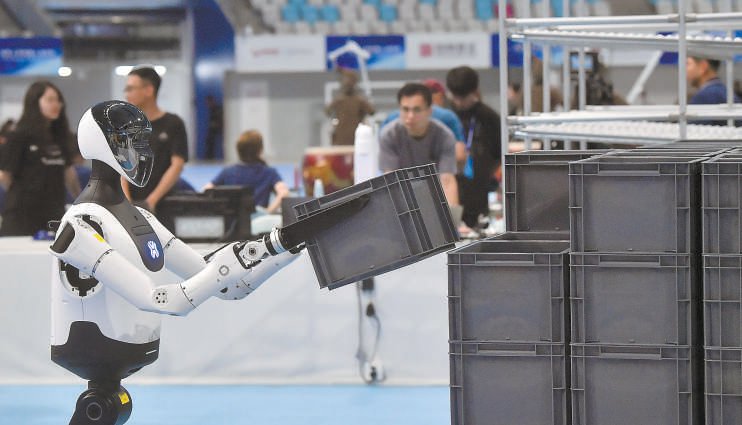
Group 1 - The World Robot Conference and Humanoid Robot Games held in Beijing have garnered significant public attention, showcasing the capabilities of humanoid robots in sports and performance [1] - The "Galaxy Space Capsule," a robot-operated convenience store, has achieved full autonomous service, with plans for expansion into popular commercial areas [2] - Companies like Songyan Power and Zhiyuan Robotics are ramping up production capabilities, with Songyan aiming for 200 units of delivery capacity by August [2] Group 2 - The humanoid robot industry is accelerating towards commercialization, with many companies transitioning from prototype demonstrations to small-scale deliveries [2] - The future of robotics may not be limited to humanoid forms, as various shapes and designs could emerge to better serve different functions [3][5] - Current humanoid robots are primarily designed for data collection and AI training, but the definition of "robot" is expanding to include non-humanoid forms that are more efficient in specific applications [5] Group 3 - Despite some companies receiving large-scale orders, the adoption of humanoid robots in everyday life remains slow, with over 70% of disclosed orders coming from educational and research institutions [6] - Key challenges facing the mass adoption of humanoid robots include operational capabilities, generalization abilities, and cost control [6] - The industry faces a significant data issue, as limited data and simulation capabilities hinder the development of versatile robots for various applications [6] Group 4 - Predictions suggest that within three years, household humanoid robots could perform simple tasks like conversation and dog walking, while more complex tasks may take 5 to 10 years to achieve [7]


造机器人:一场“谁都能干”的“全民运动”?
3 6 Ke· 2025-08-26 00:15
Core Insights - The nature of building robots is changing, moving from a joke to a reality, as the barriers to entry are lowering significantly [1][3][9] - Various players from different industries are entering the robotics field, driven by their unique motivations and market opportunities [10][11][12] Industry Trends - The influx of companies from diverse backgrounds, including traditional manufacturing, investment, and even alcohol production, indicates a broadening interest in robotics [2][10][11] - The number of humanoid robot-related companies in China has surged, with 834 existing firms as of late July 2025, reflecting a growth rate of over 180% year-on-year [3][8] Technological Advancements - Key components for robots, such as sensors and actuators, are becoming more accessible and affordable, allowing for easier assembly of robots [4][8][9] - Domestic companies are beginning to break the monopoly of foreign brands in critical areas like harmonic reducers and linear actuators, enhancing local production capabilities [6][8] Investment Landscape - Significant investments are being made in the robotics sector, with companies like Jiuding Investment planning to invest 213 million yuan in a robotics core component firm [2][10] - The capital market is responding positively, with multiple robotics companies announcing new rounds of financing and IPO plans [3][10] Market Dynamics - The competition is intensifying as companies seek to differentiate themselves in a crowded market, with some focusing on cost reduction and efficiency improvements [8][9] - The industry is expected to evolve into a multi-faceted ecosystem where specialized firms cater to specific applications, while a few giants may dominate the general humanoid robot market [17][18] Challenges Ahead - Despite the advancements, the integration of various components and ensuring their seamless operation remains a significant challenge for the industry [16][17] - The need for real-world data and practical applications is critical for the successful deployment of robots in operational environments [15][17]
人形机器人产业周报:智元机器人全系产品正式开售 关注宇树新品发布
Xin Lang Cai Jing· 2025-08-25 12:42
Market Overview - The humanoid robot concept index increased by 4.71% from August 17 to August 22, outperforming the CSI 300 index by 0.53 percentage points [1] - Year-to-date, the humanoid robot concept index has risen by 68.52%, surpassing the CSI 300 index by 53.92 percentage points [1] - Chengdu Huamei recorded the highest weekly increase at +36.23%, while Jack Co. experienced the largest weekly decline at -12.88% [1] Policy Developments - Shanghai has released an implementation plan to accelerate the development of "AI + manufacturing," focusing on the practical deployment of humanoid robots in typical scenarios [2] Product and Technology Innovations - Zhiyuan Robotics launched a new product, "Lingxi X2-W" [2] - Junsheng Electronics introduced the industry's first integrated embodiment intelligent robot "Omni Controller" for chest and chassis assembly [2] - Tiantai Robotics signed a global order for 10,000 humanoid robots, marking the beginning of large-scale commercial use [2] - Yushu Technology announced an upcoming humanoid robot with 31 degrees of freedom [2] - Huandong Technology's precision transmission R&D center and smart manufacturing base project has commenced in Zhejiang Province [2] - Zhiyuan's humanoid robot products, including Lingxi X2 Youth Edition and Expedition A2 Youth Edition, are now available for pre-sale online [2] - Weimar VMR launched the world's first humanoid robot head module, OmniHead [2] Investment and Financing Activities - Shibi Robot completed a B+ round financing of over 100 million yuan, exclusively funded by Yicun Capital's Bit Songling Fund [2] - Shaping Technology secured a new round of financing led by Shunwei Capital, with participation from existing shareholders [2] Key Company Developments - Yachuang Electronics announced that its power modules have begun indirect bulk supply to META [3] - Shengshi Technology plans to establish a wholly-owned subsidiary to integrate AI and humanoid robot technology with trendy innovations [3] - Xinzhi Group reported deepening cooperation with core client XD to expand joint module collaboration [3] Company Product Launches - On August 18, Zhiyuan Robotics launched three quadruped robot products targeting entertainment and education sectors, as well as industrial applications [4] - Zhiyuan's six core product lines are now available for sale on Zhiyuan Mall and JD Mall [4] - The company is recognized as a leading player in the domestic humanoid robot market, with accelerating product and commercialization development [4]
智元创始人邓泰华罕见亮相 犀利回应融资、上市、场景落地等质疑
3 6 Ke· 2025-08-25 03:04
Core Insights - The first partner conference of Zhiyuan Robotics was held in Shanghai, showcasing its products and technology to partners and stakeholders [1][2] - CEO Deng Taihua delivered a 29-minute closed-door speech outlining the company's comprehensive layout in products, technology, business, ecology, and capital [2] Product and Market Strategy - Zhiyuan Robotics aims to achieve a shipment target of 10,000 units by 2026, with expectations of several thousand units shipped this year and tens of thousands next year [3][4] - The company plans to shift its sales strategy to prioritize partnerships, targeting 70% of sales through partners by next year, with the remainder from online sales [5] Financing and Investment - Deng stated that the company is in a strong position to secure funding, with a focus on maintaining cash flow for three years without revenue [6] - Zhiyuan recently announced a strategic investment from LG Electronics and Korea Future Asset Group, and plans to initiate a new round of financing by the end of the year [6] - The company has established a joint investment fund with Hillhouse Capital, with a scale of several hundred million yuan [6] Collaboration and Partnerships - Over the past year, Zhiyuan has formed joint ventures with over ten listed companies to explore application scenarios for embodied intelligence [8] - The partnerships include collaborations with leading companies that have application scenarios, technology service firms, and technical expert companies to enhance product capabilities [9] Application Scenarios - Zhiyuan has identified seven key application scenarios for embodied intelligence that can be implemented this year, including exhibition reception, entertainment performance, box transportation, research education, logistics sorting, data collection training, and commercial cleaning [11] Industry Context - The acquisition of A-share listed company Aowei New Materials has sparked discussions about the company's listing path, which some view as a shortcut [13] - The company emphasizes the need for innovation across various dimensions, including technology, application, collaboration models, and capital, aligning with national support for new industries [14] Event Participation - Zhiyuan Robotics did not participate in the recent "2025 World Humanoid Robot Games," citing resource consumption and a focus on showcasing practical applications in customer scenarios [15]
重视新能源龙头的布局,新方向持续发力 | 投研报告
Zhong Guo Neng Yuan Wang· 2025-08-25 01:17
Core Viewpoint - The report highlights the ongoing investments and developments in the solid-state battery sector, with major companies like Nissan and others making significant strides in this technology [1][4]. Group 1: New Energy and AI Industry - The industry strategy emphasizes the importance of leading companies in the new energy sector, particularly in solid-state batteries and AI integration, as the market approaches a critical bottoming phase [2]. - Companies like Nissan are targeting the launch of electric vehicles equipped with self-developed solid-state batteries by the fiscal year 2028 [1][4]. - Dao Technology is increasing its investment in single-wall carbon nanotube projects, indicating a focus on advanced materials [1][4]. Group 2: New Energy Vehicle Supply Chain - The new cycle in the mid and downstream sectors of the new energy vehicle industry has begun, with companies like Xiaomi and Jinbo Co. benefiting from this trend [3]. - Xiaomi's smart electric vehicle business is projected to generate revenue of 20.6 billion yuan in Q2 2025, with a gross margin of 26.4% [3]. - Jinbo Co.'s carbon-ceramic brake disc products have received approval from leading global electric vehicle manufacturers, enhancing the safety and performance of automotive materials [3]. Group 3: Solid-State Battery Developments - Major players continue to invest in solid-state battery technology, with companies like Puxin and Xiamen Tungsten benefiting from these advancements [1][4]. - The global first mass-produced fourth-generation solid-state lithium ceramic battery platform has been launched by Huineng Technology, which boasts lower material costs [1][4]. - Deep Blue Huize has secured Pre-A investment from Saudi Aramco, accelerating its global solid-state battery strategy [1][4]. Group 4: Photovoltaic Industry Insights - The photovoltaic industry is experiencing a positive supply-demand dynamic, with recent increases in silicon material and wafer prices [5]. - The Ministry of Industry and Information Technology is working to regulate competition within the photovoltaic sector, which may lead to improved market conditions [5][6]. Group 5: AI and New Energy Integration - The integration of AI with new energy sectors, including humanoid robots, is gaining traction, with companies like Nvidia and others leading the charge [7]. - Zhongcai Technology reported a significant increase in net profit, driven by sales of wind turbine blades and specialized fiber products [7].
新能源+AI周报:重视新能源龙头的布局,新方向持续发力-20250824
Tai Ping Yang· 2025-08-24 13:49
Investment Rating - The report does not provide specific investment ratings for the industry sectors mentioned [2]. Core Insights - The overall strategy emphasizes the importance of leading companies in the new energy sector and the continuous development of new directions [3]. - The report highlights that the second half of the year is crucial for confirming the bottom of leading companies in the new energy sector, with a focus on new areas such as new energy + AI and solid-state batteries [3]. - The report indicates that the core viewpoint of the new energy vehicle supply chain has entered a new cycle, with significant opportunities in the mid and downstream sectors [4]. Summary by Relevant Sections New Energy Vehicle Supply Chain - Attention is drawn to leading companies like Xiaomi in the smart vehicle sector, with Xiaomi's electric vehicle business revenue reaching 20.6 billion yuan in Q2 2025, achieving a gross margin of 26.4% and narrowing operational losses to 300 million yuan [4]. - Jinbo Co., Ltd. has received a notification from a global leading electric vehicle company regarding its carbon-ceramic brake disc products, which are expected to accelerate the lightweight and performance revolution in automotive brake materials [4]. Lithium Battery Sector - Companies like EVE Energy and Tianci Materials are highlighted for their strategic positioning at the bottom of the cycle, with EVE Energy achieving a net profit of 1.6 billion yuan in H1 2025 and Tianci Materials reporting a net profit of 267 million yuan, a year-on-year increase of 12.79% [4]. - The report notes that the supply and demand for lithium hexafluorophosphate are expected to tighten, benefiting companies like Tianci Materials [4]. Solid-State Battery Sector - Domestic and international leaders are increasing investments in solid-state batteries, with companies like Putailai and Xiamen Tungsten benefiting from this trend [4]. - Nissan has announced a partnership for the development of all-solid-state batteries, aiming to launch electric vehicles equipped with self-developed solid-state batteries by the fiscal year 2028 [4]. Photovoltaic Industry - The report indicates that the photovoltaic industry is experiencing a continuous improvement in supply and demand, with recent price increases in silicon materials and silicon wafers [5]. - The Ministry of Industry and Information Technology has convened a meeting to regulate competition in the photovoltaic industry, which is expected to further enhance market conditions [5]. AI + New Energy and Wind Power - The report emphasizes the importance of breakthroughs in new markets, particularly in the integration of AI with new energy and humanoid robots, with companies like Fulin Precision and Zhejiang Rongtai expected to benefit [6]. - The collaboration between NVIDIA and Foxconn to develop humanoid robots is highlighted as a significant advancement in the physical AI sector [6].
造机器人:一场“谁都能干”的“全民运动”?
经济观察报· 2025-08-23 10:47
Core Viewpoint - The threshold for entering the robotics industry has significantly lowered, leading to a surge of diverse companies from various sectors attempting to manufacture robots, raising questions about the sustainability and viability of this trend [4][5][6]. Group 1: Industry Trends - The nature of "building robots" is changing, evolving from a complex task to a more accessible one, where assembling a robot is becoming a reality rather than a joke [3][6]. - The number of humanoid robot-related companies in China reached 834 by late July 2025, with over half having registered capital exceeding 10 million [6][11]. - The growth in registrations of humanoid robot companies surged by over 180% in the first half of 2025 compared to the previous year [6]. Group 2: New Players and Cross-Industry Involvement - Companies from various backgrounds, including traditional manufacturing and investment sectors, are entering the robotics field, such as Vision Technology and Jiuding Investment [4][5][13]. - Midea Group, leveraging its ownership of KUKA, is developing humanoid robots for home and factory applications, showcasing a strategic approach to robotics [15]. - Automotive companies like GAC Group are also entering the robotics space, emphasizing the technological synergies between automotive and robotics [15]. Group 3: Technological Advancements - The availability of standardized components for robots, such as sensors and actuators, has made it easier for companies to assemble robots [6][11]. - Domestic suppliers are beginning to break the monopoly of foreign brands in critical components like harmonic reducers and planetary roller screws [8][9]. - The development of specialized components, such as the BrainCo bionic hand and advanced laser radar from Hesai Technology, indicates significant progress in the robotics supply chain [7][8]. Group 4: Market Dynamics and Challenges - The influx of capital into the robotics sector has led to a competitive environment, with many companies seeking to establish themselves amid rising expectations [6][19]. - Despite the enthusiasm, the integration of various components and ensuring system stability remains a significant challenge for the industry [19][20]. - The industry is still in its early commercial stages, with many companies relying on external funding rather than self-sustaining business models [21]. Group 5: Future Outlook - The future of the robotics industry may lead to a diverse ecosystem where specialized companies coexist, focusing on niche applications while core component suppliers support the overall market [21]. - The successful companies will likely be those that can identify real-world applications and maintain resilience in a capital-intensive environment [21].



“攒一台机器人”,谁都能?
Jing Ji Guan Cha Wang· 2025-08-23 06:45
Core Insights - The robot industry is witnessing a surge of diverse players entering the market, ranging from traditional manufacturing companies to investment firms and even liquor producers, indicating a significant shift in the landscape of robotics [2][3][9] - The barriers to entry for building robots have decreased, with a growing number of companies providing standardized components, making it easier for various industries to participate in robot manufacturing [3][8] - The market is experiencing a rapid increase in the number of humanoid robot-related companies, with 834 existing firms as of late July 2025, and a year-on-year growth of over 180% in registrations [3][8] Industry Trends - The emergence of specialized suppliers for critical robot components, such as sensors and actuators, is facilitating the assembly of robots from off-the-shelf parts, leading to the concept of "building a robot" becoming more feasible [4][8] - Companies like Hesai Technology are leading in the production of 3D laser radar for robots, with significant sales figures indicating a robust demand for such components [4][8] - The domestic market is beginning to break the monopoly of foreign manufacturers in key components like harmonic reducers and planetary roller screws, with local firms investing heavily in R&D [6][8] Investment Activity - Numerous companies in the robotics sector have secured new rounds of financing, indicating strong investor interest and confidence in the industry's growth potential [3][8] - Notable investments include Jiuding Investment's acquisition of a controlling stake in a robot core component company and Kweichow Moutai's investment in a robotics startup [2][9] Company Strategies - Traditional manufacturers, such as Zhongjian Technology, are pivoting towards robotics to find new growth opportunities, while companies like Midea Group leverage existing robotics expertise from their subsidiary KUKA [10][11] - Automotive companies are also entering the robotics space, emphasizing the technological synergies between automotive and robotics, as seen with GAC Group's humanoid robot [11][12] Market Dynamics - The industry is characterized by a mix of established players and new entrants, each with different motivations, from seeking new revenue streams to enhancing existing product lines [9][10] - The competition is expected to lead to a diverse ecosystem where specialized companies focus on niche applications, while a few giants may dominate the general humanoid robot market [16]


「智元机器人」向左,[宇树科技]向右,产业链公司“齐飞”!
Robot猎场备忘录· 2025-08-23 00:02
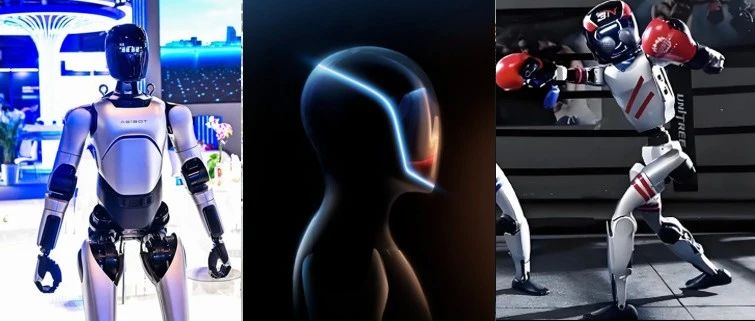
Core Viewpoint - The article discusses the competitive landscape of humanoid robotics in China, focusing on two leading companies: ZhiYuan Robotics and YuShu Technology, highlighting their strategies, partnerships, and market positioning. Group 1: ZhiYuan Robotics - ZhiYuan Robotics held its first partner conference on August 22, showcasing its "high-profile" development model and a comprehensive layout across the entire robotics industry chain [4][5] - The company aims to complete its Series C financing by the end of the year, with expectations of thousands of units shipped this year and tens of thousands next year, primarily targeting B2B markets [4][5] - ZhiYuan has established partnerships with numerous companies in the robotics supply chain, including Lens Technology and LiJing Innovation, and has invested in 15 early-stage projects [5][6] - The company has launched an open-source robotics middleware and a general-purpose embodied intelligence operating system, aiming to create a self-evolving intelligent system [6][7] - ZhiYuan's strategy includes a focus on three core capabilities: motion intelligence, interaction intelligence, and operational intelligence, with a goal of creating a comprehensive product lineup [5][14] Group 2: YuShu Technology - YuShu Technology is characterized as a "hardware-focused" company, emphasizing its strong motion capabilities and targeting educational and research markets for its humanoid robots [10][16] - The company has achieved annual revenue exceeding 1 billion yuan, with a significant portion coming from its biped humanoid robots, and plans to deliver over 1,500 units in 2024 [16][20] - YuShu has initiated its IPO process, with expectations of a high valuation, indicating strong market interest and potential for growth [20] Group 3: Market Dynamics and Comparisons - The article contrasts the two companies' approaches, with ZhiYuan focusing on software and AI capabilities while YuShu emphasizes hardware performance [10][14] - Both companies are racing towards IPOs, with ZhiYuan successfully acquiring a controlling stake in a listed company, enhancing its market position [17][18] - The competition between ZhiYuan and YuShu reflects broader trends in the humanoid robotics sector, where technological advancements and market strategies will determine future success [21][22]

机器人迎来商业化拐点 产业发展驶入快车道
Zhong Guo Zheng Quan Bao· 2025-08-22 20:10
Core Insights - The humanoid robot industry is entering a commercial phase, with significant growth expected in the coming years, particularly by 2025 when humanoid robots are anticipated to become a mass-market product [1][2] - Companies are actively competing for orders, with several manufacturers reporting substantial order volumes, indicating a positive market trend [2][3] Group 1: Market Trends - The humanoid robot market is projected to reach a tipping point in commercialization by 2025, becoming a new generation of mass intelligent terminals following smartphones and automobiles [1] - Companies like Zhiyuan Robotics aim to produce tens of thousands of units annually, with thousands of units expected to be shipped this year [1][2] - Various manufacturers have reported significant order numbers, such as Songyan Power with over 2,000 orders and Youbix with over 300 orders for educational robots [2][3] Group 2: Application Scenarios - Humanoid robots are being deployed in diverse scenarios, including industrial manufacturing, logistics, security inspections, and educational settings [3][4] - Zhiyuan Robotics has focused on eight key application areas, including entertainment, industrial manufacturing, and logistics, providing customized solutions for each [3] - The first large-scale commercial application in the industrial sector has been established with a project involving Zhiyuan Robotics and Fulian Precision, marking a significant milestone [3] Group 3: Technological Advancements - Companies are innovating with practical robot designs, such as wheeled humanoid robots and autonomous battery-swapping systems, enhancing operational efficiency [4][5] - The introduction of advanced features like the autonomous battery-swapping system in Youbix's Walker S2 robot allows for continuous operation without downtime [5] - The demand for improved hardware capabilities is driving ongoing product iterations, with a focus on lightweight components and enhanced load capacities [5]