
Neuralink

Search documents
直面挑战微软,马斯克高调推出AI新公司“巨硬”
3 6 Ke· 2025-08-25 10:22
Core Viewpoint - Elon Musk's new company "Macrohard" aims to disrupt the $1.2 trillion software industry by leveraging artificial intelligence to automate software development, directly challenging Microsoft's Office suite and Azure AI platform [2][4]. Group 1: Company Overview - "Macrohard" is positioned as a "pure AI software company" that intends to replace human developers with hundreds of specialized AI agents, covering coding, testing, and user experience design [4]. - The company is supported by Musk's xAI startup and utilizes the Grok chatbot, powered by the Colossus 2 supercomputer in Memphis [3][4]. - A trademark application for "Macrohard" was submitted to the U.S. Patent and Trademark Office on August 1 [2]. Group 2: Competitive Landscape - Musk's vision includes the potential to reduce development costs by 70% and accelerate time-to-market by 40%, while eliminating human error [4]. - Microsoft has integrated xAI's Grok into its Azure cloud services and is focusing on AI, security, and quality as strategic priorities [4]. - The competitive environment is intensified by Musk's criticism of Microsoft's partnership with OpenAI, which he claims prioritizes profit over ethics [4]. Group 3: Challenges and Regulatory Environment - The company faces significant challenges, including the limitations of AI in creativity and complex decision-making, which are crucial for enterprise software [4]. - Regulatory pressures from the EU's AI Act and U.S. data privacy laws may increase compliance costs for "Macrohard" [5]. - The high costs of procuring NVIDIA GPUs and supply chain bottlenecks could also hinder the company's expansion [5]. Group 4: Investment Outlook - The emergence of "Macrohard" has sparked excitement in the tech sector, but investors must weigh opportunities against risks [6]. - Analysts express optimism about the AI market over the next 2-3 years, yet a report indicates that 95% of companies have not yet profited from AI [6]. - The success of "Macrohard" will depend on its ability to meet enterprise demands, regulatory requirements, and manage infrastructure costs [6].


马斯克首位脑机植入者重磅发声:我重生了
创业邦· 2025-08-25 10:11
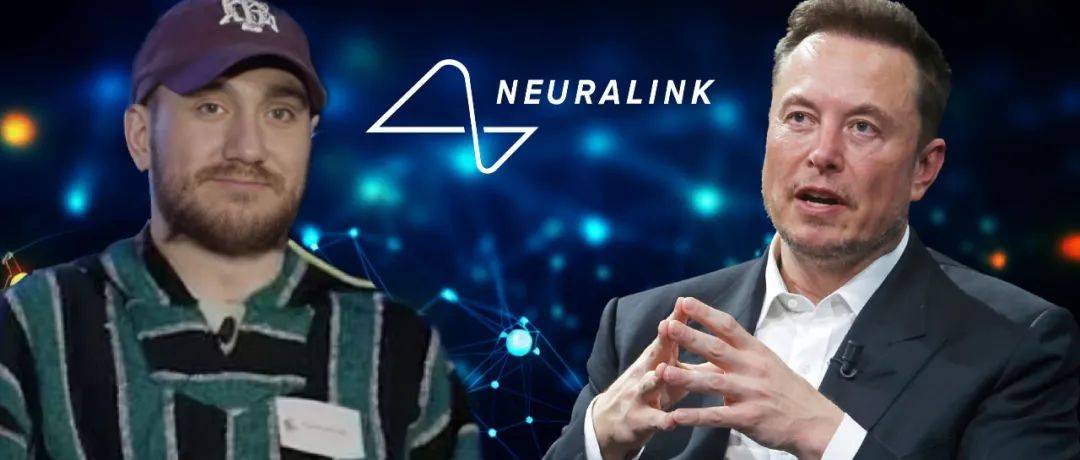
Core Viewpoint - Neuralink's brain-machine interface technology has the potential to significantly enhance the quality of life for individuals with paralysis, as demonstrated by the first participant, Noland Arbaugh, who has regained autonomy and control over digital devices after receiving the implant [7][16][31]. Group 1: Noland Arbaugh's Experience - Noland Arbaugh became the first human participant to receive a Neuralink brain-machine interface implant, allowing him to control devices using his thoughts [7][16]. - The surgery was performed using a Neuralink-designed robotic surgical device, which implanted a chip with over 1000 electrodes into the motor cortex of his brain [12][22]. - After the surgery, Arbaugh was able to perform tasks such as playing video games and controlling household devices without physical movement, breaking previous records for cursor control speed and accuracy [16][19]. Group 2: Neuralink's Technological Innovations - Neuralink's device offers a higher connection rate compared to other brain-machine interfaces currently in research, as it is implanted deeper into the brain's motor control area [22]. - The device is wireless, allowing participants to move freely without being tethered to external receivers, although it requires charging approximately every five hours [24]. - The company aims to develop further applications, including restoring vision for the blind and creating robotic arms for participants to regain sensory control [56][60]. Group 3: Public and Personal Impact - Since revealing his identity as the first participant, Arbaugh has become a public figure, facing both opportunities and challenges, including media attention and personal security issues [28][30]. - He has expressed a renewed sense of purpose and autonomy, engaging in educational pursuits and planning to start a business focused on professional speaking [31][33]. - Arbaugh's experience highlights the potential societal impact of Neuralink's technology, as he believes it represents a significant leap in the field of neuroscience and technology [49][70]. Group 4: Future Directions and Controversies - Neuralink is expanding its clinical trials and aims to increase the number of participants, with ongoing studies in multiple countries [60][66]. - The company faces criticism regarding the invasiveness of its methods and ethical concerns related to animal testing, although it maintains a commitment to safety and ethical standards [61][62]. - Elon Musk has emphasized the careful approach taken in human trials, asserting that the company prioritizes safety in its advancements [63][64].
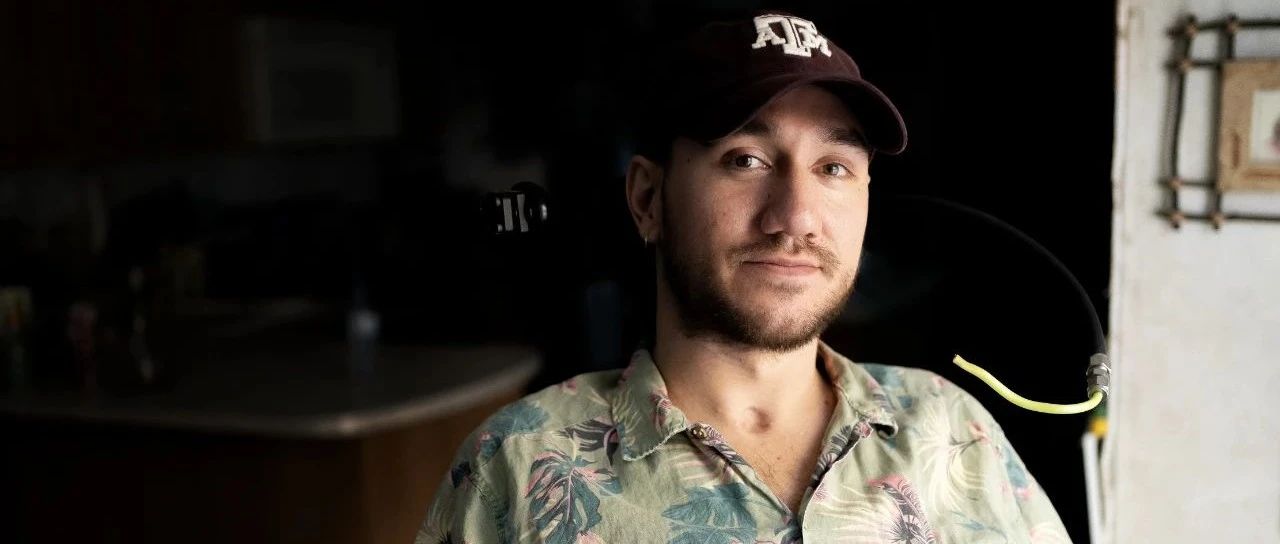
「机械飞升」18个月后,马斯克首位脑机植入者重磅发声:我重生了
3 6 Ke· 2025-08-25 03:34
Core Insights - Noland Arbaugh, the first human participant in Neuralink's brain-machine interface trial, describes his experience as life-changing, allowing him to control devices and regain a sense of purpose after being paralyzed for years [1][4][18] - Neuralink's technology features over 1,000 electrodes implanted in the motor cortex, providing a higher connectivity rate compared to competitors, and operates wirelessly, requiring charging approximately every five hours [12][8][11] - The company aims to expand its clinical trials and has plans for future projects, including restoring vision for the blind and developing robotic arms for participants [40][41][44] Company and Technology Overview - Neuralink is at the forefront of brain-machine interface technology, with a history of over 50 years in neurological research and several companies conducting limited human trials since 1998 [11] - The device implanted in Arbaugh allows him to control computers and play video games using only his thoughts, breaking records for speed and accuracy in cursor control [8][9] - The invasive nature of Neuralink's approach, while criticized, is seen as a significant advancement in the field compared to less invasive methods used by competitors [12][44] Participant Experience and Impact - Arbaugh's journey from paralysis to regaining autonomy has garnered public attention, leading to increased interest in Neuralink's trials and technology [16][45] - Since Arbaugh's surgery, additional participants have joined the trials, indicating growing momentum for Neuralink's research and development efforts [16][44] - The participant's positive outlook on the technology reflects a broader belief in the potential of tech advancements to address disabilities and improve quality of life [46][18]
X @Tesla Owners Silicon Valley
Tesla Owners Silicon Valley· 2025-08-24 22:10
Imagine being able to hug your mom again, feel the weight of a book in your hands, or simply turn a page. For many, that’s a dream. With Optimus and Neuralink, it could become reality. https://t.co/kAKtXa6mlG ...

马斯克背叛理想
Sou Hu Cai Jing· 2025-08-24 12:52
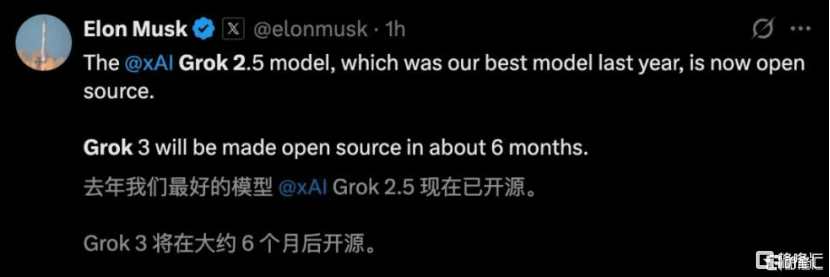
Core Viewpoint - Elon Musk has announced the open-sourcing of xAI's Grok-2 model, with plans to release Grok-3 in about six months, claiming that xAI will soon surpass all companies except Google [2][3]. Group 1: Commitment and Performance - Musk had previously promised to open-source each new version of Grok, starting with Grok-1, which was indeed open-sourced [4][5]. - However, Grok-2 was not open-sourced until now, despite the release of Grok-4, indicating a potential breach of promise [6][7][8]. - The performance of Grok-2, once considered advanced, has now fallen behind the industry average, making it less relevant [12][15][20]. Group 2: Licensing and Market Impact - The open-sourcing of Grok-2 comes with a more restrictive community license compared to Grok-1, limiting commercial use for entities earning over $1 million and prohibiting model improvements [21][22][23]. - This raises questions about the actual utility of Grok-2 in the market, as its outdated performance and restrictions may deter potential users [24][26]. Group 3: Historical Context and Ideals - Musk has a history of advocating for open-source AI, having co-founded OpenAI with the goal of creating a competitive AI landscape [33][44]. - However, his recent actions suggest a shift towards a more commercial approach, prioritizing business interests over the original ideals of open-source collaboration [64][65]. - The competitive landscape in AI has evolved, and Musk's current strategy appears to be aimed at slowing down competitors rather than fostering an open environment [65].
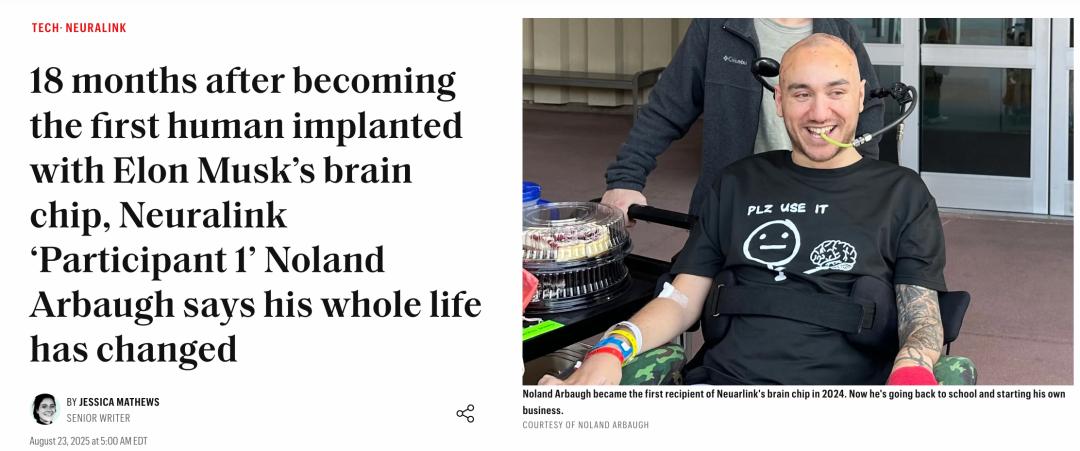
「机械飞升」18个月后,马斯克首位脑机植入者重磅发声:我重生了!
Sou Hu Cai Jing· 2025-08-24 11:34
Core Insights - Noland Arbaugh, the first participant in Neuralink's brain-machine interface trial, describes his experience as life-changing, allowing him to control devices and regain a sense of purpose after being paralyzed for years [2][5][20]. Neuralink Technology and Innovations - Neuralink's device features over 1,000 electrodes, providing a higher connectivity rate compared to most existing brain-machine interfaces [15]. - The device is implanted in the motor cortex, a more invasive approach than competitors like Synchron or Precision Neuroscience [15]. - Neuralink's technology is wireless, requiring charging approximately every five hours, with a charging coil integrated into Arbaugh's hats for convenience [15][12]. Clinical Trials and Participant Experience - Arbaugh underwent surgery at Barrow Neurological Institute, where a robot-assisted procedure implanted the device, allowing him to control computers with his thoughts [7][9]. - Since Arbaugh's participation, eight additional individuals have enrolled in Neuralink's clinical trials, which are ongoing in the U.S., Canada, the UK, and the UAE [18][20]. - The trials focus on patients with paralysis or ALS, aiming to expand the understanding and application of brain-machine interfaces [18]. Future Directions and Goals - Neuralink aims to develop a complete brain interface and is planning trials to help blind individuals regain vision, as well as creating robotic arms for participants [43][44]. - The company is also exploring the integration of its technology with Tesla's Optimus robot, potentially allowing users to control robotic limbs [44]. Public Perception and Challenges - Neuralink faces scrutiny regarding its invasive methods and treatment of test animals, although the company asserts it operates ethically [47]. - Arbaugh's public persona has led to increased media attention and scrutiny, highlighting the societal implications of such technologies [18][49]. Industry Impact and Vision - The advancements in Neuralink's technology are seen as pivotal in the future of medicine, particularly for treating disabilities through technological solutions [50]. - Arbaugh's experience reflects a broader narrative of hope and potential in the intersection of technology and healthcare, emphasizing the transformative power of innovation [51].
X @Elon Musk
Elon Musk· 2025-08-24 06:05
Medical Technology Advancements - Neuralink's brain chip implant, 18 months post-implantation, shows promising results in Participant 1, Noland Arbaugh [1] - The participant expresses optimism about technology's potential to revolutionize medicine, offering solutions for disabilities, cures, and long-sought answers [1] - The device's long-term durability and functionality are noteworthy [1] Future Implications - The advancements in technology are expected to solve many problems and are considered the future of medicine [1] - Technology is anticipated to provide cures and answers for disabilities that have been searched for a long time [1]
马斯克曾邀扎克伯格助其收购OpenAI? 科技巨头AI人才争夺战加剧
Zheng Quan Shi Bao Wang· 2025-08-23 11:39
据海外媒体报道,最新法庭文件显示,马斯克今年2月在发起974亿美元收购OpenAI的过程中,曾尝试 拉拢曾经的"死对头"——Meta首席执行官扎克伯格加入其中。不过,Meta方面并未签署任何意向书,也 没有实际参与该交易。在业内看来,科技界从来没有"永远的敌人",大家的目标或许是为了争夺人工智 能(AI)人才。 "让人感到非常意外" 对于脑机接口领域,奥尔特曼在2017年曾就这一主题写过长文,推测人与计算机结合的时刻最快可能在 2025年到来。今年,他又在另一篇博文中表示:"随着技术的最新进步,我们很快可能会拥有高带宽的 脑机接口。" 除了OpenAI,奥尔特曼还投资了多个相关领域的公司,例如核裂变公司Oklo和核聚变项目Helion。有分 析人士认为,科技公司的AI人才争夺战短期内没有消停的迹象,随着更多公司涌入,人才竞争会更加 激烈。 今年2月,马斯克先是试图强制对最终控制OpenAI业务的非营利实体进行拍卖,随后又提出直接收购的 要约。当时,就有市场人士指出,考虑到马斯克与OpenAI首席执行官奥尔特曼之间存在个人矛盾,收 购成功的可能性较低。 AI人才争夺战愈发激烈 法庭文件还显示,Meta正大举投入 ...

脑机接口,AI喜临门的新跳板
Zhong Guo Chan Ye Jing Ji Xin Xi Wang· 2025-08-22 08:17
Core Viewpoint - Brain-Computer Interface (BCI) technology is rapidly advancing from science fiction to reality, with companies like Neuralink leading the charge in applications that can significantly improve the quality of life for individuals with disabilities [1][2]. Group 1: Industry Challenges and Opportunities - Despite the potential of BCI technology, there are significant challenges in its practical application, particularly in the medical rehabilitation sector, necessitating broader consumer applications [2]. - The Chinese government is actively supporting the development of non-invasive BCI technologies, aiming to accelerate their integration into various sectors such as industrial manufacturing and healthcare [2]. - A recent collaboration between Xilinmen and Qiangnao Technology aims to address sleep issues by introducing BCI technology into sleep aids, highlighting a tangible application of BCI in everyday life [2]. Group 2: Sleep Health Crisis - Global sleep disorders are a widespread issue, with over 2 billion people suffering from insomnia, and only 13% of individuals achieving quality sleep [3]. - In China, approximately 65.91% of surveyed individuals have experienced sleep disturbances, with many adults averaging less than 7 hours of sleep per night [3]. - Poor sleep quality is linked to various health issues, including cognitive decline and increased risk of diseases like Alzheimer's, prompting a surge in demand for effective sleep solutions [3]. Group 3: Market Response and Consumer Sentiment - Over 80% of Chinese consumers express willingness to use smart sleep devices, with significant purchases of products like smart eye masks and electronic sleep aids [4]. - Despite consumer enthusiasm, there are criticisms regarding the effectiveness of some sleep products, indicating a gap between expectations and actual performance [4]. Group 4: Technological Innovations - BCI technology, particularly through EEG (electroencephalography), is being explored for its potential to enhance sleep quality by monitoring brain activity [6][7]. - Non-invasive BCI products, such as the "Deep Dolphin Smart Sleep Instrument," have shown promising results in improving sleep quality, with over 70% of users reporting reduced time to fall asleep [7]. - The industry is moving towards more comfortable and integrated solutions, such as embedding sensors in pillows and mattresses to enhance user experience [7]. Group 5: Strategic Collaborations and Product Development - Xilinmen's partnership with Qiangnao Technology has led to the development of the "Baobao·BrainCo" AI mattress, which utilizes BCI technology for real-time sleep management [8]. - This collaboration aims to create a comprehensive sleep ecosystem, allowing users to maintain personalized sleep settings across different environments, including hotels [9]. Group 6: Long-term Vision and Company Evolution - Xilinmen's collaboration with Qiangnao Technology reflects a strategic shift towards integrating advanced technology into sleep solutions, marking a significant evolution in their business model [10]. - The company has undergone multiple strategic transformations over the years, focusing on technological innovation and expanding its product offerings to include smart sleep management systems [12][13]. - Recent financial results indicate a positive response to these transformations, with a reported revenue of 4.021 billion yuan and a net profit increase of 14.04% [14]. Group 7: Future Outlook - The sleep health sector is poised for significant transformation, driven by advancements in BCI technology and a growing focus on comprehensive health management solutions [16]. - As policies support innovation and technology continues to evolve, the future of sleep systems is expected to be more personalized, comfortable, and effective in addressing sleep-related issues [16].
