
SpaceX

Search documents
Giant IPOs From SpaceX to OpenAI Put Index Rules Under Pressure
Yahoo Finance· 2026-03-18 14:11
Core Viewpoint - The proposed changes to index fund entry rules could lead to significant market distortions and affect the stability of newly listed stocks, as index funds may be forced to buy before reliable market prices are established [1][5][6]. Group 1: Proposed Changes to Index Entry Rules - Nasdaq's proposed "fast entry" rule aims to reduce the waiting period for index inclusion from at least three months to just 15 trading days, which critics argue could expose index-tracking funds to excessive price volatility [2][4]. - S&P Dow Jones Indices, Nasdaq, and FTSE Russell are all considering changes to accelerate how newly listed companies enter their benchmarks, impacting over $30 trillion in assets [4][5]. - The proposed changes include reducing the waiting time to as little as five trading days, which could make indexes more representative of the US equity market sooner [8]. Group 2: Implications of Fast-Tracking IPOs - If the ten largest US venture-backed companies were to list, they would collectively represent approximately 4.5% of the S&P 500 index, surpassing the entire energy sector [9]. - SpaceX, with a target valuation of about $1.75 trillion, would be larger than all but five current S&P 500 members, raising concerns about the exclusion of major companies from benchmarks due to existing rules [10]. - The potential for forced buying by index funds during large IPOs could inflate prices, benefiting insiders while disadvantaging passive investors [16]. Group 3: Historical Context and Methodology - Historically, the path to inclusion in major stock benchmarks has been predictable, requiring companies to prove themselves before being added [5]. - Index methodologies have evolved over time, with proponents of faster inclusion arguing that the rules should adapt to reflect the current market landscape [7]. - Current index methodologies require a minimum float of 5% or 10% of a company's outstanding shares for eligibility, which may not be met by incoming mega-caps even if seasoning periods are shortened [18]. Group 4: Concerns About Market Stability - Critics warn that rushing the inclusion of large IPOs could distort the markets that these indexes are meant to track, questioning whether a few large listings should drive changes in benchmark operations [5][6]. - Low-float IPOs have historically performed poorly in their early years, suggesting that a lack of liquidity can lead to initial overpricing and subsequent underperformance [20][21].

X @Elon Musk
Elon Musk· 2026-03-18 14:04
TrueDogeDesigner (@cb_doge):Media said Tesla would fail.Today, Tesla is worth $1.25 trillion.Media said SpaceX would fail.Today, SpaceX is dominating the space industry.Media said 𝕏 would fail.Today, 𝕏 is the #1 source of News.Now they are saying Grok will fail. 👀 ...

人才持续流失,马斯克旗下xAI关键项目陷入停滞
财富FORTUNE· 2026-03-18 13:06
Core Viewpoint - Elon Musk is undertaking a complete reconstruction of his AI startup xAI, following its acquisition by SpaceX, which is one of the largest mergers in history [1][2]. Group 1: Company Restructuring - xAI is experiencing significant talent loss, with nine out of the original eleven co-founders leaving since 2024, raising concerns about the company's future [3][5]. - Musk describes the current restructuring of xAI as similar to the early stages of Tesla, indicating a foundational overhaul due to issues with the initial architecture [2][3]. - The acquisition by SpaceX aims to create a "orbital data center," which Musk claims is the most cost-effective way to generate AI computing power [3]. Group 2: Talent Challenges - The departure of key personnel has led to the suspension of major AI projects, such as the "Macrohard" initiative, which was intended to develop a versatile AI capable of performing all white-collar jobs [5]. - Despite the talent exodus, Musk downplays the situation as a planned restructuring, suggesting that some employees are better suited for early-stage startups rather than later development phases [5][6]. - xAI is actively recruiting to address the talent shortage, having recently hired two employees from AI programming company Cursor, which has a significant growth potential in the programming tools market [6]. Group 3: Market Potential - The programming tools market is projected to grow from $7.65 billion in 2025 to $22.2 billion by 2030, indicating substantial opportunities for companies like xAI [6].

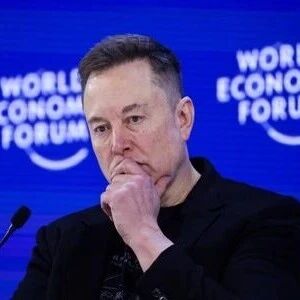
X @Forbes
Forbes· 2026-03-18 13:01
At the top of the world’s richest is Elon Musk—and he keeps setting new records.His fortune soared past $800 billion in February after he merged rocket maker SpaceX with his artificial intelligence and social media company xAI in a deal valuing the combined firm at $1.25 trillion.A successful IPO of the merged company later this year could make Musk the world’s first trillionaire.Read more about the leader of our 2026 #ForbesBillionaires list: https://t.co/6xLkVMj1ZU ...
XOVR: Tech-Heavy Strategy For A Pre-IPO Investment In SpaceX
Seeking Alpha· 2026-03-18 10:00
Core Insights - The ERShares Private-Public Crossover ETF (XOVR) aims to provide investors with equity exposure across both public and private markets, highlighting a growing trend in investment strategies that blend these two sectors [1] Group 1: ETF Overview - XOVR is designed as an alternative exchange-traded fund, indicating a focus on innovative investment approaches [1] - The fund is particularly relevant in light of the anticipated IPO of SpaceX, which may attract significant investor interest [1] Group 2: Analyst Background - Michael Del Monte, a buy-side equity analyst, has over a decade of experience in various sectors including technology, energy, and industrials, which adds credibility to the analysis of the ETF [1]
LIVE! ISS US Spacewalk #94
The Launch Pad· 2026-03-18 05:06
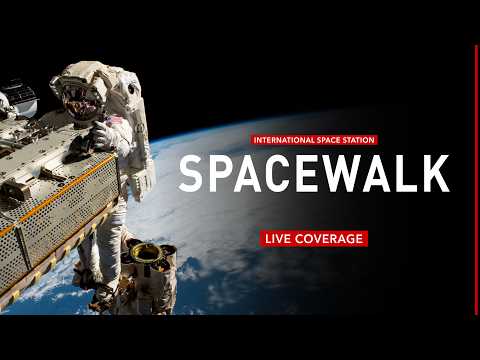
Watch as NASA astronauts Chris Williams and Jessica Meir go on a spacewalk outside of the International Space Station. Williams and Meir will make preparations to install additional International Space Station Roll-Out Solar Arrays (IROSAs), which will provide additional power for the orbital laboratory. The spacewalk is scheduled to start at about 8:00 a.m. EDT (1200 UTC) and run for about six-and-a-half hours. This spacewalk will be the first for Williams and fourth for Meir. #NASA #ISS #Spacewalk Join ou ...
X @Tesla Owners Silicon Valley
Tesla Owners Silicon Valley· 2026-03-18 03:20
RT Gali (@Gfilche)Terafab & the Inevitable @SpaceX + @Tesla merger ⚡️I sat down with @_SFTahoe & @TeslaLarry to discuss Tesla's plan to build chips, and how that will be the key partnership for a full merger with SpaceX/XAI 🎙️0:45 SpaceX to $100T2:30 SpaceX Plans To Be 10X Bigger Than NVIDIA5:20 The Terafab is Coming! Impact & Timing22:36 Digital Optimus & MARCROHARD Project37:03 SpaceX/Tesla/xAI Cash Needs41:40 The SpaceX IPO Process48:08 The Biggest Merger/Company of All-time?54:17 Grok Is Helping With Al ...
X @Tesla Owners Silicon Valley
Tesla Owners Silicon Valley· 2026-03-18 01:28
WHY ELON MUSK IS WORKING SO HARD FOR HUMANITYElon Musk isn’t driven by money, fame, or power. He’s working tirelessly because he genuinely believes in building a better future for all of us — extending the light of consciousness, solving existential risks, and creating abundance through innovation.Here’s why his efforts are so profound:•Multiplanetary survival — Through SpaceX and Starship, he’s making humanity resilient against Earth-bound extinction events. A self-sustaining Mars city isn’t ego — it’s ins ...
为何停售初代小米SU7?雷军:不想背刺老车主;AI大厂月薪3w疯抢文科生!网友:拯救了文科就业率;周鸿祎:将启动360安全龙虾全国巡装计划
雷峰网· 2026-03-18 00:31
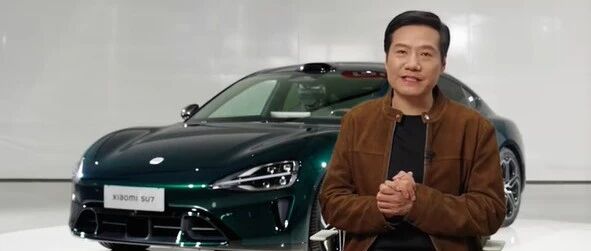
Key Points - Xiaomi's CEO Lei Jun announced the discontinuation of the first-generation SU7 to avoid undermining existing customers, despite the impact on initial sales [4] - The new generation SU7 features significant upgrades in safety, power, and chassis, including a 10% increase in strength of the embedded roll cage and a maximum power output of 690 horsepower [5] - Huawei faced a large-scale account suspension issue affecting adult players, attributed to a potential error in their account verification system, raising concerns about user experience [10] - AI companies are increasingly hiring liberal arts graduates, with salaries for positions like AI trainers and ethical researchers reaching up to 30,000 yuan per month, indicating a shift in job market demand [12][13] - 360 Group's founder announced a nationwide installation plan for their AI product, following a security incident that raised concerns about user data safety [15] - Horizon Robotics is reportedly facing leadership changes with the departure of its chip development head, which could impact its competitive position in the market [17] - Alibaba is implementing an internal plan to provide employees with token allowances to encourage the use of AI tools in their work [20] - Dell announced a significant layoff plan affecting 11,000 employees, reflecting ongoing trends in the tech industry to reduce costs and optimize operations [37][38] - The global automotive industry has suffered over $35.4 billion in losses due to U.S. tariffs, with Toyota being the most affected company, facing an estimated cost of $9.1 billion [40][41]



Musk's motives are debated as Twitter shareholder trial nears end
Yahoo Finance· 2026-03-17 23:44
Core Argument - The lawsuit against Elon Musk centers on allegations that he defrauded Twitter shareholders by driving down the stock price through public statements questioning the number of fake accounts on the platform [1][2]. Group 1: Allegations Against Musk - Musk is accused of defrauding shareholders by suggesting that Twitter had significantly more fake accounts than the 5% disclosed, which allegedly contributed to a decline in stock price [2]. - The lawyer for the plaintiffs argued that Musk's public comments "trashed the company" and its executives, leading to a decrease in stock value [3]. - Musk's statements included claims that the purchase of Twitter was "temporarily on hold" until the company could prove the bot percentage was below 5% [7]. Group 2: Defense Arguments - Musk's defense contends that his concerns about the number of bots were genuine and not intended to manipulate the stock price [5]. - The defense argued that the plaintiffs failed to provide evidence of fraud, asserting that Musk's public statements did not equate to securities fraud [6]. - The defense emphasized that if Musk had remained silent, it is speculative whether the stock would have maintained its value [6]. Group 3: Legal Proceedings - The jury is tasked with determining whether Musk's statements about bots were fraudulent and if he intended to defraud shareholders by lowering the share price [7]. - If the jury finds Musk's statements were not fraudulent, he will win the case; if they find in favor of the plaintiffs, they will then consider potential damages [7]. - The trial is ongoing, with jury deliberations expected to continue [6].