
vivo

Search documents
直播间置顶“不需要女用户”?vivo客服回应:已向内部反馈核实
Cai Jing Wang· 2025-12-01 04:35
12月1日,财经网科技联系vivo官方客服热线,对方表示,"您反馈的情况公司已经收到,我们也有向内 部反馈核实,我们始终重视每一位用户,致力于为大家提供优质服务。" 近日,据媒体报道,vivo官方直播间被曝多次人工置顶"用你们买吗集美戏真多,男人购买力够了 哈""不需要女用户哦,购买力太差"等充满性别歧视的言论,瞬间点燃舆论。 ...
双十一手机真实销量:只有苹果OV赢麻,小米华为荣耀却下跌了
3 6 Ke· 2025-12-01 04:08
Core Insights - The 2023 Double Eleven shopping festival saw significant sales fluctuations among major smartphone brands, with Apple experiencing a 37% increase in sales, while Xiaomi, Huawei, and Honor faced declines of 11%, 22%, and 14% respectively [1][3][5]. Sales Performance - Apple's sales surge is attributed to the strong performance of the iPhone 17, despite a strict pricing strategy limiting discounts to around 500 yuan [3][5]. - Xiaomi's decline is linked to the early launch of the Xiaomi 17 series, which sold over 1 million units before the Double Eleven period, resulting in lower sales during the event [7][11]. - Huawei's significant drop in sales is due to a lack of new product launches during the Double Eleven period, with previous successful models released earlier in the year [8][10]. Market Dynamics - The competitive landscape is shifting, with OPPO and Vivo reporting sales growth due to successful new product launches, contrasting with the declines of Xiaomi and Huawei [11][12]. - Consumer behavior is changing, with a growing preference for first-sale benefits over traditional Double Eleven discounts, indicating a shift in purchasing psychology [13][15]. Future Trends - The smartphone market is evolving, with brands likely to adjust their strategies for future sales events, potentially leading to earlier flagship releases to capture consumer interest [16].



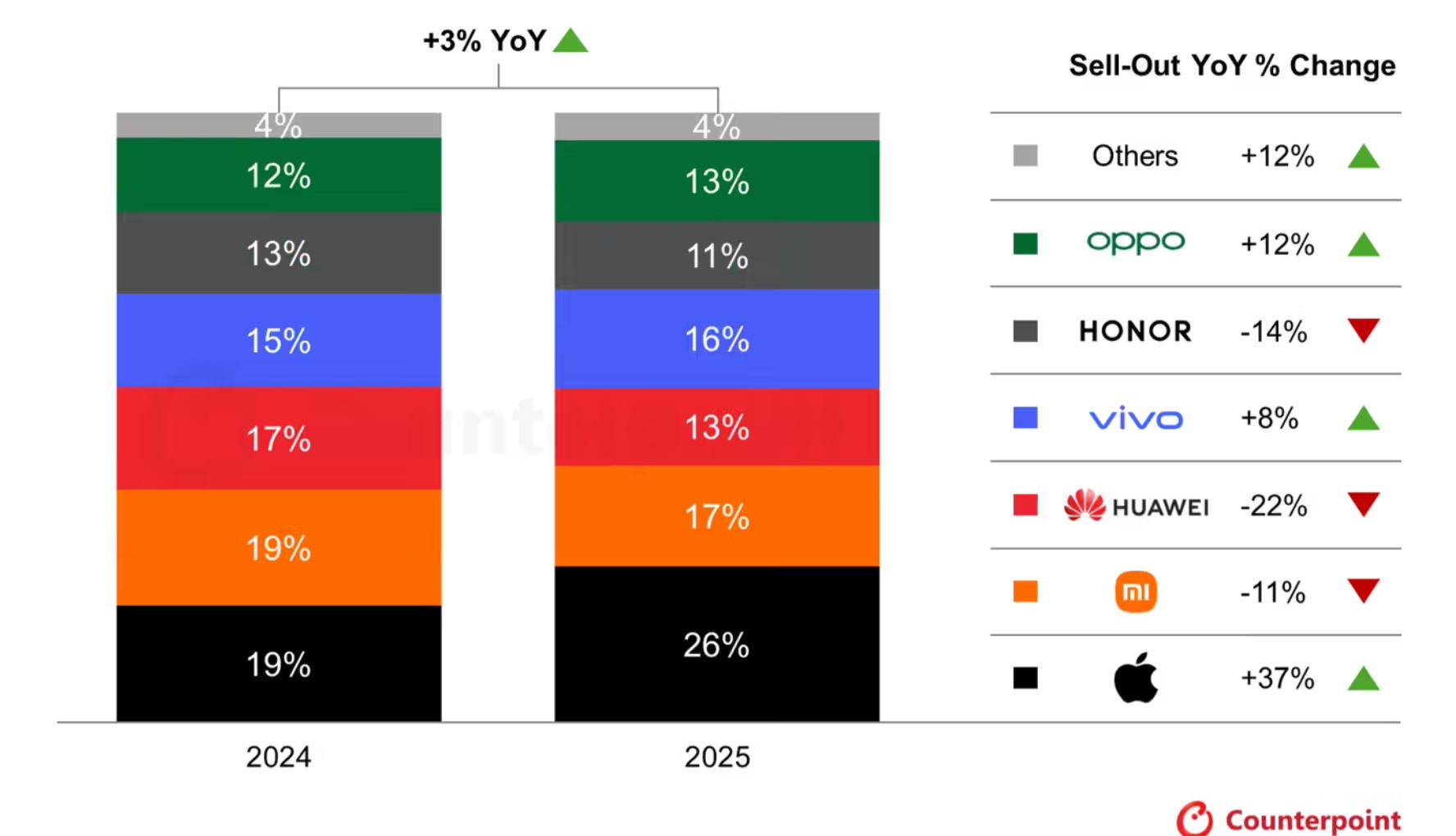
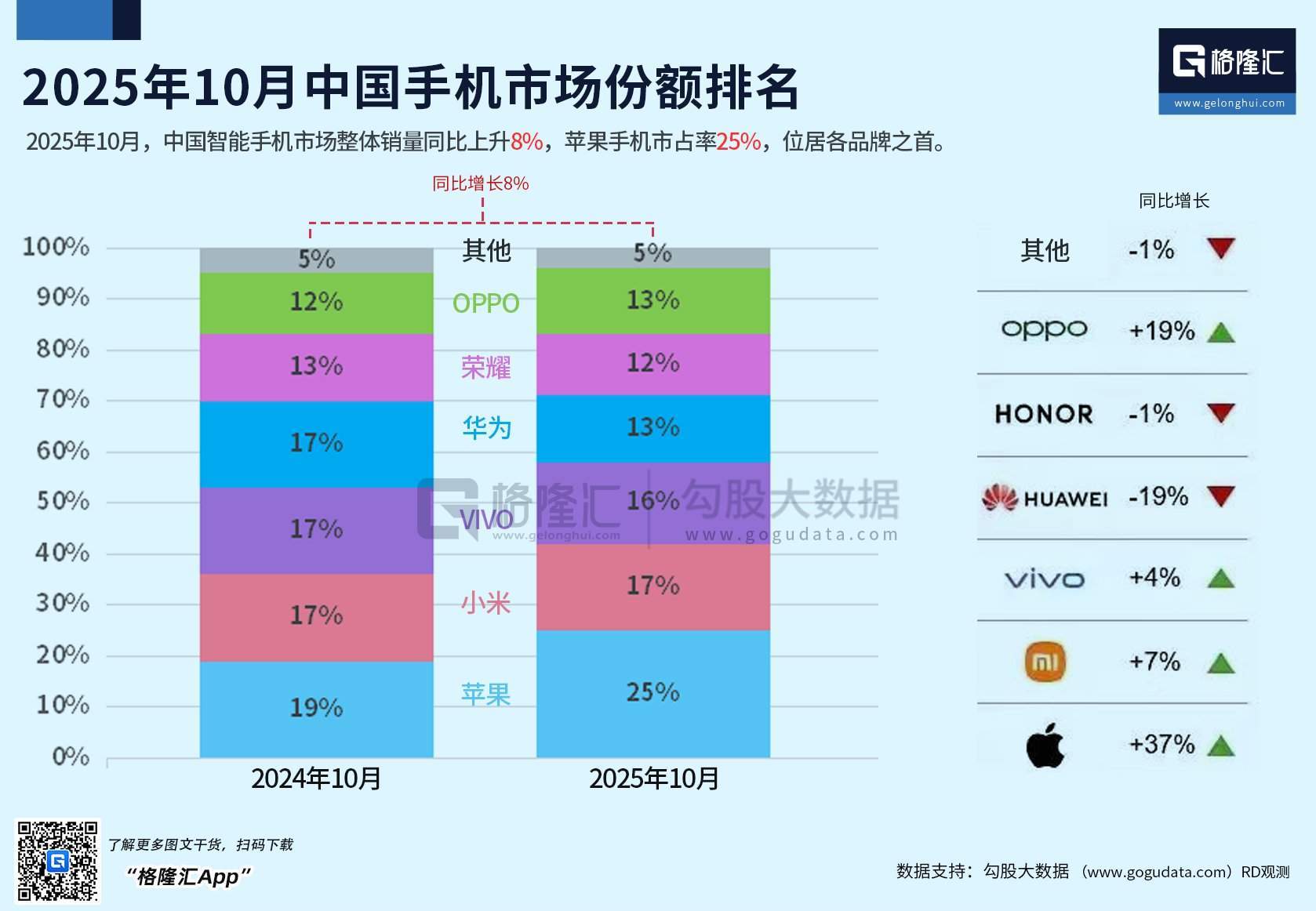
2025年10月中国手机市场份额排名:苹果市占率升至25%排第一,小米17%列第二名,vivo市占率16%第三,华为13%与OPPO并列第四
Ge Long Hui· 2025-12-01 02:38
Core Insights - In October 2025, iPhone shipments in China increased by 37% year-over-year, achieving a market share of 25%, marking the first increase since 2022 [1] - The iPhone 17 series, particularly the standard iPhone 17, significantly contributed to this growth, driving overall sales [1] - Apple's strong performance led to an 8% growth in the Chinese smartphone market [1] Company Performance - Xiaomi's 17 series also performed well, with October sales increasing by 7% year-over-year, securing the second position in the market [1] - Vivo ranked third with a market share of 16%, experiencing a 4% year-over-year growth [1] - OPPO's smartphone sales rose by 19% year-over-year in October, driven by demand for the new Find X9 model [1]
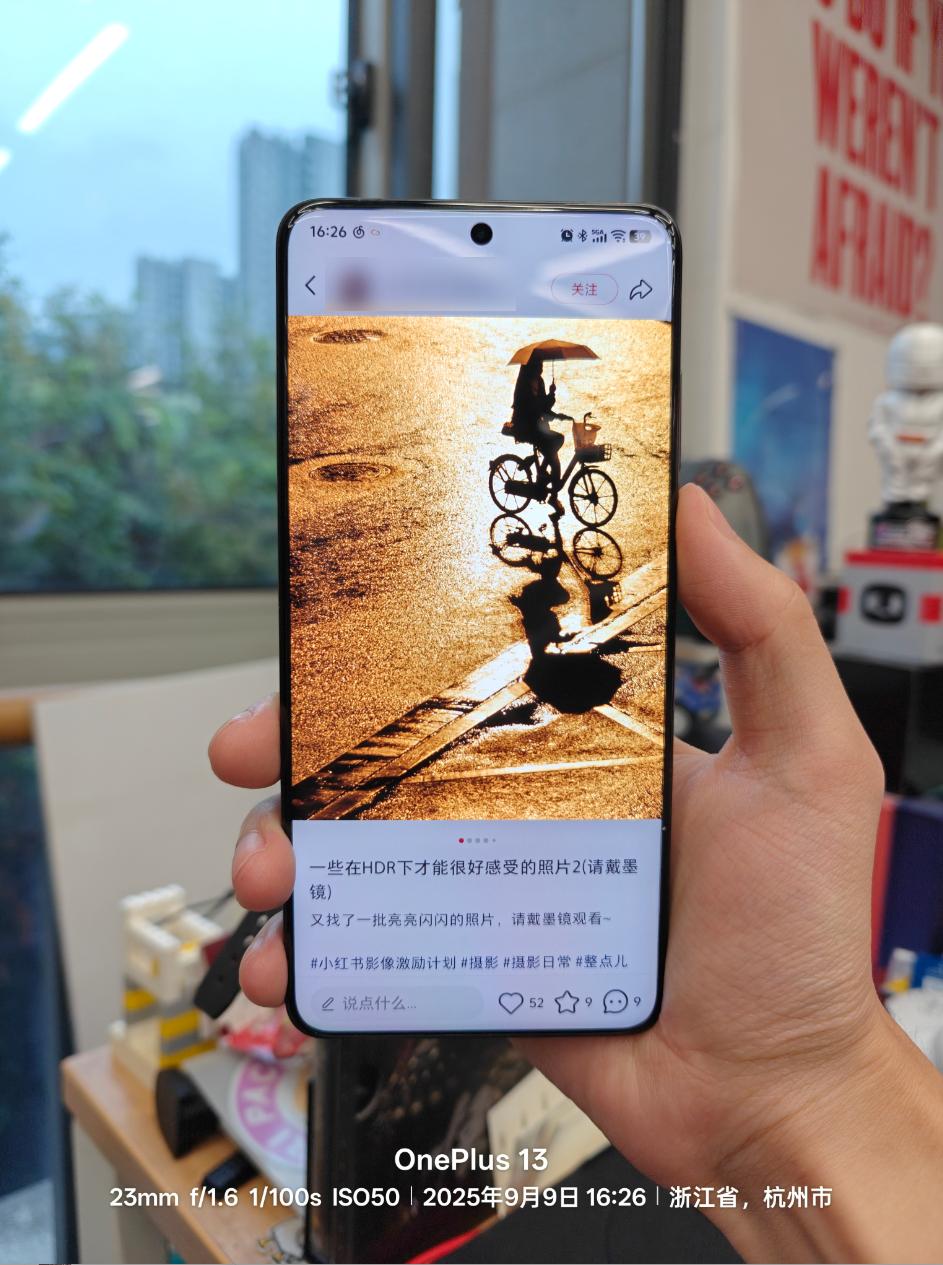
有多少人半夜玩手机,结果被HDR照片闪瞎了
3 6 Ke· 2025-12-01 00:25
Core Viewpoint - The article discusses the evolution and current state of HDR (High Dynamic Range) imaging technology, highlighting its transition from professional use to mainstream consumer adoption, driven by advancements in smartphone technology and social media platforms [5][34]. Group 1: HDR Technology Overview - HDR technology has been around since the late 1990s, with its roots tracing back to the 1850s when photographers began experimenting with multiple exposures to capture a wider dynamic range [16][19]. - The transition from SDR (Standard Dynamic Range) to HDR involves significant improvements in image quality, with HDR images offering greater brightness and detail [10][12]. Group 2: Smartphone Influence - The iPhone 12 series was a pioneer in fully supporting HDR imaging, including both capture and display capabilities, using the HEIF format to store HDR images [21][24]. - Android devices lagged behind in HDR support, with hardware and software compatibility issues delaying widespread adoption until the introduction of Google's Ultra HDR standard in Android 14 [30][32]. Group 3: Industry Standardization - The introduction of Ultra HDR by Google marks a significant step towards standardizing HDR across Android devices, allowing for better compatibility and sharing of HDR content [32][34]. - Apple has also made strides in HDR compatibility by enabling HDR image capture in JPG format starting with the iPhone 16, enhancing cross-platform sharing capabilities [34]. Group 4: Market Dynamics - The push for HDR adoption is fueled by social media platforms seeking to enhance user engagement through improved image quality, leading to a collaborative effort between manufacturers and platforms [34][36]. - The article emphasizes the importance of standardization in HDR technology, noting that the lack of a unified approach among Android manufacturers previously contributed to confusion and inconsistency in HDR image sharing [36].

12 月手机市场迎收官之战:高端市场卷差异,中端市场卷配置
3 6 Ke· 2025-12-01 00:20
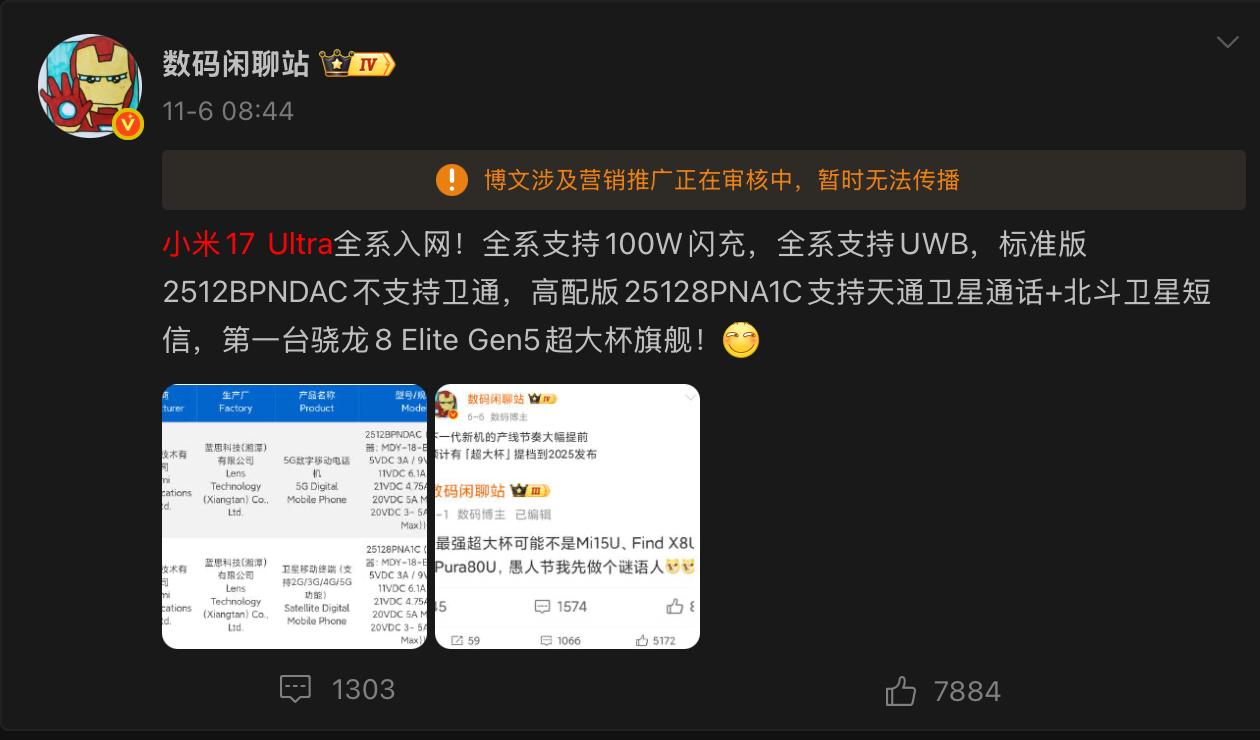
Core Insights - The smartphone market is experiencing intense competition as companies prepare for the end of 2025, with significant product launches expected in December that will shape the industry direction for 2026 [1] Group 1: High-End Market Developments - Xiaomi's upcoming flagship, the Xiaomi 17 Ultra, is set to lead in imaging technology with features like a 50MP main camera and a 200MP periscope lens, aiming to enhance the photography experience [2][3][6] - Samsung is launching its first tri-fold smartphone, the Galaxy Z TriFold, which features a unique folding mechanism and aims to differentiate itself from competitors like Huawei [7][8][14] - The Galaxy Z TriFold will include advanced features such as a Snapdragon 8 Gen 2 processor and a 10-inch display when fully unfolded, targeting the high-end market segment [9][14] Group 2: Mid-Range Market Competition - The mid-range smartphone market is becoming increasingly competitive, with brands like Vivo and Redmi introducing models that offer flagship-level specifications at lower price points [15][24] - Vivo's S50 series is expected to feature the Snapdragon 8 Gen 5 processor and innovative camera capabilities, positioning it as a strong contender in the mid-range segment [16][18] - Redmi's Turbo 5 Pro is set to compete directly with OnePlus's Turbo 6, both offering large battery capacities and high-performance specifications, indicating a fierce battle for market share in the mid-range category [20][23] Group 3: Overall Market Trends - The ongoing competition in the smartphone market is driving technological advancements and improving user experiences, benefiting consumers with better specifications and pricing [24][25] - The December product launches are seen as both a conclusion to 2025 and a prelude to the developments expected in 2026, with a focus on foldable technology and enhanced imaging capabilities [25]
网红言论引爆品牌危机:病态流量逻辑该终结了
Xin Lang Cai Jing· 2025-11-30 19:16
作者/柳叶 第一,厘清责任边界,拒绝"无限连带"。任何主体都不应为他人的独立言行承担无限责任。商业合作不等于价值背书,内容关联更不构成道德共谋。社会共 识应坚决守住这一现代商业文明的底线。 值得深思的是,部分被卷入的企业与争议内容毫无实质关联。例如,仅因主播曾做过一次vivo的发布会观看,该品牌就遭到有组织的攻击,甚至被捏造"排 斥女性用户"等不实言论。更荒诞的是,一些极端声音通过反串发言、恶意剪辑等手段制造虚假信息,倒逼企业为他人言行"表态担责"。这种逻辑,已脱离 商业常识,也异化了舆论监督的本义。 "情绪定罪"背后的网络生态危机 近年来,类似现象屡见不鲜。从音乐平台因一条用户评论被推上风口浪尖,到运动品牌因广告内容引发广泛争议,再到多家游戏公司因角色设定陷入舆论漩 涡……"情绪定罪"似乎正成为一种新型网络暴力。 其运作机制具有高度相似性:片面截取信息、强行关联归因、发动集体施压、倒逼企业切割。在这一过程中,事实不再重要,立场成为唯一标尺,"谁更激 烈,谁就更正确"的扭曲逻辑大行其道。本质上是情绪对理性的碾压。这不仅损害商业环境的稳定,更助长了网络空间的非理性风气,蚕食着公共讨论的理 性根基。 破局之道:以 ...

“逍遥散人”事件折射网络乱象:莫让“恶意构陷”成为流量
Jing Ji Guan Cha Wang· 2025-11-30 15:03
Core Viewpoint - The recent incident involving online gaming live streaming has highlighted deep-rooted issues in the current governance of the online ecosystem in China, particularly regarding the emergence of organized online violence that transcends commercial contracts and legal boundaries [1][2]. Group 1: Incident Overview - The controversy began when a well-known creator, "Xiaoyao Sanren," faced backlash for playing a new game with a legal license, leading to a wave of online violence against unrelated brands like vivo [1][5]. - The online violence escalated from individual disputes to a systematic attack on companies such as miHoYo and NetEase, indicating a standardized chain of malicious activities that exploit social issues for commercial gain [2][10]. Group 2: Nature of Online Violence - The attacks have evolved into a form of "collective punishment," where individuals and brands are targeted indiscriminately, undermining normal consumer expression and posing a substantial threat to public order [2][9]. - The online violence is characterized by organized efforts, including detailed "violence strategies" that instruct participants on how to disrupt live streams and spread false rumors [8][9]. Group 3: Impact on Companies - Companies like vivo, which had no commercial ties to the incident, faced extreme and irrational attacks, including large-scale disruptions of their live streaming activities and personal attacks on their executives [5][6]. - The situation has created an environment where businesses are not only pressured by market competition but also face unpredictable "public opinion disasters," significantly increasing compliance costs and harming the innovation landscape [11]. Group 4: Regulatory Response - The Chinese government has initiated a series of measures to address these online issues, including a special campaign targeting the provocation of extreme group emotions and the legal consequences for malicious marketing practices [14][15]. - There is a call for platforms to take responsibility for their algorithms and to implement measures against organized harassment and misinformation [17][18]. Group 5: Future Considerations - The ongoing situation emphasizes the need for a collaborative approach to governance in the online space, where legal frameworks, platform responsibilities, and societal consensus must align to restore a healthy online environment [16][19].
vivo客服回应直播间置顶“不需要女用户”:将向内部反馈核实
Xin Lang Ke Ji· 2025-11-30 14:52
责任编辑:常福强 对此,新浪科技联系vivo官方客服热线,对方表示,"公司很重视的这个情况,相关问题也会进行记 录,具体问题我们将向内部反馈核实。" 新浪科技讯 11月30日晚间消息,近日,vivo官方直播间被曝多次人工置顶"用你们买吗集美戏真多,男 人购买力够了哈""不需要女用户哦,购买力太差"等充满性别歧视的言论,瞬间点燃舆论怒火。 ...
“逍遥散人”事件折射网络乱象:莫让“恶意构陷”成为流量
经济观察报· 2025-11-30 14:10
Core Viewpoint - The article emphasizes the necessity of adhering to the rule of law in online governance to eliminate malicious provocations and restore a healthy discourse environment for economic and social development [1][26]. Group 1: Incident Overview - A recent controversy arose from a well-known creator's live stream, which led to a wave of online violence against brands like vivo, despite no commercial ties to the creator [1][6]. - The incident reflects a broader issue where individual disputes escalate into systematic attacks on companies, driven by malicious narratives and organized online violence [2][3]. Group 2: Nature of Online Violence - The online violence has evolved into a form of collective punishment, where brands are targeted based on individual controversies, leading to significant disruptions in their operations [6][11]. - There is a notable shift from mere opinion disputes to malicious framing, where companies are unjustly associated with unrelated negative events [4][5]. Group 3: Organized Tactics - The article highlights the emergence of organized tactics among online attackers, including detailed "guides" on how to conduct online harassment against companies and individuals [10][9]. - This organized behavior is characterized by a lack of concern for factual accuracy, focusing instead on creating psychological pressure on businesses through extreme measures [11][12]. Group 4: Implications for Businesses - Companies are increasingly facing not just market competition but also the threat of sudden and unprovoked public backlash, which raises compliance costs and complicates the business environment [14][15]. - The normalization of such online violence poses a risk to the foundational trust within society, potentially harming the overall economic landscape [15][26]. Group 5: Regulatory Response - The article discusses recent regulatory measures aimed at curbing online violence, including actions by the Central Internet Information Office to address the provocation of extreme group sentiments [18][20]. - Legal frameworks are being strengthened to punish organized online harassment and malicious marketing practices, signaling a zero-tolerance approach to such behaviors [21][22]. Group 6: Recommendations for Improvement - Platforms are urged to take responsibility for their algorithms and implement measures to identify and mitigate organized harassment [23][24]. - A call for a return to rational discourse among internet users is made, encouraging independent thought and resistance to emotional manipulation [24][25].

网红主播的争议言论,不该“连坐”无辜企业
Guan Cha Zhe Wang· 2025-11-30 13:28
更值得警惕的是,在这场舆论风暴中,事实与逻辑往往让位于情绪与立场。当米哈游被扣上"物化女 性"的帽子,网易云因平台用户的一条热评被曲解,vivo被张冠李戴出"不需要女用户"的言论。在这场 舆论风暴中,企业不仅失去了辩解的空间,甚至失去了被理性对待的权利。如果任由"谁闹谁有理"的不 良风气发展,网络公共空间将逐渐失去理性讨论的基础。 网络空间不是法外之地,这句话不仅适用于内容创作者,同样适用于每一位参与者。任何个体都应当为 自己的言论负责,但这并不意味着可以无限扩大责任的边界。法治社会的基本原则是责任自负,这意味 着网红应当为自己的言论承担后果,而企业则应当为其产品、服务及官方行为负责。将两者混为一谈, 是对法治精神的背离。 对于企业而言,这次事件也提供了一个重要的警示。在选择合作对象时,除了商业价值的考量,也需要 更加审慎地评估合作方的公众形象与言论风险。同时,当遭遇不合理的舆论冲击时,企业应当勇于依据 事实和法律维护自身权益,而非在压力面前轻易妥协。只有坚守原则立场,才能避免陷入"谁闹谁有 理"的恶性循环。 就在11月28日,中央政治局第二十三次集体学习还强调,网络生态治理是网络强国建设的重要任务,事 关国 ...
