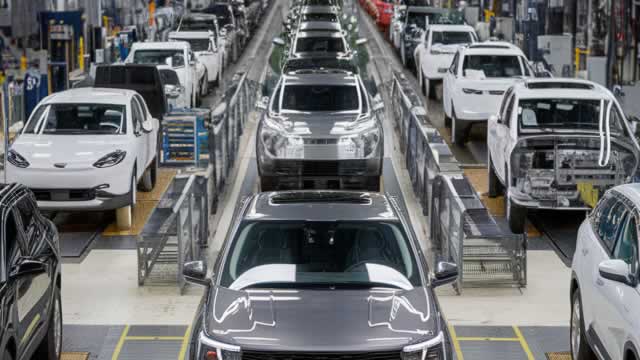
BYD Co Ltd

Search documents
Canada-China EV Trade Deal: What it Means for TSLA, GM, Geely & BYD
ZACKS· 2026-01-20 14:10
Core Insights - Canada is easing tariffs on Chinese-made electric vehicles (EVs), allowing up to 49,000 vehicles annually at a 6.1% tariff, a significant reduction from the previous 100% duty imposed in 2024 [1][2] - The deal includes a price-based clause, reserving half of the annual quota for EVs priced under CAD 35,000, aimed at increasing access to affordable electric vehicles [1][2] Group 1: Impact on Major Players - Tesla is well-positioned to benefit from the new tariff structure, having already established a production base in China and configured its Shanghai Gigafactory for a Canada-specific Model Y, leading to a 460% year-over-year increase in China-built auto imports through Vancouver prior to the 2024 tariff [5][6] - Geely's brands, including Volvo and Polestar, can resume importing Chinese-built models, which had been paused due to tariffs, leveraging their existing brand recognition and dealer networks in Canada [7][9] - General Motors is unlikely to gain from the revised tariff framework as its China EVs are not approved for sale in Canada, and significant redesigns would be required for compliance with Canadian safety standards [10][11][12] Group 2: Opportunities and Challenges - BYD fits within the new deal's scope but faces challenges in the near term due to the need for certification and the establishment of distribution networks in Canada, despite having a local electric bus assembly plant in Ontario [13][14][15] - The policy shift is expected to lower prices for consumers and accelerate EV adoption in Canada, with China accounting for approximately 70% of global EV production [3]



中央经济工作会议要点学习
Bank of China Securities· 2025-12-12 10:18
Market Performance - The Hang Seng Index (HSI) closed at 25,531, with a year-to-date increase of 27.3%[2] - The MSCI China index showed a year-to-date increase of 28.6%, closing at 83[2] - The KOSPI index experienced a significant year-to-date increase of 71.3%, closing at 4,111[2] Commodity Prices - Brent Crude oil prices decreased by 1.0% to $62 per barrel, with a year-to-date decline of 13.6%[3] - Gold prices remained stable at $4,281 per ounce, reflecting a year-to-date increase of 63.1%[3] - Copper prices increased by 0.6% to $11,557 per ton, with a year-to-date rise of 31.8%[3] Economic Indicators - China's retail sales year-on-year growth was reported at 2.9%, matching consensus expectations[4] - Industrial production in China showed a year-on-year growth of 4.9%, slightly below the consensus of 5.0%[4] - The surveyed jobless rate in China remained stable at 5.1%[4] Policy Insights - The Central Economic Work Conference emphasized a proactive fiscal policy with necessary fiscal deficits and a moderately loose monetary policy to support economic growth[6] - A specific action plan to improve household income was introduced to boost consumption from both long-term and demand perspectives[7] - The conference highlighted the need to stabilize investment growth and allocate more investment financing[7]
中国石油(601857):反向路演后上调目标价(买入)
Bank of China Securities· 2025-12-05 04:57
Investment Rating - The report assigns a "BUY" rating to PetroChina with a target price of HK$9.62 for H shares and RMB10.92 for A shares, indicating an expected total absolute return greater than 10% over the next twelve months [6][7][8]. Core Insights - PetroChina's recent reverse roadshow in the Sichuan-Chongqing area highlighted significant potential for increasing natural gas output and plans for downstream gas utilization, which are expected to enhance the company's earnings resilience amid potential declines in oil prices [6][8]. - The growing contribution from PetroChina's gas value-chain operations is anticipated to bolster its earnings stability, providing a buffer against fluctuations in oil prices [6][8]. Summary by Sections Company Overview - PetroChina is focusing on enhancing its natural gas production capabilities and downstream utilization strategies, which are crucial for its growth trajectory [6][8]. Market Outlook - The report suggests that the increasing emphasis on natural gas operations will position PetroChina favorably in a market that may experience volatility in oil prices [6][8]. Investment Strategy - The recommendation to maintain a "BUY" rating reflects confidence in PetroChina's strategic initiatives and their potential to deliver strong returns in the near future [6][7][8].

Cathie Wood Loads Up On This Tesla Rival As Elon Musk's EV Giant Gears Up For Q3 Earnings - BYD (OTC:BYDDY)
Benzinga· 2025-10-22 01:11
Group 1 - Ark Invest, led by Cathie Wood, purchased shares of BYD Co Ltd shortly after the company announced a recall of over 115,000 vehicles due to battery-related safety issues [1][3] - The purchase was made through Ark's ARK Autonomous Technology & Robotics ETF, acquiring 55,523 shares valued at approximately $737,900, increasing Ark's exposure to the electric vehicle sector [2] - Despite the recall, Ark Invest's decision to buy more shares suggests a continued belief in BYD's long-term potential in the electric vehicle market [3] Group 2 - On the previous day, Ark had also purchased 69,000 BYD shares worth $941,850, indicating a strong interest in the company [4] - Cathie Wood remains bullish on Tesla, BYD's principal rival, with Tesla being Ark Invest's largest holding valued at nearly $1.5 billion, accounting for about 9.94% of the combined portfolio weight [4] - Tesla is scheduled to release its third-quarter results, which may impact market perceptions of both companies [4]
Alibaba Leads Goldman's Top Chinese Picks For Global Growth
Benzinga· 2025-10-20 11:43
Core Insights - Goldman Sachs recommends investors focus on Chinese companies expanding internationally, driven by a weaker yuan, cost advantages, and China's robust global supply chains as growth catalysts [1] Group 1: Investment Opportunities - Goldman Sachs identified 25 top picks, including Alibaba Group Holding Ltd, Contemporary Amperex Technology Co Ltd, and BYD Co Ltd, as key beneficiaries of the "going global" trend [1] - These companies, spanning e-commerce, capital goods, and healthcare, have gained nearly 40% year-to-date, outperforming the Hang Seng Index's 29% and the CSI 300 Index's 16% rise [2] Group 2: Earnings Growth Projections - The bank expects overseas expansion to accelerate earnings growth by about 1.5% annually through 2028 as firms diversify beyond China's saturated domestic market [3] - Alibaba's overseas revenue doubled to 13% in 2023 from 7% in 2021, while CATL's increased to 30% from 21%, indicating rising global competitiveness [3] Group 3: Market Dynamics and Risks - Goldman acknowledged that potential 100% U.S. tariffs under Trump's trade agenda could reduce short-term profits by around 10%, but international diversification should mitigate this impact over time [4] Group 4: Alibaba's Performance and Projections - Alibaba's stock gained 97% year-to-date, significantly outperforming the NYSE Composite index's over 12% returns, driven by its cloud unit and AI model integration [5] - Goldman Sachs raised its cloud revenue growth forecasts to 31–38% through fiscal 2028, citing advancements in multimodal AI models and a diversified chip supply [6] - Daiwa Securities projected Alibaba Cloud revenue to climb 30% year-over-year in the second quarter of fiscal 2026, with operating losses expected to peak soon [7]


中国股票策略-反内卷:周期性板块涨势扩大China Equity Strategy-Anti-Involution a broadening rally in cyclicals
2025-08-05 03:20
Summary of Key Points from the Conference Call Industry Overview - The report focuses on the **China Equity Strategy** and the **anti-involution** policy initiated on July 1, 2025, which aims to stabilize pricing and return on investment across various sectors [2][5][16]. Core Insights and Arguments - **Market Performance**: Significant price increases were observed in several sectors from July 1 to July 25, 2025: - Lithium: +22% - Solar: +16% - Cement: +16% - Steel: +15% - Hog: +13% - Coal: +13% - Battery: +12% [2][6]. - **Policy Impact**: The anti-involution policy is expected to be an 18-month trade, with coordinated efforts from central and local governments, financial institutions, and businesses to restore normal pricing and ROI [2][5][16]. - **Valuation Re-rating**: The sectors that have seen the most significant re-rating since July 1 include: - Lithium: P/B re-rating of 22% - Solar: P/B re-rating of 16% - Cement: P/B re-rating of 16% - Autos lagged with a P/B increase of only 2% [13][18]. - **Sector Valuation**: As of July 25, 2025, sectors most discounted by P/B compared to their 10-year averages include Lithium, Solar, and Ecommerce, while Coal, Aluminum, and Autos are the least discounted [13][18]. Additional Important Content - **Government Measures**: Various ministries have implemented granular measures to support the anti-involution policy, including: - Output cuts in steel and hog industries - Pricing regulations in polysilicon and solar sectors - Capacity phase-outs in chemicals [5][17][18]. - **Profitability Concerns**: Loss-making sectors such as Lithium and Solar are under pressure, which may prompt more significant policy measures to address their financial challenges [18][21]. - **Market Capitalization Insights**: The report lists top companies by market capitalization in sectors affected by the anti-involution measures, indicating a focus on industries with poor profitability conditions [21][22]. - **Long-term Outlook**: The report suggests that while loss-making sectors may see a broad-based rally, industries with solid margins may experience internal divergence as stronger players gain market share [5][18]. This summary encapsulates the critical insights and data points from the conference call, providing a comprehensive overview of the current state and outlook of the relevant industries in China.
Tesla Jumps 10% On China FSD Optimism, Tariff Easing Hopes
Benzinga· 2025-03-24 15:28
Core Viewpoint - Tesla Inc. stock has rebounded over 10% after a significant decline, driven by renewed interest in its Full Self-Driving (FSD) rollout in China, easing tariff concerns, and technical support levels [1][2][3] Group 1: Stock Performance - Despite the recent surge, Tesla's stock is down 28% year-to-date and 17% over the past month, indicating a bearish trend [1] - The stock trades below its five-day, 20-day, and 50-day exponential moving averages, with a current price of $273.00 [6] - The eight-day simple moving average (SMA) is at $243.48, and the 20-day SMA is at $258.95, suggesting some bullish momentum [6] Group 2: Key Catalysts - The rollout of FSD in China is seen as a potential catalyst for growth, although it remains uncertain if Chinese consumers will pay a premium compared to local competitor BYD, which offers similar technology for free [2] - Reports of former President Donald Trump easing tariff threats are viewed positively, as Tesla has significant exposure to the Chinese electric vehicle market [3] Group 3: Future Outlook - The sustainability of Tesla's rally will depend on continued buying pressure and whether fundamental catalysts like the FSD launch and tariff relief can outweigh bearish technical signals [4] - The upcoming first-quarter delivery report on April 2 is anticipated as a critical moment for investors [4] - Current technical indicators, such as the Moving Average Convergence Divergence (MACD) at negative 24.83 and a Relative Strength Index (RSI) of 48.01, suggest mixed sentiment [6]
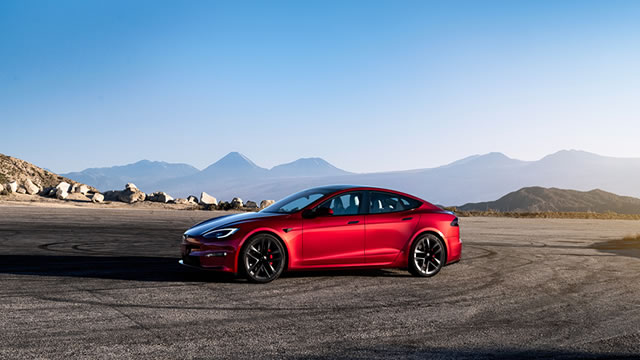
比亚迪 - 关于最新 10C 超快充技术的六大关键问题
2025-03-23 15:39
Summary of BYD Co Ltd Conference Call Company Overview - **Company**: BYD Co Ltd - **Industry**: Electric Vehicles (EVs) - **Rating**: Outperform - **Price Targets**: - 1211.HK: HK$460.00 - 002594.CH: RMB 420.00 - **Analysts**: Eunice Lee, Neil Beveridge, Brian Ho, Mika Fu Key Points 1. Introduction of 10C Ultra-Fast Charging Technology - BYD announced its 10C fast-charging technology, capable of delivering 1,000kW power output, extending driving range by 400km with a 5-minute charge, comparable to refueling at a gas station [1][2] 2. Core Questions Addressed - **How was 10C ultra-fast charging achieved?** - Achieved through advancements in materials, engineering, and system integration [10] - **Battery Chemistry and Degradation Concerns** - Utilizes high-speed Li-ion channel technology and redesigned blade battery architecture, reducing internal resistance by 50% [12] - LFP batteries have a longer lifecycle, with BYD's redesigned blade battery boasting a lifecycle 35% longer than previous generations [14] - **Competitive Positioning** - BYD leads with 10C charging, while competitors like CATL are at 6C technology [17][18] 3. Charging Infrastructure Plans - BYD plans to build 4,000 1MW charging stations, targeting long-distance travel needs [20] - Estimated cost for a 1,000kW charger is around US$200/kW, with a total station cost of approximately US$950k [20][23] - Timeline for rollout is estimated at 2 years, leveraging existing infrastructure [21] 4. Industry Implications - BYD's advancements may alleviate driving range anxiety, a significant concern for EV buyers [27][30] - Other battery manufacturers are expected to accelerate fast-charging technology deployment in response [28] 5. Implications for BYD - The new technology will debut in the Han L sedan and Tang L SUV in April 2025, laying a foundation for future model launches [33] - Shift in competitive focus from price to advanced technologies, enhancing BYD's market position [34] 6. Financial Projections - **Revenue Growth**: Projected CAGR of 29.6% from 2023 to 2025, with revenues expected to reach CNY 1,012 billion by 2025 [4] - **Earnings Growth**: Net earnings projected to grow at a CAGR of 40.1%, reaching CNY 61,496 million by 2025 [4] 7. Performance Metrics - **Current Price**: 1211.HK at HK$417.00, with a 10% upside to the target price [5] - **Market Cap**: HKD 1,284.87 billion [5] 8. Valuation Metrics - Reported P/E for 2025E is 19.2x, with EV/Sales at 1.1x [8] Additional Insights - The introduction of ultra-fast charging technology may reduce the appeal of battery swapping for individual consumers, favoring fast charging solutions instead [29] - BYD's strong R&D capabilities are highlighted, indicating a strategic shift towards advanced technology in the EV market [34]

How NVIDIA is Powering the Future of Smart Mobility
ZACKS· 2025-03-19 16:30
Core Insights - The auto industry is transitioning into the autonomous driving era, with NVIDIA positioned as a leader in AI and computing technologies for automakers [1] - General Motors has deepened its partnership with NVIDIA to integrate advanced computing and AI technologies across vehicle design, production, and driver-assistance systems [2][3] NVIDIA's Technology and Platforms - NVIDIA provides three key platforms: DGX Systems for AI model training, Omniverse for digital simulations, and DRIVE AGX for real-time data processing in vehicles [4][5] - The integration of NVIDIA's DRIVE AGX into GM's next-generation vehicles enhances safety and driver-assistance capabilities, marking a significant advancement from previous GPU usage [3] Collaborations with Other Automakers - Toyota is utilizing NVIDIA's DRIVE AGX Orin platform and DriveOS to enhance its advanced driving assistance technologies [7] - Volvo Cars integrates NVIDIA's DRIVE AGX into electric vehicle models, while Zenseact uses NVIDIA DGX for sensor data analysis [8] - Other automakers like Lucid Motors, Polestar, and Rivian are also aligning with NVIDIA to improve vehicle intelligence [9] Expansion in China - BYD has expanded its collaboration with NVIDIA, now utilizing cloud infrastructure for AI application development and factory planning [10] - Li Auto employs NVIDIA DRIVE processors to enhance its autonomous driving capabilities, moving towards fully autonomous vehicles [11] - XPeng has developed its advanced driving assistance system, XNGP, using NVIDIA's DRIVE platform [12] - NIO has integrated NVIDIA technology since 2014, evolving from basic infotainment to advanced autonomous driving solutions [13] Industry Trends - The partnerships indicate a growing recognition among automakers of the need to integrate advanced computing platforms to remain competitive in a rapidly evolving market [14] - NVIDIA is driving the next wave of mobility by transforming in-car experiences and manufacturing processes, leading to safer and smarter vehicles [15]


Ford's $4.8B Germany Revamp: Time to Buy the Stock or Stay Away?
ZACKS· 2025-03-13 18:25
Company Overview - Ford is planning to invest up to €4.4 billion ($4.8 billion) into its German operations to reduce debt and enhance competitiveness, as its German arm has €5.8 billion ($6.3 billion) in debt [1][2] - The investment aims to stabilize Ford's operations in Europe, which have been struggling due to rising costs, weak demand, and competition from Chinese EV makers [1][2] Financial Performance - Ford has been incurring losses in Europe for several years, leading to cost-cutting measures, including plans to cut 4,000 jobs by 2027 [2] - The Model e division, focused on electric vehicles, reported a loss of $5.07 billion in 2024, an increase from a $4.7 billion loss in 2023, with expectations of another loss of $5-5.5 billion in the current year [7] - The Ford Blue segment, which includes traditional gas-powered vehicles, is projected to see EBIT drop from $5.3 billion in 2024 to $3.5-4 billion in 2025 due to lower sales and product mix changes [8] Segment Performance - Ford Pro, the commercial vehicle business, experienced a 15% revenue increase to $67 billion in 2024, with EBIT rising from $7.2 billion to $9 billion, driven by strong demand for Super Duty trucks and Transit vans [9] - The company is focusing on software and service subscriptions as potential growth drivers moving forward [9] Liquidity and Dividends - Ford ended 2024 with $47 billion in liquidity, including $28 billion in cash, supporting its Ford+ strategy and cost-cutting initiatives [11] - The company offers a dividend yield of over 6%, significantly higher than the S&P 500's average of 1.31%, and plans to return 40-50% of free cash flow to investors [11][13] Market Challenges - Ford faces challenges from proposed 25% tariffs on Mexican and Canadian imports, which could increase costs and disrupt operations [14] - The company anticipates a steep decline in first-quarter 2025 adjusted EBIT, projecting it to break even compared to $2.7 billion in the first quarter of 2024 [15] - Full-year adjusted EBIT is forecasted to be between $7-$8.5 billion, down from $10.2 billion in 2024, with rising warranty costs and incentives further pressuring margins [15] Future Outlook - The Zacks Consensus Estimate indicates a decline in 2025 sales and EPS by 4% and 22%, respectively, but anticipates growth in 2026 [17] - Despite restructuring efforts and strong performance in Ford Pro, near-term headwinds such as weak demand and rising competition are expected to impact profitability [19]