Daifuku

Search documents
高盛-可持续研究-2026年展望-AI创新与能源会议要点
Goldman Sachs· 2026-01-19 02:29
Investment Rating - The report emphasizes a focus on reliability and essential services as core themes for investment, indicating a positive outlook for sectors that address these needs [2][3]. Core Insights - The report identifies a shift in sustainable investment towards risk mitigation and long-term returns, highlighting the importance of reliability, affordability, and security in the current investment landscape [2][3]. - There is a significant increase in electricity demand, reaching levels not seen since the 1990s, driven by aging infrastructure and the need for reliable energy sources [1][3]. - The report anticipates a substantial growth in data center electricity demand, projected to increase by approximately 175% by 2030 compared to 2023, necessitating significant infrastructure investments [6][9]. - The energy sector is expected to see a diversification in electricity procurement strategies, focusing on natural gas, nuclear energy, and renewable sources to ensure reliability and cost-effectiveness [9][12]. Summary by Sections Sustainable Development and Investment - Sustainable investment is increasingly centered on risk mitigation and long-term profitability, with a focus on identifying risk drivers and companies that can benefit from risk mitigation investments [2][3]. - The narrowing global trust circle has heightened the priority of reliability, affordability, and security, leading to a renewed focus on traditional sustainable development themes beyond just climate and decarbonization [2][3]. Energy Policy and Market Trends - The U.S. Energy Secretary emphasized the need to utilize domestic resources to maintain pricing advantages in natural gas and electricity, while cautioning against over-reliance on intermittent power sources [4][5]. - Despite challenges, renewable energy capacity is expected to grow healthily, supported by government incentives, although concerns remain regarding its reliability in achieving decarbonization goals [5][12]. Artificial Intelligence and Infrastructure - The development of AI is still in a phase of evaluation, with significant infrastructure investments required to support its growth and address increasing data processing demands [6][7]. - The report highlights that efficiency improvements in AI technologies have not negatively impacted overall R&D budgets, indicating continued investment in this area [7][11]. Supply Chain and Resource Management - The concentration of critical mineral supply chains poses significant risks, with China dominating the refining capacity for many strategic materials, prompting a push for diversification in supply sources [13][14]. - The report notes that the need for supply chain diversification is driving investments in local production capabilities, particularly in the U.S. and Europe [13][14]. Labor Market and Demographic Changes - The aging population and advancements in AI are expected to create labor market mismatches, with potential solutions including increased female workforce participation and skills retraining initiatives [14][15]. - Investment opportunities are identified in sectors addressing the needs of an aging population, including healthcare and education [14][15].
物流机器人市场洞察,全球生产商排名及市场份额
QYResearch· 2026-01-13 02:44
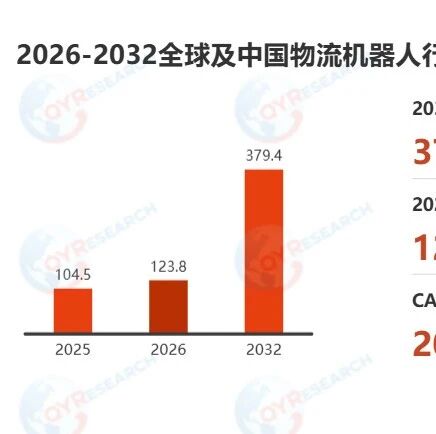
Core Viewpoint - The logistics robot industry is experiencing rapid growth driven by the need for automation and efficiency in supply chains, supported by government policies and structural demand from various sectors such as e-commerce, fast-moving consumer goods, and pharmaceuticals [1][2]. Group 1: Market Dynamics - The logistics robot market is in a high growth phase, with a projected market size of $32.02 billion by 2031 and a compound annual growth rate (CAGR) of 20.1% [3]. - The demand for warehouse automation is structurally expanding, with e-commerce, fast-moving consumer goods, and pharmaceuticals being the core drivers [1][2]. - The market is characterized by a shift from single-point equipment purchases to full-process intelligent deployments, transforming logistics robots into strategic assets for supply chains [2]. Group 2: Product and Application Segmentation - Automated Guided Vehicles (AGVs) and Autonomous Mobile Robots (AMRs) dominate the market, holding approximately 61.8% of the market share [7]. - The primary application area for logistics robots is warehousing and distribution, accounting for about 36.1% of the demand [9]. Group 3: Challenges and Trends - The logistics robot industry faces challenges such as increasing safety and compliance requirements, which necessitate higher investments in algorithms and risk control [2]. - There is a trend towards "deep verticalization" and "scene granularity" in downstream demand, with manufacturing industries pushing for flexible production and logistics upgrades [2]. Group 4: Supply Chain and Component Insights - Key components in the logistics robot supply chain include sensors, controllers, precision reducers, and lightweight structural parts, with a notable shift towards domestic production for stability and cost competitiveness [3]. - The industry is moving towards green manufacturing and low-carbon supply chains, enhancing the energy efficiency and carbon footprint of logistics robots [3].

中国收紧对日两用物项出口管制,媒体称稀土或面临实质限制风险_ China tightens controls on export of dual-use items to Japan, media reports on risk of facto restrictions on rare earth
2026-01-07 03:05
Summary of Conference Call Notes on Japan Industrials Industry Overview - The conference call discusses the Japan Industrials sector, particularly focusing on the implications of China's recent export control measures on dual-use items to Japan [1][2]. Key Points and Arguments 1. **Export Control Announcement**: On January 6, China's Ministry of Commerce announced strengthened export controls on dual-use items to Japan, citing national security and international obligations [1]. 2. **Prohibition Details**: The export of dual-use items to Japanese military users for military purposes is strictly prohibited. Violators will face legal consequences [2]. 3. **Rare Earths Inclusion**: Media reports suggest that rare earths may be included in these export controls, which could have significant implications for Japan's industrial sectors [2]. 4. **Historical Context**: The focus on rare earths is heightened due to China's previous actions in April 2025, when it added several rare earths to its dual-use item export control list [2]. 5. **Ambiguity in Applications**: There are gray areas in distinguishing between military and civilian applications of these items, leading to potential supply disruptions [6]. 6. **End-Use Certification Challenges**: The high bar for end-use certification complicates the situation, as items with both military and civilian applications may fail to pass review [7]. 7. **Industrial Impact**: The potential for widespread industrial impact, especially in Japan's precision and manufacturing sectors, necessitates close monitoring of future developments [7]. 8. **Historical Reactions**: Past issues related to rare earths have caused short-term shocks but also spurred the development of alternative materials in some fields [8]. Additional Important Content - **Analyst Disclosures**: Analysts from Goldman Sachs may have conflicts of interest due to their business relationships with companies covered in the report [3]. - **Valuation Comparisons**: The document includes a valuation comparison table for various companies within the Japan Industrials sector, detailing metrics such as price targets, P/E ratios, and expected returns [9][11]. - **Contact Information**: Contact details for analysts covering the sector are provided for further inquiries [4]. This summary encapsulates the critical insights and implications of the recent developments in the Japan Industrials sector, particularly concerning China's export controls and their potential impact on the industry.
Should You Buy Symbotic Stock Before Nov. 24?
Yahoo Finance· 2025-11-10 11:55
Core Insights - Symbotic's shares have surged nearly 200% in 2025, reflecting strong business growth and upcoming earnings report [1][3] - The company is expected to report fiscal Q4 results on November 24, 2025, raising questions about the timing of potential investments [1][6] Company Performance - Symbotic's sales for fiscal Q3 reached $592.1 million, a significant increase from $470.3 million in the same quarter the previous year, contributing to a total revenue of $1.6 billion for the first three quarters of 2025, compared to $1.2 billion in fiscal 2024 [3][4] - Walmart is Symbotic's primary customer, accounting for approximately 84% of its sales, and the acquisition of Walmart's robotics business in January 2025 has strengthened this relationship [4][6] Valuation and Investment Considerations - Despite the positive sales growth, Symbotic reported a net loss of $31.9 million in Q3, leading to concerns about its current stock valuation, which is considered high based on the price-to-sales (P/S) ratio compared to competitors like Daifuku and KION Group [5] - The stock reached a 52-week high of $84 on November 3, 2025, prompting suggestions to wait for a price dip before making investment decisions [4][5]


《全球物料搬运集成市场格局:2024年前十强厂商份额达 50.0%》
QYResearch· 2025-07-21 09:07
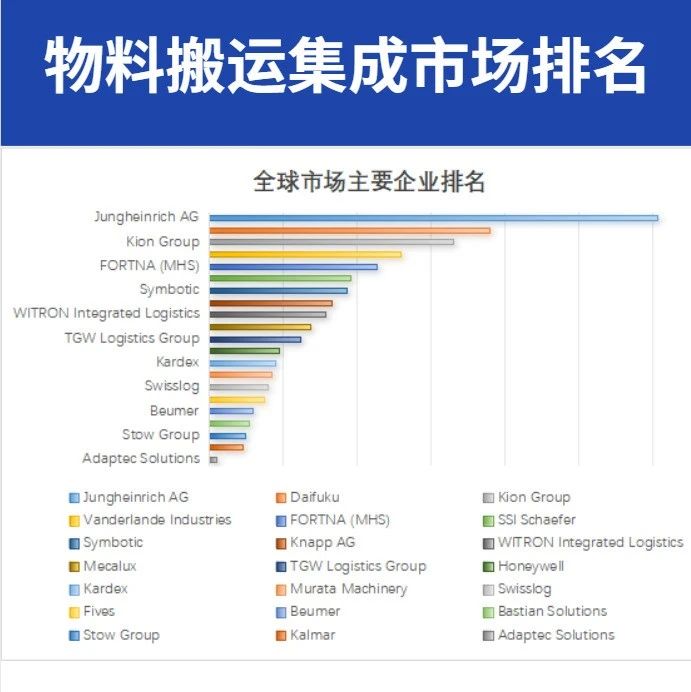
Core Viewpoint - The integration of material handling systems can streamline operations, enhance productivity, and reduce costs through strategic coordination of equipment, software, and processes [1][3]. Market Overview - The global material handling integration market is projected to reach USD 84.21 billion by 2031, with a compound annual growth rate (CAGR) of 8.8% in the coming years [3][6]. - The top 10 manufacturers are expected to hold approximately 50.0% of the market share in 2024 [6]. Key Players - Major manufacturers in the global material handling integration market include Jungheinrich AG, Daifuku, Kion Group, Vanderlande Industries, and others [6][19]. Market Segmentation by Product Type - Hardware components are essential for material handling integration systems, including automated guided vehicles (AGVs) and automated sorting control systems, which optimize material handling processes [8]. Market Segmentation by Application - The retail and e-commerce sector is the primary demand source, accounting for approximately 24.8% of the market share [10][9]. - Automated storage and retrieval systems (AS/RS) and AGVs are widely used in retail and e-commerce warehouses to enhance efficiency and accuracy [9][10]. Growth Drivers - The increasing integration of robotics and autonomous systems in material handling is a significant trend, enhancing efficiency and reducing labor costs [14]. - The rise of e-commerce globally is a crucial catalyst for adopting material handling integration systems, driven by the need for efficient operations [15][17]. - Advancements in IoT, AI, and robotics provide a technological foundation for the development of material handling integration systems [17].