数字供应链

Search documents
百世软件SaaS服务率先落地墨西哥
Mei Ri Jing Ji Xin Wen· 2026-01-14 14:28
Core Viewpoint - Best Group's subsidiary, Best Software, has officially entered the Latin American market, starting with a successful launch in Mexico in December 2025, with plans to expand into Brazil, Argentina, and other key markets [1] Group 1: Market Expansion - Best Software is advancing its presence in Latin America, beginning with Mexico and planning to gradually enter Brazil and Argentina [1] - The company aims to build a new digital supply chain ecosystem in Latin America to empower businesses in their global upgrade [1] Group 2: Product and Technology - Best Software leverages its deep experience in cross-border e-commerce digitalization to provide comprehensive digital support for outbound enterprises [1] - The company's products, including Qianyi, support multi-language deep configuration and are designed to integrate with major global e-commerce platforms [1] - AI technology is utilized to enhance operational efficiency and drive growth [1]

物流机器人市场洞察,全球生产商排名及市场份额
QYResearch· 2026-01-13 02:44
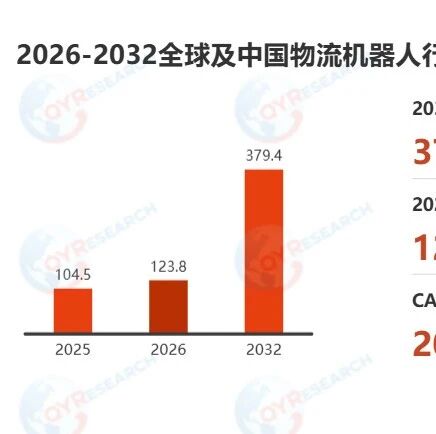
Core Viewpoint - The logistics robot industry is experiencing rapid growth driven by the need for automation and efficiency in supply chains, supported by government policies and structural demand from various sectors such as e-commerce, fast-moving consumer goods, and pharmaceuticals [1][2]. Group 1: Market Dynamics - The logistics robot market is in a high growth phase, with a projected market size of $32.02 billion by 2031 and a compound annual growth rate (CAGR) of 20.1% [3]. - The demand for warehouse automation is structurally expanding, with e-commerce, fast-moving consumer goods, and pharmaceuticals being the core drivers [1][2]. - The market is characterized by a shift from single-point equipment purchases to full-process intelligent deployments, transforming logistics robots into strategic assets for supply chains [2]. Group 2: Product and Application Segmentation - Automated Guided Vehicles (AGVs) and Autonomous Mobile Robots (AMRs) dominate the market, holding approximately 61.8% of the market share [7]. - The primary application area for logistics robots is warehousing and distribution, accounting for about 36.1% of the demand [9]. Group 3: Challenges and Trends - The logistics robot industry faces challenges such as increasing safety and compliance requirements, which necessitate higher investments in algorithms and risk control [2]. - There is a trend towards "deep verticalization" and "scene granularity" in downstream demand, with manufacturing industries pushing for flexible production and logistics upgrades [2]. Group 4: Supply Chain and Component Insights - Key components in the logistics robot supply chain include sensors, controllers, precision reducers, and lightweight structural parts, with a notable shift towards domestic production for stability and cost competitiveness [3]. - The industry is moving towards green manufacturing and low-carbon supply chains, enhancing the energy efficiency and carbon footprint of logistics robots [3].

中国跨境电商交易会:【广东产业带】大佬云集,广东卫冕跨境第一!
Sou Hu Cai Jing· 2026-01-04 04:21
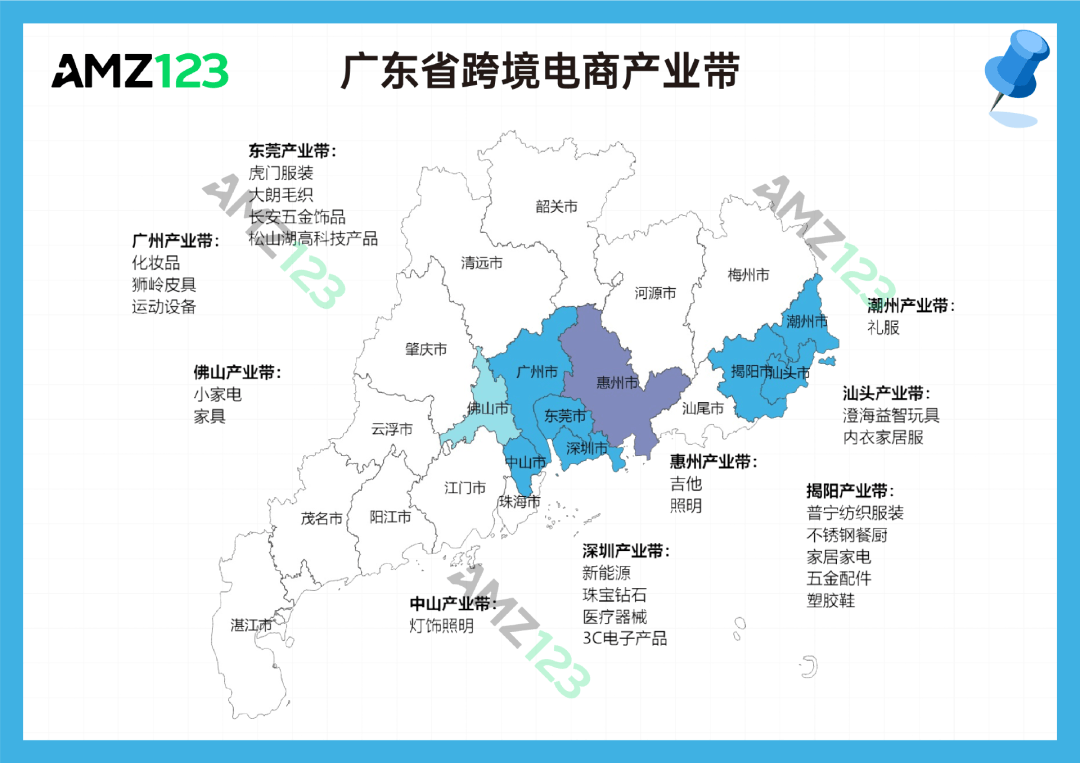
Core Insights - Guangdong has emerged as a leader in China's cross-border e-commerce, with its import and export scale growing from 11.3 billion yuan in 2015 to 745.4 billion yuan in 2024, an increase of approximately 66 times over nine years, accounting for over one-third of the national total [1][21][30] - The province's cross-border e-commerce exports have an average annual growth rate of 51.4%, the highest in the country, supported by a robust manufacturing base and an open economic framework [1][22][30] - Guangdong's cross-border e-commerce is transitioning from "platform distribution + foreign trade wholesale" to "brand export + digital supply chain" [1][21] Industry Overview - The success of Guangdong's cross-border e-commerce is attributed to its comprehensive and systematic manufacturing landscape, particularly in the Pearl River Delta, which has developed stable and specialized industrial belts [4][21] - The region has three main "outbound arteries": the 3C "hardcore belt" in Shenzhen, Dongguan, and Huizhou; the lifestyle belt in Guangzhou and Foshan; and the creative corridor of lighting and toys in Zhongshan, Jiangmen, and Chaozhou [7][12][17] 3C "Hardcore Belt" - The Shenzhen-Dongguan-Huizhou area is known for its dense network of factories and supply chains for electronic products, with Shenzhen housing over 80,000 cross-border e-commerce entities, accounting for about half of the national total [8][9] - Companies like UGREEN and GMKtec exemplify the successful integration of manufacturing and operations, leveraging local supply chains to build strong brands [11][12] Lifestyle Belt - The Guangzhou-Foshan area focuses on fashion and home appliances, with Guangzhou's textile and apparel exports reaching 46.09 billion yuan in 2024, supported by a high-frequency supply chain [12][14] - Brands like SHEIN have established flexible supply chains in Guangzhou, connecting global demand directly to local production [12][14] Creative Corridor - The Zhongshan area is recognized as the "Lighting Capital," with over 30,000 lighting businesses and significant export volumes, while Chaozhou is known for its toy manufacturing, with over 50,000 toy companies [17][18] - The integration of creative design and cross-border e-commerce has transformed local products into recognizable brands on platforms like Amazon [18][19] Infrastructure and Logistics - Guangdong has implemented 166 cross-border trade facilitation measures over the past eight years, enhancing customs efficiency and expanding shipping routes [22][23] - The province's logistics capabilities, including major ports and airports, support a multi-tiered outbound system for cross-border e-commerce [22][24] Economic and Policy Environment - The provincial government actively promotes cross-border e-commerce as a key strategy for foreign trade transformation, establishing comprehensive support systems for businesses [28][29] - The combination of experienced entrepreneurs and a new generation of digital-savvy operators is driving innovation in cross-border e-commerce [26][27] Challenges Ahead - The industry faces challenges in transitioning from volume-based sales to brand-building, as many early sellers struggle to establish lasting brand recognition [31][32] - Rising costs and labor shortages in the Pearl River Delta are prompting a shift in production to lower-cost regions, complicating supply chain management [33][34] Conclusion - Guangdong's early adoption of cross-border e-commerce and its ability to adapt to challenges position it as a likely leader in the next chapter of China's cross-border e-commerce landscape [35]
京平综合物流枢纽南场区通车 同步启用前置仓
Bei Jing Shang Bao· 2025-12-26 04:12
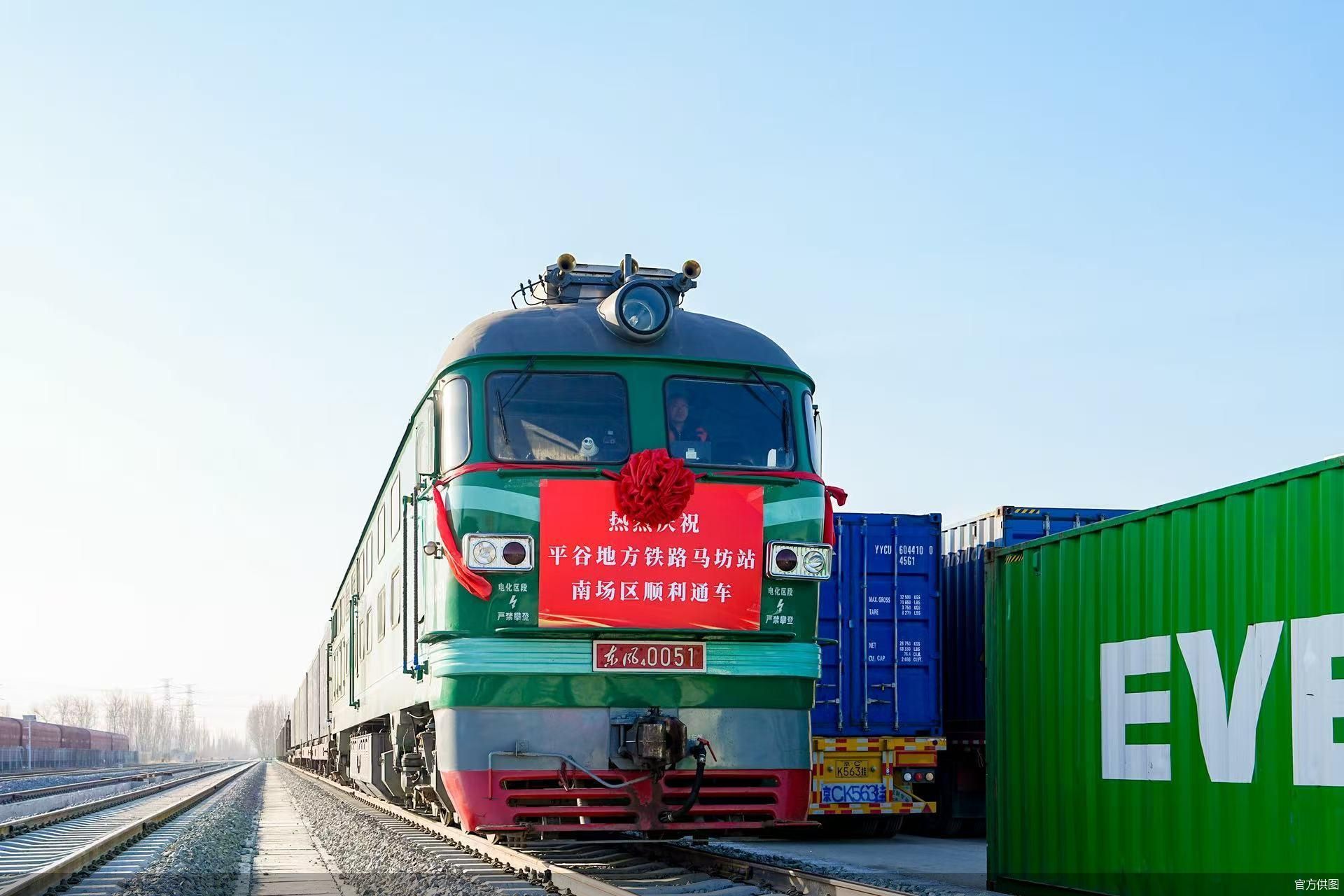
Core Insights - The construction of the modern logistics backbone network in Beijing has made significant progress with the official launch of the Capital No. 1 Node Warehouse (Zhaogongkou Warehouse) and the Capital No. 1 Central Warehouse (Heizhuanghu Warehouse) [2] - The project marks the transition to the operational phase of the logistics network, which is part of Beijing's 14th Five-Year Plan to establish a modern logistics system [2] Group 1 - The Capital No. 1 Node Warehouse is strategically located in the transportation hub area between the South Third Ring and South Fourth Ring, serving a 5-kilometer radius and utilizing an innovative "night-time intensive transportation + in-warehouse combined distribution" model [3] - The Central Warehouse, exceeding 1,000 square meters, will collaborate with multiple future warehouses to support an efficient urban delivery network [3] - By 2026, the plan includes the establishment of 50 front warehouses in the urban area, with a total of approximately 100 warehouses planned to create a smart collaborative delivery system covering the entire city [3] Group 2 - The railway southern area of the Beijing-Ping logistics hub has also been put into operation, designed to handle an annual unloading capacity of 5 million tons, focusing on the "public-to-rail" transportation of bulk materials [4] - The establishment of the "Northern Imported Fruits (Beijing) Distribution and Trading Center" and the "Beijing Ping International Bulk Commodity Digital Supply Chain Distribution Center" aims to enhance supply chain integration and trade services [4] - The Beijing-Ping logistics hub is a key component in building Beijing as a "logistics highland" and has been included in the national logistics hub construction list, with future capacity expected to reach 40 million tons annually upon completion of the railway expansion project [4]
万亿级数字产业集群,长三角如何“下好这盘棋”?
Guo Ji Jin Rong Bao· 2025-10-23 12:07
Core Insights - The Chinese government plans to establish a trillion-level digital industry cluster in the Yangtze River Delta region, focusing on artificial intelligence and digital supply chains to enhance the integration of the digital economy with advanced manufacturing and modern services [1][2] - The Yangtze River Delta data cooperation group has been formed to accelerate resource integration and innovation application across Shanghai, Jiangsu, Zhejiang, and Anhui [1][2] - By 2024, the data industry scale in the Yangtze River Delta is expected to account for 22.6% of the national total, highlighting the region's strength and potential in the digital industry [1] Group 1: Regional Development - The Yangtze River Delta's integration into a national strategy emphasizes efficient circulation and collaborative sharing of data elements as key drivers for high-quality regional development [2] - Shanghai is taking a leading role by leveraging its data resources and application capabilities, exploring new mechanisms for data element circulation in collaboration with Jiangsu and Zhejiang [2][3] - The establishment of two innovation laboratories in Shanghai aims to enhance the city's digital industry, with expectations of over 30 new data products or application scenarios by the end of the year [2] Group 2: Innovation and Growth - The Shanghai Commerce and Trade Data Innovation Laboratory focuses on various sectors, including commerce, finance, shipping, and transportation, involving 11 leading enterprises for market practice [3] - The Quality and Risk Control Data Innovation Laboratory addresses the need for high-quality public data, providing data products and solutions based on specific business scenarios [3] - By 2026, the data industry scale in Shanghai's Xuhui District is projected to grow by 20%, benefiting over 500 small and micro enterprises [3] Group 3: Future Outlook - The blueprint for the trillion-level digital industry cluster in the Yangtze River Delta is set, with innovation driving active participation from various regions [4] - The region is expected to become a new highland for digital industry development in China, providing replicable experiences and models for national digital economic growth [4]

培养数智人才,北京物资学院联合行业协会建立数智供应链管理中心
Xin Jing Bao· 2025-09-28 10:06
Core Insights - The conference focused on the theme of "Modern Circulation System and Intelligent Supply Chain Innovation Development" and aimed to explore the cutting-edge trends and collaborative development paths of intelligent supply chains [2][4] - The establishment of the "Intelligent Supply Chain Management Innovation Center" by the China Logistics and Purchasing Federation and Beijing Wuzi University aims to develop digital supply chain results and conduct nationwide training to cultivate digital supply chain talent [1][2] Group 1 - The conference gathered experts, scholars, and representatives from industry associations, universities, and research institutions to discuss the importance of digitalization in enhancing the quality of commercial circulation [2][3] - The "Action Plan" issued by eight departments, including the Ministry of Commerce, emphasizes the need to deepen supply chain innovation and application, highlighting the role of intelligent supply chains in reducing logistics costs and enhancing competitiveness [2][4] - The center will focus on researching digital supply chain results, application technologies, and case studies to promote high-quality development in the modern circulation industry [3][5] Group 2 - The conference resulted in the release of several important documents, including the "Chief Supply Chain Officer Talent Standard Guide" and the "Intelligent Supply Chain Talent Development Guide," which outline competency indicators for digital supply chain talent [4][5] - The establishment of the Intelligent Engineering and Supply Chain Innovation College at Beijing Wuzi University aims to refine key technologies in the supply chain and provide targeted talent training [5] - Various industry leaders and scholars shared insights on topics such as digital creativity, bulk commodity trading, and the application of intelligent supply chains across different sectors [5]
观察·从贸易投资到高质量发展 中国与东盟合作不断向世界展示新型区域合作典范
Yang Shi Wang· 2025-09-21 02:23
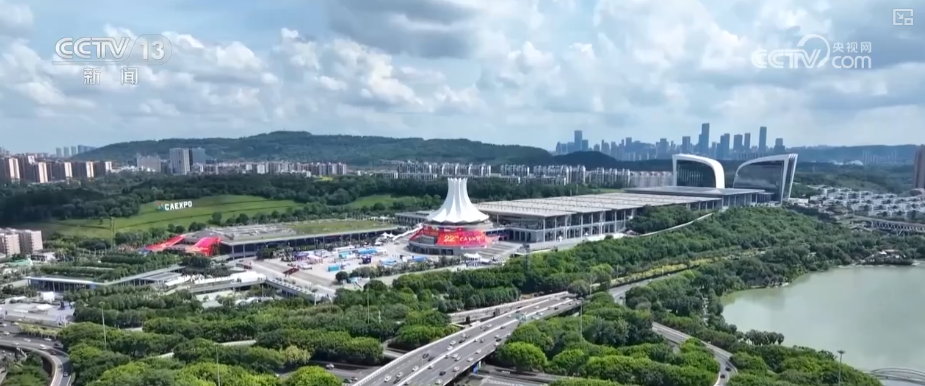
Group 1 - The China-ASEAN Expo has seen over 260,000 visitors by September 20, indicating a growing interest in China-ASEAN cooperation [1] - The expo features participation from leaders of business associations from 10 ASEAN countries, with over 3,000 enterprises from 45 countries and regions showcasing their offerings [4] - China has maintained its position as ASEAN's largest trading partner for 16 consecutive years, while ASEAN has been China's largest trading partner for 5 years [6] Group 2 - The trade volume between China and ASEAN reached a historical high in the first eight months of 2025, highlighting the strong economic ties [6] - The collaboration between China and ASEAN is evolving, focusing on emerging fields such as digital technology, artificial intelligence, and green technology [8][10] - The establishment of the China-ASEAN Artificial Intelligence Innovation Cooperation Center and the progress in clean energy cooperation reflect the commitment to high-quality development [10] Group 3 - The China-ASEAN Free Trade Area has completed its 3.0 version upgrade negotiations, enhancing economic cooperation and regional stability [12] - Public opinion polls indicate a growing recognition among ASEAN countries of China's development model and its contributions to regional economic growth [13] - The recent five-year action plan aims to strengthen cooperation in areas of mutual concern, promoting peace, stability, and sustainable development in the region [17]
美联储降息开启全球新周期,六六仓以数字供应链重塑大宗商品格局
Sou Hu Cai Jing· 2025-09-18 08:34
Core Insights - The Federal Reserve's first interest rate cut in 2025 signals a new cycle in global economic policy, with a reduction of 25 basis points to a target range of 4.00%-4.25% [1] - The global economic outlook is deteriorating, with a projected slowdown in growth to 2.4% in 2025, down from 2.9% in 2024 [2] - Six Six Warehouse Group is leveraging a digital supply chain ecosystem to provide stable and efficient solutions for the commodity industry amid these challenges [1][4] Economic Context - The Federal Reserve's rate cut is a response to lower-than-expected job growth and signs of economic collapse, aiming to assist a struggling labor market [1] - The United Nations reports that trade policy uncertainties are increasing production costs and slowing corporate investments, with tariffs causing unprecedented damage to the international trade system [2] Commodity Industry Challenges - The commodity industry faces significant challenges, including price volatility due to geopolitical conflicts and macroeconomic policy changes [3] - Financing difficulties arise from stricter bank risk control requirements, limiting access to trade financing for private enterprises [3] - Rising compliance costs due to stringent global regulations are increasing operational costs for companies in the sector [3] Six Six Warehouse Group's Digital Ecosystem - Six Six Warehouse Group has developed a "6 + 6 + N" ecosystem focusing on supply chain digitization, featuring six core platforms that integrate services across the industrial value chain [4] - The company is pioneering innovative supply chain finance solutions to address industry financing challenges, utilizing a financial-grade digital warehousing IoT system [5] - The digital supply chain ecosystem aims to empower small and medium-sized enterprises in their digital transformation efforts [6] Industrial Ecosystem Development - The company is promoting digital transformation in the commodity circulation sector by employing advanced technologies such as IoT, AI, and blockchain [7] - Six Six Warehouse Group's projects are expanding nationwide, fostering the growth of smart manufacturing industries through industrial clustering effects [7] Strategic Vision - The company has outlined a three-step strategy to lead industry transformation, positioning itself as a key player in connecting China's commodity market with global opportunities [8] - The chairman emphasizes the importance of becoming not just a technology provider but also an organizer of industrial collaboration [8]

山东港口集团交出亮眼成绩单,以“链式思维”重构港口价值
Qi Huo Ri Bao· 2025-09-07 23:20
Group 1: Shipping and Port Operations - The shipping industry is crucial for global trade, with ports serving as strategic points for regional economic growth [1] - In the first half of 2025, Shandong Port Group reported a cargo throughput of 950 million tons, a 4% year-on-year increase, and a container volume of 24 million TEUs, up 7.9% [1] - The transformation of traditional ports into smart ecological ports is highlighted by the operational efficiency improvements at the ports [1] Group 2: Supply Chain Integration - The successful implementation of a comprehensive service project for refined oil supply chains at Binzhou Port marks Shandong Port Group's transition from a single port operator to a supply chain service provider [3] - The "Two Ports and One Shipping" model enhances collaboration between ports and shipping companies, significantly reducing cargo turnaround time and logistics costs [4] - Shandong Port Group is expanding this collaborative model to international partnerships, including a recent agreement with Vietnam's Long An International Port [4] Group 3: Digital Transformation - Shandong Port Group is leveraging the "Port Cloud Warehouse" electronic warehouse receipt platform to create an online one-stop supply chain service [5] - The launch of the liquid chemical storage project at Qingdao Port enhances the port's capabilities in liquid chemical storage and logistics [6] - The "Three Document Integration" business model, which combines trade, transport, and financial orders, has been successfully implemented, streamlining processes and reducing time from weeks to hours [9] Group 4: Financial Services - Shandong Port Investment Holding Group is developing a diversified financial service system to support the port and shipping industry, leveraging its 15 types of financial licenses [10] - The "Port Easy Payment" platform offers a comprehensive solution for accounts receivable management and supply chain financing, addressing the financing challenges faced by SMEs [11] - The "Squid Loan" initiative provides a one-stop supply chain financial solution for the squid processing industry, transforming inventory into credible assets for financing [13][14] Group 5: Economic Impact - Shandong Port Group's initiatives are aimed at enhancing the efficiency of supply chains and supporting the high-quality development of the marine economy [14] - The integration of logistics, digital platforms, and diversified financial systems is reshaping the value of ports and driving economic growth [14]
中部增速第一,依然是它
3 6 Ke· 2025-08-22 03:53
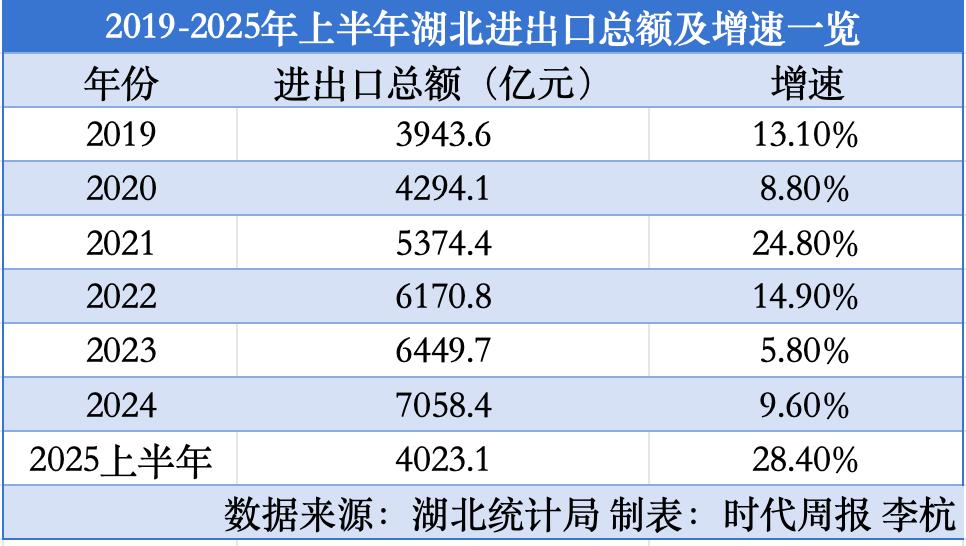
Core Insights - Hubei province has demonstrated significant growth in foreign trade, with a total import and export value of 477.18 billion yuan from January to July 2024, marking a year-on-year increase of 28.7%, surpassing the national average of 25.2% [1][2] - The province's foreign trade has shown a robust upward trend over the past five years, with a total value increase of 78.9% compared to 2019, achieving an average annual growth rate of 12.3% [1][3] - Hubei's ranking in national foreign trade has improved, moving from 17th in 2019 to 15th in 2024, and further to 11th in the first half of 2025, closing the gap with Henan province [1][7] Trade Performance - In the first half of 2024, Hubei's total import and export value reached a historical high of 402.31 billion yuan, with exports amounting to 342.79 billion yuan (up 37.9%) and imports at 134.39 billion yuan (up 10.0%) [2][3] - The province's export of high-tech products increased by 19.8% in 2024, accounting for 25.5% of total export value, with significant growth in integrated circuits and photovoltaic products [3][4] Infrastructure and Logistics - Hubei has expanded its logistics channels, including new shipping routes and rail connections, which have reduced logistics bottlenecks and enhanced trade capabilities [4][6] - The province's strategic location and infrastructure improvements have facilitated access to emerging markets, with imports and exports to Belt and Road Initiative countries reaching 220.81 billion yuan, a 32.6% increase [6][10] Policy Support and Competitive Advantage - Hubei's foreign trade growth is supported by national strategies such as the Yangtze River Economic Belt and RCEP, along with local policies that enhance trade facilitation and attract foreign investment [6][10] - The province's unique advantages in industrial structure and logistics, particularly in water transport, provide a competitive edge over neighboring provinces like Henan [10][11]