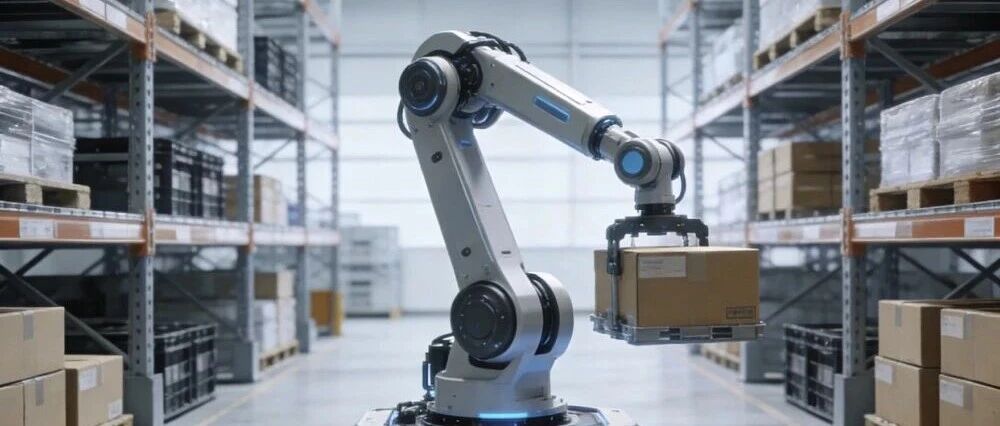
物流机器人

Search documents
上市首日涨超109%!清华夫妇造出百亿机器人IPO,顺丰赚近14亿
机器人大讲堂· 2026-03-25 09:15
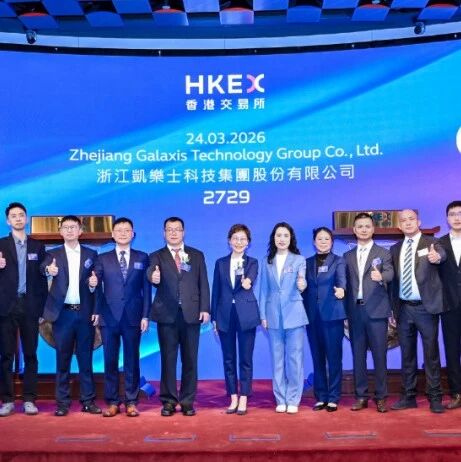
Core Viewpoint - The article discusses the successful IPO of Kales Technology (凯乐士科技), highlighting its position as the first "full-stack intelligent in-warehouse logistics robot" company listed on the Hong Kong Stock Exchange, and its innovative technology that sets it apart in a competitive market [1][3]. Group 1: Company Overview - Kales Technology was listed on March 24, with an initial pricing of HKD 16.66 per share, opening at HKD 32, reflecting a significant increase of approximately 92.17% on the first day [3]. - The company achieved a market capitalization that briefly surpassed HKD 130 billion, with its founders, Gu Chunguang and Yang Yan, both holding prestigious academic backgrounds from Tsinghua University and further studies at MIT and Cornell University [3][4]. - Kales has developed a comprehensive "hardware + software" full-stack technology system, focusing on reshaping supply chain operations through advanced robotics [4]. Group 2: Product Lines and Technology - Kales Technology's core product lines include Multi-directional Shuttle Robots (MSR), Autonomous Mobile Robots (AMR), and Conveying Sorting Robots (CSR), which together cover essential logistics functions such as storage, sorting, and transportation [5][8]. - The MSR can enhance warehouse space utilization from 30%-40% to over 70% and reduce labor costs by 40%, demonstrating its efficiency in high-demand scenarios [7]. - The AMR is highly adaptable, requiring no major site modifications, and includes innovations like the VNA AMR and the globally unique VFR series for narrow aisle operations, capturing a 19.3% market share in its segment [7][8]. - Kales' CSR combines conveyor systems with sorting robots, achieving high throughput and continuous operation, capable of processing thousands of items per hour [8]. Group 3: Market Applications - Kales Technology's products are utilized across various industries, including new energy, pharmaceuticals, automotive, and textiles, with notable clients such as CATL, BYD, and OPPO [10]. - The company has developed specialized solutions for industries with stringent requirements, such as a fireproof stacker for lithium battery production and an automated material handling system for the semiconductor sector [10]. Group 4: Founders' Background - The success of Kales is attributed to its founders, Gu Chunguang and Yang Yan, who possess a blend of top-tier academic credentials and extensive industry experience [11][14]. - Gu's previous role at a private enterprise allowed him to gain practical insights into logistics challenges, which he later applied to Kales' development [13][14]. - The couple's complementary skills in industry insight and engineering have been pivotal in establishing a solid foundation for the company [14]. Group 5: Strategic Partnerships and Growth - Kales' relationship with SF Express began in late 2016, where SF's need for efficient storage solutions aligned with Kales' technology, leading to significant collaboration [15][16]. - SF Express not only invested approximately HKD 1.66 billion but also provided a testing ground for Kales' technology, facilitating rapid development and adaptation to real-world logistics challenges [16]. - Despite facing losses from 2022 to 2024, Kales has shown a trend of narrowing losses, with a significant reduction in adjusted net losses projected for the coming years [18][19]. Group 6: Future Outlook - Kales plans to allocate approximately 45% of its IPO proceeds to R&D, 25% to capacity expansion, and 20% to international market development, indicating a strategic focus on growth and innovation [19]. - The global smart logistics robot market is expected to approach one trillion by 2030, presenting significant opportunities, although competition is intensifying [19].

以数据见证专业:QYResearch 行业数据引用案例精选集合 | 2026.02
QYResearch· 2026-02-28 09:39
Group 1 - QYResearch is recognized for its authoritative industry analysis and customized reports, widely cited by reputable companies and media, ensuring credibility and professionalism [2] - The report on the software outsourcing market highlights challenges faced by Chinese companies in exporting to Japan due to rising costs and supply chain issues [3] - The directional drilling tools market is projected to grow from approximately $7.85 billion in 2024 to over $17.29 billion by 2037, with a CAGR of 6.3% [5] - The logistics robotics market is expected to reach $32.02 billion by 2031, with a CAGR of 20.1% in the coming years [6] - The soft magnetic ferrite market is forecasted to reach $3.687 billion by 2031, with a CAGR of about 4.8% [8] - The face mask market in China reached ¥61.56 billion in 2023, accounting for approximately 43.5% of the global market, and is expected to exceed ¥75 billion by 2025 [9] - The global tire curing machine market is anticipated to grow from $1.238 billion in 2024 to $1.629 billion by 2031 [11] - The AI chip inductor market is projected to grow from $13.9 million in 2024 to $158.1 million by 2031, with a CAGR exceeding 40% [13] - The 5G automatic inspection robot market is expected to reach $9.264 billion by 2032, with a CAGR of 9.0% from 2026 to 2032 [16] - The automotive interior parts market is projected to grow from $110.11 billion in 2024 to $156.75 billion by 2031, with a CAGR of approximately 5.2% [18] Group 2 - The BBU power supply market is expected to reach $1.397 billion in 2024 and $3.1 billion by 2031, with a CAGR of 12.7% from 2025 to 2031 [32] - The data center chiller market is projected to grow from approximately ¥105.21 billion in 2024 to nearly ¥167.33 billion by 2031 [34] - The sodium-ion battery market is gaining attention as a potential alternative to lithium batteries, with significant growth expected [36] - The global continuous glucose monitoring (CGM) market is projected to reach $35.44 billion by 2032 [38] - The biological evaluation services market is expected to grow from $4.76 billion in 2024 to $8.757 billion by 2031, with a CAGR of 9.1% [40] - The global anti-aging products market is projected to grow from $60.35 billion in 2024 to $89.97 billion by 2031, maintaining a CAGR of 5.9% [54] - The global metal-air battery market is expected to increase from $296 million in 2023 to $852 million by 2031, with a CAGR exceeding 14% [60]
胖东来创始人于东来年后退休;雷军:初代SU7正式停产;拓竹科技年终奖总额增超50%,最高奖金超200万;xAI两位联合创始人离职 丨邦早报
创业邦· 2026-02-12 00:28
Core Insights - The article discusses various significant corporate announcements and developments, including leadership changes, financial results, and strategic initiatives across multiple industries. Group 1: Leadership Changes - The founder of Pang Donglai, Yu Donglai, announced his retirement effective after the Lunar New Year, transitioning to an advisory role with decision-making now handled by a committee [2] - Two co-founders of xAI, Jimmy Ba and Wu Yuhua, have left the company, marking a significant talent drain as six out of twelve co-founders have departed since its inception [6][6] Group 2: Financial Performance - NetEase reported a total revenue of 112.6 billion yuan for 2025, with R&D investment reaching 17.7 billion yuan, marking six consecutive years of over 10 billion yuan in R&D [11] - Heineken announced a global workforce reduction of 5,000 to 6,000 employees and lowered its 2026 operating profit growth forecast to 2% to 6%, down from a previous estimate of 4% to 8% [13] - Yonghui Supermarket's CEO reflected on past mistakes in prioritizing scale over quality, announcing plans to close nearly 400 low-quality stores and distribute nearly 50 million yuan in profit sharing to employees in 2025 [10] Group 3: Strategic Initiatives and Investments - Meta plans to invest over $10 billion in a new data center in Indiana, which will create approximately 4,000 construction jobs and over 300 operational positions [10] - Zhiran Medical completed a 300 million yuan A+ round of financing to advance large-scale clinical trials and product iterations in brain-machine interface technology [14] - Runway, an AI video generation startup, raised $315 million in E round financing, bringing its valuation to approximately $5.3 billion, with plans to accelerate the development of next-generation models [15] Group 4: Market Developments - The global gaming market saw player spending reach $7.1 billion in January, with "Honor of Kings" topping the revenue charts [20] - In January, China's power battery installation volume was 42.0 GWh, showing a year-on-year increase of 8.4% despite a month-on-month decline [20]



瞄向末端配送低渗透率痛点,斑陌易行推出首款物流配送机器人
Guo Ji Jin Rong Bao· 2026-02-04 07:15
Core Insights - Banmo Yixing has launched its first logistics delivery robot T6, aimed at the era of embodied intelligence, and announced a three-step technical ecosystem plan along with its first strategic partners [1] Group 1: Product Launch - The T6 robot addresses pain points in urban delivery scenarios, featuring a 6m³ optimized cargo box and a vehicle-grade chassis suitable for various operational environments such as logistics parks and public roads [1] - The T6 is equipped with a 550 TOPS hardware platform and a redundant sensor scheme for 360° panoramic perception, supporting OTA remote upgrades [1] Group 2: Technological Advancements - The T6 utilizes the self-developed "Smartware 2.0" middleware, enabling vehicle-road-cloud collaboration through 5G C-V2X communication, effectively breaking data silos [1] Group 3: Ecosystem Development - The first step of the ecosystem plan involves building a foundation for unmanned delivery robots and cloud platforms [1] - The second step focuses on enhancing intelligent operational capabilities through a "vehicle-end large model + cloud intelligent agent" approach [1] - The third step aims to expand AI application scenarios and regions, facilitating industrial value transformation [1]

增长不增收,物流机器人陷规模与利润悖论?
3 6 Ke· 2026-01-15 11:16
Core Insights - The rapid development of artificial intelligence (AI) is transforming various industries, with logistics being one of the fastest to adopt AI technologies [1] - Intelligent in-house logistics robots are revolutionizing warehouse operations and are seen as a key driver of change in the logistics system [1] Industry Overview - Intelligent in-house logistics robots are defined as automated devices used in warehouses, sorting centers, and factories, integrating advanced technologies such as navigation, motion control, and AI [2] - The global market for intelligent in-house logistics robots is projected to reach RMB 344.1 billion by 2030, with a compound annual growth rate (CAGR) of 19.5% from 2024 to 2030 [4] - The Chinese market is expected to grow from RMB 13.9 billion in 2020 to RMB 44 billion in 2024, capturing 37.2% of the global market [4] Financial Challenges - Despite the promising market growth, companies in this sector face significant profitability challenges, with only about 5% of firms truly making a profit [5] - Companies like Kales and Xizhi Jia illustrate the financial difficulties, with Kales reporting revenues of RMB 657 million, RMB 551 million, and RMB 721 million from 2022 to 2024, alongside adjusted net losses [6][10] - Xizhi Jia, the first publicly listed AMR warehouse robot company, anticipates revenue growth of 27-32% in the first half of 2025, but still faces substantial losses [8] Market Dynamics - The intelligent in-house logistics robot market is characterized by a fragmented landscape, with the top five companies holding only 12.6% of the market share [12] - The competition is intense, with around 100 players in the market, leading to a focus on sales and project delivery rather than sustainable business models [15] - The industry is still in an early expansion phase, with companies often engaging in price competition, which compresses profit margins and affects long-term investment in core technologies [16] Strategic Considerations - Companies face a strategic dilemma between focusing on high-margin standardized products or investing in faster-growing but more challenging system integration markets [17] - The current market structure creates a disconnect between profitability and market demand, complicating the operational landscape for firms [17] - Despite the challenges, the ongoing technological advancements and market demand present significant growth opportunities for innovative companies [18]
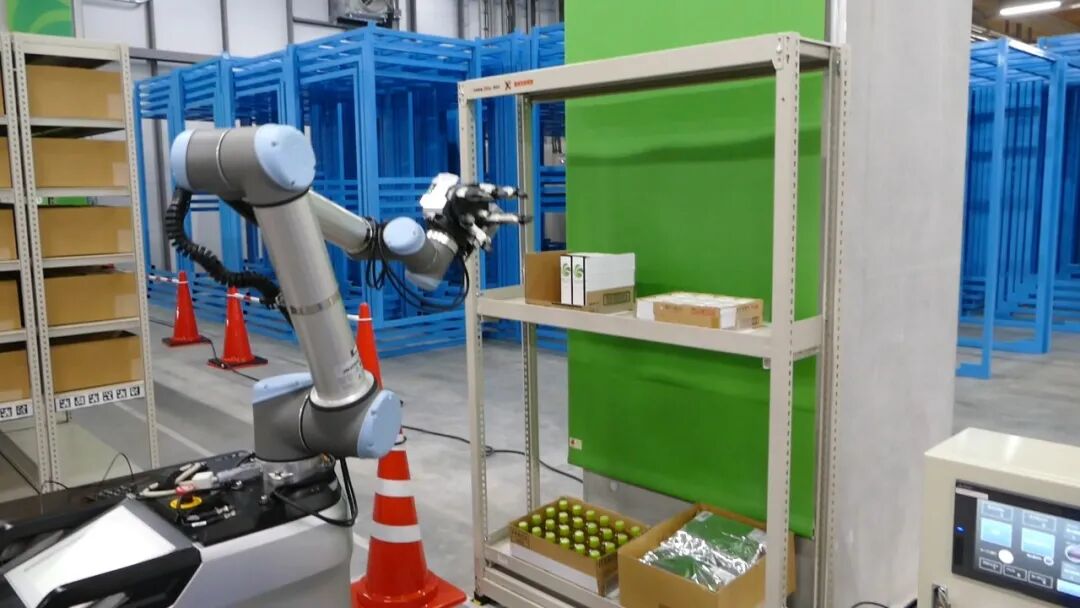
顺丰持股14%,四年累亏超7亿,这家企业冲刺上市
Sou Hu Cai Jing· 2026-01-14 11:16
Core Viewpoint - Kales Technology is aiming to become the first "full-stack intelligent in-house logistics robot" company listed on the Hong Kong stock exchange, backed by significant orders and strategic support from SF Express [1][6]. Group 1: Company Overview - Kales Technology has approximately 2.3 billion RMB in orders, indicating strong performance certainty [1]. - The company has experienced rapid growth since its inception in 2014, with multiple funding rounds totaling over 800 million RMB since 2020 [2][3]. - SF Express holds a 14.1% stake in Kales, providing both capital and access to extensive logistics scenarios [4][6]. Group 2: Financial Performance - Kales' revenue increased from 656.9 million RMB in 2022 to 721.4 million RMB in 2024, with a strong growth trajectory in the first three quarters of 2025 reaching 552 million RMB [7][8]. - Despite significant losses, with cumulative losses exceeding 700 million RMB over four years, the company has shown signs of narrowing losses, with operational losses decreasing from 131 million RMB in 2023 to 35 million RMB in the first three quarters of 2025 [11][12]. - The revenue structure is heavily concentrated in mainland China, accounting for 92.5% of total revenue in the first three quarters of 2025 [8][9]. Group 3: Market Position and Strategy - The logistics robot market is highly competitive, with over 50 domestic AMR suppliers, necessitating Kales to find differentiation strategies [17]. - Kales is strategically expanding into high-value industries and global markets, planning to establish 10 overseas centers in the next five years [18]. - The company is focusing on advanced technologies such as embodied intelligence and AI robotics, aiming to evolve from simple transport solutions to intelligent agents capable of complex operations [19]. Group 4: Future Outlook - The upcoming IPO is seen as a critical step for Kales to secure funding for global expansion and technological advancements [16]. - Kales faces challenges balancing price sensitivity among domestic clients while pursuing higher margins and scaling its embodied intelligence technology [20].

物流机器人市场洞察,全球生产商排名及市场份额
QYResearch· 2026-01-13 02:44
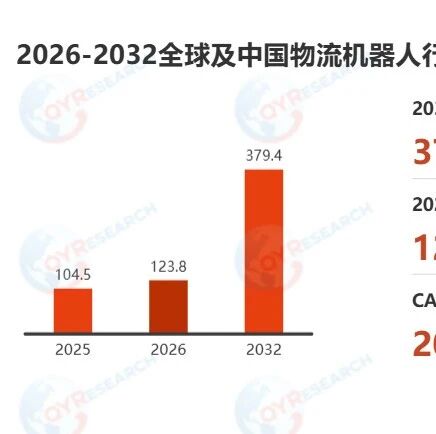
Core Viewpoint - The logistics robot industry is experiencing rapid growth driven by the need for automation and efficiency in supply chains, supported by government policies and structural demand from various sectors such as e-commerce, fast-moving consumer goods, and pharmaceuticals [1][2]. Group 1: Market Dynamics - The logistics robot market is in a high growth phase, with a projected market size of $32.02 billion by 2031 and a compound annual growth rate (CAGR) of 20.1% [3]. - The demand for warehouse automation is structurally expanding, with e-commerce, fast-moving consumer goods, and pharmaceuticals being the core drivers [1][2]. - The market is characterized by a shift from single-point equipment purchases to full-process intelligent deployments, transforming logistics robots into strategic assets for supply chains [2]. Group 2: Product and Application Segmentation - Automated Guided Vehicles (AGVs) and Autonomous Mobile Robots (AMRs) dominate the market, holding approximately 61.8% of the market share [7]. - The primary application area for logistics robots is warehousing and distribution, accounting for about 36.1% of the demand [9]. Group 3: Challenges and Trends - The logistics robot industry faces challenges such as increasing safety and compliance requirements, which necessitate higher investments in algorithms and risk control [2]. - There is a trend towards "deep verticalization" and "scene granularity" in downstream demand, with manufacturing industries pushing for flexible production and logistics upgrades [2]. Group 4: Supply Chain and Component Insights - Key components in the logistics robot supply chain include sensors, controllers, precision reducers, and lightweight structural parts, with a notable shift towards domestic production for stability and cost competitiveness [3]. - The industry is moving towards green manufacturing and low-carbon supply chains, enhancing the energy efficiency and carbon footprint of logistics robots [3].
嘉兴南湖又将冲出一个IPO!清华博士夫妻造物流机器人,年入7亿
创业邦· 2026-01-10 03:05
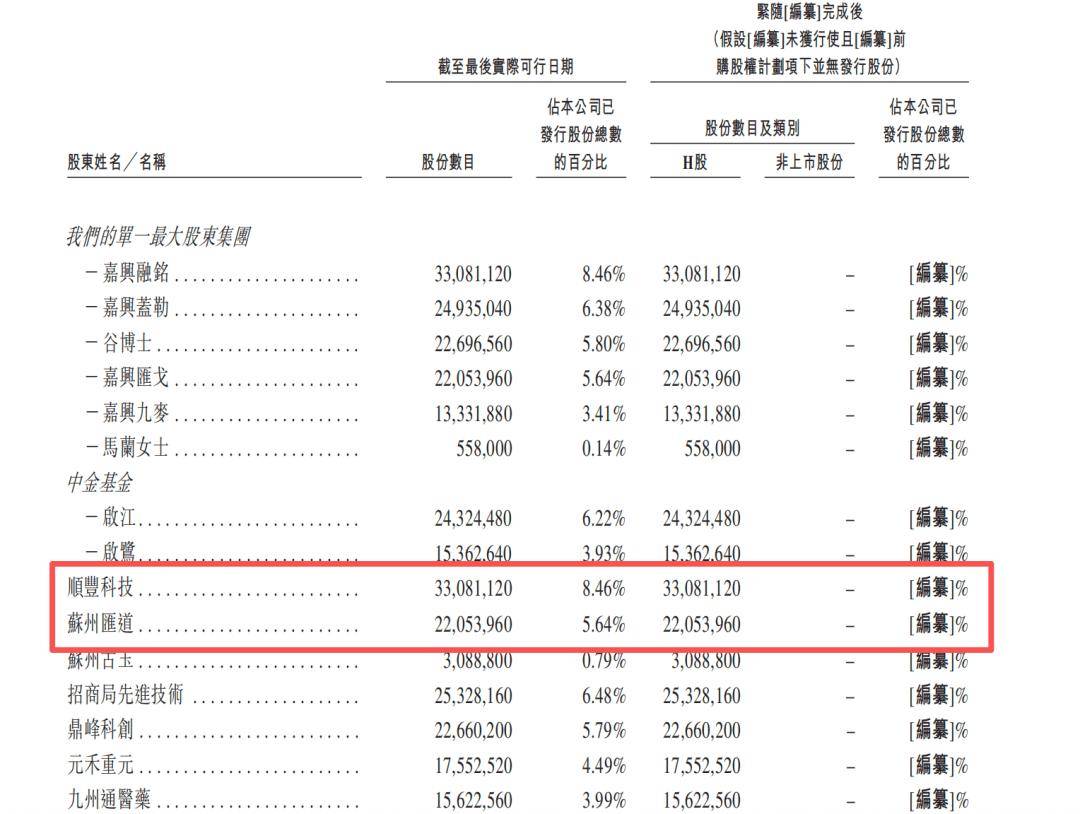
Core Viewpoint - Zhejiang Kailesi Technology Group Co., Ltd. (Kailesi) is preparing for its IPO on the Hong Kong Stock Exchange, aiming to become the first stock in the field of all-stack intelligent in-house logistics robots in Hong Kong [3]. Company Overview - Founded in 2014 by Gu Chunguang and Yang Yan, both Tsinghua University graduates, Kailesi has become the fifth largest comprehensive intelligent in-house logistics solution provider in China, with a market share of 1.6% [4]. - The company leads the market in the ultra-narrow aisle autonomous mobile robot (VNA AMR) segment with a shipment market share of 19.3% [4]. Financial Performance - Kailesi's revenue for 2024 is projected to reach 721 million RMB, a year-on-year increase of 30.8%, while the revenue for the first nine months of 2025 has already reached 552 million RMB, reflecting a growth of 60.3% [5]. - As of the end of 2024, the company has completed 1,530 projects and served 779 clients across 28 industries, including new energy, automotive, pharmaceuticals, and e-commerce, with operations in 16 countries and regions [5]. Investment and Shareholding - The company has completed multiple rounds of financing totaling over 800 million RMB, with a valuation of 3.5 billion RMB after the E round in 2022 [6]. - Founders Gu Chunguang and Yang Yan hold approximately 40.3% of the shares, while major shareholders include SF Holding (14.1%) and CICC Capital (10.15%) [6]. Product and Technology - Kailesi's core philosophy is "scene-oriented, technology-based," and it offers a product line that includes four-way shuttle robots (MSR), autonomous mobile robots (AMR), and sorting robots, along with a full-stack software system [22]. - The four-way shuttle technology enhances warehouse space utilization by over 50% and reduces energy consumption by 30% compared to traditional systems [24]. Market Expansion - Kailesi has expanded its market presence from pharmaceuticals to e-commerce, automotive, and now into higher barrier and faster-growing sectors like new energy and semiconductors [28]. - The company has initiated its international expansion with projects in Russia and plans to target Southeast Asia, Japan, South Korea, the Middle East, Europe, and North America [29]. Competitive Landscape - The logistics robot sector in China is experiencing rapid growth, with an expected market size of 413.7 billion RMB by 2030, attracting nearly 400 competitors [36]. - Key competitors include companies like Geek+, Hikvision Robotics, and FastGo Intelligent, with a shift in focus from hardware competition to ecosystem building [40].



三年累亏6.29亿、持续失血难题待解 博士夫妻档带队,凯乐士背靠顺丰二度冲港
Mei Ri Jing Ji Xin Wen· 2026-01-06 12:44
Core Viewpoint - Zhejiang Kailesi Technology Group Co., Ltd. (referred to as "Kailesi") has officially submitted its application to the Hong Kong Stock Exchange, aiming to become the first "full-stack intelligent on-site logistics robot" company listed in Hong Kong, marking its second attempt after an initial submission in June 2025 that became invalid [1] Company Overview - Kailesi was founded in 2016 by the couple Gu Chunguang and Yang Yan, focusing on three core scenarios: warehousing, material handling, and goods sorting, offering a full-stack solution with robots that operate 24/7 and double efficiency [2] - The company has significant backing from logistics giant SF Express, which holds a 14.1% stake through its subsidiaries, providing both capital and a business partnership [2] Financial Performance - From 2022 to 2024, Kailesi recorded revenues of 657 million yuan, 551 million yuan, and 721 million yuan, respectively, while accumulating losses of 629 million yuan during the same period [3] - In the first three quarters of 2025, despite a 60.3% year-on-year revenue growth, the company still reported a net loss of 134 million yuan [3] Market Position and Competition - Kailesi ranks fifth in the logistics robot industry with a market share of 1.6%, benefiting from a fragmented market where the top five companies hold only 12.6% of the total market [4] - The competitive landscape is intense, with major players like JD and Cainiao expanding their robot fleets and capabilities, indicating a highly competitive environment [4] Operational Challenges - The company's revenue heavily relies on multi-functional integrated systems, which accounted for 79% of its business in 2024, but the gross margin declined from 14% in 2023 to 10.8% in 2024 [3] - The single-function robot deployment business, which has a higher gross margin of 24.8% to 31.2%, only represented 18.4% of revenue in 2024, limiting its overall profitability [3] Management and Compliance Issues - Kailesi's management has faced compliance risks, with the CFO having a history of regulatory penalties, and the founder also having a record of violations related to stock trading [5][6] - The company has consistently reported negative cash flows from operating activities, with cash and cash equivalents decreasing from 194 million yuan to 94.52 million yuan, while net liabilities rose to 1.196 billion yuan [6] IPO Significance - The upcoming IPO is crucial for Kailesi, as the company aims to raise funds to expand its core product lines, enhance R&D, increase production capacity, and improve operational liquidity [7] - The IPO represents not only a fundraising opportunity but also a critical moment for the company to establish a foothold in the competitive logistics robot market [7]
物流机器人企业凯乐士冲刺港股,剑指 “物流机器人第一股”
机器人圈· 2026-01-06 12:06
Core Viewpoint - The article highlights the significant development of Kales, a logistics robotics company backed by SF Express, as it submits its IPO application to the Hong Kong Stock Exchange, potentially marking the first "logistics robot" listing in the market, which could catalyze the capitalized wave in the industry [1] Group 1: Company Overview - Kales was founded in 2016 by Gu Chunguang and Yang Yan, aiming to enhance logistics efficiency through intelligent robotics technology, driven by rising labor costs and increasing logistics demands [1] - The company has established a "full-stack solution" strategy, developing various robots for core logistics scenarios such as storage, handling, and sorting, which differentiates it from traditional logistics robotics firms [2] Group 2: Support and Growth - Kales received substantial support from the Jiaxing municipal government, including a startup grant of 3 million yuan, and strategic backing from Jiuzhoutong Pharmaceutical, which became a key customer and investor [2][3] - The company experienced rapid growth, achieving a total order amount of 350 million yuan in 2018, a 320% year-on-year increase, with clients including major firms like Huawei and JD.com [3] Group 3: Technological Innovation - Kales focuses on technological innovation, integrating AI and embodied intelligence to enhance its robots' capabilities, allowing for precise navigation and obstacle prediction [4] - The company aims to rank among the top five comprehensive intelligent logistics robotics companies in China by 2024, holding a 1.6% market share [4] Group 4: Financial Performance - Kales has faced challenges with profitability, reporting revenues of 657 million yuan in 2022, 551 million yuan in 2023, and 721 million yuan in 2024, with net losses of 210 million yuan, 242 million yuan, and 178 million yuan respectively [5] - Despite a narrowing adjusted net loss from 117 million yuan in 2022 to 50 million yuan in 2024, the company has not yet achieved profitability, reflecting the industry's high R&D costs and long profit cycles [5] Group 5: Market Position and Future Prospects - Kales' upcoming IPO is seen as a crucial step to gain industry first-mover advantage and enhance valuation, while also providing an opportunity to alleviate financial losses and increase R&D investment [5] - The logistics automation demand continues to grow, and Kales' journey may offer valuable insights into the commercialization path for the entire logistics robotics industry [5]