Forvia

Search documents
中国汽车行业 “走出去”:对欧洲供应商意味着什么China Going Global_ What It Implies for European Suppliers
2026-01-26 02:50
Summary of Conference Call Notes on European Automotive Industry Industry Overview - The focus is on the European automotive industry, particularly in the context of competition from Chinese suppliers and the implications of local content rules [1][14][16]. Key Points and Arguments Competitive Pressure from Chinese Suppliers - Chinese suppliers are increasingly shifting their competitive pressure onshore in Europe, becoming the marginal price setters in various component categories [1][2]. - The expectation is that Chinese auto parts suppliers will capture a US$240 billion opportunity and secure a 10% overseas market share by 2030, with a compound annual growth rate (CAGR) of 12% from 2025 to 2030 [2][15]. Local Content Rules - Minimum local content policies may provide short-term relief for European suppliers but do not address the structural cost disadvantages of 15-35% that Europe faces compared to other regions [3][16]. - Local content requirements could buy time for restructuring but are unlikely to reset competitiveness, as Chinese suppliers are already establishing manufacturing footprints in Europe [3][16][64]. Earnings and Margin Outlook - Near-term earnings for European suppliers are insulated due to programs awarded several years ago, but longer-term margins are at risk as Chinese pricing pressure will gradually emerge [4][19]. - The structural risk remains unchanged, with Chinese suppliers progressing rapidly in establishing local manufacturing capabilities [64]. Pricing Power Dynamics - Pricing power among European suppliers is expected to weaken over time, with significant dispersion based on product complexity and localization intensity [5][20][65]. - Autoliv is noted for having the most protected pricing power due to high regulatory barriers, while Valeo faces increasing pressure in advanced driver-assistance systems (ADAS) and thermal management [24][67]. Structural Cost Disadvantages - Europe faces a 15-35% structural cost disadvantage across key auto component categories, driven by higher material, energy, and labor costs, as well as stricter regulations [7][22]. - The value capture per vehicle in the EU is projected to erode by 20-25% by 2030 due to electrification and competitive pressures [11][33]. Adaptation Strategies - European suppliers are adapting by collaborating with Chinese OEMs and establishing R&D facilities in China to tailor products for local markets [17][64]. - The introduction of binding local content rules could provide upside risks for European suppliers, but the overall competitive landscape remains challenging [21][63]. Geopolitical Pressures - Geopolitical dynamics, including requests from US OEMs to eliminate China-origin components, add complexity to the supply chain landscape [62]. Other Important Insights - The transition from exports to offshore plants by Chinese suppliers is expected to continue, with key locations being Mexico, Eastern Europe, and Southeast Asia [42][59]. - The competitive impact of Chinese suppliers extends beyond awarded volumes to influence the broader margin structure of incumbent Tier-1 suppliers in Europe [27][64]. This summary encapsulates the critical insights from the conference call regarding the European automotive industry's current state and future outlook amidst rising competition from Chinese suppliers and evolving regulatory frameworks.
Michelin, Forvia, Stellantis seal restructuring deal for Symbio
Yahoo Finance· 2025-12-04 12:58
Core Insights - Michelin, Forvia, and Stellantis have reached an agreement on a restructuring and refinancing package for their hydrogen fuel cell joint venture, Symbio, amid uncertainty regarding its future [1][2] - Stellantis previously accounted for approximately 80% of Symbio's business volumes, making the joint venture vulnerable after Stellantis halted its hydrogen fuel cell technology program [2] - Symbio plans to reduce its workforce to 175 as part of the restructuring, which management describes as essential for the company's survival [2][3] Business Strategy - Symbio aims to adapt its strategy and organization to align with its new scope of activities following the restructuring [2] - The company will continue to develop its core hydrogen technologies, including a 75kW fuel cell system for buses, coaches, and data centers [3][4] - Symbio targets a production capacity of 10,000 systems per year at its SymphonHy gigafactory in Saint-Fons by 2028-2030 [4] Future Developments - Research and development efforts will focus on a next-generation 150kW fuel cell system for heavy-duty vehicles, with a potential commercial rollout expected around 2030 [4]

Michelin, Forvia and Stellantis agree on Symbio restructuring plan
Reuters· 2025-12-03 14:13
Core Insights - Michelin, Forvia, and Stellantis have reached an agreement regarding the restructuring and refinancing of Symbio, a hydrogen fuel cell firm jointly owned by the three companies [1] Company Summary - The agreement involves the restructuring and refinancing of Symbio, indicating a strategic move by Michelin, Forvia, and Stellantis to strengthen their position in the hydrogen fuel cell market [1]

Forvia confirms divestment moves for vehicle interiors unit
Yahoo Finance· 2025-12-01 10:51
Core Insights - Forvia has initiated a divestment process for parts of its portfolio, particularly its interiors business group, following media speculation about a potential sale [1][3] - The company is conducting a comprehensive strategic review of its portfolio but has not disclosed specific assets or timelines related to the divestment [2] - Forvia aims to reduce its net debt to below 1.5 times core earnings through asset disposals, with a current leverage ratio of 1.8 as of June 2025 [4] Financial Performance - The interiors division generated €1.09 billion in sales during Q3 2025, representing nearly 18% of Forvia's total revenue [4] - Forvia has completed approximately 25% of its €1 billion ($1.2 billion) divestment plan announced in October 2023, with individual asset sales ranging from €50 million to €200 million [3] Strategic Partnerships - Forvia has partnered with Indian IT company Wipro to enhance its Advanced Driver Assistance Systems (ADAS) applications, focusing on surround-view technology to assist drivers [5]
全球与中国汽车座舱舒适系统市场现状及未来发展趋势
QYResearch· 2025-11-10 01:43
Core Viewpoint - The automotive cabin comfort system is an integrated technological solution designed to enhance passenger comfort, health, and overall driving experience, incorporating features like seat heating, ventilation, massage, adjustable lumbar support, and climate control [2][4]. Market Demand and Trends - There is a significant growth in market demand as automotive consumption shifts from "transportation tools" to "intelligent mobile spaces," leading to increased consumer expectations for comfort in driving experiences [5]. - Traditional comfort features have become standard in mid-to-high-end models, while advanced systems like massage and multi-zone climate control are increasingly being integrated into mainstream vehicles [5]. Technological Integration - Comfort systems are evolving from standalone modules to deeply integrated systems with onboard sensors and intelligent control platforms, utilizing temperature and pressure sensors along with AI algorithms for smart adjustments [6][10]. - The trend towards full-function multi-mode comfort systems is emerging, which consolidates various control functions into a single controller, enhancing adaptability and reducing complexity in production [9][11]. Impact of Electrification and New Energy Vehicles - New energy vehicle manufacturers are focusing more on user experience, making comfort a key selling point, which is driving the adoption of comfort systems [8]. - For instance, electric vehicles are using seat heating as a primary heating method in winter, while the quiet environment of electric vehicles enhances the experience of massage and ventilation systems [12]. Market Size and Growth Projections - The global automotive cabin comfort system market is projected to reach $5.184 billion in sales by 2024 and is expected to grow to $10.559 billion by 2031, with a compound annual growth rate (CAGR) of 10.06% from 2025 to 2031 [15]. - The market is characterized by a competitive landscape where international companies dominate the high-end market, while local Chinese firms are rapidly emerging due to cost and supply chain advantages [15][17]. Key Manufacturers - Major global manufacturers in the automotive cabin comfort system sector include Gentherm, Lear, Forvia, Toyota Boshoku, Hyundai Transys, AEW, Adient, Leggett & Platt, Brose Fahrzeugteile, and others [17][22]. Future Development Directions - The future of automotive cabin comfort systems is expected to focus on further advancements in intelligence, personalization, and health integration, leveraging sensor fusion, AI control algorithms, and human-machine interaction to enhance user experience [17]. - Companies will need to balance technological innovation, functional differentiation, and cost control to meet diverse demands from automakers and consumers in a competitive market [17].

Forvia: Availability of the Financial Report for the First Half of 2025
Globenewswire· 2025-07-28 06:10
Core Points - FORVIA has announced the availability of its financial report for the first half of 2025, which has been filed with the French Autorité des marchés financiers [2] - The financial report can be accessed on the company's corporate website [2] Summary by Sections - **Financial Report Availability** - The financial report for the first half of 2025 is now publicly available [2] - The report has been officially filed with the French regulatory authority [2] - Interested parties can consult the report on the company's website [2][3]
法国汽车零部件供应商Forvia、法雷奥和彼欧股价涨幅为3.9%至4.8%之间,领涨SBF120指数。
news flash· 2025-07-23 07:15
Group 1 - The core point of the article highlights that French automotive parts suppliers Forvia, Valeo, and Pirelli experienced stock price increases ranging from 3.9% to 4.8%, leading the SBF120 index [1]
X @Bloomberg
Bloomberg· 2025-07-15 14:34
Industry Trend - Stellantis 将撤回对与 Michelin 和 Forvia 的氢燃料汽车合资企业的支持 [1]
全球汽车座椅控制器市场前10强生产商排名及市场占有率
QYResearch· 2025-05-19 08:23
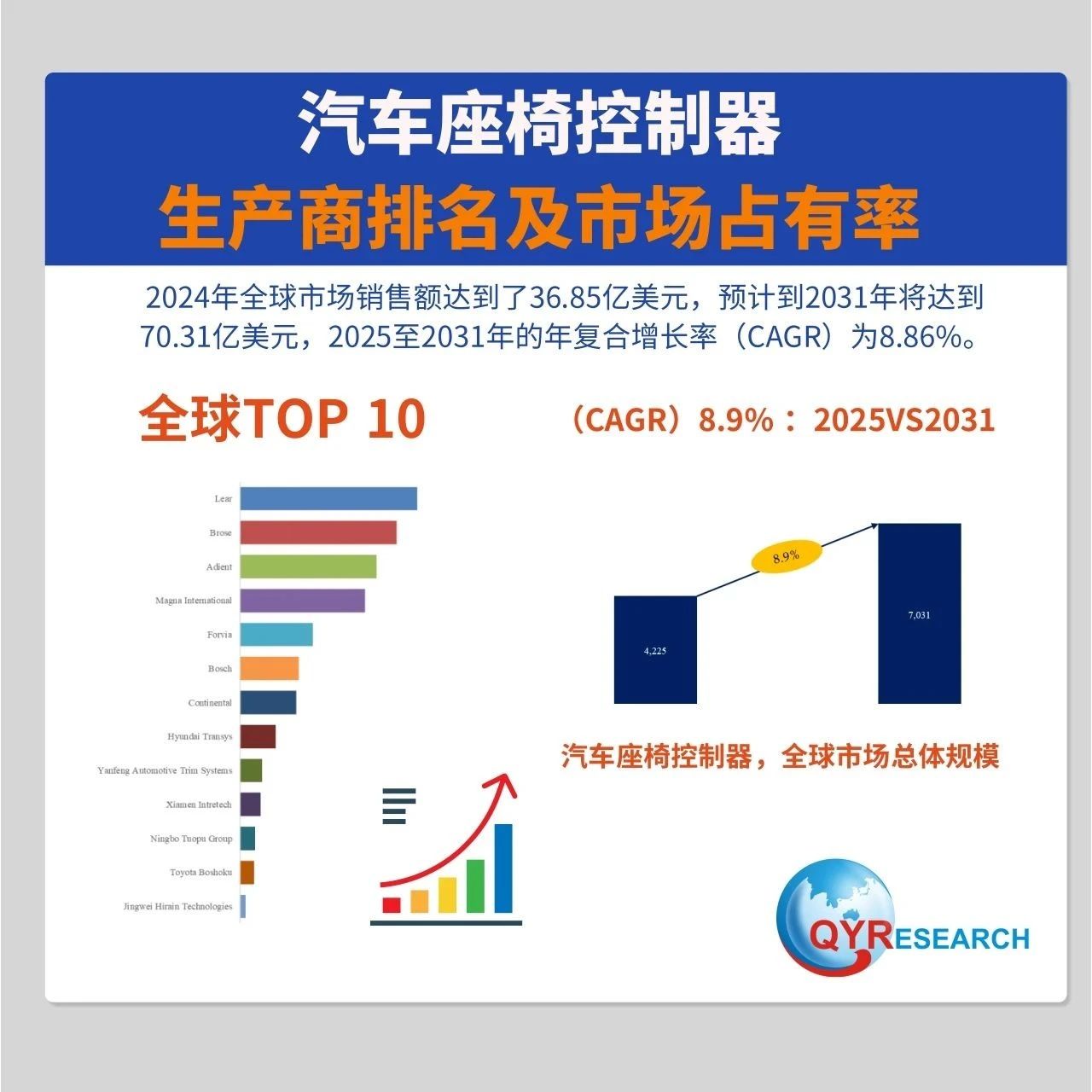
Core Viewpoint - The global automotive seat controller market is experiencing rapid growth, driven by advancements in comfort, intelligence, and personalization in automotive seating systems [2][12]. Market Overview - The global market for automotive seat controllers is projected to reach $3.685 billion in sales by 2024 and is expected to grow to $7.031 billion by 2031, with a compound annual growth rate (CAGR) of 8.86% from 2025 to 2031 [2]. - The growth is attributed to the evolution of seat control technology, which is becoming more integrated and multifunctional, enhancing vehicle quality and user experience [2]. Competitive Landscape - The market is highly concentrated, with the top 10 manufacturers holding 79.53% of the market share in 2024. Key players include Lear, Brose, Adient, Magna International, and Forvia [6]. - These companies leverage strong R&D capabilities and global resources to maintain a competitive edge, particularly in high-end product segments [6]. Regional Analysis - Europe is the largest market for automotive seat controllers, accounting for 30.98% of the market share in 2024, followed by North America at 29.13% and China at 21.07% [10]. - China's market is rapidly expanding, projected to grow from $0.776 billion in 2024 to $1.708 billion by 2031, representing 24.29% of the global market [10]. Future Outlook - The ongoing trends of electrification, intelligence, and connectivity in vehicles are expected to create significant opportunities for seat controllers [12]. - Key technological directions include multifunction integration, miniaturization, low power consumption, and enhanced hardware-software collaboration [12]. - The demand for adaptable seat structures and automatic adjustment features will increase, necessitating more complex sensing and control requirements for seat controllers [12].
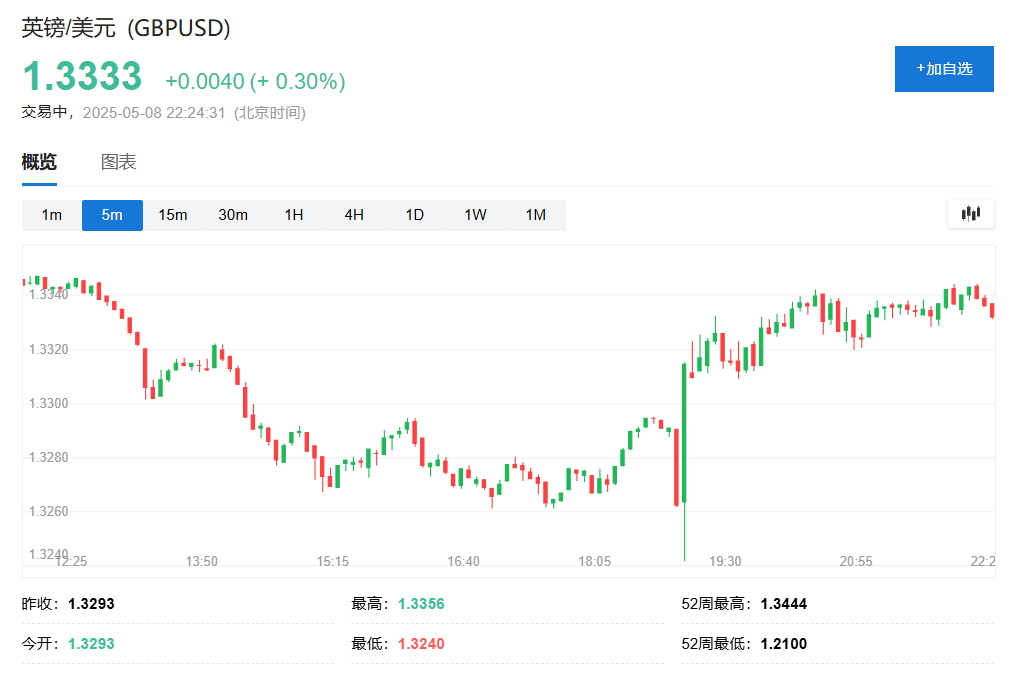
阿斯顿马丁涨约10%,通用汽车涨3%,报道称美国将下调英国汽车关税
news flash· 2025-05-08 14:31
Group 1 - Aston Martin's stock price increased by over 9.7%, leading European automotive stocks [1] - General Motors' stock price rose approximately 3%, reaching a daily high above $46.80 [1][3] - The British pound maintained a 0.3% increase, stabilizing around 1.3330 [1] Group 2 - The U.S. will reduce tariffs on cars manufactured in the UK to 10% [1] - UK automotive manufacturers will receive a quota of 100,000 vehicles at the lower tariff rate [1] - Beef tariffs will be lowered to "near zero" levels [1]